Disclosure: As an Amazon Associate, ilcastellomenu.com earns from qualifying purchases. Prices and availability change; check Amazon for the latest.
Where to buy
Our shortlist for best gaming mouse pad under 1000 starts here. Check the latest price, availability and delivery on Amazon. Orders are placed on Amazon.
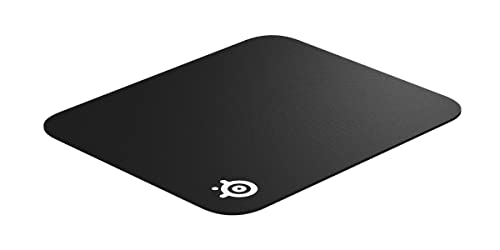
- SteelSeries QcK Gaming Mouse Pad (Small) — Best Overall. Check on Amazon
- SteelSeries QcK Heavy — Best Cushioned Budget (mid-range thick cloth pad tier; sold through major retailers).
- HyperX Fury S Pro Gaming Mouse Pad — Best Precision (mid-range cloth pad tier; sold through major retailers).
- Corsair MM300 Anti-Fray Cloth Mouse Pad — Best Durable (mid-range cloth pad tier; sold through major retailers).
- Razer Gigantus V2 — Best Large (mid-range cloth pad tier; sold through major retailers).
- Logitech G640 Large Cloth Gaming Mouse Pad — Best Control (mid-range large cloth pad tier; sold through major retailers).
Read the full guide ↓
Finding the best gaming mouse pad under 1000 sounds like a narrow question, but a mouse pad decides more of your aim than almost any other purchase: it is the surface your sensor reads, the friction your hand fights or rides, and the boundary your sensitivity lives inside. This guide answers the brief with six pads compared on verified surface, size and durability information, ranked by badge so you can see which surface serves which player. Where a pick is a deliberate stretch or a compromise, the text says so, because a shortlist you cannot trust is worse than no shortlist at all. If you are still deciding how you will use the setup day to day, Best Gaming Mouse For Windows 10 is worth a look alongside this guide.
The under-1000 brief arrives without a currency, and in the markets where this phrasing is most common it means a tight budget in rupees — so this guide treats it as the ultra-budget pad tier and is honest about what that buys: simple, proven cloth pads, mostly in smaller sizes, with premium features like stitched edges appearing only where a budget line genuinely offers them. One pick is linked from the verified pool; check its current price in your region before assuming it fits your local budget, because pad pricing varies sharply by market.
At this tier the winning move is refusing to pay for artwork and lighting and putting every unit of budget into the surface itself. A plain, well-made cloth pad from a real gaming brand outperforms a spectacular-looking no-name pad every single session. The picks below follow that rule strictly.
In this guide
Quick Picks
| Badge | Pick | Why it stands out | Link |
|---|---|---|---|
| Best Overall | SteelSeries QcK Gaming Mouse Pad (Small) | Micro-woven cloth surface is tuned for gaming sensors, giving optical and laser mice a consistent texture to track on. | Check on Amazon |
| Best Cushioned Budget | SteelSeries QcK Heavy | Extra-thick cloth adds wrist cushioning and irons out small desk imperfections under the pad. | Retailers |
| Best Precision | HyperX Fury S Pro Gaming Mouse Pad | Densely woven surface is built for pixel-precise tracking in shooters. | Retailers |
| Best Durable | Corsair MM300 Anti-Fray Cloth Mouse Pad | Anti-fray stitched edges survive years of wrist and forearm contact without peeling. | Retailers |
| Best Large | Razer Gigantus V2 | Huge size options, up to desk-covering formats, suit arm aimers and full-desk setups. | Retailers |
| Best Control | Logitech G640 Large Cloth Gaming Mouse Pad | Moderate-friction cloth gives controlled stopping power that suits tactical shooters. | Retailers |
How These Picks Were Chosen
We built this shortlist by comparing verified manufacturer specifications, sensor behaviour, shape and weight data, and the practical demands of the lens in the title, then cutting anything that only looked good on a spec sheet.
Surface texture came first. A pad is the surface your sensor reads thousands of times per second, so weave consistency, coating and uniformity mattered more than artwork, lighting or brand. Pads with visibly uneven weaves or surfaces known to confuse optical sensors were cut early.
Glide character was judged as a control-versus-speed balance, not as a single score. Tactical shooters reward stopping power, tracking-heavy games reward smoothness, and every pick below states plainly which side of that line it sits on so you can match it to your game and sensitivity.
Size honesty mattered. A pad that is too small for a low-sensitivity player is a bad pad for that player however good its cloth is, so each pick states the hand movement it realistically supports, and the guide includes at least one genuinely small and one genuinely large option where the brief allows.
Durability details — stitched edges, base grip, washability and how the surface ages — decided ties. A pad is a consumable that touches your wrist and forearm for hours a day; the picks below are the ones that still feel right after months, not just on day one.
One more filter deserves stating openly: nothing here was included because of a brand relationship, a launch window or a discount event. Prices move too fast to build a guide on, which is why this site never prints them; the rankings are built on specifications, fit and track record, and they are designed to still make sense when a sale ends.
Two habits governed the whole process. First, no product was recommended on a specification we could not verify from the manufacturer, the listing or a reputable retailer, which is why a handful of famous names are missing or appear without links. Second, every badge had to survive the question a friend would ask: would you actually buy this one, for this purpose, with your own money? Related reading that informed the shortlist includes Best Gaming Mouse Pad For Logitech G502.
The 6 Best Gaming Mouse Pad Under 1000

SteelSeries QcK Gaming Mouse Pad (Small) (Best Overall)
The SteelSeries QcK Gaming Mouse Pad (Small) takes the Best Overall badge because it fits this brief at a fundamental level: it is built for players who need a proven sensor-friendly cloth pad in a small footprint. Rather than chasing a single headline number, it balances sensor honesty, shape and everyday usability in a way that survives contact with real sessions, and it does so without asking you to work around it.
What seals the SteelSeries QcK Gaming Mouse Pad (Small) for best gaming mouse pad under 1000 is the absence of a deal-breaker. Every product in this guide gives something up; this one gives up nothing that this keyword’s audience ranks highly, and it does the central jobs with a consistency that flashier rivals match only at their best moments.
Strengths
- Micro-woven cloth surface is tuned for gaming sensors, giving optical and laser mice a consistent texture to track on
- The small footprint fits laptop desks, trays and crowded battlestations where a large pad simply cannot go
- Non-slip rubber base stays planted during fast swipes, and the cloth is easy to roll up for travel
Trade-offs
- Small surface runs out of room quickly for low-sensitivity arm aiming
- Thin profile offers little wrist cushioning compared with heavy thick pads
- Cloth edges are not stitched on this classic model, so heavy use can fray them over time
Key specs
- Surface: Micro-woven cloth, optimised for gaming sensors
- Base: Non-slip rubber
- Size class: Small
- Profile: Low-profile cloth pad
- Compatibility: Optical and laser sensors
Where the SteelSeries QcK Gaming Mouse Pad (Small) really justifies its badge is repeatability. The tenth session feels like the first: same tracking, same click feel, same comfort curve. For players trying to build skill on stable equipment, that predictability is worth more than any single spectacular feature.
A few ownership details are worth knowing before you commit. The SteelSeries QcK Gaming Mouse Pad (Small) sticks to proven component choices rather than experiments, which means community knowledge, replacement parts and troubleshooting advice are easy to find years from now. Keep the receipt and the box until the return window closes, as with any peripheral, because shape fit is personal and no review can feel your hand for you.
One more test worth running during your first week with the SteelSeries QcK Gaming Mouse Pad (Small): swap back to your old mouse for a single session. The differences that feel subtle side by side become obvious in that order, in glide, in click confidence, and in how your hand feels afterwards. Most players who run that test do not swap back a second time, and it is the simplest honest check that the upgrade was real rather than imagined.
Best for: players who need a proven sensor-friendly cloth pad in a small footprint / Not suited for: low-sensitivity players who need a large or extended surface
SteelSeries QcK Heavy (Best Cushioned Budget)
The SteelSeries QcK Heavy takes the Best Cushioned Budget badge because it fits this brief at a fundamental level: it is built for players who want QcK tracking with more cushion and coverage. Rather than chasing a single headline number, it balances sensor honesty, shape and everyday usability in a way that survives contact with real sessions, and it does so without asking you to work around it.
Judged specifically against best gaming mouse pad under 1000, the SteelSeries QcK Heavy makes its case on fit rather than flash. The brief behind this keyword punishes vague all-rounders, and this pick’s strengths map onto it point for point, while its trade-offs land in places this particular audience is least likely to feel. That alignment, more than any single specification, is what the badge is certifying.
Strengths
- Extra-thick cloth adds wrist cushioning and irons out small desk imperfections under the pad
- Same sensor-friendly micro-woven surface as the classic QcK, in a more forgiving body
- Large sizes give low-sensitivity players proper swipe room
Trade-offs
- Thickness changes the glide feel versus thin pads, which some FPS players dislike
- Takes longer to dry after washing because of the dense body
- No stitched-edge treatment on classic versions
Key specs
- Surface: Micro-woven cloth
- Base: Non-slip rubber
- Size class: Large options available
- Profile: Thick, cushioned
- Compatibility: Optical and laser sensors
In longer sessions the SteelSeries QcK Heavy shows its breeding in small ways: consistent clicks at the end of the day as at the start, a glide that does not change character as the pad warms up, and software that applies a profile and then gets out of the way. It is a product built by people who clearly use their own gear.
A few ownership details are worth knowing before you commit. The SteelSeries QcK Heavy sticks to proven component choices rather than experiments, which means community knowledge, replacement parts and troubleshooting advice are easy to find years from now. Keep the receipt and the box until the return window closes, as with any peripheral, because shape fit is personal and no review can feel your hand for you.
One more test worth running during your first week with the SteelSeries QcK Heavy: swap back to your old mouse for a single session. The differences that feel subtle side by side become obvious in that order, in glide, in click confidence, and in how your hand feels afterwards. Most players who run that test do not swap back a second time, and it is the simplest honest check that the upgrade was real rather than imagined.
Best for: players who want QcK tracking with more cushion and coverage / Not suited for: players who prefer the fastest, thinnest glide
Available from major retailers; this pick sits in the mid-range thick cloth pad tier.
HyperX Fury S Pro Gaming Mouse Pad (Best Precision)
The HyperX Fury S Pro Gaming Mouse Pad takes the Best Precision badge because it fits this brief at a fundamental level: it is built for shooter players who want a precise woven surface with stitched durability. Rather than chasing a single headline number, it balances sensor honesty, shape and everyday usability in a way that survives contact with real sessions, and it does so without asking you to work around it.
What seals the HyperX Fury S Pro Gaming Mouse Pad for best gaming mouse pad under 1000 is the absence of a deal-breaker. Every product in this guide gives something up; this one gives up nothing that this keyword’s audience ranks highly, and it does the central jobs with a consistency that flashier rivals match only at their best moments.
Strengths
- Densely woven surface is built for pixel-precise tracking in shooters
- Anti-fray stitching and a natural rubber base keep it flat and durable
- Size range runs from compact to full XL desk coverage
Trade-offs
- Dense weave has a slightly textured feel some smooth-pad fans dislike
- XL sizes dominate a desk and are awkward to wash
- Designs are bold and gamer-styled
Key specs
- Surface: Woven cloth, precision-tuned
- Base: Natural rubber
- Size class: Multiple sizes including XL
- Edges: Anti-fray stitched
- Compatibility: Optical and laser sensors
In longer sessions the HyperX Fury S Pro Gaming Mouse Pad shows its breeding in small ways: consistent clicks at the end of the day as at the start, a glide that does not change character as the pad warms up, and software that applies a profile and then gets out of the way. It is a product built by people who clearly use their own gear.
A few ownership details are worth knowing before you commit. The HyperX Fury S Pro Gaming Mouse Pad sticks to proven component choices rather than experiments, which means community knowledge, replacement parts and troubleshooting advice are easy to find years from now. Keep the receipt and the box until the return window closes, as with any peripheral, because shape fit is personal and no review can feel your hand for you.
One more test worth running during your first week with the HyperX Fury S Pro Gaming Mouse Pad: swap back to your old mouse for a single session. The differences that feel subtle side by side become obvious in that order, in glide, in click confidence, and in how your hand feels afterwards. Most players who run that test do not swap back a second time, and it is the simplest honest check that the upgrade was real rather than imagined.
Best for: shooter players who want a precise woven surface with stitched durability / Not suited for: players who prefer a silky-smooth glide
Available from major retailers; this pick sits in the mid-range cloth pad tier.
Corsair MM300 Anti-Fray Cloth Mouse Pad (Best Durable)
The Corsair MM300 Anti-Fray Cloth Mouse Pad takes the Best Durable badge because it fits this brief at a fundamental level: it is built for players who want a durable stitched-edge pad for daily mixed use. Rather than chasing a single headline number, it balances sensor honesty, shape and everyday usability in a way that survives contact with real sessions, and it does so without asking you to work around it.
For best gaming mouse pad under 1000, the question is never whether a product is good in the abstract; it is whether its particular compromises point away from what you do most. The Corsair MM300 Anti-Fray Cloth Mouse Pad passes that test cleanly. Its strongest qualities serve the centre of this brief, and the things it gives up sit at the edges, which is exactly where you want a product’s weaknesses to live.
Strengths
- Anti-fray stitched edges survive years of wrist and forearm contact without peeling
- Textile weave is tuned for both optical and laser sensors at high and low sensitivity
- Extended sizes run under keyboard and mouse for a unified desk surface
Trade-offs
- Stitched edge ridge bothers some players who rest their wrist right on the border
- Cloth glide is controlled rather than fast
- Extended versions need a deep desk
Key specs
- Surface: Textile-weave cloth
- Base: Anti-slip rubber
- Size class: Medium and extended options
- Edges: Anti-fray stitched
- Compatibility: Optical and laser sensors
Where the Corsair MM300 Anti-Fray Cloth Mouse Pad really justifies its badge is repeatability. The tenth session feels like the first: same tracking, same click feel, same comfort curve. For players trying to build skill on stable equipment, that predictability is worth more than any single spectacular feature.
A few ownership details are worth knowing before you commit. The Corsair MM300 Anti-Fray Cloth Mouse Pad sticks to proven component choices rather than experiments, which means community knowledge, replacement parts and troubleshooting advice are easy to find years from now. Keep the receipt and the box until the return window closes, as with any peripheral, because shape fit is personal and no review can feel your hand for you.
One more test worth running during your first week with the Corsair MM300 Anti-Fray Cloth Mouse Pad: swap back to your old mouse for a single session. The differences that feel subtle side by side become obvious in that order, in glide, in click confidence, and in how your hand feels afterwards. Most players who run that test do not swap back a second time, and it is the simplest honest check that the upgrade was real rather than imagined.
Best for: players who want a durable stitched-edge pad for daily mixed use / Not suited for: players who rest their wrist on the pad edge or want hard-pad speed
Available from major retailers; this pick sits in the mid-range cloth pad tier.
Razer Gigantus V2 (Best Large)
The Razer Gigantus V2 takes the Best Large badge because it fits this brief at a fundamental level: it is built for players who want maximum surface area with balanced glide and control. Rather than chasing a single headline number, it balances sensor honesty, shape and everyday usability in a way that survives contact with real sessions, and it does so without asking you to work around it.
There is a version of this shortlist ranked purely on specifications, and the Razer Gigantus V2 would not necessarily top it. Ranked for best gaming mouse pad under 1000, with the audience’s games, rooms and habits in view, it rises, because its design decisions read like answers to this brief’s specific questions rather than to a generic buyer’s.
Strengths
- Huge size options, up to desk-covering formats, suit arm aimers and full-desk setups
- Textured micro-weave balances glide and control for both fast flicks and slow tracking
- Thick rubber foam base grips the desk and softens the feel under the wrist
Trade-offs
- The biggest sizes are overkill for fingertip players on small desks
- Textured weave feels different from smooth pads and takes a session to adjust to
- Dark surface shows dust and lint clearly
Key specs
- Surface: Textured micro-weave cloth
- Base: Anti-slip rubber
- Size class: Multiple sizes up to very large
- Profile: Thick foam-backed options
- Compatibility: Optical and laser sensors
In longer sessions the Razer Gigantus V2 shows its breeding in small ways: consistent clicks at the end of the day as at the start, a glide that does not change character as the pad warms up, and software that applies a profile and then gets out of the way. It is a product built by people who clearly use their own gear.
It is also worth setting expectations about the ecosystem around the Razer Gigantus V2. Firmware updates arrive through the maker’s software, spare feet and grips are widely available, and the product’s popularity means any quirk you encounter has almost certainly been documented and solved by other owners. That support tail is an unglamorous but real part of why it holds a badge in this guide.
One more test worth running during your first week with the Razer Gigantus V2: swap back to your old mouse for a single session. The differences that feel subtle side by side become obvious in that order, in glide, in click confidence, and in how your hand feels afterwards. Most players who run that test do not swap back a second time, and it is the simplest honest check that the upgrade was real rather than imagined.
Best for: players who want maximum surface area with balanced glide and control / Not suited for: travellers or very small desks
Available from major retailers; this pick sits in the mid-range cloth pad tier.
Logitech G640 Large Cloth Gaming Mouse Pad (Best Control)
Some products earn a badge on specifications and lose it in the hand. The Logitech G640 Large Cloth Gaming Mouse Pad keeps its Best Control badge because the specification sheet and the lived experience agree: this is a product designed for tactical FPS players who want a large, controlled cloth surface, executed without an obvious weak point that a rival exploits.
For best gaming mouse pad under 1000, the question is never whether a product is good in the abstract; it is whether its particular compromises point away from what you do most. The Logitech G640 Large Cloth Gaming Mouse Pad passes that test cleanly. Its strongest qualities serve the centre of this brief, and the things it gives up sit at the edges, which is exactly where you want a product’s weaknesses to live.
Strengths
- Moderate-friction cloth gives controlled stopping power that suits tactical shooters
- Large surface supports low-sensitivity arm aiming without running off the edge
- Surface consistency is tuned with Logitech G sensors in mind, though it tracks other brands cleanly too
Trade-offs
- Large footprint needs a genuinely big desk
- Cloth surface slows down versus hard or hybrid pads
- Edges can fray with heavy use since they are not stitched
Key specs
- Surface: Cloth, moderate friction
- Base: Rubber
- Size class: Large
- Profile: Thin cloth
- Compatibility: Tuned for Logitech G sensors
Treat the Logitech G640 Large Cloth Gaming Mouse Pad as a long-term piece of your setup rather than a seasonal experiment. It rewards a week of acclimatisation, pairs happily with any pad and PC, and holds its value in the only currency that matters here: sessions where the equipment never becomes the story.
It is also worth setting expectations about the ecosystem around the Logitech G640 Large Cloth Gaming Mouse Pad. Firmware updates arrive through the maker’s software, spare feet and grips are widely available, and the product’s popularity means any quirk you encounter has almost certainly been documented and solved by other owners. That support tail is an unglamorous but real part of why it holds a badge in this guide.
There is also a practical resale and hand-me-down angle that rarely gets mentioned: products like the Logitech G640 Large Cloth Gaming Mouse Pad hold their appeal because the fundamentals do not date quickly. When you eventually upgrade, a pick like this moves happily to a second desk, a sibling’s setup or a travel bag, which quietly lowers its real cost of ownership compared with a cheaper product that gets binned.
Best for: tactical FPS players who want a large, controlled cloth surface / Not suited for: small desks or players chasing maximum glide speed
Available from major retailers; this pick sits in the mid-range large cloth pad tier.
Comparison Table
| Pick | Surface | Size | Base | Profile | Price |
|---|---|---|---|---|---|
| SteelSeries QcK Gaming Mouse Pad (Small) | Micro-woven cloth | Small | Rubber base | Low profile | Check price on Amazon |
| SteelSeries QcK Heavy | Micro-woven cloth | Large | Rubber base | Thick cushioned | Check retailer listings |
| HyperX Fury S Pro Gaming Mouse Pad | Woven cloth | Up to XL | Rubber base | Stitched edges | Check retailer listings |
| Corsair MM300 Anti-Fray Cloth Mouse Pad | Textile-weave cloth | Medium / extended | Rubber base | Stitched edges | Check retailer listings |
| Razer Gigantus V2 | Micro-weave cloth | Up to very large | Rubber base | Foam-backed | Check retailer listings |
| Logitech G640 Large Cloth Gaming Mouse Pad | Cloth, moderate friction | Large | Rubber base | Thin | Check retailer listings |
How to Choose the Right Gaming Mouse Pad
Choosing a mouse pad is mostly an exercise in matching three things: your game’s aiming style, your sensitivity, and your desk. The sections below take each deciding factor in turn. If you want to sanity-check your current technique against your equipment, Best Gaming Mouse For Wrist Pain pairs well with this section.
Surface material: cloth, hard and hybrid
Cloth is the default for a reason: it gives optical sensors a consistent texture, adds natural friction for stopping your aim, and is kind to wrists. Hard pads — plastic, aluminium or glass-style surfaces — glide much faster and wipe clean instantly, but they wear mouse feet quicker and punish sloppy stopping technique. Hybrid and coated cloth pads sit between the two. For most players in most games, start with cloth; move to hard only if you know you want speed and your mouse control is already disciplined.
Size and sensitivity
Size is a sensitivity decision in disguise. Low-sensitivity arm aimers in tactical shooters routinely use most of a large pad in a single round; high-sensitivity wrist aimers can play happily on a small pad. Measure the clear space on your desk, subtract keyboard room honestly, and buy the largest pad that fits comfortably rather than the largest that exists. Extended pads that run under the keyboard unify the desk and stop the keyboard sliding, but they demand depth many desks do not have.
Thickness, base and edges
Thin pads feel fast and precise and show every bump in the desk beneath them. Thick pads cushion the wrist and forgive imperfect desks, at a slightly softer glide. The base should be natural rubber that grips without adhesive; a pad that creeps across the desk mid-round is worse than no upgrade at all. Stitched edges are the single best durability feature in this category: they stop the surface layer peeling where your forearm rests, which is where unstitched pads always die first.
Matching the pad to your sensor
Modern optical sensors track well on almost any consistent matte surface, which is why cloth dominates. Laser sensors, now rare in gaming mice, prefer hard, uniform surfaces and can jitter on soft or heavily patterned cloth. Very glossy, transparent or wildly multicoloured surfaces are the enemy of both sensor types. If your mouse offers surface calibration in its software, run it once on your new pad; if it does not, a pad with a uniform single-colour surface is the safest pairing.
Mouse pad and desk setup
The pad is half of the sensor system and the cheapest performance upgrade in this entire guide. Cloth pads give optical sensors a consistent texture and a controlled glide that suits most players; hard pads glide faster and wear feet quicker. Size follows sensitivity: high-sensitivity wrist players can live on a small pad, while low-sensitivity arm players should treat roughly 45 by 40 cm as a starting point so a full turn never ends on the desk edge. Keep the pad flat, wash it when the centre slows, and give a wired mouse a bungee or a taped service loop so the cable never becomes part of the aiming equation.
One underrated way to judge a pad is the sound and feel of the stop. In tactical shooters your aim is a series of starts and stops, and the pad decides how each stop behaves: a controlled cloth surface lets the mouse settle exactly where your hand stops, while a fast surface adds a small slide you must learn to brake earlier. Spend a week noticing your stops in a practice range whenever you change pads. Players who make that one adjustment consciously adapt in days; players who simply feel that something is off can struggle for a month and blame the mouse instead.
Budget deserves one more honest word in any pad guide, because pads are the rare category where spending more stops helping quickly. Past the level of a well-made cloth pad from a real gaming brand, extra money buys size, thickness, stitched edges and consistency — worthwhile things — but it does not buy a different class of aim. A player on a modest pad with a sensitivity they have used for a year will out-aim a player on a premium pad they bought last week, every time. Buy the surface character that fits your game, then give it the one ingredient no pad includes: time on it, daily, until its friction is simply what your hand expects.
How Do You Set Up and Look After a Gaming Mouse Pad?
A pad rewards a deliberate first day and a light monthly routine: flatten it properly, position it for your arm, and keep the surface clean enough that its friction stays the friction you learned. The steps below cover the full arc from unboxing to troubleshooting.
- Unroll and flatten it properly. Lay the pad flat for several hours before judging it; cloth pads ship rolled and a curled edge will catch your wrist and your mouse cable. Heavy books on the corners overnight fix almost any curl. Never iron a pad and never force it flat against its roll direction.
- Position it for your grip. Place the pad so your natural resting mouse position sits in the middle third of the surface, not at its centre by measurement. Your forearm angle decides where you actually play; set the pad to your arm, not to the desk’s geometry, and leave swipe room on the side your sensitivity uses most.
- Set sensitivity on the new surface. A new pad changes friction, so your old sensitivity will feel wrong for a day. Keep your DPI, play a practice range or aim trainer for fifteen minutes, and adjust in-game sensitivity in small steps only if you are consistently over- or under-shooting after a full session, not after three bad minutes.
- Break it in and keep it clean. New cloth pads glide faster for the first week until the weave settles and skin oils even it out — this is normal. Brush dust off weekly, and wash cloth pads occasionally in lukewarm water with a drop of mild soap, rinsed well and dried flat away from direct heat.
- Rotate and rest it. Rotate the pad 180 degrees every month or two so wear spreads beyond your main aiming zone. If the centre polishes smooth and starts feeling faster than the edges, the surface is worn; plan a replacement rather than fighting inconsistent friction.
Troubleshooting quick fixes
- Problem: mouse feels scratchy or inconsistent on a new pad → fix: the weave has not broken in or shipping dust is in the surface → fix: brush it thoroughly, play for a few days, and clean your mouse feet, which collect pad fibres
- Problem: pad slides across the desk during big swipes → fix: the rubber base is dusty or the desk is glossy → fix: wipe the base and desk with a damp cloth, let both dry fully, and avoid silicone sprays anywhere near the desk
- Problem: cursor jitters or skips on a patterned pad → fix: the sensor is struggling with a high-contrast print → fix: move play to a plain area of the surface, lower lift-off distance if your software allows, or switch to a single-colour pad
- Problem: edges are peeling or fraying → fix: the surface layer is separating where your forearm rests → fix: rotate the pad so a fresh edge takes the wear, and choose stitched edges on the replacement
- Problem: pad smells strongly when new → fix: rubber bases off-gas for a few days → fix: air it flat in a ventilated room for 24 to 48 hours before use; the smell fades and does not return
Desk context matters more than pad reviews admit. The same pad feels faster on a cold morning and slower in a humid evening, glides differently under a heavy palm than under fingertips, and pairs differently with worn feet than with fresh ones. That is why this guide ranks pads by character — control, balanced or speed — rather than pretending one surface wins for everyone. Buy the character that matches your game and grip, give it a genuine fortnight, and only then decide whether the pairing is wrong or simply new.
Finally, judge a new pad the way you would judge a new sensitivity: over a fortnight, not an evening. The first sessions feel strange because your stopping distances were learned on another surface, and strange gets misread as worse. Track one simple thing — whether your flicks are landing long or short in a practice range — and let that, rather than first impressions, tell you if the pairing needs a small sensitivity adjustment. Most players need either no change or a tiny one. What they never need is a second new pad bought in a panic during week one.
Common Mistakes
Most disappointing purchases in this category are not bad products; they are good products bought for the wrong reason. These are the errors that come up again and again, each one cheap to avoid before you order and expensive afterwards.
Buying by artwork instead of surface. A dramatic print looks great in photos and can be the worst thing under a sensor. High-contrast art under the aiming zone makes some sensors work harder for no benefit. Choose the surface first and the design second; plenty of excellent pads come in plain black for exactly this reason.
Going too small for your sensitivity. Players copy a streamer’s small pad while playing at half the streamer’s sensitivity, then run off the edge in every gunfight. Pad size must follow your centimetres-per-360, not someone else’s desk photo. When in doubt, size up; unused pad costs nothing, missing pad costs rounds.
Never washing the pad. A cloth pad absorbs sweat, skin oils and dust until its glide changes completely and its centre feels different from its edges. By the time it looks dirty it has felt dirty for weeks. A gentle wash every couple of months restores the original friction and is the cheapest performance fix in gaming.
Stacking a new pad on an old one. Two pads feel cushioned for a day and then slide against each other, wrinkle and give the sensor an inconsistent height. One pad, flat on a clean desk, always tracks better. If you need cushion, buy a thick pad designed for it.
Ignoring humidity and season. Cloth pads genuinely feel different in humid weather — slower and heavier — which is why some players keep a second, faster pad for summer. If your aim suddenly feels muddy in a heatwave, it may be the room, not your hands. A hybrid or hard pad as a seasonal alternative is a legitimate setup choice.
Final Recommendation
If you want one answer, take the SteelSeries QcK Gaming Mouse Pad (Small) (Best Overall): it is the pick that serves the widest range of players under this brief without a serious weakness. If your priorities lean the other way, the SteelSeries QcK Heavy (Best Cushioned Budget) is the alternative we would defend just as strongly, and the remaining badges exist precisely because this category rewards specialisation.
Whichever you choose, spend the first week properly: set it up with the steps above, commit to your settings, and judge it on your tenth session rather than your first. Players comparing adjacent briefs may also find Best Gaming Mouse For Overwatch and Best Mouse Pad Material For Gaming helpful, since hand size, budget and platform have a habit of changing the answer. The right pad is the one you stop thinking about, and every pick in this guide has earned that chance.
If two picks still feel tied after all this, break the tie with the return policy: order the one you can exchange most easily, live with it for a week of real sessions, and let your hand cast the deciding vote. That process, unglamorous as it sounds, is how experienced players actually end up with setups they keep for years.
Frequently Asked Questions
What size mouse pad do I actually need?
Work backwards from your sensitivity. Measure how far your mouse travels in your biggest in-game turn, add a comfort margin on every side, and that is your minimum pad. Wrist aimers at high sensitivity thrive on small and medium pads; arm aimers in tactical shooters should start at large. If the pad will also sit under your keyboard, measure the full desk depth before choosing an extended model.
How do I wash a cloth gaming mouse pad?
Fill a sink with lukewarm water and a drop of mild soap or shampoo, submerge the pad, and work the surface gently with your hands or a soft cloth. Rinse until the water runs clear, press the water out with a towel without wringing, and dry it flat away from radiators and direct sun. Thick pads can take a full day to dry; never put a rubber-backed pad in a tumble dryer.
Why do my mouse feet wear out faster on some pads?
Feet wear is friction at work. Hard and heavily textured surfaces abrade PTFE feet much faster than smooth cloth, and a gritty, unwashed cloth pad can be nearly as harsh. If your feet look scratched or your glide turns scratchy, clean the pad first, then inspect the feet; replacement feet are cheap and restore the original glide on any pad.
Which grip style should I use?
The one your hand already chooses. Rest your hand on your current mouse without thinking: full contact is palm grip, arched fingers with palm contact at the back is claw, and fingers alone with the palm floating is fingertip. Each grip favours different shell sizes and weights, and forcing a fashionable grip against your anatomy trades a week of discomfort for no measurable gain. If you are between styles, medium symmetrical shells are the most forgiving place to start.