Disclosure: As an Amazon Associate, ilcastellomenu.com earns from qualifying purchases. Prices and availability change; check Amazon for the latest.
Where to buy
Our shortlist for best mousepad for laser gaming mouse starts here. Check the latest price, availability and delivery on Amazon. Orders are placed on Amazon.
- Logitech G440 Hard Gaming Mouse Pad — Best Hard Pad (Prose Pick) (mid-range hard pad tier; sold through major retailers).
- Razer Strider Hybrid Gaming Mouse Mat — Best Hybrid (Prose Pick) (premium hybrid mat tier; sold through major retailers).
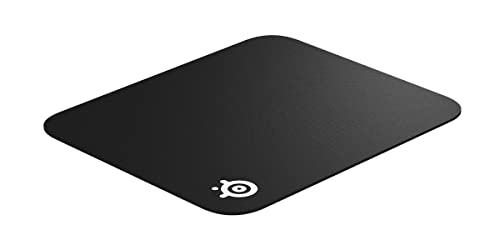
- SteelSeries QcK Gaming Mouse Pad (Small) — Best Linked Cloth Pick. Check on Amazon
- Logitech G640 Large Cloth Gaming Mouse Pad — Best Large Cloth (Prose Pick) (mid-range large cloth pad tier; sold through major retailers).
- Razer Gigantus V2 — Best Size Range (Prose Pick) (mid-range cloth pad tier; sold through major retailers).
- Corsair MM300 PRO Premium Spill-Proof — Best Spill-Proof (Prose Pick) (mid-range spill-proof cloth pad tier; sold through major retailers).
Read the full guide ↓
Finding the best mousepad for laser gaming mouse sounds like a small question, but the surface under your mouse quietly shapes every flick, every tracking correction and every long session at the desk. This guide answers it with six pads compared on verified specifications and real use-case fit — surface glide, size, base and build — ranked by badge so you can see at a glance which pad serves which player. Where a pick is a deliberate compromise, the text says so, because a shortlist you cannot trust is worse than no shortlist at all. If you are still deciding how your desk should be arranged around the pad, Best Mouse Cursor For Gaming is worth a look alongside this guide.
Laser sensors are the legacy technology of gaming mice — largely replaced by optical sensors, but still in service in millions of desks — and they track differently: they read surface detail at a microscopic level, which makes them fussy about soft, uneven cloth and happiest on hard, flat, uniform surfaces. This guide ranks pads by laser compatibility first, leads with the hard and hybrid surfaces laser sensors were tuned for, and is honest that the linked cloth classic in the pool is the workable budget route rather than the ideal one.
The scenario is a player keeping a beloved older laser mouse alive — a classic Logitech or SteelSeries from the laser era — and finding its tracking jittery on a modern soft pad. The surface is the problem, and the surfaces below are ranked as the solution, from the hard pad that fixes it outright to the cloth options that manage it.
In this guide
Quick Picks
| Badge | Pick | Why it stands out | Link |
|---|---|---|---|
| Best Hard Pad (Prose Pick) | Logitech G440 Hard Gaming Mouse Pad | Hard polymer surface gives a fast, consistent glide that does not change with humidity the way cloth does. | Retailers |
| Best Hybrid (Prose Pick) | Razer Strider Hybrid Gaming Mouse Mat | Hybrid surface glides almost like a hard pad while staying rollable and quiet like cloth. | Retailers |
| Best Linked Cloth Pick | SteelSeries QcK Gaming Mouse Pad (Small) | Micro-woven cloth surface gives optical sensors a consistent. | Check on Amazon |
| Best Large Cloth (Prose Pick) | Logitech G640 Large Cloth Gaming Mouse Pad | 460 x 400 mm surface gives low-sensitivity players genuine room for full arm swipes without reaching the edge. | Retailers |
| Best Size Range (Prose Pick) | Razer Gigantus V2 | Textured micro-weave surface gives optical sensors a dense. | Retailers |
| Best Spill-Proof (Prose Pick) | Corsair MM300 PRO Premium Spill-Proof | Spill-proof coating beads up drinks instead of soaking in. | Retailers |
How These Picks Were Chosen
We built this shortlist by comparing verified manufacturer specifications — surface material, dimensions, thickness and base — against the practical demands of the lens in the title, then cutting anything that only looked good in a product photo.
Surface honesty came first. Every pad was judged on the glide it actually delivers — speed, control or balanced — described in plain terms rather than marketing labels, because the surface is the single biggest thing a pad changes about your aim.
Size was matched to sensitivity, not to fashion. Low-sensitivity arm aimers need genuine width and depth; high-sensitivity wrist aimers are better served by a smaller pad that leaves the desk usable, and each pick is badged for the player its dimensions honestly serve.
Base and build came third. A pad that creeps, curls or frays fails no matter how good its surface is, so rubber bases, thickness and edge finishing were weighed heavily, and unstitched edges are called out as the wear point they are.
Finally, care and lifespan. Cloth pads drift as they absorb dust and moisture, hard pads wear mouse feet, and hybrids sit between; the ranking favours pads whose day-one glide is the glide you still get after a season of washing and play.
We also kept a deliberate reject pile, and it is worth knowing what is on it: pads with printed artwork inside the tracking area that changes glide from zone to zone, ultra-thin pads that transmit every desk flaw, desk mats whose bases curl within a season, and speed surfaces marketed to beginners whose hands are not ready for them. If a famous pad is absent, that pile is usually why.
Two habits governed the whole process. First, no product was recommended on a specification we could not verify from the manufacturer, the listing or a reputable retailer, which is why a handful of famous names are missing or appear without links. Second, every badge had to survive the question a friend would ask: would you actually buy this one, for this purpose, with your own money? Related reading that informed the shortlist includes Best Mouse For Productivity And Gaming.
The 6 Best Mousepad For Laser Gaming Mouse
Logitech G440 Hard Gaming Mouse Pad (Best Hard Pad (Prose Pick))
The Logitech G440 Hard Gaming Mouse Pad takes the Best Hard Pad (Prose Pick) badge because it fits this brief at a fundamental level: it is built for laser-sensor owners and speed-glide fans who want a wipe-clean surface. Rather than chasing novelty, it gets the surface fundamentals right — glide, base and build — in a way that survives contact with real sessions, and it does so without asking you to work around it.
For best mousepad for laser gaming mouse, the question is never whether a product is good in the abstract; it is whether its particular compromises point away from what you do most. The Logitech G440 Hard Gaming Mouse Pad passes that test cleanly. Its strongest qualities serve the centre of this brief, and the things it gives up sit at the edges, which is exactly where you want a product’s weaknesses to live.
Strengths
- Hard polymer surface gives a fast, consistent glide that does not change with humidity the way cloth does
- A rigid, uniform surface is exactly what older laser sensors were tuned for, avoiding the tracking quirks they show on soft cloth
- Wipes clean in seconds and never frays, so its glide on day one hundred matches day one
Trade-offs
- Fast glide offers little stopping help, which punishes shaky aim until you adapt
- Hard pads wear through mouse feet faster than cloth
- The rigid plate can feel and sound harsh, and it does not roll up for travel
Key specs
- Surface: Hard polymer, low friction
- Size class: Medium (about 340 x 280 mm class)
- Base: Rubber base
- Sensor fit: Consistent hard surface suited to optical and legacy laser sensors
Day to day, what you notice about the Logitech G440 Hard Gaming Mouse Pad is how little you notice it. The glide stays where it was on day one, the base stays where you put it, and your attention goes back to the game, which is the highest compliment a surface can earn.
It is also worth setting expectations about life with the Logitech G440 Hard Gaming Mouse Pad. Cloth and hybrid surfaces drift slowly as they absorb dust and skin oils, and this one responds well to the wash-and-dry routine in the how-to section below; a pad that recovers its glide after washing will outlast one that merely starts fast.
Think about who notices the Logitech G440 Hard Gaming Mouse Pad most: not the player in a highlight clip, but the same player in week six, when novelty has worn off and only behaviour remains. Its centre still glides like its edges, its base has not crept a centimetre, and your muscle memory has settled onto a surface that stays put. Equipment that behaves identically for months is what lets practice compound.
Best for: laser-sensor owners and speed-glide fans who want a wipe-clean surface / Not suited for: players who rely on cloth friction to stop their aim
Available from major retailers; this pick sits in the mid-range hard pad tier.
Razer Strider Hybrid Gaming Mouse Mat (Best Hybrid (Prose Pick))
The Razer Strider Hybrid Gaming Mouse Mat is the kind of pick that makes shortlists look easy. As Best Hybrid (Prose Pick), it covers the core demands of this brief — players who want hard-pad speed in a rollable, desk-friendly mat — with the sort of polish that only shows up after a few weeks of use, when lesser pads have started to curl, creep or change character.
Judged specifically against best mousepad for laser gaming mouse, the Razer Strider Hybrid Gaming Mouse Mat makes its case on fit rather than flash. The brief behind this keyword punishes vague all-rounders, and this pick’s strengths map onto it point for point, while its trade-offs land in places this particular audience is least likely to feel. That alignment, more than any single specification, is what the badge is certifying.
Strengths
- Hybrid surface glides almost like a hard pad while staying rollable and quiet like cloth
- Water-resistant coating and stitched edges make it one of the most durable large mats
- Consistent, low-texture surface tracks cleanly with modern optical sensors and behaves predictably for laser sensors too
Trade-offs
- Premium pricing for a mouse mat
- The slick glide reduces the natural braking control players lean on
- XXL size overwhelms compact desks
Key specs
- Surface: Hybrid soft mat with hard-pad-style glide
- Base: Anti-slip rubber
- Size class: Large and XXL
- Extras: Water-resistant coating, stitched edges
In longer sessions the Razer Strider Hybrid Gaming Mouse Mat shows its quality in small ways: a surface that does not change character as your hand warms it, edges that stay flat, and a base that never needs re-seating between rounds.
It is also worth setting expectations about life with the Razer Strider Hybrid Gaming Mouse Mat. Cloth and hybrid surfaces drift slowly as they absorb dust and skin oils, and this one responds well to the wash-and-dry routine in the how-to section below; a pad that recovers its glide after washing will outlast one that merely starts fast.
There is also a practical longevity angle that rarely gets mentioned: pads like the Razer Strider Hybrid Gaming Mouse Mat hold their appeal because surface fundamentals do not date quickly. When you eventually replace yours, it will most likely be for wear, not obsolescence — and a worn pad passed to a second desk is a better fate than a fashionable one binned within a season.
Best for: players who want hard-pad speed in a rollable, desk-friendly mat / Not suited for: control-pad loyalists and small desks
Available from major retailers; this pick sits in the premium hybrid mat tier.

SteelSeries QcK Gaming Mouse Pad (Small) (Best Linked Cloth Pick)
The SteelSeries QcK Gaming Mouse Pad (Small) takes the Best Linked Cloth Pick badge because it fits this brief at a fundamental level: it is built for players who need a reliable small cloth pad for a mouse-and-keyboard station. Rather than chasing novelty, it gets the surface fundamentals right — glide, base and build — in a way that survives contact with real sessions, and it does so without asking you to work around it.
What seals the SteelSeries QcK Gaming Mouse Pad (Small) for best mousepad for laser gaming mouse is the absence of a deal-breaker. Every product in this guide gives something up; this one gives up nothing that this keyword’s audience ranks highly, and it does the central jobs with a consistency that flashier rivals match only at their best moments.
Strengths
- Micro-woven cloth surface gives optical sensors a consistent, tested texture for predictable tracking
- Non-slip rubber base stays planted during fast swipes
- A long-proven pad design that pairs with every mouse in this guide
Trade-offs
- Small size suits high-sensitivity players only; low-sensitivity arm aimers need a larger pad
- Cloth surface slows slightly as it absorbs moisture and dust, so it needs periodic washing
- No stitched-edge premium finish in this basic version
Key specs
- Surface: Micro-woven cloth
- Base: Non-slip rubber
- Size class: Small
- Compatibility: Optimised for gaming optical and laser sensors
Day to day, what you notice about the SteelSeries QcK Gaming Mouse Pad (Small) is how little you notice it. The glide stays where it was on day one, the base stays where you put it, and your attention goes back to the game, which is the highest compliment a surface can earn.
Think about the pairing, too: the SteelSeries QcK Gaming Mouse Pad (Small) will be judged by your mouse’s feet as much as by your hand. Fresh PTFE feet glide on it the way the maker intended, while scratched feet drag on any surface — check yours during the first week before blaming the pad.
There is also a practical longevity angle that rarely gets mentioned: pads like the SteelSeries QcK Gaming Mouse Pad (Small) hold their appeal because surface fundamentals do not date quickly. When you eventually replace yours, it will most likely be for wear, not obsolescence — and a worn pad passed to a second desk is a better fate than a fashionable one binned within a season.
Best for: players who need a reliable small cloth pad for a mouse-and-keyboard station / Not suited for: low-sensitivity players who need a desk-size pad
Logitech G640 Large Cloth Gaming Mouse Pad (Best Large Cloth (Prose Pick))
For this brief, the Logitech G640 Large Cloth Gaming Mouse Pad earns the Best Large Cloth (Prose Pick) badge by doing the unglamorous things properly. It is aimed squarely at low-DPI and competitive players who want a proven large cloth surface, and its surface behaviour stays consistent from the centre of the pad to the edges, which is exactly where cheaper pads quietly fail.
There is a version of this shortlist ranked purely on specifications, and the Logitech G640 Large Cloth Gaming Mouse Pad would not necessarily top it. Ranked for best mousepad for laser gaming mouse, with the audience’s games, rooms and habits in view, it rises, because its design decisions read like answers to this brief’s specific questions rather than to a generic buyer’s.
Strengths
- 460 x 400 mm surface gives low-sensitivity players genuine room for full arm swipes without reaching the edge
- Moderate, consistent cloth friction balances speed and stopping power, which is why it is a long-running esports staple
- Rubber base stays planted and the pad rolls up for travel or desk resets
Trade-offs
- No stitched edges on standard versions, so the perimeter can fray over years of use
- Cloth absorbs moisture and slows slightly in humid rooms until it dries or is washed
- Texture is tuned with Logitech sensors in mind, though it works well with other brands too
Key specs
- Surface: Cloth, moderate surface friction
- Size: 460 x 400 x 3 mm (Large)
- Base: Non-slip rubber
- Sensor fit: Texture optimised for Logitech G optical sensors; consistent weave also suits laser sensors
Day to day, what you notice about the Logitech G640 Large Cloth Gaming Mouse Pad is how little you notice it. The glide stays where it was on day one, the base stays where you put it, and your attention goes back to the game, which is the highest compliment a surface can earn.
Think about the pairing, too: the Logitech G640 Large Cloth Gaming Mouse Pad will be judged by your mouse’s feet as much as by your hand. Fresh PTFE feet glide on it the way the maker intended, while scratched feet drag on any surface — check yours during the first week before blaming the pad.
There is also a practical longevity angle that rarely gets mentioned: pads like the Logitech G640 Large Cloth Gaming Mouse Pad hold their appeal because surface fundamentals do not date quickly. When you eventually replace yours, it will most likely be for wear, not obsolescence — and a worn pad passed to a second desk is a better fate than a fashionable one binned within a season.
Best for: low-DPI and competitive players who want a proven large cloth surface / Not suited for: players who need a desk-size mat that also sits under the keyboard
Available from major retailers; this pick sits in the mid-range large cloth pad tier.
Razer Gigantus V2 (Best Size Range (Prose Pick))
The Razer Gigantus V2 is the kind of pick that makes shortlists look easy. As Best Size Range (Prose Pick), it covers the core demands of this brief — players who want one pad family from medium up to full desk-mat size — with the sort of polish that only shows up after a few weeks of use, when lesser pads have started to curl, creep or change character.
What seals the Razer Gigantus V2 for best mousepad for laser gaming mouse is the absence of a deal-breaker. Every product in this guide gives something up; this one gives up nothing that this keyword’s audience ranks highly, and it does the central jobs with a consistency that flashier rivals match only at their best moments.
Strengths
- Textured micro-weave surface gives optical sensors a dense, consistent tracking texture with a slightly faster glide than basic cloth
- Size range runs from medium to a 3XL desk mat, so the same surface scales from laptop desk to full battlestation
- Thick rubber foam base cushions the wrist edge and refuses to creep during play
Trade-offs
- The textured weave feels coarser under the palm than smooth cloth pads
- Largest sizes need a genuinely big desk and take over the whole work surface
- Surface speed sits mid-pack; pure speed or pure control specialists may prefer dedicated pads
Key specs
- Surface: Textured micro-weave cloth
- Base: Non-slip rubber foam
- Sizes: Multiple sizes up to 3XL desk size
- Edges: Anti-fray stitching on larger sizes
In longer sessions the Razer Gigantus V2 shows its quality in small ways: a surface that does not change character as your hand warms it, edges that stay flat, and a base that never needs re-seating between rounds.
A few ownership details are worth knowing before you commit. The Razer Gigantus V2 builds its surface around this: Textured micro-weave cloth, and its Non-slip rubber foam keeps the pad planted and level, which together decide how consistent the glide feels month after month. Keep the receipt until the return window closes, as with any pad, because glide preference is personal and no review can feel a surface for you.
There is also a practical longevity angle that rarely gets mentioned: pads like the Razer Gigantus V2 hold their appeal because surface fundamentals do not date quickly. When you eventually replace yours, it will most likely be for wear, not obsolescence — and a worn pad passed to a second desk is a better fate than a fashionable one binned within a season.
Best for: players who want one pad family from medium up to full desk-mat size / Not suited for: players who prefer a silky-smooth cloth feel
Available from major retailers; this pick sits in the mid-range cloth pad tier.
Corsair MM300 PRO Premium Spill-Proof (Best Spill-Proof (Prose Pick))
For this brief, the Corsair MM300 PRO Premium Spill-Proof earns the Best Spill-Proof (Prose Pick) badge by doing the unglamorous things properly. It is aimed squarely at players who want an extended, drink-resistant desk surface, and its surface behaviour stays consistent from the centre of the pad to the edges, which is exactly where cheaper pads quietly fail.
For best mousepad for laser gaming mouse, the question is never whether a product is good in the abstract; it is whether its particular compromises point away from what you do most. The Corsair MM300 PRO Premium Spill-Proof passes that test cleanly. Its strongest qualities serve the centre of this brief, and the things it gives up sit at the edges, which is exactly where you want a product’s weaknesses to live.
Strengths
- Spill-proof coating beads up drinks instead of soaking in, a real advantage on desks that double as dining tables
- Extended footprint covers the keyboard zone and the mousing area in one consistent surface
- Stitched anti-fray edges survive years of wrist contact better than raw-cut cloth
Trade-offs
- The spill-proof coating gives a slightly slicker glide than untreated control cloth
- Extended size is too much pad for small desks
- Coating can wear unevenly after very heavy use, changing glide in patches
Key specs
- Surface: Spill-proof micro-weave cloth
- Base: Anti-slip rubber
- Size class: Extended (under keyboard and mouse)
- Edges: Anti-fray stitched
Where the Corsair MM300 PRO Premium Spill-Proof really justifies its badge is repeatability. The tenth session feels like the first: same glide, same stopping behaviour, same comfort under the wrist. For players building skill on stable equipment, that predictability is worth more than any novelty weave.
A few ownership details are worth knowing before you commit. The Corsair MM300 PRO Premium Spill-Proof builds its surface around this: Spill-proof micro-weave cloth, and its Anti-slip rubber keeps the pad planted and level, which together decide how consistent the glide feels month after month. Keep the receipt until the return window closes, as with any pad, because glide preference is personal and no review can feel a surface for you.
There is also a practical longevity angle that rarely gets mentioned: pads like the Corsair MM300 PRO Premium Spill-Proof hold their appeal because surface fundamentals do not date quickly. When you eventually replace yours, it will most likely be for wear, not obsolescence — and a worn pad passed to a second desk is a better fate than a fashionable one binned within a season.
Best for: players who want an extended, drink-resistant desk surface / Not suited for: small desks or players who want maximum cloth friction
Available from major retailers; this pick sits in the mid-range spill-proof cloth pad tier.
Comparison Table
| Pick | Surface | Size | Type | — | Price |
|---|---|---|---|---|---|
| Logitech G440 Hard Gaming Mouse Pad | Hard polymer pad | Medium | Pad | — | Check retailer listings |
| Razer Strider Hybrid Gaming Mouse Mat | Hybrid mat | Large / XXL | Pad | — | Check retailer listings |
| SteelSeries QcK Gaming Mouse Pad (Small) | Cloth pad | Small | Pad | — | Check price on Amazon |
| Logitech G640 Large Cloth Gaming Mouse Pad | Cloth pad, moderate friction | Large (460 x 400 mm) | Pad | — | Check retailer listings |
| Razer Gigantus V2 | Micro-weave cloth pad | Sizes up to 3XL | Pad | — | Check retailer listings |
| Corsair MM300 PRO Premium Spill-Proof | Spill-proof cloth pad | Extended | Pad | — | Check retailer listings |
How to Choose the Right Gaming Mouse Pad
A mouse pad looks like the simplest purchase in gaming and quietly decides more about your aim than most mouse upgrades do. Work through the factors below in order — surface, size, build, then care — and the right pad usually names itself. Players comparing full setups may also find Best Mouse Mat For Fps Gaming useful alongside this section.
Surface: speed, control, or balanced
Every pad sits somewhere on a glide spectrum. Speed surfaces use hard polymer, hybrid coatings or slick weaves so the mouse starts moving with almost no force; they reward players with steady hands and punish shaky ones. Control surfaces use denser cloth friction so the mouse stops where your hand stops, which is why tactical-shooter players live on them. Balanced cloth sits between the two and is the right default for mixed game libraries. Decide which problem you actually have — overshooting targets or fighting the pad to move — and buy the surface that fixes that problem, not the one with the loudest branding.
Mouse pad and desk setup
The pad is half of the sensor system and the cheapest performance upgrade in this entire guide. Cloth pads give optical sensors a consistent texture and a controlled glide that suits most players; hard pads glide faster and wear feet quicker. Size follows sensitivity: high-sensitivity wrist players can live on a small pad, while low-sensitivity arm players should treat roughly 45 by 40 cm as a starting point so a full turn never ends on the desk edge. Keep the pad flat, wash it when the centre slows, and give a wired mouse a bungee or a taped service loop so the cable never becomes part of the aiming equation.
Thickness, base and edges
Thickness changes feel more than most buyers expect: thin pads transmit every desk imperfection, standard 3 mm pads are the neutral default, and extra-thick pads cushion the wrist and iron out uneven desks at the cost of a slightly raised hand. The base should be dense, even rubber; a base that varies in thickness makes the glide vary across the pad. Edges decide lifespan — stitched edges resist the fraying that starts where your wrist and forearm rub, while raw-cut edges are cheaper and will eventually curl or split.
Desk fit and the keyboard question
Measure before you order, and decide whether the pad serves the mouse alone or the whole desk. Mouse-only pads keep the keyboard on the desk surface and are easy to swap; extended and desk-size mats put the keyboard on the same cloth, which kills pad-edge interference and quiets the desk, but demands real width and depth. Check the space between your monitor stand and the desk edge as well as the headline width: a mat that bunches against a monitor foot is worse than a smaller pad that lies flat.
Cloth, hard and hybrid surfaces compared
Cloth is the default for good reasons: it is quiet, kind to mouse feet, forgiving of imperfect technique, and available in every glide tuning from sticky control weaves to fast micro-weaves. Hard pads — polymer or metal plates — glide faster and more consistently, wipe clean in seconds, and never change with humidity, but they wear feet faster, amplify every tremor in your hand, and can feel harsh and loud on a desk. Hybrids try to split the difference with coated soft mats that glide like hard pads while rolling up like cloth; they come closest to a best-of-both answer, at premium prices. None of the three is objectively best. Match the material to your hand: steady hands gain from speed, developing aim gains from cloth’s built-in braking.
Humidity, washing and glide drift
Cloth pads are hygroscopic: they absorb moisture from the air and from your hand, and a humid week can make a familiar pad feel noticeably slower. This is normal, not a defect, and it is why esports players travel with their own pad and why your aim can feel different between seasons. Washing restores most of the original glide — lukewarm water, a drop of mild soap, gentle hand agitation, then flat air-drying away from direct heat. Build washing into your routine every month or two rather than waiting until tracking feels muddy, and keep hard and hybrid pads on the same schedule with a simple wipe-down, since skin oils change their glide too.
Pairing the pad with your sensor and feet
A pad is half of a tracking system. Modern optical sensors are tuned against cloth textures and handle almost any reputable surface, but lift-off distance interacts with thickness and weave: a sensor set very low can stutter on deep, soft pads, while worn mouse feet drag and scratch on hard surfaces long before they trouble cloth. When you change pad families, re-check your lift-off setting and inspect your feet; when you change mice, give the new sensor a clean, washed pad before judging its tracking. Small pairings like these are where ‘this mouse feels inconsistent’ complaints usually live.
Knowing when a pad is finished
Pads wear out in the centre first, where your mouse lives, leaving a slow patch surrounded by faster cloth that quietly corrupts muscle memory. Test yours by gliding slowly from edge to edge: if the middle feels different, the pad is telling you its season is over. Frayed edges, a base that no longer grips, and glide that washing no longer restores are the other end-of-life signs. Replacing a worn pad is one of the cheapest genuine upgrades in gaming, and players who treat pads as the consumables they are — replaced on condition, not on a whim — keep a consistency that no sensor upgrade can buy.
Putting it together: three example directions
If the factors above leave you between pads, decide by direction rather than by product. Direction one is the safe all-rounder: a balanced cloth weave in a large size with a dense rubber base, which is where first-time buyers should start and where most players happily stay. Direction two is the specialist surface: a control weave for tactical shooters or a hybrid for speed, chosen because your main game rewards one glide character over all others. Direction three is the desk build: an extended or full desk mat that puts keyboard and mouse on one surface and turns the whole desk into the pad. None of the three is the correct answer in the abstract; each is correct for the player it describes, and the picks above are badged so you can find your direction quickly.
How Do You Choose, Fit and Look After a Gaming Mouse Pad?
A pad needs no installation, but it rewards ten deliberate minutes on day one and a light washing routine afterwards. The steps below run from measuring your desk to fixing the problems that show up months later.
- Measure your real mousing space. Work out your sensitivity first: the lower it is, the more width and depth you need. Mark the area your mouse actually travels in a normal session, then buy the pad size that covers it with margin on every side.
- Flatten the pad properly. New cloth pads ship rolled. Unroll yours, lay it face down or weight the edges with books for a few hours, and never force a curl flat with heat, which can warp the base.
- Position it for your grip and posture. The pad’s centre should sit where your mouse naturally rests with your forearm supported, not where the desk happens to be empty. Desk-size mats go under the keyboard first, then the mouse zone is whatever remains on your mouse side.
- Test with your real games and settings. Play a full session at your normal sensitivity. If you lift and re-centre constantly, the pad is too small or your sensitivity is too low for it; if the mouse feels like it is skating, the surface is too fast for your current control.
- Wash cloth pads on a schedule. Every month or two, hand-wash in lukewarm water with a drop of mild soap, rinse thoroughly, and air-dry flat. Hard and hybrid pads need only a wipe with a damp cloth.
- Inspect feet and surface together. A worn pad eats mouse feet and worn feet scratch pads. Check both monthly, replace feet when edges catch, and retire the pad when its centre glide no longer matches its edges.
Troubleshooting quick fixes
- Problem: The pad creeps across the desk during big swipes → fix: clean dust and oils from the rubber base and the desk, and check the base has not perished; a shelf-liner sheet underneath restores grip on very smooth desktops.
- Problem: Tracking feels muddy or inconsistent in the centre → fix: wash the pad first; a slow centre patch is usually absorbed sweat and dust, not sensor failure. If washing changes nothing, the centre is worn out.
- Problem: Edges curl up and catch the mouse → fix: store the pad flat or rolled loosely with the surface facing out, and weigh curled edges overnight; stitched-edge pads resist this longest.
- Problem: The mouse feels faster in summer and slower in winter → fix: that is humidity changing cloth friction; wash and fully dry the pad, and consider a hybrid or hard surface if the swing bothers you.
Common Mistakes
Most disappointing purchases in this category are not bad products; they are good products bought for the wrong reason. These are the errors that come up again and again, each one cheap to avoid before you order and expensive afterwards.
Buying by headline size alone. A pad’s usable area is what matters, and that shrinks fast when a monitor stand, keyboard or desk edge eats into it. Measure the space your mouse actually travels at your sensitivity, then choose the size that covers it with margin.
Ignoring surface type and buying on looks. Printed artwork and brand colours tell you nothing about glide. A speed surface under a shaky hand and a control surface under a fast flicker both feel wrong within one session, however good they look on the desk.
Never washing the pad. Cloth pads absorb sweat, dust and skin oils until the centre glides differently from the edges. Players then blame their sensor or their aim for what a ten-minute hand wash would have fixed.
Pairing a new pad with worn mouse feet. Scratched, worn feet drag on any surface and tear up new cloth. Inspect the feet whenever you change pads; a fresh set of feet costs little and makes the new pad feel like the upgrade you paid for.
Expecting a pad to fix a sensitivity problem. If you run out of pad, the honest fixes are a bigger pad or a higher sensitivity, and no surface material changes that geometry. Buy the pad that fits the sensitivity you play, or adjust the sensitivity to the desk you have.
Final Recommendation
If you want one answer, take the Logitech G440 Hard Gaming Mouse Pad (Best Hard Pad (Prose Pick)): it is the pick that serves the widest range of players under this brief without a serious weakness. If your priorities lean the other way, the Razer Strider Hybrid Gaming Mouse Mat (Best Hybrid (Prose Pick)) is the alternative we would defend just as strongly, and the remaining badges exist precisely because this category rewards specialisation.
Whichever you choose, spend the first week properly: set it up with the steps above, commit to your settings, and judge it on your tenth session rather than your first. Players comparing adjacent briefs may also find Best Mouse Sensor For Gaming and Best Type Of Mouse For Gaming helpful, since hand size, budget and platform have a habit of changing the answer. The right pad is the one you stop thinking about, and every pick in this guide has earned that chance.
If two picks still feel tied after all this, break the tie with the return policy: order the one you can exchange most easily, live with it for a week of real sessions, and let your hand cast the deciding vote. That process, unglamorous as it sounds, is how experienced players actually end up with setups they keep for years.
Frequently Asked Questions
Do I need a special mouse pad?
You need a consistent one. Any decent cloth gaming pad gives an optical sensor a uniform surface to read, which is what tracking accuracy depends on. Glass and glossy desks are the real enemies. Beyond that, size matters more than branding: low-sensitivity players should want at least 40 cm of width so a full swipe never runs off the edge mid-fight.
How do I keep a gaming mouse performing like new?
Wipe the shell weekly with a slightly damp microfibre cloth, clean the sensor lens gently with a dry cotton bud, and wash or replace the pad when the centre starts to feel slower than the edges. For honeycomb shells, short bursts of compressed air clear dust from inside. Check PTFE feet for deep scratches; replacement feet are cheap and restore the original glide.
What DPI should I actually use for gaming?
Far lower than the box suggests. Most competitive players use 400 to 1,600 DPI and adjust sensitivity inside the game, because low DPI with a larger arm movement gives finer control over small angles. High maximum DPI figures simply mean the sensor can go there, not that you should. Pick one DPI, set your in-game sensitivity so a full comfortable swipe turns you roughly 180 to 360 degrees in a shooter, and leave it alone for at least a week so muscle memory can form.
Which grip style should I use?
The one your hand already chooses. Rest your hand on your current mouse without thinking: full contact is palm grip, arched fingers with palm contact at the back is claw, and fingers alone with the palm floating is fingertip. Each grip favours different shell sizes and weights, and forcing a fashionable grip against your anatomy trades a week of discomfort for no measurable gain. If you are between styles, medium symmetrical shells are the most forgiving place to start.