Disclosure: As an Amazon Associate, ilcastellomenu.com earns from qualifying purchases. Prices and availability change; check Amazon for the latest.
Where to buy
Our shortlist for best cooling fan mouse for gaming starts here. Check the latest price, availability and delivery on Amazon. Orders are placed on Amazon.
- Marsback Zephyr Pro (Fan-Cooled Gaming Mouse) — The Real Fan Mouse (Prose Pick) (niche fan-cooled tier (prose pick); sold through major retailers).
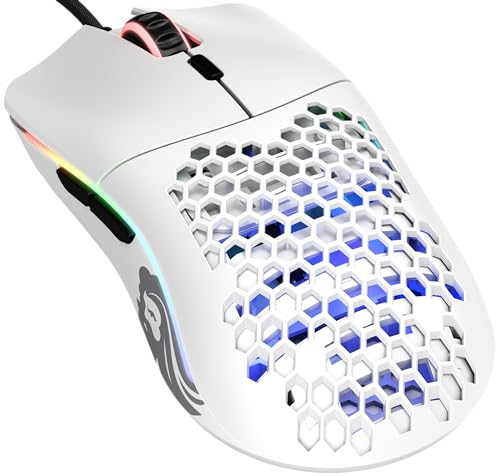
- Glorious Model O — Best Passive Cooling. Check on Amazon
- SteelSeries Aerox 3 — Best Vented Alternative (Prose Pick) (mid-range ultralight tier; sold through major retailers).
- HyperX Pulsefire Haste Wireless — Best Lightweight Airflow. Check on Amazon
- Glorious Model O Minus — Best Small Vented. Check on Amazon
- Logitech G305 LIGHTSPEED — Best Sealed Alternative. Check on Amazon
Read the full guide ↓
Finding the best cooling fan mouse for gaming sounds like a narrow question, but it opens onto almost every decision in a gaming setup: shape, sensor, weight, buttons, connection, and the games and platforms those choices have to serve. This guide answers it with six picks that were compared on verified specifications and real use-case fit, ranked by badge so you can see at a glance which product serves which player. Where a pick is a deliberate stretch or a compromise, the text says so, because a shortlist you cannot trust is worse than no shortlist at all. If you are still deciding how you will use the setup day to day, Best Chairs For Keyboard And Mouse Gaming is worth a look alongside this guide.
A cooling-fan mouse is a real but tiny niche: essentially one small-brand product puts an actual fan inside a honeycomb shell and blows air at your palm. This guide is honest about that market shape. The fan mouse itself is the lead prose pick, described from manufacturer information, and the rest of the ranking is the practical answer most sweaty-hand players end up with — honeycomb and vented shells that cool passively, which solve most of the problem with none of the moving parts.
The reader’s problem is grip, not tracking: hands that sweat through summer sessions, a shell that goes slippery by game three. Cooling, ventilation and surface texture are the ranking criteria here, ahead of the usual sensor hierarchy.
In this guide
Quick Picks
| Badge | Pick | Why it stands out | Link |
|---|---|---|---|
| The Real Fan Mouse (Prose Pick) | Marsback Zephyr Pro (Fan-Cooled Gaming Mouse) | It is the real thing this keyword asks for: a fan inside the shell blowing air at your palm while you play. | Retailers |
| Best Passive Cooling | Glorious Model O | Honeycomb shell brings it down to 67 g while the flexible Ascended cable almost disappears in use. | Check on Amazon |
| Best Vented Alternative (Prose Pick) | SteelSeries Aerox 3 | 59 g honeycomb shell with AquaBarrier protection against spills and dust. | Retailers |
| Best Lightweight Airflow | HyperX Pulsefire Haste Wireless | 61 g wireless design with a honeycomb shell delivers ultralight flick speed without a cable. | Check on Amazon |
| Best Small Vented | Glorious Model O Minus | At 58 g it is one of the lightest wired mice available. | Check on Amazon |
| Best Sealed Alternative | Logitech G305 LIGHTSPEED | Runs up to 250 hours on a single AA battery in performance mode. | Check on Amazon |
How These Picks Were Chosen
Shortlists like this one are only useful if the rejects are as deliberate as the picks, so this section explains the filters each product had to pass before it was allowed anywhere near the top six.
Sensor honesty came first. We favoured optical sensors with published tracking speeds and no forced smoothing or acceleration, because a sensor that quietly corrects your aim also quietly caps it. Headline DPI numbers were treated as marketing until backed by a named sensor with a real tracking pedigree.
Shape and weight came second, because they decide whether a mouse disappears into your hand or fights it for three hours. Each pick lists its real weight class and intended grip, and anything with an ambiguous, one-size-fits-nobody shell was dropped.
Buttons and software came third. Programmable buttons only count if the software behind them is stable and the profiles can be stored on the mouse itself, so your setup survives a move to another PC or a console-adjacent laptop.
Finally, we weighed value inside the tier the keyword names. A pick does not need to be cheap, but it does need to justify its position against the next product down the list, and several well-known models were cut precisely because a sibling did the same job for less commitment.
One more filter deserves stating openly: nothing here was included because of a brand relationship, a launch window or a discount event. Prices move too fast to build a guide on, which is why this site never prints them; the rankings are built on specifications, fit and track record, and they are designed to still make sense when a sale ends.
Two habits governed the whole process. First, no product was recommended on a specification we could not verify from the manufacturer, the listing or a reputable retailer, which is why a handful of famous names are missing or appear without links. Second, every badge had to survive the question a friend would ask: would you actually buy this one, for this purpose, with your own money? Related reading that informed the shortlist includes Best Comfortable Gaming Mouse Under $50.
The 6 Best Cooling Fan Mouse For Gaming
Marsback Zephyr Pro (Fan-Cooled Gaming Mouse) (The Real Fan Mouse (Prose Pick))
Some products earn a badge on specifications and lose it in the hand. The Marsback Zephyr Pro (Fan-Cooled Gaming Mouse) keeps its The Real Fan Mouse (Prose Pick) badge because the specification sheet and the lived experience agree: this is a product designed for players whose hands sweat enough that grip, not specs, is their limiting factor, executed without an obvious weak point that a rival exploits.
Judged specifically against best cooling fan mouse for gaming, the Marsback Zephyr Pro (Fan-Cooled Gaming Mouse) makes its case on fit rather than flash. The brief behind this keyword punishes vague all-rounders, and this pick’s strengths map onto it point for point, while its trade-offs land in places this particular audience is least likely to feel. That alignment, more than any single specification, is what the badge is certifying.
Strengths
- It is the real thing this keyword asks for: a fan inside the shell blowing air at your palm while you play
- Moving air genuinely helps the sweaty-hand grip problem that grip tape only partly solves
- Honeycomb shell keeps weight in the modern class despite the extra hardware
Trade-offs
- A niche product from a small brand: support, stock and longevity are unproven next to the majors
- Fan noise and vibration, however slight, are things a normal mouse simply does not have
- More moving parts means more to fail, and the fan needs cleaning like any fan
Key specs
- Type: Gaming mouse with built-in cooling fan
- Cooling: Internal fan aimed at the palm through a honeycomb shell
- Use: Sweaty-hand and warm-room play
Where the Marsback Zephyr Pro (Fan-Cooled Gaming Mouse) really justifies its badge is repeatability. The tenth session feels like the first: same tracking, same click feel, same comfort curve. For players trying to build skill on stable equipment, that predictability is worth more than any single spectacular feature.
It is also worth setting expectations about the ecosystem around the Marsback Zephyr Pro (Fan-Cooled Gaming Mouse). Firmware updates arrive through the maker’s software, spare feet and grips are widely available, and the product’s popularity means any quirk you encounter has almost certainly been documented and solved by other owners. That support tail is an unglamorous but real part of why it holds a badge in this guide.
There is also a practical resale and hand-me-down angle that rarely gets mentioned: products like the Marsback Zephyr Pro (Fan-Cooled Gaming Mouse) hold their appeal because the fundamentals do not date quickly. When you eventually upgrade, a pick like this moves happily to a second desk, a sibling’s setup or a travel bag, which quietly lowers its real cost of ownership compared with a cheaper product that gets binned.
Best for: players whose hands sweat enough that grip, not specs, is their limiting factor / Not suited for: players who want proven flagship reliability and silence
Available from major retailers; this pick sits in the niche fan-cooled tier (prose pick).

Glorious Model O (Best Passive Cooling)
The Glorious Model O takes the Best Passive Cooling badge because it fits this brief at a fundamental level: it is built for FPS and click-speed players who want ultralight wired performance. Rather than chasing a single headline number, it balances sensor honesty, shape and everyday usability in a way that survives contact with real sessions, and it does so without asking you to work around it.
There is a version of this shortlist ranked purely on specifications, and the Glorious Model O would not necessarily top it. Ranked for best cooling fan mouse for gaming, with the audience’s games, rooms and habits in view, it rises, because its design decisions read like answers to this brief’s specific questions rather than to a generic buyer’s.
Strengths
- Honeycomb shell brings it down to 67 g while the flexible Ascended cable almost disappears in use, giving a near-wireless feel
- PixArt PMW3360 sensor is a long-proven esports sensor with pixel-perfect tracking and no acceleration
- Software allows debounce-time adjustment, which click-focused players use to tune double-click and drag-click behaviour
Trade-offs
- Honeycomb cut-outs let dust and crumbs reach the internals, so it needs regular blasts of compressed air
- The flat, low-profile shape gives palm grippers less support than ergonomic shells
- Wired only, which will not suit players committed to a cable-free desk
Key specs
- Sensor: PixArt PMW3360 optical
- Max DPI: 12,000
- Weight: 67 g (matte)
- Connection: Wired USB, Ascended paracord-style cable
- Buttons: 6 programmable
- Switches: Omron mechanical
- Feet: G-Skates premium PTFE
Where the Glorious Model O really justifies its badge is repeatability. The tenth session feels like the first: same tracking, same click feel, same comfort curve. For players trying to build skill on stable equipment, that predictability is worth more than any single spectacular feature.
A few ownership details are worth knowing before you commit. The Glorious Model O sticks to proven component choices rather than experiments, which means community knowledge, replacement parts and troubleshooting advice are easy to find years from now. Keep the receipt and the box until the return window closes, as with any peripheral, because shape fit is personal and no review can feel your hand for you.
Think about who notices the Glorious Model O most: not the player in a highlight clip, but the same player in week six, when novelty has worn off and only behaviour remains. Its clicks still land where they landed in week one, its settings have not drifted, and its shape has taught your hand a consistent home position. Equipment that behaves identically for months is what lets practice compound, and that quiet consistency is engineered into this pick’s sensor, switches and overall restraint.
Best for: FPS and click-speed players who want ultralight wired performance / Not suited for: players who dislike open honeycomb shells or need wireless
SteelSeries Aerox 3 (Best Vented Alternative (Prose Pick))
Some products earn a badge on specifications and lose it in the hand. The SteelSeries Aerox 3 keeps its Best Vented Alternative (Prose Pick) badge because the specification sheet and the lived experience agree: this is a product designed for FPS players who want ultralight weight with spill protection, executed without an obvious weak point that a rival exploits.
Judged specifically against best cooling fan mouse for gaming, the SteelSeries Aerox 3 makes its case on fit rather than flash. The brief behind this keyword punishes vague all-rounders, and this pick’s strengths map onto it point for point, while its trade-offs land in places this particular audience is least likely to feel. That alignment, more than any single specification, is what the badge is certifying.
Strengths
- 59 g honeycomb shell with AquaBarrier protection against spills and dust, rare among open-shell mice
- TrueMove Core tracking is clean and predictable for FPS play
- PTFE glide feet and a flexible cable keep movement smooth
Trade-offs
- Sensor tops out below flagship models on paper
- Honeycomb texture is not to every player’s taste
- Small-to-medium shell only
Key specs
- Sensor: SteelSeries TrueMove Core optical
- Max CPI: 8,500
- Weight: 59 g
- Connection: Wired USB
- Extras: AquaBarrier splash resistance, honeycomb shell
Where the SteelSeries Aerox 3 really justifies its badge is repeatability. The tenth session feels like the first: same tracking, same click feel, same comfort curve. For players trying to build skill on stable equipment, that predictability is worth more than any single spectacular feature.
A few ownership details are worth knowing before you commit. The SteelSeries Aerox 3 sticks to proven component choices rather than experiments, which means community knowledge, replacement parts and troubleshooting advice are easy to find years from now. Keep the receipt and the box until the return window closes, as with any peripheral, because shape fit is personal and no review can feel your hand for you.
One more test worth running during your first week with the SteelSeries Aerox 3: swap back to your old mouse for a single session. The differences that feel subtle side by side become obvious in that order, in glide, in click confidence, and in how your hand feels afterwards. Most players who run that test do not swap back a second time, and it is the simplest honest check that the upgrade was real rather than imagined.
Best for: FPS players who want ultralight weight with spill protection / Not suited for: large-handed palm grippers
Available from major retailers; this pick sits in the mid-range ultralight tier.

HyperX Pulsefire Haste Wireless (Best Lightweight Airflow)
Some products earn a badge on specifications and lose it in the hand. The HyperX Pulsefire Haste Wireless keeps its Best Lightweight Airflow badge because the specification sheet and the lived experience agree: this is a product designed for FPS players who want ultralight wireless performance below flagship prices, executed without an obvious weak point that a rival exploits.
There is a version of this shortlist ranked purely on specifications, and the HyperX Pulsefire Haste Wireless would not necessarily top it. Ranked for best cooling fan mouse for gaming, with the audience’s games, rooms and habits in view, it rises, because its design decisions read like answers to this brief’s specific questions rather than to a generic buyer’s.
Strengths
- 61 g wireless design with a honeycomb shell delivers ultralight flick speed without a cable
- Up to 100 hours of battery per charge means weekly, not daily, charging habits
- TTC Golden micro switches are dust-resistant and rated for fast, consistent clicks
Trade-offs
- Honeycomb shell openings need regular cleaning and are not ideal around spills
- Symmetrical low-profile shape gives palm grippers limited support
- Grip tape is included rather than moulded in, and some players dislike the feel
Key specs
- Sensor: HyperX optical
- Max DPI: 16,000
- Weight: 61 g
- Connection: 2.4 GHz wireless (USB receiver), wired backup
- Buttons: 6 programmable
- Battery: Up to 100 hours per charge
- Shell: Honeycomb
Where the HyperX Pulsefire Haste Wireless really justifies its badge is repeatability. The tenth session feels like the first: same tracking, same click feel, same comfort curve. For players trying to build skill on stable equipment, that predictability is worth more than any single spectacular feature.
It is also worth setting expectations about the ecosystem around the HyperX Pulsefire Haste Wireless. Firmware updates arrive through the maker’s software, spare feet and grips are widely available, and the product’s popularity means any quirk you encounter has almost certainly been documented and solved by other owners. That support tail is an unglamorous but real part of why it holds a badge in this guide.
One more test worth running during your first week with the HyperX Pulsefire Haste Wireless: swap back to your old mouse for a single session. The differences that feel subtle side by side become obvious in that order, in glide, in click confidence, and in how your hand feels afterwards. Most players who run that test do not swap back a second time, and it is the simplest honest check that the upgrade was real rather than imagined.
Best for: FPS players who want ultralight wireless performance below flagship prices / Not suited for: palm grippers who want a tall, supportive shell
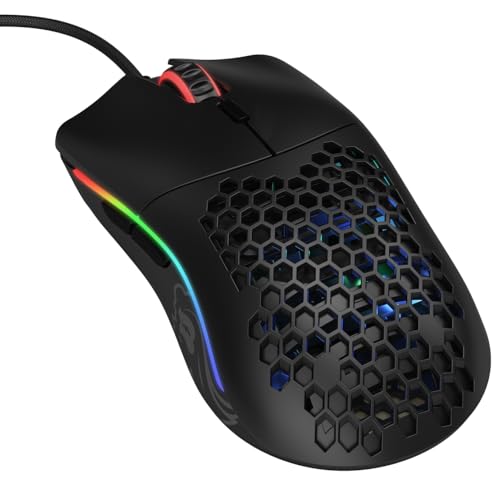
Glorious Model O Minus (Best Small Vented)
If you only read one pick closely, make it this one. The Glorious Model O Minus is here as Best Small Vented because its design priorities line up with what this keyword actually demands: small-handed and fingertip-grip players who want minimum weight. The details below explain where that quality comes from, and just as honestly, where it stops.
Judged specifically against best cooling fan mouse for gaming, the Glorious Model O Minus makes its case on fit rather than flash. The brief behind this keyword punishes vague all-rounders, and this pick’s strengths map onto it point for point, while its trade-offs land in places this particular audience is least likely to feel. That alignment, more than any single specification, is what the badge is certifying.
Strengths
- At 58 g it is one of the lightest wired mice available, and the smaller shell fits small hands and fingertip grips properly
- Same flawless PMW3360 tracking and Omron switches as the full-size Model O, just in a compact body
- Adjustable debounce in the Glorious software makes it a favourite for click-speed techniques in sandbox and PvP games
Trade-offs
- The small shell genuinely cramps medium-to-large hands, especially in palm grip
- Honeycomb shell needs regular cleaning to keep dust out of the switches and sensor area
- Cable is flexible but still a cable; wireless fans should look elsewhere
Key specs
- Sensor: PixArt PMW3360 optical
- Max DPI: 12,000
- Weight: 58 g (matte)
- Connection: Wired USB, Ascended paracord-style cable
- Buttons: 6 programmable
- Switches: Omron mechanical
- Feet: G-Skates premium PTFE
Day to day, what you notice about the Glorious Model O Minus is how little you notice it. Settings stay where you left them, the shape stops being a topic, and your attention goes back to the game, which is the highest compliment a peripheral can earn. Players inside its target audience rarely replace it for anything except its own newer generation.
A few ownership details are worth knowing before you commit. The Glorious Model O Minus sticks to proven component choices rather than experiments, which means community knowledge, replacement parts and troubleshooting advice are easy to find years from now. Keep the receipt and the box until the return window closes, as with any peripheral, because shape fit is personal and no review can feel your hand for you.
There is also a practical resale and hand-me-down angle that rarely gets mentioned: products like the Glorious Model O Minus hold their appeal because the fundamentals do not date quickly. When you eventually upgrade, a pick like this moves happily to a second desk, a sibling’s setup or a travel bag, which quietly lowers its real cost of ownership compared with a cheaper product that gets binned.
Best for: small-handed and fingertip-grip players who want minimum weight / Not suited for: large-handed palm grippers

Logitech G305 LIGHTSPEED (Best Sealed Alternative)
If you only read one pick closely, make it this one. The Logitech G305 LIGHTSPEED is here as Best Sealed Alternative because its design priorities line up with what this keyword actually demands: anyone who wants dependable wireless gaming without flagship pricing or charging cables. The details below explain where that quality comes from, and just as honestly, where it stops.
There is a version of this shortlist ranked purely on specifications, and the Logitech G305 LIGHTSPEED would not necessarily top it. Ranked for best cooling fan mouse for gaming, with the audience’s games, rooms and habits in view, it rises, because its design decisions read like answers to this brief’s specific questions rather than to a generic buyer’s.
Strengths
- Runs up to 250 hours on a single AA battery in performance mode, so battery anxiety basically disappears
- LIGHTSPEED wireless plus the HERO sensor bring genuinely lag-free, spin-out-proof tracking to a budget price class
- Compact egg shape travels well, and the USB receiver stores inside the shell so it never gets lost in a laptop bag
Trade-offs
- At 99 g it is heavy next to modern ultralights, and most of that weight sits towards the rear
- No Bluetooth and no rechargeable cell, so you swap AA batteries rather than topping up over USB
- Small shell suits small-to-medium hands; large-handed palm grippers will feel cramped
Key specs
- Sensor: Logitech HERO optical
- Max DPI: 12,000
- Weight: 99 g with one AA battery
- Connection: LIGHTSPEED 2.4 GHz wireless (USB receiver)
- Buttons: 6 programmable
- Battery: Up to 250 hours on one AA (performance mode)
- Extras: Onboard receiver storage, onboard memory
In longer sessions the Logitech G305 LIGHTSPEED shows its breeding in small ways: consistent clicks at the end of the day as at the start, a glide that does not change character as the pad warms up, and software that applies a profile and then gets out of the way. It is a product built by people who clearly use their own gear.
It is also worth setting expectations about the ecosystem around the Logitech G305 LIGHTSPEED. Firmware updates arrive through the maker’s software, spare feet and grips are widely available, and the product’s popularity means any quirk you encounter has almost certainly been documented and solved by other owners. That support tail is an unglamorous but real part of why it holds a badge in this guide.
Think about who notices the Logitech G305 LIGHTSPEED most: not the player in a highlight clip, but the same player in week six, when novelty has worn off and only behaviour remains. Its clicks still land where they landed in week one, its settings have not drifted, and its shape has taught your hand a consistent home position. Equipment that behaves identically for months is what lets practice compound, and that quiet consistency is engineered into this pick’s sensor, switches and overall restraint.
Best for: anyone who wants dependable wireless gaming without flagship pricing or charging cables / Not suited for: large-handed palm-grip players or ultralight purists
Comparison Table
| Pick | Sensor / Type | Weight / Form | Connection | Buttons | Price |
|---|---|---|---|---|---|
| Marsback Zephyr Pro (Fan-Cooled Gaming Mouse) | Fan-cooled | Honeycomb shell | Wired class | Fan speed control (model dependent) | Check retailer listings |
| Glorious Model O | PixArt PMW3360, 12,000 DPI | 67 g | Wired | 6 | Check price on Amazon |
| SteelSeries Aerox 3 | TrueMove Core, 8,500 CPI | 59 g | Wired | 6 | Check retailer listings |
| HyperX Pulsefire Haste Wireless | Optical, 16,000 DPI | 61 g | Wireless | 6 | Check price on Amazon |
| Glorious Model O Minus | PixArt PMW3360, 12,000 DPI | 58 g | Wired | 6 | Check price on Amazon |
| Logitech G305 LIGHTSPEED | HERO, 12,000 DPI | 99 g | Wireless | 6 | Check price on Amazon |
How to Choose the Right Gaming Mouse
Choosing a gaming mouse is mostly an exercise in ignoring the loudest numbers and ranking the quiet ones: fit, sensor behaviour, weight, then features. The sections below take each deciding factor in turn, in the order we recommend deciding them. If you want to sanity-check your current technique against your equipment, Best Comforable Gaming Mouse Under $50 pairs well with this section.
Shape, size and grip style
There are three common grips. Palm grip rests the whole hand on the shell and suits tall, ergonomic shapes. Claw grip arches the fingers and works with medium shells and pronounced humps. Fingertip grip moves the mouse with the fingers alone and favours small, light, low-profile bodies. Hand size matters just as much: as a rough guide, hands under about 17 cm from wrist to middle fingertip tend to prefer small shells, 17 to 20 cm suits medium shells, and larger hands need long, tall bodies to avoid cramping. The verdict line under every pick states plainly who it suits and who should skip it, so use those lines before you fall for a spec sheet.
Sensor and DPI: what actually matters
DPI (also labelled CPI) describes how many counts the sensor reports per inch of movement. It is a sensitivity ceiling, not an accuracy score. Almost every serious player settles between 400 and 3,200 DPI and lets in-game sensitivity do the rest, so a 25,600 DPI flagship and an 8,000 DPI budget mouse can feel identically precise at the settings people really use. What separates sensors is behaviour: tracking speed in IPS, whether the sensor adds smoothing at high DPI, and whether it keeps tracking cleanly during the violent flicks that make lesser sensors spin out. Every linked pick in this guide uses an optical sensor with a published, proven tracking record, which is why several flashier laser and no-name models were excluded.
Weight and glide
Mouse weight shapes your aim style more than any other single number. Lighter mice, roughly under 70 g, start and stop with less effort, which suits low-sensitivity arm aiming and fast target switching. Heavier mice, around 100 g and up, feel steadier during slow tracking and give palm grippers a sense of planted control, at the cost of more wrist and forearm work over a long session. Neither is objectively better; the mistake is buying a weight class that fights your grip and sensitivity. If you are unsure, the middle ground around 80 to 100 g is where most players happily live, and several picks here sit exactly there.
Buttons and software
Six buttons cover the vast majority of games: two main clicks, a wheel click and two thumb buttons. Shooters rarely need more. MMO and MOBA players are the exception, and for them a 12-button thumb grid genuinely changes how rotations feel. Software quality matters as much as button count. Logitech G HUB, Razer Synapse, Corsair iCUE, SteelSeries GG and the Glorious and HyperX equivalents all handle DPI stages, remapping and lighting, but onboard memory is the feature to insist on: it stores your settings inside the mouse, so they travel to any PC and keep working even where the software is not installed.
Wired or wireless
Modern 2.4 GHz gaming wireless, Logitech LIGHTSPEED, Razer HyperSpeed and their equivalents, is indistinguishable from wired in latency for human purposes, and tournament players use it on stage. The real trade-offs are weight, battery and price: wireless adds a battery and receiver, so wireless mice tend to cost more, and battery habits differ wildly, from the G305 running for months on a single AA to rechargeable flagships that want a cable every week or two. Wired mice remain the value champions and never need charging, and a flexible paracord-style cable plus a cheap bungee removes most of the old cable-drag complaint. Choose by lifestyle, not by latency fear.
Polling rate and connection basics
Polling rate is how often the mouse reports its position: 1,000 Hz means one report every millisecond, and it is the standard every pick here meets unless stated otherwise. Higher rates exist on flagship keyboards and a few mice, but the visible benefit is small and the CPU cost is real, so do not let polling rate outrank shape or sensor quality in your decision. For wired mice, plug directly into the PC rather than an unpowered hub. For wireless, keep the receiver close to the pad using the included extension adapter where one is provided, because a receiver buried behind a metal case is the most common cause of mysterious stutter.
Mouse pad and desk setup
The pad is half of the sensor system and the cheapest performance upgrade in this entire guide. Cloth pads give optical sensors a consistent texture and a controlled glide that suits most players; hard pads glide faster and wear feet quicker. Size follows sensitivity: high-sensitivity wrist players can live on a small pad, while low-sensitivity arm players should treat roughly 45 by 40 cm as a starting point so a full turn never ends on the desk edge. Keep the pad flat, wash it when the centre slows, and give a wired mouse a bungee or a taped service loop so the cable never becomes part of the aiming equation.
How Do You Set Up and Look After a Gaming Mouse?
A gaming mouse rewards a deliberate first hour: the right port, the right settings, and a sensitivity you commit to. After that, ownership is a five-minute monthly routine. The steps below cover the full arc from unboxing to troubleshooting.
- Choose and unbox deliberately. Before plugging anything in, confirm the mouse matches your hand: rest your hand on it in your normal grip and check that your fingers reach both main clicks and the thumb buttons without stretching. Keep the box and any included weights, grips or spare feet somewhere safe; the extras that seem pointless today are the ones people re-order at silly prices next year.
- Connect it the right way. For a wired mouse, plug straight into a rear motherboard USB port rather than a front-panel or hub port. For a wireless mouse, use the included extension adapter to place the receiver on the desk near the pad, facing the mouse, and fully charge the battery or fit a fresh AA before the first session.
- Install the software once, then store settings onboard. Install the maker’s software (G HUB, Synapse, iCUE, SteelSeries GG, Glorious Core or NGENUITY as appropriate), update the firmware if prompted, then set your DPI stages, button assignments and lighting. Save the profile to the mouse’s onboard memory if it offers one, so your setup survives other PCs.
- Dial in sensitivity like a player, not a shopper. Start at 800 or 1,600 DPI. In your main game, set sensitivity so one comfortable swipe across the pad turns your character about 270 degrees, then fine-tune in small steps over several days. Disable Windows pointer acceleration and use raw input in game where available. Resist changing settings daily; consistency is what builds aim.
- Use it well: grip, posture and pad. Keep your wrist neutral and your forearm supported, let your arm do large movements and your fingers do fine ones, and play on a clean, consistent pad sized for your sensitivity. If you use a wired mouse and feel cable drag, route the cable through a bungee or tape a service loop to the desk edge.
- Clean and maintain monthly. Wipe the shell with a damp microfibre cloth, clear the sensor lens with a dry cotton bud, blow dust out of honeycomb shells with compressed air, and inspect the PTFE feet for grit or peeling. Wash cloth pads with mild soap and air-dry them flat when glide becomes uneven.
Troubleshooting quick fixes
- Problem: Cursor stutters or skips → fix: Clean the sensor lens, move the wireless receiver closer with its extension cable, and try a different pad or desk surface. Stutter that survives all three is usually a failing cable or battery.
- Problem: Mouse feels floaty or inconsistent → fix: Check that Windows ‘enhance pointer precision’ is off, that in-game acceleration and smoothing are disabled, and that you have not accidentally switched DPI stages with a stray button press.
- Problem: Double-clicks when you click once → fix: Blow compressed air under the button, update firmware, and if the mouse offers debounce settings, raise them slightly. Persistent double-clicking on an old mouse is switch wear, not a settings problem.
- Problem: Wireless keeps disconnecting → fix: Replace or recharge the battery first, then move the receiver away from USB 3.0 hubs and metal enclosures, which are classic interference sources.
- Problem: Scroll wheel jumps or reverses → fix: Blow air through the wheel gap while scrolling both directions. Encoder dust causes most wheel misbehaviour, and it is worth cleaning before assuming the wheel has failed.
Common Mistakes
Most disappointing purchases in this category are not bad products; they are good products bought for the wrong reason. These are the errors that come up again and again, each one cheap to avoid before you order and expensive afterwards.
Chasing the highest DPI number. Manufacturers print enormous DPI figures because they sell mice, but accuracy lives in sensor behaviour, not ceilings. Set a sane DPI, usually 800 or 1,600, tune in-game sensitivity, and judge a mouse by tracking quality, shape and weight instead.
Buying a shape for someone else’s hand. Pro-player gear lists are a trap: a mouse that fits a fingertip-grip professional with small hands can cramp a palm-grip player within an hour. Match shell size and shape to your own hand and grip first; every other spec is secondary.
Ignoring the mouse pad. A worn, inconsistent pad makes a flagship sensor feel broken. A decent cloth pad with a stitched edge costs little, transforms glide consistency, and should be replaced when the centre wears shiny and slow.
Leaving acceleration on in Windows. Pointer acceleration quietly changes your sensitivity with hand speed, which destroys muscle memory. Turn off ‘enhance pointer precision’ for gaming, and check that your game uses raw input where the option exists.
Never cleaning the mouse. Sensor lenses collect dust, PTFE feet pick up grit, and honeycomb shells invite crumbs. A monthly wipe, a lens check with a cotton bud, and compressed air for open shells keep glide and tracking where they were on day one.
Judging by the first ten minutes. A new shape feels wrong before it feels right. Give a mouse a week of normal play before returning it for anything short of pain; genuine discomfort is a reason to swap immediately, unfamiliarity is not.
Final Recommendation
If you want one answer, take the Marsback Zephyr Pro (Fan-Cooled Gaming Mouse) (The Real Fan Mouse (Prose Pick)): it is the pick that serves the widest range of players under this brief without a serious weakness. If your priorities lean the other way, the Glorious Model O (Best Passive Cooling) is the alternative we would defend just as strongly, and the remaining badges exist precisely because this category rewards specialisation.
Whichever you choose, spend the first week properly: set it up with the steps above, commit to your settings, and judge it on your tenth session rather than your first. Players comparing adjacent briefs may also find How To Grip A Gaming Mouse and Best Mouse Wrist Rest For Gaming helpful, since hand size, budget and platform have a habit of changing the answer. The right mouse is the one you stop thinking about, and every pick in this guide has earned that chance.
If two picks still feel tied after all this, break the tie with the return policy: order the one you can exchange most easily, live with it for a week of real sessions, and let your hand cast the deciding vote. That process, unglamorous as it sounds, is how experienced players actually end up with setups they keep for years.
Frequently Asked Questions
Which grip style should I use?
The one your hand already chooses. Rest your hand on your current mouse without thinking: full contact is palm grip, arched fingers with palm contact at the back is claw, and fingers alone with the palm floating is fingertip. Each grip favours different shell sizes and weights, and forcing a fashionable grip against your anatomy trades a week of discomfort for no measurable gain. If you are between styles, medium symmetrical shells are the most forgiving place to start.
How do I keep a gaming mouse performing like new?
Wipe the shell weekly with a slightly damp microfibre cloth, clean the sensor lens gently with a dry cotton bud, and wash or replace the pad when the centre starts to feel slower than the edges. For honeycomb shells, short bursts of compressed air clear dust from inside. Check PTFE feet for deep scratches; replacement feet are cheap and restore the original glide.
Is a lighter mouse always better?
No. Lighter mice reduce the effort of starting and stopping a swipe, which helps low-sensitivity FPS play, but some players aim more steadily with the planted feel of a heavier mouse, and palm grippers often prefer the support of a larger, heavier shell. Weight is a preference with a fitness component: if your wrist or forearm aches after sessions, try lighter; if your aim feels twitchy and overshoots, a little more mass can calm it down.
Do I need a special mouse pad?
You need a consistent one. Any decent cloth gaming pad gives an optical sensor a uniform surface to read, which is what tracking accuracy depends on. Glass and glossy desks are the real enemies. Beyond that, size matters more than branding: low-sensitivity players should want at least 40 cm of width so a full swipe never runs off the edge mid-fight.