Disclosure: As an Amazon Associate, ilcastellomenu.com earns from qualifying purchases. Prices and availability change; check Amazon for the latest.
Where to buy
Check the latest price, availability and delivery on Amazon. Orders are placed on Amazon.
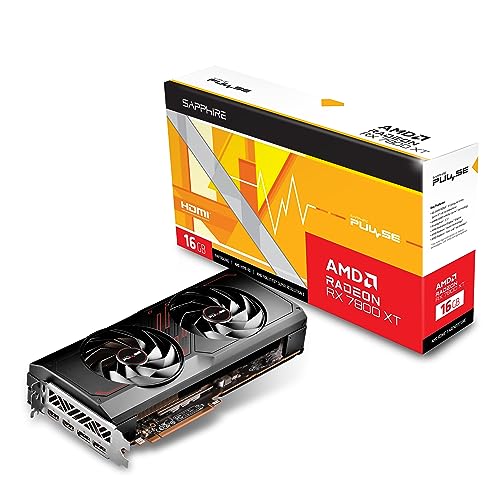
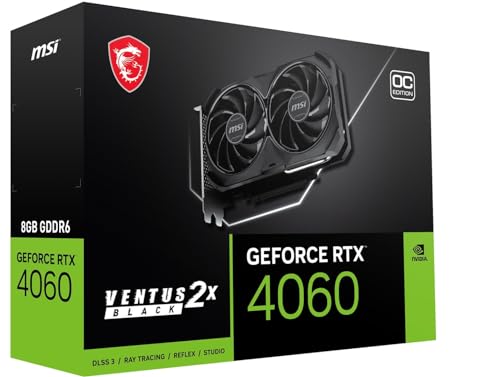
- MSI GeForce RTX 4060 Ventus 2X Black 8G OC — Best Overall Value. Check on Amazon
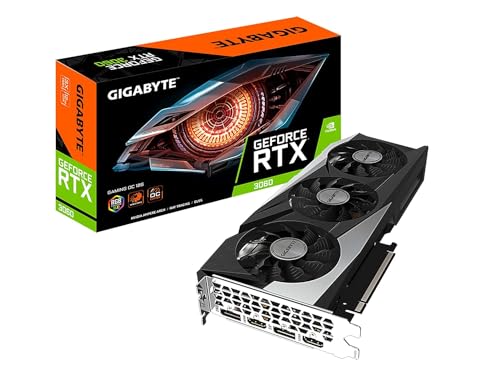
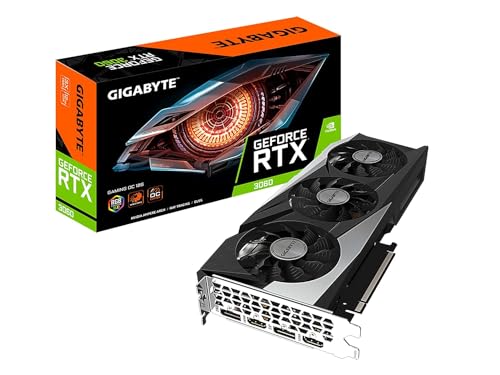
- GIGABYTE GeForce RTX 3060 Gaming OC 12G (Rev 2.0) — Best VRAM Value. Check on Amazon
- MSI GeForce RTX 4060 Ti Ventus 3X 8G OC — Best Performance Value. Check on Amazon
- NVIDIA GeForce GTX 1660 Super 6GB (used-market staple) — Best Used Value. Value tier; sold through specialist and used-market listings, so check current availability carefully.
- MSI GeForce RTX 3050 Ventus 2X XS 8G OC — Best Entry Value. Check on Amazon
- ASUS Dual GeForce RTX 4070 EVO OC Edition 12GB GDDR6X — Best Premium Value. Check on Amazon
Read the full guide ↓
If you are shopping for the best bang for buck nvidia graphics cards, the honest starting point is that the ‘best’ answer is the one matched to your machine, your setup and the work in front of it — not the one with the longest specification sheet. This guide ranks six picks for this exact brief, from the strongest overall option to the specialist choices that serve narrower needs better, and it is upfront about the compromises in each: every pick below carries its trade-offs in plain language, with no prices frozen in print (they move too fast to trust) and no scores borrowed from marketplace listings.
Restricting the value hunt to NVIDIA changes its shape: GeForce cards carry a feature premium (DLSS, the strongest encoder ecosystem, CUDA for the software that needs it), so an NVIDIA-only value chart is really asking where that premium is smallest relative to what it buys. The answer concentrates in two places — the efficiency sweet spot of the current generation, and the previous generation’s 12GB anomaly that the used and clearance markets keep repricing downward. This guide ranks both, states plainly which picks win on raw frames per dollar and which win only when the features are counted, and flags the point in the range where the value curve bends and each additional dollar buys visibly less. If your workload sits close to a neighbouring brief, our guide to Best And Most Inexpensive Graphics Cards For Vr covers that angle in the same depth.
In this guide
Quick Picks
| Badge | Pick | Why it stands out | Link |
|---|---|---|---|
| Best Overall Value | MSI GeForce RTX 4060 Ventus 2X Black 8G OC | DLSS 3 Frame Generation lifts supported games far beyond its raw raster pace | Check on Amazon |
| Best VRAM Value | GIGABYTE GeForce RTX 3060 Gaming OC 12G (Rev 2.0) | 12GB of VRAM | Check on Amazon |
| Best Performance Value | MSI GeForce RTX 4060 Ti Ventus 3X 8G OC | A clear step up in CUDA throughput for gaming, streaming and CUDA-accelerated apps | Check on Amazon |
| Best Used Value | NVIDIA GeForce GTX 1660 Super 6GB (used-market staple) | used prices make it one of the best 1080p performers per dollar available | Check current listings |
| Best Entry Value | MSI GeForce RTX 3050 Ventus 2X XS 8G OC | full RTX feature set | Check on Amazon |
| Best Premium Value | ASUS Dual GeForce RTX 4070 EVO OC Edition 12GB GDDR6X | DLSS 3 Frame Generation plus efficient RT cores deliver fluid 1440p with ray tracing | Check on Amazon |
How These Picks Were Chosen
Every product in this guide was verified against manufacturer specifications — core counts, memory configuration, power draw, outputs and physical dimensions — using the GPU vendor’s official specification pages and the board partner’s product documentation, not marketplace listings, which routinely misstate all five. Where a specification could not be verified from a primary source, it was left out rather than repeated from a listing. Products earn Amazon links in this guide only when their exact model and ASIN have been confirmed; equally valid products that could not be confirmed to that standard appear as clearly unlinked, prose-only picks rather than being quietly dropped.
Budget-tier picks were ranked on delivered experience per dollar at this band’s realistic street prices, with three honesty rules applied throughout: a pick must actually be buyable at or near the band (launch prices from years ago do not count), its compromises must be the ones this budget’s buyers can live with, and no pick earns a place on a sale price so rare it might as well be fiction. Cards were rejected when a same-band rival delivered the same experience for less, or when their limitations (VRAM, encoder, driver age) would force a second purchase too soon.
Within the band, the ranking weighs the total cost of ownership: power draw that avoids a PSU purchase, physical fit that avoids a case purchase, and driver support that avoids an early replacement. The cheapest card is not always the cheapest upgrade.
Two exclusions are worth stating openly. First, raw benchmark position alone never earned a place: a card had to fit this brief’s real constraints — the platform, the power supply, the case, the software — to be ranked. Second, near-duplicate models of the same GPU were collapsed to the single version with the best combination of cooler, warranty and availability, because six slots spent on three coolers of one GPU would serve nobody. Readers weighing a closely related brief will also find our analysis of Best Applications For New Graphics Cards useful, since the shortlists overlap more than the titles suggest.
The 6 Best Bang For Buck NVIDIA Graphics Cards

MSI GeForce RTX 4060 Ventus 2X Black 8G OC (Best Overall Value)
The MSI GeForce RTX 4060 Ventus 2X Black 8G OC takes the Best Overall Value badge because it answers this brief’s central question better than anything else in its class: how much NVIDIA GeForce RTX 4060 performance, wrapped in what compromises, at what cost in power and space? Its 8GB GDDR6 of memory and 115 W power envelope set the terms, and the sections below test whether the rest of the design keeps the promise.
Strengths
- AV1-capable NVENC encoder is the best streaming hardware in its class
- Compact Ventus 2X cooler fits almost any case
- DLSS 3 Frame Generation lifts supported games far beyond its raw raster pace
Trade-offs
- 8GB of VRAM is the ceiling on texture settings in newer games at 1440p
- The x8 PCIe link costs a few percent on PCIe 3.0 systems
- Frame Generation adds latency, so competitive players often leave it off
Key specs
- GPU: NVIDIA GeForce RTX 4060, 3,072 CUDA cores
- Memory: 8GB GDDR6, 128-bit bus
- Boost clock: up to 2,490 MHz
- Power draw: 115 W, one 8-pin PCIe connector
- Features: DLSS 3 with Frame Generation, 3rd-gen RT cores, AV1 NVENC encoding
- Cooling: Ventus 2X dual TORX fans, compact two-slot design
The RTX 4060 wins on efficiency and features rather than brute force. Ada’s DLSS 3 Frame Generation can transform a supported AAA title from adequate to fluid, the AV1 encoder made it the default recommendation for streamers on a budget, and at 115 W it barely troubles a power supply. MSI’s Ventus 2X Black is the compact, factory-overclocked expression of that formula — the version to buy when the case is small and the PSU is modest.
Best for: Efficient 1080p and entry 1440p gaming, DLSS 3 and best-in-class streaming at just 115 W / Not suited for: Buyers who keep cards for many years and worry about 8GB of VRAM
GIGABYTE GeForce RTX 3060 Gaming OC 12G (Rev 2.0) (Best VRAM Value)
Ranked here as Best VRAM Value, the GIGABYTE GeForce RTX 3060 Gaming OC 12G (Rev 2.0) is built around the NVIDIA GeForce RTX 3060 with 12GB GDDR6 of memory. It earns its place in this guide on the strength of how completely it fits the brief — not merely on throughput, but on the combination of memory, power draw, physical size and driver support that decides whether a card works in your system or merely benchmarks well in someone else’s.
Strengths
- The wide 192-bit bus keeps memory bandwidth healthy where 128-bit rivals taper off
- Triple-fan WINDFORCE cooler runs cool and quiet under sustained gaming loads
- A favourite for entry AI and rendering work precisely because of that big frame buffer
Trade-offs
- Needs a 550 W-class power supply with an 8-pin connector, ruling out the weakest OEM units
- Ray-tracing performance is modest; DLSS is effectively mandatory with RT on
- Triple-fan length does not fit the smallest mini-ITX cases
Key specs
- GPU: NVIDIA GeForce RTX 3060, 3,584 CUDA cores
- Memory: 12GB GDDR6, 192-bit bus
- Boost clock: up to 1,837 MHz
- Power draw: 170 W, one 8-pin PCIe connector
- Cooling: WINDFORCE 3X triple-fan with alternate spinning
- Features: DLSS, 2nd-gen RT cores, NVENC encoder
The RTX 3060’s 12GB of memory looked like a curiosity at launch and turned into its defining strength. Games, Blender scenes, local AI models and video timelines that choke 8GB cards simply fit here, which is why this card keeps appearing in creator and machine-learning builds long after faster gaming cards passed it by. Gigabyte’s Gaming OC adds a serious triple-fan cooler and a healthy factory overclock, making it the version to pick for cases with the length to hold it.
Best for: 1080p and 1440p gaming plus creator and AI work that benefits from 12GB of VRAM / Not suited for: Small cases that cannot fit a triple-fan card, or PSUs without an 8-pin connector

MSI GeForce RTX 4060 Ti Ventus 3X 8G OC (Best Performance Value)
The MSI GeForce RTX 4060 Ti Ventus 3X 8G OC (Best Performance Value) represents the MSI interpretation of the NVIDIA GeForce RTX 4060 Ti, and board-partner interpretation matters more than spec sheets admit: cooler quality decides sustained clocks, fan behaviour decides whether you can hear your own games or renders, and output selection decides which monitors you can drive. With 8GB GDDR6 and a 160 W power budget, this is the version of the GPU this guide would buy with its own money for this brief.
Strengths
- DLSS 3 Frame Generation plus strong RT cores make it a genuine 1440p option
- Triple-fan Ventus 3X cooler keeps clocks high and noise low
- Still only 160 W, so most 550 W power supplies handle it comfortably
Trade-offs
- 8GB of VRAM is tight for 1440p textures in the newest releases
- The narrow 128-bit bus limits memory bandwidth gains over the RTX 4060
- On PCIe 3.0 boards the x8 link trims performance slightly
Key specs
- GPU: NVIDIA GeForce RTX 4060 Ti, 4,352 CUDA cores
- Memory: 8GB GDDR6, 128-bit bus
- Boost clock: up to 2,580 MHz (Extreme clock)
- Power draw: 160 W, one 8-pin PCIe connector
- Features: DLSS 3 with Frame Generation, AV1 NVENC encoding
- Cooling: Ventus 3X triple-fan with TORX Fan 4.0
The RTX 4060 Ti 8GB is the card for buyers who want Ada’s full feature set — Frame Generation, AV1 encoding, efficient ray tracing — with more raw throughput than the 4060 behind it. MSI’s Ventus 3X wraps it in a triple-fan cooler that is arguably more cooling than 160 W needs, which translates into sustained boost clocks and low noise. Its honest limitation is memory: 8GB is workable today at 1080p and mostly fine at 1440p with DLSS, but it is the first thing that will age.
Best for: DLSS 3, AV1 streaming and 1440p ambition with more CUDA throughput than the 4060 / Not suited for: Long-term 1440p texture headroom — the 8GB frame buffer is the ceiling
NVIDIA GeForce GTX 1660 Super 6GB (used-market staple) (Best Used Value)
The NVIDIA GeForce GTX 1660 Super 6GB (used-market staple) takes the Best Used Value badge because it answers this brief’s central question better than anything else in its class: how much NVIDIA GeForce GTX 1660 Super performance, wrapped in what compromises, at what cost in power and space? Its 6GB GDDR6 of memory and 125 W power envelope set the terms, and the sections below test whether the rest of the design keeps the promise.
Strengths
- Used prices make it one of the best 1080p performers per dollar available
- Turing NVENC keeps it useful for streaming on a budget
- Full x16 PCIe 3.0 link — no penalty in older systems
Trade-offs
- Used-only in practice; condition varies and warranties are rare
- 6GB of VRAM is the ceiling in newer titles
- No DLSS and no ray-tracing acceleration
Key specs
- GPU: NVIDIA GeForce GTX 1660 Super, 1,408 CUDA cores
- Memory: 6GB GDDR6, 192-bit bus
- Power draw: 125 W, one 8-pin connector
- Encoder: Turing NVENC
The GTX 1660 Super was the thinking buyer’s 1080p card of its generation, and the used market has kept it relevant: GDDR6 memory, a proper 192-bit bus and Turing’s encoder at second-hand prices. For older CPUs it is often a better match than newer x8 cards, because its full-width PCIe 3.0 link loses nothing in the systems it usually joins.
Best for: Used-market 1080p gaming with NVENC streaming on older PCIe 3.0 systems / Not suited for: Buyers who need a warranty, DLSS, or more than 6GB of VRAM
Value tier — availability runs through specialist retailers and the used market; verify the exact model and condition before buying.

MSI GeForce RTX 3050 Ventus 2X XS 8G OC (Best Entry Value)
Ranked here as Best Entry Value, the MSI GeForce RTX 3050 Ventus 2X XS 8G OC is built around the NVIDIA GeForce RTX 3050 with 8GB GDDR6 of memory. It earns its place in this guide on the strength of how completely it fits the brief — not merely on throughput, but on the combination of memory, power draw, physical size and driver support that decides whether a card works in your system or merely benchmarks well in someone else’s.
Strengths
- 8GB of VRAM avoids the texture compromises of 4GB and 6GB rivals
- Compact Ventus 2X XS cooler fits short cases that reject full-size cards
- NVENC encoder handles streaming and recording in hardware
Trade-offs
- Raw raster performance sits close to the older GTX 1660 Super despite the newer badge
- The x8 PCIe link loses a little performance in PCIe 3.0 motherboards
- Ray tracing is usable only with DLSS enabled and modest settings
Key specs
- GPU: NVIDIA GeForce RTX 3050, 2,560 CUDA cores
- Memory: 8GB GDDR6, 128-bit bus
- Boost clock: up to 1,807 MHz
- Power draw: 130 W, one 8-pin PCIe connector
- Features: 2nd-gen RT cores, DLSS, NVENC encoding
- Outputs: HDMI 2.1, DisplayPort 1.4a, DVI-D
The RTX 3050 8GB is best understood as a features card: it brings DLSS, ray tracing and a modern encoder to builds that cannot stretch further, and its 8GB frame buffer has aged better than the 6GB cards it launched alongside. MSI’s Ventus 2X XS variant trims the cooler down for compact cases while keeping the factory overclock. It is a sensible partner for older CPUs because it rarely asks more of the processor than a mid-range chip from the last several years can give.
Best for: A first RTX card: DLSS, ray tracing and streaming features in a compact, modest-power package / Not suited for: Buyers expecting a large raw-performance jump over older GTX 16-series cards

ASUS Dual GeForce RTX 4070 EVO OC Edition 12GB GDDR6X (Best Premium Value)
The ASUS Dual GeForce RTX 4070 EVO OC Edition 12GB GDDR6X (Best Premium Value) represents the ASUS interpretation of the NVIDIA GeForce RTX 4070, and board-partner interpretation matters more than spec sheets admit: cooler quality decides sustained clocks, fan behaviour decides whether you can hear your own games or renders, and output selection decides which monitors you can drive. With 12GB GDDR6X and a 200 W power budget, this is the version of the GPU this guide would buy with its own money for this brief.
Strengths
- AV1 NVENC encoding and CUDA support cover streaming and creator workloads
- DLSS 3 Frame Generation plus efficient RT cores deliver fluid 1440p with ray tracing
- Remarkable efficiency — this performance level used to need 300 W-class cards
Trade-offs
- 12GB of VRAM is adequate today but not generous for long-term 4K use
- GDDR6X runs hot under memory-heavy loads; case airflow matters
- Two-fan cooler is slightly louder than triple-fan rivals at full load
Key specs
- GPU: NVIDIA GeForce RTX 4070, 5,888 CUDA cores
- Memory: 12GB GDDR6X, 192-bit bus
- Boost clock: up to 2,550 MHz (OC mode)
- Power draw: 200 W
- Features: DLSS 3 with Frame Generation, 3rd-gen RT cores, AV1 NVENC
- Design: 2.5-slot Dual cooler with Axial-tech fans and 0dB stop
The RTX 4070 brought Ada’s efficiency story to the mainstream: performance that previously required a flagship-class power budget now arrives at 200 W in a 2.5-slot card. ASUS’s Dual EVO is the compatibility-first version — shorter and slimmer than the triple-fan flagships, with Axial-tech fans and a factory overclock. For 1440p gaming with ray tracing, DLSS 3 support in creative apps, and streaming, it remains the balanced default choice in its class.
Best for: Balanced 1440p gaming with ray tracing, DLSS 3 and creator-ready CUDA in a compact card / Not suited for: Long-term native 4K, where 12GB will eventually feel tight
Comparison Table
| Pick | Type / GPU | Key capacity | Power / Size | Fit / Interface | Price |
|---|---|---|---|---|---|
| MSI GeForce RTX 4060 Ventus 2X Black 8G OC (Best Overall Value) | NVIDIA GeForce RTX 4060 (Ada Lovelace) | 8GB GDDR6 | 115 W | PCIe 4.0 x8 | Check price on Amazon |
| GIGABYTE GeForce RTX 3060 Gaming OC 12G (Rev 2.0) (Best VRAM Value) | NVIDIA GeForce RTX 3060 (Ampere) | 12GB GDDR6 | 170 W | PCIe 4.0 x16 | Check price on Amazon |
| MSI GeForce RTX 4060 Ti Ventus 3X 8G OC (Best Performance Value) | NVIDIA GeForce RTX 4060 Ti (Ada Lovelace) | 8GB GDDR6 | 160 W | PCIe 4.0 x8 | Check price on Amazon |
| NVIDIA GeForce GTX 1660 Super 6GB (used-market staple) (Best Used Value) | NVIDIA GeForce GTX 1660 Super (Turing) | 6GB GDDR6 | 125 W | PCIe 3.0 x16 | Check current listings |
| MSI GeForce RTX 3050 Ventus 2X XS 8G OC (Best Entry Value) | NVIDIA GeForce RTX 3050 (Ampere) | 8GB GDDR6 | 130 W | PCIe 4.0 x8 | Check price on Amazon |
| ASUS Dual GeForce RTX 4070 EVO OC Edition 12GB GDDR6X (Best Premium Value) | NVIDIA GeForce RTX 4070 (Ada Lovelace) | 12GB GDDR6X | 200 W | PCIe 4.0 x16 | Check price on Amazon |
The table compresses the verified facts; the verdicts above carry the judgement. Note how the ranking in this guide does not follow the table’s raw order — capacity, support, compatibility and physical fit all reorder what a specification chart alone would tell you, and the right reading is to find your constraint in the table first, then read that pick’s full review.
How to Choose the Right Graphics Card for the Money
The sections below are the buying guide layer of this article: the deciding specifications explained in plain language, in the order they should be decided. Readers comparing across briefs may also want the companion analysis in Best Bang For Buck Graphics Cards Chart, which applies the same framework to a neighbouring budget and workload.
Start with the workload, not the brand
Every graphics-card decision in this guide flows from one question: what will the card actually do all day? A card rendering Blender scenes, a card feeding a 240 Hz esports monitor and a card driving four office displays are three different products that happen to share a PCIe slot. Write down your primary workload, your monitor’s resolution and refresh rate, and the applications or games that matter most. Those three facts eliminate most of the market instantly and turn the remaining choice into a shortlist rather than a research project.
VRAM: the specification that decides what fits
Video memory is the card’s private workspace. Games store textures and frame buffers in it; creative apps store scenes, timelines and models in it; AI tools store model weights in it. When a workload exceeds VRAM, the result is rarely graceful — textures blur or pop in, renders fall back to system memory at a fraction of the speed, and AI models simply refuse to load. Capacity first, then speed: a slower card with enough VRAM beats a faster card that cannot hold the workload. For 1080p gaming, 8GB is the current working minimum; 1440p is comfortable at 12GB; 4K, heavy creative work and local AI argue for 16GB or more.
Architecture and features age faster than raw speed
Two cards with similar benchmark scores can age very differently. Current architectures bring current feature sets: modern upscaling (DLSS, FSR, XeSS), hardware AV1 encoding, efficient ray tracing and — critically — active driver support. A card one or two generations old can be excellent value, but check that its driver branch is still receiving updates for your operating system and applications, and that the features your software uses (CUDA version, encoder generation, ray-tracing support) are present. Raw frames per second is the easiest number to compare and often the least important one over a card’s service life.
Power supply: the unglamorous gatekeeper
Every pick in this guide lists its power draw and connector requirements, because the power supply decides what you can install before performance enters the discussion. Add the card’s TDP to your CPU’s draw, allow headroom for drives, fans and transient spikes — modern GPUs can briefly draw well above their rated TDP — and land on a quality PSU with at least 150-200 W of margin. Check the physical connectors too: a PSU without the 8-pin or 16-pin cable a card needs is a hard stop, and splitter adapters are not a safe workaround for high-draw cards.
Physical fit: length, slots and airflow
Measure before you buy. Card length is published for every model; compare it against your case’s GPU clearance with the front fan or radiator installed, not the empty-case figure. Count slot width honestly — a 2.5-slot card covers the neighbouring slot, which matters if you run a capture card, a sound card or a second GPU. Finally, powerful cards exhaust hot air into the case: a solid front panel with one intake fan will throttle a 250 W card that a mesh case handles easily. Cooling is part of the graphics card you buy, whether it ships in the box or not.
Outputs and monitors
Display outputs look interchangeable and are not. HDMI 2.1 and DisplayPort 1.4/2.1 differ in the resolution and refresh combinations they can drive, in HDR and variable-refresh support, and in what your specific monitor accepts for its headline mode — many high-refresh monitors only reach their top refresh rate over one specific input. Count your displays, note each one’s best input, and confirm the card’s output layout serves all of them before ordering; adapters solve some mismatches and quietly cap others.
Street price is the only price
Graphics-card pricing moves with stock, sales cycles and currency. Treat this guide’s band as a filter, not a promise: check the live price of the top two or three picks on decision day, because the ‘best card under the band’ is whichever of them is actually under the band that week. A card one tier up on a genuine sale beats the tier below at full price — the bands are guides, not laws.
What each step up actually buys
Budget tiers are not linear. The steps that matter historically buy specific things: entry tiers buy capability (outputs, decode, light gaming); the next buys comfortable 1080p; then VRAM headroom; then 1440p; then features like frame generation and strong ray tracing. Identify which step your money is buying and judge the card on delivering exactly that — not on failing to be the tier above.
Budget tiers are where honest reviewing matters most, because the buyers have the least slack for a mistake. The pattern across this guide’s budget lists is consistent: the winning cards are never the ones with the most impressive single specification, but the ones whose compromise set — the things they do less well — matches what their buyers will never miss. Read the trade-offs in each pick as carefully as the strengths; at this end of the market, the trade-offs are the product description.
And hold the long view: a budget card bought well teaches you exactly what your next card should be. Note what actually limited you — VRAM, encoder, raw speed, noise — across a year of real use. That diary is worth more than any launch-day review when upgrade time comes, because it is written in your workloads, not a test bench’s.
A note on availability and model variance: graphics cards are sold as GPU models, but manufactured as dozens of board-partner variants whose coolers, clocks, outputs and warranties differ more than their names suggest. When this guide names a specific model, it is because that variant’s combination of those attributes suits the brief; when it names only a GPU (the prose-only picks), any reputable partner’s version of that GPU delivers the same fundamental capability, and the deciding factors become cooler quality, warranty terms and the seller’s return policy. In the used market especially, the individual unit’s condition outweighs the badge on the box.
It is also worth deciding, before you buy, what would make you replace this card. Naming the exit condition in advance — a new monitor resolution, a software version that drops your driver branch, a game or project type you plan to take up — turns the purchase into a plan rather than a hope. Cards bought with a defined job and a defined successor condition are consistently the ones their owners describe as good value years later, whatever tier they came from. Keep the receipt, the box and the driver version that worked; future troubleshooting and future resale both reward the organised.
Finally, a word about timing and generations: graphics lines refresh roughly every two years, and the months around a launch are when the previous generation’s prices — new and used — move most. If your current setup still does its job, buying a shortlisted pick during that window is the closest thing to a reliable discount strategy. If it does not, buy now and do not look back: the best card is the one rendering your work and games this month, and every pick in this guide was chosen to still look sensible when its successor launches.
Consider the second-order costs before finalising the tier, because they are where budgets quietly break. A more powerful card can require a larger power supply, a case with real airflow, a longer chassis, or a monitor worthy of it — each a legitimate purchase, none of them free. The picks in this guide were ranked with those knock-on costs in mind: where two cards perform alike, the one that drops into the system you already own, without a supporting cast of extra purchases, ranked higher. Total project cost, not card price, is the number to compare.
How Do You Install a Budget Graphics Card and Get Full Value From It?
Installation follows the shared steps below. Budget cards reward configuration more than most, because their performance lives closer to the settings line — these steps recover the frames careless setups leave behind.
- Choose the card against your actual system. Before ordering, confirm four things: your power supply’s wattage and available PCIe power connectors, your case’s GPU length clearance and slot space, your monitor’s inputs and target resolution/refresh, and — for older platforms — that your motherboard BIOS is recent enough to initialise a modern card. Ten minutes with a tape measure and the PSU label prevents the most common return in PC building.
- Prepare the system. Shut the PC down, switch the PSU off and unplug it. Remove the side panel and, if a card is already installed, disconnect its power cables, remove its bracket screw and release the PCIe slot latch before pulling it free. If you are switching GPU brands, download the new driver package now, while the old setup still gives you a display, and consider a clean driver removal with Display Driver Uninstaller in Safe Mode to prevent cross-brand driver conflicts.
- Install the card. Remove the correct rear slot covers for the card’s width, align the card with the top PCIe x16 slot, and press it home firmly and evenly until the latch clicks. Refit the bracket screws — they carry the card’s weight and ground it — then connect the required PCIe power cables, using separate PSU cable runs for high-draw cards rather than one daisy-chained lead. On 16-pin (12VHPWR) connectors, push until fully seated with no gap; an incompletely seated 16-pin connector is a documented failure risk.
- First boot and drivers. Reconnect power, boot, and confirm you have a display. Install the latest driver from the GPU vendor’s site — NVIDIA’s GeForce or Studio branch, AMD Software: Adrenalin, or Intel Arc drivers — choosing the clean-install option when offered. Reboot once more, then verify in the driver control panel that the card is identified correctly, running at its rated PCIe link width and speed, and connected to your monitor at the resolution and refresh rate you expect.
- Configure and validate. Set your monitor’s full refresh rate in the operating system display settings (it frequently defaults to 60 Hz), enable variable refresh (G-SYNC, FreeSync or Adaptive Sync) in both the driver and the monitor’s own menu, and run a ten-minute stress test or a demanding scene from your main application while watching temperatures. A healthy card settles at stable temperatures without fan ramping oscillation; clock speeds should hold near the rated boost under sustained load.
- Maintain it. Every few months, blow dust from the heatsink fins and fans with the fans held still, and check that case intake filters are clean — dust is the leading cause of gradual temperature creep. Keep drivers current for the applications you rely on, but update deliberately: creators mid-project often pin a known-good Studio driver rather than chasing the newest release. Revisit fan curves if your case or room changes; a card that was quiet in winter may need a slightly stronger curve in summer.
- Enable every free performance feature. Turn on Resizable BAR if the platform supports it, set the memory XMP/EXPO profile, and in the driver panel choose the performance-oriented texture and power settings. On a budget card, the free 5-10 percent from correct configuration is a tier’s worth of money.
- Tune settings like you mean it. Budget gaming is a settings discipline: use quality-mode upscaling as the default, drop the two or three most expensive settings (volumetrics, shadows, ray tracing) one notch, and protect texture quality only as far as VRAM allows. A well-tuned budget card looks better than a flagship left on ultra defaults at the same frame rate.
- Cap frame rate to your monitor. Rendering frames your display cannot show wastes a budget card’s scarcest resource. Cap to the panel’s refresh (or a stable number below it in heavy games) for smoother frame times, lower heat and quieter fans.
Troubleshooting quick reference
- Problem: No display after installing the card → Reseat the card until the slot latch clicks, confirm every power connector is fully home (especially 16-pin), and make sure the monitor cable is plugged into the graphics card — not the motherboard. Clear CMOS if the board was previously configured for integrated graphics only.
- Problem: The PC boots but the card runs slowly → Check the PCIe link in GPU-Z or the driver panel: a card seated in a chipset slot or a dirty connector may run at x4 or at a lower generation. Also confirm the monitor is actually set to its full refresh rate, and that the power plan is not capping performance.
- Problem: Fans spin at full speed constantly → Usually a temperature or software issue: verify case airflow, clean dust from the heatsink, and reinstall the driver and vendor control software so the fan curve is managed correctly. A card reading a failed sensor will default to full speed as a safety behaviour.
- Problem: Crashes only in one game or application → Update (or roll back) the driver — single-title crashes are most often driver or game-patch issues. Verify game files, remove overclocks, and check temperatures under that specific load before suspecting hardware.
- Problem: Coil whine at high frame rates → An annoying but harmless artefact of inductors under rapidly varying load, worst at very high frame rates. Capping frame rate to your monitor’s refresh or enabling V-Sync usually quiets it substantially.
- Problem: Performance is worse than expected → Test benches use current CPUs, dual-channel fast RAM and clean systems. Check your memory configuration, background load and whether the game is running on the integrated GPU — the three classic budget-build traps.
- Problem: The card runs hot and loud in a small case → Budget cards often land in budget cases: add one intake fan, tidy cables out of the airflow path, and set a custom fan curve. A modest undervolt, well documented for most cards, can transform noise at equal performance.
Common Mistakes
Forgetting that prices move. A ranking written at one week’s prices inverts at another’s. Shortlist two or three picks from this guide and buy whichever the market favours on the day.
Buying the DDR3/DDR4 trap variant. Several famous budget names ship in fast and crippled memory variants under near-identical names. The slow variant can be half the card. Verify the memory type in the listing title and specifications before paying — this guide names the traps where they exist.
Spending the whole budget on the card. If the ‘upgrade’ also needs a PSU, a case or more RAM to work, that is the real budget. Total the whole project; sometimes the slot-powered pick plus change is the smarter total spend.
Chasing last generation’s flagship on the used market. Old flagships draw flagship power, carry no warranty, and lack current features. A modern mid-range card at the same money is usually the better instrument — compare total cost and features, not launch-day glory.
Ignoring the used market entirely. The opposite error: at budget tiers, a well-bought used card is often a full tier faster. Buy with returns, stress-test on arrival, and the risk is managed rather than avoided.
Final Recommendation
For most readers of this guide, the answer is the MSI GeForce RTX 4060 Ventus 2X Black 8G OC — it is the Best Overall Value pick because it satisfies the brief with the fewest conditions attached. If your priorities lean the way the Best VRAM Value badge suggests, the GIGABYTE GeForce RTX 3060 Gaming OC 12G (Rev 2.0) is the better instrument, and the MSI GeForce RTX 4060 Ti Ventus 3X 8G OC (Best Performance Value) is the right call when its particular strength — covered in its review above — matches the workload you actually run most. The remaining picks are specialists: each is the best answer in this list to a narrower question, and their verdict lines state plainly which question that is.
Whichever you choose, run the pre-purchase checks in the how-to section first — power supply, clearance, outputs, driver branch — because the most common bad graphics-card purchase is a good card in the wrong system. Readers still torn between briefs should compare this shortlist with Best Pc Graphics Cards For Gaming and Best Graphics Cards Under $50, and regular readers of the category will find How To Test A Graphics Card a useful companion before ordering.
Frequently Asked Questions
Why do NVIDIA cards cost more than AMD cards with similar benchmark scores?
Partly brand, partly bundle: DLSS’s game support and quality, the NVENC encoder’s ecosystem, CUDA compatibility for creative and AI software, and stronger ray-tracing performance are real, purchasable things. Whether they are worth the premium is workload-dependent — pure raster gaming narrows the gap to almost nothing, while streaming, AI and RT workloads widen it into a justification.
How much should a first gaming PC spend on the graphics card?
As a rough allocation, the GPU is typically the largest single component — often a third or more of a gaming build’s budget — because it decides gaming performance more than any other part. Below that share, look hard at whether the rest of the build is overspecified.
Is it better to buy new at this tier or used one tier up?
Used one tier up wins on raw performance per dollar; new wins on warranty, efficiency, features and certainty. For a main machine, this guide leans new; for tinkerers and second machines, used is excellent — with testing discipline.
Will a budget card handle a 1440p monitor?
Driving the desktop and video, yes, easily. Gaming at 1440p depends on the tier: the upper picks here do it with upscaling and sensible settings; the entry picks are 1080p gaming cards that merely tolerate a 1440p desktop.
When is the best time to buy?
New-generation launches depress previous-generation prices, and major sale events compress margins further. If your current setup works, buying a shortlisted card at a launch-adjacent sale is the closest thing to a reliable strategy this market offers.