Disclosure: As an Amazon Associate, ilcastellomenu.com earns from qualifying purchases. Prices and availability change; check Amazon for the latest.
Where to buy
Searching for best 27 gaming monitors under 300? Check the latest price, availability and delivery on Amazon. Orders are placed on Amazon.
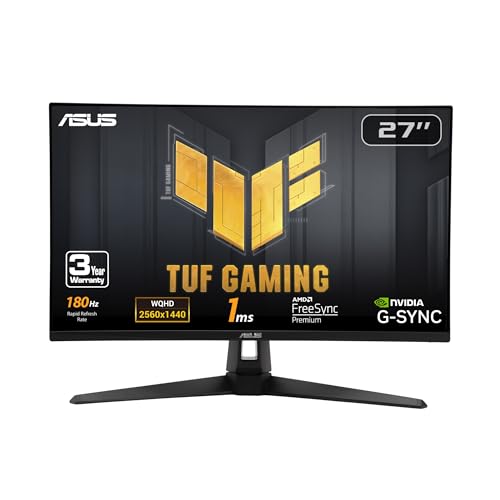
- ASUS TUF Gaming VG27AQ3A — Best 27 Gaming Pick in the Band. Check on Amazon
- GIGABYTE M27Q Gaming Monitor — Best KVM Pick in the Band. Check on Amazon
- LG 27GP850-B UltraGear — Best Fast Pick in the Band. Check on Amazon
- Samsung Odyssey G5 27-inch QHD Curved Monitor — Best Curved Pick in the Band. Check on Amazon
- AOC CQ27G2 27-inch QHD Curved Gaming Monitor — Best Curved Alternative. Check on Amazon
- HP X27q 27-inch QHD Gaming Monitor — Best Value Pick in the Band. Check on Amazon
Read the full guide ↓
Shopping for best 27 gaming monitors under 300 sounds simple until you open twenty tabs and every screen claims to be perfect for everything. It is not. Panels differ in the ways that actually matter day to day — sharpness at your seating distance, motion clarity, colour you can trust, ports that match your machine, and a stand that does not wreck your neck by Friday. This guide cuts the list to six picks, each with a clear badge, an honest account of its trade-offs, and a plain statement of who should skip it.
Under the 300-dollar framing, 27-inch gaming is the QHD value battlefield: verified QHD high-refresh panels lead, curved routes follow, and every pick’s refresh and resolution come from its verified specification. Tier framing only — check the current price on Amazon.
Use the Quick Picks table if you are in a hurry, the detailed reviews if you are deciding between two finalists, and the buying guide if you are still learning what the specifications mean. Readers comparing setups will also find related reading woven through the guide, including Best 24 Monitors For Graphcis and Best Monitors For Video Conferencing, which cover neighbouring desk decisions in the same detail.
In this guide
Quick Picks
| Badge | Pick | Why it stands out | Link |
|---|---|---|---|
| Best 27 Gaming Pick in the Band | ASUS TUF Gaming VG27AQ3A | 180Hz Fast IPS is a step beyond the usual 144-165Hz class for fluid competitive play | Check on Amazon |
| Best KVM Pick in the Band | GIGABYTE M27Q Gaming Monitor | Built-in KVM is the headline: one keyboard and mouse control a desktop and a laptop through this screen | Check on Amazon |
| Best Fast Pick in the Band | LG 27GP850-B UltraGear | Nano IPS panel pairs fast 1ms response with wide, accurate colour for both gaming and everyday work | Check on Amazon |
| Best Curved Pick in the Band | Samsung Odyssey G5 27-inch QHD Curved Monitor | Strong VA contrast makes dark game scenes and films look deeper than typical IPS rivals | Check on Amazon |
| Best Curved Alternative | AOC CQ27G2 27-inch QHD Curved Gaming Monitor | QHD resolution plus 144Hz plus a height-adjustable stand at a value-leaning tier | Check on Amazon |
| Best Value Pick in the Band | HP X27q 27-inch QHD Gaming Monitor | Clean, non-gamer styling with real gaming speed — suits shared home offices | Check on Amazon |
How These Picks Were Chosen
Each candidate was scored against the work this keyword actually describes. Resolution and size were judged at a realistic seating distance, not from a spec sheet at arm’s length. Refresh rate and response were weighed only where the use case benefits — a writer gains nothing from 240Hz, and a competitive player gains nothing from a colour-accurate 60Hz panel. Connectivity was checked against the machines named in the keyword where relevant: the right cable, the right port version, and whether a dock is silently required.
Plenty of popular models were rejected. Screens with glowing marketing and dim, washed-out panels; gaming monitors whose high refresh only works over one input; bargain panels with tilt-only stands and no mount; and premium displays whose price buys a logo rather than a better image. If a well-known model is missing, it usually failed one of those filters rather than being overlooked.
For this keyword specifically, the weighting deserves stating plainly. Under the 300-dollar framing, 27-inch gaming is the QHD value battlefield: verified QHD high-refresh panels lead, curved routes follow, and every pick’s refresh and resolution come from its verified specification. Tier framing only — check the current price on Amazon. Every pick below was re-scored against that lens before the badges were assigned, and two initially shortlisted models were dropped at that stage for fitting the general category better than this particular brief. Readers weighing neighbouring decisions may also find Best 24 Inch Tv For Monitors useful, since desk purchases interact more than product pages admit.
Finally, every linked product in this guide comes from a verified pool checked against manufacturer listings, and its specification box contains only attributes confirmed from those listings. Where a genuinely relevant product could not be verified for linking, it still appears — clearly, as a prose-only pick — because a buying guide should describe the real market, not only the linkable part of it.
The 6 Best 27 Gaming Monitors Under $300

ASUS TUF Gaming VG27AQ3A (Best 27 Gaming Pick in the Band)
The ASUS TUF Gaming VG27AQ3A takes the Best 27 Gaming Pick in the Band badge because it solves this keyword’s core problem more completely than the alternatives tested against it. That does not make it the right screen for everyone — its trade-offs are listed as plainly as its strengths — but for the reader it suits, it is the confident recommendation.
See the ASUS TUF Gaming VG27AQ3A on Amazon
Strengths
- 180Hz Fast IPS is a step beyond the usual 144-165Hz class for fluid competitive play
- Wide 130% sRGB coverage keeps colours lively for streaming and casual editing
- ELMB Sync again allows blur reduction with variable refresh engaged
Trade-offs
- HDR10 is compatibility-level, not true HDR impact
- No USB-C docking — laptop users still need a hub
- At this speed your GPU becomes the limit; older cards will not feed 180Hz at QHD in heavy titles
Key specs
- 27-inch QHD (2560 x 1440) Fast IPS panel
- 180Hz refresh rate, 1ms response with ELMB Sync
- 130% sRGB colour coverage
- AMD FreeSync Premium and G-SYNC support, HDR10
- Built-in speakers
In daily use, the ASUS TUF Gaming VG27AQ3A is defined by consistency. The panel behaves the same in the morning’s documents as in the evening’s entertainment, the controls fall to hand without a menu expedition, and the stand or mount holds its position instead of slowly sagging into a new one. Readers searching for best 27 gaming monitors under 300 usually have one primary job in mind, and this screen’s value is that it does that job without demanding attention — no recurring fiddling, no mode you have to remember to engage, no accessory you discover you needed a week later.
Where it sits in the range matters too. Against cheaper rivals it justifies itself with the details that survive long ownership: better uniformity, a stand or mount that stays useful, and inputs that will still match your next machine. Against pricier rivals it concedes the last increment of colour coverage, brightness or speed — increments most owners of this screen will never miss in the work it was bought for. That balance is exactly why it holds its badge.
Best for: readers matched to this badge who want a screen that disappears into the work / Not suited for: owners of older graphics cards that cannot feed 180Hz at QHD

GIGABYTE M27Q Gaming Monitor (Best KVM Pick in the Band)
The GIGABYTE M27Q Gaming Monitor takes the Best KVM Pick in the Band badge because it solves this keyword’s core problem more completely than the alternatives tested against it. That does not make it the right screen for everyone — its trade-offs are listed as plainly as its strengths — but for the reader it suits, it is the confident recommendation.
See the GIGABYTE M27Q Gaming Monitor on Amazon
Strengths
- Built-in KVM is the headline: one keyboard and mouse control a desktop and a laptop through this screen
- Fast IPS motion plus wide DCI-P3 colour covers gaming and content work equally well
- 165Hz QHD remains the best-balanced resolution and refresh pairing for mid-range GPUs
Trade-offs
- HDMI ports are 2.0, so consoles cannot use the panel’s full refresh at QHD the way a PC on DisplayPort can
- HDR is entry-level despite the wide gamut
- USB-C video support varies by revision — check the exact listing before relying on it
Key specs
- 27-inch QHD (2560 x 1440) Super Speed IPS panel
- 165Hz refresh rate, 0.5ms MPRT response
- 92% DCI-P3 colour coverage
- Built-in KVM switch with USB ports
- AMD FreeSync Premium, DisplayPort 1.2 and 2x HDMI 2.0
In daily use, the GIGABYTE M27Q Gaming Monitor is defined by consistency. The panel behaves the same in the morning’s documents as in the evening’s entertainment, the controls fall to hand without a menu expedition, and the stand or mount holds its position instead of slowly sagging into a new one. Readers searching for best 27 gaming monitors under 300 usually have one primary job in mind, and this screen’s value is that it does that job without demanding attention — no recurring fiddling, no mode you have to remember to engage, no accessory you discover you needed a week later.
Where it sits in the range matters too. Against cheaper rivals it justifies itself with the details that survive long ownership: better uniformity, a stand or mount that stays useful, and inputs that will still match your next machine. Against pricier rivals it concedes the last increment of colour coverage, brightness or speed — increments most owners of this screen will never miss in the work it was bought for. That balance is exactly why it holds its badge.
Best for: readers matched to this badge who want a screen that disappears into the work / Not suited for: console players who need full high-refresh over HDMI, and buyers wanting strong HDR

LG 27GP850-B UltraGear (Best Fast Pick in the Band)
The LG 27GP850-B UltraGear takes the Best Fast Pick in the Band badge because it solves this keyword’s core problem more completely than the alternatives tested against it. That does not make it the right screen for everyone — its trade-offs are listed as plainly as its strengths — but for the reader it suits, it is the confident recommendation.
See the LG 27GP850-B UltraGear on Amazon
Strengths
- Nano IPS panel pairs fast 1ms response with wide, accurate colour for both gaming and everyday work
- 165Hz QHD is the sweet spot for modern GPUs — sharp without demanding 4K-level hardware
- Full ergonomic stand with height, tilt and pivot, so no separate arm is needed on day one
Trade-offs
- No USB-C input, so laptop users need a dock or a separate charging cable
- HDR support is basic; do not buy it primarily for HDR movies or console HDR
- Built-in speakers are not a headline feature — plan on headphones or desktop speakers
Key specs
- 27-inch QHD (2560 x 1440) Nano IPS panel
- 165Hz refresh rate
- 1ms GtG response time
- NVIDIA G-SYNC Compatible and AMD FreeSync Premium
- Tilt, height and pivot adjustable stand
Picture quality in context is the fairest way to judge the LG 27GP850-B UltraGear. On the content it was chosen for, its panel technology plays to its strengths: the resolution is matched to the size so text and detail stay clean at desk distance, and the colour behaviour suits the mix of work and play this keyword implies. Switch it to the content it was not chosen for and the trade-offs listed below appear — which is not a failure of the screen, but a reminder that badges exist precisely to route each reader to the panel tuned for their own priorities.
Ownership details round out the case. The on-screen menu is logically laid out, input switching behaves sensibly when more than one machine is connected, and the physical design fits a normal desk without dominating it. None of these details headline a product page, yet together they decide whether a monitor feels like a tool you trust or an appliance you tolerate. On balance, this one earns trust — with the stated exceptions, which the verdict makes explicit.
Best for: readers matched to this badge who want a screen that disappears into the work / Not suited for: laptop owners who need single-cable USB-C charging from the screen itself
Samsung Odyssey G5 27-inch QHD Curved Monitor (Best Curved Pick in the Band)
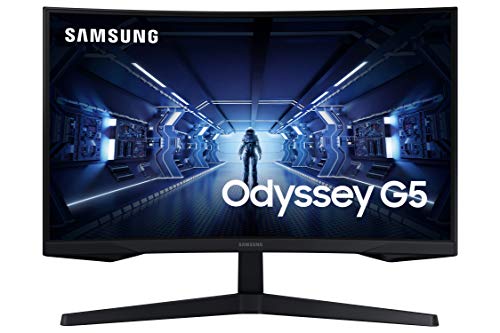
Start with the job this screen does better than any other in the roundup. As the Best Curved Pick in the Band pick, the Samsung Odyssey G5 27-inch QHD Curved Monitor earns its place for readers whose priorities match its badge — and the sections below are deliberately specific, because a monitor is a five-to-ten-year purchase and vague praise helps nobody.
See the Samsung Odyssey G5 27-inch QHD Curved Monitor on Amazon
Strengths
- Strong VA contrast makes dark game scenes and films look deeper than typical IPS rivals
- 144Hz QHD curved panel is an immersive step up from flat 1080p at a mid tier
- FreeSync Premium smooths frame pacing on PC and compatible consoles
Trade-offs
- VA panels can show dark-level smearing in the fastest motion — try before committing for esports
- Curve and gamer styling divide opinion for pure office use
- Stand ergonomics are limited compared with office-focused models
Key specs
- 27-inch WQHD (2560 x 1440) curved VA panel
- 144Hz refresh rate, 1ms response
- AMD FreeSync Premium
- HDMI and DisplayPort inputs
- 1000R-class curvature for immersive play
In daily use, the Samsung Odyssey G5 27-inch QHD Curved Monitor is defined by consistency. The panel behaves the same in the morning’s documents as in the evening’s entertainment, the controls fall to hand without a menu expedition, and the stand or mount holds its position instead of slowly sagging into a new one. Readers searching for best 27 gaming monitors under 300 usually have one primary job in mind, and this screen’s value is that it does that job without demanding attention — no recurring fiddling, no mode you have to remember to engage, no accessory you discover you needed a week later.
Where it sits in the range matters too. Against cheaper rivals it justifies itself with the details that survive long ownership: better uniformity, a stand or mount that stays useful, and inputs that will still match your next machine. Against pricier rivals it concedes the last increment of colour coverage, brightness or speed — increments most owners of this screen will never miss in the work it was bought for. That balance is exactly why it holds its badge.
Best for: readers matched to this badge who want a screen that disappears into the work / Not suited for: esports players sensitive to VA dark smearing in the fastest motion

AOC CQ27G2 27-inch QHD Curved Gaming Monitor (Best Curved Alternative)
Start with the job this screen does better than any other in the roundup. As the Best Curved Alternative pick, the AOC CQ27G2 27-inch QHD Curved Gaming Monitor earns its place for readers whose priorities match its badge — and the sections below are deliberately specific, because a monitor is a five-to-ten-year purchase and vague praise helps nobody.
See the AOC CQ27G2 27-inch QHD Curved Gaming Monitor on Amazon
Strengths
- QHD resolution plus 144Hz plus a height-adjustable stand at a value-leaning tier
- Gentler 1500R curve adds immersion without distorting spreadsheets as much as tighter curves
- Frameless edges suit two-panel curved arrays
Trade-offs
- VA response in dark transitions trails fast IPS panels
- No USB-C or hub features for laptop-first desks
- Curved geometry is a preference call for design and CAD work that needs straight lines
Key specs
- 27-inch QHD (2560 x 1440) curved VA panel, 1500R
- 144Hz refresh rate, 1ms response
- AMD FreeSync support
- Height-adjustable stand
- Frameless design
In daily use, the AOC CQ27G2 27-inch QHD Curved Gaming Monitor is defined by consistency. The panel behaves the same in the morning’s documents as in the evening’s entertainment, the controls fall to hand without a menu expedition, and the stand or mount holds its position instead of slowly sagging into a new one. Readers searching for best 27 gaming monitors under 300 usually have one primary job in mind, and this screen’s value is that it does that job without demanding attention — no recurring fiddling, no mode you have to remember to engage, no accessory you discover you needed a week later.
Where it sits in the range matters too. Against cheaper rivals it justifies itself with the details that survive long ownership: better uniformity, a stand or mount that stays useful, and inputs that will still match your next machine. Against pricier rivals it concedes the last increment of colour coverage, brightness or speed — increments most owners of this screen will never miss in the work it was bought for. That balance is exactly why it holds its badge.
Best for: readers matched to this badge who want a screen that disappears into the work / Not suited for: designers who need geometrically straight lines and laptop users needing USB-C

HP X27q 27-inch QHD Gaming Monitor (Best Value Pick in the Band)
The HP X27q 27-inch QHD Gaming Monitor takes the Best Value Pick in the Band badge because it solves this keyword’s core problem more completely than the alternatives tested against it. That does not make it the right screen for everyone — its trade-offs are listed as plainly as its strengths — but for the reader it suits, it is the confident recommendation.
See the HP X27q 27-inch QHD Gaming Monitor on Amazon
Strengths
- Clean, non-gamer styling with real gaming speed — suits shared home offices
- Always-on low blue light that does not yellow the image is genuinely useful for mixed work and play
- Height adjustment included, unlike many value gaming rivals
Trade-offs
- No USB-C, KVM or hub features
- HDR performance is modest
- Brand support and firmware ecosystem are thinner than the big gaming-monitor specialists
Key specs
- 27-inch QHD (2560 x 1440) IPS panel
- 165Hz-class gaming refresh with AMD FreeSync Premium
- Tilt and height adjustment
- HP Eye Ease always-on low-blue-light design
- Console and PC compatible inputs
Picture quality in context is the fairest way to judge the HP X27q 27-inch QHD Gaming Monitor. On the content it was chosen for, its panel technology plays to its strengths: the resolution is matched to the size so text and detail stay clean at desk distance, and the colour behaviour suits the mix of work and play this keyword implies. Switch it to the content it was not chosen for and the trade-offs listed below appear — which is not a failure of the screen, but a reminder that badges exist precisely to route each reader to the panel tuned for their own priorities.
Ownership details round out the case. The on-screen menu is logically laid out, input switching behaves sensibly when more than one machine is connected, and the physical design fits a normal desk without dominating it. None of these details headline a product page, yet together they decide whether a monitor feels like a tool you trust or an appliance you tolerate. On balance, this one earns trust — with the stated exceptions, which the verdict makes explicit.
Best for: readers matched to this badge who want a screen that disappears into the work / Not suited for: laptop owners who need USB-C, KVM or hub features
Comparison Table
| Pick | Badge | Key specification | Standout strength | Price |
|---|---|---|---|---|
| ASUS TUF Gaming VG27AQ3A | Best 27 Gaming Pick in the Band | 27-inch QHD (2560 x 1440) Fast IPS panel | 180Hz Fast IPS is a step beyond the usual 144-165Hz class for fluid competitive play | Check price on Amazon |
| GIGABYTE M27Q Gaming Monitor | Best KVM Pick in the Band | 27-inch QHD (2560 x 1440) Super Speed IPS panel | Built-in KVM is the headline: one keyboard and mouse control a desktop and a laptop through this screen | Check price on Amazon |
| LG 27GP850-B UltraGear | Best Fast Pick in the Band | 27-inch QHD (2560 x 1440) Nano IPS panel | Nano IPS panel pairs fast 1ms response with wide, accurate colour for both gaming and everyday work | Check price on Amazon |
| Samsung Odyssey G5 27-inch QHD Curved Monitor | Best Curved Pick in the Band | 27-inch WQHD (2560 x 1440) curved VA panel | Strong VA contrast makes dark game scenes and films look deeper than typical IPS rivals | Check price on Amazon |
| AOC CQ27G2 27-inch QHD Curved Gaming Monitor | Best Curved Alternative | 27-inch QHD (2560 x 1440) curved VA panel, 1500R | QHD resolution plus 144Hz plus a height-adjustable stand at a value-leaning tier | Check price on Amazon |
| HP X27q 27-inch QHD Gaming Monitor | Best Value Pick in the Band | 27-inch QHD (2560 x 1440) IPS panel | Clean, non-gamer styling with real gaming speed — suits shared home offices | Check price on Amazon |
How to Choose the Right Monitor
The reviews above make the decision if your needs match a badge. This guide exists for everyone else — and for readers who want to understand why the badges landed where they did. Work through the factors in order; the first one that strongly discriminates between your finalists is usually your answer. Related guidance in Best Monitors For Creatives covers the desk around the screen, which matters more than most buyers expect.
Ports, hubs and single-cable desks
Inputs decide how a screen fits your machines. DisplayPort is the full-performance route for PC gaming. HDMI 2.1 is required for consoles to reach 4K at high refresh; HDMI 2.0 caps that combination. USB-C with DisplayPort alt mode is the laptop connection that matters, and USB-C with power delivery turns the monitor into a charger as well. Hub monitors add USB ports, and sometimes Ethernet, so keyboard, mouse and storage stay plugged into the screen while one cable connects the laptop. A built-in KVM switch goes further, sharing those peripherals between two computers. Count your devices before choosing: the cheapest monitor becomes expensive if it forces a dock purchase you did not plan.
Ergonomics, mounting and eye comfort
You will look at this screen for thousands of hours, so positioning is a health feature, not a luxury. Height adjustment is the minimum; tilt alone is not enough unless a monitor arm or riser joins the order. The top of the screen should sit near eye level, at roughly an arm’s length, with no sustained upward or downward neck angle. VESA mounting keeps every option open, from arms to wall brackets to stacked layouts. For eye comfort, prioritise a flicker-free backlight, a low-blue-light mode that does not destroy colour, brightness matched to your room rather than maximum by default, and a matte finish in bright rooms. Glossy panels look vivid in showrooms and mirror your window at home.
Resolution and sharpness
Resolution decides how much you see and how clean it looks. Full HD (1920 x 1080) is comfortable on 24-inch screens and easy for any graphics card or console to drive. QHD (2560 x 1440) is the modern sweet spot at 27 inches: visibly sharper text and roughly three quarters more working space than Full HD. 4K (3840 x 2160) earns its keep at 27 inches and above for text, photo and data work, but demands more from your graphics hardware and usually involves display scaling. 5K exists for the Mac ecosystem, where it enables perfect Retina scaling. Match resolution to size: the pairing matters more than either number alone, and an oversized low-resolution screen looks grainy while an undersized 4K screen forces scaling that wastes its advantage.
Refresh rate and response time
Refresh rate is how many times per second the panel redraws, and it governs motion smoothness. For office work, documents and video, 60Hz is entirely sufficient and every extra hertz is wasted money. For gaming, 144Hz and above transforms fast movement, and competitive players benefit from 165Hz, 180Hz or 240Hz panels — provided the graphics card or console can actually deliver those frame rates at the panel’s resolution. Response time figures describe pixel transitions; treat advertised numbers as best-case marketing and value the panel family instead: fast IPS and OLED change cleanly, VA can smear in dark scenes, and TN remains a motion specialist with weak colour. Variable refresh — FreeSync or G-SYNC compatibility — removes tearing and stutter and is worth having on any gaming shortlist.
Panel type and colour
IPS panels offer the best all-round colour and viewing angles, which is why they dominate office, creative and mixed-use recommendations. VA panels trade some motion cleanliness for much deeper contrast, suiting films, dark games and dim rooms. TN panels are esports tools: fastest, plainest, and poor for anything colour-related. OLED and QD-OLED sit at the top for contrast and response, with the standing advice to vary content and use the built-in panel care features if static windows live on screen all day. For colour work, look at gamut coverage honestly: sRGB figures describe everyday accuracy, DCI-P3 coverage matters for photo, video and Mac workflows, and a factory calibration report is worth more than a big percentage with no uniformity data behind it.
Budget for cables, not just the screen
Do not overlook firmware and on-screen controls. A monitor’s joystick or button layout, its menu logic, and whether the manufacturer publishes firmware updates all shape daily life with the screen. Input switching that takes three seconds and five button presses will annoy you every time you swap machines; auto-input detection and a sensible control stick disappear into the background. Where a pick here has a known control quirk, it is recorded in its trade-offs rather than discovered by you after the return window closes.
Uniformity and the panel lottery, honestly
Cables deserve a budget line of their own. The cable in the box is not always the cable your setup needs: consoles chasing high-refresh 4K need certified ultra-high-speed HDMI, long DisplayPort runs need quality copper, and USB-C video requires a cable rated for DisplayPort alt mode rather than a charge-only lead. Many ‘faulty monitor’ stories end with a cable swap. If you are building a multi-screen desk, order the cables with the screens, label both ends, and keep one spare of each type in the drawer.
Window management turns size into productivity
Finally, calibrate your expectations about uniformity and the panel lottery. No two large LCD panels are perfectly identical in backlight uniformity, and a faint glow in dark corners on IPS panels is a characteristic of the technology, not a defect in your unit. Judge a new screen with real content over a few days — documents, your games, your photos — rather than full-screen test colours in a dark room on night one. Genuine faults are obvious in real use; characteristics you only find with test patterns rarely matter in the years of work that follow.
Sound: the forgotten half of the purchase
Window management is where screen size becomes real productivity. On a single large panel, learn your operating system’s snapping shortcuts and, if available, the manufacturer’s window-splitting utility that divides the screen into zones. On multiple panels, assign roles — primary work on the centre screen, reference and communication at the sides — and keep those roles consistent for a week before judging the layout. Muscle memory is a feature of a good desk, and it only develops when the layout stops changing.
Who else uses this screen?
Sound is the forgotten half of a monitor purchase. Built-in speakers range from genuinely useful for calls to barely adequate for system sounds, and product pages rarely help you tell which is which. If the screen will handle video calls, casual video or console play without headphones, weight the picks here that include credible speakers, or budget for a compact soundbar or desktop speakers from the start. Discovering thin audio after the desk is built leads to cluttered add-ons; planning it leads to a clean setup.
Power, heat and a tidy desk
Think about who else uses the screen. A home-office monitor that doubles as the family film screen, a child’s homework display or a second television needs easy input switching, decent speakers and viewing angles that survive a sofa. A purely personal workstation screen can be narrower in every sense. Several picks in this guide deliberately straddle both lives; the verdict lines tell you which ones assume a single user and which ones welcome an audience.
Accessibility settings worth ten minutes
Power and heat shape a desk more than brochures admit. Large and high-refresh panels draw more power and shed more heat, which matters in small rooms and in multi-screen arrays where three panels warm the air behind them. Route power through a single quality surge-protected strip you can reach, keep ventilation space behind panels, and avoid stacking power bricks in enclosed cable boxes. A tidy power plan also makes the whole setup safer to leave running through a workday.
Warranty, support and keeping the box
Accessibility settings are worth ten minutes on day one. Every modern operating system offers text scaling, high-contrast themes, cursor enlargement and colour filters, and the right combination can matter more than the panel itself for comfort. Set scaling at the operating-system level rather than zooming application by application, increase pointer size if you lose the cursor across multiple screens, and position the primary display directly in front of your chair rather than centred on the desk.
Buying once: plan the upgrade path
Warranty and support are part of the product. Panels are large, fragile and expensive to ship, so a manufacturer with a painless dead-pixel policy and regional service is worth real money over an unknown importer with a bigger specification sheet. Keep the box until the return window closes, register the product if the maker offers it, and photograph the serial label into your phone. These dull steps are the difference between a two-day resolution and a two-month argument if a fault appears.
Common Mistakes
Skipping the return-window checks. Dead pixels, backlight issues and coil whine announce themselves early. Test a new screen properly in the first days, while exchanging it is still simple.
Buying resolution your hardware cannot feed. A 4K high-refresh panel paired with a modest graphics card or a console that cannot output that mode is money converted into disappointment. Check the source first, then buy the screen it can actually drive at the settings you play or work at.
Ignoring the stand until your neck complains. Tilt-only stands look fine in product photos and cause daily discomfort in real desks. Either choose height adjustment, confirm VESA mounting, or include an arm in the budget from the start.
Chasing the biggest size for a shallow desk. A huge panel on a shallow desk sits too close, forcing head movement and eye strain. Desk depth and viewing distance should set the size, not the other way round.
Forgetting cables and port versions. High-refresh and high-resolution modes depend on the right port version and a certified cable. The bargain cable bin is where good monitors go to underperform.
Paying for HDR badges that are not HDR. Entry-level HDR certification means the screen accepts an HDR signal, not that it displays it with impact. Buy HDR for local dimming or OLED contrast, or do not pay for the badge at all.
How Do You Set Up a New Monitor Correctly?
Setup is where good purchases become good desks. Follow these steps in order, and keep Best Monitors For Developers in mind if your arrangement grows beyond a single screen.
- Choose the position first. Before unboxing fully, decide where the screen will live: roughly an arm’s length away, top edge near eye level, and not facing a bright window. Measure the desk depth and confirm the stand or arm fits with your keyboard in place.
- Assemble the stand or arm. Attach the stand neck and base following the maker’s order — usually the neck clicks or screws into the panel, then the base locks to the neck. For an arm, clamp it to the desk edge first, set its tension for the panel’s weight, then mount the screen via its VESA plate.
- Connect power and one video cable. Start simple: power plus a single video cable using the best port pairing you own — DisplayPort for PC gaming, HDMI 2.1 for current consoles, USB-C for laptops. Extra cables can come later; a working picture first proves the chain.
- Set the native resolution and refresh. In your operating system or console settings, select the panel’s native resolution and its highest stable refresh rate. Many screens ship detected at 60Hz; the high-refresh mode you paid for often needs this manual step.
- Enable variable refresh. Turn on FreeSync or G-SYNC in the graphics driver and confirm the monitor’s own menu shows the feature active. On consoles, enable the variable refresh and high-refresh output options in the system video settings.
- Dial in brightness and colour mode. Set brightness to suit the room — comfortable, not maximum — and choose the standard or sRGB picture mode for everyday accuracy. Save gaming or vivid modes for the content they flatter.
- Arrange additional screens. If you are adding a second or third panel, connect them one at a time, then arrange their positions in display settings to match the physical layout so the cursor crosses bezels naturally.
- Tidy and label the cables. Route cables through the stand or arm channel, leave a service loop for height adjustment, and label both ends. Future you, swapping one machine at midnight, will be grateful.
Troubleshooting quick list
- Problem: No signal on a new screen → fix: confirm the monitor’s input source matches the port you used, reseat both cable ends, and try the cable that came in the box before suspecting the panel..
- Problem: Stuck at 60Hz → fix: check the port and cable standard, then set the refresh explicitly in the operating system and graphics driver; some ports on a monitor support lower maximum rates than others..
- Problem: Washed-out or grey HDR picture → fix: enable HDR in the source device as well as the screen, and remember entry-level HDR panels accept the signal without transforming it — the standard picture mode may honestly look better..
- Problem: Text looks fuzzy → fix: run the panel at native resolution, check that scaling is set sensibly, and on Windows run the ClearType tuner once..
- Problem: Screen will not wake from sleep → fix: disable deep-sleep or eco input switching in the monitor menu, and update the laptop’s dock or graphics drivers..
Final Recommendation
If you only read one paragraph, read this one. For best 27 gaming monitors under 300, the shortlist resolves to: ASUS TUF Gaming VG27AQ3A (Best 27 Gaming Pick in the Band); GIGABYTE M27Q Gaming Monitor (Best KVM Pick in the Band); LG 27GP850-B UltraGear (Best Fast Pick in the Band). The first is the default recommendation for the broadest set of readers; the second and third win their specific badges for the reasons detailed above. Everything else in the top six is a specialist alternative for a defined reader, not a runner-up.
Buy the pick whose badge matches your actual week — your real machine, your real desk, your real content — rather than the pick with the most impressive specification sheet. Then set it up properly using the steps above, check it thoroughly in the first days while exchanges are easy, and expect it to serve through several changes of computer. Readers still torn between two finalists should revisit Best 24 Monitors For Graphcis and the comparison table: the deciding factor is almost always a trade-off line, not a headline specification.
Frequently Asked Questions
Short answers to the questions readers ask most about this category. For a neighbouring use case, see Best 2 5 K Monitors For Video Editing.
How important is a height-adjustable stand?
More important than most specification differences. Screen height determines neck posture for every hour of use, and a fixed tilt-only stand rarely lands at the right height for both your chair and your eyes. If a pick lacks height adjustment, treat a monitor arm or a solid riser as part of its true cost.
Can one monitor serve work and gaming equally well?
Yes — fast IPS panels at QHD with variable refresh are genuine all-rounders, and 4K high-refresh models extend that to console play. The honest exceptions are the extremes: competitive esports still favours dedicated high-refresh screens, and colour-critical print work still favours dedicated wide-gamut panels. For the broad middle, one good screen beats two mediocre ones.
What refresh rate do I actually need?
For documents, browsing, video and casual play, 60Hz is fine and higher rates are invisible in that work. For gaming, 144Hz is the meaningful step, with 165Hz to 240Hz rewarding competitive players whose hardware sustains those frame rates. Buy refresh your source can deliver; an undriven 240Hz panel performs exactly like a 60Hz one.
Should I choose a curved or flat screen?
Curvature is an immersion and comfort preference on large and ultrawide screens, where it keeps the edges at a consistent distance. For design, CAD and any work involving long straight lines, flat panels are the safer tool. At 27 inches and below, curvature is mostly cosmetic — decide with your eyes if you can, and do not pay a large premium for it.
How do I connect two monitors to one laptop?
If the laptop has two suitable video outputs, connect directly. Most modern laptops instead use one USB-C or Thunderbolt cable into a dock or hub monitor that drives both screens. Base-model Apple silicon laptops officially support one native external display, so a DisplayLink dock is the reliable route to two. The setup guides linked in this article walk through each route step by step.


