ilcastellomenu.com is reader-supported. When you buy through links on our site, we may earn an affiliate commission.
Where to Buy
Buy at this level from sellers whose returns window covers a month of real shooting, and check current listings before falling in love — this tier’s prices breathe with seasons, bundles and successors, so treat the thousand as a planning line rather than a prophecy. Amazon stocks every camera below, as kits and as bodies. If you are choosing the best cameras for 1000, the first thing to know is that this is photography’s sweetest budget: enough for a genuine system with a future, not so much that mistakes become expensive. Every pick here is a good camera; the guide’s work is matching each to the photographer it will make happiest.
The second thing to know is that the thousand should rarely be spent on a camera alone. The complete purchase — body, the lens it will live on, a card, a spare battery, the bag — is what photographs your year, and several picks below earn their place by leaving the total with room to complete that purchase properly. A camera at the line with nothing left for its prime lens is a poorer thousand than a camera below the line with the prime included.
Finally, this budget buys the end of a certain kind of excuse. Detection autofocus, honest sensors and real lens systems are all present here. What varies is fit — to your subjects, your light, your carrying habits and your ambitions — and fit, unlike specification, cannot be upgraded later. Choose for the photographer you demonstrably are, with one eye on the one you are becoming.
Bundle literacy helps at this tier: a kit that includes the second battery and a genuinely fast card can be worth more than a slightly lower headline price on a bare body. Read bundles as shopping lists rather than discounts, and choose the one whose contents you would have bought anyway.
Do not overlook certified refurbished channels at this level: manufacturer-refurbished bodies carry warranties and meaningful savings, and they suit a budget defined by a round number particularly well. A refurbished system body plus a new prime is one of the classic ways a thousand outperforms itself.
Key Takeaways
- Spend the thousand on a complete kit, not a bare camera: body, lens, card, battery, bag.
- System cameras at this level keep every lens purchase useful for years.
- Street prices move around the line seasonally — buy the configuration, not the headline.
- APS-C and Micro Four Thirds at this budget are strategies, not compromises.
- The pocket compact is the right answer when presence matters more than growth.
In this guide
Quick Picks
| Camera | Badge | Why it earns its place |
|---|---|---|
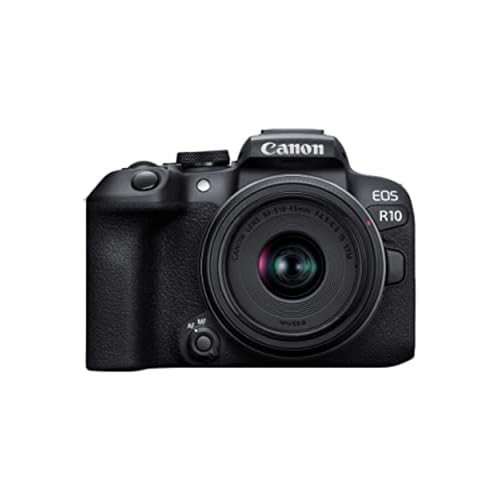
| Canon EOS R10 | Best camera around this budget overall | A complete RF system starter whose kit lands near the line and whose lenses last for years. |
| Nikon Z50 II | Best Nikon around this budget | Z-system quality with bird detection and full-frame lens compatibility at a kit price near the line. |
| Sony ZV-E10 II | Best creator camera around this budget | Creator autofocus and E-mount depth for the channel-first buyer at this level. |
| Canon EOS R50 | Best value system start | Below the line as a kit, leaving room for the prime lens that changes everything. |
| OM SYSTEM OM-5 Mark II | Best travel camera around this budget | Weather-sealed Micro Four Thirds reach and lightness for photographers whose subjects are far away. |
| Sony RX100 VII | Best pocket camera around this budget | A genuine pocket camera with a real zoom and serious autofocus — the photographer’s everyday carry. |
How Did We Choose Cameras at This Level?
We simulated complete purchases. For each candidate we priced the realistic first kit — the body in its common kit form, the second lens its owners predictably buy, storage and power — and ranked the resulting photographer’s capability, not the body’s specification in isolation. That simulation is why two sibling Canons both appear: they complete different kits for different buyers inside the same total.
Growth was scored as a financial asset. A camera whose lenses, accessories and eventual body upgrades stay inside one mount converts spending into equity; a dead-end camera converts it into depreciation. At a thousand, that difference is worth several hundred in future value, and the guide treated it accordingly.
We also respected the pocket. One pick has no system at all, included because a substantial tribe of photographers at this budget values presence over potential — and for that tribe, the finest system camera is the one in the shop window while life happens elsewhere. Honesty about who should not buy a system is part of choosing well.
We also weighed the intangibles that decide second-year satisfaction: whether the camera’s community produces tutorials for your subjects, whether its accessories are priced sanely, whether its maker supports it with firmware rather than forgetting it at launch. A thousand buys a relationship with a manufacturer as well as an object, and the guide preferred relationships with evidence of care.
Longevity of support closed the scoring. Firmware histories, tutorial ecosystems and the sheer number of working photographers using each system were treated as evidence about the next five years, because a camera bought for a season can be judged on its launch, while a camera bought for half a decade must be judged on its community.
Which Cameras Make a Thousand Feel Well Spent?
Six ways to spend the same money: four systems, one strategy pair, and a pocket. Read for the kit each builds, not the body alone.
A note on the numbers in the verdicts: they describe the planning budget from the keyword, not a promise about any single day’s listing. Configurations matter more than headlines — the same body can sit inside or outside the line depending on the lens bundled with it, and the wise buyer compares complete kits rather than bare bodies.

Canon EOS R10 — Best camera around this budget overall
A thousand, give or take the season’s pricing, is the budget where photography gets serious without getting solemn, and the R10 is its most complete citizen. As a kit it lands in this territory honestly; as a system decision it is better than honest, because every RF lens bought for it remains a working asset when the body eventually upgrades. Beginners and returning photographers get detection autofocus that simply works, colour that flatters the family, and controls that teach rather than intimidate.
The body’s pleasures are practical: a proper grip, a viewfinder that invites two-eyed composition, and menus that a newcomer can explore without fear. Its files in decent light are indistinguishable in family albums and portfolios from work costing far more; the differences appear at the edges — the darkest venues, the deepest crops — which is exactly where a sensible buyer at this level should accept them.
Treat the kit lens as the survey course and plan the prime: after a season, your own files will name the focal length you live at, and the R10’s mount makes that prime a permanent purchase rather than a placeholder. Few purchases at this level age as gracefully as a system started properly, and this is the guide’s benchmark for starting properly.
Its viewfinder deserves a beginner-specific defence: composing with the camera at the eye shuts out the world’s distractions and steadies the body against the face, and photographers raised on viewfinders develop a concentration that screen-shooters often envy. At this price, that discipline is a feature, not a nostalgia act.
Second-hand RF lenses have begun to circulate generously, which improves this pick yearly: the professional standard zoom that was next year’s dream becomes this year’s used bargain, and the R10 wears it without complaint. Systems appreciate; this one’s appreciation is visible.
Family historians praise its dependability across the unglamorous calendar — school terms, birthdays, wet weekends — where its autofocus and colour simply never become the story. Reliability across ordinary life is the highest praise a family camera can earn.
Its files interleave happily with bigger Canon bodies in a shared archive, so the family or team that standardises on RF edits one colour language. Consistency across a household’s cameras is an invisible luxury that grows more valuable every year.
Sports-day parents find its tracking honest at school level — the match, the race, the prize-giving — which covers the action photography most households actually need, without a sports body’s price or weight.
- Sensor: APS-C, clean in ordinary light
- Lens system: RF mount, professional ladder
- Autofocus: face and animal detection
- Viewfinder: electronic, two-eyed composition
- Kit form: commonly sold with a versatile zoom
Strengths
- Complete system start near the budget line
- Lenses outlive the body usefully
- Handling teaches real craft
Trade-offs
- No in-body stabilisation
- Low-light ceiling is APS-C class
- Single card slot
Best for: serious starters and returning photographers building a Canon system from a sane total.
Not suited for: professionals needing dual slots and full-frame sensitivity immediately.

Nikon Z50 II — Best Nikon around this budget
Nikon’s answer at this level mirrors Canon’s strategy with Nikon’s virtues: mature colour, honest metering and a mount whose full-frame lenses work today and belong tomorrow. The Z50 II adds subject detection — birds included — that embarrasses its price class, making it the pick for the budget photographer whose subjects include the garden’s feathered population as well as the family.
The kit arithmetic is the appeal. Body and zoom together live around this guide’s line in most seasons, leaving the second lens — the fast prime that transforms indoor family photography — within the same total plan rather than next year’s. Photographers consistently underestimate how much that sequencing matters: a complete modest kit photographs more than an incomplete ambitious one.
Ergonomics carry the Nikon signature: a grip that fits, controls that fall where fingers expect, and a general sense of an instrument designed by photographers rather than a committee. Its ceiling is the APS-C ceiling shared across this guide — sensitivity and native crop-lens depth — but as a thousand’s worth of photographic future, it is thoroughly convincing.
Its highlight-protecting metering earns its keep in the beginner’s hardest common scene — the bright day with white dresses, pale beaches and dark shade in one frame. Files that keep their skies and faces simultaneously are files a beginner can be proud of without knowing why, which is the best kind of early encouragement.
The Z system’s telephoto values flatter its bird promise: attainable long zooms in Z mount turn the garden-bird hobby into genuine wildlife practice without a system change. A starter body whose hobby can deepen in place is a starter body bought once.
Its compact kit slips into a day bag without displacing the day, which is why its owners’ archives are so complete: the camera attended. Attendance is a specification the industry cannot print, and this body has it.
The Z50 II’s video is a respectable understudy — family films and club presentations come home clean — so the stills-first buyer is not exiled from motion while the system grows.
Its JPEGs need so little persuasion that owners share same-day galleries from events while rivals are still importing. In family and club life, the fastest good photograph beats the slowest perfect one.
- Sensor: APS-C with Nikon colour behaviour
- Autofocus: detection including birds
- Lens system: Z mount, full-frame compatible
- Kit form: body and zoom near the budget line
- Ergonomics: strong grip, plain controls
Strengths
- Bird detection at a friendly total
- Z lenses are permanent purchases
- Metering that protects highlights
Trade-offs
- Native DX lenses still few
- Low-light headroom behind full-frame
- No in-body stabilisation
Best for: Nikon loyalists and garden-wildlife beginners building a Z system affordably.
Not suited for: buyers needing a complete native crop lens shelf today.

Sony ZV-E10 II — Best creator camera around this budget
At this budget the creator’s question changes: not whether the camera can film them — all can — but whether it can anchor a channel’s look for years. The ZV-E10 II answers with the strongest autofocus in this guide, creator features that save takes daily, and admission to the E-mount library, where the wide prime their room needs and the portrait lens their style discovers already wait at several prices.
Its stills are good enough that the creator who falls for photography — a common and happy accident — is not forced to restart with a second body. That optionality is worth money at this level, because channels evolve: today’s unboxing desk is tomorrow’s travel series, and a body that grows sideways into stills protects the whole investment.
The compromises are the creator compromises: stabilisation that asks for a tripod or gimbal when walking, and controls simplified toward production rather than contemplation. For its intended buyer those are scheduling notes, not flaws. If your thousand is buying an audience-facing instrument first and a camera second, this is the instrument.
Its lens library includes the compact primes that keep a creator’s rig genuinely portable — the desk camera that also travels in a jacket. Portability across a channel’s whole life, from bedroom studio to location series, is a production asset accountants understand.
Stills shooters underestimate its burst and tracking for family sport: children, dogs and school football are well within its autofocus parish. The creator body moonlighting as the family camera is a budget consolidation many households will appreciate.
Its silence in stills mode suits ceremonies and content filmed in libraries, galleries and places of worship — venues where a shutter’s announcement would end the assignment. Discretion is a creator feature too.
Its app ecosystem respects the phone-first editor: footage and stills land where the captions are written, and a channel’s turnaround stays inside one evening. Speed of publishing is a growth feature for small channels.
Guest appearances on other people’s channels are where its autofocus reputation travels: hosts notice when a guest’s camera simply never loses their face. Reputation by reliability is the creator economy’s real currency.
- Sensor: APS-C, creator tuned
- Autofocus: face, eye and product tracking
- Lens system: E-mount, deepest creator library
- Features: product showcase, defocus aids
- Workflow: phone-friendly transfers
Strengths
- Autofocus that protects solo productions
- Lens growth without body changes
- Stills good enough to grow into
Trade-offs
- Walking footage needs stabilisation help
- Simplified stills controls
- No viewfinder
Best for: channel builders and reviewers whose camera is a production partner.
Not suited for: viewfinder traditionalists and hand-held walking vloggers.

Canon EOS R50 — Best value system start
The R50’s role at this budget is strategic generosity: it costs enough less than the line, as a kit, to fund the accessories and the fast prime that complete a photographer’s first real kit inside the same thousand. Guided modes explain the camera’s thinking while its autofocus quietly handles the subjects, so the beginner’s first season produces keepers and understanding in equal measure — a combination rarer than it should be.
Compared with its R10 sibling, the R50 trades some handling depth and the viewfinder-centred experience for simplicity and savings. Which sibling suits you is a question about your hands and habits: photographers who compose on screens and value the leftover budget will prefer this one; photographers who want the more traditional instrument should stretch to the R10. Both keep every lens purchase permanent, which is the decision that actually matters.
Its files reward the learning photographer: honest colour, forgiving JPEGs, and RAW files that the free editors handle kindly when editing curiosity arrives. As the cheapest honest door into a professional ecosystem in this guide, it converts a thousand into a system, a prime and a year’s momentum — an allocation few rivals can match.
Its guided interface deserves respect as pedagogy: the camera shows its working, so the beginner’s mental model of exposure forms correctly from the first week. Photographers taught by explanation outgrow assistance; photographers merely assisted stay assisted, and the difference compounds for years.
As a household’s second camera it shines socially: a partner or teenager can pick it up in automatic and produce keepers, while its owner shoots manual on the same lenses. Shared systems create shared archives, and shared archives are the ones families actually keep.
For students, its price leaves the semester’s other costs survivable while still delivering portfolio-grade files. A camera that respects a student budget without patronising a student eye is rarer than it should be.
It forgives the beginner’s two classic technical sins — missed exposure and casual white balance — with files that tolerate correction gracefully. Forgiveness in a first camera is not weakness; it is how confidence survives contact with reality.
It is the camera photography teachers recommend without caveats to adult learners, because its explanations and its files both respect the student. Tools that respect learners produce photographers.
- Sensor: APS-C, forgiving files
- Guidance: assist modes that explain
- Lens system: RF mount, full ladder
- Kit form: leaves budget for a prime
- Autofocus: face and eye detection
Strengths
- Complete first kit within the total
- Teaching interface for true beginners
- RF lenses are forever purchases
Trade-offs
- Controls simplified for learners
- No in-body stabilisation
- Viewfinder experience is basic
Best for: beginners who want the whole first kit — body, zoom and prime — inside one budget.
Not suited for: experienced shooters wanting deeper handling and controls.

OM SYSTEM OM-5 Mark II — Best travel camera around this budget
A thousand spent on travel and nature has a different exchange rate, and the OM-5 Mark II is where that rate is best. Its sensor doubles every lens’s effective reach, so the telephoto that wildlife and landscape detail demand costs and weighs a fraction of full-frame equivalents — and the whole kit, body and two lenses, fits the small bag that actually gets carried up the mountain, onto the kayak, through the airport.
Weather sealing is the second half of the travel case. This lineage builds for the conditions travel actually includes — sea spray, drizzle, dust, dawn cold — and its stabilisation lets hand-held shooting continue into light where rivals are unpacking tripods. Computational features serve the travelling naturalist: neutral-density effects for waterfalls without filters, high-resolution modes for the perched and the still.
The sensor’s toll is darkness: city nights and forest gloom ask more of it than of the larger-sensor picks, and its files reward careful exposure. For the photographer whose thousand funds journeys rather than venues, that is the right toll to pay — reach, sealing and lightness are the currencies of the road, and this body is rich in all three.
Its in-body stabilisation rescues the travelling photographer’s most common casualty: the dawn shot before coffee, hand-held at a viewpoint while the tour moves on. Sharpness at the unrepeatable moment is the whole game in travel, and this body is ruthlessly good at it.
The system’s macro lenses open a second hobby inside the same small bag — the insect, the flower, the texture — which suits the naturalist traveller whose subjects change scale hourly. Versatility per gram remains its unanswerable argument.
Birders on a budget have built entire practices on its reach arithmetic, producing work that embarrasses heavier kits at public hides. The regulars learn to check the badge twice.
Its live composite and night features turn travel evenings into long-exposure playgrounds without a laptop’s tethering — light trails, night skies and harbour scenes from a body that fits a coat. Play, again, is curriculum.
Expedition and field-course leaders carry it as the teaching camera: sealed, light, and capable of demonstrating reach and stabilisation principles in the conditions themselves. Equipment that teaches in weather earns its passage.
- Sensor: Micro Four Thirds, doubled reach
- Sealing: serious weather resistance
- Stabilisation: excellent for travel hand-holding
- Lens system: compact telephotos and zooms
- Features: computational ND and high-res modes
Strengths
- Wildlife reach at travel weight
- Built for weather, not despite it
- Complete travel kit fits a small bag
Trade-offs
- Night files need care
- Detection AF behind Sony
- Smaller accessory ecosystem
Best for: travellers, hikers and nature photographers who carry their kit all day.
Not suited for: nightlife and dark-venue specialists.

Sony RX100 VII — Best pocket camera around this budget
There is a buyer at this budget for whom every interchangeable-lens pick fails the only test that matters: it will not be in the pocket when the moment happens. The RX100 VII is that buyer’s camera — a true pocket instrument with a versatile zoom, autofocus inherited from Sony’s professional line, and image quality that embarrasses phones precisely where phones are weakest: real optical zoom, real low-light dignity, real depth.
Its used market is part of the recommendation, because this premium compact’s street and second-hand prices are what bring it into a thousand’s orbit. Bought clean, it becomes the everyday carry of photographers who own bigger systems and the only camera of minimalists who refuse systems entirely. Both tribes report the same phenomenon: the pocket camera takes the year’s most-loved photographs, because it attended the year’s most-loved moments.
The costs are ergonomic and absolute: small controls that reward small fingers, a sensor that still asks for light by professional standards, and no lens future to grow into. It is a finished object, not a platform. For the buyer who knows their photography is a practice of presence rather than equipment, that finality is not a limitation — it is the entire, elegant point.
Its autofocus tracking at family events — the school play from row nine, the goalmouth scramble — is where owners forgive its price entirely. A pocket camera that actually focuses on the moving child is a category of one, and categories of one get to set their prices.
It also serves professionals as the scouting and notebook camera: locations logged, light tested, compositions sketched, all in a device that attends every site visit because it attends every trouser pocket. Notebooks that are always present beat masterpieces that are sometimes possible.
Its one-inch sensor and real zoom make it the default recommendation photographers give their own parents — capable enough to honour the family archive, simple enough to be used without a helpline.
For journalists and researchers it is the notebook that photographs: present at the interview, the site visit and the archive, producing publishable evidence without the theatre of a big camera. Professions that run on presence adopt it quietly.
Its macro-adjacent close focus delights the everyday documenter — menus, manuscripts, market produce, the dog’s implausible sleeping positions — the near world that fills real archives.
- Sensor: 1-inch class in a true pocket body
- Lens: built-in versatile zoom
- Autofocus: professional-lineage tracking
- Video: capable for travel and family
- Role: everyday carry and minimalist’s only camera
Strengths
- Present at every moment by design
- Real zoom and autofocus in a pocket
- Deep used market near this budget
Trade-offs
- Controls are miniature
- No lens system to grow
- Sensor behind interchangeable picks
Best for: minimalists, travellers and system owners wanting a serious pocket companion.
Not suited for: photographers planning a lens collection or large prints.
How Do the Six Compare Side by Side?
Compressed to the decision that matters: what kind of photographic future each purchase starts.
Notice, too, what the table cannot show: how each of these feels after a month of Tuesdays. That is the handling test’s territory, and it is why the guide keeps sending you, impolitely, to a shop counter or a rental weekend before the money moves.
| Camera | Type | Standout strength | Watch out for |
|---|---|---|---|
| Canon EOS R10 | APS-C mirrorless | System value and handling | No in-body stabilisation |
| Nikon Z50 II | APS-C mirrorless | Nikon colour and Z future | DX lens shelf still growing |
| Sony ZV-E10 II | APS-C mirrorless, creator focused | Autofocus and creator tools | Stabilisation needs support |
| Canon EOS R50 | APS-C mirrorless | Value inside RF system | Simplified controls, no IBIS |
| OM SYSTEM OM-5 Mark II | Micro Four Thirds mirrorless | Reach and sealing per kilo | Small sensor after dark |
| Sony RX100 VII | Premium compact, 1-inch sensor | Pocketability with real optics | Premium price for a compact, small controls |
How Should a Thousand Be Divided Across a First Serious Kit?
A resilient allocation gives the body and its kit lens roughly two-thirds, the second lens — usually the fast prime your files will request — roughly a fifth, and the remainder to the unglamorous infrastructure: fast cards, a spare battery, a bag that fits the actual kit, and a backup drive. Photographers who follow some version of that split rarely regret the season’s purchases; photographers who spend ninety per cent on the body spend the season apologising for the missing ten.
The prime deserves its emphasis. A fast prime at your most-used focal length transforms indoor and evening photography more than any body upgrade at this level: backgrounds soften, shutter speeds climb, and the camera suddenly works in the light your life actually has. Buy it from your own evidence — a month of kit-zoom files will show you the focal length you favour — and it becomes the lens your portfolio is quietly built on.
Used markets multiply this budget honourably. Lenses in particular circulate in excellent condition, because photographers upgrade bodies and trade glass carefully; a used professional prime plus a new system body is a classic thousand well spent. Insist on returns, inspect glass in good light, and let other photographers’ upgrade cycles subsidise your foundation.
Reserve a little for the experiences that justify the equipment: the trip, the workshop, the exhibition entry. A thousand’s worth of camera pointed at nothing is furniture; the same camera carried somewhere interesting is an education. Budget for going, as every guide in this series insists, because subjects are the one accessory no shop sells.
One allocation warning specific to this tier: do not let the second lens be a second zoom that merely overlaps the first. Duplicated coverage is the most common way a thousand becomes two halves of one kit. The prime, the true wide or the true telephoto — whichever your subjects request — extends the kit; the overlapping zoom merely insures it, and insurance can wait for the year the kit earns money.
Consider the humble strap and bag as optical equipment in disguise. A camera carried comfortably at the side, ready in two seconds, photographs the unrepeatable; a camera zipped in a beautiful case photographs the repeatable. At this budget the difference between those archives is worth more than a sensor tier, and it costs the price of a family takeaway to fix.
And photograph people early, however awkward it feels. Landscapes forgive beginners; people teach them. The portrait of a willing friend, repeated monthly as your skill grows, is the most honest progress chart in the craft — and the thousand’s kit, in any of these six forms, is more than equal to the lesson.
Lastly, photograph the receipt’s worth back: set a gentle target of finished photographs for the first season — a hundred you are proud of is a fine one — and notice how quickly the arithmetic of cost per photograph collapses. Cameras are not expensive; unused cameras are. The six above were chosen to be used, daily and gladly, until their cost per memory is measured in pennies.
How Do You Get the Most From a New Camera at This Level?
Spend the first month in deliberate constraints. Use one lens, shoot daily, and finish a small set of photographs every week in whatever editor you already own — the discipline converts features into instincts faster than any tutorial marathon. Cameras at this level reward configuration too: assign the custom buttons to your subjects’ needs early, while the manual is open, and then leave the layout alone until your hands have memorised it.
Learn your body’s honest edges by testing them privately: the sensitivity where its files stop pleasing you, the light where its autofocus starts hunting, the battery’s real endurance on your longest typical day. Knowing those edges precisely — rather than from reviews — is what professional confidence is made of, and it costs one honest weekend.
Then give the camera a project worthy of it: a season documented, a person portrayed monthly, a place revisited in all weathers. Projects expose what gear cannot fix and celebrate what it can, and by the project’s end you will know — from evidence, not envy — whether your next purchase should exist at all.
Keep a simple shooting log for the first season — date, subject, lens, one sentence on what the light did. It takes a minute an outing and becomes, by winter, a personal field guide to your own locations and habits: the data from which every future purchase, trip and project should be planned. Photographers who keep logs buy wisely almost by accident.
Photograph the same walk monthly for the whole first season. The repetition sounds dull and teaches everything: how light migrates across a year, how your eye sharpens on familiar ground, how the new camera’s habits become your own. By the fourth month the walk will start producing the photographs strangers compliment, because familiarity is the substrate of seeing.
Print one photograph a month from the new camera, at a size you can live with, and pin it where you will see it daily. Prints close the feedback loop that screens leave open: softness, colour and compositional timidity all confess on paper. A year of monthly prints is a portrait of a photographer becoming — and it begins with whichever of these six you choose.
Why Is a Thousand Photography’s Sweetest Budget?
Because it is the first budget where the equipment stops being the story. Below it, every purchase is a negotiation with absence — the missing viewfinder, the orphaned mount, the sensor that surrenders at dusk. At a thousand, the negotiations end: detection autofocus, real systems, honest low-light behaviour and lenses with futures all arrive together, and the photographer’s attention is released to the only subjects that ever mattered — light, timing and seeing.
Above it, by contrast, returns diminish into refinement. The bodies in the next tier are better in ways that professionals monetise and amateurs admire, but the photographs available at a thousand include nearly all the photographs there are. The limiting factor moves, permanently, from the equipment to the photographer’s calendar — which is why this guide keeps prescribing projects, trips and dawns instead of accessories.
There is a psychological dividend too. A thousand is serious enough to command respect — the camera gets carried carefully, insured mentally, used deliberately — and modest enough to permit play. Photographers at this level take risks with subjects and light that flagship owners, guarding an investment, sometimes avoid. Play is where style comes from, and this budget, uniquely, funds both the seriousness and the play.
It is also the budget where photography’s social returns begin: the camera club takes you seriously, the family trusts you with the christening, the local business asks about a commission. None of that is in the specification, and all of it is in the purchase, because a thousand’s kit signals — to others and, more importantly, to yourself — that the practice is real. Photographers rise to their equipment’s implied expectations more often than they admit.
What Does the Second Year of a Thousand’s Kit Look Like?
Usually, one lens and a body of evidence. The first year reveals the photographer’s true subjects — not the imagined safari but the actual grandchildren, coastline, street market or garden birds — and the second year’s single purchase answers that revelation: the telephoto for the birds, the wide for the interiors, the faster prime for the evenings. Bought from evidence, it feels less like shopping and more like promotion.
The second year is also when the free software ceiling starts to itch and a real editor earns its place, when the first prints get made and teach their hard lessons about sharpness and colour, and when the camera’s resale value — still kind at this tier — quietly offers an exit that most owners decline. Declining it is the tell: the kit has become a practice.
Photographers who reach that point rarely describe the original thousand as spent. They describe it as converted — into a library of lenses, a shelf of prints and a habit of seeing — which is the correct accounting for the sweetest budget in photography, and the standard against which the six picks above were chosen.
Resist, in that second year, the siren of the second body. One body shot daily teaches more than two bodies shot alternately, and the money is better held against the lens the evidence demands. The exception is the working photographer whose assignments have begun to pay — at which point the second body is not a siren but insurance, and several picks in this guide pair with each other for exactly that purpose.
How Do You Decide Between Two Systems That Both Fit?
Handle them, because the tiebreaker at this level is physical. Grips differ, dial philosophies differ, viewfinders differ in ways no specification enumerates, and the camera your hands enjoy is the camera your hands will carry on the marginal day — the tired Tuesday, the doubtful dawn — when portfolios are actually built. Ten honest minutes in a shop outweighs a month of comparison tables, and retailers know it, which is why the good ones encourage exactly that.
Then interrogate the lens shelves with your real future: price the three lenses you will plausibly own in each system, new and used, and read the totals without flinching. Systems are marriages to a price list as much as to a philosophy, and the time to discover a mount’s appetite is before the wedding.
Finally, consider your people. The friend whose lenses you can borrow, the club whose members shoot one mount, the local shop whose used shelf leans one way — ecosystems are social, and a beginner embedded in a living local ecosystem learns faster and spends wiser. Cameras are bought individually but photography is practised in company, and the company available to you is a legitimate, even decisive, specification.
If the handling test and the lens arithmetic still tie, decide by the photographs each system’s owners make in your genre — not the ambassadors’ showcases but the clubs’, the forums’, the local exhibition’s. Communities develop house styles around their tools, and joining the community whose work you already admire is a quietly reliable way to choose the tool that will shape yours.
What Should You Ignore When Shopping at This Level?
Ignore the specification that headlines the advertisement and serves a genre you do not shoot. Ignore the influencer’s identical first-month enthusiasm, which every camera receives and none retains. Ignore, above all, the marginal laboratory differences between the systems in this guide, which are smaller than the differences between photographers, between mornings, and between the handled camera and the unhandled one.
Attend instead to the unphotogenic evidence: your own last season of photographs and what they asked of a camera; your hands on the actual bodies; your realistic lens future priced honestly; your people’s ecosystem. A thousand allocated by that evidence will look, in retrospect, like wisdom. A thousand allocated by headlines will look like what it was — a subscription to other people’s priorities, paid in full.
And when the choice is made, stop shopping. The comparison habit is the tax this hobby levies on the undecided, and it is paid in the only currency that matters: mornings not spent photographing. Every body in this guide is good enough to make the tax unnecessary from the day it arrives.
There is one more thing to ignore: the fear that a better camera is about to be announced. Something better is always about to be announced; it is the industry’s business model and the photographer’s oldest excuse. The photographs available this season, with this season’s cameras, are the only ones that will ever exist of this season. Buy the tool, make the pictures, and let the announcements entertain people who prefer anticipation to evidence.
What Mistakes Do Buyers Make With a Thousand to Spend?
Maxing the body and starving the kit is the classic: the impressive camera, the kit lens, no prime, one small card, and a growing suspicion that photography was oversold. Second is buying the previous decade’s dream — the heavy flagship-style body whose size quietly reduces how often it leaves the house. Third is splitting the budget across two half-systems, a camera and a drone, say, each too compromised to love, where one complete system would have compounded.
A subtler error is optimising for the rarest shooting day: the safari, the airshow, the eclipse. Buy for the fiftieth percentile of your photography — the family, the walks, the local subjects — and rent for the extremes. A thousand spent on your ordinary subjects returns photographs weekly; a thousand spent on your exceptional subjects returns them annually, and weekly wins.
A fourth error: neglecting the boring half of ownership — the backup habit, the second card, the bag that fits. At this level the archive becomes genuinely valuable within a year, and losing it to a single failed drive is the one mistake no future purchase can undo. Protect the photographs with the same seriousness as the equipment that made them.
Fifth: treating the first lens as disposable. In a system, there is no disposable lens — there is only the lens you will lend, keep as a backup, or sell to fund its successor. Buy even the first one as if it will be examined by your future self, because it will be, usually with gratitude when chosen well.
And buy in the right order when money arrives in instalments: body and kit lens first, the bag and cards with them, the prime when the evidence lands, the rest as the practice requests it. Sequence is a form of intelligence that costs nothing and saves hundreds.
Final Recommendation
The Canon EOS R10 is the default thousand: a complete system start with a future. Nikon’s Z50 II matches it for the Z-minded and the bird-curious; Canon’s R50 stretches the same total to include the prime; Sony’s ZV-E10 II serves the creator; OM’s OM-5 Mark II serves the traveller; and Sony’s RX100 VII serves the pocket. None of these is the consolation prize for a bigger budget — each is the correct answer to a different photographic life, which is what makes this the sweetest budget in photography.
Whichever you choose, complete the kit before you judge it, shoot it for a season before you grade it, and let the photographs — arriving weekly, improving visibly — deliver the verdict that no guide, including this one, can deliver for you.
Start the season. The camera is the smallest part of what a thousand buys; the rest is a year of mornings, and those begin whenever you decide they do.
Related guides
Frequently Asked Questions
Is a thousand enough for a camera that will last years?
Yes — this is the first budget where years is the honest unit. System cameras here accept lenses you will keep across body upgrades, their sensors remain respectable for a long cycle, and their used values hold kindly. Longevity is mostly a property of the system decision, and every system pick in this guide makes that decision well.
Should I buy a full-frame camera used, or a new APS-C kit, at this level?
Both are defensible, and the tiebreaker is the lens. A used full-frame body still needs full-frame lenses, whose prices do not shrink with the body’s age; a new APS-C kit completes itself inside the budget. If your subjects demand full-frame sensitivity and you accept a one-lens start, the used route tempts. If you want a complete, warranted, growing kit now, the new crop systems here are the wiser thousand.
What is the best single lens to add to a kit at this budget?
A fast prime at the focal length your kit-zoom files favour — for most photographers a moderate wide or a standard length. It transforms indoor, evening and portrait work, teaches composition through your feet, and stays useful across every future body in the system. It is the most commonly reported ‘everything changed’ purchase at this level, and the data of your own first month will tell you which one.
Do I need to spend on editing software as well?
Not initially. The manufacturers’ free editors handle RAW files from every camera here competently, and the mainstream mobile editors cover sharing. Paid software becomes worthwhile when organisation and local adjustments start to itch — a need you will recognise precisely because the free tools taught you. Keep the thousand for glass and going places in year one.
How do seasonal prices change these recommendations?
They shuffle the order, not the membership. Every pick here drifts above and below the line across the year; the right response is to buy the configuration you chose when its price visits your budget, rather than switching choices with every fluctuation. Decide the kit in a calm month, then let a sale merely set the date.
New or used — how should a thousand be split between the two?
A common winning split is a new body, for its warranty and battery freshness, plus used lenses, which age slowly and circulate honestly. The reverse — a used flagship body and a new kit lens — usually disappoints, because the lens is what you look at the world through. Whichever split you choose, buy used only with returns, and test everything in the first week as if the return depended on it, because it does.
Can a camera at this level handle paid work?
Yes, with honest boundaries. Portraits, products, small events, content packages and portfolio work are all within these cameras’ professional competence, and many working photographers started exactly here. The boundaries are redundancy and extremes: paid work that cannot be repeated deserves a backup plan, and the darkest or fastest professional work eventually justifies the tier above. Start here, earn here, and let commissions — not anxiety — fund the ascent.
Related Guides
Keep exploring with best cameras body under 2000 best cameras for 150 dollars best cameras for 200 dollars.


