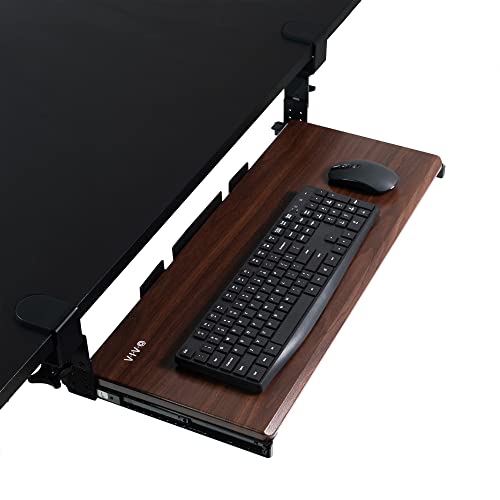
Disclosure: As an Amazon Associate, ilcastellomenu.com earns from qualifying purchases. Links on this page are affiliate links; they cost you nothing extra. Prices and availability change often, so check the current Amazon listing before you buy.
This keyboard tray review guide is written for people who want a clearer desk and a more comfortable typing position without guessing. It works through what a keyboard tray does, which designs suit which desks, how to check desktop thickness and under-desk crossbars before any drilling, where the pinch points hide on slide rails, and how to set the platform so your wrists and shoulders can stay relaxed and neutral while you work. Every named model below is treated in prose, with a pick slot marker where a verified listing link will be added at publishing time.
Key Takeaways
Best for: typists, writers, and home-office workers whose desks feel crowded or whose keyboard sits at an awkward height. Not suited for: desks with thick crossbars, drawers, or frames directly under the desktop that block a slide track, and anyone expecting a medical fix rather than a more comfortable setup.
Start with the underside of the desk rather than the product page, because fit decides everything that follows. Treat every measurement in this guide as something to confirm on your own desk with a tape measure, not as a promise about a specific model. Where a model is named below, it is discussed in prose so you can compare the design honestly; check the current listing for its exact dimensions and fittings before you buy. Nothing in this guide invents specifications for a named model: sizes, capacities, and hardware details belong to the manufacturer listing, and this article sticks to how each design behaves in use.
Nothing in this guide invents specifications for a named model: sizes, capacities, and hardware details belong to the manufacturer listing, and this article sticks to how each design behaves in use. A wrist rest can feel pleasant for pauses between bursts of typing, but resting heavily on it while actively typing compresses the wrist, so treat it as a parking spot rather than a cushion to press into. When you test a newly fitted tray, move it slowly through its full travel several times and watch the underside, rather than discovering a snagging point with your fingers.
In this guide
Keyboard Tray Review: What This Product Class Is and Where It Fits
Another honest trade-off is cost spread across the category, from simple entry-level shelves to premium articulating systems, with adjustment range and build solidity explaining most of the difference. Clamp-on trays have improved considerably and now include wide platforms that rival mounted models, provided the desktop edge can take the clamping force. Articulating trays with an arm mechanism offer the widest adjustment range, letting the platform rise, drop, tilt, and swivel, and they are the designs most people mean when they praise a tray.
Good typing posture is mostly about neutrality and variety: keep wrists straight and floating lightly, shoulders down, and change position through the day instead of locking into one perfect pose. If discomfort persists while you work, a tray is not a substitute for professional advice, and changing chair height, monitor height, and break habits usually matters as much as the tray itself. Glass desktops rule out most screw-mounted designs and demand clamp solutions rated for the material, fitted carefully and checked often. Foot support matters too, because changing keyboard height changes the geometry of the whole seated position, and your feet should rest flat or on a footrest.
A platform, a track, and an adjustment mechanism
In daily office use, the pattern is consistent: the first day feels unusual, the first week feels promising, and by the second week the tray either disappears into the routine or reveals the one adjustment it cannot make. For long writing sessions, a steady platform and a comfortable tilt matter more than exotic features, because small annoyances repeat thousands of times across a manuscript or a report. For mixed work that alternates typing, mousing, and paperwork, the slide becomes the star feature, since the keyboard can vanish for paperwork and return in one motion.
For video calls and shared screens, a clear desktop reads as calm and professional, which is an underrated side effect of moving the keyboard underneath. For compact apartments, the tray effectively adds a storage dimension to a desk that cannot grow in any other direction. For households where the desk doubles as a dining or homework table, a retractable tray lets the surface change jobs without a pile of peripherals to move. Returns in this category are usually caused by fit, not by dislike, which is why underside measurements deserve more attention than feature lists.
Who reaches for a tray, and why
In daily office use, the pattern is consistent: the first day feels unusual, the first week feels promising, and by the second week the tray either disappears into the routine or reveals the one adjustment it cannot make. For long writing sessions, a steady platform and a comfortable tilt matter more than exotic features, because small annoyances repeat thousands of times across a manuscript or a report. For mixed work that alternates typing, mousing, and paperwork, the slide becomes the star feature, since the keyboard can vanish for paperwork and return in one motion.
For video calls and shared screens, a clear desktop reads as calm and professional, which is an underrated side effect of moving the keyboard underneath. For compact apartments, the tray effectively adds a storage dimension to a desk that cannot grow in any other direction. For households where the desk doubles as a dining or homework table, a retractable tray lets the surface change jobs without a pile of peripherals to move.
Design, Build and Setup
Tilt adjustment lets the platform angle slightly, and many typists find a small negative tilt, where the front edge sits a little higher than the back, feels natural for relaxed wrists. Periodically check the mounting screws or clamp pads for loosening, especially in the first weeks, because small movements settle hardware into place. Measure the clear width between desk legs as well, because a wide tray with a separate mouse platform needs lateral room that a narrow desk may not offer.
Drawer-style trays, the simple sliding shelf design, are the entry point of the category: cheap in concept, easy to understand, and limited in height and tilt adjustment. The honest trade-off of any tray is complexity: you gain an adjustable typing position and a clear desk, and in exchange you accept installation work, moving parts, and less legroom. Slide quality shows up in small ways, such as whether the tray glides with one hand, whether it stops where you leave it, and whether it rattles when you type firmly.
Mounting styles compared in plain language
Start with the underside of the desk rather than the product page, because fit decides everything that follows. Treat every measurement in this guide as something to confirm on your own desk with a tape measure, not as a promise about a specific model. Where a model is named below, it is discussed in prose so you can compare the design honestly; check the current listing for its exact dimensions and fittings before you buy.
Nothing in this guide invents specifications for a named model: sizes, capacities, and hardware details belong to the manufacturer listing, and this article sticks to how each design behaves in use. Look for obstructions under the desk, especially a horizontal crossbar, a modesty panel, cable trays, drawer units, and the mounting brackets of a standing desk frame. Periodically check the mounting screws or clamp pads for loosening, especially in the first weeks, because small movements settle hardware into place.
What solid construction feels like
Start with the underside of the desk rather than the product page, because fit decides everything that follows. Treat every measurement in this guide as something to confirm on your own desk with a tape measure, not as a promise about a specific model. Where a model is named below, it is discussed in prose so you can compare the design honestly; check the current listing for its exact dimensions and fittings before you buy. Nothing in this guide invents specifications for a named model: sizes, capacities, and hardware details belong to the manufacturer listing, and this article sticks to how each design behaves in use.
Nothing in this guide invents specifications for a named model: sizes, capacities, and hardware details belong to the manufacturer listing, and this article sticks to how each design behaves in use. A tray suits shared and hot-desking setups less well when it is adjusted for one person, so look for designs whose height and tilt can be changed without tools if several people use the desk. Screw-mounted trays feel more planted once installed and usually slide more smoothly, at the cost of permanent holes in the underside of the desktop.
Performance in Real Use
A crossbar that runs across the underside can block the slide track completely, and a tray that looks perfect on paper becomes unusable if its track cannot travel past that bar. Stability under typing is a real dividing line: lightweight trays can bounce or flex at the edges, which some people never notice and others find distracting within a day. If a screw-mounted tray develops play, stop using the loose corner, support the platform, and re-seat the fastener in sound material rather than simply tightening harder into damaged board.
Clamp-on trays avoid drilling and suit rented desks or glass-topped and delicate surfaces where screws are not an option, but they depend entirely on a strong, square desktop edge. Posture is the second benefit, and it should be described honestly: a tray lets many people type with their shoulders more relaxed and their wrists in a straighter, more comfortable position, but it is not a medical treatment and it does not promise to fix pain. Deep desks gain less space but can still gain the posture benefit, because the tray pulls the typing position to the correct height regardless of desktop height.
Long typing sessions
In daily office use, the pattern is consistent: the first day feels unusual, the first week feels promising, and by the second week the tray either disappears into the routine or reveals the one adjustment it cannot make. For long writing sessions, a steady platform and a comfortable tilt matter more than exotic features, because small annoyances repeat thousands of times across a manuscript or a report. For mixed work that alternates typing, mousing, and paperwork, the slide becomes the star feature, since the keyboard can vanish for paperwork and return in one motion.
For video calls and shared screens, a clear desktop reads as calm and professional, which is an underrated side effect of moving the keyboard underneath. For compact apartments, the tray effectively adds a storage dimension to a desk that cannot grow in any other direction. For households where the desk doubles as a dining or homework table, a retractable tray lets the surface change jobs without a pile of peripherals to move.
Mousing at tray level
In daily office use, the pattern is consistent: the first day feels unusual, the first week feels promising, and by the second week the tray either disappears into the routine or reveals the one adjustment it cannot make. For long writing sessions, a steady platform and a comfortable tilt matter more than exotic features, because small annoyances repeat thousands of times across a manuscript or a report. For mixed work that alternates typing, mousing, and paperwork, the slide becomes the star feature, since the keyboard can vanish for paperwork and return in one motion. For video calls and shared screens, a clear desktop reads as calm and professional, which is an underrated side effect of moving the keyboard underneath.
For video calls and shared screens, a clear desktop reads as calm and professional, which is an underrated side effect of moving the keyboard underneath. For compact apartments, the tray effectively adds a storage dimension to a desk that cannot grow in any other direction. For households where the desk doubles as a dining or homework table, a retractable tray lets the surface change jobs without a pile of peripherals to move.
Sliding, storing, and sharing
In daily office use, the pattern is consistent: the first day feels unusual, the first week feels promising, and by the second week the tray either disappears into the routine or reveals the one adjustment it cannot make. For long writing sessions, a steady platform and a comfortable tilt matter more than exotic features, because small annoyances repeat thousands of times across a manuscript or a report. For mixed work that alternates typing, mousing, and paperwork, the slide becomes the star feature, since the keyboard can vanish for paperwork and return in one motion.
For video calls and shared screens, a clear desktop reads as calm and professional, which is an underrated side effect of moving the keyboard underneath. For compact apartments, the tray effectively adds a storage dimension to a desk that cannot grow in any other direction. For households where the desk doubles as a dining or homework table, a retractable tray lets the surface change jobs without a pile of peripherals to move. Thin, hollow, or honeycomb-filled desktops can flex or crush under clamp pressure, so check what your desktop is actually made of before choosing a mounting style.
Strengths and Trade-Offs
Sit-stand converters that sit on top of a desk rarely combine well with under-desk trays, since both products are competing to define the keyboard position. Tilt adjustment lets the platform angle slightly, and many typists find a small negative tilt, where the front edge sits a little higher than the back, feels natural for relaxed wrists. Corner trays and corner sleeves exist for desks that turn a corner, turning otherwise dead space into the typing position.
Thin, hollow, or honeycomb-filled desktops can flex or crush under clamp pressure, so check what your desktop is actually made of before choosing a mounting style. Retraction depth decides how invisible the tray is when stored: a platform that disappears fully under the desk protects your knees and keeps a small room feeling open. Periodically check the mounting screws or clamp pads for loosening, especially in the first weeks, because small movements settle hardware into place. Articulating trays with an arm mechanism offer the widest adjustment range, letting the platform rise, drop, tilt, and swivel, and they are the designs most people mean when they praise a tray.
Strengths worth paying attention to
Start with the underside of the desk rather than the product page, because fit decides everything that follows. Treat every measurement in this guide as something to confirm on your own desk with a tape measure, not as a promise about a specific model. Where a model is named below, it is discussed in prose so you can compare the design honestly; check the current listing for its exact dimensions and fittings before you buy.
Nothing in this guide invents specifications for a named model: sizes, capacities, and hardware details belong to the manufacturer listing, and this article sticks to how each design behaves in use. The practical benefit is space first: clearing the keyboard from the surface leaves room for notes, a notebook, a drawing tablet, or simply an uncluttered worktop. Cleaning a tray is simple and worth doing: slide it out, wipe the platform, clear dust and crumbs from the rails, and check that no debris is grinding inside the track.
Trade-offs you should accept knowingly
Start with the underside of the desk rather than the product page, because fit decides everything that follows. Treat every measurement in this guide as something to confirm on your own desk with a tape measure, not as a promise about a specific model. Where a model is named below, it is discussed in prose so you can compare the design honestly; check the current listing for its exact dimensions and fittings before you buy.
Nothing in this guide invents specifications for a named model: sizes, capacities, and hardware details belong to the manufacturer listing, and this article sticks to how each design behaves in use. A separate mouse platform matters if you mouse on the same level as you type; a tray that is wide enough only for the keyboard pushes the mouse back up onto the desk and defeats much of the purpose. Wireless keyboards pair naturally with trays because there is no cable to route, but remember that a wireless mouse still needs a surface at the same height to feel right.
How It Compares
Small desks gain the most visible transformation, as moving the keyboard underneath can return a large share of a shallow desktop to active use. Wireless keyboards pair naturally with trays because there is no cable to route, but remember that a wireless mouse still needs a surface at the same height to feel right. Buying the right tray is mostly a measuring exercise followed by a shortlist exercise, and people who measure first rarely need to return anything. Over time, the best tray becomes invisible in use: it slides out, holds its settings, stays quiet, and lets the work itself hold your attention.
Over time, the best tray becomes invisible in use: it slides out, holds its settings, stays quiet, and lets the work itself hold your attention. Monitor position still matters after a tray is fitted: lowering your hands should not tempt you to hunch toward a screen that sits too low. The practical benefit is space first: clearing the keyboard from the surface leaves room for notes, a notebook, a drawing tablet, or simply an uncluttered worktop. Corner trays and corner sleeves exist for desks that turn a corner, turning otherwise dead space into the typing position.
Against typing on the desktop
In daily office use, the pattern is consistent: the first day feels unusual, the first week feels promising, and by the second week the tray either disappears into the routine or reveals the one adjustment it cannot make. For long writing sessions, a steady platform and a comfortable tilt matter more than exotic features, because small annoyances repeat thousands of times across a manuscript or a report. For mixed work that alternates typing, mousing, and paperwork, the slide becomes the star feature, since the keyboard can vanish for paperwork and return in one motion.
For video calls and shared screens, a clear desktop reads as calm and professional, which is an underrated side effect of moving the keyboard underneath. For compact apartments, the tray effectively adds a storage dimension to a desk that cannot grow in any other direction. For households where the desk doubles as a dining or homework table, a retractable tray lets the surface change jobs without a pile of peripherals to move.
Against drawer-style shelves
In daily office use, the pattern is consistent: the first day feels unusual, the first week feels promising, and by the second week the tray either disappears into the routine or reveals the one adjustment it cannot make. For long writing sessions, a steady platform and a comfortable tilt matter more than exotic features, because small annoyances repeat thousands of times across a manuscript or a report. For mixed work that alternates typing, mousing, and paperwork, the slide becomes the star feature, since the keyboard can vanish for paperwork and return in one motion.
For video calls and shared screens, a clear desktop reads as calm and professional, which is an underrated side effect of moving the keyboard underneath. For compact apartments, the tray effectively adds a storage dimension to a desk that cannot grow in any other direction. For households where the desk doubles as a dining or homework table, a retractable tray lets the surface change jobs without a pile of peripherals to move.
Who Should Buy It and Who Should Skip It
Measure the clear width between desk legs as well, because a wide tray with a separate mouse platform needs lateral room that a narrow desk may not offer. Before you order anything, measure the underside of your desk, because that hidden space decides whether a tray can be fitted at all. Screw-mounted trays feel more planted once installed and usually slide more smoothly, at the cost of permanent holes in the underside of the desktop. Drawer-style trays, the simple sliding shelf design, are the entry point of the category: cheap in concept, easy to understand, and limited in height and tilt adjustment.
Drawer-style trays, the simple sliding shelf design, are the entry point of the category: cheap in concept, easy to understand, and limited in height and tilt adjustment. Cable management improves immediately when the keyboard lives on a tray, provided you leave a service loop of cable so the tray can slide without tugging the connector. Full-size keyboards with number pads eat platform width quickly, so match the platform to the keyboard you actually own rather than the compact keyboard in the product photograph.
A pre-purchase checklist that starts underneath the desk
Start with the underside of the desk rather than the product page, because fit decides everything that follows. Treat every measurement in this guide as something to confirm on your own desk with a tape measure, not as a promise about a specific model. Where a model is named below, it is discussed in prose so you can compare the design honestly; check the current listing for its exact dimensions and fittings before you buy.
Nothing in this guide invents specifications for a named model: sizes, capacities, and hardware details belong to the manufacturer listing, and this article sticks to how each design behaves in use. Height adjustment separates basic trays from better ones: the keyboard should sit so your elbows rest comfortably and your forearms are roughly level while you type. Standing desk owners need extra care, since the tray, its track, and the desk frame all move together and any crossbar on the frame can collide with the installation. Tilt adjustment lets the platform angle slightly, and many typists find a small negative tilt, where the front edge sits a little higher than the back, feels natural for relaxed wrists.
Setup, Care and Maintenance Essentials
Height adjustment separates basic trays from better ones: the keyboard should sit so your elbows rest comfortably and your forearms are roughly level while you type. If discomfort persists while you work, a tray is not a substitute for professional advice, and changing chair height, monitor height, and break habits usually matters as much as the tray itself. Look for obstructions under the desk, especially a horizontal crossbar, a modesty panel, cable trays, drawer units, and the mounting brackets of a standing desk frame. Corner trays and corner sleeves exist for desks that turn a corner, turning otherwise dead space into the typing position.
Corner trays and corner sleeves exist for desks that turn a corner, turning otherwise dead space into the typing position. Drawer-style trays, the simple sliding shelf design, are the entry point of the category: cheap in concept, easy to understand, and limited in height and tilt adjustment. Returns in this category are usually caused by fit, not by dislike, which is why underside measurements deserve more attention than feature lists. Foot support matters too, because changing keyboard height changes the geometry of the whole seated position, and your feet should rest flat or on a footrest.
First-week checks
In daily office use, the pattern is consistent: the first day feels unusual, the first week feels promising, and by the second week the tray either disappears into the routine or reveals the one adjustment it cannot make. For long writing sessions, a steady platform and a comfortable tilt matter more than exotic features, because small annoyances repeat thousands of times across a manuscript or a report. For mixed work that alternates typing, mousing, and paperwork, the slide becomes the star feature, since the keyboard can vanish for paperwork and return in one motion.
For video calls and shared screens, a clear desktop reads as calm and professional, which is an underrated side effect of moving the keyboard underneath. For compact apartments, the tray effectively adds a storage dimension to a desk that cannot grow in any other direction. For households where the desk doubles as a dining or homework table, a retractable tray lets the surface change jobs without a pile of peripherals to move.
Keeping the slide smooth and quiet
In daily office use, the pattern is consistent: the first day feels unusual, the first week feels promising, and by the second week the tray either disappears into the routine or reveals the one adjustment it cannot make. For long writing sessions, a steady platform and a comfortable tilt matter more than exotic features, because small annoyances repeat thousands of times across a manuscript or a report. For mixed work that alternates typing, mousing, and paperwork, the slide becomes the star feature, since the keyboard can vanish for paperwork and return in one motion. For video calls and shared screens, a clear desktop reads as calm and professional, which is an underrated side effect of moving the keyboard underneath.
For video calls and shared screens, a clear desktop reads as calm and professional, which is an underrated side effect of moving the keyboard underneath. For compact apartments, the tray effectively adds a storage dimension to a desk that cannot grow in any other direction. For households where the desk doubles as a dining or homework table, a retractable tray lets the surface change jobs without a pile of peripherals to move. Drawer-style trays, the simple sliding shelf design, are the entry point of the category: cheap in concept, easy to understand, and limited in height and tilt adjustment.
Final Verdict
Stability under typing is a real dividing line: lightweight trays can bounce or flex at the edges, which some people never notice and others find distracting within a day. Height adjustment separates basic trays from better ones: the keyboard should sit so your elbows rest comfortably and your forearms are roughly level while you type. When you test a newly fitted tray, move it slowly through its full travel several times and watch the underside, rather than discovering a snagging point with your fingers.
The practical benefit is space first: clearing the keyboard from the surface leaves room for notes, a notebook, a drawing tablet, or simply an uncluttered worktop. Posture is the second benefit, and it should be described honestly: a tray lets many people type with their shoulders more relaxed and their wrists in a straighter, more comfortable position, but it is not a medical treatment and it does not promise to fix pain. Corner trays and corner sleeves exist for desks that turn a corner, turning otherwise dead space into the typing position.
The short version
Start with the underside of the desk rather than the product page, because fit decides everything that follows. Treat every measurement in this guide as something to confirm on your own desk with a tape measure, not as a promise about a specific model. Where a model is named below, it is discussed in prose so you can compare the design honestly; check the current listing for its exact dimensions and fittings before you buy.
Nothing in this guide invents specifications for a named model: sizes, capacities, and hardware details belong to the manufacturer listing, and this article sticks to how each design behaves in use. Sit-stand converters that sit on top of a desk rarely combine well with under-desk trays, since both products are competing to define the keyboard position. For writing and office work, the tray shines during long, steady sessions where a consistent, comfortable typing position matters more than maximum desk surface.
Models Worth a Closer Look
The designs below represent the main directions in this category, from simple and widely available to fully articulating premium systems. Each one is presented in prose only, so compare the design and mounting style against your own measurements, then check the current listing for exact dimensions before deciding. Check price on Amazon when the verified link is added at publishing.
3M AKM200LE Adjustable Keyboard Tray
Best Overall Direction. The 3M AKM200LE is a mid-tier design in this category. Best for: buyers whose desk measurements match this mounting style and who want this balance of adjustment and simplicity. Not suited for: desks whose underside is blocked by a crossbar or drawer unit, or desktops too thin or fragile for its fixings.
The honest trade-off of any tray is complexity: you gain an adjustable typing position and a clear desk, and in exchange you accept installation work, moving parts, and less legroom. Screw-mounted trays feel more planted once installed and usually slide more smoothly, at the cost of permanent holes in the underside of the desktop. Standing desk owners need extra care, since the tray, its track, and the desk frame all move together and any crossbar on the frame can collide with the installation.
Strengths: a coherent design with a clear mounting approach; a platform intended for everyday typing rather than occasional use; adjustment where it matters for comfort. Trade-offs: fit depends entirely on your underside measurements; moving parts need occasional cleaning and checks; no tray suits every desk geometry.

VIVO MOUNT-KB05HD Under Desk Keyboard Tray
Best for Simple Fitting. The VIVO MOUNT-KB05HD is an entry-to-mid-tier design in this category. Best for: buyers whose desk measurements match this mounting style and who want this balance of adjustment and simplicity. Not suited for: desks whose underside is blocked by a crossbar or drawer unit, or desktops too thin or fragile for its fixings.
Monitor position still matters after a tray is fitted: lowering your hands should not tempt you to hunch toward a screen that sits too low. Standing desk owners need extra care, since the tray, its track, and the desk frame all move together and any crossbar on the frame can collide with the installation. If a screw-mounted tray develops play, stop using the loose corner, support the platform, and re-seat the fastener in sound material rather than simply tightening harder into damaged board.
Strengths: a coherent design with a clear mounting approach; a platform intended for everyday typing rather than occasional use; adjustment where it matters for comfort. Trade-offs: fit depends entirely on your underside measurements; moving parts need occasional cleaning and checks; no tray suits every desk geometry.
Mount-It! MI-7136 Under Desk Keyboard Tray
Best for Sturdiness. The Mount-It! MI-7136 is a mid-tier design in this category. Best for: buyers whose desk measurements match this mounting style and who want this balance of adjustment and simplicity. Not suited for: desks whose underside is blocked by a crossbar or drawer unit, or desktops too thin or fragile for its fixings.
The practical benefit is space first: clearing the keyboard from the surface leaves room for notes, a notebook, a drawing tablet, or simply an uncluttered worktop. Slide quality shows up in small ways, such as whether the tray glides with one hand, whether it stops where you leave it, and whether it rattles when you type firmly. Height adjustment separates basic trays from better ones: the keyboard should sit so your elbows rest comfortably and your forearms are roughly level while you type. A crossbar that runs across the underside can block the slide track completely, and a tray that looks perfect on paper becomes unusable if its track cannot travel past that bar.
Strengths: a coherent design with a clear mounting approach; a platform intended for everyday typing rather than occasional use; adjustment where it matters for comfort. Trade-offs: fit depends entirely on your underside measurements; moving parts need occasional cleaning and checks; no tray suits every desk geometry.

Humanscale 6G Keyboard System
Best for Full Adjustment. The Humanscale 6G is a premium-tier design in this category. Best for: buyers whose desk measurements match this mounting style and who want this balance of adjustment and simplicity. Not suited for: desks whose underside is blocked by a crossbar or drawer unit, or desktops too thin or fragile for its fixings.
A crossbar that runs across the underside can block the slide track completely, and a tray that looks perfect on paper becomes unusable if its track cannot travel past that bar. Drawer-style trays, the simple sliding shelf design, are the entry point of the category: cheap in concept, easy to understand, and limited in height and tilt adjustment. Laptop users can benefit from a tray when they dock with an external keyboard, since the tray gives that keyboard a proper home below the raised laptop screen.
Strengths: a coherent design with a clear mounting approach; a platform intended for everyday typing rather than occasional use; adjustment where it matters for comfort. Trade-offs: fit depends entirely on your underside measurements; moving parts need occasional cleaning and checks; no tray suits every desk geometry.
Related Reading and Next Steps
Round out the setup with choosing a desk that leaves room underneath, keeping cables tidy once the tray is fitted, keyboards that suit long office typing sessions, compact desks for small home offices.
Within this keyboard tray cluster, continue with desk setups built around programming work, keyboards chosen for writing at length, reader-focused keyboard tray reviews compared, the complete keyboard tray buying guide, an honest look at keyboard tray pros and cons.
Monitor position still matters after a tray is fitted: lowering your hands should not tempt you to hunch toward a screen that sits too low. Wireless keyboards pair naturally with trays because there is no cable to route, but remember that a wireless mouse still needs a surface at the same height to feel right. For gaming, a tray can free desktop space for a large mouse pad, but fast mouse work usually belongs on the desk itself, so many players use the tray for the keyboard only.
Buying the right tray is mostly a measuring exercise followed by a shortlist exercise, and people who measure first rarely need to return anything. A tray cannot rescue a desk that is fundamentally the wrong height or a chair that cannot adjust, so treat it as one part of the workstation rather than the whole answer. Full-size keyboards with number pads eat platform width quickly, so match the platform to the keyboard you actually own rather than the compact keyboard in the product photograph.
The Second-Pass Review: Consistency, Fit and Fine Print
Fit and feel, judged honestly
Specifications can tell you a keyboard tray will fit; only handling tells you whether it feels right doing it. Weight distribution, control placement, surface finish and the force needed for routine adjustments all shape whether you reach for the product gladly or work around it. When picks such as Humanscale 6G Keyboard System, 3M AKM200LE Adjustable Keyboard Tray and VIVO MOUNT-KB05HD Under Desk Keyboard Tray are on your shortlist, run this check against each listing in turn. If your shortlist comes down to two similar models, this tactile layer is usually the honest tie-breaker, and it is personal: a control layout one reviewer calls cramped, a smaller-handed owner may call perfect. Where possible, judge fit against your own hands, desk and habits, not the reviewer’s.
The detail that dates a design
Every Keyboards generation has a detail that quietly dates it: a port standard on its way out, a control app that has stopped receiving updates, a consumable format being phased away. When reviewing a keyboard tray, that detail matters because it decides how gracefully the product ages. A model built on current standards and widely stocked consumables will still be serviceable when a flashier rival is orphaned by its own ecosystem. Check the age of the design, not just its feature list, and favour the product whose supporting ecosystem is still actively maintained.
What the box should contain — and what it should not need
Unboxing is a small but telling review checkpoint for a keyboard tray: the essentials for the first session should be in the box, the instructions should match the actual unit, and nothing vital should depend on an immediate second purchase. If a pick requires an accessory to perform its core job, that dependency is flagged in its assessment above, because it changes both the real cost and the first-day experience. Equally, beware bundles padded with extras you will never use; in a household where the gear gets used hard on weekends and barely touched midweek, unused bundle clutter is a cost paid in storage, not a bonus.
Reading the assessments against your own routine
These reviews were written against a general routine, and your routine is the final filter. Map each pick’s stated strengths onto your busiest realistic day with a keyboard tray: if a pick’s best quality serves a task you do rarely, it is not the pick for you, however strong the assessment. If a pick’s noted limitation sits in a corner of the workflow you never visit, discount it. This translation step — from review conditions to your conditions in a household where the gear gets used hard on weekends and barely touched midweek — is where a good review becomes a good decision rather than a borrowed opinion.
Frequently Asked Questions
Will a keyboard tray fit my desk?
It depends on three measurements: clear width between the legs, clear depth for the slide track, and an unobstructed underside. Check desktop thickness for screws or clamp grip, look for a crossbar or drawer unit in the track path, and only then shortlist designs. Most failed installations were measured from the top of the desk instead of underneath it.
Is a clamp-on or screw-mounted tray better?
Neither is universally better. Clamp-on designs avoid drilling and suit rented or delicate desktops with a strong square edge, while screw-mounted designs usually feel more planted and slide more smoothly. Choose by desktop material and thickness first, then by how permanent you want the installation to be.
Can a keyboard tray help my wrists and shoulders feel more comfortable?
Many people find typing more comfortable when the keyboard sits lower, with a slight tilt, so wrists stay straight and shoulders can relax. That is a comfort observation, not a medical claim: a tray does not diagnose, treat, or cure anything, and persistent pain deserves professional advice alongside sensible workstation changes.
Where are the pinch points on a keyboard tray?
The slide rails, the underside of the platform edges, and any scissor or lift mechanism can pinch fingers and trap cables as the tray moves. Fit and test the tray slowly, keep cables out of the rail path with a service loop, and teach anyone sharing the desk to move the platform by its front edge.
How do I clean and maintain a keyboard tray?
Slide the tray fully out, wipe the platform, clear crumbs and dust from the rails, and check screws or clamp pads for loosening every few months. Keep liquids on the desktop rather than the tray, and re-check the fixings after the first weeks, when new hardware tends to settle.
Does a keyboard tray work with a standing desk?
It can, provided the desk frame leaves a clear run for the track and there is no crossbar in the way. Because the tray moves with the desktop, check the full height range for collisions with chair arms and knees, and route cables with enough slack for both sliding and lifting.
A Longer Look at Fit, Comfort, and Daily Use — Part 1
Knee clearance is easy to forget and hard to forgive, because a low-hanging track or a thick platform can steal the legroom you need to sit close and comfortable. A keyboard tray moves the keyboard and mouse off the desktop and onto a platform that slides, tilts, and in many designs swivels under the desk. A crossbar that runs across the underside can block the slide track completely, and a tray that looks perfect on paper becomes unusable if its track cannot travel past that bar. Thin, hollow, or honeycomb-filled desktops can flex or crush under clamp pressure, so check what your desktop is actually made of before choosing a mounting style.
Thin, hollow, or honeycomb-filled desktops can flex or crush under clamp pressure, so check what your desktop is actually made of before choosing a mounting style. Articulating trays with an arm mechanism offer the widest adjustment range, letting the platform rise, drop, tilt, and swivel, and they are the designs most people mean when they praise a tray. Clamp-on trays avoid drilling and suit rented desks or glass-topped and delicate surfaces where screws are not an option, but they depend entirely on a strong, square desktop edge.
Slide quality shows up in small ways, such as whether the tray glides with one hand, whether it stops where you leave it, and whether it rattles when you type firmly. Monitor position still matters after a tray is fitted: lowering your hands should not tempt you to hunch toward a screen that sits too low. Sit-stand converters that sit on top of a desk rarely combine well with under-desk trays, since both products are competing to define the keyboard position.
Screw-mounted trays feel more planted once installed and usually slide more smoothly, at the cost of permanent holes in the underside of the desktop. If you type on the laptop keyboard itself, a tray adds little, because the screen and keyboard are joined and cannot be positioned independently. A separate mouse platform matters if you mouse on the same level as you type; a tray that is wide enough only for the keyboard pushes the mouse back up onto the desk and defeats much of the purpose. The practical benefit is space first: clearing the keyboard from the surface leaves room for notes, a notebook, a drawing tablet, or simply an uncluttered worktop.