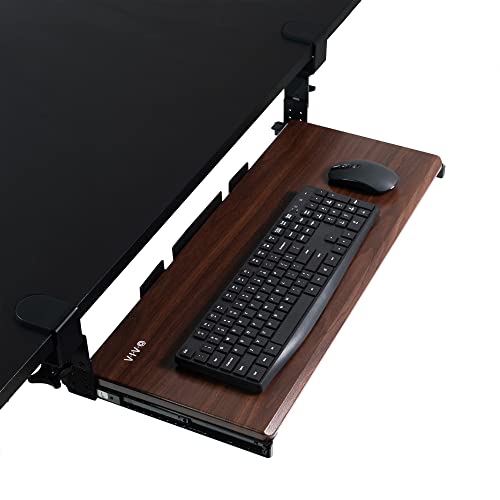
Disclosure: As an Amazon Associate, ilcastellomenu.com earns from qualifying purchases. Links on this page are affiliate links; they cost you nothing extra. Prices and availability change often, so check the current Amazon listing before you buy.
This is a keyboard tray worth it guide is written for people who want a clearer desk and a more comfortable typing position without guessing. It works through what a keyboard tray does, which designs suit which desks, how to check desktop thickness and under-desk crossbars before any drilling, where the pinch points hide on slide rails, and how to set the platform so your wrists and shoulders can stay relaxed and neutral while you work. Every named model below is treated in prose, with a pick slot marker where a verified listing link will be added at publishing time.
Key Takeaways
Best for: typists, writers, and home-office workers whose desks feel crowded or whose keyboard sits at an awkward height. Not suited for: desks with thick crossbars, drawers, or frames directly under the desktop that block a slide track, and anyone expecting a medical fix rather than a more comfortable setup.
Start with the underside of the desk rather than the product page, because fit decides everything that follows. Treat every measurement in this guide as something to confirm on your own desk with a tape measure, not as a promise about a specific model. Where a model is named below, it is discussed in prose so you can compare the design honestly; check the current listing for its exact dimensions and fittings before you buy.
Nothing in this guide invents specifications for a named model: sizes, capacities, and hardware details belong to the manufacturer listing, and this article sticks to how each design behaves in use. Cleaning a tray is simple and worth doing: slide it out, wipe the platform, clear dust and crumbs from the rails, and check that no debris is grinding inside the track. If you type on the laptop keyboard itself, a tray adds little, because the screen and keyboard are joined and cannot be positioned independently.
In this guide
What You Actually Get
Periodically check the mounting screws or clamp pads for loosening, especially in the first weeks, because small movements settle hardware into place. Before you order anything, measure the underside of your desk, because that hidden space decides whether a tray can be fitted at all. Cleaning a tray is simple and worth doing: slide it out, wipe the platform, clear dust and crumbs from the rails, and check that no debris is grinding inside the track. A tray suits shared and hot-desking setups less well when it is adjusted for one person, so look for designs whose height and tilt can be changed without tools if several people use the desk.
A tray suits shared and hot-desking setups less well when it is adjusted for one person, so look for designs whose height and tilt can be changed without tools if several people use the desk. Keep cables routed away from the slide path, because a cable dragged into the rail can be pinched, frayed, and eventually cut through by repeated travel. If you type on the laptop keyboard itself, a tray adds little, because the screen and keyboard are joined and cannot be positioned independently.
Space, position, and order
In daily office use, the pattern is consistent: the first day feels unusual, the first week feels promising, and by the second week the tray either disappears into the routine or reveals the one adjustment it cannot make. For long writing sessions, a steady platform and a comfortable tilt matter more than exotic features, because small annoyances repeat thousands of times across a manuscript or a report. For mixed work that alternates typing, mousing, and paperwork, the slide becomes the star feature, since the keyboard can vanish for paperwork and return in one motion. For video calls and shared screens, a clear desktop reads as calm and professional, which is an underrated side effect of moving the keyboard underneath.
For video calls and shared screens, a clear desktop reads as calm and professional, which is an underrated side effect of moving the keyboard underneath. For compact apartments, the tray effectively adds a storage dimension to a desk that cannot grow in any other direction. For households where the desk doubles as a dining or homework table, a retractable tray lets the surface change jobs without a pile of peripherals to move.
What you do not get
In daily office use, the pattern is consistent: the first day feels unusual, the first week feels promising, and by the second week the tray either disappears into the routine or reveals the one adjustment it cannot make. For long writing sessions, a steady platform and a comfortable tilt matter more than exotic features, because small annoyances repeat thousands of times across a manuscript or a report. For mixed work that alternates typing, mousing, and paperwork, the slide becomes the star feature, since the keyboard can vanish for paperwork and return in one motion.
For video calls and shared screens, a clear desktop reads as calm and professional, which is an underrated side effect of moving the keyboard underneath. For compact apartments, the tray effectively adds a storage dimension to a desk that cannot grow in any other direction. For households where the desk doubles as a dining or homework table, a retractable tray lets the surface change jobs without a pile of peripherals to move.
The Real Costs Beyond Money
Drawer-style trays, the simple sliding shelf design, are the entry point of the category: cheap in concept, easy to understand, and limited in height and tilt adjustment. Foot support matters too, because changing keyboard height changes the geometry of the whole seated position, and your feet should rest flat or on a footrest. Before you order anything, measure the underside of your desk, because that hidden space decides whether a tray can be fitted at all.
Full-size keyboards with number pads eat platform width quickly, so match the platform to the keyboard you actually own rather than the compact keyboard in the product photograph. Sit-stand converters that sit on top of a desk rarely combine well with under-desk trays, since both products are competing to define the keyboard position. Look for obstructions under the desk, especially a horizontal crossbar, a modesty panel, cable trays, drawer units, and the mounting brackets of a standing desk frame.
Installation time and effort
Start with the underside of the desk rather than the product page, because fit decides everything that follows. Treat every measurement in this guide as something to confirm on your own desk with a tape measure, not as a promise about a specific model. Where a model is named below, it is discussed in prose so you can compare the design honestly; check the current listing for its exact dimensions and fittings before you buy.
Nothing in this guide invents specifications for a named model: sizes, capacities, and hardware details belong to the manufacturer listing, and this article sticks to how each design behaves in use. Corner trays and corner sleeves exist for desks that turn a corner, turning otherwise dead space into the typing position. If discomfort persists while you work, a tray is not a substitute for professional advice, and changing chair height, monitor height, and break habits usually matters as much as the tray itself. Drawer-style trays, the simple sliding shelf design, are the entry point of the category: cheap in concept, easy to understand, and limited in height and tilt adjustment.
Legroom and maintenance
Start with the underside of the desk rather than the product page, because fit decides everything that follows. Treat every measurement in this guide as something to confirm on your own desk with a tape measure, not as a promise about a specific model. Where a model is named below, it is discussed in prose so you can compare the design honestly; check the current listing for its exact dimensions and fittings before you buy.
Nothing in this guide invents specifications for a named model: sizes, capacities, and hardware details belong to the manufacturer listing, and this article sticks to how each design behaves in use. The honest trade-off of any tray is complexity: you gain an adjustable typing position and a clear desk, and in exchange you accept installation work, moving parts, and less legroom. Slide quality shows up in small ways, such as whether the tray glides with one hand, whether it stops where you leave it, and whether it rattles when you type firmly. Full-size keyboards with number pads eat platform width quickly, so match the platform to the keyboard you actually own rather than the compact keyboard in the product photograph.
Who It Pays Off For
Cable management improves immediately when the keyboard lives on a tray, provided you leave a service loop of cable so the tray can slide without tugging the connector. Tilt adjustment lets the platform angle slightly, and many typists find a small negative tilt, where the front edge sits a little higher than the back, feels natural for relaxed wrists. Returns in this category are usually caused by fit, not by dislike, which is why underside measurements deserve more attention than feature lists. For writing and office work, the tray shines during long, steady sessions where a consistent, comfortable typing position matters more than maximum desk surface.
For writing and office work, the tray shines during long, steady sessions where a consistent, comfortable typing position matters more than maximum desk surface. Wireless keyboards pair naturally with trays because there is no cable to route, but remember that a wireless mouse still needs a surface at the same height to feel right. Buying the right tray is mostly a measuring exercise followed by a shortlist exercise, and people who measure first rarely need to return anything.
The crowded-desk typist
In daily office use, the pattern is consistent: the first day feels unusual, the first week feels promising, and by the second week the tray either disappears into the routine or reveals the one adjustment it cannot make. For long writing sessions, a steady platform and a comfortable tilt matter more than exotic features, because small annoyances repeat thousands of times across a manuscript or a report. For mixed work that alternates typing, mousing, and paperwork, the slide becomes the star feature, since the keyboard can vanish for paperwork and return in one motion. For video calls and shared screens, a clear desktop reads as calm and professional, which is an underrated side effect of moving the keyboard underneath.
For video calls and shared screens, a clear desktop reads as calm and professional, which is an underrated side effect of moving the keyboard underneath. For compact apartments, the tray effectively adds a storage dimension to a desk that cannot grow in any other direction. For households where the desk doubles as a dining or homework table, a retractable tray lets the surface change jobs without a pile of peripherals to move.
The comfort-seeking home worker
In daily office use, the pattern is consistent: the first day feels unusual, the first week feels promising, and by the second week the tray either disappears into the routine or reveals the one adjustment it cannot make. For long writing sessions, a steady platform and a comfortable tilt matter more than exotic features, because small annoyances repeat thousands of times across a manuscript or a report. For mixed work that alternates typing, mousing, and paperwork, the slide becomes the star feature, since the keyboard can vanish for paperwork and return in one motion.
For video calls and shared screens, a clear desktop reads as calm and professional, which is an underrated side effect of moving the keyboard underneath. For compact apartments, the tray effectively adds a storage dimension to a desk that cannot grow in any other direction. For households where the desk doubles as a dining or homework table, a retractable tray lets the surface change jobs without a pile of peripherals to move.
The small-space household
In daily office use, the pattern is consistent: the first day feels unusual, the first week feels promising, and by the second week the tray either disappears into the routine or reveals the one adjustment it cannot make. For long writing sessions, a steady platform and a comfortable tilt matter more than exotic features, because small annoyances repeat thousands of times across a manuscript or a report. For mixed work that alternates typing, mousing, and paperwork, the slide becomes the star feature, since the keyboard can vanish for paperwork and return in one motion. For video calls and shared screens, a clear desktop reads as calm and professional, which is an underrated side effect of moving the keyboard underneath.
For video calls and shared screens, a clear desktop reads as calm and professional, which is an underrated side effect of moving the keyboard underneath. For compact apartments, the tray effectively adds a storage dimension to a desk that cannot grow in any other direction. For households where the desk doubles as a dining or homework table, a retractable tray lets the surface change jobs without a pile of peripherals to move.
Who Should Skip It
Knee clearance is easy to forget and hard to forgive, because a low-hanging track or a thick platform can steal the legroom you need to sit close and comfortable. Clamp-on trays avoid drilling and suit rented desks or glass-topped and delicate surfaces where screws are not an option, but they depend entirely on a strong, square desktop edge. A tray suits shared and hot-desking setups less well when it is adjusted for one person, so look for designs whose height and tilt can be changed without tools if several people use the desk. Returns in this category are usually caused by fit, not by dislike, which is why underside measurements deserve more attention than feature lists.
Returns in this category are usually caused by fit, not by dislike, which is why underside measurements deserve more attention than feature lists. Articulating trays with an arm mechanism offer the widest adjustment range, letting the platform rise, drop, tilt, and swivel, and they are the designs most people mean when they praise a tray. Cleaning a tray is simple and worth doing: slide it out, wipe the platform, clear dust and crumbs from the rails, and check that no debris is grinding inside the track.
Desks that physically cannot take one
Start with the underside of the desk rather than the product page, because fit decides everything that follows. Treat every measurement in this guide as something to confirm on your own desk with a tape measure, not as a promise about a specific model. Where a model is named below, it is discussed in prose so you can compare the design honestly; check the current listing for its exact dimensions and fittings before you buy. Nothing in this guide invents specifications for a named model: sizes, capacities, and hardware details belong to the manufacturer listing, and this article sticks to how each design behaves in use.
Nothing in this guide invents specifications for a named model: sizes, capacities, and hardware details belong to the manufacturer listing, and this article sticks to how each design behaves in use. The pinch point warning belongs in every installation: the slide rails and the scissor or lift mechanisms underneath can catch fingers, cable insulation, and loose clothing while the platform moves. Full-size keyboards with number pads eat platform width quickly, so match the platform to the keyboard you actually own rather than the compact keyboard in the product photograph.
People who rarely type at the desk
Start with the underside of the desk rather than the product page, because fit decides everything that follows. Treat every measurement in this guide as something to confirm on your own desk with a tape measure, not as a promise about a specific model. Where a model is named below, it is discussed in prose so you can compare the design honestly; check the current listing for its exact dimensions and fittings before you buy. Nothing in this guide invents specifications for a named model: sizes, capacities, and hardware details belong to the manufacturer listing, and this article sticks to how each design behaves in use.
Nothing in this guide invents specifications for a named model: sizes, capacities, and hardware details belong to the manufacturer listing, and this article sticks to how each design behaves in use. If a screw-mounted tray develops play, stop using the loose corner, support the platform, and re-seat the fastener in sound material rather than simply tightening harder into damaged board. The practical benefit is space first: clearing the keyboard from the surface leaves room for notes, a notebook, a drawing tablet, or simply an uncluttered worktop. Knee clearance is easy to forget and hard to forgive, because a low-hanging track or a thick platform can steal the legroom you need to sit close and comfortable.
Strengths and Trade-Offs of Owning One
A wrist rest can feel pleasant for pauses between bursts of typing, but resting heavily on it while actively typing compresses the wrist, so treat it as a parking spot rather than a cushion to press into. Corner trays and corner sleeves exist for desks that turn a corner, turning otherwise dead space into the typing position. Retraction depth decides how invisible the tray is when stored: a platform that disappears fully under the desk protects your knees and keeps a small room feeling open.
Small desks gain the most visible transformation, as moving the keyboard underneath can return a large share of a shallow desktop to active use. Posture is the second benefit, and it should be described honestly: a tray lets many people type with their shoulders more relaxed and their wrists in a straighter, more comfortable position, but it is not a medical treatment and it does not promise to fix pain. Cleaning a tray is simple and worth doing: slide it out, wipe the platform, clear dust and crumbs from the rails, and check that no debris is grinding inside the track.
The ownership balance sheet
In daily office use, the pattern is consistent: the first day feels unusual, the first week feels promising, and by the second week the tray either disappears into the routine or reveals the one adjustment it cannot make. For long writing sessions, a steady platform and a comfortable tilt matter more than exotic features, because small annoyances repeat thousands of times across a manuscript or a report. For mixed work that alternates typing, mousing, and paperwork, the slide becomes the star feature, since the keyboard can vanish for paperwork and return in one motion.
For video calls and shared screens, a clear desktop reads as calm and professional, which is an underrated side effect of moving the keyboard underneath. For compact apartments, the tray effectively adds a storage dimension to a desk that cannot grow in any other direction. For households where the desk doubles as a dining or homework table, a retractable tray lets the surface change jobs without a pile of peripherals to move.
Alternatives to Consider
Buying the right tray is mostly a measuring exercise followed by a shortlist exercise, and people who measure first rarely need to return anything. Screw-mounted trays feel more planted once installed and usually slide more smoothly, at the cost of permanent holes in the underside of the desktop. For writing and office work, the tray shines during long, steady sessions where a consistent, comfortable typing position matters more than maximum desk surface. A separate mouse platform matters if you mouse on the same level as you type; a tray that is wide enough only for the keyboard pushes the mouse back up onto the desk and defeats much of the purpose.
A separate mouse platform matters if you mouse on the same level as you type; a tray that is wide enough only for the keyboard pushes the mouse back up onto the desk and defeats much of the purpose. If you type on the laptop keyboard itself, a tray adds little, because the screen and keyboard are joined and cannot be positioned independently. Standing desk owners need extra care, since the tray, its track, and the desk frame all move together and any crossbar on the frame can collide with the installation.
A better desk or chair adjustment first
Start with the underside of the desk rather than the product page, because fit decides everything that follows. Treat every measurement in this guide as something to confirm on your own desk with a tape measure, not as a promise about a specific model. Where a model is named below, it is discussed in prose so you can compare the design honestly; check the current listing for its exact dimensions and fittings before you buy. Nothing in this guide invents specifications for a named model: sizes, capacities, and hardware details belong to the manufacturer listing, and this article sticks to how each design behaves in use.
Nothing in this guide invents specifications for a named model: sizes, capacities, and hardware details belong to the manufacturer listing, and this article sticks to how each design behaves in use. A tray suits shared and hot-desking setups less well when it is adjusted for one person, so look for designs whose height and tilt can be changed without tools if several people use the desk. Keep cables routed away from the slide path, because a cable dragged into the rail can be pinched, frayed, and eventually cut through by repeated travel.
Desktop risers and monitor arms as partial answers
Start with the underside of the desk rather than the product page, because fit decides everything that follows. Treat every measurement in this guide as something to confirm on your own desk with a tape measure, not as a promise about a specific model. Where a model is named below, it is discussed in prose so you can compare the design honestly; check the current listing for its exact dimensions and fittings before you buy.
Nothing in this guide invents specifications for a named model: sizes, capacities, and hardware details belong to the manufacturer listing, and this article sticks to how each design behaves in use. Small desks gain the most visible transformation, as moving the keyboard underneath can return a large share of a shallow desktop to active use. Clamp-on trays avoid drilling and suit rented desks or glass-topped and delicate surfaces where screws are not an option, but they depend entirely on a strong, square desktop edge.
How to Get the Most Value If You Buy
Desktop thickness matters twice: the material must be thick and solid enough to hold screws securely, and clamp-on designs need enough clear edge depth for the clamp jaws to grip without slipping. The honest trade-off of any tray is complexity: you gain an adjustable typing position and a clear desk, and in exchange you accept installation work, moving parts, and less legroom. Small desks gain the most visible transformation, as moving the keyboard underneath can return a large share of a shallow desktop to active use. A wrist rest can feel pleasant for pauses between bursts of typing, but resting heavily on it while actively typing compresses the wrist, so treat it as a parking spot rather than a cushion to press into.
A wrist rest can feel pleasant for pauses between bursts of typing, but resting heavily on it while actively typing compresses the wrist, so treat it as a parking spot rather than a cushion to press into. Cable management improves immediately when the keyboard lives on a tray, provided you leave a service loop of cable so the tray can slide without tugging the connector. Look for obstructions under the desk, especially a horizontal crossbar, a modesty panel, cable trays, drawer units, and the mounting brackets of a standing desk frame. Standing desk owners need extra care, since the tray, its track, and the desk frame all move together and any crossbar on the frame can collide with the installation.
Habits that repay the purchase
In daily office use, the pattern is consistent: the first day feels unusual, the first week feels promising, and by the second week the tray either disappears into the routine or reveals the one adjustment it cannot make. For long writing sessions, a steady platform and a comfortable tilt matter more than exotic features, because small annoyances repeat thousands of times across a manuscript or a report. For mixed work that alternates typing, mousing, and paperwork, the slide becomes the star feature, since the keyboard can vanish for paperwork and return in one motion.
For video calls and shared screens, a clear desktop reads as calm and professional, which is an underrated side effect of moving the keyboard underneath. For compact apartments, the tray effectively adds a storage dimension to a desk that cannot grow in any other direction. For households where the desk doubles as a dining or homework table, a retractable tray lets the surface change jobs without a pile of peripherals to move.
The Decision Checklist
For spreadsheet work, platform width becomes decisive because a number pad plus a mouse needs more lateral room than most compact trays provide. Thin, hollow, or honeycomb-filled desktops can flex or crush under clamp pressure, so check what your desktop is actually made of before choosing a mounting style. Measure the clear width between desk legs as well, because a wide tray with a separate mouse platform needs lateral room that a narrow desk may not offer. Tilt adjustment lets the platform angle slightly, and many typists find a small negative tilt, where the front edge sits a little higher than the back, feels natural for relaxed wrists.
Tilt adjustment lets the platform angle slightly, and many typists find a small negative tilt, where the front edge sits a little higher than the back, feels natural for relaxed wrists. Swivel is useful in corner desks and L-shaped setups, where the tray can angle toward you instead of forcing you to angle toward the desk. Foot support matters too, because changing keyboard height changes the geometry of the whole seated position, and your feet should rest flat or on a footrest.
Answer honestly, then decide
Start with the underside of the desk rather than the product page, because fit decides everything that follows. Treat every measurement in this guide as something to confirm on your own desk with a tape measure, not as a promise about a specific model. Where a model is named below, it is discussed in prose so you can compare the design honestly; check the current listing for its exact dimensions and fittings before you buy.
Nothing in this guide invents specifications for a named model: sizes, capacities, and hardware details belong to the manufacturer listing, and this article sticks to how each design behaves in use. Thin, hollow, or honeycomb-filled desktops can flex or crush under clamp pressure, so check what your desktop is actually made of before choosing a mounting style. If discomfort persists while you work, a tray is not a substitute for professional advice, and changing chair height, monitor height, and break habits usually matters as much as the tray itself.
Models Worth a Closer Look
The designs below represent the main directions in this category, from simple and widely available to fully articulating premium systems. Each one is presented in prose only, so compare the design and mounting style against your own measurements, then check the current listing for exact dimensions before deciding. Check price on Amazon when the verified link is added at publishing.
3M AKM200LE Adjustable Keyboard Tray
Best Overall Direction. The 3M AKM200LE is a mid-tier design in this category. Best for: buyers whose desk measurements match this mounting style and who want this balance of adjustment and simplicity. Not suited for: desks whose underside is blocked by a crossbar or drawer unit, or desktops too thin or fragile for its fixings.
Laptop users can benefit from a tray when they dock with an external keyboard, since the tray gives that keyboard a proper home below the raised laptop screen. If discomfort persists while you work, a tray is not a substitute for professional advice, and changing chair height, monitor height, and break habits usually matters as much as the tray itself. Deep desks gain less space but can still gain the posture benefit, because the tray pulls the typing position to the correct height regardless of desktop height.
Strengths: a coherent design with a clear mounting approach; a platform intended for everyday typing rather than occasional use; adjustment where it matters for comfort. Trade-offs: fit depends entirely on your underside measurements; moving parts need occasional cleaning and checks; no tray suits every desk geometry.

VIVO MOUNT-KB05HD Under Desk Keyboard Tray
Best for Simple Fitting. The VIVO MOUNT-KB05HD is an entry-to-mid-tier design in this category. Best for: buyers whose desk measurements match this mounting style and who want this balance of adjustment and simplicity. Not suited for: desks whose underside is blocked by a crossbar or drawer unit, or desktops too thin or fragile for its fixings.
A keyboard tray moves the keyboard and mouse off the desktop and onto a platform that slides, tilts, and in many designs swivels under the desk. Measure the clear width between desk legs as well, because a wide tray with a separate mouse platform needs lateral room that a narrow desk may not offer. Standing desk owners need extra care, since the tray, its track, and the desk frame all move together and any crossbar on the frame can collide with the installation.
Strengths: a coherent design with a clear mounting approach; a platform intended for everyday typing rather than occasional use; adjustment where it matters for comfort. Trade-offs: fit depends entirely on your underside measurements; moving parts need occasional cleaning and checks; no tray suits every desk geometry.
Mount-It! MI-7136 Under Desk Keyboard Tray
Best for Sturdiness. The Mount-It! MI-7136 is a mid-tier design in this category. Best for: buyers whose desk measurements match this mounting style and who want this balance of adjustment and simplicity. Not suited for: desks whose underside is blocked by a crossbar or drawer unit, or desktops too thin or fragile for its fixings.
Height adjustment separates basic trays from better ones: the keyboard should sit so your elbows rest comfortably and your forearms are roughly level while you type. Posture is the second benefit, and it should be described honestly: a tray lets many people type with their shoulders more relaxed and their wrists in a straighter, more comfortable position, but it is not a medical treatment and it does not promise to fix pain. Over time, the best tray becomes invisible in use: it slides out, holds its settings, stays quiet, and lets the work itself hold your attention. Thin, hollow, or honeycomb-filled desktops can flex or crush under clamp pressure, so check what your desktop is actually made of before choosing a mounting style.
Strengths: a coherent design with a clear mounting approach; a platform intended for everyday typing rather than occasional use; adjustment where it matters for comfort. Trade-offs: fit depends entirely on your underside measurements; moving parts need occasional cleaning and checks; no tray suits every desk geometry.

Humanscale 6G Keyboard System
Best for Full Adjustment. The Humanscale 6G is a premium-tier design in this category. Best for: buyers whose desk measurements match this mounting style and who want this balance of adjustment and simplicity. Not suited for: desks whose underside is blocked by a crossbar or drawer unit, or desktops too thin or fragile for its fixings.
Small desks gain the most visible transformation, as moving the keyboard underneath can return a large share of a shallow desktop to active use. A separate mouse platform matters if you mouse on the same level as you type; a tray that is wide enough only for the keyboard pushes the mouse back up onto the desk and defeats much of the purpose. Clamp-on trays have improved considerably and now include wide platforms that rival mounted models, provided the desktop edge can take the clamping force. Buying the right tray is mostly a measuring exercise followed by a shortlist exercise, and people who measure first rarely need to return anything.
Strengths: a coherent design with a clear mounting approach; a platform intended for everyday typing rather than occasional use; adjustment where it matters for comfort. Trade-offs: fit depends entirely on your underside measurements; moving parts need occasional cleaning and checks; no tray suits every desk geometry.
Related Reading and Next Steps
Round out the setup with choosing a desk that leaves room underneath, keeping cables tidy once the tray is fitted, keyboards that suit long office typing sessions, compact desks for small home offices.
Within this keyboard tray cluster, continue with desk setups built around programming work, keyboards chosen for writing at length, the in-depth keyboard tray review, reader-focused keyboard tray reviews compared, the complete keyboard tray buying guide.
Screw-mounted trays feel more planted once installed and usually slide more smoothly, at the cost of permanent holes in the underside of the desktop. When you test a newly fitted tray, move it slowly through its full travel several times and watch the underside, rather than discovering a snagging point with your fingers. Keep cables routed away from the slide path, because a cable dragged into the rail can be pinched, frayed, and eventually cut through by repeated travel. Small desks gain the most visible transformation, as moving the keyboard underneath can return a large share of a shallow desktop to active use.
Small desks gain the most visible transformation, as moving the keyboard underneath can return a large share of a shallow desktop to active use. Measure the clear width between desk legs as well, because a wide tray with a separate mouse platform needs lateral room that a narrow desk may not offer. Another honest trade-off is cost spread across the category, from simple entry-level shelves to premium articulating systems, with adjustment range and build solidity explaining most of the difference.
Break-Even Thinking: Use Patterns That Justify the Purchase
The workaround you are already paying for
Most people considering a keyboard tray are already solving the problem somehow — with a slower method, a borrowed tool, a workaround that costs time or produces worse results. Price that workaround in attention and frustration, not just money: how often does it interrupt you, and what does the interruption cost the rest of your day? A purchase is worth it when it retires a recurring annoyance, not when it merely upgrades a process that was already painless. If your current workaround barely bothers you, the honest verdict for you is probably to skip the purchase.
Lifespan changes the whole calculation
A keyboard tray that serves for many years spreads its cost across thousands of uses; one that wears out, dates quickly or loses its supporting ecosystem does not. Judge lifespan by construction, consumable availability and how actively the maker still supports the line, rather than by optimism. This is where the picks discussed earlier differ most meaningfully for value: the model with the longer realistic service life can be the better value even when it is not the cheapest route in, because the cost per year of service is what your household actually pays.
The resale and hand-me-down exit
Value calculations usually assume you keep a keyboard tray forever, but a healthy second-hand market changes the risk. Products in the Keyboards category that hold their appeal tend to resell or hand down easily, which means a wrong decision is recoverable rather than total. That exit value argues for buying the respected model over the obscure bargain: if your circumstances change, the known keyboard tray finds a new home quickly. An ultra-cheap alternative with no following is the one that becomes pure sunk cost in a cupboard.
When waiting is the right answer
Sometimes the correct verdict is not no, but not yet. If your space, routine or budget is about to change — a move, a new job pattern, a renovation — the keyboard tray that suits today’s setup may be wrong for next season’s. Waiting costs nothing and buys information: you learn whether the need survives the change. The exception is when the need is already costing you weekly in time or frustration; then waiting is itself the expensive option, and the analysis earlier in this piece applies with full force. Distinguish a stable recurring need from a temporary itch before deciding.
The one-question shortcut
If the full analysis still leaves you undecided, ask the question that cuts through it: if this keyboard tray disappeared from your home after a month of use, would you replace it immediately, eventually, or not at all? People answer honestly when the purchase is framed as a loss. Immediate replacers should buy with confidence and choose the better model; eventual replacers should buy modestly; the not-at-all group has its answer too. In a household where the gear gets used hard on weekends and barely touched midweek, that instinct, checked against the use-frequency count, settles the worth-it question more reliably than any feature comparison.
Frequently Asked Questions
Will a keyboard tray fit my desk?
It depends on three measurements: clear width between the legs, clear depth for the slide track, and an unobstructed underside. Check desktop thickness for screws or clamp grip, look for a crossbar or drawer unit in the track path, and only then shortlist designs. Most failed installations were measured from the top of the desk instead of underneath it.
Is a clamp-on or screw-mounted tray better?
Neither is universally better. Clamp-on designs avoid drilling and suit rented or delicate desktops with a strong square edge, while screw-mounted designs usually feel more planted and slide more smoothly. Choose by desktop material and thickness first, then by how permanent you want the installation to be.
Can a keyboard tray help my wrists and shoulders feel more comfortable?
Many people find typing more comfortable when the keyboard sits lower, with a slight tilt, so wrists stay straight and shoulders can relax. That is a comfort observation, not a medical claim: a tray does not diagnose, treat, or cure anything, and persistent pain deserves professional advice alongside sensible workstation changes.
Where are the pinch points on a keyboard tray?
The slide rails, the underside of the platform edges, and any scissor or lift mechanism can pinch fingers and trap cables as the tray moves. Fit and test the tray slowly, keep cables out of the rail path with a service loop, and teach anyone sharing the desk to move the platform by its front edge.
How do I clean and maintain a keyboard tray?
Slide the tray fully out, wipe the platform, clear crumbs and dust from the rails, and check screws or clamp pads for loosening every few months. Keep liquids on the desktop rather than the tray, and re-check the fixings after the first weeks, when new hardware tends to settle.
Does a keyboard tray work with a standing desk?
It can, provided the desk frame leaves a clear run for the track and there is no crossbar in the way. Because the tray moves with the desktop, check the full height range for collisions with chair arms and knees, and route cables with enough slack for both sliding and lifting.
A Longer Look at Fit, Comfort, and Daily Use — Part 1
Height adjustment separates basic trays from better ones: the keyboard should sit so your elbows rest comfortably and your forearms are roughly level while you type. Slide quality shows up in small ways, such as whether the tray glides with one hand, whether it stops where you leave it, and whether it rattles when you type firmly. Drawer-style trays, the simple sliding shelf design, are the entry point of the category: cheap in concept, easy to understand, and limited in height and tilt adjustment.
A separate mouse platform matters if you mouse on the same level as you type; a tray that is wide enough only for the keyboard pushes the mouse back up onto the desk and defeats much of the purpose. Standing desk owners need extra care, since the tray, its track, and the desk frame all move together and any crossbar on the frame can collide with the installation. When you test a newly fitted tray, move it slowly through its full travel several times and watch the underside, rather than discovering a snagging point with your fingers.
Screw-mounted trays feel more planted once installed and usually slide more smoothly, at the cost of permanent holes in the underside of the desktop. Glass desktops rule out most screw-mounted designs and demand clamp solutions rated for the material, fitted carefully and checked often. Measure the clear width between desk legs as well, because a wide tray with a separate mouse platform needs lateral room that a narrow desk may not offer.
Knee clearance is easy to forget and hard to forgive, because a low-hanging track or a thick platform can steal the legroom you need to sit close and comfortable. A wrist rest can feel pleasant for pauses between bursts of typing, but resting heavily on it while actively typing compresses the wrist, so treat it as a parking spot rather than a cushion to press into. Foot support matters too, because changing keyboard height changes the geometry of the whole seated position, and your feet should rest flat or on a footrest.