Disclosure: As an Amazon Associate, ilcastellomenu.com earns from qualifying purchases. Links on this page are affiliate links; they cost you nothing extra. Prices and availability change often, so check the current Amazon listing before you buy.
This kneeling chair reviews takes the long, honest route: what the chair actually is, how the main designs differ, how the position feels across a real working week, and who should spend money on one at all. A kneeling chair reviews worth trusting has to cover the awkward first days as carefully as the good weeks that follow, because both are part of the product. Everything here is framed around comfort and sitting experience, with real brand names discussed in prose and no medical promises of any kind.
Key Takeaways
- A kneeling chair is a different sitting position, not a treatment or a cure for anything.
- Expect an adjustment period: shins and knees carry weight, so start with short sessions.
- Most owners alternate with a normal chair rather than sitting on one all day.
- Rocker designs add movement; fixed frames with casters feel calmer and more office-like.
- Cushion quality on the shin pads decides long-session comfort more than any other detail.
- Buy where the returns process is generous, and judge the chair over weeks, not hours.
The short verdict is this: a kneeling chair suits curious, patient desk workers who want variety in how they sit and who control their own schedule enough to alternate seats. It does not suit anyone who cannot kneel comfortably, anyone who must spring up constantly, or anyone shopping for a medical outcome. Keep those two sentences in mind and the rest of this review becomes a matter of choosing the right design rather than deciding whether the category makes sense.
In this guide
What a Kneeling Chair Is and Where It Fits
A kneeling chair is a seat with no backrest in the usual sense, built around a simple idea: instead of sitting on a flat cushion with your feet on the floor, you rest part of your weight on a padded shin support while the seat itself tilts gently forward. The result is a sitting position that feels noticeably different from the first minute, more like perching than slumping, and many people describe it as a position that invites small shifts and changes throughout the day. It is not a medical device and it makes no treatment promises; it is simply a different shape of chair, and whether that shape suits you depends on your body, your desk, and your patience during the first days of getting used to it.
The design has a longer history than its recent popularity suggests. Scandinavian designers popularised the rocking kneeling chair decades ago as part of a broader interest in active, varied sitting, and the original wooden rockers are still made and still sought after today. The modern market added metal frames, casters, gas lifts, and thicker modern foams around that same basic geometry. Understanding the lineage helps you shop, because nearly every current model is either a descendant of the classic rocker or a pragmatic office-furniture reinterpretation of it.
Think about the range in three broad tiers rather than by price tags. Entry-level models prove the concept with simpler frames and thinner pads. The mid tier adds better cushioning, smoother adjustment, and finishes that survive daily use gracefully. Premium designs, including the long-lived Scandinavian rocker classics, charge for materials, longevity, and a refined rocking feel rather than for extra features. Any tier can be the right buy: the entry tier suits the curious, the mid tier suits committed alternators, and the premium tier suits people who already know the position works for them.
Kneeling Chair Reviews: Design, Build and Setup
The classic design is the rocker, a curved wooden frame that lets the whole chair roll gently forward and back as you move. Fans of the rocker style say the gentle motion is the whole point, because it turns sitting into something quietly active, with the chair responding every time you lean toward the screen or sit back to think. A rocker needs a little more floor room than a fixed frame, and it feels livelier, which some people love and others find distracting during calls. If you know you fidget happily through the day, the rocker family is usually the more natural starting point to consider.
Fixed-frame designs hold the seat and shin pads in one set position, often with casters so the chair rolls like a normal office chair. These feel calmer and more predictable, which suits people who want the kneeling position without any rocking while they type. Many fixed models add height adjustment, either with a gas lift or with a frame that bolts into different positions, and that adjustability matters more than most first-time buyers expect. A fixed frame also tends to be easier to share between two people of different heights, provided the adjustment is quick rather than a tools-out project.
Materials shape both feel and longevity. Bentwood rocker frames flex slightly and feel alive, solid metal frames feel unyielding and businesslike, and upholstery ranges from hard-wearing woven fabrics to smooth finishes that wipe clean in seconds. Homes with pets often prefer wipeable covers, while people who sit in shorts prefer softer woven textures against the skin. There is no hierarchy here, only matching: the right material is the one that suits your clothes, your climate, your cleaning habits, and the look of the room.
Assembly is usually straightforward but rarely instant. Expect a frame, two sets of pads, and a bag of bolts, with the fiddliest part being the alignment of the shin support at the angle you actually want. Build the chair loosely first, sit on it, adjust, and only then tighten everything fully; the instructions rarely say this, but it saves a complete second assembly. Keep the hex key in the desk drawer afterwards, because pads and bolts settle during the first weeks and a quick tightening pass is normal maintenance, not a defect.
The Main Models, Assessed in Prose

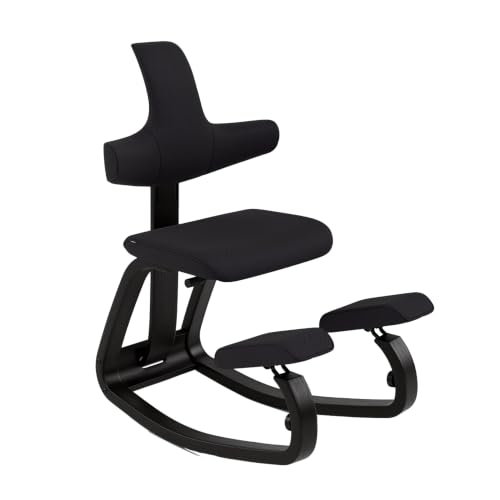
Varier Variable Balans
the original Scandinavian rocker, with curved wooden runners and the gently lively feel that defined the category. Its pads are firm and its geometry is the reference point every other design is quietly measured against. Best suited to people who want movement built into the chair itself and who appreciate furniture that looks as considered as it feels. It is a premium-tier design and it asks for the full adjustment period like any other model, so commitment matters more than budget here.
Availability and current details change often, so check the current Amazon listing before you buy. Treat this model as a prose description only for now: compare its frame style, padding, and adjustment against your own desk, floor, and leg length, and remember that the alternating pattern described in this guide is how most owners actually use any chair in this category, whatever the badge on the frame says.
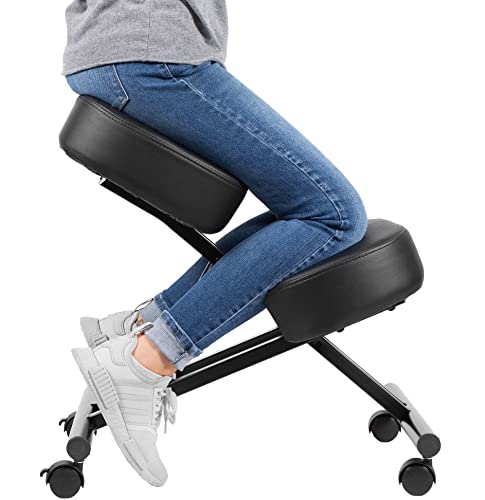
DRAGONN Kneeling Chair
a metal-frame design with casters and a more office-like character, aimed at people who want the kneeling position inside a familiar rolling-chair routine. The frame feels businesslike and the pads are generously cushioned, which first-time users often find welcoming during the early short sessions. It suits desk workers who move around their workspace during the day and who would miss casters if they gave them up. As with any caster model, check your floor surface before the first enthusiastic roll across the room.
Availability and current details change often, so check the current Amazon listing before you buy. Treat this model as a prose description only for now: compare its frame style, padding, and adjustment against your own desk, floor, and leg length, and remember that the alternating pattern described in this guide is how most owners actually use any chair in this category, whatever the badge on the frame says.
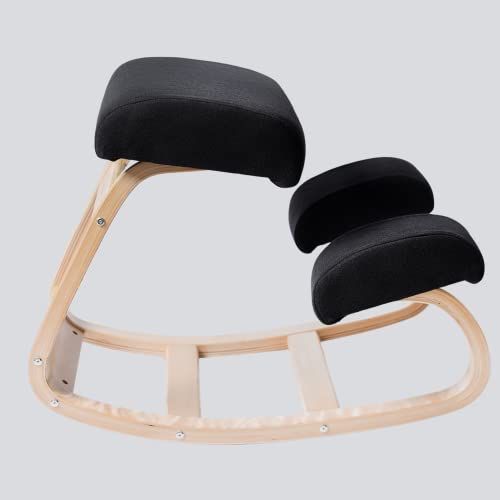
Sleekform Kneeling Chair
a fixed wooden-frame design that leans into simplicity, with an angled frame and thick pads that many home workers choose for a dedicated study corner. It has no casters and no rocking, which makes it feel calm and planted, and its compact shape suits smaller rooms. The fixed geometry means fit matters, so taller and shorter users should think carefully about proportions before ordering. It is a good example of the mid-tier formula done honestly, without pretending to adjust in ways it does not.
Availability and current details change often, so check the current Amazon listing before you buy. Treat this model as a prose description only for now: compare its frame style, padding, and adjustment against your own desk, floor, and leg length, and remember that the alternating pattern described in this guide is how most owners actually use any chair in this category, whatever the badge on the frame says.

Flash Furniture Mobile Wooden Kneeling Chair
a wooden-frame model on casters that blends the classic look with everyday mobility, popular in home offices that double as living space. The wood softens its appearance compared with metal frames, while the wheels keep it practical for people who slide between desk and shelves all day. Padding is comfortable for the alternating pattern most owners settle into. It represents the middle of the market well: neither the purest rocker nor the most adjustable office design, but a friendly compromise between the two.
Availability and current details change often, so check the current Amazon listing before you buy. Treat this model as a prose description only for now: compare its frame style, padding, and adjustment against your own desk, floor, and leg length, and remember that the alternating pattern described in this guide is how most owners actually use any chair in this category, whatever the badge on the frame says.
Master Massage Kneeling Chair
a design from a brand better known for massage equipment, bringing a wellness-shop feel to the category with plush padding as its calling card. The cushioning is the story here, and people who found firmer pads intimidating often start more happily on a softer seat and shin support. It suits shorter, comfort-first sessions and home treatment-room style spaces. Firmer-pad loyalists may find it too plush over a long session, which is a preference, not a flaw, and worth deciding honestly in advance.
Availability and current details change often, so check the current Amazon listing before you buy. Treat this model as a prose description only for now: compare its frame style, padding, and adjustment against your own desk, floor, and leg length, and remember that the alternating pattern described in this guide is how most owners actually use any chair in this category, whatever the badge on the frame says.
PREDUCTOR Kneeling Chair
an adjustable metal-frame model that competes on flexibility, with height settings intended to suit a wider range of bodies and desk heights. Adjustability is its argument: households sharing one chair, or buyers unsure of their ideal geometry, get more room to experiment. The styling is functional rather than decorative, which suits utility-first buyers. As with all highly adjustable frames, spend the first week actually using the adjustment rather than leaving the chair in whichever position it arrived in.
Availability and current details change often, so check the current Amazon listing before you buy. Treat this model as a prose description only for now: compare its frame style, padding, and adjustment against your own desk, floor, and leg length, and remember that the alternating pattern described in this guide is how most owners actually use any chair in this category, whatever the badge on the frame says.
Performance in Real Use
Focused desk work
Many owners report, purely as a matter of feel, that the kneeling position keeps them a little more alert during long reading or writing sessions. The upright, slightly forward perch does not invite the same sprawl as a deep lounge-style office chair, and some people find that helps them stay with a document. Others find the novelty distracting for the first days and then neutral. Treat focus claims the way you would treat claims about a standing desk: plausible for some, irrelevant for others, and only discoverable by trying the position yourself for a fair trial period.
Laptop users need one extra piece of discipline: the screen. A kneeling chair changes your eye line, and a laptop sitting flat on the desk already sits low, so the combination can leave you peering down more than you should. A simple stand that raises the screen, paired with a separate keyboard, restores a comfortable arrangement and takes seconds to set up each day. Desktop users with a monitor on a stand or arm have an easier time, since the screen height can be set once and then forgotten about.
Reading and writing
For reading and handwriting, the kneeling position feels surprisingly natural, with the slight forward tilt bringing the page toward you rather than forcing you to hunch down to it. Students and journal keepers often become the most loyal owners for exactly this reason. A book rest or a slightly raised laptop stand completes the setup, keeping your gaze at a comfortable angle. If your desk time is mostly reading, annotating, and writing by hand, a kneeling chair deserves a place high on your shortlist of seats to try.
Calls and shared spaces
Video calls are worth a rehearsal before the chair becomes your daily seat. A rocker moves gently as you talk, which looks natural to most colleagues but can feel conspicuous if you are presenting to a large audience. Fixed-frame models behave more like a normal chair on camera. Your framing also changes slightly because you sit a touch differently, so adjust the camera once during a test call with a friend rather than discovering the new angle live in front of your manager on a Monday morning.
In a shared office, a kneeling chair starts conversations and occasionally starts queues of curious colleagues wanting a try. That can be delightful or exhausting depending on your temperament and your calendar. Hot-desking environments suit it poorly because the adjustment is personal, while an assigned desk suits it well. If your workplace is formal, the sculptural wooden designs read as design furniture rather than gadgetry, which helps. Whatever the setting, keep your previous chair accessible during the first weeks rather than donating it on day one in a burst of enthusiasm.
Relaxed sessions and gaming
For gaming, the kneeling chair divides opinion neatly. Strategy, simulation, and relaxed single-player sessions suit it well, especially in shorter bursts between other activities. Fast, tense play where you constantly lean, twist, and jump up between matches feels less natural, and most gamers keep a conventional chair for those sessions. Treat the kneeling chair as the calm-session seat in a gaming room rather than as a universal replacement, and it earns its place without pretending to be something it is not.
The pattern that suits most owners is alternation rather than devotion. A kneeling chair works beautifully as one seat among two, swapped with a conventional chair across the day so your body gets variety instead of one fixed position held for hours. Many owners kneel for focused writing or reading, then return to their regular chair for calls, gaming, or relaxed browsing. Thinking of it as a second position rather than a total replacement also softens the risk of buying one, because even a chair you use for a few hours a day can earn its floor space.
Strengths and Trade-Offs
- Position variety is built in, especially with a rocker frame.
- Compact footprint and a low visual profile suit small rooms.
- The perch-like feel keeps many people alert during reading and writing.
- Shins and knees carry real weight, especially during the adjustment period.
- Getting on and off is a small ceremony repeated all day.
- It is not for everyone: people who cannot kneel should choose a conventional chair.
Almost everyone goes through an adjustment period, and pretending otherwise would be dishonest. Your shins and knees are not used to carrying part of your weight, so the first sessions should be short, measured in minutes rather than hours, with a normal chair nearby for swapping. Most people find the new position feels more natural after a week or two of gradual use, building up session length the way you would break in a pair of shoes. If a seller promises instant all-day comfort from the first sit, treat that promise with suspicion; honest expectations are part of enjoying this kind of chair.
Cushion quality decides whether a kneeling chair feels welcoming or punishing by the second week. The shin pads take real weight, so thin, hard padding that felt fine in a quick showroom sit can feel very different after a longer session at home. Look for pads that feel dense rather than spongy, with covers that do not slide against clothing, and think honestly about how the fabric will cope with daily use. Memory-foam style pads feel plush at first contact, while firmer foam tends to feel more supportive over a long session; neither is automatically better, and personal preference rules here.
The appeal that owners mention most is movement. A conventional chair encourages you to park yourself and stay parked, while a kneeling chair, especially a rocker, keeps inviting tiny adjustments that break up stillness. That variety is the honest core of the product: not a cure for anything, not a treatment, simply a seat that makes changing position feel easy and frequent. People who already take regular breaks and stretch will recognise the philosophy immediately, while people hoping a chair alone will transform how their body feels should recalibrate before spending anything.
How It Compares With Other Ways of Sitting
Owners of height-adjustable desks often pair a kneeling chair with standing intervals to build a three-position day: stand for a while, kneel for a while, sit conventionally for a while. The kneeling chair fills the middle ground gracefully, giving the day a rhythm that a single chair cannot. If you already own an adjustable desk, the chair integrates without any extra purchases beyond perhaps a monitor adjustment. If you do not, the chair still works at a fixed desk, provided the heights were checked honestly before ordering.
Set expectations at the level of a good pair of walking shoes: a well-chosen kneeling chair makes a daily activity more pleasant, in a way you notice most when you go back to the old arrangement. It will not reorganise your life, and it should not be asked to. Reviews that promise transformation set buyers up for disappointment, while reviews that describe the feel honestly, including the awkward first week and the weight on the shins, prepare buyers to become the satisfied long-term owners this category quietly produces in large numbers.
No chair, kneeling or otherwise, removes the need for breaks, and any review that implies otherwise is selling something. The kneeling chair simply makes position variety easier inside the chair itself, which complements rather than replaces standing up, walking to the window, and making tea. Build your day around movement in general and the chair becomes one pleasant part of a bigger pattern. Owners who understand this tend to stay satisfied for years; owners who expected the chair to do everything tend to blame it for a problem no chair could solve.
Who Should Buy It and Who Should Skip It
The clearest candidates for a kneeling chair are people who enjoy variety in how they sit, work at a desk for stretches they can break up freely, and are willing to spend a week or two adapting. It suits home workers who control their own environment, students who study in bursts, and anyone whose current chair leaves them restless rather than supported. It is a considered purchase rather than an impulse one, and the people who end up happiest with it are usually those who bought it for the experience of sitting differently, not for a promised transformation.
Honesty requires the other list too. A kneeling chair is not for everyone, and saying so plainly helps the right people avoid a disappointing purchase. If you cannot kneel comfortably, if getting up and down needs to be effortless and frequent, or if a mobility situation makes an unconventional seat impractical, a well-chosen conventional chair will serve you better and there is no shame in that conclusion. Equally, anyone expecting a chair to address a medical condition should talk to a qualified professional instead, because furniture is furniture and this category is about comfort and variety only.
Related reading: our full kneeling chair review; the complete kneeling chair buying guide; the honest kneeling chair pros and cons; whether a kneeling chair is worth it; how to choose a kneeling chair step by step; desks built for professional setups; desk setup ideas; monitors chosen for ergonomic setups; ergonomic keyboards.
Setup, Care and Maintenance Essentials
Desk height deserves a thought before you buy, because a kneeling chair positions you differently relative to the work surface than a standard chair does. Your hands still need to reach the keyboard without shrugging, and your screen still needs to sit at a comfortable viewing height, so a desk that already felt slightly low or high may feel more so. Adjustable desks pair naturally with kneeling chairs, but a fixed desk is not a deal breaker; it simply means checking your current setup honestly and being ready to raise the monitor or adjust the keyboard position.
Floors matter more than the product photos suggest. Rocker frames roll directly on the floor, so very soft carpet can mute the rocking motion and hard floors can make a fixed frame with casters livelier than expected. A low-pile rug or a chair mat can steady the experience, and felt pads protect delicate flooring from a wooden rocker. Before ordering, look at the exact patch of floor the chair will live on, including how you will roll or rock it in and out from the desk several times a day without scuffing anything you care about.
Getting on and off a kneeling chair becomes second nature quickly, but the first attempts feel faintly theatrical. You approach from the side or front, place your shins on the lower pads, and settle onto the seat in one unhurried motion, then reverse the whole thing to stand. People who need to jump up constantly for the door, the kettle, or the dog may find the small extra ceremony annoying over a day. It is a minor point that rarely appears in marketing, yet it shapes daily satisfaction as much as any cushion specification.
What you wear changes the experience in small, practical ways. Soft trousers and leggings feel natural against the shin pads, while stiff seams, chunky boots, or very short skirts can make the position awkward. Most owners settle into a routine without thinking about it, but it is worth knowing before a chair arrives rather than after. If you work from home in relaxed clothes, this is a non-issue; if you dress formally for video calls from the waist up and live in jeans below the desk, it is equally a non-issue for most people.
Day-to-day care is light. Upholstery benefits from a quick vacuum and the occasional wipe, wooden rockers like being kept out of harsh, direct heat, and caster wheels collect hair and fluff exactly the way every office chair caster does. Check the frame bolts every few months, especially on a rocker that flexes with every movement, and inspect pad covers for wear at the points where your shins press most. None of this is demanding, but a chair that is used daily rewards five minutes of attention now and then with years of quiet service.
Because the sitting position is so personal, the returns policy matters as much as the chair itself. A generous trial window lets you live through the adjustment period honestly instead of judging the chair on one strange afternoon. Buy from a seller whose returns process you have actually read, keep the packaging until you are sure, and give the chair short daily sessions across at least a couple of weeks before deciding. A kneeling chair bought in a rush and judged in a day is the most common route to an unfairly negative opinion of the whole category.
The secondhand market for kneeling chairs is active, and it can be a sensible way to test the concept at an entry-level commitment. Inspect used chairs for compressed or cracked shin pads, wobbling frames, and missing adjustment hardware, because those are the parts that decide comfort and they are not always replaceable. Wooden rocker classics in particular hold up well and appear regularly. A used chair that feels wrong may simply have tired pads, so judge the design by its best examples rather than by the most worn listing you happen to sit on.
Judge the warranty and spare-parts story qualitatively rather than by headline length. What matters is whether pads, casters, and covers can be replaced when they wear, because those are the parts that age first on any chair. Established makers tend to support their designs for years, while the cheapest listings may treat the whole chair as disposable. A chair that can be refreshed with new pads in a few years is a better long-term proposition than a slightly cheaper chair that cannot, even before you consider the waste involved.
Sharing a kneeling chair between household members is possible but rarely seamless. The position depends on leg length and preferred seat angle, so a chair adjusted for one person can feel oddly wrong for another until it is readjusted. Models with quick, tool-free adjustment share more gracefully than models that need bolts moved between holes. If two people plan to use the chair daily, have that conversation before choosing, because a chair that needs five minutes of fiddling at every swap tends to end up belonging to whoever adjusted it last.
In a small room, a kneeling chair can be a genuinely clever fit. Most designs have a compact footprint, no tall backrest looming over the desk, and some fold or roll away neatly when the workday ends. Rocker models need their rolling room, so measure the arc rather than just the static footprint, and check the chair against skirting boards and nearby furniture. Apartment dwellers who convert a corner of a living room into an office each morning often find the low visual profile as valuable as the sitting position itself.
For older children and teenagers doing homework, a kneeling chair can make study sessions feel like a novelty rather than a sentence, and the compact size suits small bedrooms. Adult judgement applies: sessions should be comfortable, the chair must adjust to a smaller frame, and a conventional chair should remain available. Younger children will treat a rocker as playground equipment, because of course they will, so supervision and common sense decide whether one belongs in a family space at all.
As a gift, a kneeling chair is a gamble that should only be taken with evidence. If the recipient has tried one, mentioned one, or keeps complaining that every normal chair feels wrong within the hour, the odds improve considerably. Otherwise, the adjustment period and the personal geometry make it a risky surprise, however thoughtful the intention. A safer route is a contribution toward the chair the person chooses themselves after reading a guide like this one, which preserves the generosity without imposing your guess about their shins.
Think about your first week as an experiment with a planned end point rather than as a verdict delivered on day one, because the position genuinely changes as your body learns it and early impressions, good or bad, are unreliable narrators.
Keep a small notebook note, even a single line a day, about how each session felt and how long it lasted; patterns appear quickly, and they tell you more about fit than any specification sheet ever will.
When friends ask to try the chair, let them, but warn them that a two-minute novelty sit tells them almost nothing except whether the idea amuses them, which is a different question from whether the chair suits a working day.
If you buy a second cushion accessory or a floor mat later, treat it as tuning rather than as rescue; small comforts refine a fundamentally suitable chair, and they rarely transform an unsuitable one into a favourite.
Photograph your setup once it feels right, including the chair position relative to the desk and the screen height, so that after holidays or a room reshuffle you can recreate the arrangement that worked instead of rediscovering it by trial and error.
Rotate the chair’s duties occasionally, using it for reading in another room for a week, and you may find it earns its keep in a place you never originally intended, which is a pleasant and common outcome with furniture this distinctive.
Final Verdict
A kneeling chair earns a recommendation as a second way of sitting, chosen patiently and judged over weeks. Pick the rocker family for movement, the fixed family for calm, protect the purchase with a fair returns window, and alternate with your existing chair from the very first day. Do that, and the category’s quiet, loyal following starts to make complete sense.
Further Considerations
Reading other people’s accounts of this category teaches a pattern worth naming: the happiest reviewers describe a routine, while the unhappiest describe an expectation. Routine reviewers talk about swapping chairs after lunch, about the rocker during long documents, about short sessions that grew longer across a fortnight. Expectation reviewers talk about transformation that never arrived. When you browse kneeling chair reviews anywhere, sort the voices by that distinction and the signal rises out of the noise remarkably fast, whatever the product being discussed.
Another pattern is timing. Reviews written in the first days swing wildly between delight and rejection, because the adjustment period is genuinely strange and the body has not yet voted. Reviews written after a month are calmer, more specific, and far more useful, even when their verdict is negative. A negative review from a patient triallist who alternated properly and still disliked the position is valuable information; a negative review from someone who sat for six straight hours on day one mostly documents a misunderstanding of the product.
Pay attention, too, to what reviewers mention about their rooms. The ones who checked floor, desk height, and screen position beforehand report smoother experiences almost without exception, while the ones who treated the chair as a drop-in replacement for a standard seat report friction that had little to do with the chair itself. The lesson generalises beyond this category: furniture succeeds or fails as part of a setup, and the setup is the part of the purchase entirely within your control.
Treat five-star enthusiasm and one-star fury with equal suspicion and read the middle voices twice, because the middle is where the honest texture lives: pads that are fine but not plush, a rocker that is pleasant but noticeable on calls, a position that is enjoyable for two hours and unwelcome for six. A category whose truth is mostly middle-shaped deserves reviews that sound like this one tries to sound, specific about the ordinary and calm about the rest.
Keeping the Purchase in Proportion
A note on patience as a feature rather than a flaw: most worthwhile changes in how a workspace feels arrive gradually, and this chair belongs to that family of purchases. The people who speak well of it after a year rarely describe a dramatic first day; they describe a slow accumulation of small, pleasant sessions that quietly became a habit. If your temperament enjoys that kind of slow verdict, the category will feel honest to you, because it never pretends to work faster than bodies actually adapt to anything new.
Consider the chair’s relationship with the rest of your furniture as a whole composition rather than a single purchase. A desk, a screen, a lamp, and two alternating seats form a small system, and changing one element changes the behaviour of all the others, usually in ways that take a week to notice. This is why experienced owners adjust one thing at a time and live with each change briefly before judging it, instead of rebuilding the entire setup in a single weekend and then being unable to say which change helped.
There is a modest environmental argument for the category that deserves a sentence or two. The classic designs are simple, repairable objects with few moving parts, long service lives, and an active secondhand market, which together make them easy furniture to keep in circulation rather than send to landfill. A chair bought once, maintained with new pads when needed, and eventually resold to another curious sitter is about as sustainable as office furniture gets without trying very hard at all.
Do not overlook the humble question of where the chair goes when it is not in use. Rocker models rest where they stop, fixed models roll into a corner, and some households simply leave the kneeling chair tucked at the desk while the conventional chair migrates to another room. Households that plan this small logistics question in advance report smoother daily life with two chairs, while households that improvise it daily report a faint, persistent clutter irritation that has nothing to do with sitting at all.
Finally, keep the whole purchase in proportion. A kneeling chair is a seat, chosen for comfort and variety, at a tier you select deliberately, with a trial you conduct patiently. It is not a referendum on your health, your discipline, or your seriousness about work, and it should never be sold or bought as one. Treated at that scale, it becomes what the best furniture always is: a quiet, daily pleasure that asks little, gives steadily, and earns its floor space one ordinary, comfortable afternoon at a time.
What a Careful First Week With a Kneeling Chair Reveals
When you check a single kneeling chair closely, work from the outside in: condition and finish first, then controls and connections, then behaviour during a real task from start to finish. Leave a little headroom in every direction that matters, whether that means physical space, connection capacity, adjustment range or simply time to do a task properly. Plan where the cables or materials connected to this kneeling chair will run when the room is tidy, not just while you are testing on an empty surface. Give a new kneeling chair a fair trial in the position it was bought for before improvising workarounds, since many early complaints disappear once placement is corrected.
As a concrete listing check, take the Varier Variable Balans and the DRAGONN Kneeling Chair named earlier in this article and confirm, line by line, that each variant offered matches the size, connection and contents described for it here. Write the exact model name and variant from the packaging into your notes, so replacement parts, accessories and support conversations start from certainty rather than guesswork. Think about the longest session you realistically run, not the average one, since heat, noise, clutter and small annoyances all grow more noticeable over time. Keep the packaging and any small adapters, feet, brackets or fasteners together until the kneeling chair has survived a full week of ordinary use in its final position. Compare what the listing promised with what the box actually contained, item by item, and treat any mismatch as a reason to pause before the return window closes.
When something behaves oddly, return to the basics first: power, connection, position, cleanliness and the last setting you changed, in that order, before assuming a fault. Think about the next purchase this one commits you to, whether that is matching accessories, consumables, a bigger surface or a different connection, and count that commitment honestly. If two options look identical on paper, choose the one whose controls, layout or handling you understood fastest, since clarity in daily use beats a longer feature list you never touch. Prefer a setup you can explain to another person in a minute, because simple arrangements are easier to troubleshoot, share and repeat than fragile clever ones.
Test in the order you actually work: power on, connect, adjust, run a real task, then tidy up, rather than judging the kneeling chair on a single impressive first impression. Check the connection points you rely on every day, and note which ones are already occupied, shared or awkward to reach once furniture is back in place. A fair test repeats the same task at least twice, once while you are paying attention and once while you work normally, because concentration can hide clumsy design. Clean and inspect the area around a kneeling chair on a simple schedule, since dust, loose fasteners and tangled leads cause many problems that get blamed on the product itself. Make one change at a time during the first days, so that when something improves or gets worse you know which change caused it.
Think about storage for the accessories this kneeling chair brings with it, so spare parts and tools end up in one known place instead of scattered across drawers. Treat any accessory bundled in the box as a starting point, and check whether it suits your setup before assuming the maker has solved that part for you. Run one deliberately awkward task early on, the kind you usually avoid, and see whether this kneeling chair handles your edge cases or only your easiest work.
Decide in advance what good enough looks like for your use, so a minor cosmetic flaw does not distract you from performance that genuinely meets the brief. Judge the controls by whether you can use them without looking down or stopping your task, because that is how they will be used for most of their life. When you compare notes with other owners, match their comments to setups like yours, because advice from a very different room, workload or routine can mislead. Take a quick photo of the working setup before you change anything, so cable routes, positions and settings can be restored exactly if the new arrangement disappoints. Notice the small sounds, lights and movements during normal use, because those everyday details decide whether a kneeling chair feels settled or constantly demands attention.
Check the underside, back or hidden face of the kneeling chair as part of your inspection, because labels, vents, switches and fasteners often live where first impressions never look. Write down the oldest and the newest device you expect this kneeling chair to work alongside, because compatibility problems usually appear at the edges of a setup rather than in the middle of it.
Frequently Asked Questions
How long does it take to get used to a kneeling chair?
Most people need one to two weeks of short, gradually lengthening sessions before the position feels natural. Start with brief sits, swap back to your normal chair often, and let your shins adapt at their own pace. Judging the chair on a single long first session is the most common beginner mistake, and it produces unfair conclusions about a design that might have suited you well with a gentler introduction.
Can you sit on a kneeling chair all day?
Most owners do not, and the category works best when you do not try. The common pattern is alternating between the kneeling chair and a conventional chair across the day, with standing breaks as well. A few long-term fans do use one for most of the day after a full adjustment period, but they are the exception, and they built up to it gradually rather than starting there on the first morning.
Is a kneeling chair a medical treatment?
No. A kneeling chair is furniture, and this guide treats it strictly as a comfort and sitting-experience choice. It changes how sitting feels and encourages position variety, and that is the whole of the claim. Anyone dealing with a medical condition, persistent pain, or a mobility question should speak with a qualified professional rather than expecting any chair, of any design, to act as a treatment.
Rocker or fixed frame: which is better?
Neither is better in the abstract. Rocker designs add gentle movement and suit people who like to shift and sway while they think. Fixed frames feel calmer and more predictable, and models with casters behave more like a normal office chair. Your floor, your desk work, and your temperament decide the question, which is why this guide describes both families in detail rather than crowning one of them.
Who should not buy a kneeling chair?
Anyone who cannot kneel comfortably, anyone who needs to get up and down effortlessly many times an hour, and anyone whose mobility situation makes an unconventional seat impractical should choose a good conventional chair instead. That is a practical judgement, not a failure. The category is a genuine pleasure for the right person and a genuine annoyance for the wrong one, and honest guides should say so.
What desk works best with a kneeling chair?
Any desk whose height lets your hands reach the keyboard comfortably and whose screen can be raised to a comfortable viewing height will work. Adjustable desks make the pairing effortless, but a fixed desk is fine once you check the geometry and, for laptop users, add a stand and a separate keyboard. Measure and think before ordering, and the desk question usually resolves itself.
Related reading: our full kneeling chair review; the complete kneeling chair buying guide; the honest kneeling chair pros and cons; whether a kneeling chair is worth it; how to choose a kneeling chair step by step; desks built for professional setups; desk setup ideas; monitors chosen for ergonomic setups.