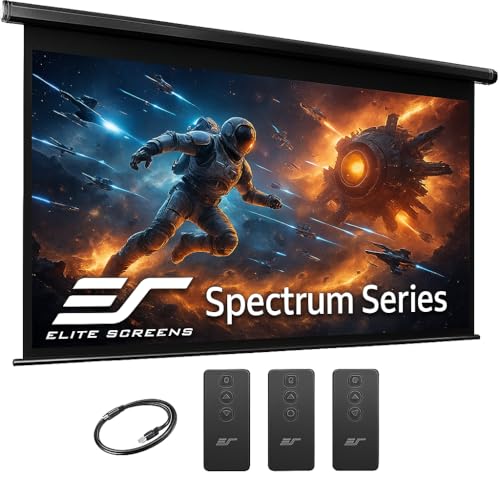
Disclosure: As an Amazon Associate, ilcastellomenu.com earns from qualifying purchases. Links on this page are affiliate links; they cost you nothing extra. Prices and availability change often, so check the current Amazon listing before you buy.
Is a projector screen worth it? The short answer is yes — if you use your projector regularly, if your room can be reasonably darkened, and if you are willing to mount the screen properly, a dedicated screen is worth it because it improves every single thing you will ever watch on that projector. It is not worth it if the projector comes out twice a year, if the room stays bright all day, or if a large television would honestly fit your habits better. This article earns that verdict rather than just stating it: what you actually get, the real costs beyond money, the households it pays off for, the households it does not, the alternatives, and a decision checklist you can run in five minutes.
Key Takeaways:
- Worth it if: you watch weekly or more, you can control the light, and you will mount the screen into solid structure.
- Not worth it if: use is rare, the room is permanently bright, or the wall already satisfies everyone who watches.
- The value compounds, because a screen improves every projector you will ever pair with it.
- The real costs are space, mounting work and room routine — not just the purchase itself.
- A mid-tier screen in the right size delivers most of the value; premium money buys convenience and problem-solving, not magic.
Is a Projector Screen Worth It for Your Room?
The surface is the part of a projector screen that actually does the optical work, turning scattered projector light into a picture your eyes can read comfortably. A smooth, even surface keeps fine detail intact, because tiny wrinkles and texture can soften edges and make text look slightly fuzzy. If you watch a lot of subtitled films or play games with small interface text, surface smoothness becomes one of the most practical things to judge. Texture is a quiet trade-off: a very fine texture can hide small imperfections, while a rougher finish may sparkle slightly under bright scenes. When a surface reflects light evenly across the seating area, people sitting off to the side see a picture that stays close to what the centre seat sees.
If the budget is tight, a simpler screen in the right size usually beats a fancier screen in the wrong size, every single time. Money spent on flatness, a good border and a sound mounting is rarely wasted, since those are the qualities you notice every single session. Money spent on features you will not use, such as a motor in a dedicated room where the screen never retracts, is where budgets quietly leak away. Value in a screen is mostly about how many years of better pictures it delivers, because a screen usually outlives the projector paired with it.
A screen chosen for a dark, dedicated room can prioritise contrast and colour, while a living-room screen has to work harder against lamps and windows. Think about the worst lighting you will regularly watch in, not the best, because that honest picture is the one your screen has to handle. Daytime sports and casual viewing are more forgiving than dark films, which is worth remembering when you judge how much light control you really need. If your viewing is mostly evening viewing, a simpler matte surface usually serves you well and keeps the budget focused on size and mounting. Closing curtains and moving one lamp often improves the picture more than upgrading any single piece of hardware in the chain. Some specialised surfaces are designed to reject light coming from above or the sides, and they make the most sense in rooms that cannot be darkened.
If you watch a lot of subtitled films or play games with small interface text, surface smoothness becomes one of the most practical things to judge. Colour neutrality matters more than most first-time buyers expect, since a surface that leans warm or cool will push every film and game in that direction. A smooth, even surface keeps fine detail intact, because tiny wrinkles and texture can soften edges and make text look slightly fuzzy. When a surface reflects light evenly across the seating area, people sitting off to the side see a picture that stays close to what the centre seat sees.
In this guide
What You Actually Get
The border around the viewing area is part of the surface story too, because a deep black frame makes the image look richer by comparison. If you watch a lot of subtitled films or play games with small interface text, surface smoothness becomes one of the most practical things to judge. A smooth, even surface keeps fine detail intact, because tiny wrinkles and texture can soften edges and make text look slightly fuzzy. Texture is a quiet trade-off: a very fine texture can hide small imperfections, while a rougher finish may sparkle slightly under bright scenes. Over time, a good surface should stay flat and consistent, and that long-term flatness is often what separates a satisfying screen from a frustrating one.
Everyday television and streaming sit in between, and they are where most screens spend most of their hours in real homes. Presentations and photos ask for accurate colour and sharp text, which brings surface smoothness back to the top of the list. Mixed households should weight the decision toward the content watched most often, not the content that sounds most impressive. Sport rewards brightness, size and a picture that stays clear for a group spread across a wide sofa or several chairs. Films reward contrast and black level above all, so dark scenes are the honest test of any screen and room combination.
When you compare designs, ask yourself how much a slight wave would bother you in the content you watch most, because that answer varies a lot by viewer. Waves and edge curl are the natural enemies of roll-up designs, and they tend to appear gradually rather than all at once. A fixed frame avoids most of the problem by never rolling the material at all, which is one reason dedicated rooms favour it. Tensioning systems exist precisely to fight that slow curl, pulling the material evenly so the picture stays geometrically honest. How a screen is stored matters: a roll screen left down for long periods and one raised daily can age in noticeably different ways. Flatness sounds like a small detail until you see a slow camera pan cross a wavy screen, where straight lines bend and the illusion breaks.
Future seating changes are worth a thought as well, because moving a sofa back later can make a modest screen suddenly feel small. A picture that is too large forces your eyes to travel constantly, which can turn an action film into a tiring experience instead of an absorbing one. A picture that is too small, on the other hand, loses the sense of scale that makes projection feel different from a television in the first place. Choosing a size starts with seating distance rather than wall space, because the biggest screen that fits is not always the most comfortable to watch.
The surface is the part of a projector screen that actually does the optical work, turning scattered projector light into a picture your eyes can read comfortably. Over time, a good surface should stay flat and consistent, and that long-term flatness is often what separates a satisfying screen from a frustrating one. Colour neutrality matters more than most first-time buyers expect, since a surface that leans warm or cool will push every film and game in that direction. The border around the viewing area is part of the surface story too, because a deep black frame makes the image look richer by comparison.
The Real Costs Beyond Money
Dark wall and ceiling colours near the screen reduce reflections that bounce back and lift black levels during bright scenes. Cable routes are easier to plan before the screen goes up, and a tidy route avoids the trailing wires that spoil an otherwise clean install. The room is half the system, and treating it as part of the purchase leads to better decisions than shopping for the screen in isolation. Think about where people walk during a film, because a screen position that crosses a busy doorway invites shadows and interruptions.
Working with a second person makes almost every stage safer and more accurate, from lifting the housing to checking the picture from the seating. The screen housing or frame must fix into something solid, so locating the structure behind the plaster is a step that should never be skipped. Dry-fitting and marking everything in pencil first lets you spot a mistake while it is still free to fix. Cables should be test-run before final fixing, because discovering a short cable after the housing is mounted is a classic and avoidable frustration. Keep the projector and screen manuals together after the install, since drop limits, cleaning notes and adjustment points are easy to forget months later.
Electrical work for a motorised screen, such as adding an outlet or hardwiring, should be handled by someone experienced with mains wiring. A heavy roll-up or motorised housing should never hang from fixings you are unsure about; if the wall construction is unclear, get advice before drilling. Two people should lift a long housing into place, since a solo lift at arm’s length above head height is how screens and people both get hurt. Keep the area below the screen clear while you work, and check that the drop path is free of furniture, lights and curious pets before the first test run.
Keep food, drinks and sticky hands away from the surface, since stains on a screen are very difficult to remove without leaving a mark. Never scrub a projection surface or use household cleaners on it, because the coating that makes the picture look right can be damaged permanently. Dust settles on a screen surface quietly, and a gentle clean with a soft, dry microfibre cloth is usually all that regular care requires. Roll screens last longer when they are raised and lowered smoothly rather than snapped, and when they are not left half-dropped for weeks at a time.
A rug, curtains and soft furniture all help twice over, calming both the light in the room and the sound of the film. If the room doubles as a living space, a screen that disappears when not in use protects both the decor and the household peace. Cable routes are easier to plan before the screen goes up, and a tidy route avoids the trailing wires that spoil an otherwise clean install. Dark wall and ceiling colours near the screen reduce reflections that bounce back and lift black levels during bright scenes. Ventilation and projector fan noise belong in the room plan as well, since a quiet room makes a modest system feel far more premium.
Who It Pays Off For
The Regular Film Household
Films reward contrast and black level above all, so dark scenes are the honest test of any screen and room combination. Mixed households should weight the decision toward the content watched most often, not the content that sounds most impressive. Everyday television and streaming sit in between, and they are where most screens spend most of their hours in real homes. Sport rewards brightness, size and a picture that stays clear for a group spread across a wide sofa or several chairs.
Resale and reuse favour standard formats and sizes, another small reason to stay mainstream unless you have a specific reason not to. Money spent on features you will not use, such as a motor in a dedicated room where the screen never retracts, is where budgets quietly leak away. Value in a screen is mostly about how many years of better pictures it delivers, because a screen usually outlives the projector paired with it. Money spent on flatness, a good border and a sound mounting is rarely wasted, since those are the qualities you notice every single session.
The Sports and Gaming Room
Fast camera movement in games exposes waves and texture more than films do, which pushes gaming rooms toward tensioned or fixed designs. Because the screen adds no input delay of its own, gamers can judge screens purely on picture quality and room fit. For gaming, the screen’s job is to stay flat, neutral and big enough that interface text stays readable from your actual seat. A matte, neutral surface keeps colours consistent across genres, from dark horror titles to bright racing games. Comfort matters in long sessions, so screen height and size deserve the same care for a gaming setup as for a cinema room.
Everyday television and streaming sit in between, and they are where most screens spend most of their hours in real homes. Films reward contrast and black level above all, so dark scenes are the honest test of any screen and room combination. Mixed households should weight the decision toward the content watched most often, not the content that sounds most impressive. Presentations and photos ask for accurate colour and sharp text, which brings surface smoothness back to the top of the list.
The Long-Term System Builder
Lens position matters too: a projector that sits far off centre forces keystone correction, and that correction always costs some sharpness. If you plan to upgrade the projector later, choose a screen size and format that will still suit a typical replacement, rather than one tied to a single model. A brighter projector gives you more freedom in screen choice, while a modest projector benefits from a surface and room that waste less light. Throw distance decides where the projector can sit for a given image size, so confirm the pairing on paper before any mounting hardware goes up.
Money spent on flatness, a good border and a sound mounting is rarely wasted, since those are the qualities you notice every single session. Consider the cost of your time as well: a screen that stays flat and clean asks almost nothing of you, while a fussy one charges attention forever. If the budget is tight, a simpler screen in the right size usually beats a fancier screen in the wrong size, every single time. Value in a screen is mostly about how many years of better pictures it delivers, because a screen usually outlives the projector paired with it. A screen is also one of the few parts of a home cinema that does not become obsolete quickly, which strengthens the case for buying a good one once.
Who Should Skip It
A television is the obvious alternative, and it wins on brightness and simplicity while giving up the sheer scale that makes projection special. Keeping an existing screen and upgrading the projector instead is sometimes the smarter order of operations, especially if the current surface is still flat and clean. For occasional use, a portable screen you store away may beat a permanent installation that dominates a shared room all week. Projecting onto a painted wall costs the least and can look surprisingly decent, but it lacks the border, flatness control and surface consistency of a real screen. A smaller, better screen is a legitimate alternative to a larger, weaker one, and many viewers who try both prefer the smaller picture with better contrast.
Daytime sports and casual viewing are more forgiving than dark films, which is worth remembering when you judge how much light control you really need. If your viewing is mostly evening viewing, a simpler matte surface usually serves you well and keeps the budget focused on size and mounting. A screen chosen for a dark, dedicated room can prioritise contrast and colour, while a living-room screen has to work harder against lamps and windows. Some specialised surfaces are designed to reject light coming from above or the sides, and they make the most sense in rooms that cannot be darkened. Ambient light is the single biggest enemy of a projected picture, and no screen choice can fully rescue a room that stays bright all day.
Forgetting about speakers and centre-channel placement until after the screen is up forces awkward compromises that planning would have avoided. Mounting the screen too high is a quiet comfort killer, because a picture your neck has to look up at stops feeling cinematic very quickly. Ignoring the black border and frame quality leads to a picture that looks less rich than it should, even with a good projector behind it. Skipping the tape-outline test and the stud check saves an hour on day one and can cost a weekend of corrections later. Another frequent error is judging a screen only by a bright demo scene, when dark scenes are where surface and room weaknesses actually show.
A smaller, better screen is a legitimate alternative to a larger, weaker one, and many viewers who try both prefer the smaller picture with better contrast. Ambient-light rooms sometimes suit a large television better than any screen, and recognising that honestly is part of shopping well. A television is the obvious alternative, and it wins on brightness and simplicity while giving up the sheer scale that makes projection special. For occasional use, a portable screen you store away may beat a permanent installation that dominates a shared room all week. Projecting onto a painted wall costs the least and can look surprisingly decent, but it lacks the border, flatness control and surface consistency of a real screen.
The Strengths and Trade-Offs of Owning One
Strengths
- A dedicated surface gives a smoother, more consistent picture than a bare wall, with controlled reflection and a proper black border around the image.
- The sense of scale is the real product: films, sport and games feel like events rather than programmes when the picture is genuinely large.
- A screen usually outlives several projectors, so one careful purchase improves every future upgrade you make to the system.
- Modern formats cover almost every room, from fixed frames for dedicated spaces to screens that vanish completely in shared living rooms.
Trade-offs
- The room still decides the result: ambient light, wall colour and seating distance can limit even an excellent screen.
- Large screens are large objects, and mounting, delivery and wall space all need honest planning before you order.
- Roll-up designs can develop waves or edge curl over time, especially with rough handling or difficult room conditions.
- Motorised models add weight, power requirements and moving parts that a simple fixed or manual design never has to think about.
Alternatives to Consider
Before deciding against a screen entirely, consider the two designs that answer the most common objections, presented in prose only: the simple manual screen for buyers worried about commitment, and the floor-rising design for buyers who cannot mount anything.

Elite Screens Manual B — manual pull-down
The Manual B line from Elite Screens represents the classic manual pull-down idea done in a mainstream, widely available form: a spring-roller housing you mount on a wall or ceiling, a handle you pull down when it is time to watch, and a surface that rolls away when the room needs to be a room again. In prose terms it sits in the entry tier of this cluster, and its appeal is simplicity. There is no motor to wire, no remote to lose, and the daily routine is a few seconds of pulling and latching. The honest trade-offs of the type apply in full: a manual screen depends on gentle handling to stay flat over the years, the drop length is set by the housing position rather than fine adjustment, and the picture rewards a controlled, even pull rather than a yank. For a first screen in a bedroom, a classroom-style space or a living room that cannot commit to a fixed frame, this is the shape of product most buyers are picturing, and it earns its place here as the straightforward, low-commitment option. Check the current listing for the exact configuration before you buy, and treat any size or surface detail as confirmed only by that listing.
Best for: viewers whose room and routine match a manual pull-down design. Not suited for: buyers whose mounting, space or budget points firmly at a different format. This pick is presented in prose only, so compare configurations on the current listing and choose by fit rather than by headline.
VIVIDSTORM S PRO — floor-rising motorised tensioned
The S PRO from VIVIDSTORM is the most distinctive design in this cluster: a floor-rising, motorised, tensioned screen that stands low in the room when closed and rises into place when it is time to watch. It sits in the premium tier here, and it solves a specific problem elegantly — rooms where wall and ceiling mounting are impossible or forbidden, including many rentals, rooms with awkward walls, and spaces where a laser projector sits on low furniture in front of the screen. The tensioned design fights the waves that plain roll materials can develop, and the rising format keeps the wall completely free. The trade-offs are commitment and care: it is a substantial piece of furniture in its own right, it needs floor space and power, its rising path must stay clear, and it deserves the same respect as any motorised equipment. For the buyer whose room rules out every mounted option, though, it is not a compromise but the enabling purchase, and it is the pick here for mounting-restricted rooms. Confirm details on the current listing before ordering.
Best for: viewers whose room and routine match a floor-rising motorised tensioned design. Not suited for: buyers whose mounting, space or budget points firmly at a different format. This pick is presented in prose only, so compare configurations on the current listing and choose by fit rather than by headline.
Keeping an existing screen and upgrading the projector instead is sometimes the smarter order of operations, especially if the current surface is still flat and clean. A smaller, better screen is a legitimate alternative to a larger, weaker one, and many viewers who try both prefer the smaller picture with better contrast. Projecting onto a painted wall costs the least and can look surprisingly decent, but it lacks the border, flatness control and surface consistency of a real screen. Ambient-light rooms sometimes suit a large television better than any screen, and recognising that honestly is part of shopping well. For occasional use, a portable screen you store away may beat a permanent installation that dominates a shared room all week.
Projecting onto a painted wall costs the least and can look surprisingly decent, but it lacks the border, flatness control and surface consistency of a real screen. A smaller, better screen is a legitimate alternative to a larger, weaker one, and many viewers who try both prefer the smaller picture with better contrast. Keeping an existing screen and upgrading the projector instead is sometimes the smarter order of operations, especially if the current surface is still flat and clean. A television is the obvious alternative, and it wins on brightness and simplicity while giving up the sheer scale that makes projection special. Ambient-light rooms sometimes suit a large television better than any screen, and recognising that honestly is part of shopping well.
How to Get the Most Value If You Buy
Level on the housing does not guarantee level on the image, because the projector alignment has the final say and needs its own careful adjustment. Accurate measuring before drilling is the whole secret of a clean installation, and it is far easier than correcting holes afterwards. The screen housing or frame must fix into something solid, so locating the structure behind the plaster is a step that should never be skipped. Cables should be test-run before final fixing, because discovering a short cable after the housing is mounted is a classic and avoidable frustration. Dry-fitting and marking everything in pencil first lets you spot a mistake while it is still free to fix.
Check fixings and brackets once in a while, especially after the first weeks, because a housing that settles slightly can be re-levelled easily if caught early. Never scrub a projection surface or use household cleaners on it, because the coating that makes the picture look right can be damaged permanently. Keep food, drinks and sticky hands away from the surface, since stains on a screen are very difficult to remove without leaving a mark. Dust settles on a screen surface quietly, and a gentle clean with a soft, dry microfibre cloth is usually all that regular care requires. Store a portable screen in its case, dry and away from sharp objects, and it will reward that small care with years of flat, clean pictures.
Lens position matters too: a projector that sits far off centre forces keystone correction, and that correction always costs some sharpness. Gaming adds its own pairing note, because the screen itself adds no meaningful delay, so any lag you feel comes from the projector and its processing settings. Resolution only pays off when the surface is smooth enough to show it, which is why pairing a very sharp projector with a rough portable screen disappoints. A screen and a projector work as a pair, and a mismatch between them wastes the strengths of both. If you plan to upgrade the projector later, choose a screen size and format that will still suit a typical replacement, rather than one tied to a single model.
The most common mistake is buying the screen before measuring the room, then discovering the size, throw or mounting simply do not agree. Skipping the tape-outline test and the stud check saves an hour on day one and can cost a weekend of corrections later. Forgetting about speakers and centre-channel placement until after the screen is up forces awkward compromises that planning would have avoided. Ignoring the black border and frame quality leads to a picture that looks less rich than it should, even with a good projector behind it. Another frequent error is judging a screen only by a bright demo scene, when dark scenes are where surface and room weaknesses actually show. Mounting the screen too high is a quiet comfort killer, because a picture your neck has to look up at stops feeling cinematic very quickly.
The Decision Checklist
Answer these honestly. Do you watch the projector at least weekly? Can the room be darkened for serious viewing? Is there a wall, ceiling or floor position that genuinely suits a screen? Can the fixings reach studs or joists, or proper heavy-duty anchors? Does the seating distance support a satisfying size? Will someone experienced handle any motorised wiring? If most answers are yes, a projector screen is worth it for you. If most are no, spend the money elsewhere and revisit the question when the room or the habit changes.
Consider the cost of your time as well: a screen that stays flat and clean asks almost nothing of you, while a fussy one charges attention forever. Money spent on flatness, a good border and a sound mounting is rarely wasted, since those are the qualities you notice every single session. A screen is also one of the few parts of a home cinema that does not become obsolete quickly, which strengthens the case for buying a good one once. Money spent on features you will not use, such as a motor in a dedicated room where the screen never retracts, is where budgets quietly leak away. Resale and reuse favour standard formats and sizes, another small reason to stay mainstream unless you have a specific reason not to.
Is a Projector Screen Worth It: The Longer Argument
A screen is also one of the few parts of a home cinema that does not become obsolete quickly, which strengthens the case for buying a good one once. If the budget is tight, a simpler screen in the right size usually beats a fancier screen in the wrong size, every single time. Money spent on flatness, a good border and a sound mounting is rarely wasted, since those are the qualities you notice every single session. Consider the cost of your time as well: a screen that stays flat and clean asks almost nothing of you, while a fussy one charges attention forever. Value in a screen is mostly about how many years of better pictures it delivers, because a screen usually outlives the projector paired with it. Resale and reuse favour standard formats and sizes, another small reason to stay mainstream unless you have a specific reason not to.
Ambient light is the single biggest enemy of a projected picture, and no screen choice can fully rescue a room that stays bright all day. Some specialised surfaces are designed to reject light coming from above or the sides, and they make the most sense in rooms that cannot be darkened. If your viewing is mostly evening viewing, a simpler matte surface usually serves you well and keeps the budget focused on size and mounting. Daytime sports and casual viewing are more forgiving than dark films, which is worth remembering when you judge how much light control you really need. Closing curtains and moving one lamp often improves the picture more than upgrading any single piece of hardware in the chain. A screen chosen for a dark, dedicated room can prioritise contrast and colour, while a living-room screen has to work harder against lamps and windows.
Over time, a good surface should stay flat and consistent, and that long-term flatness is often what separates a satisfying screen from a frustrating one. The surface is the part of a projector screen that actually does the optical work, turning scattered projector light into a picture your eyes can read comfortably. A well-made surface also helps black levels, because light that is controlled properly does not bounce around the room and wash out dark scenes. The border around the viewing area is part of the surface story too, because a deep black frame makes the image look richer by comparison. When a surface reflects light evenly across the seating area, people sitting off to the side see a picture that stays close to what the centre seat sees. Texture is a quiet trade-off: a very fine texture can hide small imperfections, while a rougher finish may sparkle slightly under bright scenes.
Ventilation and projector fan noise belong in the room plan as well, since a quiet room makes a modest system feel far more premium. A rug, curtains and soft furniture all help twice over, calming both the light in the room and the sound of the film. Cable routes are easier to plan before the screen goes up, and a tidy route avoids the trailing wires that spoil an otherwise clean install. Think about where people walk during a film, because a screen position that crosses a busy doorway invites shadows and interruptions. If the room doubles as a living space, a screen that disappears when not in use protects both the decor and the household peace. The room is half the system, and treating it as part of the purchase leads to better decisions than shopping for the screen in isolation.
If the budget is tight, a simpler screen in the right size usually beats a fancier screen in the wrong size, every single time. Money spent on flatness, a good border and a sound mounting is rarely wasted, since those are the qualities you notice every single session. Money spent on features you will not use, such as a motor in a dedicated room where the screen never retracts, is where budgets quietly leak away. Resale and reuse favour standard formats and sizes, another small reason to stay mainstream unless you have a specific reason not to. Value in a screen is mostly about how many years of better pictures it delivers, because a screen usually outlives the projector paired with it. Consider the cost of your time as well: a screen that stays flat and clean asks almost nothing of you, while a fussy one charges attention forever.
Ambient light is the single biggest enemy of a projected picture, and no screen choice can fully rescue a room that stays bright all day. A screen chosen for a dark, dedicated room can prioritise contrast and colour, while a living-room screen has to work harder against lamps and windows. Closing curtains and moving one lamp often improves the picture more than upgrading any single piece of hardware in the chain. Think about the worst lighting you will regularly watch in, not the best, because that honest picture is the one your screen has to handle. Some specialised surfaces are designed to reject light coming from above or the sides, and they make the most sense in rooms that cannot be darkened. Light that falls directly on the screen is far more damaging than light behind the seating, so room layout deserves attention before you buy.
The Ownership Maths of a Projector Screen: Time, Hassle and Recurring Frustration
Compare it honestly with the workaround you use now, describing that workaround in the same detail, because vague dissatisfaction makes almost any purchase look worthwhile. Keep the instructions somewhere you can find them months later, since the setting or step you skip today is often the one a future problem sends you hunting for. Keep a short note of what worked, what annoyed you and what you adjusted, because that note is more useful than memory when you later replace or add another projector screen. Clean and inspect the area around a projector screen on a simple schedule, since dust, loose fasteners and tangled leads cause many problems that get blamed on the product itself.
As a concrete listing check, take the Elite Screens Manual B and the VIVIDSTORM S PRO named earlier in this article and confirm, line by line, that each variant offered matches the size, connection and contents described for it here. Ask what you would do on the day this projector screen stops working as expected, and whether you could swap, reset, clean or return it without dismantling half your setup. Avoid forcing a connector, bracket or moving part that resists you, because resistance is usually information about alignment or fit rather than an invitation to push harder. Keep the area underneath and behind the projector screen reachable for cleaning, since the spots you cannot reach become the spots where dust and lost small parts collect. The value question for a projector screen is answered by your calendar more than by any feature list: count how often the problem it solves actually interrupts your week.
Think about storage for the accessories this projector screen brings with it, so spare parts and tools end up in one known place instead of scattered across drawers. Measure the place where a projector screen will actually live, including the clearance you need to reach cables, doors, trays, vents or controls without moving everything else first. Look closely at seams, edges, hinges, threads or contact points when the projector screen arrives, because build quality is easiest to judge before everyday wear hides the evidence. Give a new projector screen a fair trial in the position it was bought for before improvising workarounds, since many early complaints disappear once placement is corrected.
Treat any accessory bundled in the box as a starting point, and check whether it suits your setup before assuming the maker has solved that part for you. Prefer a setup you can explain to another person in a minute, because simple arrangements are easier to troubleshoot, share and repeat than fragile clever ones.
Frequently Asked Questions
Is a projector screen worth it for occasional movie nights?
If the budget is tight, a simpler screen in the right size usually beats a fancier screen in the wrong size, every single time. Resale and reuse favour standard formats and sizes, another small reason to stay mainstream unless you have a specific reason not to. Money spent on features you will not use, such as a motor in a dedicated room where the screen never retracts, is where budgets quietly leak away. Money spent on flatness, a good border and a sound mounting is rarely wasted, since those are the qualities you notice every single session. A screen is also one of the few parts of a home cinema that does not become obsolete quickly, which strengthens the case for buying a good one once.
Is a premium screen worth it over a basic one?
Temperature and humidity swings in a room can encourage curl, so a screen near a radiator or a damp external wall deserves extra thought. How a screen is stored matters: a roll screen left down for long periods and one raised daily can age in noticeably different ways. Tensioning systems exist precisely to fight that slow curl, pulling the material evenly so the picture stays geometrically honest. When you compare designs, ask yourself how much a slight wave would bother you in the content you watch most, because that answer varies a lot by viewer. A fixed frame avoids most of the problem by never rolling the material at all, which is one reason dedicated rooms favour it. Flatness sounds like a small detail until you see a slow camera pan cross a wavy screen, where straight lines bend and the illusion breaks.
Is a screen worth it in a rented home?
Manual pull-down screens roll into a housing when not in use, trading a little long-term flatness for a room that can return to normal in seconds. Motorised screens add a remote-controlled drop and a cleaner daily routine, at the cost of a heavier housing and a power connection to plan for. The right type is the one that matches how the room is actually used on a weekday, not how you imagine using it on the best movie night of the year. Fixed frame screens hold the material under constant tension on a rigid frame, which is why they tend to stay the flattest of all the common designs. Tensioned designs, whether fixed or motorised, use cords or tabs to keep the material flat, and that flatness is their main reason to exist.
Is a motorised screen worth it over a manual one?
Roll screens last longer when they are raised and lowered smoothly rather than snapped, and when they are not left half-dropped for weeks at a time. If the screen develops a wave or a fault, consult the maker’s guidance before attempting home remedies involving heat or weights, which often make things worse. Dust settles on a screen surface quietly, and a gentle clean with a soft, dry microfibre cloth is usually all that regular care requires. Never scrub a projection surface or use household cleaners on it, because the coating that makes the picture look right can be damaged permanently. Keep food, drinks and sticky hands away from the surface, since stains on a screen are very difficult to remove without leaving a mark. Store a portable screen in its case, dry and away from sharp objects, and it will reward that small care with years of flat, clean pictures.
Is a screen worth it for gaming?
Over time, a good surface should stay flat and consistent, and that long-term flatness is often what separates a satisfying screen from a frustrating one. The border around the viewing area is part of the surface story too, because a deep black frame makes the image look richer by comparison. A well-made surface also helps black levels, because light that is controlled properly does not bounce around the room and wash out dark scenes. The surface is the part of a projector screen that actually does the optical work, turning scattered projector light into a picture your eyes can read comfortably. Colour neutrality matters more than most first-time buyers expect, since a surface that leans warm or cool will push every film and game in that direction. When a surface reflects light evenly across the seating area, people sitting off to the side see a picture that stays close to what the centre seat sees.
When is a television the better buy instead?
Light that falls directly on the screen is far more damaging than light behind the seating, so room layout deserves attention before you buy. If your viewing is mostly evening viewing, a simpler matte surface usually serves you well and keeps the budget focused on size and mounting. Ambient light is the single biggest enemy of a projected picture, and no screen choice can fully rescue a room that stays bright all day. A screen chosen for a dark, dedicated room can prioritise contrast and colour, while a living-room screen has to work harder against lamps and windows. Some specialised surfaces are designed to reject light coming from above or the sides, and they make the most sense in rooms that cannot be darkened.
Related Guides
Keep researching with these guides: projector screen pros and cons; projector screen buying guide; projector screen review; how to install projector screen; monitors for home use; how to choose a monitor; monitors for movies; monitors for film editing.