Disclosure: As an Amazon Associate, ilcastellomenu.com earns from qualifying purchases. Links on this page are affiliate links; they cost you nothing extra. Prices and availability change often, so check the current Amazon listing before you buy.
So, is a usb sound card worth it — worth it, or a waste of a port? The short answer: worth it if you have a connection problem it solves, because it solves that problem completely, in about a minute, for the effort of plugging something in. Not worth it if your audio already works and you are hoping for a dramatic leap in sound, because that leap is not in this product, at any tier, from any brand. The rest of this article earns that short answer properly, profile by profile, cost by cost.
Short Answer and Key Takeaways
Worth it if: your jack is dead, missing, crackling, or in the wrong place, or your headset needs a proper home on a machine that cannot offer one. Not worth it if: everything already works and only a vague hope of better sound is motivating the purchase. The value here is measured in problems removed, not in specifications gained, and people who judge it that way are almost always satisfied with the decision.
In this guide
What You Actually Get When Asking Is a USB Sound Card Worth It
A USB sound card is, at heart, a tiny audio device that lives outside your computer instead of inside it. Your machine sends digital audio out through a USB port, and the adapter turns that signal into sound you can hear through headphones or speakers, while also carrying a microphone signal back the other way. Because the conversion happens outside the case, the adapter does not care whether your built-in audio hardware is healthy, missing, or simply not wired to a jack you can reach. That independence is the whole appeal: one small device, plugged into a port almost every computer has, gives you a working place to plug in a headset.
The most common reason people buy one of these adapters is embarrassingly simple: the headphone jack on their laptop or desktop has stopped working. Jacks wear out. They get loose, they crackle when the plug turns, they fill with lint, or one channel quietly disappears. Replacing a jack inside a laptop is rarely a sensible repair for most owners, and on a desktop the front-panel jack is often connected with a flimsy cable that fails long before the rest of the machine. A USB adapter sidesteps all of that in about a minute, with no tools and no opening the case.
A second, equally practical job is adding a jack where there never was one. Plenty of modern laptops ship with a single combined port or none at all, some small desktops hide their audio connections awkwardly at the back, and many people work through a dock that sits out of easy reach. An adapter plugged into a front port, a hub, or the side of a laptop puts a headphone and microphone connection exactly where your hand expects it to be. For people who join calls all day, that convenience alone can justify keeping one in a desk drawer permanently.
The third job people hope for is escaping the hum, buzz, and faint whining that some built-in audio produces. Noise from inside a computer case can leak into sensitive headphone outputs, and the symptom is familiar: a soft buzz that changes when you move the mouse or when the graphics card works hard. Moving the conversion outside the case sometimes helps a great deal, and sometimes helps only a little, because noise can also arrive through the USB connection itself or from a ground loop elsewhere in the setup. Honesty matters here: an adapter is a reasonable thing to try, not a guaranteed cure.
It is just as important to say what one of these adapters will not do. It will not turn budget headphones into studio headphones, because the headphones themselves are doing most of what you hear. It will not rescue a bad microphone, fix a damaged cable, or make a noisy room sound quiet on a call. And it is not a recording studio in a stick: anyone who wants to record instruments, use a professional microphone, or monitor themselves while recording should be looking at a proper audio interface instead, which is a different and larger category of device built for exactly that work.
The Real Costs Beyond Money
Volume and controls vary more than people expect. Some adapters are plain pass-through sticks with no buttons at all, leaving volume entirely to the system and your apps. Others add a small volume wheel, a mute switch, or buttons along the cable. Neither approach is automatically better. Desk users who adjust volume constantly may love a wheel within reach, while laptop users who carry the adapter in a bag may prefer nothing that can snag or turn by accident. Think about where the adapter will live, not just what it does on day one.
Cable style is a small decision with daily consequences. A short rigid stick is tidy and travels well, but it puts the jack right against the side of the laptop, where a stiff headphone plug can lever against the port when the cable gets tugged. An adapter on a short flexible lead moves the jack away from the machine and is kinder to both ports and plugs, at the cost of a little more desk clutter. People who have already lost one jack to mechanical wear often prefer the lead, and their reasoning is sound.
Build quality in this category is modest by design, and expectations should be set accordingly. These are small, inexpensive accessories, not heirloom hardware. What you want is a housing that does not flex alarmingly, a plug that sits firmly without wobbling, strain relief where a cable meets the body, and jacks that grip a plug with a reassuring click rather than letting it drift out during a call. A metal shell can feel nicer than plastic, but grip, fit, and strain relief matter more to lifespan than the material on the outside.
Microphone quality is where modest expectations pay off most. For calls, classes, meetings, and casual voice chat, the microphone input on a typical adapter is entirely adequate: clear, intelligible, and usually better than a laptop’s built-in microphone simply because your headset microphone sits near your mouth. For anything beyond that — streaming to an audience, recording narration, podcasting — the honest advice is to step up to a proper interface or a dedicated USB microphone. A dongle that makes your voice clear in a meeting has done its job; asking it to be a studio chain is asking the wrong product.
Who It Pays Off For
Sharing one adapter between machines is an underrated pattern. Because the device is recognised automatically, you can move it from a work laptop to a home desktop in seconds, carrying your headset setup with it. People who hot-desk, who split time between two computers, or who keep a spare machine for calls often end up valuing this more than any specification. It also makes the adapter a useful diagnostic tool: if sound works through the adapter but not the built-in jack, you have learned something important about where your problem actually lives.
Troubleshooting these adapters is mercifully short, because there is so little to go wrong. If there is no sound, confirm the adapter is selected for output. If people cannot hear you, confirm it is selected for input, because systems happily let you listen through one device and record through another. Try a different USB port, ideally one directly on the machine rather than through a hub, and try the headset in a phone to confirm the headset itself still works. That short sequence resolves the overwhelming majority of problems people report with this category.
Keeping an adapter working is mostly about not abusing it. Avoid hanging heavy headphone cables from a rigid stick plugged into a laptop, coil leads loosely rather than wrapping them tightly around the body, and pull plugs out by the plug rather than the cable. If an adapter lives in a bag, a small pouch keeps lint out of the jacks, and lint, once again, is the quiet enemy of every small audio connection. None of this is demanding; it is the same care you would give any small accessory you rely on daily.
There is also a fair question about whether to repair instead of adapt. If a desktop’s rear jack still works and only the front one has failed, a cable or a setting may solve the problem for free. If a laptop is under warranty, a dead jack is the manufacturer’s problem, not yours. The adapter earns its place when repair is impractical, too slow, too expensive relative to the machine’s age, or simply not worth opening the device for. It is a workaround, proudly so, and a good workaround is often the smartest purchase in the whole setup.
Who Should Skip It
For people with hearing or accessibility needs, an adapter can quietly solve real problems. It can put a jack within reach on a machine whose ports are at the back of a desk, let a preferred headset be used with a machine that otherwise excludes it, and provide a consistent connection that does not depend on a worn socket. Volume controls on the adapter itself can also help when system controls are buried in menus. These are unglamorous benefits, and for the people who need them, they are the entire point of the product.
Finally, a word about spares. Because these adapters are small, inexpensive, and instantly useful when a jack fails at the worst moment, many experienced users simply keep one spare in a drawer or travel kit. It is the audio equivalent of a spare charging cable: unexciting right up until the morning it saves a presentation, an exam, an interview, or a call that could not be rescheduled. If you rely on a headset for work, that insurance logic is worth taking seriously when you decide how many to buy.
A USB sound card is, at heart, a tiny audio device that lives outside your computer instead of inside it. Your machine sends digital audio out through a USB port, and the adapter turns that signal into sound you can hear through headphones or speakers, while also carrying a microphone signal back the other way. Because the conversion happens outside the case, the adapter does not care whether your built-in audio hardware is healthy, missing, or simply not wired to a jack you can reach. That independence is the whole appeal: one small device, plugged into a port almost every computer has, gives you a working place to plug in a headset.
Strengths and Trade-Offs of Owning One
Strengths:
- Removes a daily frustration completely
- Works across machines and docks
- Doubles as a diagnostic tool and a spare
Trade-offs:
- Occupies a port you might want for something else
- Modest build means a spare is wise
- No help for recording ambitions
It is just as important to say what one of these adapters will not do. It will not turn budget headphones into studio headphones, because the headphones themselves are doing most of what you hear. It will not rescue a bad microphone, fix a damaged cable, or make a noisy room sound quiet on a call. And it is not a recording studio in a stick: anyone who wants to record instruments, use a professional microphone, or monitor themselves while recording should be looking at a proper audio interface instead, which is a different and larger category of device built for exactly that work.
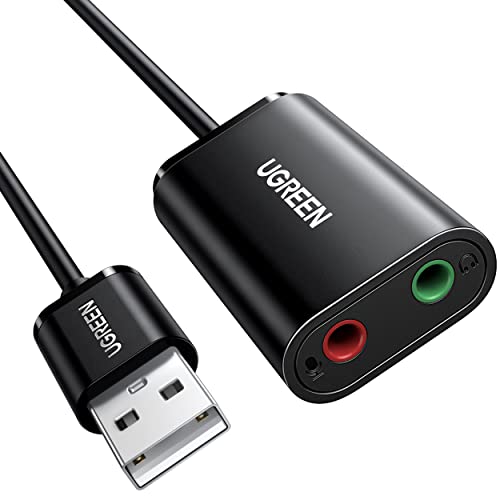
The single most practical buying decision is the jack layout. Some adapters offer one combined jack that carries both headphone sound and microphone signal on a single plug, matching the headsets made for phones and game controllers. Others offer two separate jacks, one for headphones and one for a microphone, matching older headsets and separate desk microphones. Neither layout is better in the abstract; the right one is simply the one that matches the headset you already own. Buying the wrong layout means adapters on adapters, which is exactly the clutter this purchase was supposed to remove.
Alternatives to Consider
Plug-and-play behaviour is the norm on current systems, and it is one of the category’s genuine strengths. On a modern laptop or desktop you normally plug the adapter in, wait a few seconds while the system recognises it as a standard audio device, and then choose it as the output and input in your sound settings. No disc, no hunting for downloads, and usually no restart. The step people forget is the choosing: many a supposedly broken adapter was simply never selected as the default device, while the computer kept cheerfully playing through its speakers.
Consoles and other devices deserve a cautious word. Some adapters work happily when plugged into a game console or another host, and some do not, because support depends on the host rather than the adapter. If your plan involves anything other than a computer, check that specific pairing before relying on it, and treat forum reports about your exact console and model as more useful than general promises. On a computer, by contrast, you can be reasonably confident: standard USB audio support is built into every current mainstream operating system.
Volume and controls vary more than people expect. Some adapters are plain pass-through sticks with no buttons at all, leaving volume entirely to the system and your apps. Others add a small volume wheel, a mute switch, or buttons along the cable. Neither approach is automatically better. Desk users who adjust volume constantly may love a wheel within reach, while laptop users who carry the adapter in a bag may prefer nothing that can snag or turn by accident. Think about where the adapter will live, not just what it does on day one.

Creative Sound Blaster Play
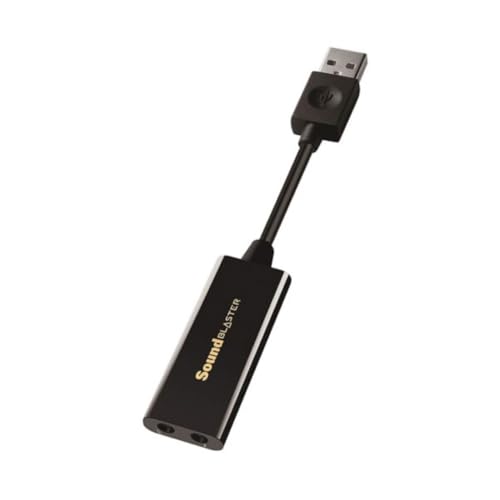
Creative Sound Blaster Play is a step-up adapter from a familiar audio brand, aimed at listeners who want a little more polish than a basic dongle provides. In daily use what matters is the unglamorous list: the jack layout matches your headset, the plug sits firmly, the housing does not flex when you swap cables, and the system recognises it the moment it is plugged in. Judge it on those things and on how it behaves in your calls and your games, not on promises printed on a box.

Sabrent USB Audio Adapter
Sabrent USB Audio Adapter is a compact, simple adapter that has been a common first fix for a dead headphone jack for years. In daily use what matters is the unglamorous list: the jack layout matches your headset, the plug sits firmly, the housing does not flex when you swap cables, and the system recognises it the moment it is plugged in. Judge it on those things and on how it behaves in your calls and your games, not on promises printed on a box.

Plugable USB Audio Adapter
Plugable USB Audio Adapter is an adapter from a docking and connectivity brand, a natural fit alongside a laptop dock setup. In daily use what matters is the unglamorous list: the jack layout matches your headset, the plug sits firmly, the housing does not flex when you swap cables, and the system recognises it the moment it is plugged in. Judge it on those things and on how it behaves in your calls and your games, not on promises printed on a box.
How to Get the Most Value If You Buy
Build quality in this category is modest by design, and expectations should be set accordingly. These are small, inexpensive accessories, not heirloom hardware. What you want is a housing that does not flex alarmingly, a plug that sits firmly without wobbling, strain relief where a cable meets the body, and jacks that grip a plug with a reassuring click rather than letting it drift out during a call. A metal shell can feel nicer than plastic, but grip, fit, and strain relief matter more to lifespan than the material on the outside.
Microphone quality is where modest expectations pay off most. For calls, classes, meetings, and casual voice chat, the microphone input on a typical adapter is entirely adequate: clear, intelligible, and usually better than a laptop’s built-in microphone simply because your headset microphone sits near your mouth. For anything beyond that — streaming to an audience, recording narration, podcasting — the honest advice is to step up to a proper interface or a dedicated USB microphone. A dongle that makes your voice clear in a meeting has done its job; asking it to be a studio chain is asking the wrong product.
Latency, the tiny delay between action and sound, is rarely a problem for the things these adapters are bought for. Music, films, meetings, and ordinary gaming all tolerate the small delays involved without anyone noticing. The exception is performing or recording music, where you need to hear yourself at the exact moment you play or sing. That is another situation where the correct answer is a proper audio interface with direct monitoring, not a general-purpose adapter. Knowing which side of that line your use sits on saves both money and frustration.
The Decision Checklist
Answer honestly: Is a jack broken, missing, or badly placed? Does your headset lack a proper connection on this machine? Do you hear noise that follows the computer rather than the headphones? Would a spare save a workday if a jack failed tomorrow? If you answered yes to any of these, buy with confidence. If every answer is no and only curiosity remains, keep your port free and put the money toward the headphones themselves, where it will actually be heard.
Troubleshooting these adapters is mercifully short, because there is so little to go wrong. If there is no sound, confirm the adapter is selected for output. If people cannot hear you, confirm it is selected for input, because systems happily let you listen through one device and record through another. Try a different USB port, ideally one directly on the machine rather than through a hub, and try the headset in a phone to confirm the headset itself still works. That short sequence resolves the overwhelming majority of problems people report with this category.
Keeping an adapter working is mostly about not abusing it. Avoid hanging heavy headphone cables from a rigid stick plugged into a laptop, coil leads loosely rather than wrapping them tightly around the body, and pull plugs out by the plug rather than the cable. If an adapter lives in a bag, a small pouch keeps lint out of the jacks, and lint, once again, is the quiet enemy of every small audio connection. None of this is demanding; it is the same care you would give any small accessory you rely on daily.
Living With the Adapter Day to Day
Microphone quality is where modest expectations pay off most. For calls, classes, meetings, and casual voice chat, the microphone input on a typical adapter is entirely adequate: clear, intelligible, and usually better than a laptop’s built-in microphone simply because your headset microphone sits near your mouth. For anything beyond that — streaming to an audience, recording narration, podcasting — the honest advice is to step up to a proper interface or a dedicated USB microphone. A dongle that makes your voice clear in a meeting has done its job; asking it to be a studio chain is asking the wrong product.
Latency, the tiny delay between action and sound, is rarely a problem for the things these adapters are bought for. Music, films, meetings, and ordinary gaming all tolerate the small delays involved without anyone noticing. The exception is performing or recording music, where you need to hear yourself at the exact moment you play or sing. That is another situation where the correct answer is a proper audio interface with direct monitoring, not a general-purpose adapter. Knowing which side of that line your use sits on saves both money and frustration.
Sharing one adapter between machines is an underrated pattern. Because the device is recognised automatically, you can move it from a work laptop to a home desktop in seconds, carrying your headset setup with it. People who hot-desk, who split time between two computers, or who keep a spare machine for calls often end up valuing this more than any specification. It also makes the adapter a useful diagnostic tool: if sound works through the adapter but not the built-in jack, you have learned something important about where your problem actually lives.
Troubleshooting these adapters is mercifully short, because there is so little to go wrong. If there is no sound, confirm the adapter is selected for output. If people cannot hear you, confirm it is selected for input, because systems happily let you listen through one device and record through another. Try a different USB port, ideally one directly on the machine rather than through a hub, and try the headset in a phone to confirm the headset itself still works. That short sequence resolves the overwhelming majority of problems people report with this category.
Keeping an adapter working is mostly about not abusing it. Avoid hanging heavy headphone cables from a rigid stick plugged into a laptop, coil leads loosely rather than wrapping them tightly around the body, and pull plugs out by the plug rather than the cable. If an adapter lives in a bag, a small pouch keeps lint out of the jacks, and lint, once again, is the quiet enemy of every small audio connection. None of this is demanding; it is the same care you would give any small accessory you rely on daily.
There is also a fair question about whether to repair instead of adapt. If a desktop’s rear jack still works and only the front one has failed, a cable or a setting may solve the problem for free. If a laptop is under warranty, a dead jack is the manufacturer’s problem, not yours. The adapter earns its place when repair is impractical, too slow, too expensive relative to the machine’s age, or simply not worth opening the device for. It is a workaround, proudly so, and a good workaround is often the smartest purchase in the whole setup.
Small Details That Decide Satisfaction
Troubleshooting these adapters is mercifully short, because there is so little to go wrong. If there is no sound, confirm the adapter is selected for output. If people cannot hear you, confirm it is selected for input, because systems happily let you listen through one device and record through another. Try a different USB port, ideally one directly on the machine rather than through a hub, and try the headset in a phone to confirm the headset itself still works. That short sequence resolves the overwhelming majority of problems people report with this category.
Keeping an adapter working is mostly about not abusing it. Avoid hanging heavy headphone cables from a rigid stick plugged into a laptop, coil leads loosely rather than wrapping them tightly around the body, and pull plugs out by the plug rather than the cable. If an adapter lives in a bag, a small pouch keeps lint out of the jacks, and lint, once again, is the quiet enemy of every small audio connection. None of this is demanding; it is the same care you would give any small accessory you rely on daily.
There is also a fair question about whether to repair instead of adapt. If a desktop’s rear jack still works and only the front one has failed, a cable or a setting may solve the problem for free. If a laptop is under warranty, a dead jack is the manufacturer’s problem, not yours. The adapter earns its place when repair is impractical, too slow, too expensive relative to the machine’s age, or simply not worth opening the device for. It is a workaround, proudly so, and a good workaround is often the smartest purchase in the whole setup.
For people with hearing or accessibility needs, an adapter can quietly solve real problems. It can put a jack within reach on a machine whose ports are at the back of a desk, let a preferred headset be used with a machine that otherwise excludes it, and provide a consistent connection that does not depend on a worn socket. Volume controls on the adapter itself can also help when system controls are buried in menus. These are unglamorous benefits, and for the people who need them, they are the entire point of the product.
Finally, a word about spares. Because these adapters are small, inexpensive, and instantly useful when a jack fails at the worst moment, many experienced users simply keep one spare in a drawer or travel kit. It is the audio equivalent of a spare charging cable: unexciting right up until the morning it saves a presentation, an exam, an interview, or a call that could not be rescheduled. If you rely on a headset for work, that insurance logic is worth taking seriously when you decide how many to buy.
A USB sound card is, at heart, a tiny audio device that lives outside your computer instead of inside it. Your machine sends digital audio out through a USB port, and the adapter turns that signal into sound you can hear through headphones or speakers, while also carrying a microphone signal back the other way. Because the conversion happens outside the case, the adapter does not care whether your built-in audio hardware is healthy, missing, or simply not wired to a jack you can reach. That independence is the whole appeal: one small device, plugged into a port almost every computer has, gives you a working place to plug in a headset.
What Experience Teaches About This Category
For people with hearing or accessibility needs, an adapter can quietly solve real problems. It can put a jack within reach on a machine whose ports are at the back of a desk, let a preferred headset be used with a machine that otherwise excludes it, and provide a consistent connection that does not depend on a worn socket. Volume controls on the adapter itself can also help when system controls are buried in menus. These are unglamorous benefits, and for the people who need them, they are the entire point of the product.
Finally, a word about spares. Because these adapters are small, inexpensive, and instantly useful when a jack fails at the worst moment, many experienced users simply keep one spare in a drawer or travel kit. It is the audio equivalent of a spare charging cable: unexciting right up until the morning it saves a presentation, an exam, an interview, or a call that could not be rescheduled. If you rely on a headset for work, that insurance logic is worth taking seriously when you decide how many to buy.
A USB sound card is, at heart, a tiny audio device that lives outside your computer instead of inside it. Your machine sends digital audio out through a USB port, and the adapter turns that signal into sound you can hear through headphones or speakers, while also carrying a microphone signal back the other way. Because the conversion happens outside the case, the adapter does not care whether your built-in audio hardware is healthy, missing, or simply not wired to a jack you can reach. That independence is the whole appeal: one small device, plugged into a port almost every computer has, gives you a working place to plug in a headset.
The most common reason people buy one of these adapters is embarrassingly simple: the headphone jack on their laptop or desktop has stopped working. Jacks wear out. They get loose, they crackle when the plug turns, they fill with lint, or one channel quietly disappears. Replacing a jack inside a laptop is rarely a sensible repair for most owners, and on a desktop the front-panel jack is often connected with a flimsy cable that fails long before the rest of the machine. A USB adapter sidesteps all of that in about a minute, with no tools and no opening the case.
A second, equally practical job is adding a jack where there never was one. Plenty of modern laptops ship with a single combined port or none at all, some small desktops hide their audio connections awkwardly at the back, and many people work through a dock that sits out of easy reach. An adapter plugged into a front port, a hub, or the side of a laptop puts a headphone and microphone connection exactly where your hand expects it to be. For people who join calls all day, that convenience alone can justify keeping one in a desk drawer permanently.
The third job people hope for is escaping the hum, buzz, and faint whining that some built-in audio produces. Noise from inside a computer case can leak into sensitive headphone outputs, and the symptom is familiar: a soft buzz that changes when you move the mouse or when the graphics card works hard. Moving the conversion outside the case sometimes helps a great deal, and sometimes helps only a little, because noise can also arrive through the USB connection itself or from a ground loop elsewhere in the setup. Honesty matters here: an adapter is a reasonable thing to try, not a guaranteed cure.
The Long View: Owning a Simple Adapter
The most common reason people buy one of these adapters is embarrassingly simple: the headphone jack on their laptop or desktop has stopped working. Jacks wear out. They get loose, they crackle when the plug turns, they fill with lint, or one channel quietly disappears. Replacing a jack inside a laptop is rarely a sensible repair for most owners, and on a desktop the front-panel jack is often connected with a flimsy cable that fails long before the rest of the machine. A USB adapter sidesteps all of that in about a minute, with no tools and no opening the case.
A second, equally practical job is adding a jack where there never was one. Plenty of modern laptops ship with a single combined port or none at all, some small desktops hide their audio connections awkwardly at the back, and many people work through a dock that sits out of easy reach. An adapter plugged into a front port, a hub, or the side of a laptop puts a headphone and microphone connection exactly where your hand expects it to be. For people who join calls all day, that convenience alone can justify keeping one in a desk drawer permanently.
The third job people hope for is escaping the hum, buzz, and faint whining that some built-in audio produces. Noise from inside a computer case can leak into sensitive headphone outputs, and the symptom is familiar: a soft buzz that changes when you move the mouse or when the graphics card works hard. Moving the conversion outside the case sometimes helps a great deal, and sometimes helps only a little, because noise can also arrive through the USB connection itself or from a ground loop elsewhere in the setup. Honesty matters here: an adapter is a reasonable thing to try, not a guaranteed cure.
It is just as important to say what one of these adapters will not do. It will not turn budget headphones into studio headphones, because the headphones themselves are doing most of what you hear. It will not rescue a bad microphone, fix a damaged cable, or make a noisy room sound quiet on a call. And it is not a recording studio in a stick: anyone who wants to record instruments, use a professional microphone, or monitor themselves while recording should be looking at a proper audio interface instead, which is a different and larger category of device built for exactly that work.
The single most practical buying decision is the jack layout. Some adapters offer one combined jack that carries both headphone sound and microphone signal on a single plug, matching the headsets made for phones and game controllers. Others offer two separate jacks, one for headphones and one for a microphone, matching older headsets and separate desk microphones. Neither layout is better in the abstract; the right one is simply the one that matches the headset you already own. Buying the wrong layout means adapters on adapters, which is exactly the clutter this purchase was supposed to remove.
Headset plugs add one more wrinkle worth understanding before you buy. A combined headset plug carries an extra contact for the microphone, and a combined-jack adapter expects exactly that plug. A separate-jack headset has two plugs, and a combined adapter cannot accept both at once without a splitter. Checking your headset takes ten seconds: count the plugs, look at what your current setup uses, and match the adapter to it. That tiny check prevents the most common disappointment with these products, which is not sound quality at all but a microphone that silently does nothing on the first important call.
Practical Notes From Real Desks
It is just as important to say what one of these adapters will not do. It will not turn budget headphones into studio headphones, because the headphones themselves are doing most of what you hear. It will not rescue a bad microphone, fix a damaged cable, or make a noisy room sound quiet on a call. And it is not a recording studio in a stick: anyone who wants to record instruments, use a professional microphone, or monitor themselves while recording should be looking at a proper audio interface instead, which is a different and larger category of device built for exactly that work.
The single most practical buying decision is the jack layout. Some adapters offer one combined jack that carries both headphone sound and microphone signal on a single plug, matching the headsets made for phones and game controllers. Others offer two separate jacks, one for headphones and one for a microphone, matching older headsets and separate desk microphones. Neither layout is better in the abstract; the right one is simply the one that matches the headset you already own. Buying the wrong layout means adapters on adapters, which is exactly the clutter this purchase was supposed to remove.
Who Gets Their Money’s Worth and Who Should Skip It
When waiting is the right answer
Sometimes the correct verdict is not no, but not yet. If your space, routine or budget is about to change — a move, a new job pattern, a renovation — the usb sound card that suits today’s setup may be wrong for next season’s. Waiting costs nothing and buys information: you learn whether the need survives the change. The exception is when the need is already costing you weekly in time or frustration; then waiting is itself the expensive option, and the analysis earlier in this piece applies with full force. Distinguish a stable recurring need from a temporary itch before deciding.
The one-question shortcut
If the full analysis still leaves you undecided, ask the question that cuts through it: if this usb sound card disappeared from your home after a month of use, would you replace it immediately, eventually, or not at all? People answer honestly when the purchase is framed as a loss. Immediate replacers should buy with confidence and choose the better model; eventual replacers should buy modestly; the not-at-all group has its answer too. In a home where children, pets and visitors all interact with the setup, that instinct, checked against the use-frequency count, settles the worth-it question more reliably than any feature comparison.
Count the uses, honestly
The worth-it question for a usb sound card is mostly a frequency question. Estimate how many times a month the product would genuinely be used in your routine — not the enthusiastic first fortnight, but month four, when the novelty has worn off. In a home where children, pets and visitors all interact with the setup, a usb sound card used weekly almost always justifies itself through saved time, avoided workarounds or better results, while the same product used twice a year is usually an expensive storage obligation. If your honest count is low, borrowing, hiring or using a service is the mathematically sound answer, and there is no shame in it.
The workaround you are already paying for
Most people considering a usb sound card are already solving the problem somehow — with a slower method, a borrowed tool, a workaround that costs time or produces worse results. Price that workaround in attention and frustration, not just money: how often does it interrupt you, and what does the interruption cost the rest of your day? A purchase is worth it when it retires a recurring annoyance, not when it merely upgrades a process that was already painless. If your current workaround barely bothers you, the honest verdict for you is probably to skip the purchase.
Lifespan changes the whole calculation
A usb sound card that serves for many years spreads its cost across thousands of uses; one that wears out, dates quickly or loses its supporting ecosystem does not. Judge lifespan by construction, consumable availability and how actively the maker still supports the line, rather than by optimism. This is where the picks discussed earlier differ most meaningfully for value: the model with the longer realistic service life can be the better value even when it is not the cheapest route in, because the cost per year of service is what your household actually pays.
The resale and hand-me-down exit
Value calculations usually assume you keep a usb sound card forever, but a healthy second-hand market changes the risk. Products in the Sound Cards category that hold their appeal tend to resell or hand down easily, which means a wrong decision is recoverable rather than total. That exit value argues for buying the respected model over the obscure bargain: if your circumstances change, the known usb sound card finds a new home quickly. An ultra-cheap alternative with no following is the one that becomes pure sunk cost in a cupboard.
Frequently Asked Questions
Can I leave it plugged in all the time?
Yes, and many people do, especially on desktops and docks where it becomes the permanent audio connection. Just be sensible about strain: a rigid stick with a heavy cable hanging from it puts leverage on the port, so route the cable so its weight is supported, or choose an adapter on a short lead for a permanent desk position. On a laptop that travels daily, unplugging it for the bag is kinder to both the adapter and the port.
Will it work through a USB hub or dock?
Generally yes, and this is a common and sensible way to use one, since the dock becomes a single connection point for your whole desk. If you ever get dropouts or odd behaviour, test the adapter plugged directly into the computer to rule the hub in or out before blaming the adapter. Busy hubs shared with drives and other hungry devices are the usual suspects when a simple device behaves strangely, and the direct-connection test takes under a minute.
Will a USB sound card improve my headphone sound?
Only in specific ways. If your current output is noisy, crackling, or broken, an adapter can sound dramatically better simply by being clean and working. If your current output is already clean, expect the adapter to sound much the same, because your headphones do most of the work in what you hear. It is a fix and a convenience first, and only occasionally an upgrade. Anyone promising a transformation of budget headphones is selling you a story rather than a small, honest accessory.
Can it fix a broken headphone jack?
Yes, in the practical sense that matters: it gives you a new place to plug in, so the broken jack stops being part of your day. It does not repair the jack itself, and the built-in socket will stay broken, but your headset, speakers, and microphone all work through the adapter instead. For most people that is the outcome they actually wanted. If the machine is under warranty, though, claim the repair first and keep the adapter as a spare for later.
Will it remove buzzing and hum from my headphones?
Sometimes, and it is important to keep that word in the answer. Noise that comes from inside the computer often gets quieter when conversion moves outside the case. Noise from a ground loop, a noisy power supply elsewhere, or interference arriving over the USB connection itself may remain. Treat the adapter as a sensible, inexpensive experiment with a decent chance of helping, not a guaranteed cure, and keep your receipt until you have listened on your own machine in your own room.
Does it work for gaming headsets?
Usually, yes, provided the jack layout matches. A headset with a single combined plug wants a combined-jack adapter; a headset with separate headphone and microphone plugs wants separate jacks or a suitable splitter. Once connected and selected as the default device, voice chat and game sound behave exactly as they would through a working built-in jack. Console use is less predictable than computer use, so check support for your specific console before counting on it there.
Related Reading
whether a Bluetooth adapter is worth it