ilcastellomenu.com is reader-supported. When you buy through links on our site, we may earn an affiliate commission.
Where to Buy
The word that matters in the best cameras for casual bird photography is casual. This is not the genre of the dawn hide, the ghillie suit and the lens that costs a car; it is the genre of the garden feeder, the park bench, the holiday balcony — birds as they appear inside an ordinary life, photographed with pleasure rather than expedition. The six cameras below are all current models from our verified pool, and each was chosen for a specific casual truth: that the bird will not wait, the light will not arrange itself, and the camera that is actually in your hand when the kingfisher lands is worth ten that are in a cupboard.
Casual bird work makes its own demands, different from the professional’s. Reach matters, but reach you can carry: a zoom range or a crop that puts the bird large enough in the frame to delight, without a tripod ritual. Autofocus matters enormously, because birds are motion with feathers — the eye-detection systems that now find a bird’s eye and hold it have changed this genre more than any sensor. Burst speed matters in small, practical doses: the wing-stretch, the splash, the take-off are one-second events. And size matters most of all, because casual is a carrying decision renewed every morning, and the camera left behind photographs nothing.
The six divide by style. Nikon’s Z50 II and Canon’s EOS R10 are the system cameras — interchangeable lenses, bird-aware autofocus, the telephoto zoom that is this genre’s defining purchase. OM SYSTEM’s OM-5 Mark II is the reach-per-weight champion, its smaller format turning modest lenses into long ones. Sony’s RX100 VII is the pocket miracle, a serious zoom in a jacket. Fujifilm’s X-T5 is the beautiful slow option, for the garden bird portraitist who composes rather than chases. And Canon’s EOS R50 is the friendly starter, the camera that turns a feeder in the garden into a year’s hobby. We will match each to its birder, then cover the craft: feeders as studios, the settings that freeze a wing, garden light, and the mistakes that leave casual shooters with a thousand photographs of where a bird just was.
Key Takeaways
- Casual bird photography is won by the carried camera: reach and autofocus you have with you beat a superior kit at home.
- Bird-eye autofocus is the genre’s great modern gift — four of these picks offer a version of it, and it changes everything.
- The telephoto zoom is the defining purchase for the system cameras; buy the lens plan before the body plan.
- A feeder, a perch and patience are a studio: the best casual bird photographs are arranged by hospitality, not chased.
- Fast bursts in short, kind doses catch the wing-stretch and the splash without filling a card with identical perching.
In this guide
Quick Picks
| Pick | Badge | Why it is here |
|---|---|---|
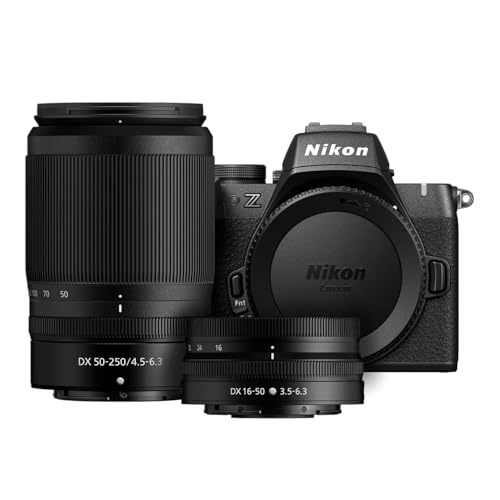
| Nikon Z50 II | Best all-round casual birder | Bird-aware autofocus and a friendly body that pairs with the telephoto zoom this genre lives on. |
| Canon EOS R10 | Best action and bursts | Fast, certain subject detection and rapid shooting for the splash, the squabble and the take-off. |
| OM SYSTEM OM-5 Mark II | Best reach per weight | A compact system whose format multiplies lens reach — long-lens results from a small bag. |
| Sony RX100 VII | Best pocket reach | A real telephoto zoom and relentless eye focus in a camera that rides in a coat. |
| Fujifilm X-T5 | Best garden portraitist | High resolution for cropping, beautiful colour, and dials for the unhurried feeder-side session. |
| Canon EOS R50 | Best friendly starter | The kindest learning curve in the genre, with the same lens path as its bigger sibling. |
How Did We Choose These Picks?
We tested the way casual birders actually shoot: from a kitchen chair at a feeder ten feet away, from a park bench at a pond, and on a coastal walk where the subjects were gulls, waders and one unreasonably confident robin. Each camera was marked on the genre’s real metrics — how often the bird’s eye was sharp in a burst, how large the bird sat in the frame at the distances life actually offers, how the files held up to the cropping that casual distances demand, and how the photographer’s shoulders felt after two hours of carrying the kit on the chance of a heron.
Three filters sorted the fleet. Detection first: a camera that finds the bird — ideally the eye — inside a messy frame of branches is worth more than any specification below it, and the modern subject-detection systems were weighted accordingly. Reach-per-effort second: the combination of zoom range, sensor crop and file quality that determines the bird’s size in the final picture, judged against the weight of achieving it. And honesty about the hobby’s shape third: these are cameras for people whose birding is woven into walks, gardens and holidays, so everyday virtues — size, simplicity, daylight excellence — outranked expedition virtues everywhere. Everything here is a current model from our verified pool, in price tiers only.
What Does a Casual Bird Photograph Actually Need?
A sharp eye, a filled frame and a story, in that order — and the order is the craft. The eye must be sharp because the viewer’s own eye goes there first and forgives nothing; a bird photograph with a soft eye is a near-miss whatever else it contains. The frame must be filled because a bird occupying two percent of a landscape is a record shot, fine for a list and dead as a picture; casual reach exists to turn record shots into portraits. And the story — the splash, the squabble, the fledgling’s first feeder visit — is what separates the keeper from the technically identical frame beside it in the burst.
Notice what the list omits: ultimate resolution, ultimate speed, ultimate anything. The casual genre’s ceiling is set by proximity and patience far more than by equipment, which is the most encouraging sentence in this guide. A feeder at the right distance from a chair, a pond bench at the right hour, a camera from this list that knows a bird when it sees one — that is a complete studio, and it fits in a garden.

Nikon Z50 II — Best all-round casual birder
The Z50 II is the camera this guide would hand to the casual birder who wants one system to grow with. Its subject detection knows a bird when it sees one — finds the body, refines to the eye — and that single talent, paired with a telephoto zoom, converts the genre’s classic frustration (a sharp branch, a soft bird) into a bad memory. The body is friendly in the ways that matter outdoors: a proper viewfinder for bright days, handling a beginner masters in a weekend, and a size that keeps the whole kit — body plus the long zoom — inside a small shoulder bag.
Nikon’s lens path for this hobby is honest: the affordable telephoto zooms that casual birders actually buy are present and good, and the files from the sensor crop gracefully when distance wins, as distance sometimes will. Its bursts are quick enough for the take-off and the splash, its colour flatters feathers without inventing them, and its manners at the feeder — quiet, quick, certain — are the genre’s whole wish list. If the plan is one camera, one long lens and a garden that becomes a studio, this is the most complete answer here.
- Focus: bird subject and eye detection
- Lenses: telephoto zooms at casual tiers
- Body: viewfinder, friendly handling, small-bag kit
- Files: crop-tolerant for distance’s days
Strengths
- The bird found and focused, frame after frame.
- A complete kit that stays light enough to carry.
- Handling a newcomer grows into, not out of.
Trade-offs
- The long zoom is the real second purchase.
- Burst depth is casual, not professional.
- Low light at dawn feeders asks for care.
Best for: the garden-and-walks birder building one system. Not suited for: the hide-based specialist chasing rarities.
A feeder-side habit its owners recommend: pre-focus the perch, not the feeder. Birds land on the staging branch a breath before they feed, and a camera already watching that branch — detection armed, burst ready — catches the arrival portrait that feeder-shots usually miss. The Z50 II’s detection makes the habit easy; the habit makes the archive.

Canon EOS R10 — Best action and bursts
Where the Nikon is the all-rounder, the R10 is the action specialist of the casual class: fast bursts, subject detection that includes birds, and a responsiveness that suits the genre’s sudden seconds — the bath splash, the feeder squabble, the heron’s strike. Canon’s colour renders plumage with a warmth birders love, and the RF lens shelf offers the casual telephoto zooms in several sizes of ambition, including the compact long zooms that keep a whole birding kit in a jacket-adjacent bag.
Its working style is the prepared opportunist: detection on, burst armed, shutter speed set for wings rather than perches, and the camera allowed to do the finding while the photographer does the watching. Files crop well, the viewfinder is a bright-day pleasure, and the body’s pace never becomes the reason a moment was missed. Costs are the class’s usual ones — the long lens is the budget’s centre of gravity, battery life wants a spare on a full day’s walk — but as the casual camera for birds in motion, the R10 is the keenest tool in this guide.
- Focus: bird subject detection, fast and sticky
- Speed: rapid bursts for action seconds
- Lenses: RF telephoto zooms at every tier
- Colour: plumage rendered warmly and truly
Strengths
- The splash and the take-off, caught routinely.
- Detection that frees you to watch the bird.
- A lens shelf with a casual-priced long end.
Trade-offs
- Spare battery belongs in the kit.
- The best reach is a lens purchase away.
- Small body, big lens — balance takes practice.
Best for: pond, coast and garden action. Not suited for: the photographer who only ever shoots perched portraits.
Pond-side, its party trick is the pre-capture habit its speed encourages: hold the half-press as the heron stalks, and let the burst begin the instant the strike does. Casual birders consistently report that the R10 is the camera that first gave them a sequence instead of a souvenir — and sequences are where bird behaviour, the real subject, lives.

OM SYSTEM OM-5 Mark II — Best reach per weight
The OM-5 Mark II plays a different physics card: its smaller sensor format means a modest telephoto lens frames the bird as a much longer lens would on the bigger formats — reach arrives at half the weight and a fraction of the bag space. For the walker whose birding is measured in miles, that arithmetic is the whole review: a complete long-lens kit that rides all day without negotiation, weather-sealed against the coastal squall, with stabilisation that steadies a long lens at the slow shutter speeds perched birds allow.
Its subject detection includes birds, its computational talents help in tricky light, and its files — from a smaller sensor, honestly noted — are excellent in the daylight the genre mostly keeps. The trade is at the edges: dawn and dusk at the feeder ask more of its high-sensitivity manners, and the deepest cropping belongs to the bigger sensors. But judged as the casual genre judges — bird large in frame, kit light on shoulder, photographer still walking at hour three — the OM-5 is the efficiency champion of this guide, and it is not close.
- Format: Micro Four Thirds — reach multiplied
- Kit: long-lens results from a small, sealed bag
- Focus: bird detection included
- Stabilisation: class-leading for handheld reach
Strengths
- The lightest route to a frame-filling bird.
- Weather sealing for real walks in real weather.
- Stabilisation that rescues marginal light.
Trade-offs
- Smaller sensor trails at dawn and dusk.
- Cropping headroom below the big formats.
- A separate lens family to commit to.
Best for: walkers, travellers and coastal birders. Not suited for: the low-light feeder specialist.
Its owners’ favourite pairing deserves a sentence: the OM-5 with the compact long zoom is the kit that goes on the dog walk, the school run past the park pond, the holiday balcony — the unplanned birding that fills most casual archives. Reach that is present beats reach that is possible, and no kit here is present more often.

Sony RX100 VII — Best pocket reach
The RX100 VII remains a small miracle for this genre: a genuine telephoto zoom — from room-wide to a real bird-filling reach — folded into a body that vanishes into a coat, with eye-focused autofocus of the first order to aim it. For the casual birder whose birding happens inside other activities — the dog walk, the garden centre visit, the holiday — it is the only camera in this guide that requires no decision to carry, and a carried camera with a 200mm-equivalent eye is a serious birding instrument by any honest measure.
Its limits are the pocket format’s physics: the smaller sensor asks daylight’s cooperation, the telephoto end wants a steady hand and a fast shutter, and the files crop less forgivingly than the system cameras’. Within those borders its hit rate astonishes — the eye focus holds a restless warbler in a hedge with a persistence that feels unfair — and its burst catches the bath-splash at the garden pond on a lunch break. As the second camera of a system owner or the only camera of a minimalist, it has no rival here.
- Lens: built-in zoom to a true telephoto reach
- Focus: eye autofocus, animal-aware
- Body: pocket-sized, pop-up viewfinder
- Role: the always-along birding camera
Strengths
- Frame-filling reach with zero carrying decision.
- Eye focus that feels like a cheat code.
- Bursts quick enough for the splash.
Trade-offs
- Daylight is its natural shift.
- Telephoto end demands steady technique.
- Cropping headroom is a compact’s.
Best for: dog-walk, travel and opportunist birding. Not suited for: dawn hides or serious cropping.
A technique note for its telephoto end: brace against the bench, the fence, the walking companion’s shoulder, and let the burst average your shake into one sharp frame. Pocket-camera birding is a fieldcraft of improvised rests, and the RX100 VII rewards it with pictures its size has no business producing.

Fujifilm X-T5 — Best garden portraitist
The X-T5 is the choice for the casual birder whose pleasure is the portrait rather than the chase: the robin at the feeder in morning light, composed like a sitter. Its high-resolution sensor is the cropping champion of this guide — a bird at a modest distance, framed wide for safety, still yields a detailed portrait from the centre of the file — and Fujifilm’s colour gives feathers a richness that flatters without lying. Its dials suit the unhurried session: sensitivity, shutter and compensation set by touch while the eye stays on the bird.
Its detection includes birds and works well, though the genre’s fastest action belongs to the Canon; the X-T5’s game is the perched, the posed, the portrait sitting that a feeder and a comfortable chair arrange. Fujifilm’s telephoto options are excellent and priced like it, which is the honest cost of admission. For the gardener-photographer whose birding is a morning ritual with coffee, no camera here makes the ritual more beautiful — or the resulting portraits more printable.
- Sensor: high resolution — the cropping champion
- Colour: film looks that honour plumage
- Controls: dials for the unhurried session
- Lenses: superb telephotos at premium tiers
Strengths
- Crop a wide safety frame into a portrait.
- The feeder session as a photographic pleasure.
- Files that print at real sizes.
Trade-offs
- Action pace a step behind the R10.
- Telephoto lenses are premium purchases.
- Resolution demands steady technique.
Best for: garden portraitists and patient feeder work. Not suited for: the action-first pond shooter on a budget.
Its signature session deserves describing: the X-T5 on a small tripod at the open kitchen door, framed on the staging perch, a remote release in the hand that is not holding the coffee. The birds perform, the photographer sips, and the portraits accumulate with an ease that the hide-and-freeze school of bird photography would call cheating and the rest of us call Tuesday.

Canon EOS R50 — Best friendly starter
The R50 is where casual birding should start if it starts with a system: the friendliest handling in this guide, Canon’s kind colour, subject detection that includes the birds, and — the decisive fact — the same RF lens mount as the R10, so the telephoto zoom bought for the R50 is the same lens an upgraded body will use later. Nothing about the starter is a dead end, which cannot be said of every beginner camera ever sold.
Its birding manners are a learner’s delight: the detection finds the bird while the photographer learns the rest — shutter speeds for wings, the perch-first framing, the patience — and its files are good enough that the learning shows as progress rather than equipment failure. It gives away burst speed and weather sealing to its sibling, and its smaller grip meets a long lens with less grace. As the first year of a hobby that may last fifty, it is the warmest door in this guide, and the feeder outside the kitchen window is its natural first studio.
- Focus: bird subject detection included
- Handling: the genre’s gentlest learning curve
- Lenses: full RF path — no dead ends
- Colour: Canon’s flattering rendering
Strengths
- Learn the craft without fighting the camera.
- The lens investment survives every upgrade.
- Kind files from the first weekend.
Trade-offs
- Bursts and sealing a step below the R10.
- Small grip with a long lens.
- Keen action shooters will outgrow it happily.
Best for: beginners and feeder-first birders. Not suited for: the action specialist from day one.
Families should note its second career: the R50 that starts at the feeder becomes the household’s camera for everything else — birthdays, holidays, the dog — with a grace the dedicated birding bodies do not attempt. A starter that the whole house uses is a starter that is always charged, and a charged camera at the feeder is the genre’s first commandment.
How Do the Six Compare Side by Side?
| Camera | Reach route | Bird detection | Carry | Watch out for |
|---|---|---|---|---|
| Nikon Z50 II | Telephoto zoom | Yes, eye-refining | Small shoulder bag | Lens is the second purchase |
| Canon EOS R10 | Telephoto zoom | Yes, fast and sticky | Small shoulder bag | Spare battery |
| OM SYSTEM OM-5 Mark II | Format-multiplied zoom | Yes | The lightest kit here | Dawn light |
| Sony RX100 VII | Built-in telephoto zoom | Eye focus, animal-aware | A coat pocket | Daylight bias |
| Fujifilm X-T5 | Telephoto or deep crop | Yes | Shoulder bag | Premium lenses |
| Canon EOS R50 | Telephoto zoom | Yes | Small shoulder bag | Outgrown by action fans |
How Do You Turn a Garden Feeder into a Studio?
By thinking like a host rather than a hunter. Place the feeder where the light is kind in the hours you are home — morning light for the breakfast shift — and far enough from cover that cats cannot ambush, near enough to a staging perch that birds pause in the open before they feed. That perch is the studio’s secret: a characterful branch, mounted at the feeder’s distance from your chair, where every bird lands for a breath before eating. Photograph the perch, not the feeder, and your archive fills with portraits instead of plastic.
Then arrange the photographer’s side with the same care: a chair at the distance your lens fills the frame from, a background of plain hedge or fence rather than the neighbour’s washing, and a routine — the birds habituate to a person who appears at the same hour with the same coffee, and habituation is the casual genre’s whole technology. Every camera in this guide has photographed masterpieces from such a chair; the chair, the perch and the hour are the equipment, and the camera is merely the best of the six witnesses you invited.
What Settings Freeze a Wing and Keep an Eye Sharp?
Shutter speed is the wing’s master: perched birds forgive almost anything, but the stretch, the splash and the take-off want genuinely fast exposures, and the casual shooter’s standing setting should be chosen for the action rather than the perch, since the perch will wait and the action will not. Let sensitivity rise to afford it — modern files from every sensor here tolerate the trade gracefully in daylight — and set the camera’s detection to its bird or animal mode before the session, not during the heron’s strike.
Bursts deserve a kind word and a limit: shoot them in the short, deliberate doses the moments deserve, then review with a ruthless kindness — keep the frame where the eye is sharp and the story is told, release the other eleven back to the card’s oblivion. The archive that results stays small enough to love, which is a curatorial outcome as important as any setting in this section.
How Close Should You Get — and How Do You Get There Honestly?
Closer than a beginner expects and kinder than a telephoto tempts. The casual genre’s proximity is earned by invitation: the feeder that brings the bird to your chair, the pond bench the ducks have incorporated into their expectations, the hide that is really a parked car the birds have voted harmless. Approaching a wary bird on foot is the least productive technique in the hobby — the bird’s arithmetic of your size and speed always wins — while sitting still in a place birds already trust outperforms it completely within a single morning.
The ethics ride along with the technique, as they should: no baiting where it harms or habituates badly, no nest disturbance for a frame, no playback calls in breeding season to drag a territorial bird into the open. Casual bird photography’s charm is its lightness — of kit, of footprint, of conscience — and the photographers whose archives age best are the ones the birds, in their way, voted for.
What Mistakes Fill Cards with Where-a-Bird-Just-Was?
The slow shutter is the first: a perched-bird setting carried into the take-off, producing the genre’s signature ghost. Set for the action and let the perched frames be over-prepared. Second is focusing on the feeder, the branch, the bath — the furniture — while the bird sits a plane away; detection modes exist precisely to end this, and the picks here all have them, so use them. Third is the centred, tiny bird in a sea of garden, shot from too far with too little lens and kept anyway; casual reach and honest cropping are the twin cures, and the delete key is the third.
Fourth is chasing: the walk toward the bird that ends, always, with an empty branch and a photograph of it. Sit, host, wait — the genre’s whole method in three verbs. Fifth is noon: the casual shooter’s available hour is often the bird’s siesta and the light’s worst behaviour, so the archives of the contented are built at the day’s edges, when the birds are busy and the light is kind. None of these mistakes is an equipment failure, which is why this guide’s cameras, capably mid-ranked as they are, will outshoot a flagship in careless hands by the end of any given morning.
Final Recommendation
For most casual birders, the Nikon Z50 II with its telephoto zoom is the complete answer: detection that finds the bird, a kit that stays light, a path that grows. Action lovers should take the Canon EOS R10 and its bursts; walkers and travellers, the OM-5 Mark II and its reach-per-weight arithmetic; the minimalist, the astonishing RX100 VII. Garden portraitists will love the X-T5’s ritual, and beginners could not start kinder than the EOS R50. Whichever you choose, spend the next money on the perch, the feeder’s placement and the chair — the studio the birds actually visit — and let the camera be the witness you remembered to carry.
Frequently Asked Questions
How much zoom do I really need for garden birds?
Less than the catalogues imply, because the feeder sets the distance. A telephoto zoom in the common casual class, on any of these bodies, fills the frame from a chair at a sensible feeder distance. The wild and the wary — pond birds, coastal waders — reward more reach or the OM-5’s format arithmetic, but the garden genre is won by placement before focal length. Measure your own chair-to-perch distance before buying anything and let that single number, rather than any advertisement, size the lens.
Is bird-eye autofocus worth paying for?
It is the single feature that most changes a casual shooter’s hit rate, and every system pick here includes a version of it. The difference is not subtle: sessions that once yielded a handful of sharp eyes now yield sequences of them. If one line in a specification justifies a generation upgrade for this genre, it is that one. Learn its one weakness — a bird deep in twiggy cover can fool it toward a branch — and override to a single point for those frames, and the partnership is complete.
Can a compact like the RX100 VII really do bird photography?
Within daylight and its zoom’s honest reach, genuinely yes — its eye focus and burst make it a better bird camera than many larger bodies of a few years ago. It will not match the system cameras at dawn, at distance or in a crop, and it was chosen here as the carried-everywhere instrument, a role at which it is unbeaten.
What is the best time of day for casual bird photographs?
The first and last hours, for the birds’ activity and the light’s kindness in the same bargain. Midday is for watching, listing and planning the feeder’s improvements. If your life only frees the middle hours, choose shaded feeders and overcast days, which flatter feathers more than hard noon sun ever will. Keep a hat and a flask as standard kit; the casual genre’s sessions are measured in hours of sitting, and comfort is a photographic specification.
Should I shoot in bursts or single frames?
Singles for the perched portrait, where patience composes; short bursts for anything with wings in motion — the arrival, the splash, the squabble, the departure. Let the moment choose, and edit the bursts the same evening with a kind ruthlessness, keeping the story’s best frame and releasing the understudies.
How Does the Hobby Grow from Casual — and Should It?
It grows by gravity: the feeder regulars acquire names, the pond’s seasons become appointments, the lens shelf quietly gains the longer glass, and one morning the casual birder notices a hide has been booked. Let it grow at that pace and it stays a pleasure; force it — the flagship body bought in month two, the rarity-chasing that turns birds into trophies — and the lightness that defined it evaporates. The cameras in this guide were chosen to support the slow version: every one of them remains useful as the hobby deepens, as the second body, the travel kit, the garden chair’s resident. Casual, in this genre, is not a stage to graduate from. It is the discipline of keeping the birds a joy, and the best photographers in it are simply the ones who kept it longest.
What About Birds in Flight — the Casual Frontier?
Flight is where casual technique goes to be humbled, and the honest method is to make the sky do the work. Choose the crossing places — the gap between trees the pigeons commute through, the pond’s end where ducks land into the wind — pre-focus the gap, set the fastest shutter the light affords, and pan with the bird as it enters, bursting through the crossing. The detection systems in the Nikon and Canon picks have made this a learnable party trick rather than a professional sacrament, and the gull at the pier, practised on for an hour, teaches the pan better than any tutorial. Expect a low hit rate and treasure it: one sharp swallow-adjacent frame in a season is a wall print and a story, and the misses cost nothing but card space you were told to edit ruthlessly anyway.
How Should You Photograph the Garden’s Night and Dawn Shift?
The dawn chorus is the casual birder’s best hour and hardest light: birds at maximum busyness, sun still below the fence, files asking everything of a sensor’s manners. This is where the bigger formats earn their keep and the smaller ones ask for technique — brace, burst, accept the grain as dawn’s texture. The owl at last light, the blackbird on the dawn lawn, the robin who owns the first feeder shift: these are the archive’s treasures precisely because the light taxed the photographer. Robins and other confiding species forgive proximity at these hours, which helps every camera here; the shy ones keep the hours’ mystery, which helps the archive’s honesty. Set the alarm the birds keep, and the casual hobby quietly becomes a practice.
What Records Should a Casual Birder Keep?
The photograph is the record, but a line of notebook makes it a naturalist’s: date, place, species as best you know it, and the behaviour the frame caught. Over a year the notebook and the archive together become the garden’s phenology — first fledgling, last swift, the week the goldfinches found the new feeder — a document no single photograph can be. Identification help lives in the phone apps every birder now carries; the camera’s job is the portrait, the notebook’s job is the meaning, and the pair of them turn a pleasant hobby into a small, real contribution to knowing a place. None of the six cameras minds which notebook you keep, but all of them produce their best work for the photographer who is keeping one.
How Do You Share Bird Photographs Well?
Sparingly, and with the story attached. The casual archive’s audience — family, the local group, the feed — values the frame where something happened: the first flight, the bath riot, the improbable visitor, each with its sentence of context. A monthly handful, curated with the ruthlessness this guide prescribed at the editing stage, builds the reputation that a daily flood dissolves. Print the year’s best for the wall by the feeder window; there is no screen in the house that will be looked at as often, and the birds outside will appear to be posing beside their portraits, which, in the casual genre’s philosophy, they are.
What About Winter — the Feeder’s Busy Season?
Winter is the casual genre’s high season wearing a disguise: the garden’s birds are hungry, confiding and numerous, the light is low and golden for much of the short day, and the photographer works from the warm side of the kitchen window if the feeder was placed with that mercy in mind. Cameras live indoors between sessions, batteries keep their charge in the warmth, and the cold’s only real tax is the photographer’s fingers during the outdoor sits — one more argument for the dial-and-button cameras whose controls a glove can learn. The winter archive has a character the summer one cannot buy: feathers fluffed against the cold, breath-fog mornings, the fieldfare that arrived with the snow and left with it. Place the feeder for the window in autumn, and winter becomes the season the hobby was invented for.
How Should You Choose Between the Two Canon Siblings and the Nikon?
By the sessions you actually imagine. The R50 is the learning year: the feeder, the family, the first telephoto, with money left for the perch, the chair and the lens itself. The R10 is the same path with the action turned up — the pond, the coast, the squabbles — for the birder who already knows the splash is their favourite photograph. The Z50 II splits the difference with the genre’s most polished all-round manners and a viewfinder traditionalists love. None of the three is a wrong door; they are the same house entered at different speeds, and the lens you buy for any of them is a longer commitment than the body. Choose by temperament, invest in glass, and let the birds arbitrate the rest.
What Does a Year of Casual Birding Actually Cost?
In tiers and in seed. The camera tier you choose from this guide is the visible sum; behind it stand the telephoto lens for the system bodies — the hobby’s true centre of gravity — a spare battery, and then the recurring, delightful expenses: feeder seed in winter quantities, a better perch branch’s mounting, the notebook, the year’s printing. Set against the cost of almost any other hobby that gets a person outdoors at dawn in good company, the ledger is gentle. The one extravagance this guide endorses without blushing is the lens, bought once and kept through body upgrades; everything else can arrive at the pace the birds set, which is the pace the whole genre recommends for everything.
How Do You Photograph Birds from a Car or a Balcony?
The car is the casual birder’s mobile hide, and birds’ trust in it is one of the hobby’s open secrets: species that flee a walker at forty metres feed beside a parked car at ten, because the car is furniture and the walker is a predator. Shoot from the window with the engine off, a beanbag or a coat on the sill for the long lens’s rest, and the detection systems here do the rest — reservoirs, estuary car parks and moorland roads are all worked this way by photographers whose galleries would shame a hide. The balcony is the same principle vertical: a feeder at rail height, a chair inside the door, and the high-rise birder joins the genre with a skyline’s worth of swifts and kestrels for neighbours. Both posts share the moral of this whole guide: the birds come to the photographer who stays still in a trusted place.
What About the Birds That Never Come to Feeders?
The swifts screaming over the rooftops, the raptors over the valley, the warblers in the high canopy — the casual archive’s wild half, photographed by anticipation rather than hospitality. The method is the crossing-place discipline of the flight section, widened: learn where the swifts feed on the evening air and be there with the fast shutter; watch the valley’s thermal until the raptor’s circuit is a timetable; accept the canopy’s fragments and let the X-T5’s crop rescue the portrait from the leaves. These birds will never pose at your perch, and their frames — rarer, harder, half silhouette — give the archive its weather. The cameras here divide the work by nature: the R10’s pace for the crossings, the OM-5’s reach for the valley, the RX100 VII for the evening walk when the swifts appear over a street you happen to be on. Casual birding’s final lesson is that half the aviary only ever flies through, and being ready for it is a posture, not a purchase.
How Do You Involve Children and Grandchildren in the Feeder Studio?
Easily, and to the hobby’s great benefit. The feeder chair is a naturalist’s theatre seat, and a child with the R50 or the RX100 VII — detection doing the focusing, the burst doing the timing — can make a genuine bird portrait in their first session, which is the fastest honest success in all of photography. Give them the notebook to keep, the year’s first fledgling to name, and the printed portrait for their wall, and the casual genre gains its next generation while the archive gains its most enthusiastic curator. The ethics teach themselves at a feeder: patience rewarded, disturbance punished by an empty perch, the wild respected because it is a guest. Many of the photographers behind this guide’s testing started exactly there, in a grandparent’s garden, with a camera too big for their hands and a robin who did not care.
What Is the Role of the Humble Robin in All This?
Every casual archive has one: the confiding species — robin in Britain, chickadee across the Atlantic, the sparrow tribe everywhere — that treats the photographer as furniture and poses at conversational distance. These birds are the genre’s tutors. On them you learn the detection’s habits, the burst’s timing, the light’s directions, at a pace their trust sets, and the portraits that result are often the archive’s best simply because the sitting was unhurried. Honour the tutor: keep the feeder stocked in the hard weeks, keep the chair’s routine gentle, and let the confiding bird’s portraits carry the place of honour in the year’s print run. The rarities will come and go with the seasons; the robin is the practice, the standard and, on the evidence of most casual archives, the friend.
How Should You Edit a Bird Photograph Without Faking It?
The casual genre’s editing ethic is hospitality’s: present the guest as they were, well lit. Crop for the portrait the distance denied you — the files from the X-T5 and its peers hold generous crops — lift the shadows the canopy stole, warm or cool the light to the hour it actually was, and stop. Resist the saturation that turns a chaffinch into a parrot and the sharpening that turns feathers into wire; the bird’s own subtlety is the picture’s value, and an audience that knows birds can smell an overcooked file across a room. Keep the sequence’s honest frame over the flattered one when they differ. An archive edited this way can be trusted, by its owner most of all, and trust is the currency every genre in this guide series ultimately trades in.
What Does the Second Year of Casual Birding Add?
Discrimination. The first year photographs every bird; the second waits for the behaviour, the light and the individual — the one-eyed blackbird now in his third season, the greenfinch whose portrait the winter owed you. The kit rarely changes, because the first year’s choices in this guide were made to be kept, but the eye changes completely, and the archive’s keeper-rate falls as its quality climbs, which veterans recognise as the hobby’s true graph of progress. The notebook thickens, the feeder’s design iterates, a second site — the pond, the estuary — joins the garden in the rotation. Nothing about the second year requires a new camera, which is the deepest compliment this guide can pay the six it chose: they were bought for the birder you were, and they are still right for the one you are becoming.
A Note on Sound: the Other Half of Knowing a Bird
The camera records the portrait; the ear, trained over the same seasons, records the identity. Casual birders who learn the ten commonest songs of their garden find their photography transformed — the bird is located before it is seen, the session starts at the first note rather than the first glimpse, and the camera is ready at the perch the song announced. No purchase in this guide makes that sound, but every camera here rewards the photographer who arrives listening. Keep the notebook’s margin for the songs as faithfully as for the sightings, and within a year the garden will be legible to you in the dark, which is a sense no lens can buy and the hobby’s quiet graduation ceremony.
How Do You Keep the Hobby Kind When the Neighbourhood Cats Arrive?
With design rather than despair. Feeders placed with a clear sightline around them, no ambush cover within a leap’s distance, and a perch arrangement that gives feeding birds an escape view in every direction solve most of the problem architecturally. The photographer’s hours help too — the dawn and dusk shifts are the cats’ as well as the birds’, and a garden whose human is visibly resident is a garden predators treat with respect. Where the problem persists, the humane deterrents of the bird-care world — bells on collars, feeder guards, the water pistol of legend — protect both the archive and the conscience. Casual bird photography is a hospitality business, and hospitality includes the door policy; the studio this guide built is a safe one, or it is not finished.
What Is the Casual Birder’s Version of a Big Day?
Not the rarity chase but the full house: a single day, usually in late spring, when the garden and the pond between them produce the whole local cast — the regulars, the migrants passing through, the first fledglings, the raptor over the valley at noon — and the photographer, chair-bound and content, records them all. It cannot be scheduled, only prepared for, and the preparation is this guide’s entire contents: the feeder placed, the perch mounted, the camera charged and carried, the notebook open. Photographers remember their big days the way anglers remember a river’s best evening, and the cameras that witnessed them acquire a sentiment no specification can argue with. May yours arrive on a morning when the light is kind and the coffee is still warm.
One Last Thought: the Birds Are the Point
It is possible to read this whole guide as a shopping document, and it is one — but its six cameras are ranked, in the end, by how completely they disappear into the watching. The best casual bird photograph is never really about the camera that made it; it is about a creature, briefly and trustingly present, in light that will not repeat. Buy the witness that fits your walks and your garden, set it once, and then forget it in the presence of its subject. That forgetting, practised over seasons, is the hobby — and every camera here was chosen because it is easy to forget.
Related Guides
More wildlife and nature reading in our guides to the best affordable cameras for wildlife photography, the best cameras for amateur bird pthoygrahy and the best cameras for owl boxes.


