ilcastellomenu.com is reader-supported. When you buy through links on our site, we may earn an affiliate commission.
Where to Buy
Plane spotting is photography’s long-distance discipline. The subject is fast, far away, lit by an enormous sky, and separated from the photographer by fences, heat haze and airport geography that no enthusiasm can repeal. The best cameras for plane spotting are therefore judged on a short, brutal list: reach — how large the aircraft can be made in the frame; tracking — whether focus holds a jet through approach, rotation and climb-out; and file quality at the sensitivities and crops this hobby lives on.
Spotters also divide by intention, and this guide respects the divide. The registration hunter wants every frame sharp, legible and archival — the fleet number readable, the livery exact. The aviation artist wants the golden departure, the vapour over the wing, the silhouette against a burning sky. The family spotter at the fence with children wants the afternoon to work without a manual. Six cameras below serve those three spotters at different budgets, and each verdict names its spotter plainly.
One truth governs everything that follows: in plane spotting, the lens is the camera. Bodies differ in tracking intelligence and file depth, but the telephoto you can afford and carry decides the size of the aircraft in your life. This guide therefore writes every verdict as a body-and-lens system, prices the reach honestly, and treats crop factors and resolution as the currencies they are.
Heat haze, harsh noon light and the fence’s geography get their own sections, because spotters know the hobby is won against the atmosphere as much as against distance. But it begins, as it must, with the machinery of reach.
A final framing before the machinery: spotting is a patient hobby practised at speed — hours of waiting discharged in seconds of arrival. The right camera is the one whose readiness matches that rhythm: awake instantly, tracking without supervision, and honest for the whole of a long, bright, shimmering day.
Key Takeaways
- Plane spotting is bought in millimetres: the telephoto lens decides the frame, the body decides how many frames survive.
- The Nikon Z50 II is this guide’s reach-per-budget champion — its crop sensor multiplies affordable telephoto glass.
- The Canon EOS R10 matches it with professional-line vehicle tracking at a family price.
- The Sony Alpha 7 IV serves the serious spotter whose crops are deep and whose light is dawn and dusk.
- The Canon EOS R6 Mark II owns the golden hours — low-light grace for departures and arrivals at the day’s edges.
- The OM SYSTEM OM-5 Mark II doubles reach in the smallest bag, for spotters who hike to their fences.
- The Sony RX100 VII is the pocket spotter — airshows, trips and the airport window, with real zoom reach.
- Learn your own fence’s haze hours and light calendar before upgrading anything — atmosphere and angle are free reach.
In this guide
Quick Picks
| Camera | Badge | Why spotters choose it |
|---|---|---|
| Nikon Z50 II | Best reach for the budget | Crop-sensor multiplication of affordable telephoto lenses, with vehicle detection that works. |
| Canon EOS R10 | Best tracking value | Canon’s vehicle recognition and a fast burst in a light, keenly priced body. |
| Sony Alpha 7 IV | Best for deep crops | Resolution and recognition focus for the spotter who reframes in the edit. |
| Canon EOS R6 Mark II | Best for golden-hour spotting | Low-light files and tracking for the dawn patrol and the evening arrivals bank. |
| OM SYSTEM OM-5 Mark II | Best travel spotting system | Double effective reach and stabilisation in a kit that hikes anywhere. |
| Sony RX100 VII | Best pocket spotter | A real telephoto zoom in a pocket body for trips, windows and airshow days. |
How Did We Choose Cameras for Plane Spotting?
Testing happened at fences, in the hobby’s real conditions: morning arrivals against a bright sky, noon departures through heat shimmer, an evening bank photographed until the light gave up, and an airshow’s chaos of crossing displays. Keeper rate at distance — frames where the aircraft is sharp, correctly exposed and large enough to matter — was the score, and it humbled several cameras with fine reputations in gentler genres.
Reach arithmetic was done honestly for each system: the sensor’s crop effect on the telephoto lenses a spotter at each budget actually buys, the resolution left after the crop the distance imposes, and the weight of the resulting kit across a four-hour session. A system whose reach exists only behind a lens nobody can afford or carry was scored as not having it.
Tracking was judged on aircraft specifically, because a jet on approach is a peculiar target — fast, small in the frame at acquisition, growing rapidly, and crossing backgrounds from sky to clutter to terminal. Vehicle-detection modes earned their name here only if they found the airframe early and held it through rotation, when the aspect changes completely in two seconds.
Exposure behaviour against the sky mattered more than in any other guide in this series. A camera metering for a bright sky renders the aircraft a silhouette; spotters live by exposure compensation and highlight discipline, and bodies whose metering and live warnings support that discipline — and whose files forgive the sky’s dynamic range — scored accordingly.
A closing note on exclusion: superzoom bridge cameras were tested and left below the line, honourably. Their reach is real and their convenience unmatched, but their small sensors surrender the golden hours and their files surrender the registrations at distance — the two currencies this hobby banks in. They remain a fine first month; this guide is written for the years after it.
How Does Reach Actually Work: Crop, Resolution and Glass?
An aircraft at a fence’s distance occupies a stubbornly small piece of any frame, so spotting is the art of magnification by every available means. The first means is the lens’s focal length — the true, physical magnification. The second is the sensor’s size: a smaller sensor sees a narrower slice of the lens’s image, which multiplies the effective reach of the same glass — the reason the APS-C and Micro Four Thirds picks in this guide punch so far above their prices. The third is resolution, spent afterwards as cropping: a high-resolution file can be trimmed to the aircraft and still print, which is the full-frame Sony’s different route to the same fence.
Each currency has its exchange rate. Crop sensors multiply glass but gather less light per frame and show noise earlier at dusk. Resolution-cropping spends file quality and demands the lens be sharp enough to feed the crop. Physical glass — the long, bright telephoto — is the purest reach and the most expensive, in money and in kilograms across a long session.
The mature spotter combines currencies deliberately: a crop body behind an affordable telephoto for the daylight hours, resolution in reserve for the rare visitor that must be captured at any distance, and the humility to know that some movements, on some days, are simply beyond the fence’s arithmetic — and to photograph the atmosphere instead.
Why Does Heat Haze Defeat More Spotters Than Distance Does?
On a warm day the air over tarmac and grass boils optically: rising heat bends light randomly, and a distant aircraft photographed through it wavers as though seen through water. No lens resolves through the shimmer and no autofocus steadies it, because the distortion is in the medium, not the machinery. Spotters who understand haze plan around it the way sailors plan around tide.
The defences are scheduling and geometry. Early morning, before the ground heats, offers the day’s clearest air — one reason the dawn patrol is spotting’s priesthood. Elevated positions, shorter distances over cooler surfaces like water, and overcast days all reduce the column of boiling air between fence and flightpath. Longer lenses magnify haze exactly as they magnify aircraft, so the biggest glass suffers most and the temptation to crop a shorter, cleaner frame is often the professional’s actual choice.
Judge your own fence by its haze calendar before upgrading anything: a month of dawn sessions will teach you whether your limitation is reach or atmosphere, and the two have entirely different prices. The cameras in this guide were ranked in clear air and in shimmer alike, and the verdicts note which bodies’ stabilisation and files hold up best when the air itself is the enemy.
How Should a Spotter Expose Against the Sky?
The sky is the exposure’s tyrant: bright, vast and irrelevant. Metered naively, it convinces the camera to underexpose the aircraft into silhouette — occasionally glorious, usually a failed record. The spotter’s discipline is to expose for the airframe: positive compensation against bright sky, less or none against cloud, and constant attention to the whites of liveries, which blow out a full stop before the fuselage’s greys complain.
Shutter speed follows the propulsion: jets forgive higher speeds and demand them for sharpness at long focal lengths, while propellers ask the opposite craft — a slower speed that blurs the prop into its disc, because a frozen propeller looks like a stopped engine and every spotter knows the photograph is lying. The bodies here all give the spotter the manual control and the live feedback to run both disciplines in one session.
Backlight is the golden hours’ tax and gift in one: arrivals against a low sun expose the exposure system’s whole character. Files with highlight depth — the full-frame picks lead — let the spotter hold the sky’s fire and the airframe’s detail in one frame, which is the aviation photograph most often framed. Shoot those hours with the exposure compensation in your fingers and the histogram in your conscience, and the fence becomes a gallery.
How Do Airshows Change the Spotting Brief?
Everything gets closer, faster and less predictable. Displays cross the crowd line at speeds the arrivals bank never attempts, formations split the frame’s attention, and the light changes as the programme turns through the day. The tracking leaders in this guide — Canon’s pair above all — earn their airshow reputations here, acquiring display aircraft against sky and crowd clutter and holding them through manoeuvres that change the airframe’s aspect completely, twice a second.
Position at a show is a study in the display line’s geometry: the crowd centre gives symmetry, the ends give drama and closer passes, and the spotter who walks the line during the morning’s rehearsals owns information the programme cannot print. Burst discipline matters more than at the fence — displays are short, and the buffer spent on the warm-up act is not available for the headliner’s finale.
Sound is the airshow’s secret timetable: the next act announces itself acoustically before it appears, and the experienced spotter’s camera is up, set and tracking on the note rather than on the sight. It is the hobby’s purest example of anticipation — the skill every section of this guide has been quietly teaching under different names.
What Makes a Spotting Archive Worth Keeping for Decades?
Consistency of record. The spotter’s archive is a fleet history written in frames: registrations legible, dates certain, liveries exact, locations named. Its value compounds precisely because aviation changes — airlines merge, fleets retire, colour schemes vanish — and the archive becomes the evidence of how the sky used to look. The bodies in this guide serve that compounding unequally: the Sony’s archival files at the summit, the mid-range pair’s faithful colour as the working standard, the pocket camera’s opportunism as the archive’s lucky accidents.
Metadata is the archive’s unglamorous skeleton: date, airport, runway, and the registration in the filename or the record, entered while the day is fresh. A thousand beautiful frames without that skeleton are a picture library; with it, they are a reference work other spotters cite. Build the habit at the fence, on the day, in the notebook or the phone — the future researcher you are equipping is yourself, in twenty years, delighted.
Cull for legibility rather than beauty in the record series, and keep the art series by beauty’s rules beside it. Two folders, two mercies, one archive that serves both the historian and the artist every spotter houses.
Why Do Spotters Photograph the Same Aircraft Repeatedly?
Because the archive is a record of change wearing the disguise of repetition. The same airframe returns in a new livery, with a new operator, wearing a special scheme for a season, ageing through its career toward retirement — and the spotter’s dated frames are how that biography is documented. What looks to a stranger like the hundredth photograph of the same jet is, to the archive, a page in a fleet’s history that no one else is writing.
Repetition is also the craft’s practice range: the regular arrivals are the calibration subjects this guide’s session discipline runs on, the control group against which a new lens, a new body or a new technique is honestly measured. A spotter’s improvement is legible precisely because the subjects repeat — the same flight, in the same light, across five years of Fridays, is a graph of a photographer’s growth no other genre provides so cleanly.
And there is the simplest reason, which the hobby does not apologise for: the regulars are loved. An airport’s based fleet becomes a cast of characters, and photographing them is a form of attention the community understands completely, even when the wider world finds it gloriously eccentric.
How Do You Read an Airport’s Light Like a Spotter?
Every airport has a light geography as fixed as its runways: the fence that is backlit at dawn is front-lit by evening, the arrivals bank that glows in June is in shadow by December, and the regulars carry that calendar in their heads the way farmers carry seasons. The beginner’s fastest education is to photograph the same movement across the day and the year, and let the archive itself teach the map.
Build your sessions from the map rather than from the schedule alone: the interesting flight at the wrong hour is a silhouette exercise, honestly framed as such, while the ordinary flight at the golden minute is the portfolio frame. Spotters who plan by light first and traffic second return with fewer frames and better ones, which is the hobby’s definition of a good day at every level of equipment in this guide.
Keep notes as the archive’s marginalia — which position, which hour, which runway direction flattered which movement. In a year those notes are a private guidebook to your airport that no publication can sell you, and they compound in value for exactly as long as you keep spotting there.
Which of the Best Cameras for Plane Spotting Fits Your Fence?

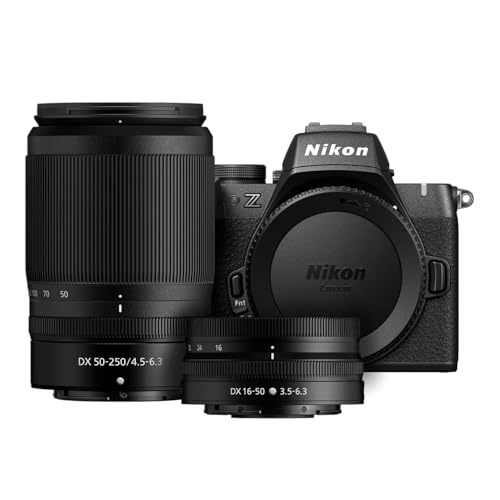
Nikon Z50 II — Best reach for the budget
The Z50 II is the spotter’s arithmetic made friendly. Its APS-C sensor multiplies every telephoto mounted on it, so Nikon’s affordable long zooms reach into genuine spotting territory — arrivals large in the frame, registrations legible — at a total kit price and weight that leave the spotter’s budget and shoulders intact for the season.
Its vehicle detection, aimed by Nikon at exactly this class of subject, finds aircraft early and holds them through the approach with a calm that belies the body’s family-friendly price, and its menus keep the spotter’s few vital settings — tracking, burst, compensation — within a thumb’s reach during a busy arrivals bank.
The files behave at the fence: clean enough at the sensitivities bright-sky work demands, faithful in colour for liveries that spotters identify by shade, and consistent across a long session’s hundreds of frames. Nikon’s colour neutrality, praised elsewhere in this series for portraits, serves the registration hunter equally — the livery is the evidence, and this body does not editorialize it.
It concedes the dusk to the full-frame pair and the deepest crops to the Sony, but for the daylight hours when most spotting happens, this is the guide’s clearest value: a complete spotting system for the price of some rivals’ second lens.
- Format: APS-C mirrorless
- Reach: crop multiplication of telephoto glass
- Focus: vehicle subject detection
- Colour: neutral, livery-true
- Kit: affordable long zooms in system
Strengths
- Genuine spotting reach at a sane total price
- Detection that holds an approach calmly
- A kit that survives a four-hour session’s weight
Trade-offs
- Dusk files trail the full-frame pair
- No in-body stabilisation
- Buffer suits bursts, not endless streams
Spotters graduating from a bridge camera should feel the specific liberation of this system: the same fence, the same flights, and suddenly the registrations are readable — the hobby’s whole reward structure changes in one purchase.
Nikon spotters should map the exposure compensation to their most reachable control and drill it: at a busy bank there is no time for menus, and the sky’s brightness changes faster than the schedule does.
Best for: registration hunters and budget-led spotters. Not suited for: golden-hour specialists needing full-frame dusk files

Canon EOS R10 — Best tracking value
The R10 brings Canon’s professional vehicle-tracking intelligence down to a price and weight a young spotter can carry all day, and at the fence that intelligence is worth millimetres: aircraft acquired early on approach, held through the rotation’s aspect change, and kept through the clutter of the terminal background where lesser tracking surrenders to a hangar.
Its burst gives the spotter the sequence the hobby runs on — the rotation, the touchdown’s puff of smoke, the reversers’ deployment — as a choice of frames rather than a single gamble, and the APS-C crop multiplies Canon’s affordable telephoto zooms into the same honest reach as the Nikon’s.
Canon’s colour pleases the aviation eye: skies graduate smoothly, liveries sit bright and true, and the files need little correction at the fence’s picnic-table edit. The body’s eagerness — fast wake, willing focus, controls that keep up with a busy bank — makes it the favourite of spotters who cover airshows, where the action crosses the sky in several directions at once.
Buffers and build are its honest limits: long streams at a major hub will find the buffer’s bottom, and the body is enthusiast-grade rather than weather-armoured. For the club, the fence and the show, it is the tracking value of this guide.
- Format: APS-C mirrorless, lightweight
- Focus: vehicle recognition from Canon’s pro line
- Burst: fast, for rotation sequences
- Reach: crop-multiplied telephoto zooms
- Handling: eager, all-day light
Strengths
- Tracking intelligence far above its price
- Sequences at the decisive seconds
- Airshow chaos handled willingly
Trade-offs
- Buffer bottoms out in long hub streams
- No in-body stabilisation
- Build is enthusiast, not armoured
Young spotters and aviation-society members should note its social value: it is the body most easily lent along the fence, its menus being legible to any Canon hand, and spotting is a hobby whose knowledge travels by lending.
The R10’s electronic shutter silence is a courtesy at quiet regional fields and a genuine asset near wildlife-sensitive boundaries — spotting and birding share more fences than either hobby admits.
Best for: airshow and club spotters on a budget. Not suited for: professionals needing sealed bodies and endless buffers

Sony Alpha 7 IV — Best for deep crops
The Alpha 7 IV is the serious spotter’s insurance policy. Its recognition autofocus — vehicles found and held with the tenacity this guide has praised in other arenas — is matched to the asset distance spotting actually runs on: resolution deep enough that the aircraft too far for the lens can still be cropped into a frame worth keeping. Every spotter knows the rare visitor that appears once, at the wrong runway, too far away; this body is how that frame survives.
Its files reward the spotter’s editing reality: skies graduated without banding, liveries corrected precisely, shadows under wings opened to reveal gear and detail. A spotter’s archive is a reference library, and this body’s files are the ones that remain legible to it longest.
The lens system supplies the hobby’s full vocabulary — affordable long zooms for the fence, serious telephotos for the dedicated, converters and third-party glass at every rung — so the system grows with the spotter’s ambition without a change of mount or religion.
The costs are the familiar full-frame ones: price, weight, and a menu system that rewards the spotter who configures it once, thoroughly, before the season. For the registration hunter who prints, publishes and archives, it is the guide’s professional recommendation.
- Format: full-frame mirrorless, high resolution
- Focus: vehicle recognition, tenacious
- Files: deep crop and correction tolerance
- System: telephoto glass at every price
- Colour: precise for livery records
Strengths
- The rare, distant visitor survives the crop
- An archive-grade file for every frame
- A telephoto future without limits
Trade-offs
- Heaviest serious option here with long glass
- Menus demand one thorough setup
- Full-frame reach must be bought in glass
Spotters who publish — fleet databases, magazines, the society journal — will find its files the most welcomed by editors, because they survive the second crop, the one production makes, that fence-side framing never anticipated.
Sony’s tracking sensitivity settings reward being tuned per airport: a clean sky background wants different persistence from a terminal-cluttered one, and the body remembers both if the spotter teaches it once.
Best for: serious spotters, publishers and archivists. Not suited for: casual fence afternoons and tight budgets

Canon EOS R6 Mark II — Best for golden-hour spotting
Spotting’s most beautiful hours are its most technically expensive: the dawn arrivals bank lit rose and gold, the evening departures climbing into a burning sky, the night movements under apron floods. The R6 Mark II is built for exactly those hours — full-frame files that stay composed as sensitivity climbs, tracking that holds aircraft against darkening clutter, and stabilisation that steadies long glass when the light and the photographer’s arms are both giving out.
Its vehicle focus performs the golden hour’s hardest trick — acquiring a jet against a bright sky and holding it as it crosses into shadowed ground clutter — with the Canon system’s characteristic lack of drama. The spotter’s attention stays where it belongs: on the sky, the schedule and the next movement.
Colour at the day’s edges is its signature: skies that graduate from fire to indigo without tearing, liveries that keep their identity in mixed apron light, and silhouettes that hold a clean edge when the spotter chooses drama over record. The aviation artist and the registration hunter share this body at different hours of the same day.
Its resolution is the deliberate trade — the Sony crops deeper at noon. At the hours this body owns, light is scarcer than pixels, and the trade is made in the spotter’s favour every dawn it is used.
- Format: full-frame mirrorless
- Focus: vehicle tracking across light changes
- Files: graceful at high sensitivity
- Stabilisation: in-body, for long glass at dusk
- Colour: skies and liveries at the day’s edges
Strengths
- The golden hours, owned outright
- Tracking from bright sky into ground shadow
- Dusk files that keep the evening bank viable
Trade-offs
- Resolution crops less deeply than the Sony
- Professional glass prices apply
- Size and weight across a long session
Airport-adjacent residents — the spotters whose fence is a daily walk — will value its reliability across seasons: the winter dawn, the summer evening, the same body unbothered, building an archive of one airport’s light.
The R6 Mark II’s stabilisation partners long glass at dusk in a way that changes the session’s economics: handheld until the light truly fails, where lesser kits packed up at the golden hour’s start.
Best for: dawn and dusk spotters, aviation artists. Not suited for: midday registration hunters prioritising crop depth

OM SYSTEM OM-5 Mark II — Best travel spotting system
The OM-5 Mark II is the spotter’s travelling argument: Micro Four Thirds doubles the effective reach of its lenses, so a genuinely long spotting kit — body plus telephoto — fits in a small bag and weighs what other systems’ lens alone weighs. For the spotter who hikes to a remote fence, travels for airshows, or combines spotting with a walking holiday, that arithmetic is the whole decision.
Its stabilisation is the system’s second gift: long effective focal lengths handheld at the fence, steadied through a long session without a monopod’s encumbrance, with the viewfinder calm enough to track smoothly. Weather sealing completes the traveller’s brief — the kit shrugs off the airfield’s drizzle and the coast path’s spray alike.
Focus tracking is competent rather than clairvoyant, a step behind the Canon and Sony leaders, and the smaller sensor concedes the dusk. In daylight — the travelling spotter’s working hours — those concessions rarely bind, and the reach-per-kilogram is without rival in this guide.
Spotters whose hobby is measured in fences visited rather than hours at one fence will find this system the difference between going and not going, which is the only specification that ultimately matters.
- Format: Micro Four Thirds mirrorless
- Reach: double effective focal length
- Stabilisation: class-leading for handheld telephoto
- Build: sealed, compact, hikeable
- Kit: the lightest serious spotting system
Strengths
- Serious reach in a small, light bag
- Handheld telephoto steadied all session
- Weather-sealed for the travelling fence
Trade-offs
- Tracking a step behind the leaders
- Dusk concedes to larger sensors
- Files crop less deeply than the Sony’s
Spotters combining aviation with birding — the airfield’s other residents — will find this the natural dual system: one bag, one telephoto discipline, two hobbies fed, which is how many travelling kits actually evolve.
The OM SYSTEM’s pre-capture thinking applies to departures as to birds: the rotation’s exact instant can be buffered rather than guessed, and spotters who master it stop losing the nose-up frame to reflex.
Best for: travelling and hiking spotters. Not suited for: dusk specialists and maximum-crop archivists

Sony RX100 VII — Best pocket spotter
The RX100 VII is the spotter’s second camera and the traveller’s only one: a pocket body with a real telephoto zoom that reaches into the lower end of spotting territory — close enough for airshow displays, airport viewing terraces, and the movements at smaller fields where the fence is near and the light is kind.
Its virtues are presence and discretion. It rides in the jacket on the business trip that passes an airport, appears at the viewing window without a bag search’s worth of glass, and produces files — sharp, well-exposed, honestly coloured — that shame every phone pressed to the same glass. For the spotter whose life includes airports they did not choose, it is the difference between an archive and a regret.
Tracking and burst are pocket-class rather than fence-class: displays and terraces, yes; a distant hub’s arrivals bank in shimmer, no. The honest spotter carries it as the always-along instrument and keeps a system body for the dedicated days — a pairing this guide recommends without embarrassment, because spotting opportunities are famously unscheduled.
As a first spotting camera for a young enthusiast, it also teaches the hobby’s geometry — reach, light, position — at a size and price that forgive experimentation. Many serious kits began as this camera’s education.
- Format: premium compact, telephoto zoom
- Reach: genuine zoom in a pocket body
- Files: sharp, honest, terrace-grade
- Size: jacket pocket, always along
- Focus: capable for displays and terraces
Strengths
- Spotting that travels anywhere you do
- Real zoom where phones merely crop
- The unscheduled opportunity, captured
Trade-offs
- Reach and tracking are pocket-class
- No system to grow into longer glass
- Small controls with gloves at a winter fence
Airshow families should note its particular mercy: one parent can spot, film and photograph the displays with a device that leaves the other hand free for the children, the programme and the ice cream — the hobby at family scale.
The RX100 VII’s zoom speed suits the terrace’s rhythm — wide for the taxiway context, long for the rotation — in one pocketable gesture, which is why it keeps appearing in serious spotters’ jacket pockets.
Best for: travellers, airshow families and second-camera spotters. Not suited for: dedicated fence work at major hubs
How Should a Spotter Set Up for a Session at the Fence?
Arrive before the bank you came for, and spend the first movements calibrating rather than collecting: set the tracking mode for vehicles, the burst for the rotation sequences, and exposure compensation against the day’s sky — then test it on an ordinary arrival and check the frame at magnification. The rare visitor does not announce itself an hour early; the calibration done on the common traffic is what saves it.
Position by the light before the flightpath: the sun over your shoulder for the record shots, the runway’s rotation point in comfortable reach of your longest honest focal length, and a background for the climb-out that is sky rather than terminal wherever the fence allows a choice. Spotting positions are local knowledge — arrive early, watch where the regulars stand, and let the fence’s elders teach the geography no guide can.
Manage the session’s stamina like the hobby’s professional class does: shade, water, a chair, batteries rotated before they are desperate, and cards treated as film — finite, precious, backed up at home before the next outing. A four-hour bank is an endurance event wearing a hobby’s clothes, and the cameras in this guide all reward the spotter who is still sharp when the last movement lands.
What Do Spotters Owe the Airports and Communities They Watch?
Legality, courtesy and invisibility, in that order. Spotting is tolerated — and at many airports genuinely welcomed — where spotters stay in the public places, keep fences and gates unobstructed, take their litter home, and understand that security staff have a job the hobby must never make harder. The community’s good name is a collective asset that one careless afternoon can spend; the regulars at any fence police it themselves, and newcomers should learn the local customs as carefully as the flight schedules.
Many airports formalise the welcome with viewing parks, spotting guides and even identity schemes for regulars — join them, support them, and let the hobby’s organised face be its public one. Photography at the fence is a privilege maintained by behaviour, and the cameras in this guide will be welcome at fences for exactly as long as their owners are.
Share the archive generously with the community — the fleet databases, the society journals, the local groups where a frame of a rare visitor is a public good. Spotting’s knowledge economy runs on such generosity, and the photographers who contribute to it find the fence’s knowledge flowing back to them in positions, warnings and welcomes no money buys.
How Should a Beginner Spotter’s First Season Be Spent?
At one airport, mostly, learning its geography the way this guide’s method sections teach: where the light lives at each hour, which fence serves which runway, when the interesting banks arrive, and who the regulars are whose knowledge is the real local guidebook. A season at one field teaches more spotting than a year of airshow tourism, because repetition is what turns procedures into instincts.
Keep the equipment constant and let the variables be light and traffic. The beginner who changes bodies mid-season restarts the calibration this guide described — tracking feel, compensation habits, buffer rhythm — while the beginner who keeps one kit from this list spends the season accumulating the only asset that compounds: familiarity, with a place and a machine at once.
End the season by printing the dozen best and pinning them where the winter’s planning happens. The wall will argue, all winter, for the dawn sessions and the long lens fund more persuasively than any review — including, the guide admits, this one.
How Do Winter and Weather Change the Fence’s Arithmetic?
Cold, clear winter air is the spotter’s secret season: the haze sleeps, the light runs low and golden for hours, and contrails write the sky’s traffic large. The costs are batteries that fade early, fingers that lose the controls’ subtlety, and sessions shortened by the spotter’s own endurance rather than the airport’s schedule. The sealed bodies in this guide and a pocketful of warm spare batteries convert winter from the hobby’s off-season into its exhibition season.
Rain and storm light offer the dramatic register: departures through spray, vortices visible in humid air, skies that make every livery look like a flag. Weather-sealed kits — the OM SYSTEM and the full-frame pair with sealed glass — keep working where lesser systems bag up, and the photographs repay the discomfort at the rate aviation art always pays for weather.
Summer’s tax, beyond haze, is the sun itself: heat on the spotter, glare off every surface, and the noon hours’ hard blue light that flattens liveries into decals. The wise summer spotter works the day’s edges and spends noon in the shade with the archive — a rhythm the golden-hour bodies in this guide were practically designed to reward.
How Should You Photograph at a Viewing Terrace or Through Glass?
Terraces trade the fence’s freedom for elevation and amenities, and glass — where it intervenes — adds its own physics: reflections that must be killed by proximity, so the lens hood rests near the pane and the photographer’s dark clothing stops performing in the reflection; and a slight loss of contrast that a touch of editing honestly repairs. The pocket Sony and the compact kits rule this territory, because terraces reward the unencumbered.
Shoot the terrace’s own story as well as the aircraft: the children on the rail, the silhouettes against the apron, the café window’s reflection of a departure. Spotting’s social architecture is part of the hobby’s record, and the terrace is where its public life happens — the archive that includes it will explain the hobby to the future better than registrations alone.
Time remains the terrace’s gift: elevated, unhurried, with the schedule on a board and the coffee in reach, it is the place to practise the prop discs and the exposure disciplines at leisure, then carry the drilled skills back to the fence where they will be needed at speed.
How Do the Six Plane-Spotting Cameras Compare?
The table’s first question is not which camera but which currency of reach you prefer to pay in: crop multiplication, resolution, or glass. Read across with your fence’s distance and your day’s hours in mind, and the rows sort themselves into your shortlist.
| Camera | Reach strategy | Working character | Best matched spotter |
|---|---|---|---|
| Nikon Z50 II | Crop times affordable glass | Calm, faithful, economical | The registration hunter |
| Canon EOS R10 | Crop plus pro-line tracking | Eager, light, fast | The airshow spotter |
| Sony Alpha 7 IV | Resolution spent as crop | Deep, precise, archival | The publishing spotter |
| Canon EOS R6 Mark II | Glass plus low-light grace | Warm, steady, enduring | The golden-hour artist |
| OM SYSTEM OM-5 Mark II | Double reach, half weight | Small, sealed, tireless | The travelling spotter |
| Sony RX100 VII | Zoom in a pocket | Discreet, instant, honest | The opportunist |
The pairing the table quietly recommends is one system body and the pocket Sony: the dedicated kit for the planned days, the RX100 for the airports life happens to route you through. Between them, very few movements in a spotter’s year go unphotographed.
Whichever currency of reach you choose, spend a season with it before judging it: spotting systems reveal themselves across weather, light and traffic, and the kit that looked second-best in the shop has a way of becoming the trusted instrument by autumn — familiarity being the specification no table can print.
What Mistakes Do Plane Spotters Make When Choosing and Using a Camera?
Buying reach on paper that the atmosphere will confiscate: the longest lens and the deepest crop, aimed through a mile of boiling air at noon, produce large, sharp-edged wobbles that no archive wants. Learn your fence’s haze hours first; many spotters discover their true limit is the shimmer, and that the dawn session with a modest kit outperforms the noon session with a flagship.
Second, exposing for the sky and archiving silhouettes — or overcorrecting into chalk-white liveries with no detail. The discipline of compensation, checked on the first arrival of each session and adjusted as cloud moves, is unglamorous and decisive. Spotting is an exposure craft wearing a tracking craft’s clothes.
Third, freezing every propeller. A prop aircraft with a motionless propeller reads as a model or a mishap; the slower shutter that blurs the disc is the genre’s signature skill, and it must be practised deliberately, at the cost of some blurred airframes, until the pan and the speed are one gesture. Jets forgive; props examine.
Fourth, neglecting the session’s logistics until the rare movement finds a full card, a flat battery or a photographer who left for shade. Spotting’s rewards are scheduled by airlines and delivered without negotiation; readiness — power, space, position, patience — is the hobby’s real professional skill, and it is entirely free.
Fifth, standing where the crowd stands because the crowd stands there. The popular position is popular for convenience, not for light or angle, and the spotter who walks the fence’s length at different hours discovers the positions the regulars keep quiet about — which is to say, earns them, the only way they have ever been earned.
Final Recommendation
For the fence’s daylight hours and the registration hunter’s archive, the Nikon Z50 II and Canon EOS R10 divide this guide’s value honours — Nikon’s calm economy against Canon’s tracking brilliance — and either builds a complete spotting system for the price of a professional’s lens. The OM SYSTEM carries the same reach up mountains and across continents for the travelling spotter.
For the serious archive and the day’s golden edges, the Sony Alpha 7 IV and Canon EOS R6 Mark II are the professional pair: crop depth against low-light grace, chosen by whether your airport gives you distance or darkness to fight. And the little Sony RX100 VII rides in every spotter’s pocket, because the best movement of the year will be the one nobody scheduled. Choose your currency of reach, learn your fence’s light, and mind the haze.
And when the kit is chosen and the fence is learned, the hobby’s last lesson is the one it teaches every session: look up from the viewfinder occasionally. The archive matters, the registrations matter — but the spotter who never simply watches a departure climb into a clean sky has filed the experience instead of having it. The camera serves the watching, never the other way round.
Related guides
Frequently Asked Questions
How much zoom do I actually need for plane spotting?
[“Enough to make the aircraft large at your fence’s distance, which varies by airport more than by camera: viewing terraces and small fields forgive modest zooms, while major-hub fences demand the longest affordable reach. The crop-sensor systems here multiply mid-priced telephotos into genuine spotting range; judge any kit by photographing your own fence’s typical movement, not by the millimetres on a brochure.”]
Why do my plane photos look wavy and soft on warm days?
[“Heat haze — the air itself bending light as it rises off hot ground. No camera or lens corrects it, because the distortion happens before the light arrives. Shoot early before the ground heats, shorten the distance or the air column over hot surfaces, and accept the shimmer’s days as the atmosphere’s veto. The dawn sessions this guide keeps recommending are the professional answer.”]
What shutter speed should I use for jets and for props?
[“Jets reward the fastest speeds your light and lens allow, for crisp airframes at long focal lengths. Propellers ask the opposite: a markedly slower speed, with a smooth pan, so the prop blurs into its natural disc — practised deliberately, since too slow blurs the airframe too. The two disciplines in one session are the spotter’s rite of passage, and every body here supports both.”]
Is a bridge camera or superzoom a good spotting choice?
[“It can be an honest starting point — enormous zoom in one body, no lens decisions — and many spotters began there. Its limits arrive with light and files: small sensors struggle at the golden hours, and crops for registrations dissolve. The mirrorless systems in this guide are the usual graduation, bringing tracking intelligence and file depth the hobby’s archive eventually demands.”]
Can I photograph aircraft at night or in the dark?
[“At the day’s edges, yes — that is the R6 Mark II’s home fixture, with apron-lit movements and golden climb-outs well within its files’ grace. In full darkness, spotting becomes a specialist exercise in long exposures of parked aircraft and light trails of movements, where tripods replace tracking and the airport’s own illumination paints the scene. Both are legitimate branches of the hobby; neither needs a different camera from this guide’s leaders.”]
Do I need permission to photograph aircraft at an airport?
[“From public places, spotting photography is broadly accepted in many countries, and numerous airports actively welcome it with viewing areas — but rules vary by airport and nation, security staff have the final word on the day, and some locations restrict photography entirely. Learn your airport’s customs before the session, carry identification, cooperate instantly with any instruction, and let the hobby’s good behaviour be its permit.”]
What is the best way to practise tracking before a big airshow?
[“Your local fence’s ordinary traffic, shot deliberately: pan with arrivals at rotation, rehearse the prop-blur speeds on the turboprops, and calibrate exposure compensation against the day’s sky on common movements. An hour a week of such practice converts the airshow from a lottery into a harvest, because the displays will be faster and closer but the skills are identical.”]
What is the best focal length for photographing props without freezing them?
[“The focal length matters less than the shutter it forces your hand to hold steady: the slower speeds the prop disc requires turn panning into the whole technique, and longer lenses magnify every tremor in that pan. Practise at your kit’s middle reach first, where the disc and the airframe can both be won, and extend the length as the follow-through earns it.”]
Should I use a monopod or tripod at the fence?
[“A monopod is the fence’s traditional compromise — support for long glass across a long session, with the freedom to pan and relocate that a tripod denies. Tripods belong to the parked-aircraft and night branches of the hobby. Most spotters in this guide’s testing worked handheld with stabilisation for arrivals and kept the monopod for the heavy glass and the long waits between banks.”]
How do I keep up with which aircraft are due at my airport?
[“Use the community’s shared knowledge the way the hobby has always run it: the local spotting group’s channels, the airport’s own movement information where it is published, and the regulars at the fence, whose calendars are the most reliable database in aviation. Arrive with the day’s expected highlights noted, but keep the camera ready for the unlisted — spotting’s history is written by diversions, substitutions and surprises, and readiness is the only subscription that covers them.”]
Related Guides
Spotters extending their reach usually continue into the neighbouring briefs of our guide to cameras for photographing moving subjects at speed our guide to cameras for photographs of distant wildlife and birds our guide to cameras for outdoor pictures in hard light and weather


