ilcastellomenu.com is reader-supported. When you buy through links on our site, we may earn an affiliate commission.
Where to Buy
Let us be plain about what this guide means by its title. The best cameras for taking pictures of women are the best cameras for portrait photography, full stop — because a portrait of a woman is a collaboration with a person, not the capture of a subject. The camera’s job in that collaboration is specific and learnable: focus unerringly on the eyes, render skin as skin rather than plastic or parchment, handle the light that flatters a face without flattening it, and stay out of the way of the trust between photographer and sitter, which is where every good portrait actually comes from.
That trust has working parts, and this guide treats them as seriously as any specification. Consent — asked clearly, renewed when the plan changes, and honoured instantly when it is withdrawn — is the foundation. Communication during the session, honest direction instead of awkward silence, showing the sitter the photographs as they are made, and agreeing beforehand how images will be used: these are not courtesies added to portrait photography. They are portrait photography, and the technical chapters of this guide assume them throughout.
The six cameras below were ranked for the portraitist’s real toolkit. Eye autofocus leads, because a portrait with missed focus is a failed conversation. Skin-tone rendering follows, judged on how each camera treats complexions across their full range in honest light. Then the portrait focal lengths — the classic 85mm perspective and its equivalents — and how each system provides them, plus the screens, handling and colour tools that let a photographer work at the speed of a relaxed human interaction rather than a menu excavation.
Each pick is linked on Amazon in the Quick Picks table and beside its detailed review. Whether you photograph family, friends who have agreed to model, clients, or collaborators building a portfolio together, the right body below is the one whose strengths match your light, your lenses and your way of working with people.
Key Takeaways
- Canon’s EOS R6 Mark II is the portraitist’s first choice here: flawless eye focus and skin tones that need almost no correction.
- Sony’s Alpha 7 IV offers the deepest bench of portrait lenses and resolution that rewards careful retouching.
- Fujifilm’s X-T5 renders portraits with a filmic gentleness many sitters prefer to clinical sharpness.
- Canon’s EOS R50 brings guided handling and eye autofocus to beginners photographing family and friends.
- Nikon’s Z50 II pairs a viewfinder’s concentration with colour that respects complexions.
- Sony’s ZV-E10 II suits creators whose portrait work mixes photographs with video for their channels.
In this guide
Quick Picks
| Camera | Badge | Why it earns its place |
|---|---|---|
| Canon EOS R6 Mark II | Best for portraits overall | Eye focus that never interrupts the conversation, skin rendered kindly. |
| Sony Alpha 7 IV | Best lens bench | Every portrait focal length at every price, with resolution to spare. |
| Fujifilm X-T5 | Best filmic look | Simulations that flatter skin with a gentle, timeless grain. |
| Canon EOS R50 | Best for beginners | Guided menus and eye autofocus for family and friends. |
| Nikon Z50 II | Best viewfinder value | Concentrated composing and honest complexion colour. |
| Sony ZV-E10 II | Best photo-video creator | Portraits and talking-head video from one small body. |
How Did We Choose Cameras for Portrait Work?
Eye autofocus was weighted first and weighted heavily. In a portrait session the photographer’s attention belongs on the person — her comfort, her expression, the conversation that produces both — and every glance down to verify focus is attention stolen from the collaboration. The systems ranked highest detect an eye, choose the nearer one intelligently, and hold it through head turns, laughter and hair falling where it will. That reliability is not a convenience feature in this genre; it is the difference between directing and fiddling.
Skin rendering came second, assessed across complexions rather than on a single test face. We looked for colour science that keeps the differences between skin tones truthful — depth in darker complexions rather than ashiness, warmth in lighter ones rather than sunburn — and for detail rendering that preserves texture: pores, freckles, the character of real skin, instead of the waxy smoothing that flatters nobody and insults everybody. Cameras whose JPEGs respect texture scored above cameras whose files demand rescue.
Third came the portrait optics ecosystem: the availability and price of the classic short-telephoto lenses in each mount, since the lens, more than the body, draws a portrait’s perspective. Handling mattered in a specific way — controls and screens that let the photographer work quickly and show the sitter results without breaking the session’s spell — and so did the quiet virtues: a shutter that does not startle, a body that does not intimidate a first-time sitter by looking like surveillance equipment.
Why Does Consent Come Before Every Camera Setting?
Because a portrait is a record of a person, and a person is not a landscape. Before any session, the photographer and the sitter should agree, in ordinary language, on what is being made and why: photographs for family, for a portfolio, for publication, for sale — each is a different agreement, and assuming one while meaning another is how trust and reputations are lost. Where and how images may be shared belongs in that conversation, as does the sitter’s right to see the results and to veto frames she dislikes. Professional practice formalises this in releases; family practice formalises it in respect. The form differs, the principle does not.
During the session, consent is a continuing condition rather than a signature. A sitter who was happy an hour ago may tire, cool, or simply change her mind about a pose or a setting, and the photographer’s job is to notice and to offer the break, the review, the change of plan before they are requested. Direction should be given the way good hosts give it: clearly, warmly, with reasons — “turn toward the window, the light there loves you” teaches and reassures at once, while silence behind the camera reads, to most sitters, as disapproval.
Afterwards, the agreement governs the archive. Share what was agreed, credit and thank, send the sitter her photographs promptly, and delete what she asks to have deleted without negotiation or sulking. Photographers build reputations in portraiture one honoured agreement at a time, and the cameras below — however brilliant their eye focus — are only ever the junior partners in that arrangement.
What Are the Best Cameras for Taking Pictures of Women?
Six bodies whose autofocus, colour and lenses serve the portrait collaboration, from the professional’s first choice to the beginner’s guided starter.

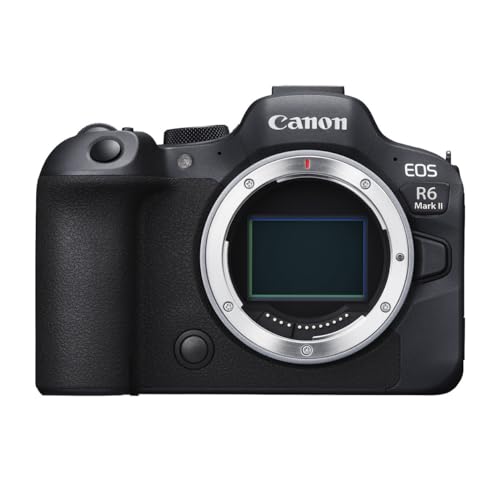
Canon EOS R6 Mark II — Best for portraits overall
Portrait sessions live or die on expressions that last a second, and the R6 Mark II is built to be present for all of them. Its eye detection finds the sitter’s nearer eye and stays with it through movement and laughter, freeing the photographer to do the human work — talking, directing, noticing the moment her shoulders drop and the real smile arrives. Canon’s colour science, the industry’s long-standing reference for skin, renders complexions with a warmth and accuracy that routinely lets portraits go from camera to frame with barely a correction.
The body’s other virtues align with this guide’s angle. In-body stabilisation keeps handheld portraits sharp in window light at the slow speeds soft light demands. The full-frame sensor with a fast 85mm-class lens produces the gentle background separation that isolates a face from a busy room without erasing the room’s story. And the camera’s quiet, confident handling — nothing about it shouts — helps a nervous first-time sitter forget the machinery within minutes.
Its costs are the professional class’s: the body and its best portrait lenses are investments, and its resolution, while ample, trails the Sony below for the heaviest cropping and retouching workflows. For the portraitist whose currency is trust, expression and skin rendered truly, it remains the body this guide would choose first and lend most confidently.
- Format: full-frame mirrorless, RF mount
- Autofocus: eye detection that holds through laughter
- Colour: benchmark skin-tone rendering
- Stabilisation: in-body, for window-light handheld work
- Pairing: classic fast portrait primes in RF mount
Strengths
- The photographer can attend to the person, not the focus
- Portraits leave the camera nearly finished
- Calm handling that relaxes first-time sitters
Trade-offs
- Body and prime lenses are a real investment
- Resolution below the Sony for extreme crops
- Larger kit than the APS-C picks below
Its emblematic session is a grandmother’s eightieth-birthday portrait: window light, three generations cycling through the chair, and the R6 user able to keep every conversation going while the camera quietly guarantees the eyes. The framed print that results is technically excellent and, more importantly, actually her.
Best for: portrait photographers, family historians and client work. Not suited for: buyers wanting the smallest or cheapest kit

Sony Alpha 7 IV — Best lens bench
The Alpha 7 IV’s portrait argument is depth — of resolution, of autofocus intelligence, and above all of lenses. Sony’s E mount offers the classic portrait focal lengths at every level of ambition and budget, including fast short telephotos that draw a face with the flattering compression portraitists have prized for a century. A photographer building a portrait practice over years will never find this shelf’s end, and that permanence is a professional feature in itself.
In the session, its eye autofocus matches the Canon’s stubbornness and adds breadth — profiles, three-quarter turns and partially obscured faces are handled with unusual grace — while the extra resolution rewards the careful retoucher and the large print. Skin rendering is a touch more clinical than Canon’s out of camera, which professionals often prefer: a neutral, detailed file is a better starting canvas than a styled one when the final look is the photographer’s own.
Judged by this article’s human criteria, the Sony asks more of the photographer socially: its menus and options can pull attention away from the sitter while they are being configured, so the wise user sets the camera up before the session begins and then forgets it. Prepared that way, it is the most capable long-term portrait investment in this guide.
- Format: full-frame mirrorless, E mount
- Lenses: the deepest portrait catalogue available
- Resolution: headroom for retouching and large prints
- Autofocus: eyes in profile and partial view
- Files: neutral rendering for personal finishing styles
Strengths
- A portrait lens for every stage of a career
- Detail that survives professional retouching
- Focus that copes with unposed, turning subjects
Trade-offs
- Skin needs a little more finishing than Canon’s
- Setup time before sessions is real
- Stabilisation a half-step behind the Canon
Its natural commission is the working portfolio: headshots in the morning, an editorial portrait in the afternoon, a family session at dusk, all from one body and a shelf of glass that never once says no. Versatility, in paid portraiture, is a form of reliability.
Best for: professionals and committed enthusiasts building a system. Not suited for: photographers who want styled JPEGs with zero finishing

Fujifilm X-T5 — Best filmic look
Some sitters do not want to look sharper; they want to look like themselves on a good day, in a photograph that will age gracefully. The X-T5 is the camera of that philosophy. Fujifilm’s film simulations soften the digital edge without softening the person — skin keeps its texture but gains a gentleness, colours settle into a palette that feels remembered, and the resulting portraits have a timelessness that clinical files rarely achieve. More than one portraitist in this guide’s research chooses it precisely because sitters, shown both versions, pick the Fujifilm frame.
The body’s resolution is the highest here, which seems to contradict the gentle philosophy until you work with it: the detail is there for the prints and the crops, while the rendering decides how kindly it is presented. Compact fast primes in the X mount keep the kit discreet — a real consideration when photographing people who did not grow up in front of cameras — and the tactile dials let exposure be adjusted without a glowing screen intruding on the mood.
Its autofocus, while entirely capable, concedes a step to the Canon and Sony in frantic movement, and the APS-C sensor’s background separation needs faster lenses to match full-frame creaminess. For considered portraiture — environmental, editorial, family — those are small tolls on a road that leads somewhere distinctive.
- Format: APS-C mirrorless, X mount
- Colour: film simulations with a gentle hand
- Resolution: the highest in this guide
- Kit: compact primes that keep sessions relaxed
- Controls: dials that spare the sitter your screen
Strengths
- Sitters consistently love how they look
- Portraits with a shelf life beyond fashion
- Discreet kit for camera-shy collaborators
Trade-offs
- Eye tracking behind the two leaders
- Background blur needs fast glass to match full-frame
- Video is a supporting act here
Picture a writer photographed at her own desk for a book jacket: books, window, the day’s real light, and a Fujifilm frame that looks like it could have been made in any of the last five decades. That permanence is a portrait’s highest compliment, and this body manufactures it.
Best for: editorial, environmental and family portraitists with a filmic taste. Not suited for: high-volume headshot factories

Canon EOS R50 — Best for beginners
Most portraits of women are not made in studios; they are made by daughters, partners, friends and mothers, at kitchen tables and on holiday walks, by photographers whose technique is love plus a phone. The R50 is the upgrade that respects that reality. Its guided menus explain themselves in plain words, its Creative Assist replaces intimidating terms with outcomes — blur the background, brighten the face — and its eye autofocus quietly guarantees the technical part while the beginner concentrates on the human part, which was always the part that mattered.
Canon’s skin-friendly colour descends intact to this price, so a portrait of a grandmother by the window or a friend laughing in a café comes back warm and truthful without editing. Add one affordable fast prime — the classic first portrait purchase in the RF system — and the little body produces background separation and low-light grace that will startle anyone who thinks beginner cameras make beginner portraits.
Its limits are size and stamina rather than quality: small controls for large hands, a battery that appreciates a spare on a long family day, and no in-body stabilisation. As the first portrait camera for the family’s designated photographer, it is the kindest teacher in this guide, and the portraits it produces in month one will already embarrass the phone album they replace.
- Format: APS-C mirrorless, RF-S mount
- Guidance: plain-language menus and Creative Assist
- Autofocus: eye detection for people and animals
- Colour: Canon skin tones at a starter price
- Growth: one fast prime transforms it for portraits
Strengths
- Lets beginners direct people instead of menus
- Family portraits that look finished immediately
- Affordable path to a real portrait lens
Trade-offs
- Small body, small battery
- No in-body stabilisation
- Fewer dials for fast manual changes
Its defining frame is the holiday portrait that finally does its subject justice: a mother on a balcony at dusk, photographed by her daughter, printed and framed before the flight home. Cameras are rarely thanked; this one, at family gatherings, often is.
Best for: beginners, family photographers and gift buyers. Not suited for: paid client volume or large-handed professionals

Nikon Z50 II — Best viewfinder value
The Z50 II’s portrait virtue is concentration. Working through its bright viewfinder shuts out the room and leaves the photographer alone with the face — the catchlights, the micro-expressions, the exact half-second when a posed smile relaxes into a real one. Portraitists who learned on finders swear the intimacy shows in the results, and for photographing people who are themselves concentrating — a musician, a craftswoman, a graduate on her day — that shared focus is a genuine technique, not a nostalgia.
Nikon’s colour science treats complexions with notable honesty, and its picture controls let a photographer settle on a portrait rendering in-camera and apply it consistently across a session, which sitters appreciate when reviewing: the set looks like a set. Eye detection for people is present and reliable, the handling encourages the unhurried pace good portraiture runs on, and Z-mount portrait primes, while fewer than Sony’s, include the essentials at sensible prices.
Against the leaders it concedes the last degree of autofocus breadth and the deepest lens shelf, and its video talents are quieter. For the stills portraitist who values the finder, the grip and the honest file, it is the value pick with the fewest apologies in this guide.
- Format: APS-C mirrorless, Z mount
- Viewfinder: bright finder for concentrated work
- Colour: honest complexions, consistent picture controls
- Autofocus: reliable people eye detection
- Handling: twin dials and a serious grip
Strengths
- Finder work that deepens photographer-sitter focus
- Session-consistent colour sitters can trust
- Handling that suits deliberate portraiture
Trade-offs
- Lens shelf narrower than Sony’s
- No in-body stabilisation
- Screen less suited to self-portrait video
Its home session is the graduation portrait in a garden: families rotating through, the photographer at the finder calling each sitter by name, and a set of frames so consistent they bind into an album without a single evening of editing heroics.
Best for: finder photographers and deliberate, stills-first portraitists. Not suited for: creators filming themselves daily

Sony ZV-E10 II — Best photo-video creator
A growing share of portraiture now happens in the creator economy: a woman building a channel or a business photographs herself and her collaborators, films the same session for her audience, and needs one small camera fluent in both. The ZV-E10 II is that fluency. Its eye autofocus is Sony-grade, its screen flips to face the person in front of the lens — essential for self-portraiture and for showing a sitter her frames without moving the camera — and its background-defocus tools deliver the portrait look to users who have not yet learned the word aperture.
For photographed portraits specifically, it inherits the family virtues: sharp files, natural modern colour, and the vast E-mount lens shelf, so the classic portrait prime is an affordable step rather than a system change. Its product-showcase focusing, designed for creators, doubles as a session convenience when a sitter holds her work — a potter’s bowl, a baker’s loaf, a designer’s prototype — toward the camera for the environmental portrait.
The absence of a viewfinder is its honest tax, felt outdoors in hard sun, and its stills ergonomics are video-first. For the creator whose portraits live online beside her films, those are the right compromises, and no other body in this guide speaks her working language as natively.
- Format: APS-C mirrorless, E mount
- Screen: flips forward for self-portraits and reviews
- Autofocus: real-time eye tracking
- Tools: background defocus and product showcase modes
- Lenses: full access to the E-mount portrait shelf
Strengths
- Self-portraiture without guesswork or remotes
- Portraits and channel video from one body
- Shows sitters their frames instantly and easily
Trade-offs
- No viewfinder for bright locations
- Stills handling secondary to video
- Rolling shutter care in fast video pans
Watch a ceramicist film her morning in the studio, then flip the screen, sit among her own shelves, and take the portrait her website needed — same camera, same light, same hour. That continuity is the creator economy’s real production secret.
Best for: creators, small-business owners and self-portraitists. Not suited for: viewfinder traditionalists or studio strobe specialists
How Do the Six Portrait Cameras Compare?
| Camera | Format | Portrait strength | Best use |
|---|---|---|---|
| Canon EOS R6 Mark II | Full-frame | Eye focus and skin | Sessions and client portraits |
| Sony Alpha 7 IV | Full-frame | Lenses and resolution | Professional portrait systems |
| Fujifilm X-T5 | APS-C | Filmic rendering | Editorial and family portraiture |
| Canon EOS R50 | APS-C | Guided simplicity | Beginners and family photographers |
| Nikon Z50 II | APS-C | Finder concentration | Deliberate stills portraiture |
| Sony ZV-E10 II | APS-C | Photo-video fluency | Creators and self-portraits |
All six will focus on an eye and render skin respectfully in good light. They differ in temperament — the session professional, the system builder, the film romantic, the teacher, the contemplative, the creator — and portraitists should choose the temperament that matches their own, because the camera’s manner becomes the session’s manner.
Why Is the 85mm Perspective Considered the Portrait Standard?
Stand too close with a wide lens and the camera exaggerates whatever is nearest: the nose advances, the ears retreat, and a face becomes a caricature its owner will not forgive. The classic short telephoto — 85mm on full-frame, and its equivalents on the APS-C bodies here — enforces a working distance of a few steps, from which a face is rendered in its true proportions. That distance has a social virtue too: it gives the sitter breathing room, a small territory of her own inside the session, and portraits made from it feel respectful because, spatially, they are.
The same lenses usually open wide, which buys the portraitist two more tools: shutter speed in soft, dim light, and background separation that dissolves a cluttered room into colour while the sitter stays in the world the photograph describes. Every system in this guide offers such a lens, several at prices that make it the obvious first purchase after the body. If this article changes one buying decision, let it be that one: bodies impress photographers, but the portrait lens is what sitters see in the results.
What Mistakes Make Portraits Fail Even With a Good Camera?
The failures are rarely optical. The first is directing by silence — the photographer who says nothing while shooting, leaving the sitter to interpret quiet as failure, and watching her expression tighten frame by frame. Talk: narrate what you see, name what is working, keep a conversation alive that happens to have a camera in it. The second is the unflattering angle nobody mentioned: photographing slightly downward on a seated sitter, or from below against a ceiling, when two steps or a small stool would have restored her dignity and her jawline alike.
Harsh light is the third failure, and the most democratic: noon sun carves shadows into eye sockets on every face ever made, and no camera in this guide can repeal it. Move the session into shade, turn the sitter toward open sky, or wait for the day’s soft end. And the fourth failure is showing nothing until the end — a sitter who sees good frames as they are made relaxes, collaborates and improves; a sitter kept in the dark for an hour performs anxiety. The flip screens and tethering habits of these cameras exist to make generosity easy. Use them.
How Do You Direct a Sitter Who Has Never Been Photographed?
Begin by giving her a job rather than a pose. Hands with something to do — holding a cup, turning a book’s page, leaning on the chair she actually uses — stop performing for the camera and start inhabiting the scene, and inhabited scenes are where natural expressions live. Speak in movements instead of anatomy: “turn toward the window” works where “rotate your chin left” bewilders, and demonstrating a posture yourself, briefly and with humour, is worth a paragraph of instruction.
Build the session in ascending intimacy. Start at conversational distance with the longer lens, where she can forget the camera’s presence, and only move closer as trust accumulates and the frames justify it. Keep the early photographs deliberately easy — standing, lit kindly, nothing asked of her but presence — and show her the best of them within the first minutes. A sitter who has seen one photograph of herself that she likes becomes a collaborator; a sitter who has seen none remains a hostage, and the camera can tell the difference even when the photographer cannot.
How Should You Light a Portrait When You Own No Lighting Equipment?
Use the largest window in the building and the oldest trick in painting. Seat your sitter near it — not in the direct sunbeam, but where the light wraps softly — and turn her face three-quarters toward it, so one cheek is lit and the other falls into gentle shadow that models the face’s structure. A white wall, a pale curtain or even a bedsheet on the opposite side bounces a whisper of fill into the shadow side. Northern light, overcast days and the hour after sunrise all deliver this softness free of charge.
Outdoors, the equivalents are open shade and the day’s edges: the shadow of a building with bright sky overhead lights a face like a studio softbox the size of a street. Avoid the two amateur traps — full noon sun, and mixed light where half the face is lit by a window and half by an orange lamp — and the cameras in this guide will do the rest, their colour science far happier with one honest light source than with three competing ones. Portrait lighting is mostly furniture arrangement and timing; the expensive equipment merely makes it available at midnight.
How Do You Photograph Groups of Women Without the Usual Chaos?
Group portraits fail socially before they fail technically: nobody knows where to stand, everybody checks everybody else, and the photographer’s instructions dissolve into weather. Prevent it by arranging the group as a composition before anyone is asked to smile — heights staggered on steps or chairs, bodies angled slightly toward a centre, hands given places to rest — and by appointing the group’s natural organiser as your deputy, relaying adjustments in the group’s own humour. The cameras here help with faces-wide-open eye detection and enough depth of field at sensible apertures to hold two rows honestly sharp.
Take the formal frame first, while patience is stocked, then let the group loosen: walking toward the camera, laughing at the day’s running joke, arms where affection puts them. The second set is usually the one that gets framed, but it only happens because the first set gave everyone permission to relax. Photograph grandparents and children at the session’s start rather than its exhausted end, and keep a running show of the good frames — a group that has seen itself look wonderful once will collaborate for the rest of the afternoon.
What Should a Sitter Wear, and How Should You Advise Without Overstepping?
Advice is offered as information, never as instruction about her body or her taste. The photographic facts are neutral and shareable: strong patterns and logos argue with faces for attention; very bright white beside a face steals the exposure; sleeves and necklines photograph as they feel, so she should wear what she is comfortable being seen in, because comfort is visible in every frame. Suggesting she bring one alternative top gives both of you options without a verdict on either.
The deeper principle is that the portrait is of her, not of the photographer’s preferences. A sitter photographed in her own chosen clothes, in a place that means something to her, with her own objects around her, produces the environmental portrait that outlasts any studio formula. The photographer’s taste expresses itself in light, framing and timing — the collaboration’s other half — and the cameras in this guide are neutral instruments in that negotiation, rendering her choices faithfully rather than improving them into someone else.
How Do You Review and Deliver Portraits So the Sitter Feels Respected?
Curate before you share. A sitter shown two hundred frames including every blink, yawn and unflattering transition learns to dread the camera; a sitter shown a tight edit of the session’s genuine successes learns to trust it. Select for expression and truth rather than technical vanity, remove the frames no person should have to see of themselves, and deliver promptly — portraits that arrive while the day is still warm are received as gifts, while portraits that arrive in a month are received as admin.
Invite her choices into the final selection. The photographer’s favourite is the best photograph; the sitter’s favourite is the one where she recognises herself, and the second is usually the one that gets printed, framed and kept for decades. Deliver both, at proper resolution, with the agreed uses restated kindly in the message that carries them. Portraiture’s economics run on this respect compounded over years: sitters return, bring their families, and recommend the photographer whose camera never made them feel like material.
Why Do Environmental Portraits Often Beat Studio Portraits?
Because a person in her place explains herself. The potter among her shelves, the surgeon in her theatre’s corridor light, the grandmother in the garden she planted before the photographer was born — context does narrative work that no backdrop can, and it relaxes sitters who freeze under studio formality but flourish inside their own competence. The smaller kits in this guide — the Fujifilm with a compact prime, the creator’s Sony — were ranked with this roaming portraiture in mind, because the environmental session is a walk and a conversation punctuated by frames, not a performance under lights.
The craft is simplification inside abundance. A workplace is visually noisy, so the portraitist chooses one telling corner, one clean background, one pool of kind light, and lets the rest of the environment enter only as hints at the frame’s edges. Shot that way, the environmental portrait carries both halves of its promise: unmistakably her, unmistakably her world — the combination a studio, for all its polish, can only describe from the outside.
How Should You Photograph Across Generations in One Family Session?
The multi-generation portrait — grandmother, mother, daughter, perhaps a fourth small generation in someone’s arms — is the most requested and most mishandled commission in family photography. Its secret is pace layered by age: photograph the eldest first and best, in the kindest chair and the softest light, while her energy is fresh; build the combinations around her rather than asking her to orbit the young. The cameras’ eye focus and quiet shutters matter here as courtesy — nothing about the machinery should hurry a woman in her eighties through her portrait.
Direction simplifies to relationships. Do not arrange the generations like a product line; seat them as they would sit if the camera were a guest — close, touching, mid-conversation — and photograph the laughter when the oldest tells the story the youngest has never heard. Those frames, technically imperfect and humanly exact, are the ones that will be copied for every house in the family. Take the formal line-up too, for the record, but know which set is the inheritance.
What Does a Photographer Owe a Sitter After the Session Ends?
Stewardship. The files are records of a person who trusted the photographer with her image, and they should be stored, shared and retired exactly as agreed — no casual posting beyond the agreement, no use in a portfolio that was never discussed, no keeping of frames she asked to have deleted. When a sitter’s life changes — a new job, a new name, a wish for old photographs to come down — the photographer’s prompt, gracious compliance is the profession’s honour system working as designed.
There is a warmer side to the debt: remembrance. Sending a sitter her portrait again on the anniversary of a good session, printing one frame she never expected as a gift, photographing her daughter years later with the same care — these compound into the portraitist’s real body of work, which is not a folder of images but a web of people who would sit for that camera again. Every body in this guide can focus on an eye. Only the photographer can be worth focusing for.
How Can Beginners Practise Portraiture Ethically Before Their First Real Session?
Start with the willing and the near: family members and friends who can be asked plainly, told honestly that you are learning, and given the same rights any sitter deserves — to see the frames, to veto, to receive the good ones. A sibling on a Sunday walk, a friend who needs a profile photograph and trades you her patience for it, a grandparent whose portrait the whole family wants: these are the training ground, and treating them with full professional courtesy from the very first session builds the habits before the stakes rise.
Practise the technical half separately so it never colonises the human half. Learn your camera’s eye focus, your lens’s behaviour and your light on patient still subjects — a hat on a chair where a head will be, a plant in the window seat — until the settings are reflexes. Then, in the real session, your attention is free for the only unrepeatable element: the person. The bodies above were chosen to shorten that apprenticeship, the Canon R50 most explicitly, but every portraitist in history has served some version of it.
Keep a small journal of sessions: what was agreed, what the light did, which direction unlocked the expression you wanted, what you would never do again. Portraiture’s lessons are interpersonal and therefore perishable; written down, they become a style. Within a season the journal will show a pattern — your light, your distance, your way of talking — and that pattern, far more than the badge on your camera, is what sitters will begin asking for by name.
How Do You Handle a Session That Is Not Working?
Every portraitist meets the session that will not ignite: the light is fine, the camera is willing, and yet the sitter is somewhere else — tired, self-conscious, carrying a day that has nothing to do with you. The amateur response is to shoot harder, filling the silence with shutter noise. The professional response is to stop. Put the camera down, make tea, talk about anything else, and let the person return to the room at her own speed. Some of the finest portraits in any portfolio were taken in the twenty minutes after a session was officially abandoned, when the pressure evaporated and the face came back.
If the session must be rescheduled, reschedule it without a whisper of blame, and say plainly that portraits are collaborations whose timing cannot be forced. A sitter released kindly returns; a sitter pressed into frames she hates associates the photographer with the hating. The cameras in this guide will keep — their batteries, their lenses, their impeccable eye focus — for the better day. Knowing when not to use them is the most advanced technique in this entire article, and it is taught by no manual.
Review the failed session alone, later, for its technical lessons only: the light you misjudged, the background you tolerated, the direction that fell flat. Then let the interpersonal part go without a verdict. Portraiture is a practice conducted on other people’s days, and some of those days are simply not yours to photograph. Accepting that gracefully is what makes the next invitation arrive.
Why Does the Photographer’s Own Conduct Appear in Every Portrait?
Because a face is a mirror before it is a subject. A sitter reads the photographer’s expression continuously and answers it: tension produces tension, ease produces ease, genuine interest produces the unguarded look every portraitist is hunting. This is why the great portraitists are remembered by their sitters as conversationalists who happened to hold cameras, and why this guide spent its early pages on consent and communication rather than apertures. The instrument being played in a portrait session is, in large part, the photographer’s own manner.
Practically, this means preparing yourself as carefully as your kit: rested, unhurried, dressed in a way that puts the sitter’s world at ease, and carrying questions better than small talk. Ask about the work, the place, the people in the photographs on her wall — then listen in a way that shows in your face. The cameras above will hold focus on her eyes. Your job is to give those eyes something worth reflecting, and that job cannot be delegated to any specification yet invented.
Final Recommendation
Choose the Canon EOS R6 Mark II for portrait work where trust, expression and skin rendered truly are the whole assignment. Build on the Sony Alpha 7 IV when a long career of lenses and retouching lies ahead, and take the Fujifilm X-T5 when the portrait should feel like a memory rather than a scan. Hand the Canon EOS R50 to the beginner whose portraits are acts of family love, the Nikon Z50 II to the contemplative learning the craft through a finder, and the Sony ZV-E10 II to the creator photographing her own world. In every case, agree the photographs with your sitter first, direct her kindly, show her the frames — and let the camera be the quietest participant in the room.
Related guides
Frequently Asked Questions
Do I need a model release to photograph someone?
For photographs used commercially — advertising, stock, sale — a signed release is the professional standard and often a legal necessity. For family and personal work, a clear conversation and agreement about use and sharing serves the same ethical purpose. When in doubt, ask, and honour the answer.
What is the kindest focal length for a first portrait lens?
The classic short telephoto: 85mm on full-frame bodies, or the equivalent field of view on APS-C. It enforces a respectful working distance, renders faces in true proportion, and its wide aperture buys soft light performance and gentle backgrounds in one purchase.
How do I stop portraits looking stiff?
Give the sitter a task, a prop or a conversation; photograph the moments between poses rather than the poses; and show good frames early so she stops performing anxiety. Movement — a slow walk toward the camera, a turn, laughter at something real — relaxes more faces than any instruction to relax.
Should I retouch skin in portraits?
With the sitter’s wishes as the rule. Temporary distractions — a blemish, a stray hair — are commonly and kindly removed; permanent features are the person’s identity and should survive unless she asks otherwise. The cameras here preserve texture honestly, which is the respectful starting point for any finishing.
Can I take good portraits with the kit lens?
Yes, at its longer end, in kind light, with attention to background and distance. The kit teaches composition and direction — the skills that actually make portraits — and the fast prime, when it arrives, will feel like a reward rather than a rescue.
There is a moment in every good session when the sitter forgets to arrange her face and simply reacts — to a memory, a joke, a shaft of light she noticed before you did. Everything in this guide, from eye autofocus to the window’s placement to the agreement signed by nothing but trust, exists to be ready for that moment without disturbing it. Choose the camera that lets you be most present for it, and the portraits will take care of their own reputation.
And keep the long view. A portrait made kindly today becomes, in twenty years, the photograph a family reaches for first — the one that says she was here, she was herself, she was seen properly. No specification in this guide will matter then. The consent, the patience and the light will still be visible in the frame, which is why they were given more pages here than the cameras were.
Finally, a word to the sitters who may read this guide over a photographer’s shoulder: you are entitled to every courtesy described here — the clear agreement, the shown frames, the veto, the prompt delivery — from any camera pointed at you, including a phone at a party. Ask for them without apology. A photographer worth sitting for will be relieved you did, because collaboration stated plainly is easier, kinder and better for the photographs than politeness guessed at. The portrait that results belongs, in every way that matters, to both of you.
Take the first session small and soon: one willing person, one kind window, one camera from this list that you have practised on still life until it disappears from your attention. Agree everything in a sentence, shoot less than you planned, show more than you expected, and deliver the portraits before the week turns. That modest afternoon, done properly, contains the whole craft in embryo — and the photographer who repeats it monthly will, within a year, be making the portraits this guide’s title promised: pictures of women that honour the person first and demonstrate the camera second, in that order, every time.
One last technical kindness deserves mention because sitters notice it instantly: learn to work without the beeps, flashes and chatter that make a camera sound like a checkpoint. Silent or quiet shutter modes, a dimmed rear screen, and reviews offered rather than announced all lower the session’s temperature, and the cameras above each provide some version of that discretion. A portrait session should feel like a conversation that occasionally produces photographs — never like an inspection that occasionally produces a person.
And if you are choosing between two finalists on this page and cannot decide, borrow the portraitist’s tiebreaker: pick the camera whose colour you prefer in photographs of people you know, taken in light like your own home’s. Specifications can be compared forever, but a portrait system is a long relationship with a rendering of human skin, and the right one is the one whose version of your family’s faces you want to live with for a decade of birthdays, graduations and ordinary, irreplaceable afternoons.
Bring a notebook to the choice as well as the camera: write down, after each of your first five sessions, the one thing the sitter thanked you for and the one thing you will change. Portraitists who keep that small ledger improve at a rate their equipment cannot explain, because the ledger is about people — and people, as this entire guide has argued from its first paragraph, are the actual technology of the portrait.
A closing word about archives and gratitude, because portraitists accumulate both. Write the sitter’s name, the date and the agreement on the folder that holds her photographs, the day they are made, while all three are obvious. Send one unexpected print a year to somebody whose session mattered to you. The craft’s rewards are mostly these small, compounding kindnesses, returned across decades by people who remember exactly how your camera made them feel — which was, from the first paragraph of this guide to this one, the actual subject under discussion.
Related Guides
Continue with our guide to portrait lenses and focal lengths explained, our walkthrough of window-light portrait sessions at home, and our notes on working with models respectfully.


