ilcastellomenu.com is reader-supported. When you buy through links on our site, we may earn an affiliate commission.
Where to Buy
Let us begin with the honest fact that shapes this entire guide: the NewTek TriCaster TC460 is an older-generation production switcher from the 1080i era. It was a serious, capable machine in its day — the backbone of school studios, houses of worship, local sports productions and small broadcast operations — and plenty of them are still switching shows today. But it is not a modern 4K hub, and the best cameras for tricaster tc 460 duty are therefore not the cameras with the longest specification sheets. They are the cameras that feed this particular switcher cleanly, at the signal formats it understands, without adapters stacked on adapters or resolutions it cannot accept.
That framing liberates the buying decision. A TC460 accepts HD and SD inputs — its world is built around 1080i and 720p-era signals arriving over SDI and analogue connections, with HDMI appearing through conversion in many real installations. A camera feeding it must offer a clean output: no menu overlays burned into the feed, no automatic shutdown mid-service, no focus boxes wandering across the picture the congregation sees. Resolution beyond HD buys the switcher nothing; reliability, clean output and sensible low-light behaviour buy it everything. The cameras below were chosen as feed cameras for a live production chain whose final destination is this switcher, recorded or streamed at the formats the TC460 produces.
Who is this guide for? The media volunteer standardising cameras across a worship sanctuary, the school district keeping a TC460 studio productive, the small production company whose paid-for switcher still earns its keep, and the community broadcaster adding a camera position without replacing the heart of the control room. If that is your situation, spend on cameras that behave like studio citizens: powered from the wall, locked to the house format, and boring in all the ways live television needs equipment to be boring.
Every linked pick is a camera we could verify, and each is matched to a position in a TC460 production: the main sanctuary or studio camera, the close-up position, the wide safety shot, the roaming feed. One pick is deliberately prose-only — a dedicated camcorder class with native SDI — because for some positions that remains the technically correct answer, and this guide would rather name it honestly than pretend a stills-shaped body is always the right tool.
Key Takeaways
- The TC460 is a 1080i-era switcher: judge cameras by clean output and format manners, not by headline resolution.
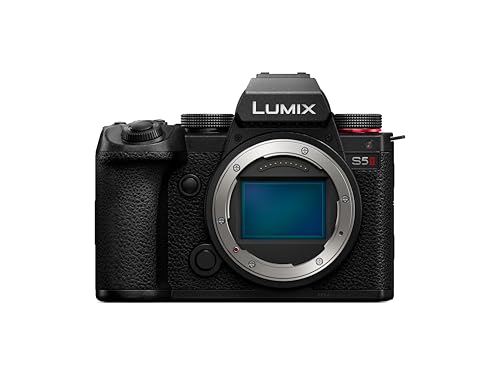
- Panasonic’s LUMIX S5II leads for its clean HDMI feed, full-frame low-light strength and unlimited-feel live behaviour.
- Sony’s Alpha 7 IV serves dim sanctuaries and evening events where light cannot be added.
- A dedicated SDI camcorder, covered as a prose-only pick, remains the zero-adapter answer for long cable runs.
- Lock every camera to the house format and frame rate before show day; the switcher rewards uniformity.
- Test the whole chain — camera, cable, converter, input — at rehearsal, never first at the event.
In this guide
Quick Picks
| Camera | Badge | Why it earns its place |
|---|---|---|
| Panasonic LUMIX S5II | Best main feed camera | Clean full-frame HDMI output, strong low light and cooling that suits long services. |
| Sony Alpha 7 IV | Best for dim venues | Full-frame sensitivity for sanctuaries and halls where the lighting cannot change. |
| Canon EOS R6 Mark II | Best close-up position | Confident autofocus and pleasing skin tones for the speaker close-up the audience watches most. |
| Canon EOS R10 | Best budget position | An affordable clean-feed body for the wide shot, choir angle or second room. |
| Nikon Z30 | Best compact spare feed | Small, simple and dependable for overflow rooms, interviews and backup angles. |
| A Dedicated SDI Camcorder | Best for long cable runs | Native SDI output and production manners, bought by class rather than badge. Prose-only. |
How Did We Choose Cameras to Feed a TC460?
Our first test was output hygiene. A live feed camera must deliver a picture with nothing on it: no battery icon, no recording border, no autofocus rectangle announcing itself to the entire congregation. Every pick below can present a clean output with information displays directed to its own screen instead, and can stay awake on mains power for the length of a service, a school day of assemblies or a tournament — because a camera that sleeps during the sermon is a sermon illustration nobody wanted.
The second test was format discipline. The TC460’s inputs expect the production’s chosen format, and they reward cameras that can be set once — the house resolution and frame rate, fixed white balance, manual exposure — and then left alone by volunteers whose real job is switching, audio or graphics. Cameras whose automatic habits wander visibly on air, hunting focus across a still speaker or breathing exposure as clouds cross a window, were marked down regardless of their stills pedigree.
Third came the physical chain. Feeds travel: across sanctuaries, along gymnasium walls, through floor pockets and patch panels. We weighed connector sense, the practicality of HDMI-to-SDI conversion where the run demands SDI, and how each body behaves locked on a tripod for hours — heat, fan noise near microphones, and the dignity of a tally-free existence. Finally, we considered the humans: most TC460 crews are volunteers or students, so a camera whose menus a trained sixteen-year-old can set correctly scored above one that needs a broadcast engineer to babysit.
What Signal Does a TC460 Actually Want?
Understanding the destination prevents nearly every bad purchase in this category. The TC460 belongs to the generation of TriCasters built when HD production meant interlaced or progressive signals at television frame rates, delivered principally over SDI, with component and composite still present for legacy sources. A modern mirrorless camera speaks HDMI. Between the two sits the working reality of most TC460 installations: a quality HDMI-to-SDI converter at the camera or in the rack, a cable run rated for the distance, and a production format chosen once — very commonly 1080i or 720p depending on the house — to which every source conforms.
This has three consequences for camera shopping. First, a camera’s maximum recording resolution is nearly irrelevant here; what matters is the resolution and frame rate of its live output, and whether that output stays clean and continuous. Second, frame-rate agreement is sacred: a camera feeding a mismatched rate forces the switcher to cope, and the coping is visible as judder or worse. Set every camera to the house standard and verify it on the multiviewer, not on the camera’s own cheerful screen. Third, audio usually should not ride the camera feed in a TC460 production — the house mixer owns audio, and embedded camera audio invites sync and level surprises. Feed the switcher picture; let the sound desk be the sound desk.
There is one more inheritance from that era worth respecting: interlaced delivery forgives nothing about motion artefacts introduced upstream, so pans should be slow, zooms deliberate and camera movements rehearsed rather than discovered. A feed camera with smooth handling and predictable response is therefore not a luxury in this chain — it is how the final picture keeps its composure when the programme moves. Operators who learned their craft on broadcast cameras will recognise the discipline instantly; newcomers learn it from the first recording they review honestly.
None of this makes the TC460 a problem to apologise for. It makes it a known destination, and known destinations are what good purchasing serves. The cameras below were each imagined already installed: on the tripod, in the format, feeding the input, while a volunteer switches the show.
What Are the Best Cameras for a TriCaster TC460?
Five verifiable bodies for the positions most TC460 productions actually run, plus the camcorder class that still wins one specific argument.

Panasonic LUMIX S5II — Best main feed camera
If one camera in this guide was practically designed by the needs of a switcher production, it is the S5II. Panasonic built its recent reputation on video seriousness: clean HDMI output, a cooling fan that lets the body work through long events without thermal drama, and image stabilisation and autofocus that behave like production tools rather than photography features. As the main feed of a TC460 show — the camera the director lives on, the one framing the speaker, the stage or the lesson — it offers the calm, continuous competence that live production values above brilliance.
The full-frame sensor earns its place in the venues TC460s actually inhabit. School auditoriums, sanctuaries and community halls share a lighting philosophy best described as whatever was installed decades ago. The S5II’s low-light strength means the main camera holds a clean, dignified picture at those light levels without pushing gain into noise, and its colour renders skin tones kindly under mixed house lighting — the exact conditions under which lesser feeds turn speakers waxy or green.
Operationally, it is a set-and-trust body. Exposure and white balance lock down manually and stay locked; the output stays clean; the fan keeps its voice low enough for quiet rooms; and on mains power it will outlast the longest ceremony on the calendar. Paired with a sensible zoom covering the main position’s range, it becomes the closest thing this category has to an install-and-forget studio camera, while remaining a superb stills and video body if the organisation ever points it at other work.
Its costs are the full-frame system’s costs: lenses are a real investment, the body is more camera than a wide safety position needs, and its menus reward a proper setup session rather than improvisation by a new volunteer. Assign it to the main position, have one competent person configure it, tape the settings card to the tripod, and it will repay the care every single show. In a TC460 chain, the main camera is the programme; this is the body we would trust with the programme.
- Format: full-frame mirrorless, L mount
- Feed: clean HDMI output for conversion to SDI
- Cooling: fan-equipped for long events
- House role: the main camera position
- Setup: configure once, card the settings
Strengths
- Long-event stamina without thermal anxiety
- Full-frame dignity in dim house lighting
- Production-minded video behaviour throughout
Trade-offs
- Lens investment matches its ambition
- More camera than a safety wide shot requires
- Menus ask for one competent setup session
Its characteristic show is a Sunday in a mid-sized sanctuary: pre-service music, a reading, a forty-minute message, a baptism, closing music — one continuous feed, framed on the speaker, never once the subject of a whispered conversation in the control room. In live production, the highest praise a camera earns is silence about itself, and this one collects that praise weekly.
School studios report the same temperament across a different calendar: morning announcements, an assembly, an evening concert, the body still composed at the final curtain. Equipment that does not accumulate drama across a long day becomes the equipment volunteers stop worrying about — and a crew that is not worrying about cameras is a crew watching the show, which is where their attention was always supposed to be.
Best for: the main position in worship, school and community TC460 productions. Not suited for: tight budgets or positions needing only a static wide view

Sony Alpha 7 IV — Best for dim venues
Every TC460 operator knows the venue: the beautiful old sanctuary with candlelight ambitions and filing-cabinet light levels, the evening awards hall, the theatre space where the lighting designer answers to art rather than to cameras. The Alpha 7 IV is the pick for those rooms. Its full-frame sensor gathers light with an ease that changes what is possible on the multiviewer — faces stay clean, colours stay honest, and the feed holds together at sensitivities that would turn smaller sensors into impressionist paintings.
Sony’s autofocus is the second half of its case. In a dim venue with a moving speaker — a pastor who walks the platform, a lecturer who works the stage — focus that tracks the face reliably is the difference between a feed the director can take at any moment and one they take only when desperate. The A7 IV’s tracking, set up once and left to its work, gives the close or medium position a professional confidence that volunteers particularly appreciate, because it forgives the divided attention that live shows impose on everyone.
Its hybrid nature also serves the organisations that own TC460s, which rarely own equipment for one job only. The same body that feeds the switcher on Sunday photographs the building project on Monday and records interviews on Tuesday, at a quality that justifies its shelf space to any finance committee. In small operations, versatility is not a bonus feature; it is how equipment gets approved at all.
Balance the praise with its working notes. Full-frame lenses are a budget conversation; the body’s considerable menu depth means the feed settings — clean output, fixed format, locked exposure — should be configured by whoever owns the setup card, not rediscovered weekly; and like all mirrorless bodies it reaches the switcher through conversion, so cable and converter quality share responsibility for its picture. None of this is unusual, and in a dim venue none of it matters beside the central fact: this camera sees in the dark your audience sits in, and shows it to them cleanly.
- Format: full-frame mirrorless, E mount
- Feed: clean HDMI output, conversion to SDI as needed
- Specialty: low-light sanctuaries and evening halls
- Autofocus: face tracking for moving speakers
- Second life: stills and interviews all week
Strengths
- The cleanest picture when light cannot be added
- Tracking focus that rescues moving speakers
- Earns its keep across the organisation’s week
Trade-offs
- Full-frame glass is a serious line item
- Menu depth demands a written setup
- Conversion hardware shares its reputation
Its signature production is the candlelit service: a room the congregation experiences as glowing darkness, rendered by this feed as warmth with faces — the one camera position the director trusts when the house lights fall and the candles take over. Viewers at home write in about evenings like that. They never mention the camera, which is exactly the point.
Evening graduations make the same case in secular dress: a stage lit for the audience’s eyes, a procession of proud, moving subjects, and a feed that stays composed while other positions soften. When the venue’s light belongs to the occasion rather than the broadcast, sensitivity is not a luxury specification — it is the whole job description, and this body fills it.
Best for: dim sanctuaries, evening events and theatres feeding a TC460. Not suited for: buyers avoiding full-frame lens costs

Canon EOS R6 Mark II — Best close-up position
Ask a director which feed the audience actually watches and the answer is the close-up: the speaker’s face, the soloist, the graduate crossing the stage. That is the R6 Mark II’s assignment in this guide, and it suits the role the way a portrait lens suits a face. Canon’s colour science has a long-standing reputation with skin, its autofocus finds and holds eyes with a tenacity that flatters everyone, and the full-frame sensor keeps the picture composed in the mixed, imperfect light of real halls.
The close-up position makes specific demands beyond sharpness. It is reframed often — a volunteer riding the zoom as a speaker moves, tightening for emphasis, easing wide for a gesture — so the camera and lens must respond smoothly and the feed must never betray a hunting focus at the very moment the director takes it. The R6 Mark II’s tracking, locked to the subject’s face, turns that risky position into the show’s most reliable asset. Directors build their confidence around the close-up; this body justifies the confidence.
It is also the pick most likely to be borrowed, because the same qualities serve the organisation’s photography: the confirmation class, the team portraits, the annual dinner. A body that is the close-up camera on show day and the house camera all week spreads its cost across the calendar in a way committees understand instinctively.
Its notes of caution are practical. It is priced as the serious body it is; its considerable capability invites feature wandering, so the setup card discipline matters — the feed configuration is a fixed recipe, not a weekly exploration; and its place is a staffed position with a tripod and an operator, not a forgotten corner. Deployed as intended, it gives a TC460 production the one thing audiences remember: a face they felt they were in the room with.
- Format: full-frame mirrorless, RF mount
- Feed: clean HDMI output for the switcher chain
- House role: the staffed close-up position
- Autofocus: eye tracking that holds moving speakers
- Colour: skin tones with a long-earned reputation
Strengths
- The face camera audiences unconsciously judge
- Focus tenacity during reframed, moving shots
- Doubles as the organisation’s best stills body
Trade-offs
- A serious price for a single position
- Feature depth needs the setup card’s discipline
- Wants an operator, not a corner
Its representative moment is small and decisive: a speaker, mid-message, steps away from the lectern into unplanned light to make the point that matters most — and the close-up simply follows, eyes sharp, exposure composed, the director taking the shot without a flicker of doubt. Live television is a chain of such moments; the close-up either keeps them or loses the show’s heart.
Weddings and memorials streamed from houses of worship make the same demand in a tenderer key: faces carrying emotion, in imperfect light, unreproducible. The camera that holds those faces kindly is remembered by families who never learn its name, which is the correct relationship between equipment and occasion.
Best for: the staffed speaker close-up in TC460 productions. Not suited for: unstaffed static positions or minimal budgets

Canon EOS R10 — Best budget position
Not every input on a switcher deserves a flagship. The wide safety shot, the choir angle, the classroom overflow camera, the fixed view of the stage that the director uses to breathe between close-ups — these positions need a clean, reliable feed at a price that lets a small operation actually fill its inputs. The R10 is that camera: a compact APS-C body with Canon’s approachable handling, a clean output for the chain, and a purchase price that changes the conversation from whether to which semester.
Its virtues in position are specific. It is light enough for the mounts and clamps that odd corners demand; its autofocus, while a generation simpler than the R6’s above, handles the largely static framings of safety positions without fuss; and its image is more than adequate at the formats a TC460 distributes — remember, the switcher itself sets the ceiling here, and the R10 clears that ceiling with room to spare. Spending flagship money to feed a 1080i-era input is a category error this pick exists to prevent.
For school programmes the R10 carries a second argument: it is a teaching camera. Students learn real photographic craft on it between productions — interchangeable lenses, manual exposure, deliberate focus — and the studio’s feed camera on Friday is the photography class’s instrument on Monday. Equipment that educates while it serves is the easiest funding case in any school, and this body makes it fluently.
Keep its expectations honest. Its smaller sensor works harder in dim venues, so give it the better-lit positions; its build assumes gentler handling than a touring production provides; and its video feature set, while ample for a fixed feed, is not the main-position arsenal the S5II brings. None of that touches its assignment. A switcher with four honest inputs outperforms a switcher with one magnificent camera and three empty sockets, and the R10 is how honest inputs get afforded.
- Format: APS-C mirrorless, RF mount
- Feed: clean HDMI output, converted as the run requires
- House role: wide, safety and secondary positions
- Value: fills inputs without flagship spending
- Teaching: a real craft camera for students
Strengths
- The price that completes a multi-camera plan
- More than clears the switcher’s format ceiling
- Light enough for awkward mounts and corners
Trade-offs
- Dim venues expose its smaller sensor
- Build suits care, not touring abuse
- Not the main position’s feature set
Its typical triumph is invisible, which suits a safety camera: a full school concert where the director cuts to its wide shot a dozen times — full stage, full choir, context restored — and no viewer ever thinks about the camera that provided the evening’s geography. Geography is a gift; audiences only notice its absence.
Overflow rooms are its other quiet ministry. The camera feeding the fellowship hall screen or the cry room monitor rarely gets thanked, yet it is the difference between a community included and a community turned away. An affordable, dependable feed makes inclusion a line item any organisation can approve.
Best for: wide, safety, overflow and teaching positions. Not suited for: the main camera in a dim sanctuary

Nikon Z30 — Best compact spare feed
Every production needs a camera for the jobs nobody planned: the interview in the side room, the second angle added on the morning of the event, the feed that replaces a failed unit while the show continues. The Z30 is this guide’s utility player — a small, creator-minded APS-C body that sets up fast, feeds cleanly, and asks so little of its operator that a volunteer can be briefed during the pre-show huddle and run it creditably by the first song.
Its size is a tactical asset. It fits the clamp on the balcony rail, the small tripod in the classroom corner, the shelf position in the studio that a full body would crowd. For organisations whose TC460 lives in a multipurpose room rather than a dedicated studio, a camera that stores in a drawer and deploys in minutes matches the building’s reality. Its flip screen serves the solo operator filming an interview feed, and its menus — Nikon’s clearer, calmer design — suit the occasional user who touches the camera monthly rather than daily.
Picture quality at switcher formats is comfortably sufficient, and its autofocus handles the interview and presentation framings that make up its assignments. Battery and mains arrangements follow the same house rules as the other bodies: powered for the show, formatted to the house standard, checked on the multiviewer before doors.
Its limits are a small body’s limits: low light is managed rather than mastered, the lens range for the position must be chosen with the room in mind, and it is nobody’s main camera for a flagship production. But productions are ecosystems, and the spare that always works is worth more than the star that sometimes cannot attend. The Z30 is the camera that makes a TC460 rig feel complete — the answer to the sentence every director eventually says: we need one more angle.
- Format: APS-C mirrorless, Z mount
- Feed: clean HDMI output for ad-hoc inputs
- House role: spare, interview and overflow angle
- Size: drawer-stored, minutes to deploy
- Handling: calm menus for occasional operators
Strengths
- The extra angle, always available
- Briefs a volunteer in one huddle
- Fits positions larger bodies crowd out
Trade-offs
- Low light is handled, not conquered
- Not a flagship main-position body
- Lens choice must respect the room
Its finest hour in most facilities arrives unplanned: a guest speaker, a side-room testimony, a children’s segment moved at the last minute — and the little Nikon, carried in one hand with a clamp and a cable, is feeding the switcher before the schedule’s ink is dry. Directors remember which equipment saved a show. This one builds its reputation in rescues.
It also lowers the stakes of experimentation. A student crew can try the balcony angle, the stage-left view, the reaction shot, because the spare body makes curiosity cheap. Productions learn by trying positions; a rig with no spare is a rig that stops learning.
Best for: spare feeds, interviews and improvised angles. Not suited for: main-position duty in dark venues
A Dedicated SDI Camcorder — Best for long cable runs
This pick carries no link, because it names a class rather than a model — and for one specific problem, the class beats every body above. When a camera position sits a long way from the control room — the back of a large sanctuary, the far end of a gymnasium, a stage in another part of the building — the signal’s journey becomes the story. SDI was engineered for exactly those journeys: one robust cable, locking connectors, distances that HDMI cannot contemplate without help. A dedicated camcorder with native SDI output speaks to the TC460 in its own language, with no converter to power, mount or blame.
Beyond the connector, camcorders bring production manners that stills-shaped bodies imitate imperfectly: servo zooms that ease like a broadcast lens, built-in neutral-density filtration for bright stages, handles and ergonomics designed for a tripod pan that lasts a whole song, and an operational philosophy in which the device exists only to feed and record video. For a staffed main or roaming position on a long run, those manners are not nostalgia; they are the correct engineering for the job.
Why prose-only, then? Because the right camcorder for a given facility depends on its existing lens, battery and media ecosystem, on the used market’s local weather, and on whether the organisation values matching its other cameras — variables a buying guide cannot honestly collapse into one badge. Buy by specification instead: native SDI output, the house format among its standards, clean continuous operation on mains power, and a zoom range measured against your room’s actual distances.
Its costs are real and should be weighed without romance. A good SDI camcorder concentrates its budget in one specialised tool that will never take a family photograph; its sensor may be smaller than the full-frame bodies above, trading their low-light grace for its operational depth; and the category evolves slowly, which cuts both ways. But when the cable run is long and the position is staffed, this remains the answer that broadcast engineers give without hesitating — and a TC460, a broadcast-hearted machine, recognises its own kind.
- Format: dedicated camcorder, class pick
- Feed: native SDI, no conversion in the chain
- House role: distant, staffed positions
- Ergonomics: servo zoom and production handling
- Buying: by specification and house ecosystem
Strengths
- Long runs on one honest cable
- Handling designed for live camera work
- Nothing between camera and switcher to fail
Trade-offs
- A single-purpose tool at a serious price
- Smaller sensors than the full-frame picks
- The right model depends on your facility
Its emblematic installation is the cathedral-scale room: a hundred feet of cable between the rear camera platform and the rack, through conduit laid when the building was wired for exactly this, and a picture that arrives with the same composure as the camera beside the switcher. Distance is either a design parameter or a recurring emergency; native SDI makes it a parameter.
Facilities inheriting a TC460 often discover the building already agrees with this pick — SDI runs in the walls, plates on the sanctuary floor, a patch panel waiting. In those rooms the camcorder is not the old-fashioned choice; it is the choice the building was literally built around, and fighting the architecture with converters is the eccentric option.
Best for: long cable runs and staffed positions in wired venues. Not suited for: buyers wanting one camera for stills, video and feeds alike
How Do the Six TC460 Feed Options Compare?
| Camera | Format | Feed path | Best position |
|---|---|---|---|
| Panasonic LUMIX S5II | Full-frame mirrorless | HDMI via converter | Main camera |
| Sony Alpha 7 IV | Full-frame mirrorless | HDMI via converter | Dim venues |
| Canon EOS R6 Mark II | Full-frame mirrorless | HDMI via converter | Speaker close-up |
| Canon EOS R10 | APS-C mirrorless | HDMI via converter | Wide and safety |
| Nikon Z30 | APS-C mirrorless | HDMI via converter | Spare and interview |
| A Dedicated SDI Camcorder | Camcorder | Native SDI | Long runs |
Notice, too, what the table does not contain: no camera is asked to be two positions at once, and no position depends on a feature the switcher cannot use. That restraint is deliberate, and it is the cheapest reliability a facility can buy.
The table’s pattern is the guide’s argument in miniature: five flexible mirrorless bodies cover the positions inside a normal room, and one specialised class covers the distance problem. Most facilities need three or four of the six; the skill is matching bodies to positions rather than buying a favourite camera four times.
How Do You Set Up a Camera Feed the Switcher Will Love?
Methodically, once, and then never improvisationally again. Begin at the switcher: confirm the production’s format on the TC460 and write it on the setup card, because every camera decision descends from that line. Set each camera to output that format, disable every on-screen display element in the feed, fix white balance to a value chosen under the room’s real lighting, and set exposure manually against the multiviewer with the room in show condition — house lights as they will be, stage dressed, windows in their service state rather than their rehearsal state.
Then secure the unglamorous layer: mains power for every body, cables dressed and taped so a procession cannot unplug a sacrament, converters mounted where they cannot be kicked, and each input labelled at both ends of its run. Focus the staffed positions, mark zoom and focus positions on the tripods with tape for the recurring framings, and record a minute of the full chain to check for the faults that live pictures hide — a drifting sync, a converter’s colour shift, a hum that means an audio path exists where none was invited. Finish by photographing every camera’s settings screens for the setup file. The next volunteer inherits your diligence instead of your memory.
What Lenses Belong on Feed Cameras?
The lens question in a switcher production is really a distance question. Measure from each position to its subject in the room’s real geometry — platform depth, balcony throw, the gymnasium’s long diagonal — and choose focal lengths that frame the subject generously at the middle of the zoom range, not at its desperate end. A main camera that lives mid-zoom has room to tighten for emphasis and widen for the unplanned group; a camera at its telephoto limit has nowhere to go when the show moves. Standard zooms cover most sanctuary and studio positions; the distant rear position is where longer glass — or the SDI camcorder’s built-in reach — earns its budget.
Feed lenses also live a different life from photographic ones. They are focused once and ridden gently, exposed manually under house light, and valued for smoothness over character: a zoom that creeps when pointed down, breathes visibly during focus, or hunts for its aperture will announce itself on air. Parfocal behaviour — holding focus through a zoom — is a broadcast virtue worth asking about explicitly, because the close-up operator’s whole technique assumes it. None of this requires exotic glass; it requires matching ordinary glass to measured distances, which is why the tape measure appears in this guide more often than any brand name.
How Do You Keep a TC460 Rig Reliable for a Decade?
By treating reliability as a maintenance liturgy rather than a purchase. The rig gets a pre-show checklist that any trained volunteer can run in fifteen minutes: power at every body, formats confirmed on the multiviewer, a recorded minute reviewed, cables inspected where feet and processions cross them. Quarterly, the deep version: connectors cleaned and reseated, firmware and settings audited against the setup file, spare cables and one spare converter on the shelf where the show’s survival expects them. Productions rarely die from exotic failures; they die from a two-dollar connector that nobody owned a spare of.
Documentation is the other half of longevity, because volunteer organisations outlive their experts. The setup file — photographs of every settings screen, the format decision and its reasoning, the cable map, the supplier of the odd adapter — converts one person’s knowledge into the institution’s property. The TC460 itself is proof of this philosophy: a machine still serving because its operation was understood and written down. Cameras chosen for standard manners and locked settings join that tradition; cameras dependent on one enthusiast’s memory leave with the enthusiast.
What Mistakes Do TC460 Productions Make With Cameras?
The first is shopping by recording specification — paying for resolutions the switcher cannot accept while neglecting the clean output and stamina it actually needs. The second is format anarchy: cameras arriving at inputs in a mixture of rates and resolutions, each individually excellent, collectively a multiviewer of quiet compromises. The third is the rehearsal skipped — the chain tested for the first time in front of the audience it serves, with a converter, cable or setting auditioning live. Each of these mistakes is a planning failure that better cameras cannot fix, which is why this guide spends as many words on the chain as on the cameras.
The fourth mistake is subtler and sadder: letting one magnificent camera excuse an unfinished rig. A production is its weakest input at the moment the director needs that input. The budget that buys one flagship and leaves two positions empty usually serves the audience worse than the budget that buys three honest feeds — a truth the picks above are priced to make actionable.
How Do You Plan Camera Positions Around a Fixed Switcher?
Start from the programme, not the room’s corners. List the moments the production must never miss — the speaker’s face, the full stage, the baptismal font or the trophy table, the audience’s reaction at the one emotional peak — and give each moment a camera whose position serves it, in priority order, until the inputs run out. This sounds obvious and is routinely inverted: facilities place cameras where mounting is easy and discover during the show that the easy places see everything except the programme. A TC460’s inputs are a fixed budget; spend them on moments.
Then walk the sightlines as the camera, at the camera’s height, during a real rehearsal with people in the seats. The standing congregation that a balcony camera clears in an empty room becomes a forest of heads at the chorus; the aisle position that framed the procession perfectly discovers the usher’s traditional standing place. Positions also carry cable consequences — every metre of run is a decision between conversion, conduit and compromise — so the position plan and the signal plan are one document, drawn together, tested together.
Finally, plan the failure positions. When the main camera’s operator is sick, which body covers the speaker? When a feed dies mid-show, which input does the director live on, and has anyone practised the show that way? A rig whose backup geometry is rehearsed shrugs off the failures that end less honest productions. The picks in this guide were partly chosen for this interchangeability: similar manners, shared house settings, no prima donnas.
How Should Recording and Streaming Be Handled Downstream?
The TC460 sits in the middle of the chain, and the cameras’ job ends at its inputs — but buying decisions improve when the whole journey is kept in view. The switcher’s programme output is what gets recorded and streamed, at the production’s chosen format, so the audience’s experience is governed by the weakest link among camera, conversion and switching. This is liberating news for camera budgets: beyond the switcher’s ceiling, additional camera resolution is invisible to every viewer, forever. Money past that ceiling belongs in light, lenses, audio and the second honest camera.
It also means the archive inherits the production’s discipline. A show switched from clean, format-locked feeds records as a programme a volunteer can upload the same evening; a show assembled from wandering sources needs rescue work nobody has time for. Churches, schools and community stations live on volunteer hours, and the kindest equipment decision is the one that deletes post-production. Cameras that behave on the day are therefore worth more to these organisations than cameras that excel in a studio test, and this guide’s rankings quietly encode that kindness throughout.
Why Does Lighting Outrank Cameras in a Switcher Room?
Because the switcher multiplies whatever the cameras are given, and cameras given flat, mismatched light return flat, mismatched feeds no director can cut between gracefully. The most common TC460 picture problem is not resolution at all; it is three cameras white-balanced to three different rooms — one warm from the tungsten wash, one cool from the windows, one neutral and lonely — so every cut changes the speaker’s complexion. The cure costs a fraction of any camera in this guide: agree the white balance under show lighting, add light to faces before adding sensitivity to sensors, and shade the window that turns the afternoon rehearsal into a different production from the morning’s.
Even modest additions transform feeds. A single soft source aimed at the lectern lifts the close-up from surveillance to portraiture; raising house light one notch during streamed events lets every camera in the rig work in its comfortable range instead of its desperate one. Organisations routinely discover, after one lighting experiment, that their old cameras were better than they believed — and that the new cameras they then buy perform beyond the brochure, because the room finally lets them. Buy light first where light is the deficit; this guide’s picks assume a room that has at least begun that conversation.
How Do You Train Volunteers to Run These Cameras?
With the setup card, the rehearsal and a deliberate ladder of responsibility. The card reduces each position to its liturgy: power, format check, framing marks, the two adjustments permitted during the show and the long list of things never to touch. New operators start on the safety wide — the position where stillness is excellence — graduate to the spare angle, and earn the close-up only after a rehearsal under the director’s eye. This ladder is not gatekeeping; it is how a sixteen-year-old becomes, by the third month, the person the director trusts with the face.
Training also means teaching the chain’s humility: what a converter does, why the multiviewer outranks the camera’s own screen, how to report a problem in the language the director needs — input number, symptom, when it started. Crews trained this way stop fearing the equipment, and unafraid crews make brave, attentive television. The cameras above were chosen to be teachable: consistent manners, forgiving automation where it belongs, and no hidden behaviours waiting to surprise a learner mid-service.
Frequently Asked Questions
Can a TC460 accept a modern mirrorless camera directly?
Through the right chain, yes: the camera’s HDMI output is converted to SDI at the appropriate format, and the switcher sees a source it understands. The converter and cable are part of the camera purchase in any honest budget.
Which format should the whole production use?
The one your distribution needs and every source can supply — many TC460 houses run 1080i or 720p. Choose once, set every camera to it, write it on the setup card, and treat deviations as faults, not preferences.
Should camera audio feed the switcher?
Almost never in this class of production. The house mixer owns audio; camera feeds carry picture. Embedded camera sound invites level and synchronisation surprises that a separate audio path avoids by design.
How long can an HDMI run be before SDI conversion is needed?
Short, in practice — beyond a modest room-length run, convert to SDI near the camera and let SDI do the travelling. When in doubt, the distance test happens at rehearsal, at full format, not by optimism.
Do these cameras need special power arrangements?
They need mains power for show duty: dummy batteries or adapters appropriate to each body, dressed safely. A feed camera running on a consumer battery is a countdown the director did not agree to.
Is it worth replacing the TC460 instead of buying cameras?
That is a capital decision beyond this guide’s scope, but note the asymmetry: cameras bought for clean output and standard formats serve any future switcher too, while the TC460 keeps earning from every honest feed you give it today.
Final Recommendation
Feed the switcher you own with the discipline it rewards. Make the Panasonic LUMIX S5II the main camera for its stamina and clean full-frame feed; give dim venues to the Sony Alpha 7 IV and the close-up to the Canon EOS R6 Mark II, whose faces audiences remember; complete the rig honestly with the Canon EOS R10 on wide and safety duty and the Nikon Z30 as the ever-ready spare; and where distance rules, respect the dedicated SDI camcorder’s native answer. Lock every body to the house format, power everything from the wall, test the chain at rehearsal — and the TC460, that supposedly ageing machine, will switch shows that look entirely current, because in live production the picture is only ever as old as its cameras.
One practical footnote before the verdict: label everything as if a stranger will run the show next week, because eventually one will. Input numbers on both ends of every cable, the format on a card at the switcher, the setup file in a shared folder and a printed copy in the rack — these courtesies to your future colleagues are worth more than any single upgrade this guide could name, and they cost an afternoon.
A closing word for the volunteers and students who will actually run these rigs: the audience never sees your switcher, your converters or your setup cards. They see faces, clearly, at the moments that matter, in a programme that never stumbles over its tools. That invisibility is the craft. Choose cameras that disappear into it.
What Should a Small Facility Buy First, Second and Third?
Sequence matters more than selection when budgets arrive in annual slices. First, buy the main camera and its conversion chain properly — the S5II position, powered, formatted, rehearsed — because one excellent, dependable feed transforms every show immediately, even a one-camera show. Second, buy the wide safety position, the R10’s assignment, because the wide shot is what turns a feed into a production: it gives the director somewhere to go, the editor context, and the audience geography. Third, add the close-up or the dim-venue body as your room’s light dictates, and let the spare come last, when the rig’s shape is proven and its gaps have names.
Resist the symmetrical temptation to buy three identical mid-range bodies in one order. Positions have different jobs, and a rig assembled by job — stamina at main, thrift at wide, sensitivity where darkness lives — outperforms a uniform fleet at the same total spend. The TC460 does not care that its inputs match; it cares that each one is right.
Related Guides
Production teams can continue with our notes on building a volunteer-friendly live production setup, read clean HDMI and SDI signal chains explained, or browse cameras for streaming church and school events.


