ilcastellomenu.com is reader-supported. When you buy through links on our site, we may earn an affiliate commission.
Where to Buy a Camera That Sells Rooms, Not Just Records Them
Listing photographs are a property’s first viewing, and most buyers hold it on a phone, at speed, with a thumb hovering over the next listing. The best digital cameras for real estate agents are therefore judged by a sales ledger, not a photographic one: how wide the lens can honestly show a small room, how gracefully the files handle a sunlit window beside a shadowed corner, how quickly bracketed exposures blend into a natural-looking interior, and how fast finished photographs reach the listing portal — because a home photographed on Tuesday and published on Friday has lost three days of the market’s freshest attention. This guide ranks five verified bodies, plus the prose-only ultra-wide lens that matters more than any of them, by their fitness for that commercial workflow.
Agents photograph under constraints professionals rarely face: no control over the property’s readiness, mixed light from every bulb the owner owns, rooms too small for the tripod the shot deserves, and a schedule measured in listings per week rather than masterpieces per month. Every judgement below was made inside those constraints. A camera that needs a perfect house to perform is, for this reader, a decoration.
Key Takeaways
- The ultra-wide lens, not the body, is the decisive purchase for interiors; budget for it first.
- Exposure bracketing and honest HDR blending solve the window-versus-room problem that defines property photography.
- Vertical lines must stay vertical: levelling aids, tripod discipline and correction in editing protect a listing’s credibility.
- Turnaround speed is a feature — same-day photographs outsell perfect photographs delivered next week.
- Consistency across a whole listing, room to room, builds the trust that gets buyers through the door.
- Buy for the workflow you will actually repeat fifty times a month, not the showcase home you photograph twice a year.
In this guide
Quick Picks
| Camera | Badge | Why it earns its place |
|---|---|---|
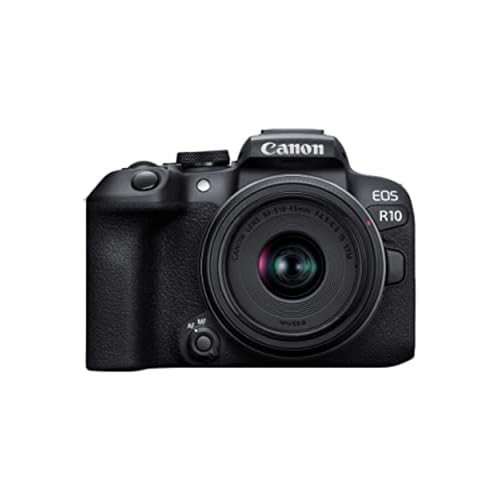
| Canon EOS R10 | The listing-day sprinter | Fast, light and quick to bracket, with Canon colour that makes interiors feel welcoming. |
| Canon EOS R50 | The agent-friendly starter | Guided operation and painless phone transfer for agents who photograph their own listings. |
| Sony ZV-E10 II | The video-tour hybrid | Stills plus polished walkthrough video from one body, on the deepest wide-lens catalogue around. |
| Panasonic LUMIX S5II | The luxury-listing full frame | Full-frame dynamic range for difficult light in premium homes, with files that grade beautifully. |
| Nikon Z50 II | The dependable second system | Honest colour, a growing ultra-wide range and handling a busy agent learns in a weekend. |
| An ultra-wide zoom lens for your mount | The prose-only room stretcher | The single optic that decides whether small rooms photograph as homes or as cupboards. |
How Did We Assess Cameras for the Listing Workflow?
Assessment started in the smallest rental bathroom we could find, because that is where property cameras go to die. Each candidate was judged on the geometry problem first: with an appropriate ultra-wide fitted, can it show a compact room’s shape honestly — wide enough to include the room’s story, controlled enough to avoid the funhouse stretching that makes buyers feel deceived at the viewing? Dynamic range came next, tested against the genre’s defining exposure: a dim interior against a blown-out garden window, the frame every listing needs and most cameras fumble.
Workflow speed was timed rather than assumed. Bracketing setup, file writing, wireless transfer to a phone or laptop, and the path into a typical editing-and-upload routine all counted, because an agent’s camera earns money in the hours between the shoot and the portal. Bodies that buried bracketing in menus, or transferred files at a crawl, lost marks that no sensor could recover. Reliability finished the rubric: dual-purpose agents need a camera that works in a cold empty flat in February and a sun-baked new-build in August, on one battery, without negotiation.
Video was scored as a listing feature rather than a hobby. Portals and social channels increasingly reward walkthrough clips, and an agent’s body that shoots a smooth, wide, well-exposed tour without a second device saves a second purchase and a second learning curve. Stabilisation, autofocus that does not hunt through doorways, and clean performance under mixed household bulbs decided those marks.
Which Are the Best Digital Cameras for Real Estate Agents, Room by Room?

Canon EOS R10 — The listing-day sprinter
Throughput is the R10’s sales pitch, and listings are a throughput business. The body is light enough to carry through a six-property day without shoulder fatigue, fast enough to fire bracketed sequences before the light through a window changes, and simple enough in its control layout that an agent reaches competence in a weekend rather than a season. Canon’s colour does quiet commercial work here: interiors render warm and welcoming without tipping into the orange falseness that makes buyers suspicious, and skin tones — for the agent’s own video introductions — flatter reliably.
Paired with Canon’s compact ultra-wide zoom for the RF mount, the R10 covers the genre’s geometry in a kit that fits a small bag and a smaller budget than any full-frame route. Bracketing is quick to set, the electronic level keeps verticals honest, and files move to a phone or laptop without ceremony for same-day portal uploads. For an agency equipping several negotiators, the arithmetic is compelling: multiple identical kits, one training session, interchangeable results across the whole team’s listings.
- Format: APS-C mirrorless, Canon RF mount
- Speed: fast bursts and quick bracket sequences
- Handling: light body for multi-property days
- Colour: warm, trustworthy interior rendering
- Role: the high-volume listing workhorse
Strengths
- Kit cost and weight suit whole-team deployment
- Bracketing and levelling aids sit close to hand
- Same-day turnaround is genuinely achievable
Trade-offs
- APS-C dynamic range asks for bracketing discipline in hard light
- Single card slot, acceptable at this tier and task
- Premium low-light interiors favour the full-frame pick
New-build show homes are this Canon’s showcase assignment. Developers photograph well when the images feel bright, spacious and new, and the R10’s files — crisp, warm, honestly wide — deliver that brochure feeling without the brochure budget. Agents who win developer instructions on the strength of their marketing will find this little body punches far above its invoice.
High-volume agents and agencies should start the fleet conversation here. Solo agents whose listings skew luxurious, with cavernous rooms and theatrical light, should compare the Panasonic before signing anything.
Best for: busy agents, agency teams and new-build marketing. Not suited for: cavernous luxury interiors as a daily diet

Canon EOS R50 — The agent-friendly starter
Plenty of agents photograph their own listings with a phone and a prayer, and the R50 is the upgrade designed for exactly that person’s patience level. Guided modes explain themselves in plain language, the camera suggests settings for interiors rather than demanding fluency, and the phone app — the bridge between a shoot and a live listing — is among the least temperamental in this roundup. The step up in quality is the point: an ultra-wide lens showing whole rooms, bracketed exposures taming windows, and files with the depth to survive editing, all without a photography course standing between the agent and the portal.
Nothing about the friendliness caps the ceiling for long. The APS-C sensor is a serious instrument shared with more expensive bodies, Canon’s RF ultra-wide options fit the mount directly, and the video side — a front-facing screen, competent autofocus, clean clips — covers the walkthrough tours and agent introductions that modern listings increasingly include. An agent can grow from guided interiors to a deliberate, consistent house style inside this one body, which is more than most starter purchases anywhere in technology can claim.
- Format: APS-C mirrorless, Canon RF mount
- Interface: guided modes in plain language
- Screen: vari-angle for walkthroughs and introductions
- Transfer: fuss-light app connection to phone
- Role: the first real camera for self-shooting agents
Strengths
- Learning curve measured in days, not months
- One body covers stills, tours and social clips
- Compact kit travels between appointments unnoticed
Trade-offs
- Enthusiast controls are present but not surfaced
- Weather sealing is minimal for rainy viewing days
- Heavy daily volume will eventually argue for the R10
Rural and small-town agents deserve the specific nod this Canon earns. Where no staff photographer exists within a day’s drive and every listing is a self-portrait of the agency’s competence, a camera that makes a competent agent look like a marketing department changes the business’s economics outright. The R50’s photographs announce that the agency takes presentation seriously — a signal buyers and sellers both read before they read a word.
Self-shooting agents moving up from a phone should buy this Canon first. High-volume operators and luxury specialists have their own champions elsewhere on this page.
Best for: solo agents, rural agencies and phone graduates. Not suited for: multi-listing daily volume at agency scale

Sony ZV-E10 II — The video-tour hybrid
Listings are becoming moving pictures with photographs attached, and the ZV-E10 II was designed by people who saw that coming. Its creator-first layout — vari-angle screen, tally light, product and presenter modes that translate directly to room tours and agent pieces-to-camera — serves the walkthrough format natively, while the stills side remains a fully capable APS-C system camera. Sony’s autofocus tracks an agent walking through doorways without the focus hunting that makes amateur tours seasick, and the E mount’s ultra-wide shelf is the deepest in this guide, from compact zooms to fast primes for dim hallways.
Agencies building a content operation around listings will appreciate the pipeline thinking. Files transfer quickly for same-day posting, the body doubles as a high-quality webcam for live virtual viewings, and colour profiles can be set once to give every listing from the agency the same bright, consistent signature — branding at the file level. A solo agent with this body, an ultra-wide zoom and a small gimbal owns a marketing studio that fits in a tote bag.
- Format: APS-C mirrorless, Sony E mount
- Screen: vari-angle, forward-facing for presenting
- Focus: tracking that holds through doorways and movement
- Lenses: the widest ultra-wide selection of any mount here
- Role: the hybrid stills-and-tours agency body
Strengths
- Walkthrough video is a native language, not an afterthought
- Lens catalogue answers every interior geometry problem
- Consistent colour profiles brand an agency’s whole portfolio
Trade-offs
- No in-body stabilisation; tours lean on lens or gimbal help
- Menu depth exceeds what a reluctant photographer wants
- No viewfinder for bright-day exterior work
Social-first agencies are this Sony’s natural home. A practice that markets listings through reels, stories and live viewings needs exactly the ZV-E10 II’s blend — stills for the portal, polished motion for the feed, one colour signature across both — and its agents consistently report the tours, not the stills, booking the first appointments. In a market where attention is the scarce resource, the hybrid body is a prospecting tool.
Agencies investing in video-led marketing should build on this Sony. Agents who shoot stills only, and want the simplest possible tool, will be happier with either Canon above.
Best for: video-led agencies, solo content creators in property. Not suited for: stills-only minimalists who resent menus

Panasonic LUMIX S5II — The luxury-listing full frame
Premium homes fail photographically in premium ways: double-height windows beside fireplaces in shadow, glass walls at noon, dark timber kitchens under a single skylight. The S5II’s full-frame dynamic range is the answer this guide recommends for those rooms, because a single frame holds detail at both ends of a contrast range that forces smaller sensors into bracket-and-blend gymnastics — and when bracketing is used, the Panasonic’s files blend with a tonal smoothness that keeps the result believable. Luxury buyers scrutinise photographs the way they scrutinise finishes; files this graceful survive the scrutiny.
Presentation polish extends through the whole Panasonic package. Stabilisation steadies handheld detail shots — the tapware, the stone, the joinery close-ups that luxury listings use as punctuation — the colour grades toward the calm, expensive end of the spectrum, and the L-mount ultra-wide options include optics whose straight-line rendering flatters architecture. For the agent or retained photographer whose listings carry seven figures, this is the body whose files look like the price.
- Format: full-frame mirrorless, L mount
- Range: wide dynamic range for extreme interior contrast
- Stabilisation: strong in-body system for detail shots
- Optics: architecture-grade ultra-wides available
- Role: the premium and luxury listing specialist
Strengths
- Single frames hold windows and shadows together
- Files grade toward a calm, expensive finish
- Detail close-ups stay steady without a second tripod
Trade-offs
- Body and full-frame lenses cost and weigh the most here
- Capability exceeds what standard listings will ever use
- Learning curve is a professional’s, not a beginner’s
Architect-designed homes make the Panasonic’s case in a single frame. Such properties are sold on proportion, material and light behaviour — qualities a photograph must transmit rather than summarise — and the S5II’s files carry the tonal information that lets a distant buyer feel a room’s volume. Agents competing for design-led instructions will find the camera pays for itself in won listings rather than in photographs.
Luxury specialists and retained property photographers should audition this Panasonic first. Volume agents shooting standard stock all day will find the same money buys two Canon kits and a spare.
Best for: luxury listings, architectural homes, retained photographers. Not suited for: high-volume standard stock on a budget

Nikon Z50 II — The dependable second system
Reliability has a colour, and for many working photographers it is Nikon’s honest rendering — skies that stay blue, whites that stay white, interiors that look like the viewing felt. The Z50 II packages that rendering with flagship-borrowed subject detection, a proper viewfinder for bright exterior work, and handling that an agent can learn across one busy weekend and then forget about for years. In a roundup of showier talents, the Nikon is the body that simply never becomes the story, which busy professionals correctly identify as praise.
The Z mount’s ultra-wide story has matured into a genuine asset for property work, with compact wide zooms that suit the body’s scale and keep the whole kit in one small bag. Bracketing, levelling and transfer all behave as a working tool should, and Nikon’s picture controls let an agency lock a bright, consistent listing look into the body itself. For an office standardising its photography, that in-camera consistency across dozens of listings is worth more than a specification advantage nobody’s buyers will ever see.
- Format: APS-C mirrorless, Nikon Z mount
- Colour: honest, trustworthy rendering for interiors
- Viewfinder: a real one, for exteriors and bright days
- Consistency: picture controls lock an agency look in camera
- Role: the set-and-forget professional system
Strengths
- Colour that buyers experience as honesty
- Handling learned once and used unconsciously thereafter
- Compact wide-zoom options keep the kit genuinely portable
Trade-offs
- No in-body stabilisation; video tours want a gimbal
- Lens shelf still smaller than Sony’s or Canon’s
- Screen-centric creators may miss some creator furniture
Lettings and management portfolios are the Nikon’s quiet stronghold. A portfolio photographed over years, by several staff members, in hundreds of ordinary homes needs exactly what this body sells: identical, trustworthy files with no drama and no fashion. Tenants and landlords alike read consistency as competence, and the Z50 II produces it the way a good boiler produces heat — unnoticed, indefinitely.
Agencies standardising a house style should shortlist this Nikon beside the Canon R10. Creators who lead with video should take the Sony’s measure first.
Best for: agencies, lettings portfolios and consistency seekers. Not suited for: video-first marketing operations
An Ultra-Wide Zoom Lens for Your Mount — The prose-only room stretcher
Ask a room full of property photographers what to buy first and the vote is unanimous, which is why this pick is prose-only: the lens is chosen per mount and per budget, and its importance dwarfs the badge on the body. An ultra-wide zoom in the classic property range transforms the genre’s possibilities — whole rooms in one honest frame, small bathrooms rendered as rooms rather than apologies, hallways with a sense of destination. Every body in this guide becomes a professional property tool the day such a lens is fitted, and remains a tourist camera until one is.
Selection within the class follows three rules. Rectilinear rendering matters: the lens should keep straight lines straight, because buyers forgive width but not funhouse walls. Corner behaviour matters: listings are read edge to edge, and smeared corners advertise carelessness. And honesty matters most of all: the widest setting should be used to include a room’s context, never to counterfeit its size, because the viewing will expose the lie and cost the agent the buyer’s trust along with the sale. Bought with those rules, one ultra-wide zoom serves an entire career of listings.
- Type: ultra-wide zoom, chosen per mount (Canon RF, Sony E, Nikon Z, L)
- Rendering: rectilinear, straight lines preserved
- Use: whole-room context at honest widths
- Priority: buy before any second body or accessory
- Role: the genre-defining optic
Strengths
- Unlocks professional results from every body in this guide
- One lens covers nearly every interior an agent meets
- Outlasts several bodies across a career
Trade-offs
- Quality ultra-wides are a serious line item per mount
- Width tempts exaggeration; discipline is the owner’s job
- Filters and hoods behave awkwardly on bulbous front elements
Rental is the intelligent audition for this purchase. A weekend with a mount’s ultra-wide options, spent photographing your own current listings, will identify the right lens with a certainty no review can — and the before-and-after comparison against your phone photographs will end any internal debate about whether the lens matters. Agencies have standardised entire marketing budgets on the strength of that single experiment.
Every agent reading this guide needs this lens on whichever body they choose. There is no second recommendation in property photography that comes close, and no body upgrade that substitutes for it.
Best for: every agent, on every system, without exception. Not suited for: nobody — this is the purchase the genre is built on
How Do the Six Property Solutions Compare Side by Side?
| Camera | Format | Native strength | Listing profile |
|---|---|---|---|
| Canon EOS R10 | APS-C system | Speed and value | High-volume sales |
| Canon EOS R50 | APS-C system | Guidance and simplicity | Self-shooting agents |
| Sony ZV-E10 II | APS-C system | Video tours and lenses | Content-led agencies |
| Panasonic LUMIX S5II | Full-frame system | Dynamic range | Luxury and architecture |
| Nikon Z50 II | APS-C system | Colour consistency | Portfolios and lettings |
| Ultra-wide zoom (prose) | Per mount | Room geometry | Every listing |
Decide by the listings you actually carry: volume rewards the Canons, video rewards the Sony, luxury rewards the Panasonic, consistency rewards the Nikon — and the ultra-wide lens rewards everybody, starting with the first small bathroom.
How Does Bracketing Solve the Window Problem Without Making Rooms Look Fake?
Every interior contains two exposures: the room, lit dimly and warmly, and the view through its windows, lit by the whole sky. A single frame must betray one of them, which is why professional property work brackets — capturing the same composition at several exposures and blending the best regions of each. Done with restraint, the result simply looks like being there, because human eyes adapt across a room in a way a single exposure cannot. The bodies in this guide all bracket quickly and consistently; the craft lies in the blending, where the editor’s loyalty must be to believability rather than to drama.
Restraint has recognisable symptoms when it fails. Interiors that glow like aquariums, skies that turn theatrical, shadows with no darkness left in them — buyers may not name the manipulation, but they feel it, and the feeling registers as distrust of the listing itself. The working rule is to blend until the photograph matches the experience of standing in the room, then stop one step earlier. Windows should be bright, not nuclear; corners should be readable, not floodlit. An agent’s photographs are a promise, and HDR is where the promise is kept or broken.
Why Must Vertical Lines Stay Vertical, and How Do You Keep Them That Way?
Buildings stand upright, and photographs that lean them trigger a subconscious verdict of instability — about the house and, unfairly, about the agent. Walls converge when the camera tilts up or down, so the discipline begins at capture: camera level, at a height that keeps the lens parallel to the walls, using the electronic levels the bodies here provide. Shooting from roughly chest-to-waist height serves most rooms, low enough to include floor and ceiling in balance, high enough to show surfaces rather than stare at them.
Correction software finishes what posture starts, and every listing workflow should include a verticals pass before upload. The order matters: correct geometry first, then judge exposure and colour, because a straightened crop changes the frame’s contents. Photographers who build the pass into a preset — lens profile, vertical correction, a house sharpening recipe — process a whole listing in minutes with identical geometry discipline across every room, which is precisely the consistency buyers experience as professionalism.
What Should Happen in the House Before the Camera Comes Out?
Preparation photographs better than equipment. The thirty-minute routine that precedes professional listing shoots is unglamorous and decisive: lights on everywhere, curtains and blinds set to a consistent story, toilet seats down, bins and cables and pet evidence removed, beds made with hospital intent, kitchen counters cleared to a curated few objects, and cars moved from the drive. A camera records what it finds, and no body in this guide — or any guide — can subtract a laundry basket in post as convincingly as a hand can remove it in life.
Agents add value by teaching sellers this routine in advance, ideally with a one-page checklist sent at instruction. The photographer’s visit then becomes photography rather than housekeeping, the listing’s quality stops depending on the seller’s tidiness instincts, and the resulting consistency across an agency’s whole portfolio quietly becomes its brand. Sellers, shown the difference preparation makes in a comparable listing’s click-through, rarely need persuading twice.
How Do You Photograph Small Rooms Without Lying About Them?
Small rooms are the genre’s examination, and the honest techniques are specific. Shoot from the doorway or the corner that includes the most context; include a door frame or a familiar object — a bed, a bath, a standard chair — that gives the buyer’s eye a scale reference; keep the lens at its honest width rather than its widest desperation; and let one wall leave the frame rather than stretching all four into a ballroom. A small room photographed truthfully still sells, because buyers are purchasing location, price and potential — what it cannot survive is the viewing, where an exaggerated photograph converts interest into grievance.
Height helps where width cannot. A slightly elevated viewpoint shows a compact room’s floor plan — its usable shape — which is information a buyer genuinely needs, while the standard corner shot supplies the feeling. Listings that pair both, feeling and plan, respect the buyer’s intelligence and are rewarded with viewings from people whose expectations the property can actually meet. That matching of expectation to reality is the entire commercial point of the exercise.
What Do Twilight Photographs Do That Daylight Cannot?
Dusk is the property photograph’s glamour hour, and it is a technique rather than a filter. In the brief balance between a darkening sky and a home’s interior lights, a house photographs as a welcome: windows glowing amber, sky a deep blue, garden lights defining the approach. Agents reserve the twilight shoot for listings that merit the extra visit — premium homes, slow movers needing relaunch, anything whose evening character is a selling feature — and the bodies here, with their low-light competence and bracketing, handle the narrow window of opportunity reliably.
Timing is the whole skill. Arrive early, compose in daylight, switch everything on, and shoot through the twenty minutes when interior and exterior brightness cross; the hero frame lives inside a window of minutes, and preparation is what buys a place inside it. A single twilight hero can re-energise a stale listing’s click-through overnight, which makes it among the highest-value photographs an agent can commission or capture.
How Should an Agent’s Editing and Upload Pipeline Be Organised?
Pipeline beats artistry at volume. The agencies with the fastest, most consistent listings run a fixed sequence — ingest with the listing’s reference as the folder name, cull ruthlessly to the portal’s ideal count, apply the house preset (geometry, exposure balance, colour signature), export at the portal’s preferred dimensions, upload, then archive the RAW files against the day the property is re-marketed. Each step is small; the discipline is in never improvising their order. The cameras in this guide support the pipeline with fast, predictable files and in-camera looks that shorten the preset’s work.
Same-day publication should be the pipeline’s design target. Market data in every region repeats the lesson: a listing’s first days attract its most motivated audience, and photographs that arrive late spend the listing’s best attention on an apology. An agent whose camera, preset and portal routine deliver finished photographs within hours owns an advantage competitors consistently underestimate — because it looks like administration, and it is actually marketing.
Where Is the Ethical Line in Property Photography?
Flattery is the job; fabrication is the sackable offence, and the line between them is bright enough to state. Removing a wheelie bin, brightening a dull day, straightening a wall: flattery, universally accepted. Removing a pylon, a neighbouring extension or a damp patch; widening a room beyond its honest geometry; compositing a view the window does not have: fabrication, and in many jurisdictions a regulatory problem as well as a reputational one. Agents should also remember that photographs outlive listings — today’s marketing is tomorrow’s evidence in a dispute about what was represented.
Consistency is the ethical habit that protects an agency daily. A house style applied evenly — same brightness philosophy, same width honesty, same colour signature across every listing — makes each photograph a fair sample of a known standard, and buyers learn to read the agency’s images with calibrated trust. Trust, in a market built on the largest purchase of a person’s life, is the only marketing asset that compounds.
How Do Exteriors and Kerb Appeal Set the Listing’s First Price in a Buyer’s Mind?
The exterior photograph is the listing’s thumbnail, headline and first impression compressed into one frame, and buyers price the whole property from it in about two seconds. Composition therefore follows estate craft rather than convenience: shoot from the angle that shows the home’s best elevation and its setting together, include approach and garden where they add story, keep the verticals true, and choose the hour when the frontage’s light is kindest — which for many houses is not the hour the appointment diary prefers. Agents who revisit a key listing purely for a better exterior light are not being precious; they are repricing the property upward in every buyer’s first glance.
Weather patience belongs to the same discipline. A blue-sky day flatters almost any house, and while schedules rarely permit waiting for one, the exterior is the single frame where a return visit earns its fuel. Where return is impossible, honest brightening in editing is accepted practice — the line, as ever, is that the photograph must remain the house on a plausible day, not a different house in a different climate. The cameras in this guide render skies and foliage with the restraint that keeps such editing believable.
How Do You Handle Mixed Household Lighting Without Turning Rooms Orange or Blue?
Sellers light their homes with whatever bulbs history provided — warm tungsten in the lounge, cold daylight tubes in the kitchen, a greenish compact fluorescent in the hall — and a camera set to one white balance will render the others as colour casts. The professional counters are layered: set a custom white balance per room where the body allows, favour the dominant light source in each space, and turn off the worst offenders when a window can carry the room. Bracketed sets should share one fixed white balance, or the blend will inherit a rainbow.
Editing completes the correction, and consistency is again the goal: a listing whose rooms share one believable warmth reads as a single home photographed once, while a tour through alternating orange and blue rooms reads as several properties stitched together. Agencies build the correction into the house preset — a white-balance starting point and a tint discipline — so every photographer’s output converges on the same interior climate. Buyers never notice this work, which is exactly its purpose: they notice only that the home felt coherent.
What Role Do Elevated Photographs and Floor Plans Play Alongside the Stills?
Context is the information stills alone struggle to give. An elevated photograph — from a pole, an upstairs window or, where licensed and appropriate, a drone — shows the plot, the garden’s true shape, the roof’s condition and the neighbourhood’s character in one honest frame, answering the questions buyers otherwise bring to the viewing. Agents should treat aerial imagery as a specialist, regulated service in many regions rather than a camera accessory, but its partnership with ground-level stills is now standard in premium marketing, and the listings that include both consistently hold attention longer.
Floor plans are the stills’ other partner, and the camera contributes more to them than agents expect. A measured plan with the photographs keyed to it lets a buyer reconstruct the home mentally — the flow from hall to kitchen to garden — and listings with plans generate better-qualified viewings, because mismatched buyers exclude themselves early. Some agents capture room dimensions and reference photographs in the same visit using the camera as the record; the bodies here, with their quick note-friendly handling, serve that dual duty without slowing the shoot.
How Should Seasonal and Weather Challenges Change the Shoot Plan?
Winter tests a property workflow honestly: days shrink, light turns thin and blue, and interiors must carry the listing while gardens sleep. The plan adapts by shooting exteriors in the day’s best middle hours, leaning on bracketing and the bodies’ low-light steadiness inside, and warming the house story — lights on, fires lit where they exist, the home presented as shelter. Summer inverts the problems: harsh noon contrast, blown gardens, airless rooms with curtains drawn against the heat. Early and late appointments, window management and exposure discipline answer most of it.
Rain deserves its reputation as the listing photographer’s tax. Wet drives and pavements can actually flatter an exterior — surfaces deepen, colours saturate — provided the photographer keeps the lens dry and the sky’s gloom honest. Interiors on rainy days photograph cosily with every light on, and more than one agent keeps a list of homes to reshoot on the first fine day, treating weather as a scheduling variable rather than an excuse. The camera’s job through all seasons is identical: be ready, be level, be quick.
When Should an Agent Add Flash to the Ambient Light Instead of Bracketing?
Flash blended with ambient light — practitioners call the blend flambient — is the alternative discipline to HDR, and many retained property photographers prefer it for high-end work. A carefully placed flash exposure lifts the room’s shadows and colour truthfully while the ambient frame preserves the windows and the mood; blended, the result can look cleaner than a five-frame HDR, with whites that stay white and wood that keeps its warmth. The technique demands more skill and a little more kit — a flash, a trigger, occasionally a stand — and repays it in rooms where bracketing struggles, particularly spaces with mixed bulbs whose colour chaos flash simply overrules.
Beginners should master bracketing first, because it needs no extra equipment and forgives more, then add flash room by room as confidence grows. The bodies in this guide support both disciplines without preference — fast bracket sequences for one, reliable flash sync and custom white balance for the other — which is as it should be: the method is a workflow choice, and the camera’s loyalty belongs to the result. Agencies standardising on one method across a team gain the consistency either discipline, practised uniformly, provides.
How Do Rental and Investment Listings Change the Photographic Brief?
Tenants shop differently from buyers, and the photographs should know it. Rental listings reward clarity over romance: the room’s true size, the storage, the condition of kitchen and bathroom, the light at the hours a tenant will actually live there. Investment buyers read photographs as documents — evidence of condition, layout and lettability — and punish gloss that hides information. The same bodies serve both briefs; the difference is the photographer’s shot list and honesty settings, with rental work often shot faster, wider in coverage, and with less staging beyond cleanliness.
Volume landlords and build-to-rent operators add a consistency requirement of their own: hundreds of near-identical units must photograph as a coherent product line, which is where an agency-standard kit, preset and checklist — the system this guide keeps recommending — stops being a preference and becomes the contract. The Nikon and Canon picks, with their in-camera looks and team-friendly pricing, dominate this work for sound economic reasons.
How Do Photographs of the Agent Themselves Fit a Listing Strategy?
People instruct people, and the agent’s own image is part of a listing’s persuasion whether it appears in the photographs or not. A consistent, professional portrait — refreshed seasonally, shot on the same system as the listings for colour coherence — anchors the agency’s pages, boards and social profiles with a face buyers can attach the service to. The bodies in this guide, particularly the Canons and the Sony with their presenter-friendly screens, make such portraits and the accompanying market-update videos a one-person production.
Restraint keeps the tactic tasteful. The property remains the subject of its own listing; the agent appears at the listing’s edges — the introduction clip, the area guide, the sold board photograph — as the accountable human behind the marketing. Agencies that strike that balance find their photography working twice: selling the home in the frame and the agency behind the camera, in a market where both are always being chosen.
How Should Gardens and Outdoor Spaces Be Photographed as Rooms in Their Own Right?
Buyers increasingly purchase outdoor life along with indoor space, and the garden deserves the interior’s discipline: a viewpoint that shows its shape and destinations, verticals true on fences and walls, and an hour chosen for kind light rather than the appointment’s convenience. Photograph the garden from the house as the residents experience it, then from its far end looking back, so the home and its setting compose each other’s portraits. Water features, seating and mature planting are the garden’s furniture; the preparation routine applies outdoors too — hoses coiled, bins hidden, lawns cut, furniture arranged as if guests were expected within the hour.
Seasonal honesty governs the outdoor set as strictly as the indoor. A garden photographed in June glory and marketed in November invites the same grievance as a widened room, so agents date their photography conscience: reshoot the exterior when the season turns on a slow listing, and let the set represent the home as the buyer will first own it. The bodies here render foliage without the acid greens cheaper processing produces, which helps the garden look like a place rather than a special effect.
How Does a Photography Portfolio Win the Next Instruction?
Sellers choose agents at the kitchen table, and the portfolio is the quiet negotiator in that conversation. An agent who can show a before-and-after — the seller’s likely current marketing against the agency’s standard — converts photography from a promise into evidence, and the consistency this guide keeps praising becomes a pitch asset: same light philosophy, same honesty, same polish, across every price band the agency serves. The camera system’s real return on investment is often booked there, in instructions won, long before it is booked in click-through statistics.
Building the portfolio is a by-product of the workflow, not an extra task. Archive the best set from each instruction with the property’s permission, tag by type and price band, and review the collection quarterly for gaps — the flat, the farmhouse, the new-build — that the next quarter’s shoots should fill. Within a year the agency owns a visual argument no competitor’s brochure can answer, assembled entirely from work it was already paid to do.
Why Do Kitchens and Bathrooms Deserve the Listing’s Best Technique?
Buyers renovate living rooms in their imagination for free; kitchens and bathrooms they price as found, which makes those two rooms the listing’s financial close-up. Photograph them with the set’s most careful technique: verticals exact, because cabinetry exposes a lean mercilessly; surfaces honest, because stone, grout and chrome record every shortcut; and light balanced, because these rooms mix the home’s worst bulb zoo in its smallest spaces. The detail frames — the tap, the handle, the tile junction — function as quality certificates, and the stabilised bodies in this guide shoot them handheld at qualities that once required a second tripod session.
Styling restraint peaks in these rooms. A single plant, folded towels, one bowl of fruit: the vocabulary is small because the buyer’s eye is auditing, not dreaming, and clutter reads as evidence of the maintenance standard. Photographers who internalise the audit mindset produce kitchen and bathroom sets that survive the zoom — which is where these rooms are always examined, and where lesser listings quietly lose their buyers.
What Mistakes Do Real Estate Photographers Keep Making?
Shooting from standing eye height in every room is the beginner’s signature: it makes rooms feel like corridors and hides the surfaces buyers care about. A second regular failure is the single-exposure interior with windows burned to white voids — the photograph announces that nobody involved knew about bracketing, and the listing pays for the announcement. Third, photographing the house as found, laundry and all, then blaming the property for a weak click-through that preparation would have doubled.
Inconsistency across a listing quietly kills conversions that individual photographs might have won. A bright, wide, warm living room followed by a dark, narrow, blue bedroom reads as two different houses, one of them disappointing, and buyers resolve the confusion by booking a viewing elsewhere. Finally, agents who photograph beautifully and publish slowly have built a museum, not a marketing pipeline: in property, the second-best photograph today outsells the perfect photograph next week, every week of the year.
Final Recommendation
Most agents should buy the Canon EOS R10 and the ultra-wide lens as a single decision: the pairing covers volume, quality and turnaround at a price that leaves budget for the tripod and the editing preset that complete the workflow. Self-shooting solo agents will reach competence fastest on the EOS R50; video-led agencies belong on the Sony ZV-E10 II; luxury practices justify the Panasonic LUMIX S5II; and consistency-driven portfolios will love the Nikon Z50 II. Whichever body you choose, spend the saved money and the first month on preparation checklists, bracketing craft and a same-day pipeline — the photographs that sell houses are a system, not a camera. Treat the purchase as the founding of that system — body, lens, tripod, preset, checklist, pipeline — and judge every later addition by whether it shortens the distance between a front door and a live, honest, beautiful listing that the right buyer simply cannot scroll past, even once, however fast their thumb is moving that evening.
One experiment settles most remaining doubts for an agent choosing between the finalists: photograph the same current listing twice, once with your present method and once with the borrowed or rented kit, preparation checklist and bracketing discipline included. Publish neither, and compare the two sets cold the next morning at portal size. The difference you see is the difference your buyers will feel — in click-through, in viewing quality, and in the confidence with which your agency’s name attaches to the next instruction on that street. Agents who run the experiment rarely return the kit; they return, instead, for the second body, the spare ultra-wide and the agency-wide training session that turns one photographer’s good habit into the whole office’s standard practice within a single quarter of listings — and they date their agency’s marketing transformation, afterwards, from the morning they stopped photographing houses with a telephone and started presenting homes with intent, preparation and a camera chosen for the purpose — a small, unglamorous revolution measured not in megapixels but in viewings booked, offers strengthened and sellers who mention the photography, unprompted, when they recommend the agency to their neighbours.
Frequently Asked Questions
Can I photograph listings well with just a phone?
Modern phones with ultra-wide lenses produce passable listing photographs in kind light, and many agents start there. The dedicated camera earns its place in difficult light, in small rooms where geometry control matters, in bracketing quality, and in the consistency a whole portfolio needs. Treat the phone as the apprenticeship and this guide’s kits as the practice.
What lens should an agent buy first?
An ultra-wide zoom made for your camera’s mount, before any other optic and arguably before upgrading any body. It is the lens that shows whole rooms honestly, and it will serve every body you own in that system for years. The prose-only pick in this guide explains the selection rules that matter.
Do I need a tripod for property photography?
For interiors, effectively yes. Bracketed sequences must align perfectly, low light in hallways and bathrooms demands stability, and a tripod enforces the level, deliberate compositions that keep verticals honest. A modest tripod used daily contributes more to listing quality than a body upgrade costing ten times as much.
How many photographs should a listing have?
Enough to tell the property’s whole story and no more: typically the exterior, every principal room from its best angle, the details that differentiate, and the garden or view. Duplicates and weak rooms dilute click-through and viewing conversion. A ruthless cull is a marketing decision, not a photographic one.
Should agents shoot their own listings or hire a photographer?
Both models work when the standard is held. Agents who shoot their own need the equipment in this guide, a preparation routine and an honest eye for their limits; premium and architecturally significant listings usually repay a specialist’s fee. The unforgivable option is the careless middle: professional prices with amateur photographs.
Related Guides
Continue with ultra-wide lenses for property photography compared, read HDR blending for interiors without the fake look, or explore walkthrough video tours that book viewings when your listings are ready to move.


