Where to buy
Check the latest price, availability and delivery on Amazon. Orders are placed on Amazon. We may earn a commission from qualifying purchases.
- Best AM4 expansion pick: ASUS TUF Gaming X570-Plus (Wi-Fi) — Check on Amazon
- MSI MAG B550 Tomahawk — Check on Amazon
- ASUS ROG Strix B550-F Gaming WiFi II — Check on Amazon
- MSI MAG Z590 Tomahawk WiFi — prose-only pick (best lga1200 overclocking pick; no verified listing link — see the review and source notes)
- Gigabyte B550 Aorus Elite AX V2 — Check on Amazon
- ASRock B550M Pro4 — Check on Amazon
Read the full guide ↓
Disclosure: As an Amazon Associate, ilcastellomenu.com earns from qualifying purchases. Links to Amazon on this page are affiliate links; they cost you nothing extra. Listing details such as price and availability change often, so check the current Amazon listing before you buy.
Searching for the best motherboards for video editing means you need a board that fits a specific job, and motherboard buying punishes vagueness faster than any other component choice: the boards below were matched to this exact use case by chipset, socket generation and power delivery, not by marketing labels. This guide names the six boards that genuinely serve this search, states exactly which processors and workloads each one suits, and labels every pick honestly — linked where its Amazon listing was verified during research, prose-only where it was not, with the reason recorded in the article’s source notes.
Here is the sentence this whole guide is built around: a motherboard purchase is a platform commitment — it fixes your processor family, your memory generation and your expansion ceiling for the life of the build — so this guide ranks boards by the decisions that cannot be undone later (chipset, power delivery, slot layout) ahead of the ones that can (lighting, shrouds, bundled software). Readers weighing neighbouring searches should also see Best Motherboards For Music Production and Best Motherboards For Ryzen 5900x in this same category.
In this guide
Quick Picks
Short on time, or comparing several options at once? Each row below names a buyer type and the board that suits it, with a link to the listing where one is verified.
| Buyer type | Pick | Why it stands out | Link |
|---|---|---|---|
| Best AM4 expansion pick | ASUS TUF Gaming X570-Plus (Wi-Fi) | Chipset PCIe 4.0 lanes, 8 SATA ports and dual Gen 4 M.2 for loaded builds | Check on Amazon |
| Best all-round AM4 pick | MSI MAG B550 Tomahawk | Proven VRM cooling, PCIe 4.0 and dual LAN in a no-nonsense ATX board | Check on Amazon |
| Best AM4 pick with Wi-Fi | ASUS ROG Strix B550-F Gaming WiFi II | Wi-Fi 6E, strong power stages and FlashBack in a polished ATX package | Check on Amazon |
| Best LGA1200 overclocking pick (prose-only) | MSI MAG Z590 Tomahawk WiFi | Z590 overclocking, triple M.2 and Wi-Fi 6E for 11900K/11700K builds | Prose-only (see review) |
| Best AM4 value with Wi-Fi | Gigabyte B550 Aorus Elite AX V2 | 12+2 phases, Wi-Fi 6 and Q-Flash Plus without flagship pricing habits | Check on Amazon |
| Best compact AM4 pick | ASRock B550M Pro4 | Micro ATX, ECC support and APU-friendly display outputs with PCIe 4.0 | Check on Amazon |
How These Picks Were Chosen
We did not use these boards on a test bench. We read manufacturer specification pages, datasheets and listing records, cross-checked the numbers that decide a build — power design, memory support, M.2 and SATA counts, LAN and Wi-Fi modules, form factor — and favored boards whose makers publish complete specifications over boards sold on adjectives. Where a platform is discontinued, the guide says so and treats the used market as what it is: a real option with real inspection homework, not a defect to hide.
Compatibility was treated as a hard filter, not a preference. Motherboards are the least forgiving component in a PC: a CPU that shares a socket’s name can still be electrically or firmware-incompatible with a board, as the two generations of LGA1151 prove, and a chipset that boots a chip can still refuse to overclock it. Each pick below was matched to the exact processor family or use case in the keyword, and where a board needs a BIOS update before a given chip will boot, the review says so in plain language rather than letting you discover it with a black screen.
One rule governed the ordering: power delivery before decoration. A motherboard’s first job is feeding the processor clean power for years without throttling it, and that job is done by the VRM and its heatsinks — the least photogenic parts of any board. Boards below are ranked with that job first, connectivity second, and appearance nowhere, because a board that throttles a flagship chip under a pretty shroud has failed at the only task that cannot be fixed later with an accessory.
The 6 Best Best motherboards for video editing
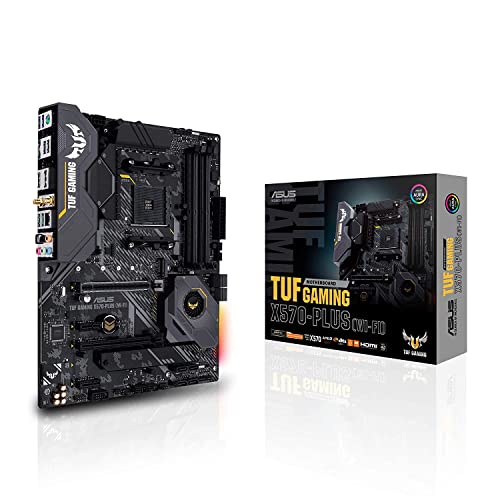
ASUS TUF Gaming X570-Plus (Wi-Fi)
Who it suits: Best AM4 expansion pick — builders who want chipset PCIe 4.0 lanes, 8 SATA ports and dual Gen 4 M.2 for loaded builds.
X570’s difference is lanes: the chipset itself serves PCIe 4.0, so both M.2 slots and the second x16 slot run at Gen 4 speeds — the platform for builders who genuinely fill expansion slots, capture cards and multiple fast NVMe drives. The specification sheet confirms the fundamentals a buyer should verify before anything else: AMD X570 chipset, Socket AM4, ATX format, 4x DDR4 DIMM, dual channel, PCIe 4.0 on both x16 slots (chipset-fed lanes included), 2x M.2 PCIe 4.0 x4, 8x SATA 6Gb/s, Gigabit Ethernet, Wi-Fi 5 (802.11ac) with Bluetooth 5.0, USB 3.2 Gen 2 Type-A and Type-C at the rear, 7.1-channel HD audio. Read as a whole, that list describes a board with a clear centre of gravity — and the centre of gravity, not the longest feature list, is what decides whether a board suits your processor and your case.
What ownership feels like: POST codes or debug LEDs (where fitted) that turn a failed boot into a diagnosis instead of a guessing game; a support page that still lists BIOS files for a mature platform; and a layout that either respects the reality of two-and-a-half-slot graphics cards or does not. PCIe 4.0 from CPU and chipset, eight SATA ports and a 12+2 DrMOS power stage for flagship Ryzen chips. None of that photographs well, and all of it matters more than the box art within a month of building.
One practical note on assembly: boards of this class reward a bench test — CPU, one memory stick, graphics — before the board goes into the case, because every connector is reachable and every debug signal is visible. Once installed, its 4x DDR4 DIMM, dual channel layout and PCIe 4.0 on both x16 slots (chipset-fed lanes included) define the upgrade paths that stay open: memory capacity, a faster or additional drive, a second expansion card. A board is a five-year decision wearing a one-day purchase; this one’s five-year story is written in those paths, and the review’s verdict follows from them.
- PCIe 4.0 from CPU and chipset, eight SATA ports and a 12+2 DrMOS power stage for flagship Ryzen chips.
- AMD X570 chipset on Socket AM4 with 4x DDR4 DIMM, dual channel.
- 2x M.2 PCIe 4.0 x4; 8x SATA 6Gb/s.
Honest limitation: The chipset has an active cooling fan — a small moving part B550 boards do not have — and Wi-Fi is the older Wi-Fi 5 standard.
Choose it if its strengths match your build’s actual bottleneck. Skip it if its stated limitation is the thing your build cannot live with — the next pick in this guide trades exactly that point differently.
MSI MAG B550 Tomahawk
Who it suits: Best all-round AM4 pick — builders who want proven VRM cooling, PCIe 4.0 and dual LAN in a no-nonsense ATX board.
The Tomahawk line earned its reputation on VRM cooling, and the B550 version pairs a substantial extended heatsink with a power design that runs high-core-count Ryzen chips at stock and mild overclocks without drama. The specification sheet confirms the fundamentals a buyer should verify before anything else: AMD B550 chipset, Socket AM4, ATX format, 4x DDR4 DIMM, dual channel, PCIe 4.0 x16 primary slot (with Ryzen 3000/5000 CPUs), 2x M.2 (one PCIe 4.0 x4 with heatsink), 6x SATA 6Gb/s, 2.5Gb Ethernet plus Gigabit Ethernet, No onboard Wi-Fi, USB 3.2 Gen 2 Type-A and Type-C at the rear, 7.1-channel HD audio. Read as a whole, that list describes a board with a clear centre of gravity — and the centre of gravity, not the longest feature list, is what decides whether a board suits your processor and your case.
What ownership feels like: POST codes or debug LEDs (where fitted) that turn a failed boot into a diagnosis instead of a guessing game; a support page that still lists BIOS files for a mature platform; and a layout that either respects the reality of two-and-a-half-slot graphics cards or does not. Strong, well-cooled power delivery for its class, dual LAN and a Flash BIOS button that lets you update firmware without a CPU installed. None of that photographs well, and all of it matters more than the box art within a month of building.
One practical note on assembly: boards of this class reward a bench test — CPU, one memory stick, graphics — before the board goes into the case, because every connector is reachable and every debug signal is visible. Once installed, its 4x DDR4 DIMM, dual channel layout and PCIe 4.0 x16 primary slot (with Ryzen 3000/5000 CPUs) define the upgrade paths that stay open: memory capacity, a faster or additional drive, a second expansion card. A board is a five-year decision wearing a one-day purchase; this one’s five-year story is written in those paths, and the review’s verdict follows from them.
- Strong, well-cooled power delivery for its class, dual LAN and a Flash BIOS button that lets you update firmware without a CPU installed.
- AMD B550 chipset on Socket AM4 with 4x DDR4 DIMM, dual channel.
- 2x M.2 (one PCIe 4.0 x4 with heatsink); 6x SATA 6Gb/s.
Honest limitation: No onboard Wi-Fi, so wireless builds need a PCIe card or a USB adapter.
Choose it if its strengths match your build’s actual bottleneck. Skip it if its stated limitation is the thing your build cannot live with — the next pick in this guide trades exactly that point differently.
ASUS ROG Strix B550-F Gaming WiFi II
Who it suits: Best AM4 pick with Wi-Fi — builders who want wi-Fi 6E, strong power stages and FlashBack in a polished ATX package.
The WiFi II revision updates the original Strix B550-F with a Wi-Fi 6E module and keeps the features builders actually used: BIOS FlashBack, a pre-mounted I/O shield and some of the clearest debug LEDs in the class. On paper the essentials read: AMD B550 chipset on Socket AM4, ATX, 4x DDR4 DIMM, dual channel, PCIe 4.0 x16 primary slot (with Ryzen 3000/5000 CPUs), 2x M.2 (one PCIe 4.0 x4), 6x SATA 6Gb/s, 2.5Gb Ethernet, Wi-Fi 6E with Bluetooth. In a build, what those lines mean is simpler. The power design and its cooling decide whether your processor holds its boost clocks through a long render, a compile or a summer gaming session, or quietly trims them when the VRM heats up; the slot layout decides whether a thick graphics card buries the slot your capture card, sound card or extra NVMe adapter needed; and the rear panel decides how many dongles your desk accumulates.
Daily life with this board is mostly about what you stop noticing. BIOS updates arrive through the maker’s normal support channel — check the support page before a CPU upgrade, because on mature platforms the difference between a chip booting and a black screen is usually one firmware version. Fan control, boot order and memory profiles live in a BIOS whose layout rewards ten patient minutes of exploration on day one. Wi-Fi 6E, BIOS FlashBack and a 12+2 teamed power-stage design that handles flagship Ryzen chips comfortably — that is the sentence owners repeat when recommending it, and it is the reason this board holds its place in the guide.
Judge this board against the peripherals already on your desk. Its rear panel and headers — USB 3.2 Gen 2 Type-A and Type-C at the rear; SupremeFX 7.1-channel HD audio — decide whether headsets, DACs, external drives and front-panel ports all connect at once, and its ATX footprint decides how much slot and cable room surrounds the graphics card. None of that appears in benchmark charts, and all of it is felt daily. The board’s centre of gravity is consistent: it serves the build described in its Who-it-suits line completely, and trades away the things that build does not need.
- Wi-Fi 6E, BIOS FlashBack and a 12+2 teamed power-stage design that handles flagship Ryzen chips comfortably.
- AMD B550 chipset on Socket AM4 with 4x DDR4 DIMM, dual channel.
- 2x M.2 (one PCIe 4.0 x4); 6x SATA 6Gb/s.
Honest limitation: It sits at the upper end of B550 pricing territory, where sale prices on X570 boards sometimes overlap it.
Choose it if its strengths match your build’s actual bottleneck. Skip it if its stated limitation is the thing your build cannot live with — the next pick in this guide trades exactly that point differently.
MSI MAG Z590 Tomahawk WiFi
Who it suits: Best LGA1200 overclocking pick (prose-only) — builders who want z590 overclocking, triple M.2 and Wi-Fi 6E for 11900K/11700K builds.
MSI’s Z590 Tomahawk is the overclocking pick for 10th and 11th Gen K chips: full multiplier control, a third M.2 slot and Wi-Fi 6E, from the same Tomahawk design language as its B550 sibling. On paper the essentials read: Intel Z590 chipset on LGA1200, ATX, 4x DDR4 DIMM, dual channel, PCIe 4.0 x16 primary slot (with 11th Gen CPUs), 3x M.2 (one PCIe 4.0 x4 with 11th Gen CPUs), 6x SATA 6Gb/s, 2.5Gb Ethernet, Wi-Fi 6E with Bluetooth 5.2. In a build, what those lines mean is simpler. The power design and its cooling decide whether your processor holds its boost clocks through a long render, a compile or a summer gaming session, or quietly trims them when the VRM heats up; the slot layout decides whether a thick graphics card buries the slot your capture card, sound card or extra NVMe adapter needed; and the rear panel decides how many dongles your desk accumulates.
Daily life with this board is mostly about what you stop noticing. BIOS updates arrive through the maker’s normal support channel — check the support page before a CPU upgrade, because on mature platforms the difference between a chip booting and a black screen is usually one firmware version. Fan control, boot order and memory profiles live in a BIOS whose layout rewards ten patient minutes of exploration on day one. Unlocked CPU overclocking for K chips, three M.2 slots and Wi-Fi 6E — that is the sentence owners repeat when recommending it, and it is the reason this board holds its place in the guide.
One practical note on assembly: boards of this class reward a bench test — CPU, one memory stick, graphics — before the board goes into the case, because every connector is reachable and every debug signal is visible. Once installed, its 4x DDR4 DIMM, dual channel layout and PCIe 4.0 x16 primary slot (with 11th Gen CPUs) define the upgrade paths that stay open: memory capacity, a faster or additional drive, a second expansion card. A board is a five-year decision wearing a one-day purchase; this one’s five-year story is written in those paths, and the review’s verdict follows from them.
- Unlocked CPU overclocking for K chips, three M.2 slots and Wi-Fi 6E.
- Intel Z590 chipset on LGA1200 with 4x DDR4 DIMM, dual channel.
- 3x M.2 (one PCIe 4.0 x4 with 11th Gen CPUs); 6x SATA 6Gb/s.
Honest limitation: Discontinued and increasingly sold by third parties — verify the seller and condition before paying flagship money.
Choose it if its strengths match your build’s actual bottleneck. Skip it if its stated limitation is the thing your build cannot live with — the next pick in this guide trades exactly that point differently.
Prose-only pick: no verified Amazon listing link for this board — see the source notes for what was verified and buy through a seller who accepts returns.
Gigabyte B550 Aorus Elite AX V2
Who it suits: Best AM4 value with Wi-Fi — builders who want 12+2 phases, Wi-Fi 6 and Q-Flash Plus without flagship pricing habits.
Gigabyte’s V2 revision is the quiet value play of the B550 generation: a 12+2 phase digital power design, Q-Flash Plus for CPU-less BIOS updates and Wi-Fi included, usually priced against boards with weaker VRMs and no wireless. The specification sheet confirms the fundamentals a buyer should verify before anything else: AMD B550 chipset, Socket AM4, ATX format, 4x DDR4 DIMM, dual channel, PCIe 4.0 x16 primary slot (with Ryzen 3000/5000 CPUs), 2x M.2 (one PCIe 4.0 x4 with heatsink), 6x SATA 6Gb/s, 2.5Gb Ethernet, Wi-Fi 6 with Bluetooth, Front-panel USB Type-C header plus USB 3.2 Gen 2 at the rear, 7.1-channel HD audio. Read as a whole, that list describes a board with a clear centre of gravity — and the centre of gravity, not the longest feature list, is what decides whether a board suits your processor and your case.
What ownership feels like: POST codes or debug LEDs (where fitted) that turn a failed boot into a diagnosis instead of a guessing game; a support page that still lists BIOS files for a mature platform; and a layout that either respects the reality of two-and-a-half-slot graphics cards or does not. 12+2 phase power design, Wi-Fi 6 and Q-Flash Plus at a mid-tier position in the B550 range. None of that photographs well, and all of it matters more than the box art within a month of building.
Judge this board against the peripherals already on your desk. Its rear panel and headers — Front-panel USB Type-C header plus USB 3.2 Gen 2 at the rear; 7.1-channel HD audio — decide whether headsets, DACs, external drives and front-panel ports all connect at once, and its ATX footprint decides how much slot and cable room surrounds the graphics card. None of that appears in benchmark charts, and all of it is felt daily. The board’s centre of gravity is consistent: it serves the build described in its Who-it-suits line completely, and trades away the things that build does not need.
- 12+2 phase power design, Wi-Fi 6 and Q-Flash Plus at a mid-tier position in the B550 range.
- AMD B550 chipset on Socket AM4 with 4x DDR4 DIMM, dual channel.
- 2x M.2 (one PCIe 4.0 x4 with heatsink); 6x SATA 6Gb/s.
Honest limitation: Gigabyte’s BIOS menu layout takes longer to learn than MSI’s or ASUS’s equivalents.
Choose it if its strengths match your build’s actual bottleneck. Skip it if its stated limitation is the thing your build cannot live with — the next pick in this guide trades exactly that point differently.
ASRock B550M Pro4
Who it suits: Best compact AM4 pick — builders who want micro ATX, ECC support and APU-friendly display outputs with PCIe 4.0.
The Pro4 is the engineer’s B550: micro ATX, ECC memory support on supported processors, a reinforced primary slot and display outputs (HDMI, DisplayPort and VGA) that make it the natural home for Ryzen APUs and compact workstations. On paper the essentials read: AMD B550 chipset on Socket AM4, Micro ATX, 4x DDR4 DIMM, dual channel, ECC support (with supported CPUs), PCIe 4.0 x16 primary slot (with Ryzen 3000/5000 CPUs), 2x M.2 (one PCIe 4.0 x4 Hyper M.2), 6x SATA 6Gb/s, Gigabit Ethernet, No onboard Wi-Fi (M.2 Key E slot for a Wi-Fi module). In a build, what those lines mean is simpler. The power design and its cooling decide whether your processor holds its boost clocks through a long render, a compile or a summer gaming session, or quietly trims them when the VRM heats up; the slot layout decides whether a thick graphics card buries the slot your capture card, sound card or extra NVMe adapter needed; and the rear panel decides how many dongles your desk accumulates.
Daily life with this board is mostly about what you stop noticing. BIOS updates arrive through the maker’s normal support channel — check the support page before a CPU upgrade, because on mature platforms the difference between a chip booting and a black screen is usually one firmware version. Fan control, boot order and memory profiles live in a BIOS whose layout rewards ten patient minutes of exploration on day one. ECC support, three display outputs for APUs and honest micro-ATX value with PCIe 4.0 — that is the sentence owners repeat when recommending it, and it is the reason this board holds its place in the guide.
Judge this board against the peripherals already on your desk. Its rear panel and headers — USB 3.2 Gen 2 Type-C at the rear; 7.1-channel HD audio (Nahimic) — decide whether headsets, DACs, external drives and front-panel ports all connect at once, and its Micro ATX footprint decides how much slot and cable room surrounds the graphics card. None of that appears in benchmark charts, and all of it is felt daily. The board’s centre of gravity is consistent: it serves the build described in its Who-it-suits line completely, and trades away the things that build does not need.
- ECC support, three display outputs for APUs and honest micro-ATX value with PCIe 4.0.
- AMD B550 chipset on Socket AM4 with 4x DDR4 DIMM, dual channel, ECC support (with supported CPUs).
- 2x M.2 (one PCIe 4.0 x4 Hyper M.2); 6x SATA 6Gb/s.
Honest limitation: No built-in Wi-Fi and a plainer VRM heatsink than the ATX flagships — sensible for 6- and 8-core chips, less ideal for sustained 16-core overclocks.
Choose it if its strengths match your build’s actual bottleneck. Skip it if its stated limitation is the thing your build cannot live with — the next pick in this guide trades exactly that point differently.
Comparison Table
| Product | Chipset / Socket | Key specifications | Link |
|---|---|---|---|
| ASUS TUF Gaming X570-Plus (Wi-Fi) | AMD X570 / Socket AM4 | ATX · 4x DDR4 DIMM, dual channel · PCIe 4.0 on both x16 slots (chipset-fed lanes included) · 2x M.2 PCIe 4.0 x4 · 8x SATA 6Gb/s · Gigabit Ethernet · Wi-Fi 5 (802.11ac) with Bluetooth 5.0 | Check on Amazon |
| MSI MAG B550 Tomahawk | AMD B550 / Socket AM4 | ATX · 4x DDR4 DIMM, dual channel · PCIe 4.0 x16 primary slot (with Ryzen 3000/5000 CPUs) · 2x M.2 (one PCIe 4.0 x4 with heatsink) · 6x SATA 6Gb/s · 2.5Gb Ethernet plus Gigabit Ethernet · No onboard Wi-Fi | Check on Amazon |
| ASUS ROG Strix B550-F Gaming WiFi II | AMD B550 / Socket AM4 | ATX · 4x DDR4 DIMM, dual channel · PCIe 4.0 x16 primary slot (with Ryzen 3000/5000 CPUs) · 2x M.2 (one PCIe 4.0 x4) · 6x SATA 6Gb/s · 2.5Gb Ethernet · Wi-Fi 6E with Bluetooth | Check on Amazon |
| MSI MAG Z590 Tomahawk WiFi | Intel Z590 / LGA1200 | ATX · 4x DDR4 DIMM, dual channel · PCIe 4.0 x16 primary slot (with 11th Gen CPUs) · 3x M.2 (one PCIe 4.0 x4 with 11th Gen CPUs) · 6x SATA 6Gb/s · 2.5Gb Ethernet · Wi-Fi 6E with Bluetooth 5.2 | Prose-only |
| Gigabyte B550 Aorus Elite AX V2 | AMD B550 / Socket AM4 | ATX · 4x DDR4 DIMM, dual channel · PCIe 4.0 x16 primary slot (with Ryzen 3000/5000 CPUs) · 2x M.2 (one PCIe 4.0 x4 with heatsink) · 6x SATA 6Gb/s · 2.5Gb Ethernet · Wi-Fi 6 with Bluetooth | Check on Amazon |
| ASRock B550M Pro4 | AMD B550 / Socket AM4 | Micro ATX · 4x DDR4 DIMM, dual channel, ECC support (with supported CPUs) · PCIe 4.0 x16 primary slot (with Ryzen 3000/5000 CPUs) · 2x M.2 (one PCIe 4.0 x4 Hyper M.2) · 6x SATA 6Gb/s · Gigabit Ethernet · No onboard Wi-Fi (M.2 Key E slot for a Wi-Fi module) | Check on Amazon |
A Note on Prices and Listings in This Category
Motherboards are among the most promotion-driven components sold online: the same board moves between list and sale figures across the year, discontinued models pass to third-party sellers at figures that wander widely, and bundles vary by listing. That is why this guide prints no product prices and sends you to the live listing for the current number — a printed price would be wrong more often than right, and a wrong price helps no one. When you check a listing, confirm the full model name (a single suffix decides Wi-Fi, chipset revision and sometimes the socket generation), confirm the seller and the return terms, and — on any mature platform — confirm the BIOS version the board ships with if your processor needs a recent one.
Boards for Long Renders and Quiet Rooms
Creative workloads invert gaming priorities. A video timeline cares about sustained all-core power delivery (renders run for tens of minutes at full load, exactly where weak VRMs confess), fast NVMe storage for media and cache, and port counts for audio interfaces, control surfaces and card readers. A music-production machine adds two more demands: low-latency, well-behaved USB for interfaces, and silence — which means fan control good enough to keep the machine inaudible under a microphone, and a preference for passively cooled chipsets.
The picks in this guide are ordered with those loads in mind: boards whose power stages and heatsinks are documented for sustained work, whose storage can grow, and whose BIOS gives manual control over every fan header. Thunderbolt appears in this class as a header or an add-in consideration rather than a universal feature — check the exact board if your interface chain depends on it, because support is model-specific, never platform-wide.
Reading the Specification Sheet Like a Builder
A motherboard specification sheet rewards reading in a fixed order. Socket and chipset first — they decide the processors, in a way no firmware update can appeal. Power design second, in whatever detail the maker publishes: phase counts are marketing-shaped, but heatsink mass and layout are visible in photographs and honest in person. Slots and storage third, with the lane-sharing footnotes read rather than skimmed. Networking and rear I/O fourth, because they are the daily interface. Everything after that — lighting, shrouds, bundled utilities — is garnish, and a board whose garnish outshines its first four lines is telling you where its budget went.
The picks in this guide were read in that order, and their reviews are written in it too: compatibility and power before features, features before decoration. Where a specification could not be verified from a manufacturer’s document or a corroborated listing record, it does not appear in this guide — an absent detail is a smaller failure than an invented one, and on discontinued platforms it is also the difference between a board that boots your chip and an expensive lesson in someone else’s optimism.
Two Builds That Show the Difference
Two upgrades decide most motherboard regrets, and both can be rehearsed before purchase. The first is the storage upgrade: open the manual’s lane-sharing table and physically trace what happens when the second M.2 slot is populated — which SATA ports sleep, whether the graphics slot narrows. The second is the processor upgrade within the platform: find your next chip on the maker’s CPU support list for this exact board, note the BIOS version it demands, and confirm the board’s VRM class is rated by its maker for that chip’s tier. Ten minutes with those two documents predicts five years of ownership better than any review, including this one.
The builders who enjoy their systems longest tend to share a habit: they buy the board for the second build, not the first. The first build is today’s parts list; the second build is the same case and board after the platform’s prices fall and its best chips become bargains. A board chosen with its platform’s ceiling in mind — its strongest supported processor, its fullest storage configuration, its fastest memory — turns that second build into a CPU swap. A board chosen only for today’s list turns it into a rebuild. This guide’s picks are ordered, wherever the platform allows, with the second build in view.
How to Choose
- Read the VRM for the chip you own, not the chip in the advertisement. Core count and power draw decide how much power stage and heatsink you need. Six-core chips run happily almost anywhere; 12- and 16-core flagships under sustained all-core load expose weak VRMs as throttling that looks, misleadingly, like a CPU or cooling problem.
- Match the chipset to the overclocking question. On Intel platforms, only Z-series chipsets unlock K-chip multipliers; B- and H-series boards run K chips at stock. On AMD AM4, B550 and X570 allow overclocking while A520 does not. Buying a K processor for a locked chipset — or a locked processor on an expensive Z board — wastes money in both directions.
- Check the BIOS version before pairing an older board with a newer CPU. Boards manufactured before a CPU’s launch need a firmware update to boot it. Flash-back buttons that update without a CPU are the clean solution; otherwise you need a supported chip installed first, or a seller who confirms the shipped BIOS version in writing.
- Check Windows 11 support at the firmware level. Modern platforms carry firmware TPM (AMD fTPM or Intel PTT) that satisfies Windows 11 without a discrete module, but it must be enabled in BIOS and the CPU itself must be on Microsoft’s supported list — several older generations in this guide are not, whatever the board offers.
- Decide Wi-Fi before the build, not after. Onboard Wi-Fi costs less than a quality PCIe adapter, keeps a slot free and usually brings Bluetooth with it. If the board has an M.2 Key E slot, a module can sometimes be added later — otherwise the adapter card is the only route, and it needs that unobstructed slot.
- Plan memory as a platform decision. DDR3 and DDR4 boards are different worlds and the memory you own only follows you within its generation. Four DIMM slots preserve the cheapest upgrade path — two sticks now, two later — while two-slot boards force a full replacement to grow capacity.
- Let the graphics card choose your slot layout. Modern GPUs are two to three slots thick. A board whose only x1 slot sits directly under the graphics card has, in practice, no x1 slot. Capture cards, sound cards and Wi-Fi adapters all compete for the same few centimetres of unobstructed slot space.
- Count M.2 and SATA together — they share lanes. On many boards, populating an M.2 slot disables one or two SATA ports, and a second M.2 can drop the graphics slot to x8. The manual’s lane-sharing table, not the headline port count, tells you the storage configuration you can actually run.
- Buy the support page, not just the board. For mature and discontinued platforms, the maker’s archived BIOS files, drivers and manuals are the product’s second half. Boards from makers who keep those archives public and organised are measurably easier to keep alive than boards whose support pages have vanished.
- Treat the rear panel as a five-year commitment. USB ports are the interface you touch daily for the board’s whole life. Count what your desk actually uses — headset, DAC, external drives, VR sensors, drawing tablet — and require the board to cover it without a hub living permanently on the desk.
Common Mistakes
- Skipping the I/O shield moment — realising the shield is uninstalled only after the board is screwed down and cabled, the oldest rite of passage in PC building.
- Installing a newer CPU in an older board without checking the BIOS version first — a black screen on first boot is usually firmware, not a dead part.
- Pairing a flagship 12- or 16-core processor with the cheapest board that boots it, then diagnosing the resulting VRM throttling as a cooler problem.
- Assuming every CPU with the same socket name fits every board with that socket — the two LGA1151 generations are the standing counterexample, and AM4’s chipset-by-chipset support table is the other.
- Counting M.2 slots without reading the lane-sharing table, then discovering the second NVMe drive disabled two SATA ports or halved the graphics slot.
- Judging a used board by its photographs alone: bent socket pins, swollen capacitors near the VRM and missing M.2 screws are the three checks that decide a used purchase, and none of them is visible in a listing’s hero shot.
- Forgetting that memory does not cross generations: DDR3 from a Haswell or FX system will never fit a DDR4 board, and the budget that ignores new RAM is not a real budget.
- Ignoring chipset fans and VRM heatsink clearance with very large air coolers — a flagship tower cooler that overhangs the top PCIe slot or the VRM heatsink is a layout problem discovered at build time.
- Buying a K-series Intel chip for a B- or H-series board and discovering the multiplier is locked — or buying a Z board for a locked chip and paying for controls that do nothing.
Living With the Platform
Ownership of a mature platform has a rhythm worth planning for. BIOS updates slow as a platform ages, then stop — archive the final BIOS file, the chipset drivers and the manual for your exact board somewhere that is not the PC itself, because support pages for discontinued boards have a habit of moving or vanishing. The CMOS battery will need replacing somewhere in the board’s second half-decade; the symptom is a system that forgets its settings when unplugged, and the cure costs less than a coffee. And keep the I/O shield, spare M.2 screws and Wi-Fi antennas in the board’s box: on the used market, completeness is value, and in your own spares drawer it is the difference between a five-minute job and a week of waiting for a small part.
A motherboard’s second life is decided by documentation. Save the CPU support list and the lane-sharing table for your board today, while they are easy to find; screenshot the BIOS settings that took an evening to dial in; and note which BIOS version your current processor required, because the next owner of your chip — or you, after a CMOS reset — will need exactly that fact. Platforms reward this housekeeping disproportionately: the hardware in this guide is durable, and most ‘dead board’ stories on mature platforms are really lost-information stories wearing a hardware costume.
Final Recommendation
- Best AM4 expansion pick: ASUS TUF Gaming X570-Plus (Wi-Fi).
- Best all-round AM4 pick: MSI MAG B550 Tomahawk.
- Best AM4 pick with Wi-Fi: ASUS ROG Strix B550-F Gaming WiFi II.
- Best LGA1200 overclocking pick (prose-only): MSI MAG Z590 Tomahawk WiFi.
Our top two for this search are the ASUS TUF Gaming X570-Plus (Wi-Fi) and the MSI MAG B550 Tomahawk — between them they cover the two shapes this search usually takes: the strongest all-round answer, and the answer for the build whose priorities run the other way. Readers still weighing the neighbouring questions in this category should see Best Motherboards For I7 10th Gen, Best Motherboards For 5600x and Best Motherboards For 3700x. Verify your exact processor against the maker’s CPU support list, check the shipped BIOS version where the pairing needs one, and check the live price before you order — with motherboards, that homework is the whole difference between a platform that serves the build for years and one that fights it from the first boot.
Frequently Asked Questions
How do I check whether a board supports my exact processor?
Use the CPU support list on the manufacturer’s product page for that exact board model — not the socket name, not a forum list. The support list names every supported chip and the minimum BIOS version each one needs. If your chip is absent, the pairing is not supported, whatever the socket suggests; if it is present with a BIOS note, plan the update before the build.
What is the difference between ATX and micro ATX in practice?
Expansion room and port counts. ATX typically offers an extra PCIe slot that stays clear of the graphics card, more SATA ports and more fan headers; micro ATX keeps four DIMM slots and the same chipsets in a smaller board that fits compact cases. For a single-GPU build with two drives, micro ATX loses nothing that matters; for capture cards, many drives or flagship processors, ATX earns its footprint.
Should I update the BIOS on a working system?
For security and CPU-support reasons, a mature platform’s final BIOS is usually worth running — but update deliberately: read the version notes, update from within the BIOS using a file on a USB stick, never interrupt power mid-flash, and do not chase beta versions on a machine you depend on. Boards with dual BIOS or flash-back buttons forgive mistakes the others do not.
How long should a motherboard last?
A quality board from a major maker is typically the longest-lived component in a build — it commonly outlasts two graphics cards and one CPU upgrade within its platform. The parts that age are capacitors on very old boards, chipset fans on X570, and the CMOS battery, which is replaceable for pennies.
Do I need to reinstall Windows after changing a motherboard?
A platform change (new chipset generation) deserves a clean installation: driver stacks differ enough that carried-over installs are a common source of phantom problems. Within the same platform, Windows usually adapts — but back up first either way, and note that OEM Windows licences are tied to the original board.
What does ‘check price on Amazon’ mean in this guide?
This site prints no static product prices, because motherboard listings move with promotions and marketplace sellers. The link leads to the live listing where the current figure, the seller and the stock state are visible — the three facts that decide a purchase and the three that go stale fastest in print.