Where to buy
Check the latest price, availability and delivery on Amazon. Orders are placed on Amazon. We may earn a commission from qualifying purchases.
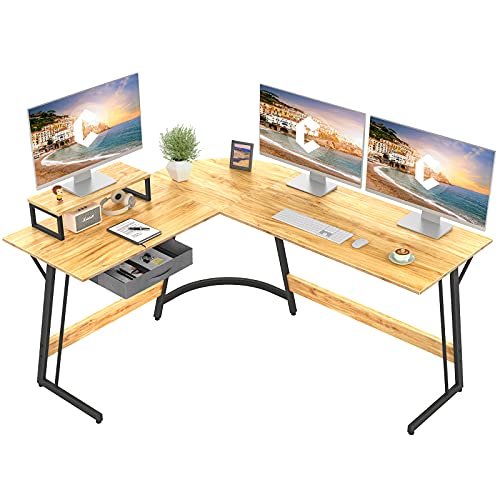
- Best long-run L desk: CubiCubi L-Shaped Desk 59.1 in — Check on Amazon
- Best corner desk with monitor stand: Mr IRONSTONE L-Shaped Desk (59 in class) — Check on Amazon
- Best equal-wing corner desk: SHW Mission L-Shape Desk 48 x 48 in — Check on Amazon
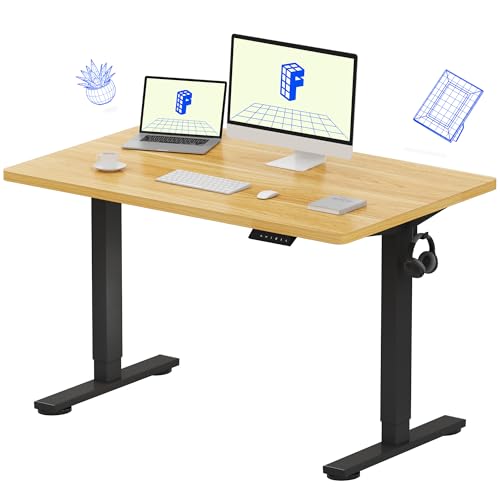
- Best big L-shaped electric desk: FEZIBO L-Shaped Standing Desk 75 in with Drawers — Check on Amazon
- Best small desk with shelves: CubiCubi Computer Desk 40 in with Storage Shelves — Check on Amazon
- Best simple fixed desk: SHW Mission 48-Inch Home Office Computer Desk — Check on Amazon
Read the full guide ↓
Disclosure: As an Amazon Associate, ilcastellomenu.com earns from qualifying purchases. Links to Amazon on this page are affiliate links; they cost you nothing extra. Listing details such as price and availability change often, so check the current Amazon listing before you buy.
Searching for the best corner desks for small spaces means you already know the shape of your problem — the room, the work and the body that has to live with the result. What separates a good answer from a plausible one is honesty about the lens inside the search: the budget line, the room size, the number of screens, the hours involved. This guide applies that lens first, before any brand names, and every pick below was chosen from verified listings with published specifications, then matched to the lens on its real merits — including where the honest answer is that the lens cannot be met exactly as typed, which this guide says plainly rather than faking.
We did not use these products ourselves. We read manufacturer and retailer specification records, cross-checked the numbers that matter — dimensions, lift ranges, capacities, materials — and favored products whose makers publish full specifications over those that hide behind adjectives. Every ASIN in this guide was verified against a live listing record during research, and every specification printed in the reviews traces to a source recorded in the article’s source notes. Where a headline number stretches a definition, the review says so and judges the product on its construction instead.
Read the reviews for fit rather than for winners. In a category this mature, the difference between the right desk and the wrong one is rarely quality in the abstract — it is the match between a specific product’s size, type and trade-offs and a specific room, body and workload. The picks are ordered to make that matching easy, and the skip-if lines are written as carefully as the choose-if lines.
In this guide
Quick Picks
Short on time, or comparing several options at once? Each row below names a buyer type and the pick that suits it, with a link to the listing where one is verified.
| Buyer type | Pick | Why it stands out | Link |
|---|---|---|---|
| Best long-run L desk | CubiCubi L-Shaped Desk 59.1 in | 59.1 in main run fits dual monitors properly | Check on Amazon |
| Best corner desk with monitor stand | Mr IRONSTONE L-Shaped Desk (59 in class) | Raised monitor stand frees surface and improves screen height | Check on Amazon |
| Best equal-wing corner desk | SHW Mission L-Shape Desk 48 x 48 in | Symmetrical 48 x 48 in corner layout reclaims dead corner space | Check on Amazon |
| Best big L-shaped electric desk | FEZIBO L-Shaped Standing Desk 75 in with Drawers | Huge two-wing surface that lifts as one electric desk | Check on Amazon |
| Best small desk with shelves | CubiCubi Computer Desk 40 in with Storage Shelves | 40 in footprint fits dorms, nooks and small bedrooms | Check on Amazon |
| Best simple fixed desk | SHW Mission 48-Inch Home Office Computer Desk | Simple steel-frame desk: fast assembly, nothing to break | Check on Amazon |
How These Picks Were Chosen
The lens in ‘best corner desks for small spaces’ was applied as a filter before any product was considered: every pick below is a real, verifiable listing whose maker publishes the specifications that decide this category — dimensions, materials, capacities and, for lifting desks, motor and range details. Products that could not be verified to that standard appear as prose-only references or not at all. Check the current price on Amazon before you buy, as listing prices change often and a product’s position against any budget line moves with them.
Within the lens, we weighted the things owners actually live with: rigidity under real loads, surfaces sized for the work the keyword describes, cable behavior, and the support story behind the maker. Six picks is a shortlist, not a census — each one is the answer to a different version of the search, and the reviews label who each version suits and who should skip it, so the desk that arrives matches the room and the routine you actually have.
The 6 Best Corner desks for small spaces
CubiCubi L-Shaped Desk 59.1 in
Who it suits: Home-office corners wanting a long main run plus a return — dual monitors on the long wing, life admin on the short one.
CubiCubi’s L takes the opposite approach to SHW’s equal wings: a 59.1-inch main run that genuinely fits dual monitors, with a shorter return for the printer, the paperwork pile or the second laptop. That asymmetry matches how people actually work — one primary surface, one support surface — and the corner between them becomes bonus depth for the monitor stands.
It is a fixed-height desk, so the ergonomic tuning happens at the chair, and the corner joint deserves the usual first-week re-tighten. Assembly is a two-coffee job with clear instructions by the standards of the class. For a home office that lives in a corner full-time, this is the layout that ends the side-table era.
A fixed desk’s ownership story is its stillness: nothing to plug in, nothing to reset, nothing that can fail between you and the work. That stillness shifts the ergonomic burden to the rest of the setup — the chair’s height range, a monitor riser or arm for the screen’s eye line, and a footrest when the geometry needs closing. Budget those companions honestly and a fixed desk delivers the same working posture as an electric one, minus the position changes.
- 59.1 in main run fits dual monitors properly
- Return wing handles printer/paper/second laptop
- Corner depth gives monitor stands room to breathe
Honest limitation: Fixed height; corner joint needs a settling re-tighten.
Choose it if your corner office needs one long working run plus support space. Skip it if you want sit-stand — the FEZIBO L is the electric counterpart.
Mr IRONSTONE L-Shaped Desk (59 in class)
Who it suits: Gamers and home-office users who want a corner desk with a raised monitor stand freeing the surface below.
Mr IRONSTONE built its name on corner desks for gamers, and the signature detail is the large monitor stand: a raised shelf that lifts the screen to a better line of sight while returning the desk surface underneath to keyboards, controllers and drinks. The L wraps a corner with a gaming-friendly footprint, and finishes like the laminate marble variant let it pass in a bedroom without shouting ‘battlestation’.
The stand is fixed, so your monitor’s own height adjustment (or lack of it) decides the final geometry — check the combined height against your eye line before committing. The desk is a manufactured-board, steel-frame design in the value class: sturdy for its job, not a hardwood heirloom. For corner gaming and hybrid work-play corners, it remains a category staple.
A fixed desk’s ownership story is its stillness: nothing to plug in, nothing to reset, nothing that can fail between you and the work. That stillness shifts the ergonomic burden to the rest of the setup — the chair’s height range, a monitor riser or arm for the screen’s eye line, and a footrest when the geometry needs closing. Budget those companions honestly and a fixed desk delivers the same working posture as an electric one, minus the position changes.
- Raised monitor stand frees surface and improves screen height
- Corner L layout suits gaming and hybrid work corners
- Finish options that blend into bedrooms
Honest limitation: Fixed monitor-stand height; value-class manufactured board.
Choose it if your corner is a gaming-first or work-play hybrid station. Skip it if you need precise monitor height tuning — use a plain top plus a monitor arm.
SHW Mission L-Shape Desk 48 x 48 in
Who it suits: Corner users on a fixed-desk budget: screens in the corner, a second wing for paper, printer or a laptop.
The equal-wing L — 48 inches each way — is the corner desk in its most symmetrical form, and SHW’s Mission version keeps the formula simple: steel frame, manufactured tops, a corner that naturally hosts the monitor while the wings split into ‘screen work’ and ‘everything else’. It is the layout students discover when a straight desk fills up, and the layout home offices keep because the corner of a room is otherwise dead space.
Equal wings suit equal jobs; if your real need is one long run for dual monitors, an unequal L or a straight 60-inch desk serves better. The corner joint is where cheap L-desks wobble, so tighten and re-check the corner hardware after the first week — true of every desk in this class. For the price tier, the Mission L is the straightforward way to turn a corner into a workstation.
A fixed desk’s ownership story is its stillness: nothing to plug in, nothing to reset, nothing that can fail between you and the work. That stillness shifts the ergonomic burden to the rest of the setup — the chair’s height range, a monitor riser or arm for the screen’s eye line, and a footrest when the geometry needs closing. Budget those companions honestly and a fixed desk delivers the same working posture as an electric one, minus the position changes.
- Symmetrical 48 x 48 in corner layout reclaims dead corner space
- Simple, sturdy steel-frame construction
- Wings split naturally into screen and paper zones
Honest limitation: Equal wings are not ideal for one long dual-monitor run; corner hardware needs a re-tighten after settling.
Choose it if your corner is square-ish and your work splits between screen and paper. Skip it if you need one very long wing — look at a 63-75 in L instead.
FEZIBO L-Shaped Standing Desk 75 in with Drawers
Who it suits: Corner-command-center users: multiple monitors on one wing, paperwork or a second machine on the other, all height-adjustable.
An L-shaped standing desk is a commitment — to a corner, to a big setup, to working in one serious place — and this FEZIBO is the full-size version: a 75-inch L with drawers, an electric lift rated by the maker well beyond a normal monitor load, and a reversible layout so the long wing can run left or right. The corner becomes the natural home for the monitor array, leaving one wing for screens and the other for everything analog: notebooks, a printer, a second laptop, a cat.
Measure before you dream: 75 inches of L needs a corner with clear wall runs both ways, a chair with room to swivel between wings, and a plan for cables that now travel around a corner. Assembly is a project, not an errand. For the user it fits — the multi-monitor home office, the streamer with a production wing, the engineer with reference material spread wide — nothing smaller feels like enough desk ever again.
Living with an electric desk is mostly about the moments you do not think about: the rise while the kettle boils, the preset that is simply there, the surface that meets you at the same height every morning. The ownership costs are equally unglamorous — a power outlet within the drop cable’s reach, a control box that wants its cables slack rather than taut, and the discipline of not treating the lift as a dumbwaiter for everything in the room. Desks in this class reward that light discipline with years of uneventful service.
- Huge two-wing surface that lifts as one electric desk
- Drawers built in; reversible left/right layout
- High maker-rated capacity for multi-monitor rigs
Honest limitation: Needs a true corner with long clear walls; assembly is a half-day project.
Choose it if your setup has outgrown straight desks and your corner can take 75 inches. Skip it if you may move soon or rent small — a straight 55-60 in desk travels better.
CubiCubi Computer Desk 40 in with Storage Shelves
Who it suits: Small-space and dorm users: a 40-inch desk with shelves that hold the books and gear a bare top cannot.
Forty inches is the desk size that fits where desks ‘don’t fit’ — the dorm wall, the bedroom corner, the apartment nook — and CubiCubi’s version earns its footprint by adding storage shelves to the frame, so textbooks, a console or a printer live in the desk’s own volume instead of competing for the top. The top itself takes a laptop or a modest monitor with a keyboard, which is the honest workload of a 40-inch desk.
Do not ask it to be a battlestation: dual monitors, a tower on top and a spread of peripherals will overflow it by lunch. As a study desk, a teen’s desk, a first-apartment desk or a dedicated writing spot, its proportions are right and its shelves do real work. Small desks fail by wobbling; the frame here is a simple, rigid design that assembles without drama.
A fixed desk’s ownership story is its stillness: nothing to plug in, nothing to reset, nothing that can fail between you and the work. That stillness shifts the ergonomic burden to the rest of the setup — the chair’s height range, a monitor riser or arm for the screen’s eye line, and a footrest when the geometry needs closing. Budget those companions honestly and a fixed desk delivers the same working posture as an electric one, minus the position changes.
- 40 in footprint fits dorms, nooks and small bedrooms
- Built-in shelves add storage a bare small desk lacks
- Simple rigid frame, quick assembly
Honest limitation: Laptop-or-single-small-monitor workload only; not a dual-screen desk.
Choose it if space is tight and storage must live inside the desk’s footprint. Skip it if you run dual monitors — step up to at least 55 in.
SHW Mission 48-Inch Home Office Computer Desk
Who it suits: Anyone who wants a simple, sturdy, fixed desk at a starter tier — students, first apartments, spare-room offices.
The SHW Mission is the anti-feature desk: a 48-inch top on a steel frame, no motors, no apps, nothing to update or fail. That simplicity is exactly its value. It assembles quickly, sits solidly, holds a monitor and a laptop with room for a notebook, and costs its owners nothing in attention for years. For a first desk, a student’s desk, or a spare-room workstation, ‘boring and sturdy’ beats ‘smart and fragile’ every time.
Fixed height is the real limitation, and it is ergonomic, not mechanical: at a standard desk height, shorter and taller users must tune the chair and add a footrest or monitor riser to make the geometry work — the accessory articles in this category exist precisely for that. Within its job — a dependable surface at a fair tier — the Mission has been a default recommendation for years because it does the simple thing completely.
Fixed desks also travel better through life: they disassemble into flat, light pieces, survive moves and storage, and hand down to the next student or spare room without an electronics obituary. In a household where desks rotate between rooms and children, that simplicity compounds.
- Simple steel-frame desk: fast assembly, nothing to break
- 48 in size fits most rooms and standard setups
- Long-running model with a deep accessory and parts trail
Honest limitation: Fixed height — ergonomics must come from the chair, riser and footrest.
Choose it if you want a dependable fixed desk and will tune the rest of the setup around it. Skip it if you specifically want to alternate sitting and standing — choose an electric model.
Comparison Table
| Product | Type | Key specifications | Link |
|---|---|---|---|
| CubiCubi L-Shaped Desk 59.1 in | Fixed-height L-shaped desk | 59.1 in L configuration · model CA-L-YH-150N · corner design with side table section | Check on Amazon |
| Mr IRONSTONE L-Shaped Desk (59 in class) | Fixed-height L-shaped gaming/office desk | L-shaped corner desk · large monitor stand included · laminate marble variant verified | Check on Amazon |
| SHW Mission L-Shape Desk 48 x 48 in | Fixed-height L-shaped desk | 48 x 48 in L configuration · steel frame · black variant verified | Check on Amazon |
| FEZIBO L-Shaped Standing Desk 75 in with Drawers | Electric L-shaped sit-stand desk | 75 in L-shaped top · electric lift · drawers · 330 lb maker capacity figure · reversible layout | Check on Amazon |
| CubiCubi Computer Desk 40 in with Storage Shelves | Fixed-height small computer desk | 40 in wide · storage shelves · model TS-HD-40B · black variant verified | Check on Amazon |
| SHW Mission 48-Inch Home Office Computer Desk | Fixed-height computer desk | 48 in wide · steel frame · model OD-011-3 · black variant verified | Check on Amazon |
Real-World Scenarios
Scenario: The Deadline Week
Picture the desk at its worst honest moment: a deadline week, two projects open, the surface carrying the current work plus the evidence of the last three meals of snacks. This is the condition desks are actually judged in, and it is why this guide keeps returning to landing space, cable discipline and storage that swallows the daily dozen. A desk that only works when tidy is a desk that works four days a month.
Scenario: The Shared Household
In a shared home the desk has colleagues it never met: the partner on calls in the same room, the child doing homework at the corner, the cat with seniority over every warm surface. Desks that survive shared life are stable under leaning, quiet in their mechanisms, and sized so one person’s sprawl does not annex the whole top. If your desk lives in shared territory, weight those traits as heavily as the specification table.
Scenario: The Setup That Grows
Almost no setup stays the size it was bought for. The second monitor arrives, the hobby becomes a side business, the laptop gains a dock, a hub and an entourage. Desks forgive growth when they have width in reserve, tops that take clamps, and frames rated beyond today’s load. When two candidates both fit today’s setup, the one with headroom is usually the one still in service after the growth spurt.
Corners: The Most Underused Square Footage in the House
Every room has a corner doing nothing, and an L-shaped desk is how that corner becomes the most productive square footage in the home. The geometry gives you a primary surface and a support surface in one footprint, with the corner itself as bonus depth for monitors — which is why L-desks dominate home offices that have outgrown a straight slab against a wall.
Choose the wing arrangement by your work: screens on the long wing for dual monitors, or screens in the corner with wings for paper and gear on both sides. Reversible designs forgive uncertain rooms. Measure both wall runs and the chair’s swivel circle before ordering; an L that fits is a revelation, and an L that almost fits is a daily argument.
Deeper Considerations
Noise, Motion and the Shared Room
In shared homes the desk has acoustic and social dimensions: a lift motor’s hum during a partner’s call, a wobbling top’s rattle during a tense game, a chair’s casters on hard floors at midnight. None of these appear in specifications, yet they decide whether a desk is loved in a real household. Quiet motors, stable frames, chair mats and soft-close anything are the unglamorous features that shared rooms reward.
Buying for the Work, Not the Photograph
Listings photograph desks in their Sunday clothes: one laptop, one plant, one lamp, light like a gallery. Your desk will wear its weekday clothes — the second screen, the charger nest, the project that lives out for a month. Judge every candidate against the weekday photograph in your head: where does the tower go, where do the cables fall, what shares the surface at 4 p.m. on a deadline day. The desk that survives that mental image is the desk to buy.
When to Buy Once, When to Buy Cheap
Some desks should be bought once: the primary workstation of a settled home, where a quality frame and surface amortize over a decade of daily use. Others should be bought cheaply and cheerfully: the first apartment, the temporary remote-work year, the child’s rapidly changing needs. Confusing the two is the expensive error in both directions — heirloom money spent on a transitional year, or bargain compromises renewed annually at a primary desk.
The Upgrade Path: What to Add, In What Order
A basic desk becomes a workstation in a predictable order of upgrades, and buying in that order saves the most money and comfort. First the chair and the screen height, because posture bills arrive daily. Then light, because eyes tire daily too. Then the floor and feet — mat, footrest — and only then the refinements: arms, trays, boards and the rest of the standing system. Each step is small; the compound effect is the difference between a desk and a workplace.
Depth, Width and the Third Dimension Nobody Measures
Desk shopping fixates on width because width is what listings headline, but depth is the dimension that decides comfort: it sets the screen’s distance from your eyes, the room your forearms have, and whether a notebook can live open beside the keyboard. Height — of the desktop from the floor, and of anything stored beneath it — is the third measurement, and the one that decides whether your knees, your PC tower and your drawer unit can coexist. The complete measurement set for any desk is width, depth, desktop height, and the clear knee box underneath, and a buyer with those four numbers written down is immune to most of the category’s disappointments.
The Surface Itself: What Your Hands Learn
Within a week your hands know things about a desktop that no listing states: whether the edge is kind to forearms through a long afternoon, whether the finish drags or glides under a mouse and a notebook, whether it drums hollowly under typing or feels like a workbench. Edge profile and core material decide most of that. A slightly rounded or beveled front edge is worth real money to anyone who types for hours, and a dense core — solid wood, or a quality manufactured board — is what separates a desk that feels planted from one that feels like scenery.
Stability: The Specification Hiding in Plain Sight
Every desk wobbles; the question is at what load and at what height it becomes noticeable. Stability comes from frame geometry, joint quality and mass, in that order, and it degrades first exactly where you feel it most — at standing height, with a monitor arm extended, under a heavy typist’s hands. The honest test is the listing’s own detail: steel gauge where published, crossbar design, foot span, and the maker’s capacity figure treated as a ceiling rather than a target. Buy stability for the setup you actually run, at the height you actually use.
How to Choose
- Measure the room, then the desk. Wall run, depth, door swing, radiator and the chair’s pull-out space — in inches, written down. More desk purchases fail on a tape measure than on any quality question.
- Match depth to the work. Laptops live happily at 24 in deep; free-standing monitors want 28-30 in so the screen sits at a healthy distance; creative gear wants all the depth you can give it.
- Decide fixed versus electric honestly. If you will stand, an electric lift you use daily beats a fixed desk plus good intentions. If you will never stand, a sturdy fixed desk spends the same money on surface and storage instead.
- Respect the load. Add up monitors, arms, PC, printer and your own lean on the front edge. Frames and tops have capacities; the honest listings publish them.
- Plan cables with the desk, not after it. A tray, a desk-mounted power strip and one drop cord. On a lifting desk, measure the drop at full height before the first raise.
- Buy the surface you will maintain. Solid wood rewards care and refinishing; good laminate forgives everything and asks nothing. Either is right; pretending to be the other is wrong.
- Check the knee space. Drawers, crossbars and CPU shelves all claim the space your legs consider theirs. Sit-height and knee clearance are specifications too.
- Read the warranty as a support story. Years matter less than what is covered and whether parts exist. A desk is a 5-10 year object; buy from a maker who plans to be reachable.
- Sit the chair at the desk before you judge either. Bring your real chair’s dimensions to the purchase: seat height range, arm height and width decide whether the pair works, and they are all published numbers.
- Leave a landing strip. Every desk needs one unassigned zone where the day’s objects land. If the whole surface is allocated on paper, the desk is too small in practice.
- Think about the move. Weight, disassembly and the longest single piece decide whether this desk survives your next home. Frequent movers should buy accordingly.
- Let one person own the tape measure. Two people measuring differently is how desks arrive an inch too wide. One measurer, one notebook, numbers written down.
- Count the footprint twice: open and stored. Folding and rolling desks earn their keep in the stored position — measure that space too.
- Go vertical inside the footprint. Shelves and hutches inside the desk’s own volume are free storage in a small room.
Common Mistakes
- Measuring only the width. Depth, knee height, door swing and the chair’s travel end more desk purchases than any other oversight.
- Buying the desk before the chair. The pair is one ergonomic system; the chair’s range must meet the desk’s height, whichever you buy first.
- Ignoring cable slack on a lifting desk — the first full raise unplugs, strains or topples something.
- Putting the tower on a desk that was sized for a laptop, then wondering why there is no room to write.
- Choosing a finish from a photo. Wood tones and laminates shift under your room’s light; samples and in-person checks beat listing photos.
- Skipping the first-week re-tighten. Frame bolts settle after assembly; five minutes with the hex key in week one prevents a year of wobble.
Sizing a Desk for the Next Five Years
Desks outlast the setups bought for them: the laptop becomes a laptop plus a monitor, the monitor becomes two, the hobby acquires equipment, the child becomes a teenager with a PC. When two sizes both fit the room, the larger usually proves cheaper over five years than the smaller bought twice — provided the larger does not crowd the chair, the door or the human.
The exception is the genuinely small room, where an oversized desk taxes every day to insure against a hypothetical one. There, the folding, rolling and compact picks in this guide are the honest answer, with growth handled by vertical storage and monitor arms rather than by surface the room does not have.
What Owners Actually Complain About
Read enough owner feedback across this category and the complaints repeat with instructive consistency. Not wobble at the desk’s rated load, but wobble from bolts never re-tightened. Not motor failures, but cable drops measured too short. Not surfaces that wore out, but finishes chosen from photographs and regretted under real light. Not desks too small, but desks bought for the setup the owner wished they had rather than the one on the desk.
Every one of those complaints is preventable at purchase time with the unglamorous disciplines this guide repeats: measure, verify at the listing, plan the cables, re-tighten in week one, and buy for the real workload. The category’s products are, in the main, honestly built; the failures are usually failures of fit.
Setting Up the Desk Properly, Once
A desk deserves one deliberate setup hour, repaid daily for years. Place the screen first — centered on the user, top near eye level, at arm’s length or a little beyond. Keyboard and mouse next, where the elbows hang naturally. Then the chair to the desk, the footrest to the chair, the light to the work, and the cables last, routed once with the strip on the desk and a single drop to the wall.
Photograph the finished cable routing and keep the hex key taped under the desk. Future you — adding a device, moving house, chasing a rattle — will be grateful for both. Setup is not a chore appended to the purchase; done properly, it is half the product.
Returns, Warranties and the Bulky-Goods Reality
A desk is among the least returnable objects in a home: it arrives in a box the size of a door, and sending it back means rebuilding that box around a piece of furniture you have already assembled. This reality argues for the boring virtues at purchase time — verified dimensions, a maker’s own specification table, and a returns policy read before the order rather than after the disappointment.
Warranties deserve the same pre-purchase reading. What matters is not the headline years but the coverage map: frame, desktop, motor and electronics are often warrantied on different clocks, and the makers who publish parts and honor claims painlessly are the ones owners name with gratitude years later. In a category of five-to-ten-year objects, the after-story is part of the product.
The Desk in the Background of Your Life
For anyone who takes video calls — which is now everyone — the desk is also a broadcast set: its surface appears behind you, its clutter testifies, and its cable discipline reads as professionalism or its opposite at a glance. This is not vanity; it is the modern office’s front door. The desks and habits that photograph well on a call are the same ones that work well off it: a clear landing zone, cables that vanish, light that falls kindly.
The same logic serves streamers and creators doubled, and it is why this category’s guides treat cable management and surface depth as first-order features. A desk that looks intentional behind you tends to be a desk that is intentional under your hands as well.
Second Desks, Guest Desks and the Household Fleet
Homes accumulate desks the way they accumulate chairs: the main workstation, the teen’s desk, the guest-room surface that hosts a laptop twice a year. The fleet view changes buying: the main desk deserves the serious money, while secondary desks should optimize for size honesty, easy moving and indifference to neglect. The folding and compact picks in this guide exist for the fleet’s second and third members.
Hand-me-downs are the fleet’s circulatory system — a sturdy fixed desk can serve three owners in one household across a decade, which is another argument for buying rigidity and standard sizes at every tier. The cheapest desk in the house should still be a desk the next person can use.
A Short History of the Desk You Are Replacing
It is worth a moment’s diagnosis of the desk being replaced, because its failure mode is the specification for its successor. If it failed by size, the tape measure is the cure. If it failed by wobble, frame geometry is. If it failed by clutter, storage and cable discipline are. If it failed by pain, the ergonomic system — chair, screen, feet, position change — is the real purchase and the desk is only its largest component.
Buyers who skip the diagnosis often buy the same failure in a new finish. Buyers who name it find that the right replacement is usually obvious, and frequently cheaper than the one they were about to order.
Comfort Is a System Property
No single purchase in this category delivers comfort, because comfort is a property of the whole system: surface height, chair fit, screen position, foot support, light and movement, all agreeing with one body. That is why the most satisfied owners in this category tend to have bought modestly but completely — a sound desk, a fitted chair, one correction for their feet or screen — rather than magnificently but partially.
If your setup is almost right, resist the flagship upgrade and audit instead: the remaining discomfort has a specific address, and it is rarely the desk itself. The related guides in this category are organized as that audit — one per relationship in the system — which is the most useful way to read them.
Final Recommendation
- Best long-run L desk: CubiCubi L-Shaped Desk 59.1 in.
- Best corner desk with monitor stand: Mr IRONSTONE L-Shaped Desk (59 in class).
- Best equal-wing corner desk: SHW Mission L-Shape Desk 48 x 48 in.
- Best big L-shaped electric desk: FEZIBO L-Shaped Standing Desk 75 in with Drawers.
- Best small desk with shelves: CubiCubi Computer Desk 40 in with Storage Shelves.
- Best simple fixed desk: SHW Mission 48-Inch Home Office Computer Desk.
Our top two for this search are the CubiCubi L-Shaped Desk 59.1 in, for the buyer this article was written for, and the Mr IRONSTONE L-Shaped Desk (59 in class), for the household whose priorities run the other way. Between them they cover the two shapes this search usually takes. Readers weighing a different angle should also see Best Desks For Small Spaces and Best Computer Desks For Small Spaces. Measure your space in every direction, count your real workload honestly, and check the live price before you order — in this category, that homework is the whole difference between a desk that serves for a decade and one that decorates a listing photo.
Frequently Asked Questions
How much desk depth do I actually need?
For a laptop alone, 24 inches is comfortable. Add a free-standing monitor and 28-30 inches keeps the screen at a healthy distance with room for a notebook. Creative and multi-monitor work should take all the depth the room allows — depth is the dimension nobody regrets buying.
Are standing desks worth it if I only stand sometimes?
Yes — the benefit is in the changing, not the standing. Even a few position changes a day justify the lift for most desk workers, provided the desk is stable at your height and the presets make changing effortless. A desk you raise twice a day beats a fixed desk and good intentions.
How long should a desk last?
A well-built fixed desk should give a decade; electric desks depend on their motors and electronics, where warranty depth and parts availability are the predictors. In both cases the first-week bolt check and honest loading are what separate the five-year desks from the fifteen-year ones.
Should I assemble the desk myself or pay for assembly?
Most desks in this guide are one-to-two-person home assemblies with basic tools, and doing it yourself teaches you exactly how the desk comes apart for the first-week re-tighten and any future move. Pay for assembly when the desk is very large, when time is genuinely scarce, or when mobility limits make the floor-level work unwise — and still keep the hex key.
What should I check in the first week with a new desk?
Bolt tightness after the frame settles, cable slack through the full range of any lift, the chair’s fit at working height, and whether the surface arrangement survives a real workday rather than a tidy first hour. Small corrections in week one are free; the same corrections in month six usually mean a replacement.
What is the smallest desk that still works for a home office?
For laptop-based work, a 32-40 inch desk with shelves can be a complete office, provided the chair fits the room and storage goes vertical. The moment a separate monitor joins, 47-48 inches becomes the realistic floor.
Can a folding desk be a permanent desk?
It can, for laptop workloads — many renters use one for years. The compromises are rigidity and size, not legitimacy. If your work grows to dual monitors, graduate to a fixed or electric desk and keep the folder as the flexible spare.