Where to buy
Check the latest price, availability and delivery on Amazon. Orders are placed on Amazon. We may earn a commission from qualifying purchases.
- Best overall for this guide: MSI GeForce RTX 3050 Ventus 2X XS 8G OC — Check on Amazon
- ASUS Phoenix GeForce GTX 1650 OC Edition 4GB GDDR6 — Check on Amazon
- GIGABYTE GeForce RTX 3060 Gaming OC 12G (REV2.0) — Check on Amazon
- NVIDIA GeForce GTX 1660 Super 6GB (used and remaining stock) — discussed in prose below (no verified listing to link; see the review for where it honestly sells)
- Gigabyte GeForce GT 1030 Low Profile 2G (GV-N1030D5-2GL) — Check on Amazon
- MSI GeForce RTX 4060 Ventus 2X Black 8G OC — Check on Amazon
Read the full guide ↓
Disclosure: As an Amazon Associate, ilcastellomenu.com earns from qualifying purchases. Links to Amazon on this page are affiliate links; they cost you nothing extra. Listing details such as price and availability change often, so check the current Amazon listing before you buy.
Searching for the best nvidia graphics cards for under 200 means you have already made the most important decision in PC hardware: the graphics card is where the money visibly changes the experience. What the words in that search actually deliver, though, varies enormously — the same shelf holds display adapters and genuine gaming cards, workstation silicon and mining veterans, 2 GB cards and 24 GB flagships, all wearing similar boxes. This guide sorts the shelf for budget gaming and everyday use, names what each of its six picks genuinely does and where each one stops, and refuses to call anything fast that is not. Every linked pick below was chosen from a verified listing with published specifications, and every pick is labeled in plain language, so the card that arrives matches the machine you imagined. Because this search names NVIDIA specifically, every linked pick below is a GeForce or NVIDIA workstation card; AMD’s competing cards are covered in their own guides in this category and are not smuggled into this one.
The $200 line is a real budget with real choices in it, and this guide applies it the way the previous guides in this category have: as the framing for the tier, checked against live listings rather than printed as a promise. Street prices for graphics cards move weekly, so a pick whose position against the line matters is flagged in its review — check the current listing before you buy, and treat a card slightly above the line on the day you shop as a decision, not a betrayal of the budget.
One more piece of housekeeping before the picks: this guide prints no product prices and no fixed ratings, on purpose. Graphics card street prices move with stock, promotions and generation cycles fast enough that a printed figure would mislead within weeks, so each linked pick says check price on Amazon and means it — the budget in the title is the framing, the live listing is the number. Readers comparing across budgets in this category should also see Best Graphics Cards For Gameing Under $300 Dollers and Best Graphics Cards For Under $350, which apply the same method at neighbouring tiers.
In this guide
Quick Picks
Short on time, or comparing several options at once? Each row below names a buyer type and the card that suits it, with a link to the listing where one is verified.
| Buyer type | Pick | Why it stands out | Link |
|---|---|---|---|
| Best overall for this guide | MSI GeForce RTX 3050 Ventus 2X XS 8G OC | The complete answer for budget gaming and everyday use: the specification, features and fit line up without a serious compromise | Check on Amazon |
| Best value pick | ASUS Phoenix GeForce GTX 1650 OC Edition 4GB GDDR6 | The efficiency and specification-per-dollar pick — the card the value arithmetic keeps selecting | Check on Amazon |
| Best step-up pick | GIGABYTE GeForce RTX 3060 Gaming OC 12G (REV2.0) | More memory, more cores or a stronger feature set for buyers who keep hardware for years | Check on Amazon |
| Best for smaller or quieter builds | NVIDIA GeForce GTX 1660 Super 6GB (used and remaining stock) | Sized and powered for smaller cases, quieter rooms and modest power supplies | Prose only — see review |
| Best alternative approach | Gigabyte GeForce GT 1030 Low Profile 2G (GV-N1030D5-2GL) | A different route to the same job — a different brand, platform or market, honestly labeled | Check on Amazon |
| Best for buyers planning ahead | MSI GeForce RTX 4060 Ventus 2X Black 8G OC | The pick for buyers whose plans outgrow today’s target: headroom bought once instead of twice | Check on Amazon |
How These Picks Were Chosen
The lens was applied as a filter before the benchmarks were: every card below is a real, verifiable product whose maker or board partner publishes its memory, bus, core and power specifications, and whose fit for budget gaming and everyday use could be argued from those specifications rather than from a badge. Cards whose names promise this article’s job while their specifications quietly belong to another one — display adapters wearing gaming language, workstation prices without workstation certification — were either excluded or included with the gap stated in the review, because a guide that hides the gap has failed before the first game launches. Check the current price on Amazon before you buy, as listing prices change often and a card’s position against its tier moves with them.
We did not benchmark these cards ourselves. We read manufacturer and board-partner specification pages and Amazon listings, cross-checked the numbers that matter — memory capacity and type, bus width, core counts, board power, outputs and form factor — and favored cards whose makers publish full specifications over those that hide behind marketing words. Every ASIN in this guide was verified against a live listing record during research, and every specification printed in the reviews traces to a manufacturer or retailer source recorded in the article’s source notes. Where a card appears in prose without a link, that is deliberate: its US listing could not be verified to the same standard, or it honestly sells in the used market, and the review says which.
One filter sat on top of all of that for this article: the budget gaming and everyday use test. Picks that could not answer it — in performance class, in memory, in features, in power draw or in physical fit — were left out however strong their specifications looked in another guide’s context, because a card that fights your actual use loses to a lesser card that fits it, every single session.
The 6 Best NVIDIA Graphics Cards For Under $200
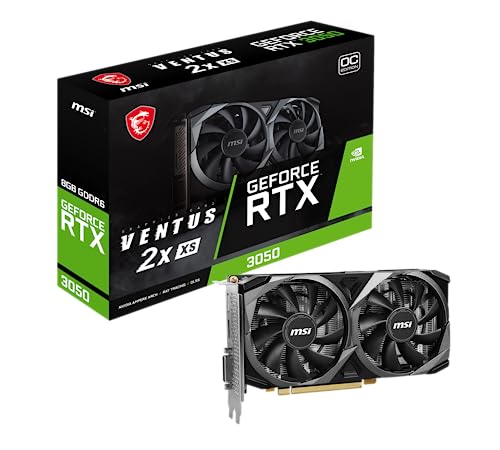
MSI GeForce RTX 3050 Ventus 2X XS 8G OC
Who it suits: best overall for this guide in this guide — buyers whose priority is budget gaming and everyday use and whose machine matches this card’s power and size: 130 w class — check the listing for the connector on this oc model, dual-fan, dual slot.
The RTX 3050 is where NVIDIA’s modern feature set starts: Ampere architecture with ray-tracing cores, DLSS upscaling and a proper NVENC encoder, wrapped in an 8 GB card that mainstream power supplies can feed. This MSI Ventus 2X XS version is the compact dual-fan take — TORX fans, a factory overclock with a maker-quoted boost of 1,807 MHz, and a footprint aimed at ordinary mid-tower and smaller builds rather than showcase rigs. For a buyer stepping up from integrated graphics or a GTX-era card, the jump is not subtle: DLSS alone turns several games from marginal to comfortable at 1080p.
Its honest position is 1080p first. At that resolution, with DLSS where a game offers it, the 3050 covers esports easily and modern single-player games at medium-to-high settings; at 1440p it becomes a settings-negotiation exercise, and ray tracing is a sometimes-feature rather than a default. The 8 GB of memory is the right amount for the class and ages far better than 4 GB or 6 GB rivals. What holds it back is raw throughput per dollar against AMD’s competing cards, which is why the comparisons in this guide keep returning to what you actually play: DLSS and NVENC are worth money to some buyers and nothing to others.
For budget gaming and everyday use, the specification that decides this card’s place is the combination of 8 GB GDDR6 on a 128-bit bus, 2,560 CUDA cores and a board power of 130 w class — check the listing for the connector on this oc model. Read against this article’s target, that combination means the card’s ceiling is set less by any single number than by how those numbers cooperate under sustained load — memory holding the assets, bandwidth feeding them, and the cooler and power budget sustaining the clocks that process them. Its outputs (hdmi and displayport (check listing for the exact mix)) define the desk it can drive, and its NVIDIA Ampere platform defines the features standing behind it: upscaling support, encoder hardware and driver maturity all trace back to that architecture, which is why this guide prints it in every review rather than leaving you to decode a model name.
Honest tier note: this card’s normal street position sits above the $200 line in this article’s title. It is included because it is the closest verifiable answer to part of this search, not because the budget magically stretches — check the live listing, consider it as the deliberate step-up, and read the other picks for the options that respect the line more closely or reach it through the used market.
- DLSS, ray tracing and NVENC — the full modern NVIDIA feature set at an entry tier
- 8 GB of VRAM ages better than 4 GB and 6 GB rivals
- Compact dual-fan Ventus design suits mainstream cases
Honest limitation: A 1080p card first; 1440p and heavy ray tracing ask more than its 128-bit design gives.
Choose it if its strengths — dLSS, ray tracing and NVENC — the full modern NVIDIA feature set at an entry tier — match the machine you actually own and the work in this article’s title. Skip it if its stated limitation is the thing you were hoping to escape; the neighbouring picks in this guide cover that ground deliberately.
ASUS Phoenix GeForce GTX 1650 OC Edition 4GB GDDR6
Who it suits: best value pick in this guide — buyers whose priority is budget gaming and everyday use and whose machine matches this card’s power and size: 75 w, powered by the slot on this model, compact single-fan, dual slot.
The GTX 1650 is the classic no-cable gaming upgrade: a Turing card that draws its 75 watts from the slot, so it drops into prebuilt desktops whose power supplies have no spare connectors and no headroom. In this ASUS Phoenix form it is a compact single-fan card with an Axial-tech fan and a full set of outputs — HDMI, DisplayPort and DVI-D — which makes it as useful for reviving an older monitor setup as for gaming. The GDDR6 memory on this version is the one to buy; earlier GDDR5 cards share the name and give up real performance.
On the desk it delivers the esports and last-generation experience honestly: fast frame rates in competitive titles at 1080p with sensible settings, playable results in bigger games at medium, and NVIDIA’s Turing NVENC encoder, which is good enough to stream or record while you play — a trick far beyond its price-class rivals of the same era. The ceiling is equally clear: 4 GB of memory forces texture compromises in the newest releases, and there is no DLSS to lean on. As a slot-powered revival for an old PC it remains excellent; as a long-term card for new AAA games it is a stepping stone, and the review sections below treat it that way.
For budget gaming and everyday use, the specification that decides this card’s place is the combination of 4 GB GDDR6 on a 128-bit bus, 896 CUDA cores and a board power of 75 w. Read against this article’s target, that combination means the card’s ceiling is set less by any single number than by how those numbers cooperate under sustained load — memory holding the assets, bandwidth feeding them, and the cooler and power budget sustaining the clocks that process them. Its outputs (hdmi, displayport and dvi-d (3 displays)) define the desk it can drive, and its NVIDIA Turing platform defines the features standing behind it: upscaling support, encoder hardware and driver maturity all trace back to that architecture, which is why this guide prints it in every review rather than leaving you to decode a model name.
Tier note: this card is one of the picks that genuinely belongs to the $200 conversation — verify its live position on the listing before ordering, because cards move across tier lines with stock and promotions in both directions.
- No power cable needed — the classic prebuilt-PC upgrade
- Turing NVENC encoder makes light streaming and recording realistic
- Compact single-fan Phoenix cooler fits small cases
Honest limitation: 4 GB of VRAM limits textures in current releases, and there is no DLSS support to recover performance.
Choose it if its strengths — no power cable needed — the classic prebuilt-PC upgrade — match the machine you actually own and the work in this article’s title. Skip it if its stated limitation is the thing you were hoping to escape; the neighbouring picks in this guide cover that ground deliberately.
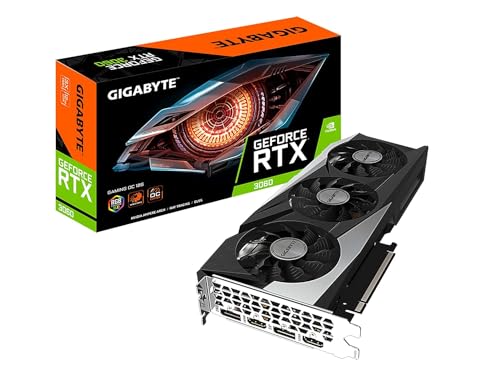
GIGABYTE GeForce RTX 3060 Gaming OC 12G (REV2.0)
Who it suits: best step-up pick in this guide — buyers whose priority is budget gaming and everyday use and whose machine matches this card’s power and size: 170 w class, single 8-pin connector, triple-fan, dual slot.
The RTX 3060’s defining decision was memory: NVIDIA gave this mainstream Ampere card 12 GB of GDDR6 on a 192-bit bus — more memory than the tier above it at launch — and that single choice is why it remains relevant years later. Gigabyte’s Gaming OC version wraps it in the triple-fan WINDFORCE cooler, a factory overclock and the build quality of a card meant to be kept, not replaced next season. With 3,584 CUDA cores, DLSS and a mature driver record across games and creative applications alike, it is the generalist of this guide: gaming, editing, 3D and streaming all run through it credibly.
Its age shows in efficiency rather than capability — newer cards match it on less power — and its ray tracing, while real, wants DLSS alongside it at anything above 1080p. But the 12 GB frame buffer keeps paying rent: texture packs, video timelines, 3D scenes and AI experiments that choke 8 GB cards simply fit here. For a buyer who keeps hardware for years and does more than one thing with a PC, that headroom is the argument, and it is why this card appears in so many different guides in this category wearing a different hat each time.
For budget gaming and everyday use, the specification that decides this card’s place is the combination of 12 GB GDDR6 on a 192-bit bus, 3,584 CUDA cores and a board power of 170 w class. Read against this article’s target, that combination means the card’s ceiling is set less by any single number than by how those numbers cooperate under sustained load — memory holding the assets, bandwidth feeding them, and the cooler and power budget sustaining the clocks that process them. Its outputs (hdmi and displayport outputs (4 displays)) define the desk it can drive, and its NVIDIA Ampere platform defines the features standing behind it: upscaling support, encoder hardware and driver maturity all trace back to that architecture, which is why this guide prints it in every review rather than leaving you to decode a model name.
Honest tier note: this card’s normal street position sits above the $200 line in this article’s title. It is included because it is the closest verifiable answer to part of this search, not because the budget magically stretches — check the live listing, consider it as the deliberate step-up, and read the other picks for the options that respect the line more closely or reach it through the used market.
- 12 GB of VRAM — headroom for games, editing, 3D and AI side projects
- DLSS plus CUDA support across creative applications
- Triple-fan Gaming OC cooler is quiet and built to last
Honest limitation: An older, less efficient design; ray tracing leans on DLSS above 1080p.
Choose it if its strengths — 12 GB of VRAM — headroom for games, editing, 3D and AI side projects — match the machine you actually own and the work in this article’s title. Skip it if its stated limitation is the thing you were hoping to escape; the neighbouring picks in this guide cover that ground deliberately.
NVIDIA GeForce GTX 1660 Super 6GB (used and remaining stock)
Who it suits: best for smaller or quieter builds in this guide — buyers whose priority is budget gaming and everyday use and whose machine matches this card’s power and size: 125 w class, single 8-pin connector, dual-fan, dual slot (varies).
The GTX 1660 Super was the thinking budget gamer’s card of the Turing generation: nearly GTX 1660 Ti performance, fast GDDR6 memory, the good Turing NVENC encoder for streaming, and power draw modest enough for mainstream systems. It remains a genuinely satisfying 1080p card for esports and mainstream titles, and its encoder keeps it relevant for streamers on a budget long after faster-on-paper rivals without NVENC have aged out.
Its limits are the era’s: 6 GB of memory is a negotiation in the newest games, there is no DLSS and no ray tracing worth enabling. New stock has largely dried up, so most buyers meet it used or as remaining inventory at prices that sometimes overlap better cards — compare carefully against the linked RTX 3050 and RX 6600 in this guide before paying a nostalgia premium. At the right figure it is still easy to recommend; at the wrong one it is a museum piece with a fan.
For budget gaming and everyday use, the specification that decides this card’s place is the combination of 6 GB GDDR6 on a 192-bit bus, 1,408 CUDA cores and a board power of 125 w class. Read against this article’s target, that combination means the card’s ceiling is set less by any single number than by how those numbers cooperate under sustained load — memory holding the assets, bandwidth feeding them, and the cooler and power budget sustaining the clocks that process them. Its outputs (hdmi, displayport and dvi outputs (varies by board)) define the desk it can drive, and its NVIDIA Turing platform defines the features standing behind it: upscaling support, encoder hardware and driver maturity all trace back to that architecture, which is why this guide prints it in every review rather than leaving you to decode a model name.
Tier note: this card is one of the picks that genuinely belongs to the $200 conversation — verify its live position on the listing before ordering, because cards move across tier lines with stock and promotions in both directions.
- Strong 1080p raster performance and the Turing NVENC encoder
- Modest power draw suits mainstream systems
- GDDR6 memory keeps it relevant longer than its siblings
Honest limitation: 6 GB of VRAM, no DLSS, and mostly used availability at variable prices.
Choose it if its strengths — strong 1080p raster performance and the Turing NVENC encoder — match the machine you actually own and the work in this article’s title. Skip it if its stated limitation is the thing you were hoping to escape; the neighbouring picks in this guide cover that ground deliberately.
Prose-only pick: no Amazon link is given for this card, for the reason stated in its review and in this article’s source notes. Check price and condition carefully wherever it is sold.
Gigabyte GeForce GT 1030 Low Profile 2G (GV-N1030D5-2GL)
Who it suits: best alternative approach in this guide — buyers whose priority is budget gaming and everyday use and whose machine matches this card’s power and size: 30 w, powered by the slot — no power cable, low-profile, single slot.
The GT 1030 is the smallest honest step up from integrated graphics that still carries a real name and a real driver. Its Pascal chip and 2 GB of GDDR5 — and the memory type matters enormously here, because DDR4 versions of this same card name are dramatically slower — give an old office PC a proper HDMI output, smooth video playback and enough 3D ability for light, older or deliberately undemanding games at modest settings. The low-profile, single-slot body with a small fan fits the small-form-factor desktops that no gaming card will ever enter, and because it draws all its power from the PCIe slot, it asks nothing of a weak, ageing power supply.
What it is not is a modern gaming card, and this guide will not dress it up as one. Two gigabytes of memory and a narrow 64-bit bus cap it at esports-era titles, older games and low settings, and its two display outputs limit multi-monitor ambitions. Buy it as a display adapter with light gaming ability, for a media PC, a second machine or an old desktop that needs a screen output its motherboard lacks, and it does that job reliably for years. Buy it expecting current releases at high settings and no honest review can save the purchase.
For budget gaming and everyday use, the specification that decides this card’s place is the combination of 2 GB GDDR5 on a 64-bit bus, 384 CUDA cores and a board power of 30 w. Read against this article’s target, that combination means the card’s ceiling is set less by any single number than by how those numbers cooperate under sustained load — memory holding the assets, bandwidth feeding them, and the cooler and power budget sustaining the clocks that process them. Its outputs (hdmi and dvi-d (2 displays)) define the desk it can drive, and its NVIDIA Pascal platform defines the features standing behind it: upscaling support, encoder hardware and driver maturity all trace back to that architecture, which is why this guide prints it in every review rather than leaving you to decode a model name.
Tier note: this card is one of the picks that genuinely belongs to the $200 conversation — verify its live position on the listing before ordering, because cards move across tier lines with stock and promotions in both directions.
- Slot-powered at 30 W — works with almost any existing power supply
- Low-profile single-slot body fits small office desktops
- GDDR5 version is a genuine step up from integrated graphics for video and light gaming
Honest limitation: 2 GB of memory and a 64-bit bus make it a display and light-gaming card, not a card for current demanding titles.
Choose it if its strengths — slot-powered at 30 W — works with almost any existing power supply — match the machine you actually own and the work in this article’s title. Skip it if its stated limitation is the thing you were hoping to escape; the neighbouring picks in this guide cover that ground deliberately.
MSI GeForce RTX 4060 Ventus 2X Black 8G OC
Who it suits: best for buyers planning ahead in this guide — buyers whose priority is budget gaming and everyday use and whose machine matches this card’s power and size: 115 w, single 8-pin connector, dual-fan, dual slot.
The RTX 4060’s story is efficiency plus software. Built on Ada Lovelace, it delivers its 1080p and light-1440p performance at just 115 watts — a figure that lets this compact MSI Ventus 2X run cool and quiet in almost any case — and it brings DLSS 3 frame generation, which in supported games manufactures smoothness its raw raster power alone could not. Add AV1-capable NVENC encoding for streamers and the strongest driver ecosystem in the business, and the card’s case writes itself for buyers who value features and watts as much as raw frames.
The honest counterweight is memory and bus width: 8 GB on a 128-bit interface is a specification that ages at 1440p and in texture-heavy releases, and in plain rasterized gaming the jump over its predecessor is modest — the generational win is concentrated in DLSS 3 titles and in power draw. This Ventus 2X is the sensible trim: dual TORX fans, a backplate, a factory overclock, no premium-tier lighting tax. Buy it for a quiet, efficient, feature-complete 1080p machine or a small build; buy a bigger-memory rival if your games and resolution keep outgrowing 8 GB.
For budget gaming and everyday use, the specification that decides this card’s place is the combination of 8 GB GDDR6 on a 128-bit bus, 3,072 CUDA cores and a board power of 115 w. Read against this article’s target, that combination means the card’s ceiling is set less by any single number than by how those numbers cooperate under sustained load — memory holding the assets, bandwidth feeding them, and the cooler and power budget sustaining the clocks that process them. Its outputs (hdmi 2.1a and 3x displayport 1.4a (4 displays)) define the desk it can drive, and its NVIDIA Ada Lovelace platform defines the features standing behind it: upscaling support, encoder hardware and driver maturity all trace back to that architecture, which is why this guide prints it in every review rather than leaving you to decode a model name.
Honest tier note: this card’s normal street position sits above the $200 line in this article’s title. It is included because it is the closest verifiable answer to part of this search, not because the budget magically stretches — check the live listing, consider it as the deliberate step-up, and read the other picks for the options that respect the line more closely or reach it through the used market.
- Only 115 W — cool, quiet and easy on power supplies
- DLSS 3 frame generation and AV1 NVENC encoding
- Compact dual-fan design fits small and quiet builds
Honest limitation: 8 GB on a 128-bit bus is the aging risk at 1440p and in texture-heavy games.
Choose it if its strengths — only 115 W — cool, quiet and easy on power supplies — match the machine you actually own and the work in this article’s title. Skip it if its stated limitation is the thing you were hoping to escape; the neighbouring picks in this guide cover that ground deliberately.
Comparison Table
| Product | Platform | Key specifications | Link |
|---|---|---|---|
| MSI GeForce RTX 3050 Ventus 2X XS 8G OC | NVIDIA Ampere | 8 GB GDDR6 · 128-bit · boost clock 1,807 MHz (maker figure) · dual TORX fans · HDMI/DP | Check on Amazon |
| ASUS Phoenix GeForce GTX 1650 OC Edition 4GB GDDR6 | NVIDIA Turing | 4 GB GDDR6 · 128-bit · 896 CUDA cores · 75 W slot power · HDMI + DisplayPort + DVI-D | Check on Amazon |
| GIGABYTE GeForce RTX 3060 Gaming OC 12G (REV2.0) | NVIDIA Ampere | 12 GB GDDR6 · 192-bit · 3,584 CUDA cores · 3X WINDFORCE fans · Ampere · DLSS | Check on Amazon |
| NVIDIA GeForce GTX 1660 Super 6GB (used and remaining stock) | NVIDIA Turing | 6 GB GDDR6 · 192-bit · 1,408 CUDA cores · Turing NVENC — mostly used/remaining stock | Prose only |
| Gigabyte GeForce GT 1030 Low Profile 2G (GV-N1030D5-2GL) | NVIDIA Pascal | 2 GB GDDR5 · 64-bit · 384 CUDA cores · 30 W slot power · low profile · HDMI + DVI-D | Check on Amazon |
| MSI GeForce RTX 4060 Ventus 2X Black 8G OC | NVIDIA Ada Lovelace | 8 GB GDDR6 · 128-bit · 3,072 CUDA cores · 115 W · DLSS 3 frame generation · AV1 NVENC | Check on Amazon |
Stretching a Tight Budget Without Wasting It
The most expensive budget card is the one bought twice — a card so weak it is replaced within a year costs more than the right card bought once. That is why this guide’s budget picks cluster at the tiers where gaming actually starts, and why several reviews advise waiting, saving the difference, or buying used rather than spending the whole budget on a new card that cannot do the job in the title. The step from a display-class card to an entry gaming card is the largest quality jump in the entire category; the steps after it are refinements.
Settings are the other half of budget gaming, and they are free. Esports titles are built to run everywhere; mainstream games at medium settings with an upscaler engaged look far better than their reputation suggests; and a 1080p monitor forgives what a 4K television exposes. A budget card paired with honest settings delivers a better evening than a mid-range card bought by emptying the budget that should have covered the power supply it requires. Spend on the card class first, the fit second, and the badge last.
A Note on Prices and Listings in This Category
Graphics cards are among the most promotion- and stock-driven products sold online: the same GPU moves between list and sale positions across the year, board partners list near-identical cards under different model codes, and memory variants of one name can be different products in all but branding. That is why this guide prints no product prices and sends you to the live listing for the current number — a printed price would be wrong more often than right, and a wrong price helps no one. When you check a listing, confirm the full model code, the memory capacity and type, the connector your power supply must provide, and the card’s dimensions against your case, because bundles and variants differ by listing even for the same GPU.
What a Small Budget Honestly Buys in Graphics Cards
Small graphics budgets have a hard floor, and it is set by physics and manufacturing rather than by retailers: a modern gaming GPU, its memory, its board and its cooler cost more to make than the lowest tiers in this category, which is why the honest guides at these prices talk about three different markets at once. There is the new market, where the cheapest real gaming cards live; the used market, where older flagships and mining-era cards deliver remarkable frames per dollar with real risk attached; and the no-card market, where a modern processor’s integrated graphics quietly outperform the cheapest new cards sold. A guide that pretends only the first market exists will happily sell you a display adapter as a gaming card.
The used market deserves respect and caution in equal measure. Cards from the mining era — the RX 580 above all — offer memory capacities and bus widths that new budget cards do not match, and a carefully bought example can anchor a genuinely enjoyable 1080p machine. The same cards may have run at full load for years, so the discipline matters: buy from sellers who demonstrate the card working, inspect fans and connectors, stress-test inside the return window, and keep the saving large enough to justify the absent warranty. When a used card and a new card sit close in price, the new card’s warranty, efficiency and drivers usually win; when the gap is wide, used is the smart money’s route into real gaming.
Integrated graphics are the third answer and the one nobody selling cards mentions: a current-generation desktop processor with a competent integrated GPU plays esports and older titles respectably, outputs multiple displays, and costs nothing beyond the processor you already own. For a machine that mainly needs screens and light games while a real card is saved for, integrated graphics plus patience beats a bottom-tier card bought in haste. The picks in this guide are ordered with all three markets in view, and each review says plainly which market it belongs to.
How to Choose — NVIDIA Graphics Cards For Under $200
- Treat VRAM as the longevity specification. Cores decide today’s speed; memory decides how long the card keeps its settings. For a card you plan to keep for years, the higher-memory option in a class is usually the better purchase even when its benchmark lead today is small.
- Match the brand to your software. Gamers can choose freely; creators and professionals cannot. CUDA-dependent applications, certified CAD drivers and specific encoder needs all pick a brand for you — check your software list before your benchmark list.
- Value the encoder if you stream or edit. NVENC, AMD’s media engine and Intel’s AV1-capable blocks turn recording, streaming and exports from a burden into a background task. If you create video at all, the encoder generation is a headline specification, not a footnote.
- Plan the cables and outputs. Count your monitors, note their inputs, and confirm the card’s outputs and the cable standards needed to run each panel at its full resolution and refresh. The cheapest performance problem in this category is a cable that cannot carry the signal.
- Leave performance headroom. A card running at its absolute limit is loud, hot and stutter-prone in the busiest scenes. Buying one class above the minimum for your target keeps frame times smooth and fan noise down, and it is usually cheaper than the upgrade it prevents.
- Enable the platform features after installing. Resizable BAR, variable refresh and the correct creator or game driver are free performance sitting in menus. A short setup session after installation is part of the purchase — several cards in this guide gain real performance from it.
- Buy the cooler and warranty, not just the chip. The same GPU arrives in cards that differ in noise, size, build and support. Board partners with a record — and a warranty you can actually use — are worth a modest premium over the cheapest implementation of the same silicon.
- Keep the driver current, and keep the old one handy. New drivers bring game support and fixes, especially for newer platforms like Intel Arc. Update deliberately, note the version that worked, and a bad release becomes a five-minute rollback instead of a ruined evening.
- Think about the exit. Cards with more memory, a respected board partner and a standard form factor resell better. If you upgrade often, the card’s second-hand appeal is part of its price — value guides in this category count it for a reason.
- Start from the display, not the benchmark chart. Name the monitor’s resolution and refresh rate first. Every card class in this guide maps to a display class, and buying for the panel you own — or the one genuinely planned — prevents both the waste of invisible frames and the disappointment of a card outrun by its own screen.
Living With the Card: Installation, Heat and the First Month
Installation day has a rhythm worth following in order. Before the old card comes out, download the new driver package so the machine is never stranded at a low resolution hunting for software. Power down, switch the supply off, ground yourself against the case, and photograph the existing power connectors before touching them — the photograph settles every later argument about what was plugged where. Seat the new card until the slot latch clicks, connect its power cables from separate supply leads where the card wants two, and only then close the case. First boot is a checklist, not a celebration: confirm the card’s name in the driver, confirm the monitor is running at its full resolution and refresh, and enable variable refresh and Resizable BAR if your platform supports them, because several picks in this guide gain real performance from those two menus.
The first month teaches you the card’s character. Temperatures under a sustained load settle into a pattern — a card that runs hot and loud in week one will not improve in month six, so use the return window honestly if the cooler disappoints. Fan curves can be softened for a quiet room or sharpened for a warm one, and a dusty case deserves its cleaning before the new card is blamed for its predecessor’s environment. Keep the driver current but not frantic: update for the games and applications you actually run, note the version that worked, and treat the machine’s stability as the feature it is. A graphics card bought well disappears into the work and the play — the highest compliment this category offers, and the state every pick above was chosen to reach.
Common Buying Mistakes
- Ignoring VRAM at 1440p and 4K, where texture settings consume memory faster than any other specification ages.
- Assuming every version of a card with the same name is identical — memory type and capacity variants (GDDR5 versus GDDR6, 6 GB versus 8 GB) can differ enormously.
- Forgetting case dimensions: length, slot thickness and connector clearance have ended more upgrades than any benchmark.
- Skipping Resizable BAR and variable-refresh setup after installation, leaving free performance unclaimed in BIOS and monitor menus.
- Buying a used mining-era card without testing it under load inside the return window.
- Choosing a gaming card for certified professional software without checking the vendor’s certified list — or paying workstation prices when no certification is needed.
- Chasing ultra settings by default; the high preset with an upscaler usually looks near-identical and runs dramatically faster.
- Neglecting airflow: a powerful card in a sealed, dusty case throttles itself into a slower card’s performance.
- Buying for a game your processor cannot feed — if frame rates ignore the settings slider, the bottleneck is elsewhere.
Final Recommendation
- Best overall for this guide: MSI GeForce RTX 3050 Ventus 2X XS 8G OC.
- Best value pick: ASUS Phoenix GeForce GTX 1650 OC Edition 4GB GDDR6.
- Best step-up pick: GIGABYTE GeForce RTX 3060 Gaming OC 12G (REV2.0).
- Best for smaller or quieter builds: NVIDIA GeForce GTX 1660 Super 6GB (used and remaining stock).
- Best alternative approach: Gigabyte GeForce GT 1030 Low Profile 2G (GV-N1030D5-2GL).
- Best for buyers planning ahead: MSI GeForce RTX 4060 Ventus 2X Black 8G OC.
Our top two for this search are the MSI GeForce RTX 3050 Ventus 2X XS 8G OC, for the buyer this article was written for, and the ASUS Phoenix GeForce GTX 1650 OC Edition 4GB GDDR6, for the household whose priorities run the other way. Between them they cover the two shapes this search usually takes: the complete answer bought once, and the value answer that leaves budget for the rest of the machine. Readers weighing a different angle should also see Best Graphics Cards For Mining and Best Graphics Cards Under $150, and anyone still deciding which class they need can start with Best Graphics Cards Under $1000. Measure your case, read your power supply’s label, name your display’s resolution and refresh, and check the live price before you order — in this category, that homework is the whole difference between a card that transforms a machine and one that merely arrives at the door.
Frequently Asked Questions
Can you really game on the cheapest graphics cards?
Yes — within honest limits. Esports, older and indie titles play well on entry cards and even integrated graphics; current demanding releases need the entry gaming class or the used market. This guide labels which is which on every pick.
Is a used graphics card a good idea on a budget?
It is the budget route with the best frames per dollar and the only real risk in this guide. Buy demonstrable cards, test under load inside the return window, and keep the saving large enough to justify the missing warranty.
Why do some very cheap cards perform worse than integrated graphics?
The cheapest new cards are display adapters built to add a screen output, with narrow memory buses and old architectures. A modern processor’s integrated GPU can outrun them, which is why this guide names that trap explicitly.
How much should a first gaming card cost?
Spend to the entry gaming class rather than to a fixed figure: the step from display-class to gaming-class is the largest quality jump in the category, and a card bought below it is usually bought twice.
What else does a budget build need besides the card?
A power supply that can feed it (or a slot-powered card that needs nothing), a case it physically fits, and settings discipline. Budget for the fit, not just the card.