Where to buy
Check the latest price, availability and delivery on Amazon. Orders are placed on Amazon. We may earn a commission from qualifying purchases.
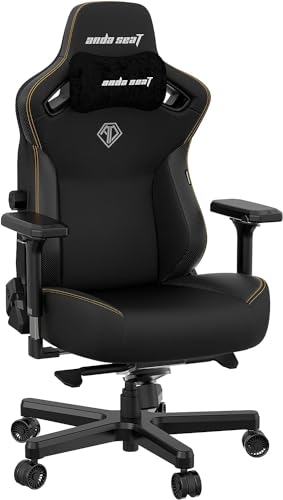
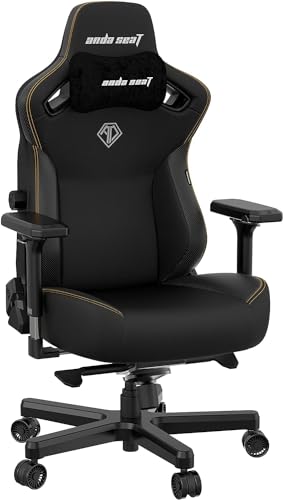
- Best XL premium alternative: AndaSeat Kaiser 3 XL Gaming Chair — Check on Amazon
- Razer Iskur V2 X Gaming Chair — Check on Amazon
- Secretlab Titan Evo Gaming Chair (Stealth, Leatherette) — Check on Amazon
- Corsair TC100 Relaxed Gaming Chair (Fabric) — Check on Amazon
See 2 more options
- Dowinx Gaming Chair Fabric with Pocket Spring Cushion — Check on Amazon
- Steelcase Leap — prose-only in this guide: sold mainly through its maker’s own channels, so it is covered in prose here — see the full review below
Read the full guide ↓
Disclosure: As an Amazon Associate, ilcastellomenu.com earns from qualifying purchases. Links to Amazon on this page are affiliate links; they cost you nothing extra. Listing details such as price and availability change often, so check the current Amazon listing before you buy.
Anyone looking for the best gaming chairs for back is really asking a fit question disguised as a shopping question. Chairs fail their owners in predictable ways — seats that flatten, pillows that wander, bolsters that pinch, frames sized for somebody else — and every one of those failures is visible in the specifications before you spend anything. This guide reads those specifications for you: six picks from verified listings, each reviewed for who it suits, what it does well, and the honest limitation its advertising leaves out.
One boundary before the picks, stated plainly: a chair is furniture, not a medical device. No chair in this guide diagnoses, treats or cures back pain, and if your pain is persistent, worsening, or accompanied by numbness or weakness, the right purchase is a medical professional’s time, not a product. What a well-chosen chair legitimately does is support comfortable posture habits — a supported lower-back curve, a seat that distributes pressure, armrests that unload your shoulders — across the long hours that desk and gaming life impose. The picks below were chosen for exactly those support features, described as what they are.
In this guide
Quick Picks
Short on time, or comparing several options at once? Each row below names a buyer type and the chair that suits it, with a link to the listing where one is verified.
| Buyer type | Pick | Why it stands out | Link |
|---|---|---|---|
| Best XL premium alternative | AndaSeat Kaiser 3 XL Gaming Chair | An XL premium chair with 4-way lumbar and magnetic 4D armrests that swap tops without tools | Check on Amazon |
| Best built-in lumbar support | Razer Iskur V2 X Gaming Chair | Integrated lumbar support built into the backrest — no loose pillow to slide out of place | Check on Amazon |
| Best premium all-rounder | Secretlab Titan Evo Gaming Chair (Stealth, Leatherette) | The category’s benchmark premium chair: 4-way lumbar, magnetic pillow, 4D armrests and a big-and-tall rating | Check on Amazon |
| Best wider-seat comfort | Corsair TC100 Relaxed Gaming Chair (Fabric) | Corsair’s ‘relaxed’ fit: a wider, roomier seat than racing chairs, in breathable fabric | Check on Amazon |
| Best seat cushion in class | Dowinx Gaming Chair Fabric with Pocket Spring Cushion | A pocket-spring seat cushion — the construction sofas use — instead of a plain foam slab | Check on Amazon |
| Best office-ergonomic alternative | Steelcase Leap | The long-running office benchmark whose back changes shape as you move | Prose only — see review |
How These Picks Were Chosen
Every pick in this guide comes from a live, verifiable listing whose maker publishes the specifications that matter — materials, support type, dimensions and, where a capacity claim is made, the maker’s own rating. ASINs were checked against Amazon listing records and corroborating retailer or price-tracker records during research, and a product only earns a ‘Check on Amazon’ link when its listing could be verified that way. Products we could not verify that way are still covered where they belong in the conversation, but they are covered in prose, clearly, without a link.
One discipline ran through the selection: no invented numbers. This guide prints no product prices, because listing prices move constantly and a printed figure would mislead within weeks; it prints no fixed product scores or popularity tallies, for the same reason. The figures it does print — maker capacity ratings, recline angles stated in listings, dimensions — are the makers’ own, attributed as such. Comfort claims are kept to what a chair’s construction can honestly promise, because a guide that oversells a seat has failed you before the box arrives.
The 6 Best Gaming Chairs for Back
AndaSeat Kaiser 3 XL Gaming Chair
Who it suits: Larger players comparing the premium tier, who want maximum room and adjustment with a slightly softer sit than the firmest rivals.
The Kaiser 3 XL is AndaSeat’s entry in the premium big-chair class, and it competes on room and refinement: an XL frame that gives larger players space at the shoulders and hips, a built-in lumbar system adjustable four ways, a memory-foam head pillow on a magnetic mount, and 4D armrests whose tops attach magnetically — pop them off, swap them, reposition them, no tools and no screws. The PVC leather finish is the line’s premium surface, smooth and easy to keep clean.
In the premium comparison that matters, the Kaiser tends to sit a touch softer than the firmest benchmark chairs, which some backs will prefer and posture purists may not. Its XL dimensions demand an honest measurement of the desk corner — this is a large object. What you are buying at this level, from any of the three premium names in this guide, is the end of compromise: capacity, adjustment and materials all stop being constraints. The Kaiser’s particular blend of room, softness and magnetic convenience makes it the big player’s strongest alternative to the default choice.
- XL frame gives big and tall users genuine shoulder and hip room
- 4-way built-in lumbar plus a memory-foam magnetic head pillow
- Magnetic armrest tops swap and reposition without tools
Honest limitation: The XL footprint is large for small rooms and desks, and like its premium rivals it carries a premium price with no footrest.
Choose it if it matches the player described above and its fit, surface and support suit your room. Skip it if its honest limitation is the thing you were trying to escape — the other picks in this guide cover that ground deliberately.
Razer Iskur V2 X Gaming Chair
Who it suits: Back-conscious players who hate strap-on lumbar pillows and want support that is engineered into the chair itself.
The Iskur line exists because Razer looked at the strap-on lumbar pillow — the part of every budget chair that slides down, twists sideways and ends up on the floor — and engineered it away. The V2 X builds its lumbar support into the backrest itself, shaped to meet the lower back’s natural curve, so the support is in the same place in hour six as it was in minute one. A widened seat base with softened edges spreads sitting pressure more evenly, and the backrest reclines to 152 degrees for between-match resets.
The trade for that integration is adjustability: a built-in curve fits the backs it was designed around, and while that covers most players, anyone whose spine wants support in a very specific place should compare the dial-adjustable systems on the Secretlab and AndaSeat picks before deciding. The fabric finish is plush and breathable, the armrests adjust in two directions, and the overall standard of finish is a clear step above the budget shelf. As a statement of where gaming-chair design is heading, the V2 X is the clearest one at its tier.
- Built-in lumbar support stays exactly where it was designed to be
- Widened seat base with reduced edges spreads pressure more evenly
- 152-degree recline and a plush fabric finish for long sessions
Honest limitation: The built-in lumbar curve is fixed in shape — supportive for most backs, but buyers who need deeply adjustable support should compare the 4-way systems on the premium picks.
Choose it if it matches the player described above and its fit, surface and support suit your room. Skip it if its honest limitation is the thing you were trying to escape — the other picks in this guide cover that ground deliberately.
Secretlab Titan Evo Gaming Chair (Stealth, Leatherette)
Who it suits: Players ready to buy once at the premium level — including big and tall users — who want the most refined adjustment package in gaming chairs.
The Titan Evo is the chair the rest of this category is measured against, and the specification explains why: a lumbar system that adjusts four ways — height and depth — built into the backrest; a memory-foam head pillow that attaches magnetically and can be repositioned in a second; armrests that adjust in four directions; and cold-cure foam moulded rather than cut, so the seat keeps its shape and support across years of daily use. This Stealth leatherette version is the big-and-tall configuration, maker-rated up to 395 lb.
Two expectations to set before spending at this level. The seat is firm by design — Secretlab argues, with some justice, that firm foam supports posture where soft foam lets you sink and slouch — but buyers who dream of a sofa-soft sit should choose accordingly. And the price is the category’s ceiling, buying materials, mechanisms and warranty depth rather than any single headline feature. For the player who has replaced two budget chairs and is done replacing chairs, this is the purchase that ends the cycle.
- 4-way built-in lumbar adjusts up, down, in and out to fit your actual back
- Magnetic memory-foam head pillow snaps on and stays put; 4D armrests dial in elbow support
- Maker-rated for big and tall users up to 395 lb, with premium materials throughout
Honest limitation: It sits at the top of the category’s price range, the firm seat is a deliberate design choice that soft-seat lovers should test their expectations against, and there is no footrest.
Choose it if it matches the player described above and its fit, surface and support suit your room. Skip it if its honest limitation is the thing you were trying to escape — the other picks in this guide cover that ground deliberately.
Corsair TC100 Relaxed Gaming Chair (Fabric)
Who it suits: Broader players and cross-legged sitters who find racing-chair bolsters pinch their thighs, from a major PC-hardware brand.
The TC100 Relaxed starts from a complaint every broad player knows: racing chairs are modelled on motorsport seats, and motorsport bolsters are designed to hold a driver against cornering forces that do not exist at a desk. Corsair widened the seat, flattened the bolsters and called the result ‘relaxed’, and for players who sit cross-legged, shift positions or simply have wider hips and thighs, the difference is immediate — this is a chair you sit in rather than one you are poured into.
The fabric version adds the warm-room advantage of a breathable surface, and the included lumbar pillow and detachable memory-foam neck pillow cover the support basics without an internal mechanism to adjust. Support after the sale is part of the proposition: Corsair is a major PC-hardware company with the parts and warranty machinery that implies. What the TC100 does not do is lounge — there is no footrest — and racers who love the bucket-seat hug will find it plain. For everyone the bucket pinched, it is the correction.
- Wider, flatter seat without the thigh-pinching bolsters of bucket designs
- Breathable fabric with a memory-foam neck pillow included
- Backed by Corsair’s PC-hardware support and warranty infrastructure
Honest limitation: The relaxed fit trades away the hugged, locked-in feel racing-chair fans love, and there is no footrest for full lounging.
Choose it if it matches the player described above and its fit, surface and support suit your room. Skip it if its honest limitation is the thing you were trying to escape — the other picks in this guide cover that ground deliberately.
Dowinx Gaming Chair Fabric with Pocket Spring Cushion
Who it suits: Long-session players who find flat foam seat pads go numb or bottom-out, and fabric fans who want a footrest too.
Most gaming chairs sit you on a slab of moulded foam, and the Dowinx fabric chair’s reason to exist is that it does not: its seat cushion is built with pocket springs, the same construction that keeps sofa seats supportive, each spring responding where your weight actually lands. Across a long session the difference is not subtle — pressure spreads instead of concentrating, and the cushion recovers its shape between sittings instead of slowly packing down into a foam pancake over the chair’s first year.
Around that seat, Dowinx wraps a breathable fabric high-back with a retractable footrest, a vibration massage lumbar cushion and a headrest, rated by the maker to 290 lb. The fabric asks for real cleaning when drinks spill, and the massage function is a gentle vibration rather than any kind of deep work, but neither caveat touches the chair’s central strength. If your buying history is a trail of chairs whose seats died before their backs did, this is the mid-budget design that attacks the actual failure point.
- Pocket-spring cushion keeps its shape and support far longer than plain foam
- Breathable fabric surface with a footrest and massage lumbar cushion included
- Maker-rated to 290 lb with a high-back adult fit
Honest limitation: The massage cushion is vibration-only, and the fabric needs proper cleaning rather than a quick wipe after spills.
Choose it if it matches the player described above and its fit, surface and support suit your room. Skip it if its honest limitation is the thing you were trying to escape — the other picks in this guide cover that ground deliberately.
Steelcase Leap
Who it suits: Players whose desk is primarily a workplace and who want proven ergonomic engineering without gaming styling.
The Steelcase Leap has been the ergonomic office benchmark for so long that its central idea still feels modern: its backrest is built to change shape as you do, flexing to follow the spine’s movement between upright work and leaned-back thought. For the player whose gaming desk is first a working desk — and whose back keeps office hours — that movement-following support is a genuinely different and defensible answer to the gaming chair’s fixed shapes.
It is covered in prose because it sells through office-furniture channels rather than a verifiable Amazon listing we could pin for this guide. Its compromises for gaming are cultural as much as physical: no headrest-and-recline lounge mode, no racing silhouette, and professional-furniture pricing. But as a reminder that ‘gaming chair’ is a category, not a law, the Leap earns its paragraph in any honest guide — especially for readers whose sitting day is eight hours of work with gaming as the evening’s second act.
- Backrest flexes and reshapes to follow your spine as you change posture
- Decades of office deployment behind its mechanisms and support
- Understated design that belongs in any professional room
Honest limitation: Sold through office-furniture channels rather than a pinnable Amazon listing, with no gaming-chair recline culture or headrest tradition; priced as professional furniture.
Choose it if its particular strength is the one your setup lacks and buying through its maker’s own channels suits you. Skip it if you want the verified-listing convenience of the linked picks in this guide.
Covered in prose in this guide: sold mainly through its maker’s own channels, so it is covered in prose here — see the full review below.
Comparison Table
| Product | Upholstery | Support | Armrests | Footrest / format | Link |
|---|---|---|---|---|---|
| AndaSeat Kaiser 3 XL Gaming Chair | Premium PVC leather | 4-way adjustable built-in lumbar + memory-foam head pillow | Magnetic 4D armrests | No footrest | Check on Amazon |
| Razer Iskur V2 X Gaming Chair | Plush fabric finish | Built-in lumbar support | 2D armrests | No footrest | Check on Amazon |
| Secretlab Titan Evo Gaming Chair (Stealth, Leatherette) | Premium leatherette | 4-way adjustable built-in lumbar + magnetic memory-foam head pillow | 4D armrests | No footrest | Check on Amazon |
| Corsair TC100 Relaxed Gaming Chair (Fabric) | Breathable fabric | Lumbar pillow + detachable memory-foam neck pillow | Adjustable armrests | No footrest | Check on Amazon |
| Dowinx Gaming Chair Fabric with Pocket Spring Cushion | Fabric upholstery | Massage lumbar cushion + headrest | Padded armrests | Retractable footrest | Check on Amazon |
| Steelcase Leap | Fabric or leather upholstery options | LiveBack shape-changing backrest | Adjustable armrests | No footrest | Prose only |
Support That Stays Where You Put It
The central design question in this category is not whether a chair offers lumbar support but whether the support is still correctly placed in hour four. The strap-on pillow — the budget category’s standard answer — migrates: it slides down the backrest, twists, and ends up cushioning nothing while its owner sits in the slouch it was bought to prevent. The built-in systems on the stronger picks here exist to end that failure: Razer’s Iskur builds the curve into the backrest itself, while Secretlab and AndaSeat build in lumbar mechanisms that adjust in height and depth and then stay set, session after session.
Neither approach is magic, and this guide will not pretend otherwise. A built-in curve fits the backs it was designed around; an adjustable system fits more backs but asks you to spend ten minutes dialling it in. What both beat, decisively, is the migrating pillow. If you choose a pillow-based pick from this guide, use the straps, set the pillow at your belt line where the lower back’s curve actually lives, and re-set it when it wanders. Support is a position, not a purchase.
The Whole Sitting System: Seat, Arms, Screen
Backs do not experience a chair in isolation; they experience a system. A seat that is too soft or too shallow lets the pelvis roll backward, flattening the lower back’s curve no matter what the backrest does — which is why the pocket-spring and firm moulded seats in this guide earn their places. Armrests that meet your elbows at desk height unload the shoulders and upper back in a way players feel within one long session. And a screen placed below eye level will drag the head and neck forward out of the best chair ever built.
Movement is the system’s final part, and no chair supplies it for you. Even the finest support is designed for a body that changes position: stand, stretch and walk briefly between matches or at least hourly, shift between the chair’s upright and reclined postures, and let the footrest models here carry your legs for a while. Treat the chair as the foundation of a sitting practice rather than a cure in a box, and it will do everything furniture can honestly do for your back.
How to Choose
- Prefer built-in lumbar for set-and-forget support. Adjustable in-backrest systems stay positioned across sessions. Pillows work too, but only if you reposition them when they wander.
- Set support at the belt line. Lumbar support belongs at the lower back’s natural curve, roughly where a belt sits. Placed higher, it pushes the shoulders forward and creates the slouch it was meant to prevent.
- Judge the seat as part of back support. A seat that bottoms out rolls your pelvis and flattens your lower back. Firm moulded foam and pocket-spring seats hold the posture the backrest promises.
- Armrests are back equipment. Elbows supported at desk height unload the shoulders and upper back. If your arms hang or shrug all session, no backrest can compensate.
- Raise the screen, save the neck. Eye-level monitors end the forward-head lean that undoes a good chair. A riser is the cheapest back purchase you will ever make.
- Match recline to your habits. Changing posture helps: a chair that lets you alternate upright play with a supported lean-back gives your back variety within the session, not just between sessions.
- Be honest about pain versus discomfort. End-of-day stiffness after long sitting is a furniture-and-habits conversation. Persistent or radiating pain is a clinician conversation. This guide only claims the first.
- Give a new chair two weeks. A firmer, more supportive chair can feel strange for days as posture habits adjust. Judge it by how you feel after sessions in week two, not by the first sit.
Setting Up: The First Evening With a New Chair
Assembly day decides more of a chair’s life than any review can. Build on a clear floor, tighten bolts in the sequence the manual gives — loosely first, then fully, corner to corner — and resist the urge to judge the chair in the first ten minutes. Set the three positions that matter before the first session: seat height so your feet rest flat and your forearms land level with the desk; lumbar support at your belt line, whether that means positioning a pillow or dialling a built-in system; and armrests, where they adjust, meeting your elbows without lifting your shoulders.
Then give the chair its settling week. Foam firms and softens into its working feel, mechanisms loosen into their true action, and bolts that were tight on day one relax a fraction — which is why the six-monthly bolt check starts with a one-week bolt check. Keep the hex key in the desk drawer, not the box in the attic. A chair set up with this much care feels like a different, better product than the same chair slapped together, and the difference costs nothing but twenty unhurried minutes.
A Note on Prices and Listings in This Category
Gaming chairs are among the most promotion-driven products sold online: the same model moves between list and sale pricing across the year, colourways of one chair are listed separately at different figures, and near-identical variants — footrest or not, fabric or PU — sit side by side in search results. That is why this guide prints no product prices and sends you to the live listing for the current figure. When you check a listing, confirm the full model name and variant, confirm the maker’s capacity rating in the specification block rather than the headline, and confirm what is in the box — pillows, footrest and cushions vary by variant even within one model line.
When to Repair, When to Replace
A gaming chair is an assembly of wear parts, and knowing which failures are maintenance and which are endings saves real money. A sinking gas lift is maintenance: lifts are standardised, replaceable in minutes, and sold by most serious makers — a chair that sinks in year three usually needs a lift, not a funeral. Wobble is maintenance: it is almost always bolts, tightened in sequence. A torn pillow cover, a dead caster, a cracked armrest pad — maintenance, where the maker sells parts. The endings are structural: a cracked mechanism casting, a frame that has bent, a seat whose foam has compressed into a permanent valley with no spring or structure left to recover.
This is why this guide keeps returning to makers with parts support and stable listings: the five-year cost of a chair is the purchase plus its maintenance, and a chair that can be maintained wins that arithmetic against a cheaper chair that cannot. When a component fails on a chair you otherwise love, price the part before pricing a replacement chair. The category’s best-kept secret is how many ‘dead’ chairs are one inexpensive component away from another three years of service.
Foam, Springs and What a Seat Is Really Doing
A seat cushion has one job — distribute your weight so no single point carries enough pressure to demand a position change — and three common ways of doing it. Cut foam, the budget standard, starts life adequate and compresses along a curve: supportive in month one, noticeably thinner by the end of year one under daily use. Moulded foam is cast in its final shape, denser and more consistent, and holds that shape years longer; it is the quiet upgrade that separates mid-range chairs from budget ones even when their silhouettes match. Pocket springs, borrowed from sofa construction, answer point by point — each spring compresses where the load lands — which is why spring seats feel supportive without feeling hard, and why they recover between sessions instead of remembering them.
The practical reading of all this: when two chairs look identical in photographs, ask what the seat is made of, because that answer predicts year two better than any other line in the specification. Players who have killed foam seats before should start their shortlist with the spring and moulded designs in this guide. Players buying for lighter use can save the money with a clear conscience. The seat is not a detail; in a product you sit on for thousands of hours, it is close to being the product.
The Room Around the Chair: Heat, Light and Space
Chairs do not live in showrooms; they live in rooms, and rooms have opinions. Heat is the first: a chair against a sunny window or in a room that runs warm will punish a non-breathable surface every single session, which is why this guide keeps returning fabric options to the front of warm-room recommendations. Light is the second: direct sun ages PU leather faster than use does, fading and drying the surface — a chair that must live in sunlight should be fabric, or shaded, or both. Space is the third, and the most commonly misjudged: a chair needs its footprint, its recline arc behind it, and a rolling zone in front of the desk, and a room that cannot give all three will make even a great chair feel like an obstacle.
None of this is in the manufacturer’s specification, and all of it decides satisfaction. Before ordering, stand where the chair will live and audit the room honestly: where does the sun land at gaming hour, where does the recline end, what does the caster path cross? Five minutes of that audit prevents the most pointless returns in the category — good chairs sent back by rooms that were never measured. The picks in this guide span sizes and surfaces precisely so that a room, however it is shaped, has a right answer in here somewhere.
Gaming Chair or Office Chair? The Honest Boundary
Every buyer in this category eventually asks whether they should simply buy an office chair instead, and the honest answer is that the two products optimise for different postures. The gaming chair is built around variety: upright for play, reclined for breaks, a headrest for leaning back, bolsters that hold you in a relaxed shell. The ergonomic office chair is built around one posture done properly: upright, active, supported in motion, usually with a breathable back and without any interest in your lean-back life. Neither is the other’s failed version; they are answers to different evenings.
The deciding question is where your hours actually go. If the desk’s day is work and its evening is play, and the play is upright PC gaming, the office-ergonomic route — represented in this guide where it genuinely competes — deserves its place on the shortlist. If your gaming leans back, stretches out, moves to a controller or a TV, the gaming chair’s recline culture is not a gimmick but the point. Hybrid lives are now common enough that fabric gaming chairs and quiet colourways exist to serve them, and several picks here are exactly that compromise, chosen deliberately. Buy for the posture you actually keep, and the boundary stops mattering.
The Five-Year Cost of a Chair, Honestly Counted
Sticker prices lie by omission, because a chair’s real cost is its price divided by the years it serves — plus the cost of the chairs it forces you to buy when it fails early. A budget chair replaced three times in five years can cost more than the mid-range chair that simply lasted, and the premium chair that serves a decade of daily sitting can be the cheapest seat in this entire guide measured honestly. This arithmetic is not an argument for always buying the flagship; it is an argument for matching the purchase to the horizon. A chair for a dorm room, a first flat or a two-year posting should be bought cheaply and without guilt, because its job is short. A chair for a settled home office or a dedicated gaming room should be bought for years, because its job is long.
The hidden variables in the arithmetic are parts and care. A maker who sells replacement gas lifts, casters and armrest pads converts failures into small bills; a maker who does not converts them into new chairs. An owner who checks bolts, cleans casters and keeps surfaces out of punishing sun stretches every tier’s lifespan by a margin no specification sheet mentions. When you compare the picks in this guide, run the five-year version of the comparison — price, expected years, parts support, your own willingness to maintain — and the right tier usually identifies itself. The cheapest chair is the one you buy once for the job it actually has to do.
Reading a Chair Listing Like an Engineer
Product listings are written to be skimmed, but a chair listing rewards being read like a contract. Start at the specification block, not the headline: find the maker’s capacity rating, the seat width and depth, the backrest height and the materials, in that order, because those five facts predict your daily experience more reliably than everything else on the page combined. Then check what the photographs quietly reveal — the thickness of the seat cushion relative to the frame, whether the lumbar pillow is strapped or built in, whether the armrests show adjustment dials or sit fixed — because photographs cannot lie about geometry even when captions exaggerate everything else.
Next, read the variant selector as the trap it is: the price that caught your eye belongs to one variant — one colour, one surface, one size — and the variant you actually want may live at a different figure on the same page. Confirm the box contents, since pillows and footrests differ between variants of one model. Finally, look for the maker’s own footprint beyond the listing: a parts page, a warranty document, a support channel. A chair is a machine you will maintain for years, and the listing’s quiet evidence about its maker matters as much as its loud claims about its foam. Read this way, and the category’s marketing loses its power over you permanently.
Materials and Mechanisms: A Short Field Guide
Four components decide how a gaming chair ages, and none of them photograph well. The gas lift is the chair’s spine: it sets height, carries the load, and is the part whose slow sinking announces a chair’s old age — makers who rate and warrant their lifts seriously are telling you something about the whole product. The tilt mechanism beneath the seat governs recline tension and lock; a mechanism with a wide, smooth tension range serves both upright work and leaned-back play, while a crude one offers a choice between rigid and falling. The base — nylon on budget chairs, aluminium on premium ones — spreads load to the casters, and the casters themselves decide whether the chair rolls or drags, and what it does to your floor while deciding.
Above those bones, the seat’s construction is the comfort story: cut foam is cheapest and softens fastest; moulded foam holds shape longer; pocket springs distribute and recover best of all in this guide’s mid-range; and cold-cure moulded foam is the premium standard for a reason. None of this requires engineering knowledge to use — it requires only that you read a listing for these four components before reading its adjectives. A chair whose maker specifies its lift, mechanism, base and seat construction is a chair whose maker expects to be checked. Prefer those makers.
Casters, Floors and the Quiet Life of a Chair
The least glamorous part of chair ownership decides two things owners care about daily: how the chair sounds, and what it does to the floor. Standard hard casters are made for carpet; on wood, laminate or tile they rattle, skate and — loaded with a sitter’s weight and a year’s grit — engrave the surface they roll on. A chair mat is the cheap, complete answer on hard floors, and it has the side effect of making the chair roll the way its designer intended. On carpet, the enemy is the opposite: casters that sink and drag, turning every adjustment of position into a small workout.
Caster care is a two-minute, twice-a-year job: turn the chair over, pull the wound hair and thread from the caster axles, and check each wheel spins freely. Hair-choked casters are the hidden cause of chairs that ‘suddenly’ roll badly and mechanisms that feel strained. While the chair is upside down, the bolt check takes another two minutes. Chairs do not usually die in this category; they are neglected to death, one skipped maintenance at a time, and the whole defence costs less time than a single loading screen.
Common Mistakes
- Expecting any chair to fix a back problem on its own — chairs support habits; they are not treatment, and persistent pain deserves a professional.
- Leaving the lumbar pillow wherever it lands, usually mid-back, where it pushes you into the slouch you bought it to avoid.
- Buying the softest seat in the shop. Plush foam feels kind for ten minutes and lets the pelvis roll for the next six hours.
- Ignoring the monitor’s height and blaming the chair for a neck and shoulders that screen geometry is bending.
- Sitting statue-still because the chair is ‘ergonomic’. Supported stillness is still stillness; move between and during sessions.
- Choosing a chair whose support is built for a very different body — support systems have size ranges, and the big-and-tall picks exist for larger frames.
Final Recommendation
- Best XL premium alternative: AndaSeat Kaiser 3 XL Gaming Chair.
- Best built-in lumbar support: Razer Iskur V2 X Gaming Chair.
- Best premium all-rounder: Secretlab Titan Evo Gaming Chair (Stealth, Leatherette).
- Best wider-seat comfort: Corsair TC100 Relaxed Gaming Chair (Fabric).
- Best seat cushion in class: Dowinx Gaming Chair Fabric with Pocket Spring Cushion.
- Best office-ergonomic alternative: Steelcase Leap.
Our top two for readers of this guide are the AndaSeat Kaiser 3 XL Gaming Chair, for the buyer this article was written for, and the Razer Iskur V2 X Gaming Chair, for the household whose priorities run the other way. Between them they cover the two shapes this search usually takes: the strongest all-round answer, and the strongest answer when fit, room or format pulls the other direction. Readers weighing a neighbouring question should also see Best Gaming Chairs For Lower Back Pain, Best Desk Chairs For Gaming and Best Bean Bag Chairs For Gaming. Measure your space, check your body against the makers’ ratings, and check the live listing before you order — that homework is the whole difference between a chair that serves your gaming for years and one that merely fills its corner.
Frequently Asked Questions
What kind of chair support actually helps during long gaming sessions?
Support that stays in place: a built-in or adjustable lumbar system set at your belt line, a seat firm or springy enough to keep your pelvis level, and armrests that carry your elbows. Combined with an eye-level screen and regular movement breaks, that is the complete, honest package furniture can offer.
Is a firmer chair better for my back than a soft one?
For most long-session sitters, yes. Firm and moulded seats hold the pelvis in position so the lower back keeps its natural curve; very soft seats feel welcoming briefly, then let you sink into a slouch. Expect a short adjustment period when moving to a firmer, more supportive chair.
Built-in lumbar or a lumbar pillow — which should I choose?
Built-in adjustable systems are set once and stay correct, which is why the premium picks here use them. Pillows are more flexible and cheaper, and work well if you position them at the belt line and re-set them when they slip. The Razer Iskur’s built-in curve is the middle path: fixed in place, shaped into the backrest.
Can a gaming chair help my posture?
A chair can make good posture easier to hold — supported lower back, level pelvis, elbows carried, head free to sit over the spine instead of drifting forward. Posture itself remains a habit the chair supports rather than a result it delivers, and pairing the chair with an eye-level screen matters as much as the chair.
When should I see a professional instead of buying a chair?
When pain persists beyond a few weeks, keeps worsening, wakes you at night, or comes with numbness, tingling or weakness in the arms or legs. Those are medical questions. A chair is the right tool for comfort and posture support during long sitting — a different and smaller job.