Where to buy
Check the latest price, availability and delivery on Amazon. Orders are placed on Amazon. We may earn a commission from qualifying purchases.
- Best overall AM4 cooler: Thermalright Peerless Assassin 120 SE — Check on Amazon
- Best refined AM4 pick: Thermalright Phantom Spirit 120 SE — Check on Amazon
- Best for 65 W-class AM4: DeepCool AK400
- Best quiet AM4 flagship cooling: be quiet! Dark Rock Pro 4 (BK022) — Check on Amazon
See 2 more options in the full guide
- Corsair iCUE H100i Elite Capellix — Check on Amazon
- Noctua NH-U12A — prose-only pick, reviewed in full below
Read the full guide ↓
Disclosure: As an Amazon Associate, ilcastellomenu.com earns from qualifying purchases. Links to Amazon on this page are affiliate links; they cost you nothing extra. Listing details such as price and availability change often, so check the current Amazon listing before you buy.
Searching for the best cpu coolers for am4 means you have a specific processor, budget or build in mind — and CPU cooling punishes vague answers, because the right cooler for a 65-watt six-core is wasted money on a flagship and a dangerous underspend in reverse. This guide is built around socket AM4: every pick was checked against its manufacturer’s socket list, its dimensions are printed for your case measurements, and each review states plainly who the cooler suits, where it is strong, and where its honest limit sits. Socket AM4 hosted everything from a 35-watt Athlon to the sixteen-core Ryzen 9 5950X, which makes ‘AM4 cooler’ a question with a necessary follow-up: which AM4 processor? The best cpu coolers for am4 therefore span the full range — proportionate single towers for the 65-watt-class chips that fill most AM4 systems, flagship dual towers for the 105-watt class, and a 240 mm liquid option for cases that reject tall hardware. Every pick below was verified for native AM4 mounting on the standard backplate, and every linked pick also covers AM5 or current Intel sockets, so an AM4 cooler bought today is not a dead-end purchase.
One promise frames everything that follows: this guide would rather recommend fewer, verified options than a longer list padded with guesses. Where a well-known cooler in this class could not be linked to a corroborated listing, it still appears — as a prose-only pick, clearly labelled — because a buying guide that hides good products over a paperwork problem serves its sources, not its readers. And where a famous product’s compatibility is narrower than its marketing, this guide says so in the review itself, in plain language, before you can spend money on the mistake. Cooling is a physical purchase: it has to fit your socket, your case and your memory at the same time, and every section below is organised around those three fits.
We did not use these coolers ourselves. We read manufacturer specification pages, Amazon listings and reputable review coverage, cross-checked the numbers that matter — heat pipes, tower and radiator size, fan specifications, dimensions and socket support — and favoured coolers whose makers publish complete specifications over those that hide behind marketing figures. Every ASIN in this guide was verified against a live listing record during research; picks whose ASINs could not be corroborated to that standard are reviewed honestly without a purchase link and flagged as prose-only, here and in this article’s source notes. Check the current price on Amazon before you buy, as listing prices in this category move often.
In this guide
Quick Picks
Short on time, or comparing several options at once? Each row below names a buyer type and the cooler that suits it, with a link to the listing where one is verified.
| Buyer type | Pick | Why it stands out | Link |
|---|---|---|---|
| Best overall AM4 cooler | Thermalright Peerless Assassin 120 SE | Dual tower covering every AM4 processor class | Check on Amazon |
| Best refined AM4 pick | Thermalright Phantom Spirit 120 SE | Seven heat pipes for the platform’s hottest chips | Check on Amazon |
| Best for 65 W-class AM4 | DeepCool AK400 | Ryzen 5 and efficiency Ryzen 7, perfectly matched | — |
| Best quiet AM4 flagship cooling | be quiet! Dark Rock Pro 4 (BK022) | 250 W rating for silent Ryzen 9 systems | Check on Amazon |
| Best AM4 liquid option | Corsair iCUE H100i Elite Capellix | 240 mm radiator for compact or showcase AM4 builds | Check on Amazon |
| Best compact premium (prose-only) | Noctua NH-U12A | Near-flagship cooling where towers crowd the build | Prose-only — see review |
How These Picks Were Chosen
The first filter was socket truth: a cooler only appears here if its manufacturer’s own compatibility list covers socket AM4 — not a marketplace title, not a retailer’s summary. That filter removed at least one famous flagship radiator from several articles in this series, because its maker supports a narrower socket range than its listings claim, and this guide follows the maker. The second filter was class honesty: each pick’s capacity class — heat pipes and towers for air, radiator size for liquid — had to genuinely match the loads described in this article, so no pick is here on the strength of a rated-TDP marketing figure.
The third filter was ownership: mounting systems with proper backplates, fans from makers with a service record, and published dimensions for every pick, because a cooler that cannot be measured against your case cannot be recommended responsibly. Within those filters we favoured the coolers that independent testing and long production runs have proven, across the full spread of budgets and formats this keyword covers — and where a strong product’s ASIN could not be verified, we kept the product and dropped the link rather than the other way around.
The 6 Best CPU Coolers for AM4
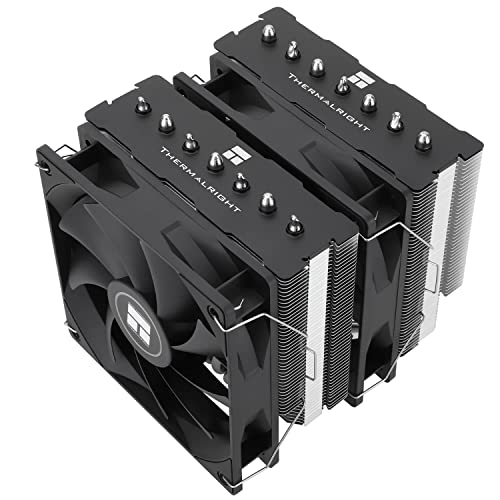
Thermalright Peerless Assassin 120 SE
Who it suits: Builders who want flagship-class air cooling without paying flagship money — the default recommendation in this category.
The Peerless Assassin 120 SE is the cooler that reset expectations for what a modest budget buys in air cooling: a dual-tower heatsink with six heat pipes using Thermalright’s AGHP anti-gravity design, two 120 mm TL-C12C PWM fans, and a soldered copper base that behaves like coolers costing far more. In independent testing across the AM4 generation it routinely matched or beat premium dual towers on Ryzen processors, which is why it appears at or near the top of almost every honest shortlist in this category.
Living with it is straightforward. The fans run to about 1,550 RPM with airflow rated at 66.17 CFM, the mounting system uses a proper backplate and a simple two-screw bridge on AM4, and Thermalright includes its TF7 thermal paste in the box. At 155 mm tall it fits most mid-tower cases, though you should still measure — and like every dual tower, the front fan can overhang the first memory slots, so tall RGB memory may force the front fan a few millimetres higher, which adds to the effective height.
On an AM4 processor specifically, the dual-tower format is the point: two fin stacks give the cooler thermal mass and surface area that absorb boost spikes without fan drama, and under sustained load the second fan keeps speeds — and therefore noise — in the civilised band where this processor should live.
Ownership of the Thermalright Peerless Assassin 120 SE is mostly a story of clearances remembered once and then forgotten: the front fan’s position over the memory, noted before the side panel went on; the case’s exhaust fan behind it, close enough to carry its air straight out; the mounting screws’ even pressure, checked by the level temperatures across cores in the first stress run. None of that recurs — a dual tower fitted carefully in an afternoon stays fitted, in every sense, for the life of the build and usually the one after it.
- Dual-tower, six-heat-pipe performance that rivals premium flagships
- Simple, sturdy AM4 and Intel mounting with paste included
- Two PWM fans give real headroom for hot, high-core-count chips
Honest limitation: Front fan can crowd tall memory modules, and at 155 mm it will not fit narrow cases — measure before you buy.
Choose it if your priorities match its label in this guide — best overall am4 cooler. Skip it if its stated limitation is the thing your build cannot accommodate; a neighbouring pick in this guide covers that case deliberately.
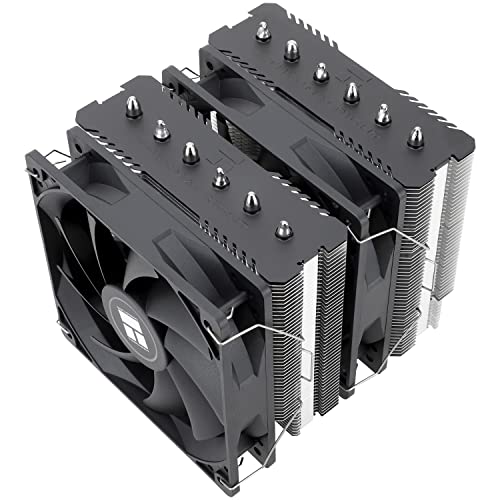
Thermalright Phantom Spirit 120 SE
Who it suits: Builders who want the Peerless Assassin formula refined — one more heat pipe and a slightly calmer acoustic profile.
The Phantom Spirit 120 SE is Thermalright’s own evolution of the Peerless Assassin idea: seven heat pipes instead of six, the same dual-tower layout, and dual TL-C12B V2 PWM fans on S-FDB bearings tuned for a smoother sound character. On AM4 processors the practical difference over its sibling is small — a degree here, a little less fan speed there — but small differences are exactly what separate the top of this class, and the Phantom Spirit is the one to pick when both sit at similar money.
Installation mirrors the Peerless Assassin: a solid backplate, a two-point bridge, and included thermal paste. The cooler stands 154 mm tall, a millimetre shorter than its sibling, and the offset fin design keeps the front tower clear of the first memory slot better than older dual towers did. For builders upgrading from a stock AMD cooler, the step in both temperature and noise is the largest single improvement most systems ever get from one part.
On an AM4 processor specifically, the dual-tower format is the point: two fin stacks give the cooler thermal mass and surface area that absorb boost spikes without fan drama, and under sustained load the second fan keeps speeds — and therefore noise — in the civilised band where this processor should live.
Ownership of the Thermalright Phantom Spirit 120 SE is mostly a story of clearances remembered once and then forgotten: the front fan’s position over the memory, noted before the side panel went on; the case’s exhaust fan behind it, close enough to carry its air straight out; the mounting screws’ even pressure, checked by the level temperatures across cores in the first stress run. None of that recurs — a dual tower fitted carefully in an afternoon stays fitted, in every sense, for the life of the build and usually the one after it.
- Seven heat pipes and refined fans — the strongest value dual tower here
- 154 mm height fits a wide range of mid-tower cases
- Excellent AM4 mounting hardware for the money
Honest limitation: Availability and pricing fluctuate more than the big brands, and the two Thermalright dual towers overlap so closely that choosing between them can feel arbitrary — on performance, it nearly is.
Choose it if your priorities match its label in this guide — best refined am4 pick. Skip it if its stated limitation is the thing your build cannot accommodate; a neighbouring pick in this guide covers that case deliberately.
DeepCool AK400
Who it suits: Mainstream builders who want one tower, four heat pipes and no drama — the sweet spot for six-core gaming chips.
The AK400 is DeepCool’s answer to a simple question: how much cooler does a mainstream gaming processor actually need? Four 6 mm heat pipes, a single dense fin stack with DeepCool’s matrix pattern, and one 120 mm fluid-dynamic-bearing fan rated at 66.47 CFM add up to a 220 W dissipation rating — far beyond what a 65-watt-class Ryzen or a locked Intel chip will ever ask of it, with real headroom left for boost behaviour on hotter days.
At 155 mm tall and with a slim 97 mm depth, it clears all four memory slots and fits cases the dual towers cannot. The fan runs from 500 to 1,850 RPM on PWM control, and the mounting kit covers AM4 and AM5 plus Intel LGA1700 and the 115x/1200 family. For a single-PC builder who wants to fit a cooler once and forget it exists, the AK400 is the proportionate choice: enough cooler for the chip, none of the clearance puzzles of the big towers.
On an AM4 processor specifically, this single tower is sized to the chip’s real heat output rather than its reputation: it holds the processor’s sustained loads with headroom, keeps every memory slot accessible while doing it, and its fan spends most of its life in the quiet lower half of its range.
The DeepCool AK400 rewards the simplest possible setup: mount it with even pressure, point its fan at the rear exhaust, and set one fan curve with a ramp delay so brief boost spikes never become audible events. From then on it asks for nothing but an occasional dusting. Single towers live or die on proportionality — matched to the right processor class, as this guide’s labels insist, they deliver years of quiet service; stretched a class too far, they become the loudest part in the case. The labels exist so you never have to learn that distinction expensively.
- 220 W rating is generous headroom for mainstream processors
- Slim single tower clears memory and fits narrower cases
- FDB fan and simple mounting make it a fit-and-forget part
Honest limitation: A single tower still trails the dual towers on 105-watt-class chips under sustained all-core loads — it will run warmer and louder there.
Choose it if your priorities match its label in this guide — best for 65 w-class am4. Skip it if its stated limitation is the thing your build cannot accommodate; a neighbouring pick in this guide covers that case deliberately.
be quiet! Dark Rock Pro 4 (BK022)
Who it suits: Builders who want dual-tower muscle tuned for silence — workstations, recording setups and quiet gaming rooms.
The Dark Rock Pro 4 is the dual tower for people who hear their computer. Seven copper heat pipes feed two fin stacks cooled by a pair of Silent Wings PWM fans — a 120 mm front fan shaped to clear memory and a 135 mm middle fan doing the heavy lifting — and be quiet! rates the whole assembly at 24.3 dB(A) even at full speed, with a 250 W TDP rating that covers every mainstream desktop processor in this guide. The black ceramic-coated finish also makes it the best-looking big air cooler here for a dark, windowed build.
The trade-offs are physical. At 163 mm tall it needs a generous case, the front fan’s position over the memory slots is adjustable only within limits, and installation — while well engineered — is a two-handed job best done with the motherboard out of the case or lying flat. None of that matters once it is running: for a high-core-count Ryzen or an unlocked Intel chip in a room where noise carries, this is the air cooler that disappears.
On an AM4 processor specifically, the dual-tower format is the point: two fin stacks give the cooler thermal mass and surface area that absorb boost spikes without fan drama, and under sustained load the second fan keeps speeds — and therefore noise — in the civilised band where this processor should live.
In daily use the be quiet! Dark Rock Pro 4 (BK022) asks for two small disciplines. Keep its front intake path clear — a tower this size breathes a lot of case air, and a clogged front filter shows up directly in its temperatures — and resist the urge to run its fans at maximum ‘just in case’: the whole point of a dual tower’s surface area is that moderate speeds already hold the load, and the acoustic difference between 70 percent and 100 percent fan speed is far larger than the thermal difference. Fitted that way, it becomes the kind of part you forget is in the machine, which is the highest compliment cooling hardware can earn.
- 250 W TDP rating with genuinely quiet Silent Wings fans
- Premium finish and build quality throughout
- Handles flagship mainstream CPUs without AIO complexity
Honest limitation: 163 mm tall and heavy — a two-person-feeling install in tight cases, and tall memory can clash with the front fan.
Choose it if your priorities match its label in this guide — best quiet am4 flagship cooling. Skip it if its stated limitation is the thing your build cannot accommodate; a neighbouring pick in this guide covers that case deliberately.
Corsair iCUE H100i Elite Capellix
Who it suits: Builders who want liquid cooling’s case freedom and RGB presentation in the common 240 mm size, inside the Corsair iCUE ecosystem.
A 240 mm all-in-one like the H100i Elite Capellix changes the shape of a build rather than just its temperatures: the heavy metal moves to the case wall as a radiator, the CPU area stays open and easy to work around, and tall memory and big graphics cards stop competing for the same space. The Capellix pump head uses dense LEDs for a bright, even glow, and the included Commander Core controller runs both fan speed and lighting for the two ML RGB fans through Corsair’s iCUE software.
On the processors in this guide a good 240 mm AIO performs in the same class as the big dual-tower air coolers, with a different character: slower to warm up, slower to cool down, and dependent on where the radiator can breathe. Mount it as a front intake and it drinks cool air but warms the case for the graphics card; mount it as a top exhaust and the CPU gets warmer air but the system balance improves. The honest costs of the format apply — a pump that will eventually age, more cables to manage, and software between you and your fan curves.
On an AM4 processor specifically, a 240 mm radiator is the right size of liquid: enough surface to hold the chip’s sustained loads at moderate fan speeds, small enough to fit the cases this processor typically inhabits, and free of the socket-area crowding that tall memory and big air towers negotiate daily.
Day to day, living with the Corsair iCUE H100i Elite Capellix means thinking in coolant rather than fins: give the radiator an unobstructed intake or exhaust path, route the tubes without sharp bends, and let the pump run at a steady speed rather than chasing temperature spikes — pumps prefer constancy, and so do ears. Check coolant-side behaviour after a long session rather than a cold boot: a liquid system that is calm at hour three, with the case fully heat-soaked, is the system you actually bought, whatever the first five minutes suggested.
- Frees the CPU area completely — no memory or case-height conflicts
- Commander Core and iCUE give unified fan and lighting control
- 240 mm size fits the majority of mid-tower cases
Honest limitation: Pump and software add failure points and setup work that air coolers do not have, at a higher price than dual-tower air.
Choose it if your priorities match its label in this guide — best am4 liquid option. Skip it if its stated limitation is the thing your build cannot accommodate; a neighbouring pick in this guide covers that case deliberately.
Noctua NH-U12A
Who it suits: Builders with narrower cases or memory-clearance worries who still want near-flagship cooling and Noctua support.
The NH-U12A is Noctua’s argument that width matters as much as height: a single tower in the 120 mm format, but with seven heat pipes and two of the company’s NF-A12x25 fans in push-pull — fans widely regarded as the best 120 mm units Noctua has made. The result cools within striking distance of the big dual towers while leaving memory slots and the top PCIe slot far more breathing room, in a case-friendly footprint.
It is listed prose-only here because its Amazon ASIN was not corroborated during this guide’s research pass, not because of any doubt about the product. The doubts are economic: it typically costs flagship money for single-tower hardware, and value rivals cool similarly for far less. What the money buys is Noctua’s mounting, acoustics and socket-support record in the size class that fits the most builds — for a small or crowded case housing a hot processor, that combination is sometimes exactly right.
On an AM4 processor specifically, this single tower is sized to the chip’s real heat output rather than its reputation: it holds the processor’s sustained loads with headroom, keeps every memory slot accessible while doing it, and its fan spends most of its life in the quiet lower half of its range.
The Noctua NH-U12A rewards the simplest possible setup: mount it with even pressure, point its fan at the rear exhaust, and set one fan curve with a ramp delay so brief boost spikes never become audible events. From then on it asks for nothing but an occasional dusting. Single towers live or die on proportionality — matched to the right processor class, as this guide’s labels insist, they deliver years of quiet service; stretched a class too far, they become the loudest part in the case. The labels exist so you never have to learn that distinction expensively.
- Near-dual-tower cooling in a slimmer 120 mm footprint
- Two premium NF-A12x25 fans in push-pull
- Excellent memory and PCIe clearance for a high-end cooler
Honest limitation: Prose-only in this guide (ASIN unverified in this pass) and premium-priced for a single tower.
Choose it if your priorities match its label in this guide — best compact premium (prose-only). Skip it if its stated limitation is the thing your build cannot accommodate; a neighbouring pick in this guide covers that case deliberately.
Prose-only pick: reviewed from manufacturer and review sources, listed without a purchase link because its ASIN was not verified in this guide’s research — see the source notes.
Comparison Table
| Product | Type | Key specifications | Link |
|---|---|---|---|
| Thermalright Peerless Assassin 120 SE | Dual-tower air | 6 heat pipes · dual 120 mm PWM fans · 1,550 RPM · 66.17 CFM · 155 mm tall · AM4/AM5, LGA1700/1200/115x | Check on Amazon |
| Thermalright Phantom Spirit 120 SE | Dual-tower air | 7 heat pipes · dual 120 mm PWM fans · 1,500 RPM class · 154 mm tall · AM4/AM5, LGA1700/1200/115x | Check on Amazon |
| DeepCool AK400 | Single-tower air | 4 heat pipes · single 120 mm FDB fan · 500–1,850 RPM · 66.47 CFM · 220 W dissipation rating · 155 mm tall · AM4/AM5, LGA1700/1200/115x | — |
| be quiet! Dark Rock Pro 4 (BK022) | Dual-tower air (quiet) | 7 heat pipes · 250 W TDP rating · dual Silent Wings PWM fans · 24.3 dB(A) max · 163 mm tall · AM4/AM5, LGA1700/1200/115x/2066 | Check on Amazon |
| Corsair iCUE H100i Elite Capellix | 240 mm AIO liquid | 240 mm radiator · two 120 mm ML RGB fans · Capellix LED pump head · Commander Core included · AM4/AM5, LGA1700/1200/115x/2066 | Check on Amazon |
| Noctua NH-U12A | Single-tower air (premium 120 mm) | 7 heat pipes · dual NF-A12x25 120 mm fans · 120 mm-class width · 158 mm tall class · AM4/AM5, LGA1700/1200/115x | Prose-only |
A Note on Prices and Listings in This Category
CPU coolers are promotion-driven hardware: the same model moves between list price and sale price across the year, value brands fluctuate with stock, and long-running models quietly revise their included mounting hardware. That is why this guide prints no product prices and sends you to the live listing for the current number — a printed price would be wrong more often than right. When you check a listing, confirm the full model code (several picks here have lookalike variants), confirm the socket kit in the box matches your platform, and confirm the cooler’s height against your case before the order, not after it.
AM4’s Range: One Socket, Four Cooling Problems
AM4’s longevity created a cooler market inside a socket. At the bottom, Athlon and Ryzen 3/5 efficiency chips need only a competent single tower to run silently. The middle — the 5600X, 5700X and their kin — rewards the same single towers and begins to justify dual towers for quiet. The top splits in two: the single-die 5800X, whose concentrated heat is the platform’s hardest per-watt problem, and the dual-die Ryzen 9s, whose sustained all-core loads are its hardest absolute problem. A guide that recommends one cooler for ‘AM4’ without asking which chip has not understood the platform.
This guide’s structure answers by class instead: find your processor’s class in the quick picks and the choice narrows to two or three coolers whose differences are character, not capability. The platform’s other constant is mounting — AM4’s backplate system has been stable since 2017, and every pick here uses it natively, with no adapters or board removal in the typical install.
Case Airflow: The Half of Cooling That Is Not the Cooler
A CPU cooler does not breathe the room; it breathes your case. Every tower in this guide can only work with the air the case delivers, which is why two identical coolers in two different chassis produce different temperatures and different noise. The minimum viable arrangement is one unobstructed intake path and one exhaust near the cooler — front intake and rear exhaust in the classic layout — with dust filters clean enough to pass air freely. A starved tower recirculates its own exhaust, temperatures climb, fans compensate with speed, and the owner blames the heatsink for a plumbing problem.
Radiators obey the same law from the other direction: a front-mounted radiator drinks the coolest air in the system and hands its warmth to everything behind it, while a top-mounted radiator exhausts processor heat directly but breathes air the graphics card has warmed. Neither is wrong; each is a choice about which component gets the better air. What is wrong is a radiator mounted against a solid panel or a tower sealed behind a glass front with no intake gap — configurations that cap any cooler’s performance regardless of its price or class. Fix the airflow first and mid-range coolers perform like flagships; neglect it and flagships perform like regrets.
Buying AM4 Cooling in the AM5 Era
AM4 is a mature platform, and its cooler buying has a strategic wrinkle: the next system you build will likely be AM5. The linked picks here all list AM5 in their verified support, which converts a cooler from a platform accessory into a carry-over component — buy the dual tower for today’s 5800X and it mounts on tomorrow’s AM5 board with the kit already in its box. That carry-over is worth more than small price differences between rival coolers, and it is a deliberate filter in this guide’s selection.
The mature-platform cautions are physical rather than electronic: older AM4 boards place memory and the first PCIe slot exactly where dual towers are widest, and older cases run narrower than today’s. The comparison table’s dimensions, checked against your board and case, are the difference between a fifteen-minute install and a return label — the most AM4 sentence ever written.
Fan Curves and Noise: Tuning the Cooler You Already Bought
The difference between a loud system and a quiet one is rarely the cooler — it is the fan curve, and specifically the motherboard’s default curve, which typically ramps fans aggressively in response to temperature spikes that last two seconds. Modern processors, Ryzen’s boost behaviour above all, produce exactly those spikes constantly. A curve with three properties fixes it: a flat, gentle shelf through the processor’s everyday temperature band, a ramp delay (often labelled hysteresis or step-up time) of several seconds so brief spikes are ignored, and a ceiling speed you have actually listened to and accepted, reached only at temperatures your sustained workloads genuinely produce.
Set that curve once, in the BIOS rather than in software that must run forever, and the same hardware becomes a different machine: silent at the desktop, composed in games, and audible only during the long renders where audibility is honest information. Owners chasing silence should also cap a flagship cooler’s fans deliberately — an oversized cooler limited to modest speeds is the quietest configuration in this entire category, quieter than any small cooler running free. The picks in this guide were chosen with wide, controllable PWM ranges precisely so this tuning is available to you.
Before You Order: A Five-Minute Checklist
Run this list against your actual build before any pick in this guide earns your money. First, the socket: your processor is an AM4 processor, on socket AM4 — confirm that exact socket appears in the manufacturer’s compatibility list for the cooler you chose, not merely in the retailer’s title. Second, the case: find its stated CPU cooler clearance (or radiator support, for the liquid picks) and compare it with the dimensions in the comparison table above, remembering that a raised front fan adds height a dual tower’s headline figure does not include. Third, the memory: note your modules’ height and whether the cooler’s front fan will overhang their slots.
Fourth, the board: check that nothing tall — a VRM heatsink, an M.2 cover, the first PCIe slot’s occupant — sits where the cooler’s width wants to be, using the dimensions printed here rather than photographs, which lie about scale. Fifth, the small print of the listing itself: full model code (several families in this guide have lookalike variants), the mounting kit named in the box contents, and whether thermal paste is included or must be added to the order. Five minutes, five checks — every return this category generates fails one of them, and every one of them is knowable before the box ships.
How Long a Cooler Lasts, and What Actually Wears Out
A heatsink is a lump of copper and aluminium with no moving parts and no chemistry to exhaust: barring physical damage, it will outlive every other component in the system. The wear story of cooling is entirely about the parts around it. On air coolers, that means fans — quality fluid-dynamic and ball-bearing fans run for many years before bearing noise appears, and they are standard-sized parts that swap in minutes. On liquid coolers it means the pump and the coolant: pumps tire, coolant slowly permeates through tubing over years, and the unit is sealed, so ageing ends in replacement rather than repair.
Thermal paste sits between those extremes: good compounds serve for years, but a system whose temperatures have crept upward across its life often needs nothing more than a repaste and a dust-out. This is why this guide weights makers’ support records — mounting kits for future sockets, spare fan availability, warranty handling — as heavily as benchmark results. A cooler is a decade-scale purchase pretending to be a component; buy it from a maker who treats it that way, keep its box of brackets, and it will cool processors that have not been announced yet.
How to Choose Best CPU Coolers for AM4
- Match the class to the processor first. 65-watt-class chips are fully served by single towers; 105-watt-class and unlocked flagships belong under dual towers or 240 mm-plus liquid. Class errors in either direction waste money or performance.
- Verify the socket on the manufacturer’s list. Marketplace titles sometimes claim broader support than the maker does — this guide found exactly that failure on a flagship radiator. The maker’s compatibility page is the authority.
- Measure height, width and memory together. Cooler height against case clearance, front-fan position against memory height, tower width against the first PCIe slot. All three checks take five minutes and prevent nearly every return in this category.
- Decide air versus liquid on format, not folklore. At mainstream sizes the formats tie thermally. Choose air for permanence and simplicity; choose liquid for socket clearance, radiator placement and presentation.
- Budget the case into the cooler. Intake and exhaust fans, clean filters and an unobstructed front are part of the cooling system. A modest case fan can outperform a cooler upgrade in a starved chassis.
- Weight mounting quality heavily. A backplate system with even, alternating pressure extracts a cooler’s full design performance. Flimsy mounts leave degrees on the table that no fan curve recovers.
- Plan the fan curve before the first boot. A shelf through everyday temperatures, a ramp delay for spikes, and a considered maximum speed. Five minutes in the BIOS is the cheapest silence in computing.
- Keep the bracket box. Coolers outlive sockets. The makers in this guide supply mounting kits for new platforms, and the owner who kept the hardware box is the one who reuses a flagship for a decade.
- Size the cooler to an AM4 processor. This article’s picks are tiered by that processor’s real heat class — follow the labels in the quick picks table rather than buying the largest hardware the budget tolerates.
Common Mistakes
- Buying by rated TDP numbers, which every maker measures differently — use cooler class (towers, heat pipes, radiator size) instead.
- Forgetting the protective film on the cooler base, then diagnosing the resulting temperatures as a faulty product.
- Tightening one mounting screw fully before the other, tilting the base and leaving one core dramatically hotter than the rest.
- Choosing a dual tower without checking memory height, then discovering the front fan must sit so high the side panel will not close.
- Mounting a radiator against a solid panel or starving a tower behind a sealed glass front, then blaming the cooler for case airflow.
- Leaving the motherboard’s default fan curve in place and concluding the cooler is loud, when the curve — not the hardware — is chasing two-second spikes.
- Assuming a marketplace title’s socket list is accurate; one flagship radiator in this category is sold under titles claiming sockets its maker explicitly does not support.
- Buying a premium cooler for a processor two classes below it while the case has one dying fan — system problems need system budgets.
- Judging a cooler by a one-minute benchmark instead of its equilibrium temperature and noise after the case has heat-soaked.
Final Recommendation
- Best overall AM4 cooler: Thermalright Peerless Assassin 120 SE.
- Best refined AM4 pick: Thermalright Phantom Spirit 120 SE.
- Best for 65 W-class AM4: DeepCool AK400.
- Best quiet AM4 flagship cooling: be quiet! Dark Rock Pro 4 (BK022).
- Best AM4 liquid option: Corsair iCUE H100i Elite Capellix.
- Best compact premium (prose-only): Noctua NH-U12A.
Our top two for this search are the Thermalright Peerless Assassin 120 SE, for the buyer this article was written for, and the DeepCool AK400, for the household whose priorities run the other way. Between them they cover the two shapes this search usually takes: maximum cooling capacity for the money, and the best-matched format for a specific case, socket or silence requirement. Readers comparing neighbouring questions should also see Best Coolers For Cpu, Best Cpu Coolers For Ryzen 7 5800x and Best Cpu Coolers For Ryzen 9 5950x. Measure your case, confirm your socket on the manufacturer’s list, set a sane fan curve — and check the live price before you order.
Frequently Asked Questions
What is the best cooler for AM4 overall?
For most AM4 owners, a value dual tower — it covers every processor the socket ever hosted, runs the hot ones quietly, and carries AM5 support for the next platform. Owners of 65-watt-class chips who will not upgrade can honestly spend less on the single towers here and lose nothing.
Do AM4 coolers need a special bracket?
AM4 uses a standard backplate with a defined mounting pattern that has been stable across the platform’s life. Every pick here mounts natively with included hardware; some designs ask you to remove AMD’s plastic stock brackets first, per their instructions. No exotic adapters are involved.
Can an AM4 cooler be reused on AM5?
The linked picks in this guide list both AM4 and AM5 in their verified socket support — confirm the AM5 hardware is in the box via the listing, since older stock can predate it. That dual support is a deliberate selection criterion here, because AM4 owners are AM5’s most likely builders.
Which AM4 processor is hardest to cool?
Per watt, the 5800X — its single compute die concentrates 105-watt-class power into one small hotspot. In absolute sustained terms, the Ryzen 9 5900X and 5950X under all-core production loads. Both problems are solved by the dual-tower class in this guide.
Is liquid cooling worth it on AM4?
When the build needs it: compact cases that cannot fit a 154 mm tower, very tall memory, or a showcase window build. Thermally, the 240 mm pick matches the dual towers on AM4’s processors; the choice is format and presentation, not necessity.