Where to buy
Check the latest price, availability and delivery on Amazon. Orders are placed on Amazon. We may earn a commission from qualifying purchases.
- Best internal production card for PC: Creative Sound Blaster Z SE — Check on Amazon
- Best starter card for a production PC: Creative Sound Blaster Audigy Fx V2 — Check on Amazon
- Best external monitoring upgrade: Creative Sound BlasterX G6 — Check on Amazon
- Best for powered monitor speakers: Fosi Audio K5 Pro — Check on Amazon
See 2 more Amazon options
- Best live-production control desk: Creative Sound Blaster GC7 — Check on Amazon
- The capture side of the PC studio: A dedicated USB audio interface (for example, the Focusrite Scarlett Solo class) — discussed in this guide as a prose-only recommendation; no verified Amazon link is printed for it, so check the manufacturer or a reputable retailer.
Read the full guide ↓
Disclosure: As an Amazon Associate, ilcastellomenu.com earns from qualifying purchases. Links to Amazon on this page are affiliate links; they cost you nothing extra. Listing details such as price and availability change often, so check the current Amazon listing before you buy.
Choosing the best PC sound cards for music production starts with a division of labour that will save you money and frustration: on a production PC, the sound card’s job is playback, monitoring and voice — the interface’s job is capture. A sound card gives your DAW a clean, low-noise output stage, drives your studio headphones properly, feeds your monitor speakers, and, in the case of the one pick here with verified ASIO support, offers the low-latency driver path that playing software instruments demands. What it will not do is plug in a condenser microphone or a guitar; that is interface work, and the interface class appears below as a prose-only pick so the full picture is on one page.
The PC focus matters because the details are PC details: PCIe slots for the internal picks, driver support for Windows music software, USB boxes that move between the production PC and a laptop. The Z SE and Audigy Fx V2 cover the internal route at two levels; the G6, GC7 and Fosi K5 Pro cover external monitoring from flagship headphone amplification to a speaker-centred hub with tone controls. Every linked ASIN was verified against a live listing record during research, specifications claimed are only those the makers publish, and no product prices are printed — check the live listing. Build the playback half properly and a production PC stops fighting you.
In this guide
Quick Picks
Short on time, or comparing several options at once? Each row below names a buyer type and the product that suits it, with a link to the listing where one is verified.
| Buyer type | Pick | Why it stands out | Link |
|---|---|---|---|
| Best internal production card for PC | Creative Sound Blaster Z SE | ASIO support, 116 dB DAC, 600-ohm amp and receiver encoding — the most complete internal package | Check on Amazon |
| Best starter card for a production PC | Creative Sound Blaster Audigy Fx V2 | 120 dB hi-res playback, discrete 5.1 and SmartComms voice cleaning in a compact PCIe card | Check on Amazon |
| Best external monitoring upgrade | Creative Sound BlasterX G6 | 130 dB dynamic range and a discrete Xamp headphone amplifier in a portable USB box | Check on Amazon |
| Best for powered monitor speakers | Fosi Audio K5 Pro | USB, optical and coaxial inputs, speaker outputs and physical tone controls | Check on Amazon |
| Best live-production control desk | Creative Sound Blaster GC7 | AKM DAC, Super X-Fi and programmable physical controls with GameVoice Mix | Check on Amazon |
| The capture side of the PC studio | A dedicated USB audio interface (for example, the Focusrite Scarlett Solo class) | XLR preamp, phantom power and instrument input: the actual recording tool, listed as a class | Prose-only — see review |
How These Picks Were Chosen
Every product in this guide is a real, verifiable listing whose maker publishes the specifications that matter for best pc sound cards for music production — DAC and noise ratings, headphone amplifier range, connection type, surround and processing features, and driver support where it is relevant. Picks were ranked on the fundamentals first: a low noise floor, amplification matched to real headphones, and honest fit for the job in the keyword. Only after those were satisfied did feature collections — surround modes, chat mixing, microphone processing, tone controls — influence the order. Check the current price on Amazon before you buy, as listing prices change often and no guide can freeze them.
We did not use these products ourselves. We read manufacturer specification pages and Amazon listings, cross-checked the numbers that matter, and favoured products whose makers publish full specifications over those that hide behind marketing words. Every ASIN in this guide was verified against a live listing record during research, and every specification printed in the reviews traces to a manufacturer or retailer source recorded in the article’s source notes. Where a product could not be verified to that standard, it appears prose-only, clearly labelled, with no link and no invented specifications — you will find two such entries in this category’s guides, kept because the products matter to the research even without a verified link.
One filter sat on top of all of that for this article: honesty about the job itself. Sound cards are playback, monitoring and voice devices. Where this keyword touches recording or production, the guide states plainly which part of the work a sound card can do and which part belongs to a dedicated audio interface — and includes that interface class as a pick rather than pretending a gaming or consumer card crosses the line. Readers comparing directions can also see Best Sound Cards For Music Production Under $100 and Best Sound Cards For Music, which approach the same desk from neighbouring angles.
The 6 Best PC Sound Cards for Music Production
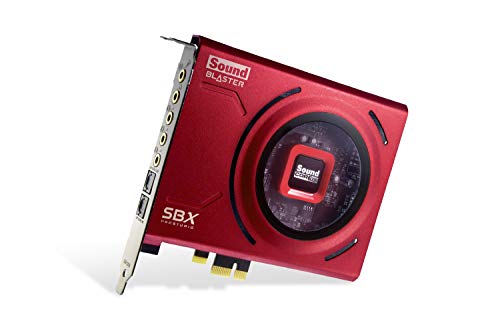
Creative Sound Blaster Z SE
Who it suits: Desktop users who want one internal card to cover gaming, music, receiver surround and light recording work.
The Sound Blaster Z SE is the special-edition refresh of one of the longest-running internal sound cards in the business, and its recipe explains the longevity: a Sound Core3D processor doing the audio work on the card itself, a DAC rated at 116 dB signal-to-noise, playback up to 24-bit/192 kHz, and a headphone amplifier rated for headphones up to 600 ohms. Around that core it wraps the full entertainment toolkit — discrete 5.1 output for speakers, virtual 7.1 for headphones, SBX surround processing, and live encoding in Dolby Digital Live and DTS Connect, which is how a PC feeds a surround signal to an AV receiver or soundbar system over a single digital cable.
For anyone who records or streams, two lines in its specification matter more than the surround badges. The first is ASIO support: a low-latency driver path is what music software wants to see, because it keeps the delay between playing or singing and hearing yourself small enough to work with. The second is the microphone side — mic EQ and Crystal Voice processing let you shape a headset or desk microphone without extra software. None of that turns the Z SE into a studio interface: its microphone input is a 3.5 mm jack for headset and consumer microphones, not an XLR input with phantom power. Judged as what it is — an internal card for a desktop that games, plays music and records voice through consumer microphones — it is one of the most complete single-slot packages in this guide.
For production, the Z SE’s ASIO support is the headline: music software gets the low-latency driver path it prefers, monitoring through the 600-ohm headphone amp stays clean, and the mic EQ shapes a guide vocal or narration take at the input. It remains a one-consumer-input card — fine for writing, arranging, podcast-style production and voice work, not a substitute for an interface when real microphones and instruments arrive. Within that honest boundary, it is the strongest internal production pick here.
- ASIO support makes it the most music-software-friendly internal card in this guide
- Dolby Digital Live and DTS Connect feed surround to receivers over one cable
- 600-ohm headphone amp and 116 dB DAC cover demanding headphones comfortably
Honest limitation: The red, windowed design and full-height bracket assume a conventional desktop case, and the mic input remains a consumer 3.5 mm jack.
Choose it if you want the fullest internal feature set, including ASIO and receiver encoding. Skip it if your case is very small, or you need XLR recording inputs.
Creative Sound Blaster Audigy Fx V2
Who it suits: Desktop owners who want a modern internal upgrade for games, music and voice without flagship money or desk clutter.
The Audigy Fx V2 is Creative’s current answer to the oldest question in PC audio: the motherboard sounds thin, noisy or just dull, so what is the cheapest honest step up that still feels like real hardware? Its answer is a small PCIe x1 card built around a DAC rated at 120 dB, with playback up to 24-bit/192 kHz, discrete 5.1 outputs for a real speaker set and virtual 5.1 for headphones. It is deliberately not a flagship. There is no RGB light bar, no external control box and no audiophile theatre in the marketing — just a compact card, a half-height bracket in the box for small cases, and a headphone amplifier specified for headphones up to 600 ohms, which covers essentially every mainstream and studio headphone a normal buyer will ever plug into it.
Two software ideas carry more weight in daily use than the headline numbers. Scout Mode lifts the quiet directional cues in games — footsteps, reloads, movement through grass — so they sit forward in the mix without simply making everything louder. The SmartComms Kit works on your microphone instead: VoiceDetect mutes and unmutes you as you speak, and the noise-cleaning tools push keyboard clatter and fan hum down under your voice on calls and in game chat. The card is also upgradable in a way budget cards rarely are: an optional DBPro daughter expansion, sold separately, adds features such as optical output and wider surround, so the base card can grow instead of being replaced. Owners of compact or older cases should still check the one physical fact that matters — a free PCIe x1 slot, or a longer slot the short card can sit in.
For production work, read this card as a monitoring and voice tool rather than a recorder. Its clean 120 dB playback stage makes a trustworthy output for a DAW’s master bus through headphones or its 5.1 analogue outs, and the SmartComms-cleaned microphone input handles spoken takes, guide vocals and video narration. The moment a condenser microphone or an electric guitar enters the plan, the card reaches its boundary — that is interface work, and this guide says so rather than pretending a 3.5 mm jack is a preamp.
- 120 dB DAC and 24-bit/192 kHz playback are a genuine step up from typical onboard audio
- Discrete 5.1 outputs serve real speaker sets, not only headphones
- SmartComms Kit cleans up microphone audio for calls, chat and light recording
Honest limitation: It is a playback-and-voice card, not a recording interface: there is no XLR microphone input and no phantom power for condenser microphones.
Choose it if you want one compact internal card for gaming, music and clean voice chat. Skip it if you need to record a condenser microphone or an instrument — that is interface work.
Creative Sound BlasterX G6
Who it suits: Headphone listeners and gamers who want the strongest external playback in this guide, across PC and console.
The Sound BlasterX G6 is the external pick that internal cards have to answer to. It is a USB DAC and headphone amplifier in a small desktop box, built around a DAC rated at 130 dB dynamic range with playback up to 32-bit/384 kHz, and a discrete Xamp headphone amplifier — a design that amplifies the left and right channels separately, which Creative specifies for demanding headphones that make lesser USB dongles sound strained. Because it lives outside the PC, it sidesteps the electrical noise inside a gaming case entirely, and because it is USB, the same box moves between a desktop, a laptop and a games console without opening anything.
The gaming layer is complete rather than decorative: 7.1 virtual surround for headphones, Scout Mode for lifting quiet cues, Dolby Digital decoding for console optical feeds, sidetone so you can hear your own voice naturally through a closed headset, and a physical switch between headphone and speaker output so the desk speakers and the headset do not fight. For music, the honest summary is that the G6 is a very capable stereo DAC-amp with gaming processing you can switch off — run it in direct mode and it behaves like the hi-fi component its numbers suggest. Its limits are the external format’s limits: it occupies a USB port and desk space permanently, its microphone input is a 3.5 mm consumer jack, and none of its processing makes it a multitrack recording device. As a one-box upgrade for how a PC or console sounds through headphones, it is the benchmark in this guide.
For production, the G6 earns its place on the monitoring side of the desk: switch its processing off and it is a high-resolution DAC and a genuinely powerful headphone amplifier, which is exactly what checking a mix on demanding headphones requires. It contributes nothing to the capture side beyond a consumer microphone input, so in a production setup it pairs with an interface rather than replacing one — playback and gaming through the G6, recording through the interface, each doing its own job properly.
- 130 dB dynamic range and 32-bit/384 kHz playback lead this guide on paper
- Xamp discrete headphone amplifier drives demanding headphones properly
- Works across PC and consoles, with physical headphone/speaker switching
Honest limitation: A desktop box with cables both sides is less tidy than an internal card, and the mic input is still a consumer 3.5 mm jack.
Choose it if headphone quality is the priority and one box should serve PC and console alike. Skip it if you need studio recording inputs, or you cannot spare the desk space and USB port.
Fosi Audio K5 Pro
Who it suits: Desk listeners with powered speakers and several sources — PC, TV, streamer — who prefer knobs to apps.
The K5 Pro is the hi-fi outsider in a guide full of gaming brands: a small metal desktop DAC and headphone amplifier from Fosi Audio that takes USB-C, optical and coaxial digital inputs and feeds powered speakers through RCA outputs or headphones through its 3.5 mm jack. That input mix is its signature — a PC on USB, a TV or console on optical, and a CD player or streamer on coaxial can all live on one box, switched at the front, which no internal sound card and few gaming DACs offer. Physical bass and treble knobs replace software EQ for listeners who would rather reach out and turn something.
For gaming it covers the essentials honestly: a microphone input in USB mode for a headset or mic, enough headphone power for the 16-to-300-ohm range, and clean stereo imaging rather than virtual surround processing — competitive players who rely on software surround from their game or operating system lose nothing, while players who wanted Scout-style processing should look at the Creative boxes. For music it is arguably the most natural pick here: no gaming DSP in the way, tone controls on the desk, and speaker outputs that make it the only pick in this guide equally at home running a small desktop hi-fi. Its recording ceiling is the same consumer line as the rest — a single microphone input, no XLR, no phantom power, no multitrack anything — and it asks for desk space and a power connection like any desktop component.
For production, the K5 Pro’s honest role is the monitoring and speaker half of a small studio desk: clean stereo playback, RCA outputs for powered monitor speakers, tone controls on the desk for quick listening checks, and a headphone output for detail work. Its single microphone input serves talkback and guide vocals in USB mode, nothing more. Paired with an interface for capture, it makes a tidy producer’s playback hub; presented as a recorder, it would be oversold, and this guide does not oversell it.
- USB-C, optical and coaxial inputs serve PC, TV, console and streamer on one box
- RCA outputs for powered speakers plus a proper headphone output
- Physical bass and treble controls, no software required
Honest limitation: Stereo only, with no virtual surround or gaming DSP, and recording stops at a single consumer microphone input.
Choose it if your desk has powered speakers and multiple digital sources to switch between. Skip it if you want virtual surround or gaming processing of any kind.
Creative Sound Blaster GC7
Who it suits: Streamers, creators and chat-heavy players who want audio controls on the desk, not in a menu.
The GC7 is Creative’s streamer-minded external box: a USB DAC and amplifier built around an AKM4377 DAC with playback up to 24-bit/192 kHz and a 120 dB signal-to-noise rating, wrapped in a control surface designed to be driven by one hand while the other stays in the game. Four programmable buttons, a large volume dial and dedicated controls mean the adjustments other sound cards bury in software — game and chat balance through GameVoice Mix, surround modes, microphone settings — happen on the desk, mid-session, without alt-tabbing into an app.
Its audio processing offers two different philosophies in one box. Sound Blaster’s processing gives you 7.1 virtual surround plus Battle Mode and Scout Mode for competitive play, while Super X-Fi takes the opposite approach, aiming to make headphones sound like a set of speakers in a room — an effect music and film listeners often prefer to conventional virtual surround, and one you can simply switch off for plain stereo. Dolby Audio decoding covers console feeds. For recording and streaming, the GC7 is a voice tool rather than an instrument interface: it will carry a headset or 3.5 mm microphone cleanly and let you balance game and voice on the fly, which is exactly what a stream needs, but there is no XLR input hiding anywhere on it. Buy it as a control deck for a gaming and streaming desk and it has few peers in this guide.
For production-adjacent work — streaming, podcast-style shows, video production with live voice — the GC7’s control surface is its production feature: game and voice balance, microphone settings and surround modes sit on physical controls, so a creator can ride levels while recording instead of editing around problems later. Its clean DAC makes a fine monitoring output too. Instrument and studio-microphone recording still belongs to an interface; the GC7 runs the live desk, not the studio input.
- Programmable physical controls and GameVoice Mix suit streamers and chat-heavy players
- AKM4377 DAC with 24-bit/192 kHz playback and 120 dB SNR
- Super X-Fi offers a speaker-like headphone presentation for music and films
Honest limitation: The control-deck format is the largest footprint in this guide, and its recording side remains headset-microphone territory.
Choose it if you stream, record live or adjust game/chat balance constantly. Skip it if you want the smallest, simplest possible device, or a purely internal install.
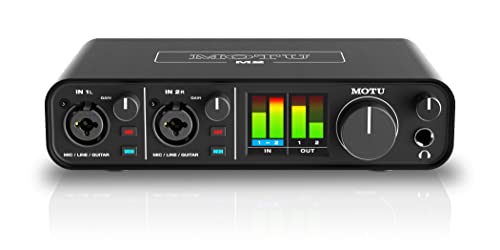
A dedicated USB audio interface (for example, the Focusrite Scarlett Solo class)
Who it suits: Anyone recording through a studio microphone or an instrument — the reader the recording keywords are really for.
Every recording and production keyword in this category eventually meets the same honest answer, so this guide names it directly instead of dressing a sound card up as something it is not. A dedicated USB audio interface — the class of device typified by models such as the Focusrite Scarlett Solo — is built around the microphone, not around playback. Its defining features are an XLR input with a proper microphone preamp, phantom power for condenser microphones, an instrument input for guitar or bass, and direct monitoring so you hear yourself with no delay while you record. No sound card in this guide, at any price, offers that combination, because sound cards and interfaces are different tools that happen to share a USB port or a PCIe slot.
That does not make interfaces better at everything. An interface typically offers plain stereo playback with none of the gaming processing in this guide — no virtual surround, no Scout-style modes, no game/chat mixing — and its headphone output is built for monitoring accuracy rather than gaming headsets. The mature setup many home studios land on uses both: an interface for everything recorded through a microphone or instrument, and a sound card or gaming DAC for playback, games and entertainment. This pick is listed prose-only, as a class rather than a linked product, because this guide’s verified pool covers sound cards; if recording is your primary purpose, start your shopping in the interface category and use the sound-card picks here for the listening side of the desk.
For production, this is the pick the keyword is actually asking for, and this guide will not pretend otherwise: multitrack recording software, condenser microphones, instruments and low-latency monitoring all begin at an interface. Sound cards in this guide can monitor the result beautifully — several make excellent production playback stages — but the recording itself starts here.
- XLR microphone preamp and phantom power — the actual requirements of studio microphones
- Instrument input and zero-latency direct monitoring for recording
- Built for music software first, with proper recording drivers
Honest limitation: No gaming processing at all, and it is a class recommendation rather than a verified linked product in this guide.
Choose it if recording through real microphones or instruments is the actual job. Skip it if your audio life is playback, gaming and entertainment — the sound cards here serve it better.
Comparison Table
| Product | Type | Key specifications | Link |
|---|---|---|---|
| Creative Sound Blaster Z SE | Internal PCIe sound card | PCIe x1 · 24-bit/192 kHz · 116 dB SNR DAC · ASIO support · headphone amp up to 600 ohms · discrete 5.1 / virtual 7.1 · Dolby Digital Live and DTS Connect encoding | Check on Amazon |
| Creative Sound Blaster Audigy Fx V2 | Internal PCIe sound card | PCIe x1 · 24-bit/192 kHz playback · 120 dB DAC · discrete 5.1 and virtual 5.1 surround · headphone amp for headphones up to 600 ohms · half-height bracket included | Check on Amazon |
| Creative Sound BlasterX G6 | External USB sound card / gaming DAC | USB · 32-bit/384 kHz playback · 130 dB dynamic range · Xamp discrete headphone amplifier · Dolby Digital decoding · 7.1 virtual surround · works with PC and consoles | Check on Amazon |
| Fosi Audio K5 Pro | External USB DAC and headphone amplifier | USB-C, optical and coaxial inputs · RCA and 3.5 mm outputs · microphone input in USB mode · bass and treble controls · up to 24-bit/192 kHz over optical/coaxial · drives headphones from 16 to 300 ohms | Check on Amazon |
| Creative Sound Blaster GC7 | External USB sound card / streaming DAC | USB · AKM4377 DAC · 24-bit/192 kHz playback · 120 dB SNR · Super X-Fi and 7.1 virtual surround · GameVoice Mix · programmable control buttons | Check on Amazon |
| A dedicated USB audio interface (for example, the Focusrite Scarlett Solo class) | External USB audio interface (prose-only) | USB audio interface class — XLR microphone input with phantom power, instrument input and direct monitoring are the defining features of the class | Prose-only |
Latency, Drivers and the Production PC
Latency is the delay between doing something musical — pressing a key, singing a note — and hearing it, and on a production PC it is governed less by raw hardware than by the driver path between your software and the card. Windows’ shared audio path is built for convenience, not speed, which is why music software prefers ASIO: a direct, low-latency route that keeps software instruments playable and overdubbing sane. Among this guide’s internal picks, the Z SE carries verified ASIO support, and that single specification is why it leads the production shortlists for buyers who play virtual instruments rather than only mixing recorded tracks.
For arrangement and mixing — work that is playback-only — any of the clean DAC stages here serves a DAW well, and the choice turns to outputs: headphones only, or headphones plus powered monitors, which is where the Fosi K5 Pro’s RCA outputs and tone controls earn their place. Sample-rate headlines deserve a calm reading, too: production work lives at 24-bit in the DAW regardless of a card’s maximum playback rate, and a stable driver at a sensible buffer beats a spectacular specification that crackles under load. Buy the production PC’s audio in that order — driver first, noise floor second, outputs third, headline numbers last.
Readers who arrived here from a neighbouring question may also want Best Sound Cards For Music Production — the same products, weighed for a slightly different desk.
A Note on Prices and Listings in This Category
Sound cards are a mature, promotion-prone category: the same model drifts between list and sale pricing across the year, bundles change, and regional listings for one card can carry different identifiers. That is why this guide prints no product prices anywhere and sends you to the live listing for the current number — a printed price would be wrong more often than right, and a wrong price helps no one. The single exception is the keyword’s own budget figure where a keyword carries one, which is tier framing, not a claim about any product’s price.
When you check a listing, confirm the full model name and code — Creative and ASUS both sell several generations under similar names, and the letters decide the feature set. Confirm the connection your machine actually has free: a PCIe x1 slot, a USB-C port, an optical input. Confirm what is in the box where it matters — a low-profile bracket, a USB-A adapter — because bundles vary by listing even for the same model. Two minutes of that homework is the difference between an upgrade that installs itself and a return label.
How to Choose
- Decide which production job you are equipping. Playback and monitoring belong to sound cards; capture belongs to interfaces. Naming the job first prevents the category’s most expensive mistake — a great gaming card bought to record a condenser microphone.
- Put the driver on the shortlist. If you play software instruments or overdub, a low-latency driver path such as ASIO is a first-order feature, not a footnote. Mixing-only work is more forgiving.
- Match the headphone amplifier to your headphones. Check your headphones’ impedance against the card’s rated range — 300-ohm class for the simpler picks, 600-ohm for the flagship Creative stages.
- Count your outputs honestly. Headphones only, or headphones plus powered monitors? Speaker desks should shortlist the K5 Pro’s RCA outputs and the internal cards’ analogue outs.
- Demand a processing-off mode. Production monitoring must be honest stereo. Every pick here can run clean; make sure the one you buy is used that way while working.
- Keep the noise floor boring. DAC ratings in the 116 dB class and up keep quiet passages quiet at editing volumes. Below that, hiss starts editing your decisions for you.
- Plan the two-device desk. If an interface is in your future, buy the sound card for playback and entertainment without apology — the roles do not overlap, and neither purchase wastes the other.
Common Mistakes
- Forgetting the application’s own audio setting. The system default changes, the game or chat app keeps pointing at the old device, and the new card gets blamed for silence it never caused.
- Plugging demanding headphones into the weakest output on the desk out of habit — a front-panel jack or a controller — after buying a card with a proper amplifier stage at the back.
- Chasing the largest playback number on the box. Maximum sample rates are ceilings, not quality scores; noise floor and headphone drive decide what you actually hear.
- Running a USB DAC through an elderly unpowered hub shared with drives and webcams, then diagnosing the resulting dropouts as the card’s character.
- Placing the microphone far away and the gain high to compensate, then buying processing to remove the room noise that placement created. Close and quiet beats distant and loud, every time.
- Ignoring the speaker path when the desk has one — buying a headphone-only box for a room that also runs powered speakers or a receiver, and living with cable swaps forever.
- Skipping the maker’s current driver or software because the device ‘worked’ on plug-in. On Windows especially, the maker’s package is where half the features you paid for actually live.
- Buying a sound card to record a studio microphone. No card here has an XLR input or phantom power; that purchase is an audio interface, and guides that blur it cost buyers a return.
- Judging a card in its first ten minutes, with every processing feature switched on at once. Start flat, add one feature at a time, and let your ears — not the feature list — decide what stays.
The Quiet Test: How to Judge Any Pick in This Guide
There is a simple evaluation that cuts through every specification in this category, and it works identically for a card, a USB box or a dongle. Put on your most familiar headphones, play the quietest recording you own — the piece whose opening you know by heart — and listen for the machine instead of the music. Hiss between movements, a whine that follows the mouse, a hum under the silence: whatever survives is your current audio stage confessing. Repeat the test after installing a pick from this guide and the difference, or the honest lack of one, tells you more than any number printed here.
Run the second half of the test at the other extreme: the loudest, busiest passage you own, at the volume you actually use, and listen for strain — bass going soft, detail smearing, the sense that the sound is working hard. That is amplifier headroom, or its absence. A pick that passes both ends of the quiet test has done the whole job of a sound card; everything else in this guide — surround modes, chat mixing, tone knobs, programmable buttons — is about how pleasantly it fits your desk while doing it. Judge in that order and you will keep the right device.
Keeping the Signal Clean: Cables, Ports and Ground Loops
A sound card lowers the noise floor of the conversion; the rest of the chain decides whether you hear that improvement. Three unglamorous habits protect it. First, connections: seat cables fully, keep analogue runs away from power bricks and charging cables, and prefer the digital options — optical especially — where a long run to speakers or a receiver is needed, because an optical link cannot carry an electrical hum. Second, ports: plug a USB DAC directly into the machine rather than an elderly hub, and give an internal card the slot the motherboard manual recommends when a GPU crowds the alternatives.
Third, the ground loop — the mains-frequency buzz that appears when powered speakers, a PC and a TV each find a different path to earth. It is not the sound card’s fault and no card purchase fixes it; the cures are boring and effective: power the desk’s audio from one strip, use the optical input where available to break the electrical path, and change one variable at a time while testing. Buyers who spend ten minutes on this housekeeping hear the full value of the noise ratings quoted throughout this guide; buyers who skip it sometimes blame an innocent card for a wiring problem.
What Good Looks Like After a Month
A month in, a well-chosen sound card has a distinctive property: you have stopped thinking about it, except in the moments it quietly saves you. The call where your voice came through clean the first time. The game session where a teammate’s callout arrived from exactly the direction it should. The late-night edit where the quiet passage stayed quiet. Those moments are the return on the fundamentals this guide weights — noise floor, headphone drive, controls where your hand expects them — and they compound, because audio is the one part of a computer setup that touches every single thing the machine is used for.
If a month in you are still thinking about the card, the reason is almost never its DAC. It is a fit problem: a box that crowds a small desk, a dongle left in the wrong bag, processing you have to fight before music sounds like music, a driver that needs reinstalling after updates. That is why the format questions in this guide — internal or external, fixed desk or travelling, speakers or headphones only — are asked before the specification questions. Specifications decide between good cards; fit decides whether the good card you bought is the one still serving you in year three.
Final Recommendation
- Best internal production card for PC: Creative Sound Blaster Z SE.
- Best starter card for a production PC: Creative Sound Blaster Audigy Fx V2.
- Best external monitoring upgrade: Creative Sound BlasterX G6.
- Best for powered monitor speakers: Fosi Audio K5 Pro.
- Best live-production control desk: Creative Sound Blaster GC7.
- The capture side of the PC studio: A dedicated USB audio interface (for example, the Focusrite Scarlett Solo class).
Our top two for readers searching best pc sound cards for music production are the Creative Sound Blaster Z SE, for the buyer this article was written for, and the Creative Sound Blaster Audigy Fx V2, for the desk whose priorities run the other way. Between them they cover the two shapes this search usually takes: the fullest version of the job, and the version matched to a specific room, machine or workflow. Readers weighing a neighbouring direction should also see Best Pc Sound Cards For Gaming and Best Sound Cards For Recording, and anyone still deciding between formats can start with Best Sound Cards For Linux. Check the live price on Amazon before you order, confirm the connection your machine has free, and let the quiet test in this guide be the first thing you run when the box arrives.
Frequently Asked Questions
Which of these picks works best with a DAW on Windows?
For playing software instruments and overdubbing, the Sound Blaster Z SE, thanks to its verified ASIO support and strong headphone output. For mixing and arrangement, any pick here works as the DAW’s output; choose by your monitors — the Fosi K5 Pro if powered speakers are central, the G6 if demanding headphones are. Recording microphones or instruments into the DAW still calls for an audio interface alongside.
Does a sound card improve the quality of my finished productions?
Indirectly but really: it improves the accuracy of everything you hear while producing — the monitoring chain your decisions pass through. Cleaner playback and proper headphone drive make EQ, balance and reverb decisions more reliable, and mixes translate better to other systems. It does not improve the recorded source itself; that is microphones, instruments and the interface’s job.
What sample rate and bit depth should I run my DAW at?
Work at 24-bit in the DAW — that part matters for headroom — and a sample rate your whole chain shares comfortably; the familiar studio rates exist for compatibility, not magic. Chasing a card’s maximum playback rate in production adds conversion friction and file size without audible benefit. Set it once, consistently, and spend the saved attention on the music.
Are gaming sound cards unsuitable for production?
No — their playback stages are often excellent, and the Z SE’s ASIO support is a production feature outright. What production buyers should do is switch the gaming processing off while working: surround and cue enhancement are listening effects, not monitoring. Judged with processing off, several gaming cards in this guide are fine production playback devices.
Internal or external for a gaming laptop?
External, by definition — a laptop has no PCIe slot. The G3 is the travel-shaped pick, the G6 the flagship. Both also serve a desktop later, which makes a USB gaming card the safer purchase for players whose setup changes — students, shared households, anyone between machines.