Where to buy
Check the latest price, availability and delivery on Amazon. Orders are placed on Amazon. We may earn a commission from qualifying purchases.
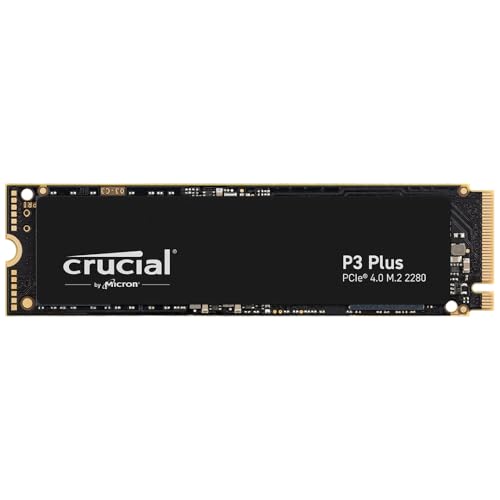
- Best NVMe candidate at this budget: Crucial P3 Plus PCIe Gen4 NVMe SSD 1TB (CT1000P3PSSD8) — Check on Amazon
- WD_BLACK SN770 NVMe SSD 1TB (WDS100T3X0E) — Check on Amazon
- Crucial MX500 1TB 3D NAND SATA 2.5-inch SSD (CT1000MX500SSD1) — Check on Amazon
- Samsung 870 EVO SATA III SSD 1TB (MZ-77E1T0B/AM) — Check on Amazon
See 2 more Amazon options
- Samsung 970 EVO Plus SSD 1TB (MZ-V7S1T0B/AM) — Check on Amazon
- Crucial X9 Pro Portable SSD 1TB (CT1000X9PROSSD902)
Read the full guide ↓
Disclosure: As an Amazon Associate, ilcastellomenu.com earns from qualifying purchases. Links to Amazon on this page are affiliate links; they cost you nothing extra. Listing details such as price and availability change often, so check the current Amazon listing before you buy.
The best ssds under 100 are a moving target, and this guide begins by admitting it: this site’s standing rule is that articles print no fixed product prices, because listings change constantly — so what this page can honestly do is more useful than a price list anyway. It names the drives whose capacities and tiers are the ones that live in the under $100 conversation, explains which capacity of each family is the realistic candidate at this budget, and gives you the checks to run on the live listing before you buy. Every pick is a verified product with corroborated specifications; the final price verdict, as the guide’s format intends, is one click away on the listing itself.
What $100 honestly buys in SSDs, stated plainly: at the budget end, a capacious SATA drive or a smaller NVMe; in the middle of the market’s moods, a 1TB Gen4 drive of the value class — the P3 Plus and SN770 tier — when listings are kind; and never, at any mood, a flagship 1TB or a large portable. Capacity is the dial this budget turns. The reviews below therefore talk in capacities and classes rather than pretending a number printed here would survive the week: choose the family by the drive’s quality, choose the capacity by the live listing, and the under-$100 brief is met without a single invented figure.
One more discipline defines this guide: a cheap drive is not a good drive by default, and the under-$100 shelf contains both the best value picks in storage and its worst false economies — no-name drives with fictional specifications. Every pick here is from a maker with a real datasheet, real software support and a warranty that exists, because at this budget the difference between a bargain and a trap is entirely the maker’s name on the label.
In this guide
Quick Picks
Short on time, or comparing several options at once? Each row below names a buyer type and the drive that suits it, with a link to the listing where one is verified.
| Buyer type | Pick | Why it stands out | Link |
|---|---|---|---|
| Best NVMe candidate at this budget | Crucial P3 Plus PCIe Gen4 NVMe SSD 1TB (CT1000P3PSSD8) | The value Gen4 family whose 1TB is the tier’s headline act when listings are kind | Check on Amazon |
| Best step-up candidate | WD_BLACK SN770 NVMe SSD 1TB (WDS100T3X0E) | A DRAM-less Gen4 overachiever whose 1TB contests this tier in kind listing weeks | Check on Amazon |
| Best SATA candidate | Crucial MX500 1TB 3D NAND SATA 2.5-inch SSD (CT1000MX500SSD1) | The value SATA benchmark: 1TB of proven 2.5-inch storage that owns this tier | Check on Amazon |
| Best SATA drive, budget permitting | Samsung 870 EVO SATA III SSD 1TB (MZ-77E1T0B/AM) | The finest SATA SSD made; its smaller capacities are this tier’s premium option | Check on Amazon |
| Best Gen3 candidate | Samsung 970 EVO Plus SSD 1TB (MZ-V7S1T0B/AM) | The definitive Gen3 drive, whose 1TB contests this budget as the older flagship | Check on Amazon |
| Best portable candidate | Crucial X9 Pro Portable SSD 1TB (CT1000X9PROSSD902) | A compact 1,050 MB/s-class portable whose 1TB is the external to watch at this tier | — |
How These Picks Were Chosen
Under-$100 judging applied the budget as a class filter rather than a price promise: families whose mainstream capacities habitually contest this tier, from makers with verifiable specifications and support. Within the class, the usual axes decided the order — interface fit, NAND type, sustained behaviour — and each review states which capacity of the family is the realistic budget candidate, so the live listing check takes seconds.
We did not use these drives ourselves. We read manufacturer specification pages and listing records, cross-checked the numbers that matter — interface, form factor, sequential figures, endurance ratings where published, and cooling arrangements — and favoured drives whose makers publish full specifications over those that hide behind marketing words. Every ASIN in this guide was verified against a live listing record during research, and every specification printed in the reviews traces to a manufacturer or retailer source recorded in the article’s source notes. Where a maker’s headline stretches a definition — a USB mode a host cannot use, a speed a console cannot spend — the review says so in plain language and judges the drive on its architecture instead.
The 6 Best SSDs Under $100
Crucial P3 Plus PCIe Gen4 NVMe SSD 1TB (CT1000P3PSSD8)
Who it suits: Best NVMe candidate at this budget — the value Gen4 family whose 1TB is the tier’s headline act when listings are kind.
The P3 Plus is the budget Gen4 drive that made NVMe speed ordinary: up to 5,000 MB/s reads and 4,200 MB/s writes — figures that would have been flagship territory a generation ago — from a QLC NAND design built to hit a price first. For the jobs most PCs actually do all day (booting, launching, loading games, moving documents and photos), it feels decisively faster than any SATA drive and close enough to pricier NVMe drives that most owners would never clock the difference outside a benchmark.
Honesty about QLC is the whole review, though. QLC writes slow down more than TLC once the cache is exhausted on very long transfers, and endurance ratings on QLC drives are lower than TLC equivalents — so a drive that will spend its life recording video, plotting, or absorbing NAS cache writes deserves the TLC flagships instead. As a boot-and-games drive, a laptop upgrade, or the second drive in a build, the P3 Plus is exactly the right economy; Crucial’s Storage Executive software and Acronis cloning support round out an ownership story that punches above its tier.
The P3 Plus is the under-$100 conversation’s main character: a genuine Gen4 drive, up to 5,000/4,200 MB/s, whose 1TB capacity is the one to check first on the live listing — it is the capacity this family is famous for contesting this budget with. Its QLC design is the honest trade, invisible in the everyday and gaming duties this budget serves. If the 1TB listing fits the budget on your day, this is the buy; if it does not, the family’s smaller capacities still deliver the same modern feel for less, with capacity as the only real sacrifice.
- Up to 5,000/4,200 MB/s — real Gen4 speed at the budget tier.
- Backward compatible with Gen3 slots for older-system upgrades.
- Crucial software and cloning support included.
Honest limitation: QLC NAND: sustained writes and endurance trail TLC drives — not the pick for write-heavy professional duty.
Choose it if you want a modern Gen4 boot-and-games drive and the 1TB listing lands inside the budget. Skip it if your work is sustained-write professional — QLC is the wrong tool at any price, and this guide’s editing picks are the honest road.
WD_BLACK SN770 NVMe SSD 1TB (WDS100T3X0E)
Who it suits: Best step-up candidate — a DRAM-less Gen4 overachiever whose 1TB contests this tier in kind listing weeks.
The SN770 is WD’s mid-range Gen4 drive done right: up to 5,150 MB/s sequential reads, a DRAM-less design that leans on host memory buffer support, and real-world responsiveness that feels far closer to the flagships than its tier suggests. For game loads, application launches and everyday file work — the loads that are mostly reads and short bursts — the gap between this drive and one costing much more is measured in fractions of a second, which is why it has become the standard value recommendation in Gen4.
Its compromises live exactly where the price says they should. Sustained writes of very large files slow sooner than on the DRAM-equipped flagships, and 5,150 MB/s sits below the 5,500 MB/s figure Sony recommends for PS5 expansion, so console buyers should look at the heatsink flagships in this guide instead. In a PC or laptop, though, the SN770’s efficiency, single-sided-friendly design and WD Dashboard support make it the drive to beat for a mainstream build that wants Gen4 feel without flagship money.
The SN770 is the pick for buyers who can stretch within the budget’s spirit: its 5,150 MB/s Gen4 behaviour feels flagship-adjacent in games and everyday work, and its 1TB is the capacity to watch — in favourable listing weeks this family reaches into the under-$100 conversation, and when it does, it is arguably the best drive this budget can buy. When its 1TB sits above the line, the smaller capacity keeps the same character for a strict budget, and the family’s efficiency suits laptops as well as desktops.
- Up to 5,150 MB/s reads — Gen4 responsiveness at a mid-range tier.
- Efficient DRAM-less design suits laptops as well as desktops.
- WD_BLACK gaming line support and Dashboard software.
Honest limitation: Below Sony’s recommended 5,500 MB/s for PS5 use, and sustained writes trail the DRAM-equipped flagships on very long copies.
Choose it if you find its 1TB inside the budget, or you value its all-round polish in a smaller capacity. Skip it if the listing sits stubbornly above the budget and capacity matters most — the P3 Plus’s 1TB is the likelier fit.
Crucial MX500 1TB 3D NAND SATA 2.5-inch SSD (CT1000MX500SSD1)
Who it suits: Best SATA candidate — the value SATA benchmark: 1TB of proven 2.5-inch storage that owns this tier.
The MX500 has been the value answer in SATA for years: up to 560 MB/s reads from a DRAM-equipped 3D NAND design that matches the interface’s ceiling and undercuts the 870 EVO’s usual pricing tier. Crucial builds in the ownership details that matter at this level — power-loss protection for data in flight, hardware encryption support, and the Acronis cloning software that makes a laptop or console drive swap a guided afternoon rather than a research project.
In practice the MX500 and the 870 EVO deliver the same experience to the machines that take them; the choice between them is about the day’s listings and your brand history, not about a performance gap you could feel. As a PS4 internal drive, an older-laptop resurrection, a NAS SATA tier or an enclosure build, it does the complete job with no asterisk — the asterisk belongs only to SATA itself, whose ceiling every drive in this form factor shares.
For the enormous world of SATA machines — older PCs, laptops, PS4s — the MX500’s 1TB is this budget’s anchor tenant: a DRAM-equipped, up-to-560 MB/s drive with a long record, from the maker whose cloning software makes the swap painless. It does not contest headlines; it contests the only SATA question that matters, which is how much proven capacity the budget holds, and at 1TB it holds a whole machine’s life. Check its listing against the 870 EVO’s on the day; the MX500 is the one usually priced to win this page.
- Up to 560 MB/s — the full SATA experience at a value tier.
- DRAM-equipped design with power-loss protection.
- Acronis cloning software included for easy drive swaps.
Honest limitation: SATA ceiling applies, as with every 2.5-inch drive; Samsung’s rival is the more premium name if listings are ever equal.
Choose it if your machine speaks SATA and you want the most proven capacity this budget buys. Skip it if your machine has an M.2 slot — NVMe candidates above deliver a larger upgrade for the same budget.
Samsung 870 EVO SATA III SSD 1TB (MZ-77E1T0B/AM)
Who it suits: Best SATA drive, budget permitting — the finest SATA SSD made; its smaller capacities are this tier’s premium option.
The 870 EVO is the best SATA SSD ever made, and it is not close. Samsung’s V-NAND and its own controller extract up to 560 MB/s reads and 530 MB/s writes — the practical ceiling of the SATA III interface — with the consistency, DRAM-equipped responsiveness and firmware maturity that made the EVO line the default upgrade for a decade of PCs, laptops and consoles with 2.5-inch bays. If a machine takes a 2.5-inch SATA drive, this is the drive against which every alternative is measured.
That role defines its modern shortlist: the internal swap for a PS4, the resurrection of an older laptop or desktop, the reliable SATA tier in a NAS, and the known-quantity drive for a USB enclosure build. SATA’s ceiling is the honest limitation — roughly a tenth of a flagship NVMe drive’s sequential speed — but in the machines that take this form factor, the comparison is against a spinning hard drive, and against that baseline the 870 EVO is transformative: silent, shock-proof, and fast enough that the rest of the old machine becomes the bottleneck.
The 870 EVO at this budget is a capacity negotiation: its 1TB often sits above the line, while its smaller capacities bring the best SATA drive ever made inside it. The buyer’s question is therefore honest and simple — is the 870 EVO’s record and consistency worth trading capacity against the MX500’s 1TB? For a system drive in a machine you love, often yes; for a library or a console, capacity usually wins. Either way the comparison is between two excellent drives, which is what a budget page should offer.
- SATA-ceiling speeds: up to 560/530 MB/s with DRAM-equipped consistency.
- The most proven 2.5-inch SSD line in the business.
- Fits any 2.5-inch bay — laptops, PS4, older desktops, enclosures.
Honest limitation: SATA interface caps sequential speed far below NVMe — only buy it for a machine or bay that actually uses SATA.
Choose it if you value the best SATA drive over maximum capacity and find its mid capacities inside the budget. Skip it if capacity is the whole brief — the MX500’s 1TB at this tier is the fuller drive.
Samsung 970 EVO Plus SSD 1TB (MZ-V7S1T0B/AM)
Who it suits: Best Gen3 candidate — the definitive Gen3 drive, whose 1TB contests this budget as the older flagship.
The 970 EVO Plus is the definitive Gen3 drive: up to 3,500 MB/s reads and 3,300 MB/s writes — essentially the whole PCIe 3.0 x4 pipe — from Samsung V-NAND TLC with a proper DRAM cache, in a design that has been the safe answer for older motherboards, laptops and enclosures for years. On a Gen3 slot it gives up nothing; on a Gen4 slot it runs at Gen3 speeds and still feels fast in every everyday load, because most real work never touches the sequential ceiling either way.
Its modern roles are specific and honourable. It is the known-quantity upgrade for Gen3-era machines, a favourite inside USB and Thunderbolt enclosures where the interface is the bottleneck anyway, and the drive older-Mac tinkerers reach for because its behaviour in adapters and enclosures is documented to exhaustion. What it is not is a PS5 drive — Sony requires Gen4 — and buyers with a Gen4 slot and flagship money should spend it on a Gen4 drive. Within its generation, nothing here is a compromise.
The 970 EVO Plus is the connoisseur’s budget pick: an older flagship whose 1TB now lives in this tier’s neighbourhood, delivering a saturated Gen3 interface, TLC and DRAM, and a decade of proven behaviour. For a Gen3 machine it is not a compromise at all — it is the best drive that slot can use — and for enclosure builders it is the known-quantity stick. Check the live listing’s capacity ladder: the 1TB is the target, and in a Gen4 slot remember it runs at Gen3 pace, which for most owners remains a thoroughly modern experience.
- Saturates Gen3: up to 3,500/3,300 MB/s with TLC and DRAM.
- Enormous installed base — behaviour in enclosures and adapters is well documented.
- Samsung Magician support and a five-year-class warranty record.
Honest limitation: Gen3 interface: cannot meet PS5 requirements and leaves Gen4 slots underfed on sequential transfers.
Choose it if your machine is Gen3, or you are building an enclosure, and its 1TB lands inside the budget. Skip it if your Gen4 slot and workload can use a Gen4 drive’s pace daily — the P3 Plus and SN770 contest the same money.
Crucial X9 Pro Portable SSD 1TB (CT1000X9PROSSD902)
Who it suits: Best portable candidate — a compact 1,050 MB/s-class portable whose 1TB is the external to watch at this tier.
The X9 Pro is Crucial’s answer to the T7 formula: up to 1,050 MB/s reads and writes over USB-C in an anodised aluminium enclosure barely bigger than a credit card’s footprint, with drop resistance and a lanyard loop that signal it was designed to live on a keyring-adjacent life rather than a desk. It is bus-powered, works across PC, Mac and consoles, and Crucial prices it to undercut the Samsung equivalent whenever listings move — which, in this class, is often.
The specification ceiling is the class ceiling: 10 Gb/s USB, so about a gigabyte per second on a good day, and no way around it. Within that, the X9 Pro’s sustained behaviour is honest, its enclosure handles travel heat well, and its size makes it the portable most likely to actually be in your bag when you need it. Buyers choosing between this and the T7 Shield are choosing ruggedness ratings and the day’s listing, not a different class of drive.
External storage has a candidate in this budget too: the X9 Pro’s 1TB is the portable capacity to check, a compact metal drive in the full USB class for backups, libraries and console storage. Portables contest this tier less often than internal drives, so the discipline matters more, not less — if its 1TB listing fits, it is the external buy of this page; if not, its smaller capacities still beat any hard-drive portable hollow. For a backup drive, that last comparison is the one that counts: at this budget, the choice is between a small SSD and a large spinning disk, and for anything you value, choose the SSD.
- Up to 1,050 MB/s read and write in a very compact metal body.
- Broad PC, Mac and console compatibility over USB-C.
- Aggressively positioned against the Samsung T7 class.
Honest limitation: 10 Gb/s USB ceiling, shared with its whole class; the Mac-specific version is the tidier buy for Apple-only kits.
Choose it if you need external storage — backup, shuttle or console library — and its capacity listing fits the budget. Skip it if you need maximum raw capacity above all — a portable hard drive holds more for the money and protects nothing but space.
Comparison Table
| Product | Type | Key specifications | Link |
|---|---|---|---|
| Crucial P3 Plus PCIe Gen4 NVMe SSD 1TB (CT1000P3PSSD8) | Internal NVMe, PCIe Gen4 x4, M.2 2280, no heatsink | PCIe Gen4 x4 · M.2 2280 · up to 5,000 MB/s read · up to 4,200 MB/s write · QLC NAND · 1TB | Check on Amazon |
| WD_BLACK SN770 NVMe SSD 1TB (WDS100T3X0E) | Internal NVMe, PCIe Gen4 x4, M.2 2280, no heatsink | PCIe Gen4 x4 · M.2 2280 · up to 5,150 MB/s read · 1TB | Check on Amazon |
| Crucial MX500 1TB 3D NAND SATA 2.5-inch SSD (CT1000MX500SSD1) | Internal SATA, 2.5-inch 7mm | SATA 6 Gb/s · 2.5-inch · up to 560 MB/s read · 3D NAND · 1TB | Check on Amazon |
| Samsung 870 EVO SATA III SSD 1TB (MZ-77E1T0B/AM) | Internal SATA III, 2.5-inch 7mm | SATA III 6 Gb/s · 2.5-inch · up to 560 MB/s read · up to 530 MB/s write · 1TB | Check on Amazon |
| Samsung 970 EVO Plus SSD 1TB (MZ-V7S1T0B/AM) | Internal NVMe, PCIe Gen3 x4, M.2 2280, no heatsink | PCIe Gen3 x4 · M.2 2280 · up to 3,500 MB/s read · up to 3,300 MB/s write · TLC V-NAND · DRAM-equipped · 1TB | Check on Amazon |
| Crucial X9 Pro Portable SSD 1TB (CT1000X9PROSSD902) | External portable, USB 3.2 USB-C | USB 3.2 Gen2 (10 Gb/s) · USB-C · up to 1,050 MB/s read and write · 1TB | — |
This table compares families, not prices — by design. The specifications column tells you what each drive is; the capacity to check on the live listing is named in each full review, because at this budget the same family’s different capacities are effectively different products competing for the same hundred.
How to Shop a Budget That Moves
A fixed budget against moving listings is a method, not a moment, and the method has three steps. First, fix the family, not the price: decide from this guide which drive suits your machine and workload — interface, NAND, record — because a drive’s quality does not change when its listing does. Second, read the capacity ladder on the live listing: budget SSD shopping is capacity shopping, and the same family’s 500GB and 1TB are different purchases wearing one name. Third, compare the two or three families on your shortlist on the same day, since the winner at this tier rotates with the listings — the MX500 and 870 EVO trade places, the P3 Plus and SN770 trade places, and the patient buyer simply takes the day’s honest winner.
What never rotates is the trap shelf: drives from makers with no datasheet, no software and specifications that read like wishes. At this budget the traps are priced a small step below the real drives in this guide, and the step is never worth it — a storage device holds your data, and its maker’s existence in three years is a specification. Buy the real drive in the smaller capacity before the fictional drive in the larger one, every time. The neighbouring guides apply the same families at fuller budgets: Best Ssds For Pc for the complete PC picture and Best Ssds For Gaming for the play-focused ranking.
Capacity Versus Class: Spending the Same Money Two Ways
Every under-$100 decision is secretly the same fork: the larger capacity of a humbler drive, or the smaller capacity of a finer one. The fork resolves by job, not by taste. A system drive in a machine you use daily rewards class — responsiveness, consistency, software — and lives happily at a capacity that holds the system and your active work. A library, backup or console drive rewards capacity almost exclusively, because its job is to hold things, and a fuller humbler drive beats a finer one that cannot fit the collection. Name the job in those words and the fork disappears: class for the drive you live on, capacity for the drive you store on.
The fork has a third prong worth naming: the second drive. Two modest drives — a smaller, finer system drive and a larger, humbler library drive — often serve a PC better than one drive at the same total spend, and budget families make that arithmetic friendly. However you resolve it, keep the standing disciplines: a fifth of any drive free, a backup of anything precious, and a maker whose name will still mean something when the warranty is needed. Under $100 buys genuinely good storage in this era — it simply refuses to buy it carelessly.
Refurbished, Used and Open-Box: The Budget’s Back Door
Sooner or later every budget shopper meets the second-hand shelf, and SSDs make it a more rational shelf than most: a drive reports its own health, including the share of its rated life consumed, in software anyone can read. A used drive from a reputable maker, bought from a seller who shows its health readout, can be an honest bargain — the SSD equivalent of a car with a verifiable service history. The disciplines are the used market’s usual ones, sharpened: buy where returns exist, read the health figure before the capacity figure, and treat any seller who will not show the drive’s health as having shown it.
What the back door should never become is the front: a main drive holding the only copy of anything deserves a maker’s warranty and a known past, and the new drives in this guide contest this budget closely enough that used purchases are a tactic, not a strategy. The exception is the second-drive role — a library, scratch or backup-adjacent drive whose failure would be an inconvenience — where a healthy used flagship can out-serve a new budget drive entirely. Budget shopping is a portfolio decision, and the used shelf is one asset class inside it, sized accordingly.
When to Break the Budget Deliberately
A budget is a tool, and this guide’s last essay is about the two moments it should be consciously broken. The first is capacity gravity: when the family’s 1TB sits a small step above the line and its 500GB sits inside it, the step is usually the cheapest capacity you will ever buy, because the alternative — replacing a full drive within the year — repays the whole purchase, not the difference. The second is the workload mismatch: when the job is genuinely sustained-write or endurance-bound, no drive inside the budget is the right drive, and buying one anyway converts a small overspend into a full repurchase on a deadline. Both breaks share a signature: they are decided by arithmetic done calmly in advance, never by appetite at the listing.
Every other break is just spending. The budget’s real function is to force the shortlist discipline this guide is built on — the right family, the right capacity, a maker who will exist at warranty time — and within that discipline the under-$100 shelf of this era is honestly excellent. Break it for capacity gravity or a genuine workload, in writing, with numbers. Otherwise hold it, and enjoy the peculiar satisfaction of a drive that is both good and cheap, bought on purpose.
The Household Effect: Where a Budget SSD Changes the Most Lives
The under-$100 SSD has a social history worth honouring: it is the price point at which the technology stopped being an enthusiast upgrade and became the standard answer to ‘my computer is slow’ — the single most common sentence in domestic computing. The machines it transforms are not benchmarks; they are the family laptop that takes four minutes to wake, the parent’s desktop that has been ‘about to be replaced’ for three years, the console whose menus hitch. In each case the budget drive in this guide does not merely speed the machine up; it cancels a replacement, extends a life by years, and does so for less than the household spends on the software subscriptions the machine exists to run.
That is the context in which this guide’s strictness about makers and datasheets should be read. A budget drive bought for someone else’s machine — the classic gift, the classic favour — carries a responsibility a personal purchase does not: its failure is your recommendation failing, in their house, with their photos. The families listed here are the ones whose names can be put on that gift without a prayer. Under $100, bought this way, is not the cheap option. It is one of the best-value transactions in all of consumer technology, and it has quietly extended the useful life of more computers than any other single product class of its decade.
The Upgrade Order: What to Fix First in an Old Machine
Budget SSD money usually arrives as part of a larger question — an old machine, a fixed sum, and a list of complaints — and the order of operations decides whether the sum works. Storage comes first when the machine has a spinning hard drive, because that single change alters every interaction the owner has with the computer, and because it is the upgrade whose benefit does not depend on any other part being worthy. Memory comes second, if the machine’s ceiling allows a meaningful step. Everything else — and especially anything involving the processor — is a new machine wearing an upgrade’s clothes, and budget honesty consists of saying so.
The SSD-first rule has one qualifier: health. A machine whose existing drive is failing needs its data rescued before it needs its speed improved, and the budget drive’s first job in that house is to receive the clone, not to win a benchmark. Sequenced that way — rescue, then storage, then memory, then honesty about the rest — a hundred spent on an old computer routinely outperforms several hundred spent in the wrong order. That is the real promise of this price tier, and why it deserves a guide of its own.
That sequencing wisdom is the note to end on, because it is what separates a budget from a false economy. A hundred spent in the right order — rescue, storage, memory, honesty — revives machines. A hundred spent on the shiniest line item revives nothing but the upgrade itch. The drives in this guide are the storage step of that order, chosen so the step never has to be taken twice.
And when the order is right, notice what the budget actually bought: not a component, but time — the years an old machine stays useful, the evenings a console stays quick, the semester a laptop survives. Measured in time, this tier is not the cheap end of storage. It is the highest-return end of it.
How to Choose Best SSDs Under $100
A moving budget against moving listings rewards method over luck. These checks, in order, are the method:
- Fix the family first, the capacity second. Decide which drive suits your machine from its quality and fit; then let the live listing’s capacity ladder decide the size your budget takes home.
- Check the listing on the day, every time. This tier rotates weekly. The same shortlist compared on the same morning is the whole method — yesterday’s winner is a rumour.
- Refuse the trap shelf. No datasheet, no software, no maker you can name — no purchase, however kind the capacity looks. Your data lives on this decision.
- Match the fork to the job. Class for the drive you live on; capacity for the drive you store on. Naming the job settles the budget’s hardest question.
- Count the whole purchase. An internal SATA swap may want a cable or a bracket; a DIY external wants an enclosure. The budget is the working total, not the drive alone.
- Prefer the real drive one size down. A genuine 500GB from a maker in this guide outlives and out-serves a fictional 1TB from the trap shelf, without exception.
- Watch the family’s ladder, not one listing. The same drive at 500GB, 1TB and 2TB is three different budget answers. The ladder is where this tier is actually shopped.
- Keep a fifth free and a backup kept. Budget drives obey the same physics as flagships: headroom keeps them fast, and a backup keeps them from mattering too much.
Common Mistakes
- Believing a fixed price printed anywhere — including, especially, a deal post from last season.
- Buying a no-name drive with wishful specifications because its capacity undercut the real drives slightly.
- Comparing a 500GB of one family against a 1TB of another and calling the cheaper one the winner.
- Spending the budget on interface speed your machine cannot use while starving capacity.
- Forgetting the enclosure, cable or bracket that makes the purchase complete.
- Buying a QLC drive for sustained-write work because it won the capacity contest.
- Filling a budget drive completely in the first month and living with its slowest self.
- Treating a single budget drive as a backup strategy rather than as storage.
Final Recommendation
- Best NVMe candidate at this budget: Crucial P3 Plus PCIe Gen4 NVMe SSD 1TB (CT1000P3PSSD8).
- Best step-up candidate: WD_BLACK SN770 NVMe SSD 1TB (WDS100T3X0E).
- Best SATA candidate: Crucial MX500 1TB 3D NAND SATA 2.5-inch SSD (CT1000MX500SSD1).
- Best SATA drive, budget permitting: Samsung 870 EVO SATA III SSD 1TB (MZ-77E1T0B/AM).
- Best Gen3 candidate: Samsung 970 EVO Plus SSD 1TB (MZ-V7S1T0B/AM).
- Best portable candidate: Crucial X9 Pro Portable SSD 1TB (CT1000X9PROSSD902).
Our top two here are the Crucial P3 Plus PCIe Gen4 NVMe SSD 1TB (CT1000P3PSSD8), for the buyer this article was written for, and the WD_BLACK SN770 NVMe SSD 1TB (WDS100T3X0E), for the household whose priorities run the other way. Between them they cover the two shapes this search usually takes: the complete answer bought once, and the value answer that leaves budget for everything else. Readers weighing a neighbouring question should also see Best Ssds For Pc. Shortlist by quality, shop the capacity ladder on the day, and refuse the trap shelf — under $100, that discipline is the entire difference between the best value in storage and its most expensive lesson.
Frequently Asked Questions
Can I really get a good 1TB SSD under $100?
In favourable listing weeks, yes — the value Gen4 families (the P3 Plus class) and the great SATA drives contest exactly that point, which is why this guide names them as the capacities to check first. Prices move constantly and this page prints none; the method is to shortlist the family here and verify the live listing’s capacity ladder on the day you buy.
Why does this guide not just print the prices?
Because a printed price for a specific product would be wrong more often than right, and a wrong price helps no one — this site’s standing rule for every guide. What does not change is which drives are worth the budget, which capacities contest it, and how to check. The listing is one click from every pick, with the live figure.
Is a budget SSD reliable enough for my main drive?
From the makers in this guide, yes — these are mainstream drives with real datasheets, health software and warranties, used as main drives in millions of machines. The reliability cliff at this budget is not between these families; it is between them and the no-name trap shelf this guide refuses to list.
Should I buy a smaller NVMe or a bigger SATA drive for the same money?
It depends on the job and the machine. If your PC has an M.2 slot and this is its system drive, the NVMe’s responsiveness usually wins. If the drive is for capacity — a library, a console, a SATA-only machine — the bigger SATA drive is the honest buy. The essays call this the capacity-versus-class fork, and naming your job settles it.
What capacity should I target at this budget?
For a system drive, the largest the shortlisted family offers inside the budget — 1TB when the listing allows, 500GB with discipline when it does not. For storage and console duty, capacity is the product: take the biggest proven drive the budget holds.
When is the best time to buy?
When you need the drive and the day’s listings put your shortlisted family’s target capacity inside the budget. This tier’s prices move in both directions on short cycles; the durable saving is buying the right family at the right capacity, not timing a dip that a printed page cannot predict.
Is it worth waiting for a sale on these drives?
If your need is not urgent, this tier’s listings do cycle, and a shortlisted family bought on a kind week is the budget ideal. But storage is usually bought because a machine needs it — a drive purchased and working beats a perfect price on a drive still being watched, and the families here are honest value at their ordinary listings too.


