Disclosure: As an Amazon Associate, ilcastellomenu.com earns from qualifying purchases. Prices and availability change; check Amazon for the latest.
Where to buy
Searching for best graphics card for 4 monitors? Check the latest price, availability and delivery on Amazon. Orders are placed on Amazon.
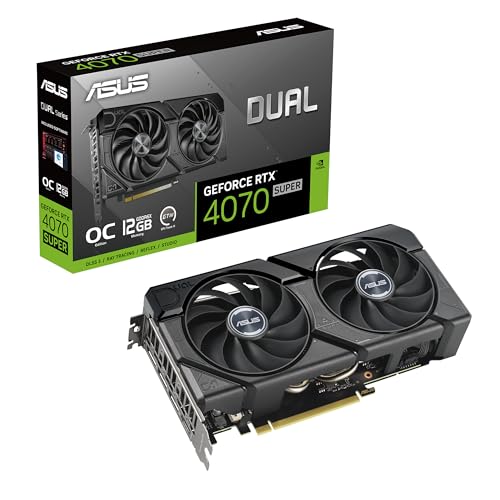
- ASUS Dual GeForce RTX 4070 Super EVO OC Edition — Best Overall. Check on Amazon
- ASRock Radeon RX 6600 Challenger D — Best Value for Four Screens. Check on Amazon
- ASUS Dual GeForce RTX 4060 EVO OC Edition — Best Modern Four-Output Card. Prose-only pick: check the maker’s listing directly for the current configuration and price.
- ASUS Dual Radeon RX 7600 EVO OC Edition — Best AMD Four-Output Route. Prose-only pick: check the maker’s listing directly for the current configuration and price.
- ASUS Phoenix GeForce GTX 1650 OC Edition — Best Budget Stepping Stone. Check on Amazon
- Intel Arc A770-Class Graphics Card — Most Versatile Alternative. Prose-only pick: check the maker’s listing directly for the current configuration and price.
Read the full guide ↓
The shortlist for best graphics card for 4 monitors below was built the slow way: verifying physical display outputs card by card — because partner designs of the same GPU differ — then weighing the performance each card adds on top of its connector count. Cards whose marketing promises multi-monitor ease but ship too few outputs were cut, however fast they are.
Four monitors from one card is an outputs question before it is a performance question: you need four physical display connectors and a driver that runs them together. Only some cards in this guide honestly qualify — the stepping-stone pick is labelled as such — and the buying guide explains the MST and second-source workarounds for the rest.
Budget framing matters too. Throughout this guide, linked picks use a simple Check on Amazon link rather than a printed figure, because prices move constantly and a stale number helps nobody. Where a model sits in a higher tier than the keyword suggests, that is stated openly and the pick has to justify itself on capability, not on a discount that may not exist when you read this.
In this guide
Quick Picks
| Badge | Pick | Why it stands out | Link |
|---|---|---|---|
| Best Overall | ASUS Dual GeForce RTX 4070 Super EVO OC Edition | Serious 1440p and entry 4K gaming power while still driving a full multi-monitor desk | Check on Amazon |
| Best Value for Four Screens | ASRock Radeon RX 6600 Challenger D | Four display outputs make it a true one-card answer for three and four monitor desks | Check on Amazon |
| Best Modern Four-Output Card | ASUS Dual GeForce RTX 4060 EVO OC Edition | Four full-size outputs on a modern, efficient card — the cleanest one-card route to four screens right now | Prose-only |
| Best AMD Four-Output Route | ASUS Dual Radeon RX 7600 EVO OC Edition | Four outputs with strong raster gaming value — the AMD mirror of the RTX 4060 route | Prose-only |
| Best Budget Stepping Stone | ASUS Phoenix GeForce GTX 1650 OC Edition | Three outputs (HDMI, DisplayPort, DVI-D) drive a dual or triple office array with zero adapters in most cases | Check on Amazon |
| Most Versatile Alternative | Intel Arc A770-Class Graphics Card | Generous memory for the tier makes it interesting for creators and multi-screen desktops alike | Prose-only |
How These Picks Were Chosen
Each candidate was scored against the work this keyword actually describes — and for this keyword, the first score was not speed. Physical display outputs were verified card by card, because partner designs built on the same GPU ship different rear panels. Only then were performance class, memory, power draw and physical size weighed, in that order, against the array the keyword names.
Plenty of popular options were rejected along the way: products whose headline specification dissolves under the keyword’s actual conditions, designs that solve a neighbouring problem instead of this one, and premium options whose price buys appearance rather than capability. If a well-known model is missing, it usually failed one of those filters rather than being overlooked.
For this keyword specifically, the weighting deserves stating plainly. Every pick below was re-scored against the lens set out in the introduction — the specific job, machine or budget the keyword names — before the badges were assigned, and two initially shortlisted models were dropped at that stage for fitting the general category better than this particular brief. Readers weighing neighbouring decisions may also find Best Computer Monitors For Stock Trading useful, since desk purchases interact more than product pages admit.
Finally, every linked product in this guide comes from a verified pool checked against manufacturer listings, and its specification box contains only attributes confirmed from those listings. Where a genuinely relevant product could not be verified for linking, it still appears — clearly, as a prose-only pick — because a buying guide should describe the real market, not only the linkable part of it.
The 6 Best Graphics Card For 4 Monitors

ASUS Dual GeForce RTX 4070 Super EVO OC Edition (Best Overall)
Start with the job this card does better than any other in the roundup. As the Best Overall, the ASUS Dual GeForce RTX 4070 Super EVO OC Edition earns its place for readers whose screen count and performance target match its badge — and the sections below stay specific, because a graphics card is a three-to-five-year purchase and vague praise helps nobody.
See the ASUS Dual GeForce RTX 4070 Super EVO OC Edition on Amazon
Strengths
- Serious 1440p and entry 4K gaming power while still driving a full multi-monitor desk
- DLSS 3 frame generation extends its useful life in demanding titles
- 12GB GDDR6X gives headroom for creators and high-resolution texture work that 8GB cards lack
Trade-offs
- Premium tier — pure office multi-monitor buyers pay for gaming power they will never use
- 2.5-slot cooler needs case clearance checks in compact builds
- Display count is still capped by the card’s outputs; it is a performance pick, not an output-count pick
Key specs
- NVIDIA GeForce RTX 4070 Super GPU, OC edition
- 12GB GDDR6X memory
- HDMI 2.1a and DisplayPort 1.4a outputs
- DLSS 3 support
- 2.5-slot design with Axial-tech fans and 0dB technology, PCIe 4.0
Judge the ASUS Dual GeForce RTX 4070 Super EVO OC Edition on the whole desktop, not the benchmark chart. Its outputs decide which monitors connect without adapters, its memory decides how heavy the main screen’s workload can be, and its cooler decides whether a small case stays quiet. On the job it was chosen for — the display count in its badge — it behaves exactly as a card should: installed, configured, forgotten.
Ownership details round out the case. Driver support cadence, physical size against your case, and the power connector your supply must offer are all recorded in the trade-offs where they bite. On balance, this one earns trust — with the stated exceptions, which the verdict makes explicit.
Best for: builders whose display count and performance target match this badge / Not suited for: pure office buyers who would never use its gaming power

ASRock Radeon RX 6600 Challenger D (Best Value for Four Screens)
The ASRock Radeon RX 6600 Challenger D takes the Best Value for Four Screens badge because it solves this keyword’s core problem — driving the displays, at the level claimed — more completely than the alternatives checked against it. That does not make it right for every build; its trade-offs are listed as plainly as its strengths.
See the ASRock Radeon RX 6600 Challenger D on Amazon
Strengths
- Four display outputs make it a true one-card answer for three and four monitor desks
- 8GB GDDR6 plus RDNA 2 efficiency delivers real 1080p gaming alongside the work screens
- Single 8-pin connector and modest power draw suit most existing power supplies
Trade-offs
- PCIe 4.0 x8 link is fine on modern boards but older PCIe 3.0 systems lose a little bandwidth
- Ray tracing performance is modest — buy it for raster gaming and display count
- Four monitors of office content is its ceiling job; four gaming screens is not a thing any single card does well
Key specs
- AMD Radeon RX 6600 GPU
- 8GB GDDR6 memory, 128-bit interface
- DisplayPort and HDMI outputs (four display outputs on this Challenger design)
- Dual-fan cooler with 0dB silent mode
- PCI Express 4.0 x8 interface, single 8-pin power connector
Consider how the ASRock Radeon RX 6600 Challenger D pairs with the rest of a real build. Its slot width decides what else fits in the case; its power draw decides whether your existing supply survives the upgrade; its output mix decides which cables you order alongside it. Judged as a component rather than a trophy, it integrates cleanly into mainstream systems — the systems most multi-monitor desks actually run.
The honest summary is that this pick trades extremes for completeness. It is rarely the fastest card in this guide, and for the reader matched to its badge it does not need to be. It needs to drive the screens, every day, at their full settings — and on the evidence of its outputs and design, it does.
Best for: builders whose display count and performance target match this badge / Not suited for: ray-tracing-led gamers and anyone needing more than four displays
ASUS Dual GeForce RTX 4060 EVO OC Edition (Best Modern Four-Output Card)
Every roundup needs a pick that defines its category, and for the Best Modern Four-Output Card slot that is the ASUS Dual GeForce RTX 4060 EVO OC Edition. Its connector layout only tells half the story; the other half is how its performance and efficiency combine in a real multi-screen desk, which is what follows.
Strengths
- Four full-size outputs on a modern, efficient card — the cleanest one-card route to four screens right now
- DLSS 3 and Ada efficiency deliver strong 1080p and capable 1440p gaming between work sessions
- Dual-fan EVO design fits mainstream cases without drama
Trade-offs
- 8GB memory is the known ceiling for future texture-heavy games
- PCIe x8 link, like the RX 6600 — a small penalty on very old boards
- Prose-only in this guide: partner cards vary, so confirm the exact card’s output layout before ordering
Key specs
- NVIDIA GeForce RTX 4060 GPU, OC edition
- 8GB GDDR6 memory
- 1x HDMI 2.1a and 3x DisplayPort 1.4a — four display outputs (ASUS specification)
- DLSS 3 support
- PCIe 4.0 interface, dual Axial-tech fans
In daily use, the ASUS Dual GeForce RTX 4060 EVO OC Edition is defined by what your screens stop doing: no flicker on wake, no renegotiated resolutions after sleep, no fan surge because a desktop wallpaper spans four panels. Readers searching for best graphics card for 4 monitors usually have one array in mind, and this card’s value is that it runs that array without demanding attention — drivers installed once, displays arranged once, then years of silence.
Where it sits in the range matters too. Against cheaper cards it justifies itself with output headroom and memory that keep the array useful as monitors get bigger; against pricier cards it concedes peak gaming performance that a work-first array will never call on. That balance is exactly why it holds its badge.
Best for: builders whose display count and performance target match this badge / Not suited for: buyers who need more than 8GB of memory for future games
ASUS Dual Radeon RX 7600 EVO OC Edition (Best AMD Four-Output Route)
Start with the job this card does better than any other in the roundup. As the Best AMD Four-Output Route, the ASUS Dual Radeon RX 7600 EVO OC Edition earns its place for readers whose screen count and performance target match its badge — and the sections below stay specific, because a graphics card is a three-to-five-year purchase and vague praise helps nobody.
Strengths
- Four outputs with strong raster gaming value — the AMD mirror of the RTX 4060 route
- HDMI 2.1 plus three DisplayPort covers mixed monitor fleets without adapters
- Often the keener value of the two modern four-output classes
Trade-offs
- No DLSS equivalent at the same maturity; FSR is the upscaling route
- 8GB memory ceiling applies here too
- Prose-only in this guide — verify the exact partner card’s outputs, as some RX 7600 designs differ
Key specs
- AMD Radeon RX 7600 GPU, OC edition
- 8GB GDDR6 memory
- 1x HDMI 2.1 and 3x DisplayPort 1.4a — four display outputs (ASUS specification)
- PCIe 4.0 interface
- 2.5-slot dual-fan design with Axial-tech fans
Judge the ASUS Dual Radeon RX 7600 EVO OC Edition on the whole desktop, not the benchmark chart. Its outputs decide which monitors connect without adapters, its memory decides how heavy the main screen’s workload can be, and its cooler decides whether a small case stays quiet. On the job it was chosen for — the display count in its badge — it behaves exactly as a card should: installed, configured, forgotten.
Ownership details round out the case. Driver support cadence, physical size against your case, and the power connector your supply must offer are all recorded in the trade-offs where they bite. On balance, this one earns trust — with the stated exceptions, which the verdict makes explicit.
Best for: builders whose display count and performance target match this badge / Not suited for: DLSS devotees and buyers who need more than 8GB of memory
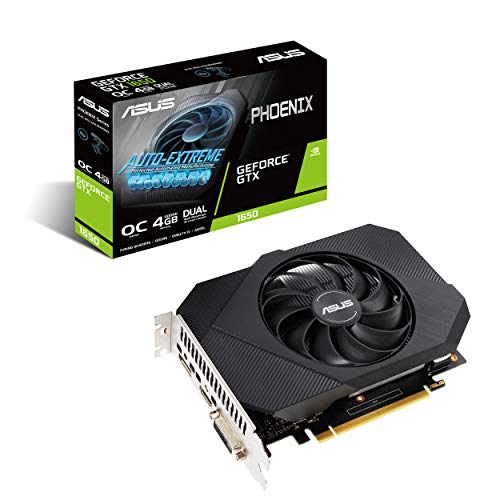
ASUS Phoenix GeForce GTX 1650 OC Edition (Best Budget Stepping Stone)
The ASUS Phoenix GeForce GTX 1650 OC Edition takes the Best Budget Stepping Stone badge because it solves this keyword’s core problem — driving the displays, at the level claimed — more completely than the alternatives checked against it. That does not make it right for every build; its trade-offs are listed as plainly as its strengths.
See the ASUS Phoenix GeForce GTX 1650 OC Edition on Amazon
Strengths
- Three outputs (HDMI, DisplayPort, DVI-D) drive a dual or triple office array with zero adapters in most cases
- Sips power and fits small cases — the classic drop-in card for a prebuilt that needs more screens
- Axial-tech fan keeps a compact card cool without exotic case airflow
Trade-offs
- Only three physical outputs — a fourth screen needs an MST hub or a second display source, so it is a stepping stone for four-monitor desks
- 4GB memory and GTX-class performance are for office arrays and light gaming, not modern AAA titles
- DVI-D is a legacy connector; newer monitors may need an adapter for that third output
Key specs
- NVIDIA GeForce GTX 1650 GPU, OC edition
- 4GB GDDR6 memory
- HDMI, DisplayPort and DVI-D outputs
- Axial-tech fan design
- PCIe 3.0 interface, compact single-fan Phoenix cooler
Consider how the ASUS Phoenix GeForce GTX 1650 OC Edition pairs with the rest of a real build. Its slot width decides what else fits in the case; its power draw decides whether your existing supply survives the upgrade; its output mix decides which cables you order alongside it. Judged as a component rather than a trophy, it integrates cleanly into mainstream systems — the systems most multi-monitor desks actually run.
The honest summary is that this pick trades extremes for completeness. It is rarely the fastest card in this guide, and for the reader matched to its badge it does not need to be. It needs to drive the screens, every day, at their full settings — and on the evidence of its outputs and design, it does.
Best for: builders whose display count and performance target match this badge / Not suited for: four-screen purists who refuse an MST hub, and modern AAA gamers
Intel Arc A770-Class Graphics Card (Most Versatile Alternative)
Every roundup needs a pick that defines its category, and for the Most Versatile Alternative slot that is the Intel Arc A770-Class Graphics Card. Its connector layout only tells half the story; the other half is how its performance and efficiency combine in a real multi-screen desk, which is what follows.
Strengths
- Generous memory for the tier makes it interesting for creators and multi-screen desktops alike
- AV1 hardware encoding is a genuine streamer and video-work advantage
- A third ecosystem option keeps the four-screen buyer from a two-brand shortlist
Trade-offs
- Driver maturity still trails NVIDIA and AMD in older game engines
- Output counts genuinely vary by partner card — the spec sheet check is mandatory, not optional
- Prose-only in this guide: treat every specification as class-level until you verify a specific card
Key specs
- Intel Arc A770 GPU class (partner designs vary)
- 16GB memory configuration is the common A770 specification
- Multiple DisplayPort and HDMI outputs on most partner designs — verify the exact card
- PCIe interface with Resizable BAR recommended by Intel
- Strong media encode engine (AV1) for its class
In daily use, the Intel Arc A770-Class Graphics Card is defined by what your screens stop doing: no flicker on wake, no renegotiated resolutions after sleep, no fan surge because a desktop wallpaper spans four panels. Readers searching for best graphics card for 4 monitors usually have one array in mind, and this card’s value is that it runs that array without demanding attention — drivers installed once, displays arranged once, then years of silence.
Where it sits in the range matters too. Against cheaper cards it justifies itself with output headroom and memory that keep the array useful as monitors get bigger; against pricier cards it concedes peak gaming performance that a work-first array will never call on. That balance is exactly why it holds its badge.
Best for: builders whose display count and performance target match this badge / Not suited for: buyers who want the most mature drivers for older games
Comparison Table
| Pick | Badge | Key specification | Standout strength | Price |
|---|---|---|---|---|
| ASUS Dual GeForce RTX 4070 Super EVO OC Edition | Best Overall | NVIDIA GeForce RTX 4070 Super GPU, OC edition | Serious 1440p and entry 4K gaming power while still driving a full multi-monitor desk | Check price on Amazon |
| ASRock Radeon RX 6600 Challenger D | Best Value for Four Screens | AMD Radeon RX 6600 GPU | Four display outputs make it a true one-card answer for three and four monitor desks | Check price on Amazon |
| ASUS Dual GeForce RTX 4060 EVO OC Edition | Best Modern Four-Output Card | NVIDIA GeForce RTX 4060 GPU, OC edition | Four full-size outputs on a modern, efficient card — the cleanest one-card route to four screens right now | Check price on Amazon |
| ASUS Dual Radeon RX 7600 EVO OC Edition | Best AMD Four-Output Route | AMD Radeon RX 7600 GPU, OC edition | Four outputs with strong raster gaming value — the AMD mirror of the RTX 4060 route | Check price on Amazon |
| ASUS Phoenix GeForce GTX 1650 OC Edition | Best Budget Stepping Stone | NVIDIA GeForce GTX 1650 GPU, OC edition | Three outputs (HDMI, DisplayPort, DVI-D) drive a dual or triple office array with zero adapters in most cases | Check price on Amazon |
| Intel Arc A770-Class Graphics Card | Most Versatile Alternative | Intel Arc A770 GPU class (partner designs vary) | Generous memory for the tier makes it interesting for creators and multi-screen desktops alike | Check price on Amazon |
How to Choose the Right Graphics Card
The reviews above make the decision if your needs match a badge. This guide exists for everyone else — and for readers who want to understand why the badges landed where they did. Work through the factors in order; the first one that strongly discriminates between your finalists is usually your answer. Related guidance in Best Monitors For Video Conferencing covers neighbouring desk decisions in the same detail.
Memory and performance class
Driving extra desktop screens costs a card almost nothing; gaming on the main screen costs everything. Choose the performance class for the hardest job the main display will do — 1080p esports, 1440p AAA, 4K — and let the array come along for free. Memory matters at the margins: 8GB serves 1080p and moderate 1440p today, while 12GB and above buy years of texture headroom. Creator workloads — video timelines, GPU rendering — scale with both memory and the card’s media engines.
Power, size and cooling
Check three physical things before any card: the power connectors your supply offers (a single 8-pin covers the efficient cards here; performance cards ask more), the card’s slot width against your case and neighbouring cards, and its length against drive cages. 0dB fan-stop designs keep an office array silent at desktop loads, which matters more in a workroom than any benchmark. A card that does not fit or cannot be fed is not a bargain at any tier.
MST hubs and second sources
When a card has three outputs and you need four screens, a DisplayPort MST hub can split one output into two independent displays — the honest workaround, with two caveats: total bandwidth is shared, and hub quality varies. The other route is a second source: many desktop CPUs include integrated graphics that can run a side screen from the motherboard’s ports, once enabled in firmware. Both routes are covered in the setup section; both beat replacing a card you otherwise like.
Drivers and display software
Multi-monitor life is driver life. All three ecosystems — NVIDIA, AMD and Intel — arrange extended desktops competently today, and all offer surround or eyefinity-style spanning for the rare reader who games across screens. What differs is maturity in edge cases: older games, mixed refresh rates, HDR on one panel only. Keep drivers current, save your display arrangement once it works, and expect a major driver update to occasionally reset it — a five-minute annoyance, not a crisis.
Outputs first: count connectors, not logos
The only specification that decides a multi-monitor card on day one is its physical output count and mix. Four screens need four connectors — typically three DisplayPort plus one HDMI on modern designs. The trap: partner cards built on the same GPU differ, and some ship three outputs where others ship four. Verify the exact card’s rear panel before ordering, every time. DVI belongs to older designs and caps resolution and refresh; count it as a work-screen output, not a gaming one.
When two cheaper cards beat one
There is an unfashionable alternative this guide should name honestly: in a desktop with spare slots, two modest cards can drive more screens than one expensive one, and for pure office arrays that arithmetic sometimes wins. The costs are real — driver juggling, no shared gaming across cards, extra heat — which is why every pick here is a single-card answer. But if your array grows past four work screens, the two-card route belongs on your whiteboard before a workstation-class card does.
Check the motherboard before the card
A new graphics card inherits its home: the slot’s PCIe generation, the space the case actually offers, the power supply’s connectors and headroom, and whether integrated graphics are available as a bonus output. Five minutes with your current system’s specification prevents the classic sequence — card arrives, case opens, reality differs. The setup steps in this guide begin with exactly that audit, because in multi-monitor builds the boring checks are the ones that decide whether installation takes twenty minutes or two weekends.
The rear panel is the real spec sheet
Every other GPU purchase starts with benchmarks; a multi-monitor purchase starts with a photograph of the card’s rear panel. Count the connectors, note their standards, and match them against your screens’ inputs before any performance figure is allowed into the decision. This guide verified outputs per card precisely because GPU-family assumptions fail: the same chip ships with three outputs on one design and four on another, and only one of those cards answers a four-screen brief.
Desktop screens are nearly free
It surprises buyers that four office screens load a graphics card less than one game menu. Composition, video playback and browser windows are light, hardware-accelerated work. That is why the budget picks here are honest recommendations rather than compromises: if the array is the job, an efficient card with the right outputs beats a flagship with the wrong ones, every single day of its working life.
Buy performance for the main screen only
The correct way to size a multi-monitor card is to spec the hardest job on the primary display — the game, the render, the timeline — and let the side screens ride along. Buyers who size for ‘four screens of gaming’ overspend enormously chasing a setup almost nobody runs. Buyers who size for the main screen and verify the outputs get a card that feels fast for years and an array that never flickers.
Efficiency is a desk feature
A card that idles silently and sips power keeps a workroom cool and quiet across a full day — and multi-monitor desktops idle most of the time. Fan-stop designs, modest power draws and single-cable power feeds are quality-of-life specifications for this brief. The performance picks here earn their place despite higher draws because their owners game; pure array builders should weight efficiency almost as heavily as outputs.
The MST hub in the drawer
Every multi-monitor veteran eventually owns a DisplayPort MST hub, because arrays grow and cards lag one output behind. A hub splits one DisplayPort output into two independent screens within a shared bandwidth budget — fine for work panels, wrong for a high-refresh gaming screen. Keeping a hub as the growth path is why a great three-output card can still be the right buy today, provided you choose it knowingly rather than by accident.
Integrated graphics: the free extra output
Many desktop processors carry integrated graphics that sit idle once a discrete card is installed. Enabled in firmware, those motherboard outputs can run a chat, monitoring or reference screen without touching the main card’s budget. It is the least-known legitimate trick in this category, and the setup section walks through it — with the caveat that laptop-style hybrid arrangements differ and BIOS menus vary by board maker.
Cables fail before cards do
When a multi-screen setup misbehaves — one panel flickering, one capped at a lower refresh, one dark after sleep — the culprit is a cable far more often than the card. High-bandwidth modes are unforgiving of long, cheap or damaged leads. Order certified cables at the lengths you actually need when you order the card, label both ends, and keep one spare DisplayPort lead in the drawer. It is the cheapest reliability upgrade in this entire category.
Plan the next monitor now
Arrays grow: a fourth screen, a bigger main panel, a higher refresh rate. A card bought with one spare output and a performance class above today’s need absorbs that growth without replacement. The picks here were scored partly on that headroom, because the cheapest graphics card strategy is buying once — and buying once means buying for the desk you are growing into, not only the one in front of you.
Why drivers matter more than benchmarks here
A multi-monitor card spends its life in the driver, not in games: wake-from-sleep behaviour, resolution memory, per-screen refresh retention. All three ecosystems handle the basics well today, but their update cadences differ, and a card whose maker ships calm, frequent driver fixes is worth more to an array owner than a rival with a two-percent benchmark edge. When you read the trade-offs in this guide, the driver notes are not filler — for this brief, they are close to the main event.
Heat and noise in a working room
Four screens usually mean a room someone works in all day, and a graphics card is that room’s loudest potential resident. Fan-stop designs stay silent at desktop loads; efficient cards stay cool enough that case fans never spin up for office work. The performance picks here earn their noise honestly, under game loads, in rooms that accept it. If your array shares a room with calls, lessons or sleep, weight the efficiency notes in each review as heavily as the output counts.
The used-market question
Multi-monitor buyers often ask whether a previous-generation card is the smarter buy. For pure display driving, it can be: outputs do not age, and an older card with four connectors runs an office array exactly as well as it did at launch. The cautions are driver support horizons and warranty — a card near the end of its maker’s support window is a countdown, not a bargain. This guide sticks to current, supported designs so the advice survives contact with real listings.
One card, two jobs: the hybrid desk
Most arrays in this guide’s audience are hybrids: work screens by day, a gaming main screen by night. That hybrid life is why the picks span such a performance range under one keyword. The discipline is to spec the night job honestly — the game, the resolution, the frame rate you actually chase — and refuse to pay twice for it. Everything above that line is money the array will never feel; everything below it is a card you will replace early and resent accurately.
Ports wear out too
Display connectors are mechanical parts with finite mating cycles, and multi-screen desks plug and unplug more than most — laptop swaps, troubleshooting, the annual deep clean. Seat cables fully, avoid hanging adapters off ports where their weight levers against the socket, and use the port you will touch least for the screen that never moves. A card cared for this way outlives two monitor generations, which is the entire economic argument for buying its outputs carefully in the first place.
How Do You Install a Graphics Card for Multiple Monitors?
Setup is where good purchases become good desks. Follow these steps in order, and keep Best Monitors For Vertical Use in mind if your arrangement grows beyond its first form.
- Check power and space first. Confirm your power supply offers the connector the card needs and enough headroom, and measure the case for the card’s length and slot width. Do this before ordering if you can; definitely before opening the case.
- Prepare the system. Download the current driver for the new card now, while the old setup still works. If you are switching ecosystems, uninstall the old driver cleanly first to avoid mixed-driver oddities.
- Seat the card and its power. Power off, unplug, and ground yourself on the case. Remove the slot covers, seat the card firmly in the primary PCIe slot until the latch clicks, then connect its power cables fully — a half-seated power connector is the classic no-boot cause.
- Connect the main monitor only. Attach your primary screen to the card’s best output — usually the first DisplayPort — and boot. One working screen proves the card, the slot and the power before the array complicates diagnosis.
- Install drivers and update. Install the driver you downloaded, reboot if asked, and confirm the main screen runs at its native resolution and full refresh rate. Update the card’s firmware only if the maker directs it for your issue.
- Add the remaining screens one at a time. Connect each additional monitor individually, letting the system detect and extend to it before adding the next. Arrange positions in display settings to match the physical layout so the cursor crosses bezels naturally.
- Set per-screen refresh and scaling. Walk each display’s settings once: native resolution everywhere, the main screen at its highest stable refresh, scaling set per screen size. Then save a restore point or note the arrangement — future driver updates occasionally reset it.
Troubleshooting quick list
- Problem: One screen stays dark → fix: reseat its cable at both ends, try the card’s other output of the same type, and confirm the monitor’s input source matches the port used.
- Problem: Flicker or dropouts on one output → fix: swap that screen’s cable for a shorter, certified one — long or bargain cables fail at high bandwidth long before they fail visibly elsewhere.
- Problem: Card not detected at all → fix: reseat the card in its slot and check the power connector is fully home; then confirm the display cable is in the card, not the motherboard.
Common Mistakes
Forgetting the power supply. A card your supply cannot feed — wrong connectors, not enough headroom — turns an upgrade into a second purchase. Check connectors and wattage before the card, not after.
Ignoring slot width and length. A 2.5-slot card in a case with a neighbouring card, or a long card against drive cages, is a return waiting to happen. Measure the case; the dimensions are published.
Expecting to game across every screen. One card gaming on one screen while others show desktop is effortless. Spanning a game across three or four screens is a specialist setup with real performance costs — buy for it deliberately or not at all.
Skipping driver and firmware basics. Multi-monitor faults are usually software: old drivers, disabled integrated graphics, a loose power connector. Work the setup checklist before concluding the card is wrong.
Buying performance when you needed outputs. The fastest card in the shop with three connectors still runs three screens. For multi-monitor briefs, the rear panel is the specification; the benchmark chart is decoration.
Assuming all partner cards share outputs. Same GPU, different card, different connectors. One well-known design ships four outputs while another ships three. Check the exact model’s rear panel photo and spec sheet.
Final Recommendation
If you only read one paragraph, read this one. For best graphics card for 4 monitors, the shortlist resolves to: ASUS Dual GeForce RTX 4070 Super EVO OC Edition (Best Overall); ASRock Radeon RX 6600 Challenger D (Best Value for Four Screens); ASUS Dual GeForce RTX 4060 EVO OC Edition (Best Modern Four-Output Card). The first is the default recommendation for the broadest set of readers; the second and third win their specific badges for the reasons detailed above. Everything else in the top six is a specialist alternative for a defined reader, not a runner-up.
Buy the pick whose badge matches your actual week — your real machines, your real room, your real work — rather than the pick with the most impressive specification sheet. Then set it up properly using the steps above, check it thoroughly in the first days while exchanges are easy, and expect it to serve for years. Readers still torn between two finalists should revisit Best Computer Monitors For Photography and the comparison table: the deciding factor is almost always a trade-off line, not a headline specification.
Frequently Asked Questions
Short answers to the questions readers ask most about this category. For a neighbouring use case, see Best Monitors For Creators.
How many monitors can one graphics card run?
As many as it has display outputs, in almost every modern design — four outputs means four independent screens for desktop work. The exceptions are very old cards and a few partner designs with shared circuitry, which is why this guide verifies output counts per card rather than per GPU family.
Can I mix monitor sizes and resolutions on one card?
Yes. Extended desktop handles mixed sizes, resolutions and refresh rates independently — a 4K main screen beside two 1080p side screens is a normal arrangement. Keep each screen on an output whose standard covers its full resolution and refresh, and arrange the layout in display settings to match the physical desk.
Do I need a powerful card just for office monitors?
No. Desktop composition across four screens is light work that even entry cards handle silently. Buy performance only for the hardest job on the main screen — gaming, rendering, video work — and let the office array come along for free.
What refresh rate do I actually need?
For documents, browsing, video and casual play, 60Hz is fine and higher rates are invisible in that work. For gaming, 144Hz is the meaningful step, with 165Hz to 240Hz rewarding competitive players whose hardware sustains those frame rates. Buy refresh your source can deliver; an undriven 240Hz panel performs exactly like a 60Hz one.
Should I choose a curved or flat screen?
Curvature is an immersion and comfort preference on large and ultrawide screens, where it keeps the edges at a consistent distance. For design, CAD and any work involving long straight lines, flat panels are the safer tool. At 27 inches and below, curvature is mostly cosmetic — decide with your eyes if you can, and do not pay a large premium for it.


