Disclosure: As an Amazon Associate, ilcastellomenu.com earns from qualifying purchases. Links on this page are affiliate links; they cost you nothing extra. Prices and availability change often, so check the current Amazon listing before you buy.
Weighing up digital voice recorder pros and cons is the right way to decide, because this is a category with genuine advantages and genuine drawbacks rather than a clear verdict for everyone. This balanced look at digital voice recorder pros and cons sets out the strongest points on each side, explains what the trade-offs mean for different users, and shows how sensible buying and a few habits shrink the cons list considerably.
Quick Verdict and Key Takeaways
- Pros centre on reliability, focus and consistent audio for speech.
- Cons centre on carrying, cost and the limits of one small device.
- The pros dominate for regular recorders; the cons dominate for occasional ones.
- Most cons shrink with good placement, testing and backup habits.
- A phone remains a legitimate alternative for casual use.
One honesty point belongs near the start of any discussion about recording people. Recording laws vary by place: many jurisdictions require the consent of everyone recorded, while others follow one-party consent rules, and workplaces, schools and call recordings can have their own additional rules on top of that. Check your local rules and get permission before recording conversations, meetings or calls. Saying plainly that you are recording, and why, is not just a legal precaution. People speak more naturally once the recorder is acknowledged and forgotten than they do when they discover it halfway through, and a recording made openly is one you can actually use, share and transcribe without worry.
In this guide
The Pros
No Interruptions From Calls or Notifications
A phone is the honest free alternative, and any fair discussion of dedicated recorders has to admit it. For a casual reminder, a quick idea or a short conversation in a quiet room, a phone recording app costs nothing and is already in your pocket. The case for a separate recorder starts where the phone struggles: long sessions that drain the phone battery, recordings you cannot afford to have interrupted by a call or a notification, situations where a phone on the table is distracting or not allowed, and heavy daily use where a dedicated device with physical buttons is simply faster and more reliable. Neither answer is right for everyone, which is why the honest question is how often, how long and how critically you record.
Physical Controls and Instant Recording
Physical controls deserve more respect than they usually get in buying advice. A record button you can find by feel, a hold switch that prevents pocket accidents, and a screen you can read at a glance are worth more in the field than a long feature list you navigate through menus. Voice activation can help for hands-free capture but can also clip the first word of a sentence or trigger on room noise, so test it before trusting it with anything important. The best recorder for you is the one whose basic operations you can perform calmly, in a hurry, in poor light, without the manual, because real recording moments rarely arrive with time to browse settings.
Consistent, Repeatable Audio Quality
Recording level is the setting beginners ignore and experienced users check first. Too low and the voice is buried under hiss when you turn it up later; too high and loud moments distort in a way no software can truly repair. Automatic level control suits unpredictable situations and speakers who move, while manual control rewards a steady setup and a test recording. Either way, the discipline is the same: record a short sample in the actual room, listen to it on headphones, adjust, and only then begin. Headphones are the honest tool here, because a recorder’s small speaker flatters bad recordings and hides problems that will be obvious to anyone who listens later.
Better Organisation of Important Audio
Getting files off the recorder and into your working life should be effortless, and for heavy users it decides whether the recorder gets used or abandoned. Direct USB connection, a removable card you can read on a computer, or a companion app all work, provided the route fits your habits. What matters is that transfer is quick enough to happen the same day, that file names or a quick renaming routine tell you what each recording is, and that the originals stay untouched while copies are edited, shared or transcribed. Try the transfer with your own computer and your own software before committing to a model for serious work, because small incompatibilities are tolerable once and maddening weekly.
Unobtrusive in Interviews and Meetings
Interviews are where a dedicated recorder earns its keep most clearly. The conversation flows without a phone screen lighting up, the device sits unobtrusively between you, and you can give the other person your full attention instead of watching a battery icon. Place the recorder closer to the person you are interviewing than to yourself, since your questions can be reconstructed but their answers cannot. Ask a warm-up question while you check that levels look sensible, avoid tapping the table near the recorder, and let silences run a moment longer than feels natural, because people often add their most useful sentence after a pause. When it ends, stop the recording politely and back the file up before you travel home.
Kind to Your Phone Battery and Storage
Battery behaviour shapes real-world usefulness more than brochures suggest, and the honest way to judge it is by pattern rather than by any single figure. A recorder used for long days needs either generous endurance, replaceable cells you can swap in the field, or charging that fits your routine without thought. What matters is the match between the device and your longest realistic session, with margin to spare, because the recording you lose to a flat battery is always the important one. Build the charging or battery swap into your preparation ritual, check the indicator when you check placement, and treat a nearly empty recorder the way you would treat a nearly full one: as a problem to solve before the session, not during it.
The Cons
Another Device to Carry and Charge
A voice recorder lives a rougher life than most electronics. It is carried in pockets and bags, set down on cafe tables, lent to colleagues and pulled out in rain, hurry and poor light. A body that feels solid, buttons that survive daily use, and a case or pouch in the bag are practical virtues, not luxuries. Consider also the small things: a lanyard loop, a tripod thread for a small stand, a speaker loud enough to check a recording on the spot. None of these headline a product page, yet together they decide whether the recorder is a trusted tool two years from now or a drawer object with a flat battery and a forgotten password.
Real Limits in Large or Noisy Rooms
Background noise is the enemy every recorder owner eventually meets. Air conditioning, traffic, projectors, fridges, wind and other people’s conversations all compete with the voice you want, and no small recorder fully escapes physics. You fight noise with distance first, placing the recorder close to the speaker and away from the noise source, with direction second, and with settings last. Closing a window, moving away from a kitchen, or shifting a chair can improve a recording more than any menu option. When you review a recording and it sounds poor, ask where the recorder was before you blame the recorder, because placement explains most disappointing audio and it is the cheapest thing to fix.
Files Can Be Lost With the Device
Back up important recordings as a habit, not as an afterthought. A lost recorder is lost audio, and a recorder that is dropped, left in a taxi or wiped by mistake takes the only copy with it unless you have moved the files somewhere else. Copy recordings to a computer or another storage location the same day, keep the original file untouched, and work on a duplicate when you edit or transcribe. Name files with the date, the speaker and the topic while you still remember them, because a folder of files named only by number becomes a puzzle within a month. The recorder captures the moment; the backup is what lets you keep it.
A Learning Curve, However Small
Listening back is part of recording, not an optional extra. Check recordings on headphones soon after making them, while a re-record or a follow-up question is still possible. Learn what your recorder sounds like in a quiet room, a car, a hall and a cafe, so surprises become rarer. Keep a simple log for important sessions: where the recorder sat, what the room was like, what you would change. That log, dull as it sounds, is how casual users become reliable ones, and it is why two people with the same recorder get very different results. Skill compounds in this hobby faster than equipment upgrades do.
Extra Cost Over the Phone You Already Own
Value in this category is not about the cheapest box or the longest feature list. It is about cost per successful recording over the life of the device: the sessions captured cleanly, the interviews that did not need repeating, the lectures you could actually revise from. A recorder that fits your routine gets used hundreds of times and becomes cheap in the only sense that matters. A recorder that fights your routine, however impressive its specifications, is expensive at any price. Judge value after imagining a month of your real life with the device in it: your rooms, your speakers, your computer, your habits. That imagined month predicts satisfaction far better than a comparison table does.
Responsibilities Around Consent and Privacy
Recordings create responsibilities as well as convenience. A recorder full of meetings, interviews and personal notes is a sensitive object: it can hold other people’s words, confidential plans and private thoughts. Protect it accordingly. Use any locking or password features your model offers where appropriate, be thoughtful about which recordings are shared and with whom, keep transfers to services you trust, and delete recordings you no longer need rather than letting them accumulate indefinitely. And return to the starting point: record openly, with permission where the law or simple courtesy requires it, because a recording made fairly is one you never have to worry about explaining.
Digital Voice Recorder Pros and Cons: What the Trade-Offs Mean for You
Meetings are the hardest common job for a small recorder, because they combine several speakers, uneven distances, side conversations and rooms that were designed for looking at screens rather than for sound. Place the recorder in the middle of the table rather than in front of one person, ask people to say their name when they first speak if a transcript or detailed notes will follow, and accept that a single small recorder has limits in a large boardroom. For recurring important meetings, the routine matters as much as the device: same position, same settings, a test before people settle, and files transferred and named the same day. Consistency turns a pile of recordings into a usable record of decisions.
Lectures reward preparation more than equipment. Sit as close to the lecturer as the room allows, because every row back adds echo and audience noise. Arrive early enough to place the recorder, check the level with the lecturer’s first words, and confirm it is actually recording before the substance starts. A recorder on a desk in front of you captures your own page turns and whispers surprisingly well, so keep it pointed toward the front and resist handling it during the session. Afterwards, transfer and label the file while the topic is fresh, and note the moments that mattered, because finding one sentence in a long lecture recording without markers is slow work.
Recording music, rehearsals and lessons is a different job from recording speech, and it is the one place where the gap between a basic voice recorder and a model designed with music in mind becomes obvious. Speech recorders are tuned to make voices intelligible, sometimes at the expense of fullness and dynamic range. A rehearsal recorder needs to handle a quiet passage and a loud chorus without distorting, place its microphones for a sense of space, and let you set levels rather than guessing. If music is your main purpose, weight your choice toward models built for it, place the recorder where a listener would enjoy sitting, and expect to experiment with position across several sessions before the results sound like the room felt.
Context: Recorders Versus the Alternatives
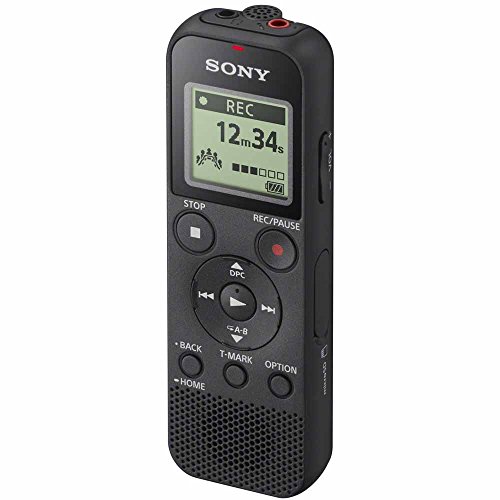
Sony ICD-UX570
The Sony ICD-UX570 is a polished everyday recorder from Sony that suits people who record often and want a refined, compact device for interviews, classes and meetings. In prose terms it sits in the upper part of the mainstream range: the appeal is ease of use, a clear interface and a microphone setup aimed at clean speech in ordinary rooms. It is a sensible anchor model for anyone comparing the category, because it represents what a well sorted dedicated recorder feels like when the basics are done properly.
Seen through a pros-and-cons lens, this model’s value depends on which side of the ledger your routine emphasises: frequent, important sessions push toward refinement, while occasional light use pushes toward simplicity and a lower tier.
Microphone placement matters more than the tier of recorder you buy. A modest recorder placed close to the speaker, on a stable surface, pointing toward the voice, will capture clearer speech than an expensive recorder left in a bag across the room. Distance adds room echo, keyboard noise, air conditioning hum and every cough between you and the speaker. Get the recorder near the person who matters, keep it off vibrating tables where possible, and do a short test recording before the real session starts. Thirty seconds of testing saves an hour of unusable audio later, and it also lets you hear whether a window, a fan or a projector is louder in the recording than it sounds in the room.
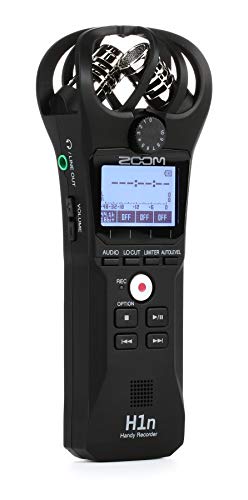
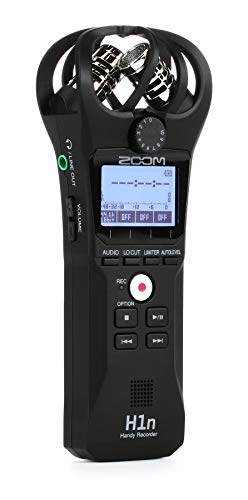
Zoom H1n
The Zoom H1n is the model in this group that leans toward music and field recording as well as speech. Zoom comes from the music and audio world, and the H1n reflects that heritage: it is the natural comparison point for anyone whose recording includes rehearsals, performances, lessons or ambient sound alongside interviews. For pure speech in quiet rooms it is more recorder than you strictly need, but for mixed use it represents the flexible end of the category, and it is the model musicians tend to ask about first.
Seen through a pros-and-cons lens, this model’s value depends on which side of the ledger your routine emphasises: frequent, important sessions push toward refinement, while occasional light use pushes toward simplicity and a lower tier.
Microphone placement matters more than the tier of recorder you buy. A modest recorder placed close to the speaker, on a stable surface, pointing toward the voice, will capture clearer speech than an expensive recorder left in a bag across the room. Distance adds room echo, keyboard noise, air conditioning hum and every cough between you and the speaker. Get the recorder near the person who matters, keep it off vibrating tables where possible, and do a short test recording before the real session starts. Thirty seconds of testing saves an hour of unusable audio later, and it also lets you hear whether a window, a fan or a projector is louder in the recording than it sounds in the room.

EVISTR Digital Voice Recorder
The EVISTR Digital Voice Recorder is a value-oriented recorder line that appears in many first-time buyers’ searches. EVISTR represents the budget-conscious end of the dedicated recorder market: basic, functional devices for lectures, reminders and occasional interviews where the priority is owning a separate recorder without spending like a professional. Judged fairly, that is a legitimate role. The expectations should match the tier, particularly for build feel and refinement, but for light duties and as a first step away from phone recording, it is a name worth understanding rather than dismissing.
Seen through a pros-and-cons lens, this model’s value depends on which side of the ledger your routine emphasises: frequent, important sessions push toward refinement, while occasional light use pushes toward simplicity and a lower tier.
Microphone placement matters more than the tier of recorder you buy. A modest recorder placed close to the speaker, on a stable surface, pointing toward the voice, will capture clearer speech than an expensive recorder left in a bag across the room. Distance adds room echo, keyboard noise, air conditioning hum and every cough between you and the speaker. Get the recorder near the person who matters, keep it off vibrating tables where possible, and do a short test recording before the real session starts. Thirty seconds of testing saves an hour of unusable audio later, and it also lets you hear whether a window, a fan or a projector is louder in the recording than it sounds in the room.
How to Buy Smart
Microphone placement matters more than the tier of recorder you buy. A modest recorder placed close to the speaker, on a stable surface, pointing toward the voice, will capture clearer speech than an expensive recorder left in a bag across the room. Distance adds room echo, keyboard noise, air conditioning hum and every cough between you and the speaker. Get the recorder near the person who matters, keep it off vibrating tables where possible, and do a short test recording before the real session starts. Thirty seconds of testing saves an hour of unusable audio later, and it also lets you hear whether a window, a fan or a projector is louder in the recording than it sounds in the room.
Many people record today in order to transcribe tomorrow, and that changes what good recording means. Transcription software, whether built into a service or run on your computer, works best with clear speech, one speaker at a time, consistent volume and as little background noise as you can manage. Cross-talk, laughter over speech and a recorder placed nearer a fan than a person all punish transcription accuracy far more than they punish a human listener. If you know a recording is headed for transcription, say names and key terms clearly, pause between speakers where the conversation allows it, and spell unusual names once. A few seconds of care at the microphone saves real time correcting the transcript afterwards.
Setup and Care That Reduce the Cons
Back up important recordings as a habit, not as an afterthought. A lost recorder is lost audio, and a recorder that is dropped, left in a taxi or wiped by mistake takes the only copy with it unless you have moved the files somewhere else. Copy recordings to a computer or another storage location the same day, keep the original file untouched, and work on a duplicate when you edit or transcribe. Name files with the date, the speaker and the topic while you still remember them, because a folder of files named only by number becomes a puzzle within a month. The recorder captures the moment; the backup is what lets you keep it.
Recording level is the setting beginners ignore and experienced users check first. Too low and the voice is buried under hiss when you turn it up later; too high and loud moments distort in a way no software can truly repair. Automatic level control suits unpredictable situations and speakers who move, while manual control rewards a steady setup and a test recording. Either way, the discipline is the same: record a short sample in the actual room, listen to it on headphones, adjust, and only then begin. Headphones are the honest tool here, because a recorder’s small speaker flatters bad recordings and hides problems that will be obvious to anyone who listens later.
Bottom Line
The pros of a dedicated recorder are about reliability and focus; the cons are about effort and limits. If you record weekly or the recordings matter professionally, the pros win comfortably. If you record a few times a year, the cons and the free phone alternative win just as comfortably. Decide by your actual frequency, and the right answer becomes obvious.
Balancing the Upsides Against the Everyday Annoyances
When the alternative is genuinely better
There are owners for whom skipping the digital voice recorder altogether is the right call, and naming them is part of an honest pros-and-cons account. If your need is occasional, borrowed or built into something you already own, or if your space cannot give the product the conditions it needs, the alternative route avoids both the cost and the clutter. The pros only outweigh the cons when the problem the digital voice recorder solves is a recurring one in your week. A problem you meet twice a year rarely justifies a permanent new resident in the Sound Cards category.
How the balance shifts over a year of ownership
The pros-and-cons ledger of a digital voice recorder is not static. In the first month, novelty inflates the pros; by the sixth month, the honest picture is about reliability, running costs and whether the product has earned a permanent place in your routine. Wear parts, consumable availability and the maker’s support responsiveness all matter more at month ten than at day ten. When you read owner feedback, weight the long-term reports accordingly: a complaint about a part that failed after a year tells you more than a first-week rave about unboxing.
The compromise candidate
Many buyers end up choosing neither the strongest nor the cheapest digital voice recorder but the one whose weaknesses fall where they personally care least. That is a rational strategy, not a failure of research. List the cons of your final two candidates side by side and ask which set you would rather live with daily in a small rented room where drilling, permanent fixings and bulky extras are off the table. The product whose drawbacks sit in your blind spots will feel like the better product for years, even if a comparison table scores the other one higher on paper.
The advantage that depends on your habits
The headline advantage of a digital voice recorder is real, but it is not automatic: it only pays out if your habits match it. Used the way it was designed, in a small rented room where drilling, permanent fixings and bulky extras are off the table, the strengths described earlier compound quietly — less friction, fewer workarounds, a smoother routine. Used against its grain, the same design choices become the source of the complaints in the cons column. Before deciding, be honest about which user you are on an ordinary tired weekday, not the organised version of yourself you plan to become next month.
Where the drawbacks bite hardest
The disadvantages of a digital voice recorder are not evenly distributed across owners. They concentrate in specific situations: tight spaces, shared rooms, heavy daily loads, or workflows that change direction mid-task. If your routine involves any of those, the cons deserve double weight in your decision, because you will meet them weekly rather than rarely. Conversely, an owner whose setup avoids those situations entirely may never encounter the most-criticised weakness at all, which is why verdicts on the same digital voice recorder can sound like descriptions of two different products.
The maintenance trade-off nobody advertises
Almost every digital voice recorder trades purchase-day simplicity for a small ongoing maintenance obligation: cleaning, recalibrating, replacing a wear part, updating firmware or simply keeping accessories together. The trade is usually worth it, but it is not free, and it scales with how hard you use the product. In a small rented room where drilling, permanent fixings and bulky extras are off the table, skipped maintenance shows up first as small annoyances — a control that feels off, a result that drifts, a noise that was not there before — long before it causes a real failure. Budget the minutes, not just the money.
That single habit separates owners who stay pleased with their choice from owners who quietly start shopping again within a season.
Frequently Asked Questions
What is the biggest advantage of a dedicated voice recorder?
Reliability. It records without interruptions, starts instantly with physical controls, and produces consistent results once you have a routine. For anyone whose recordings matter, a lecture that must be revised from, an interview that cannot be repeated, a meeting that must be documented, that reliability is worth more than any single feature on a specification sheet.
What is the biggest disadvantage?
It is one more device to carry, charge, remember and eventually replace, and it costs money that a phone app does not. For occasional users that burden outweighs the benefits. There are also real physical limits: a single small recorder cannot fully master a large, echoing room or a table of people talking over each other, whatever the marketing suggests.
Are voice recorders better than phones for sound quality?
At close range in a quiet room, the difference can be small. The dedicated recorder pulls ahead through placement freedom, consistent microphone behaviour, no interruptions and sessions that do not drain your phone. Sound quality in practice is a system: device, distance, room and routine. A well used recorder beats a casually used phone across a month of real sessions.
Can the cons be reduced?
Most of them can. Placement and a test recording fix most quality complaints. A same-day transfer routine removes the lost-audio risk. Choosing a model whose controls you find simple removes most of the learning curve. The carrying and cost cons remain, which is why frequency of use is the honest deciding factor between buying and staying with a phone.
Do voice recorders raise privacy concerns?
They can, which is why consent and care matter. Recording laws vary by place, many jurisdictions require the consent of everyone recorded, and recordings of meetings and interviews are sensitive material. Record openly, get permission where required, protect the device and its files, and delete recordings you no longer need. Handled that way, the privacy con becomes a manageable responsibility.
Who should skip a voice recorder entirely?
Anyone who records rarely, only in quiet rooms, and only for casual reminders. For that pattern a phone app is free, adequate and always present. Also skip, or at least pause, if your main setting is a very large room where a single recorder will disappoint; solve the room and placement problem first, then choose the device.
Related Guides
digital voice recorder review digital voice recorder reviews digital voice recorder buying guide related guide related guide related guide
Recording level is the setting beginners ignore and experienced users check first. Too low and the voice is buried under hiss when you turn it up later; too high and loud moments distort in a way no software can truly repair. Automatic level control suits unpredictable situations and speakers who move, while manual control rewards a steady setup and a test recording. Either way, the discipline is the same: record a short sample in the actual room, listen to it on headphones, adjust, and only then begin. Headphones are the honest tool here, because a recorder’s small speaker flatters bad recordings and hides problems that will be obvious to anyone who listens later.
Listening back is part of recording, not an optional extra. Check recordings on headphones soon after making them, while a re-record or a follow-up question is still possible. Learn what your recorder sounds like in a quiet room, a car, a hall and a cafe, so surprises become rarer. Keep a simple log for important sessions: where the recorder sat, what the room was like, what you would change. That log, dull as it sounds, is how casual users become reliable ones, and it is why two people with the same recorder get very different results. Skill compounds in this hobby faster than equipment upgrades do.
A few accessories genuinely help, and many do not. A small tripod or stand lifts the recorder off table vibrations and points it properly. An external microphone, where the model supports one, can transform an interview by sitting on the speaker rather than across the table. A windscreen helps outdoors more than any setting. A simple case protects the recorder in a bag, and spare charging or battery supplies suit long days. Beyond that, be sceptical: elaborate kits for a simple device usually gather dust. Buy the recorder, learn its limits in your real rooms, and add only the accessory that fixes a problem you have actually had.
A voice recorder lives a rougher life than most electronics. It is carried in pockets and bags, set down on cafe tables, lent to colleagues and pulled out in rain, hurry and poor light. A body that feels solid, buttons that survive daily use, and a case or pouch in the bag are practical virtues, not luxuries. Consider also the small things: a lanyard loop, a tripod thread for a small stand, a speaker loud enough to check a recording on the spot. None of these headline a product page, yet together they decide whether the recorder is a trusted tool two years from now or a drawer object with a flat battery and a forgotten password.
Recordings create responsibilities as well as convenience. A recorder full of meetings, interviews and personal notes is a sensitive object: it can hold other people’s words, confidential plans and private thoughts. Protect it accordingly. Use any locking or password features your model offers where appropriate, be thoughtful about which recordings are shared and with whom, keep transfers to services you trust, and delete recordings you no longer need rather than letting them accumulate indefinitely. And return to the starting point: record openly, with permission where the law or simple courtesy requires it, because a recording made fairly is one you never have to worry about explaining.
Storage is rarely the limit people imagine for speech, but managing it is a real habit. Long sessions at high quality settings produce large files, cards and internal memory fill quietly over weeks of use, and a recorder that stops mid-session for lack of space is an avoidable embarrassment. The practical approach is routine: transfer files promptly, keep the recorder’s memory mostly clear, and carry a spare card if your model uses one and your work justifies it. Prompt transfer is also your backup, your filing system and your chance to label recordings while you remember them, so the storage habit and the safety habit are the same habit wearing two hats.
Battery behaviour shapes real-world usefulness more than brochures suggest, and the honest way to judge it is by pattern rather than by any single figure. A recorder used for long days needs either generous endurance, replaceable cells you can swap in the field, or charging that fits your routine without thought. What matters is the match between the device and your longest realistic session, with margin to spare, because the recording you lose to a flat battery is always the important one. Build the charging or battery swap into your preparation ritual, check the indicator when you check placement, and treat a nearly empty recorder the way you would treat a nearly full one: as a problem to solve before the session, not during it.
Background noise is the enemy every recorder owner eventually meets. Air conditioning, traffic, projectors, fridges, wind and other people’s conversations all compete with the voice you want, and no small recorder fully escapes physics. You fight noise with distance first, placing the recorder close to the speaker and away from the noise source, with direction second, and with settings last. Closing a window, moving away from a kitchen, or shifting a chair can improve a recording more than any menu option. When you review a recording and it sounds poor, ask where the recorder was before you blame the recorder, because placement explains most disappointing audio and it is the cheapest thing to fix.
Getting files off the recorder and into your working life should be effortless, and for heavy users it decides whether the recorder gets used or abandoned. Direct USB connection, a removable card you can read on a computer, or a companion app all work, provided the route fits your habits. What matters is that transfer is quick enough to happen the same day, that file names or a quick renaming routine tell you what each recording is, and that the originals stay untouched while copies are edited, shared or transcribed. Try the transfer with your own computer and your own software before committing to a model for serious work, because small incompatibilities are tolerable once and maddening weekly.
Many people record today in order to transcribe tomorrow, and that changes what good recording means. Transcription software, whether built into a service or run on your computer, works best with clear speech, one speaker at a time, consistent volume and as little background noise as you can manage. Cross-talk, laughter over speech and a recorder placed nearer a fan than a person all punish transcription accuracy far more than they punish a human listener. If you know a recording is headed for transcription, say names and key terms clearly, pause between speakers where the conversation allows it, and spell unusual names once. A few seconds of care at the microphone saves real time correcting the transcript afterwards.
Dictation and voice notes are the quiet everyday use that many recorders are actually bought for. Writers draft while walking, researchers think aloud after an interview, managers capture the action points of a call before they evaporate, and students talk through an argument before writing it. For this work the winning qualities are speed and simplicity: a device that starts recording with one obvious action, a microphone that handles a voice at arm’s length, and files that move easily to wherever the words will be used. Fancy features matter little here. What matters is that the recorder is with you, charged and empty enough, at the moment the thought arrives, because a thought not captured rarely returns in the same shape.