Where to buy
These are the three picks from our motherboard black friday deals shortlist we would check first. Check the latest price, availability and delivery on Amazon. Orders are placed on Amazon, and prices during Black Friday Week can change by the hour, so the figure on the live listing is the one that counts. We may earn a commission from qualifying purchases.
- Best overall: GIGABYTE B650 AORUS Elite AX AM5 ATX Motherboard
- Best budget: GIGABYTE B650 Eagle AX AM5 ATX Motherboard
- Best premium: ASUS ROG Strix B850-F Gaming WiFi AM5 ATX Motherboard
Disclosure: As an Amazon Associate, ilcastellomenu.com earns from qualifying purchases. Links to Amazon on this page are affiliate links; they cost you nothing extra. Listing details such as price and availability change often — during this event they can change several times a day — so check the current Amazon listing before you buy.
Motherboard Black Friday Deals: The AM5 and Intel Boards Worth Building On
Amazon Black Friday Week runs from November 19 to November 30, 2026. Black Friday itself is November 27, and Cyber Monday closes the event on November 30. A motherboard is the least glamorous purchase in a new PC and the one that decides how long the machine stays relevant: it fixes your CPU socket, your memory generation, your storage speeds and your upgrade path for years. These motherboard black friday deals are the six we would actually build on: a B650 all-rounder with a strong power design at a third off its list price, a budget AM5 board that still includes WiFi 6E and a PCIe 5.0 M.2 slot, a current-generation B850 board with WiFi 7 and four M.2 slots, MSI’s dependable B650 Tomahawk, the one Intel pick — a Z790 Tomahawk MAX for 12th, 13th and 14th Gen builders — and Gigabyte’s B850 AORUS Elite WIFI7, which puts the newest chipset features at a mid-range figure.
Every price in this guide was checked against Amazon’s own catalogue data on November 20, 2026, and every price is written as a dated sighting: “seen at $149.99 on November 20, 2026” means exactly that, no more. Board prices move hourly during Black Friday Week, and popular AM5 models sell through in waves as CPU bundles pull demand with them. Where the catalogue also returned a list price for the same board, we show the percentage that pair of numbers represents; where no list price came back, we print no percentage at all, because an invented discount is worse than none. Always check the live price on the listing before you buy.
One decision matters more than any single discount here, and it is the socket decision, because it locks everything else. Five of the six picks are AMD AM5 boards, and that is deliberate: AM5 is the platform with a future, the socket AMD’s current Ryzen 9000, 8000 and 7000 series all share, with DDR5 memory and PCIe 5.0 storage as standard. A B650 or B850 board bought today accepts today’s chips and stands the best chance of accepting tomorrow’s. The Intel pick is the exception that proves the rule — LGA 1700 is a finished platform, which is exactly why its best board is discounted, and why it makes sense for builders who already own a 12th, 13th or 14th Gen chip or find one cheap in the same sale. The second decision is chipset tier: B650 versus B850 is mostly about newer connectivity — WiFi 7, faster USB, Gen5 storage wiring — rather than raw performance, and the reviews below state plainly what each board actually gives you, because the board is the one component where a wrong guess cannot be fixed with a settings change.
It also helps to read a motherboard deal the way a system builder would. The headline features — power phases, M.2 counts, USB speeds — matter in proportion to what you will actually plug in. A 14+2+1 power design is insurance for high-core-count chips and future upgrades; three M.2 slots are only useful if you will fill them; WiFi 7 only matters if your router and devices speak it. What never stops mattering is the basics done right: a VRM that does not throttle a flagship CPU, BIOS flashback so a new chip can be supported without an old one on hand, and enough fan and USB headers for the case you actually own. With those cautions in mind, the six picks below were chosen because their verified prices buy real, specifiable capability on platforms with a future — not because their boxes carry the longest feature list.
In this guide
Quick Picks
Short on time? These are the six deals, the builder each one suits, and the price we verified on November 20, 2026. Every price is a dated sighting — check the live price before you buy.
| Best for | Deal | Spotted price | Link |
|---|---|---|---|
| Best overall | GIGABYTE B650 AORUS Elite AX AM5 ATX Motherboard | seen at $149.99 on November 20, 2026 (list $219.99) | Check on Amazon |
| Best budget | GIGABYTE B650 Eagle AX AM5 ATX Motherboard | seen at $109.00 on November 20, 2026 (list $179.99) | Check on Amazon |
| Best premium | ASUS ROG Strix B850-F Gaming WiFi AM5 ATX Motherboard | seen at $209.99 on November 20, 2026 (list $299.99) | Check on Amazon |
| Best for MSI fans | MSI MAG B650 Tomahawk WiFi AM5 ATX Motherboard | seen at $149.99 on November 20, 2026 (list $169.99) | Check on Amazon |
| Best for Intel builds | MSI MAG Z790 Tomahawk MAX WiFi LGA 1700 ATX Motherboard | seen at $174.99 on November 20, 2026 | Check on Amazon |
| Best WiFi 7 value | GIGABYTE B850 AORUS Elite WIFI7 AM5 ATX Motherboard | seen at $179.00 on November 20, 2026 (list $254.99) | Check on Amazon |
How These Deals Were Chosen
We verified every pick in this guide the slow way: by searching Amazon’s own catalogue data for the exact brand and model, matching the returned listing title word for word against the board we intended to recommend, and recording the price and list price the catalogue returned on November 20, 2026. That process sounds basic, but it eliminates the two failure modes that fill most Black Friday roundups — links that land on a different board than the headline promises, and “deals” whose prices were copied from a roundup of a roundup until nobody knows which year they belong to. Motherboard ranges are especially treacherous here: Gigabyte, MSI and ASUS each sell several boards whose names differ by one word — Elite, Eagle, Tomahawk, MAX — while their power designs, slot layouts and prices differ substantially, and a renewed listing can sit beside the new one at a tempting figure. If a search did not return a listing we could match with confidence, the board did not get a link, however good it looked.
A deal then had to clear three further bars. First, the product had to be a current, genuine motherboard from its maker’s present range — no marketplace lookalikes, no previous-socket hardware wearing a Black Friday banner, and no renewed units presented as new. Second, the hardware had to be honest at the price: the power design, slot count and networking stated in the review had to come from the verified listing title, not from a sibling model’s page. Third, the price had to be a price worth printing. A token few dollars off a board that sits at that figure all year is not a deal, so we favoured listings where the verified price sat meaningfully below the list price returned alongside it — in four of the six cases here, by around a third or close to it.
We also weighted what the discount buys in practice. A percentage off a board with a weak power design is worth less to a builder planning a 16-core upgrade than the same percentage off one whose VRM will never be the limit, which is why power phases appear in every review and why the B650 AORUS Elite AX’s 14+2+1 design earns it the top slot at a mid-range price. Where a figure in a review comes from the maker’s own specifications — memory support, slot wiring, port counts — it is presented as the maker’s figure, not as an independent test result. And where two near-identical boards sit a few dollars apart, we chose the one whose specification we could verify completely rather than the one with the bigger headline.
The Six Deals, In Detail

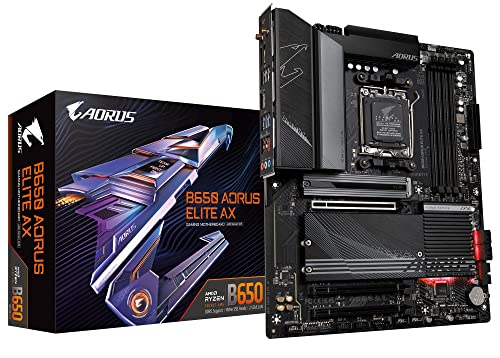
1. GIGABYTE B650 AORUS Elite AX AM5 ATX Motherboard — Best Overall
Badge: Best Overall. If one specification defines the sensible AM5 purchase, it is this one: a genuinely strong power design on the mature B650 chipset, at a price a tier below where it launched. Per the verified listing, the B650 AORUS Elite AX supports Ryzen 9000, 8000 and 7000 series processors on socket AM5 with DDR5 memory, a 14+2+1 power phase design, a PCIe 5.0 M.2 slot for the fastest current SSDs, USB-C 3.2 Gen 2, WiFi 6E, 2.5GbE wired networking, EZ-Latch tool-free fittings and Q-Flash BIOS updating. That combination is the whole argument: the VRM headroom to run any AM5 chip you are likely to buy — including a future high-core-count upgrade — Gen5 storage wiring, and both fast wireless and fast wired networking, without paying the early-adopter premium the B850 boards still carry. It is the board we would hand to most builders, at the deepest mainstream discount in this guide.
Spec snapshot: AMD AM5, B650 chipset, ATX; Ryzen 9000/8000/7000 support; DDR5; 14+2+1 power phases; PCIe 5.0 M.2; USB-C 3.2 Gen 2; WiFi 6E; 2.5GbE LAN; EZ-Latch; Q-Flash Plus.
Who it suits: Most new AM5 builders — gaming PCs, creator workstations and family machines alike — especially anyone pairing a mid-range Ryzen today with an eye on a stronger chip later, who wants the board to be the last thing that needs replacing.
Deal details: Seen at $149.99 on November 20, 2026, against a $219.99 list price returned by the same catalogue check — 32% below list on the verified figures. B650 boards with this power design launched in a distinctly higher tier; at this figure the Elite AX costs what entry-level AM5 boards cost while out-specifying them where it counts. Check the live price before you buy, and pair it with DDR5 memory — AM5 has no DDR4 option, so an old DDR4 kit cannot come across from a previous build.
Strengths
- 14+2+1 power design: VRM headroom for any current AM5 CPU and the next upgrade.
- PCIe 5.0 M.2 slot ready for Gen5 SSDs, with WiFi 6E and 2.5GbE both included.
- Q-Flash and EZ-Latch fittings make first builds and BIOS updates genuinely easier.
Trade-offs
- B650 chipset: no WiFi 7 and fewer high-speed USB ports than the B850 picks below.
- The graphics slot is PCIe 4.0 — no practical loss for current GPUs, but Gen5 purists should note it.
- Gigabyte’s RGB Fusion software is functional rather than beloved; lighting perfectionists may grumble.
Verdict — Best for: most AM5 builders who want one board for this CPU and the next. Not suited for: builders who need WiFi 7 or PCIe 5.0 graphics today. Check on Amazon · See the B650 AORUS Elite AX listing · View full specs and the live price

2. GIGABYTE B650 Eagle AX AM5 ATX Motherboard — Best Budget
Badge: Best Budget. Every guide needs the pick that proves the floor has risen, and this is it: a full ATX AM5 board with WiFi, three M.2 slots and a Gen5-capable slot among them, at the lowest verified price here. Per the verified listing, the B650 Eagle AX runs on socket AM5 with DDR5 memory, triple M.2 slots — one PCIe 5.0 and two PCIe 4.0 — USB 3.2 Gen2x2 Type-C, WiFi 6E and Realtek gigabit LAN. What it gives up against pick one is power-design headroom and the 2.5GbE port; what it keeps is everything a mainstream build actually touches — the same socket and upgrade path, the same DDR5 platform, fast storage wiring and wireless networking included rather than sold as an add-on card. For a Ryzen 5 or Ryzen 7 gaming build, that is the correct trade, and the saving funds a better graphics card, which is where budget builds should spend.
Spec snapshot: AMD AM5 (LGA 1718), B650 chipset, ATX; DDR5; 3× M.2 slots (1× PCIe 5.0, 2× PCIe 4.0); USB 3.2 Gen2x2 Type-C; WiFi 6E; Realtek GbE LAN.
Who it suits: Budget AM5 builds, first-time builders and anyone upgrading from AM4 who needs the whole platform — board, DDR5 and CPU — to stay affordable; also ideal for living-room and family PCs that will never see a flagship chip.
Deal details: Seen at $109.00 on November 20, 2026, against a $179.99 list price returned by the same catalogue check — 39% below list on the verified figures, the deepest percentage in this guide. The honest framing is not the percentage but the platform it buys: a current-socket board with WiFi and Gen5 storage wiring at a figure that, not long ago, meant a stripped board on a dying socket. Check the live price before you buy; budget boards are among the most volatile listings of the event, and this one anchors a lot of bundle deals.
Strengths
- Full AM5 platform and upgrade path at the guide’s lowest price.
- Three M.2 slots including one PCIe 5.0 — storage room most budget boards deny you.
- WiFi 6E included: no add-on card, no Ethernet-only compromise.
Trade-offs
- Gigabit LAN rather than 2.5GbE — wired NAS users should look at pick one.
- Modest power design: fine for Ryzen 5/7, not the board for a future 16-core flagship.
- Fewer USB ports and fan headers than the Elite tier; plan a large case build accordingly.
Verdict — Best for: affordable AM5 builds that still want the platform’s full future. Not suited for: flagship-CPU builds or homes wired for multi-gig networking. Check on Amazon · See the B650 Eagle AX listing · View budget specs and the live price

3. ASUS ROG Strix B850-F Gaming WiFi AM5 ATX Motherboard — Best Premium
Badge: Best Premium. At the top of the mainstream, the question stops being “is it enough?” and becomes “is there anything it leaves out?” The ROG Strix B850-F’s verified specification is ASUS’s maximal mainstream answer: 16+2+2 power stages, WiFi 7, four M.2 slots, PCIe 5.0, DDR5 with AEMP memory tuning, a total of 19 USB ports including 20Gbps Type-C, AI Networking II and Aura Sync lighting. Per the verified listing this is a B850 board built for AI-era PCs and high-core Ryzen chips alike — the power design shrugs at a flagship CPU, the storage field swallows a boot drive, a games drive and a scratch drive without adapters, and the networking is the current generation on both wireless and USB fronts. It is the board for the builder who specs the platform once and intends to keep it through two CPU generations.
Spec snapshot: AMD AM5, B850 chipset, ATX; 16+2+2 power stages; DDR5 with AEMP; WiFi 7; 4× M.2 slots; PCIe 5.0; 19 USB ports total, 20Gbps Type-C; AI Networking II; Aura Sync.
Who it suits: Enthusiasts and creators building around Ryzen 9 or the X3D gaming flagships, anyone wiring a fast home network, and builders who count M.2 slots the way others count cores.
Deal details: Seen at $209.99 on November 20, 2026, against a $299.99 list price returned by the same catalogue check — 30% below list on the verified figures. Current-chipset ROG boards rarely discount this early in their life; a cut of this depth on a B850 with this power design is the strongest premium value story in the guide. Check the live price before you buy, and be honest about need: everything pick one does, this does with more headroom — whether your build can tell the difference is the real question.
Strengths
- 16+2+2 power stages and four M.2 slots: headroom on every axis that matters.
- WiFi 7 and 20Gbps USB-C: the current connectivity generation, not the last one.
- 30% below list — flagship-tier ROG hardware at a mid-range sale price.
Trade-offs
- The guide’s highest price — justifiable only if you will use the headroom.
- Most gaming builds will never stress half its VRM or fill four M.2 slots.
- ROG styling and Aura lighting are part of what you pay for; minimalists subsidise them anyway.
Verdict — Best for: flagship AM5 builds meant to last two CPU generations. Not suited for: budget or mid-range builds, where pick one delivers the same daily experience for less. Check on Amazon · See the ROG Strix B850-F listing · View premium specs and the live price

4. MSI MAG B650 Tomahawk WiFi AM5 ATX Motherboard — Best for MSI Fans
Badge: Best for MSI Fans. Some boards earn their reputation one uneventful build at a time, and the Tomahawk line is the textbook case. Per the verified listing, the MAG B650 Tomahawk WiFi supports Ryzen 9000, 8000 and 7000 series processors on AM5 with DDR5, PCIe 4.0, M.2 storage, SATA 6Gb/s, USB 3.2 Gen 2, HDMI and DisplayPort outputs, WiFi 6E, Bluetooth 5.3 and 2.5Gbps LAN. Nothing in that list is exotic, and that is precisely the appeal: every mainstream box is ticked, the networking is complete on both wired and wireless sides, and MSI’s BIOS and board layout have a long track record of simply working on the first boot. If your last two boards were Tomahawks and both are still running, this guide is not going to talk you out of the third.
Spec snapshot: AMD AM5, B650 chipset, ATX; Ryzen 9000/8000/7000 support; DDR5; PCIe 4.0; M.2 and SATA 6Gb/s storage; USB 3.2 Gen 2; HDMI/DP; WiFi 6E; Bluetooth 5.3; 2.5Gbps LAN.
Who it suits: Builders who value a proven platform and a familiar BIOS, upgraders replacing an older MSI board, and anyone whose priority list reads reliability first, features second.
Deal details: Seen at $149.99 on November 20, 2026, against a $169.99 list price returned by the same catalogue check — 12% below list on the verified figures, the shallowest percentage among the AM5 picks here. We include it anyway because the comparison that matters is against other proven B650 boards at the same figure, and because a board’s job is to disappear into a working PC — a job this one has a long record of doing. Check the live price before you buy; if it drifts up while pick one holds its price, pick one is the better buy on the day.
Strengths
- Complete mainstream specification: WiFi 6E, Bluetooth 5.3 and 2.5Gbps LAN all present.
- The Tomahawk line’s track record for painless first boots and stable BIOS releases.
- Same $149.99 figure as pick one — a genuine choice between two good boards, not a compromise.
Trade-offs
- PCIe 4.0 throughout: no Gen5 graphics or storage wiring, unlike picks one and six.
- Shallowest discount in the guide — you are buying dependability, not a bargain.
- No WiFi 7; the B850 Tomahawk generation is the step up if that matters to you.
Verdict — Best for: builders who want the proven, familiar AM5 option. Not suited for: Gen5 storage enthusiasts or discount-first shoppers. Check on Amazon · See the MAG B650 Tomahawk listing · View full specs and the live price

5. MSI MAG Z790 Tomahawk MAX WiFi LGA 1700 ATX Motherboard — Best for Intel Builds
Badge: Best for Intel Builds. Five AM5 picks would be a strange guide in a sale where thousands of builders already own a 12th, 13th or 14th Gen Intel chip — or can buy one at end-of-platform prices in the same event. The MAG Z790 Tomahawk MAX WiFi is the board for them. Per the verified listing, it supports 12th, 13th and 14th Gen Intel processors on LGA 1700 with DDR5, PCIe 5.0, M.2 storage, SATA 6G, 2.5Gbps LAN, USB 3.2 Gen 2, WiFi 7 and Bluetooth 5.4. Read that again: the finished platform’s flagship chipset, with the newest wireless standard and Gen5 wiring, at a mid-range figure. Z790 was the overclocking chipset for LGA 1700, and the MAX variant layers the updated networking on top. For a discounted 14th Gen chip, there is no better home at this price.
Spec snapshot: Intel LGA 1700, Z790 chipset, ATX; 12th/13th/14th Gen support; DDR5; PCIe 5.0; M.2 and SATA 6G storage; 2.5Gbps LAN; USB 3.2 Gen 2; WiFi 7; Bluetooth 5.4.
Who it suits: Builders who already own an LGA 1700 CPU, anyone pairing a discounted 13th or 14th Gen chip with a board that will not hold it back, and upgraders whose DDR5 kit can carry over.
Deal details: Seen at $174.99 on November 20, 2026. The catalogue check returned no list price for this listing, so we print no percentage — what we can say is that Z790 boards with WiFi 7 launched in a higher tier, and end-of-platform pricing is the whole story here. Check the live price before you buy, and check your CPU twice: this board takes LGA 1700 chips only, and Intel’s newer Core Ultra processors use a different socket entirely.
Strengths
- Flagship Z790 chipset with WiFi 7 and PCIe 5.0 at a mid-range figure.
- Supports three Intel generations — ideal for a chip you already own or find discounted.
- DDR5 platform, so memory carries over from a modern build.
Trade-offs
- LGA 1700 is a finished platform: no future CPU generation will fit this board.
- No list price returned, so the size of the discount cannot be verified — judge the absolute figure.
- Overkill for a locked i3/i5 office build; a B760 board serves those for less.
Verdict — Best for: Intel builders with an LGA 1700 chip in hand or in the cart. Not suited for: anyone buying a platform for the next five years — that is AM5’s job here. Check on Amazon · See the Z790 Tomahawk MAX listing · View Intel specs and the live price

6. GIGABYTE B850 AORUS Elite WIFI7 AM5 ATX Motherboard — Best WiFi 7 Value
Badge: Best WiFi 7 Value. The B850 generation’s pitch is simple: everything B650 does, with the connectivity updated — and this is the board that makes that pitch at a price close to the older chipset’s. Per the verified listing, the B850 AORUS Elite WIFI7 supports AMD Ryzen 9000, 8000 and 7000 series processors on AM5 with DDR5, a 14+2+2 power phase design, three M.2 slots, PCIe 5.0, USB-C, WiFi 7, 2.5GbE LAN, EZ-Latch fittings and a 5-year warranty. Set it beside pick three: you give up one M.2 slot, some USB count and the ROG badge; you keep a strong power design, Gen5 wiring and the newest wireless standard — for thirty dollars less at the verified figures. For a builder whose router is already WiFi 7 — this is the board that completes the chain.
Spec snapshot: AMD AM5, B850 chipset, ATX; Ryzen 9000/8000/7000 support; DDR5; 14+2+2 power phases; 3× M.2 slots; PCIe 5.0; USB-C; WiFi 7; 2.5GbE LAN; EZ-Latch; 5-year warranty.
Who it suits: Builders with WiFi 7 routers, anyone choosing between B650 and B850 who wants the newer chipset without the premium tier, and long-term owners who notice the 5-year warranty.
Deal details: Seen at $179.00 on November 20, 2026, against a $254.99 list price returned by the same catalogue check — 30% below list on the verified figures. A current-generation board at the same discount depth as the outgoing one is the definition of the sale working as it should. Check the live price before you buy, and compare it against pick one on the day: the thirty-dollar gap between them is the price of WiFi 7 and a newer chipset, and it will not always be thirty dollars.
Strengths
- WiFi 7 and a 14+2+2 power design at a mid-range verified price.
- Three M.2 slots and PCIe 5.0: the B850 update where it matters.
- 5-year warranty — longer cover than most boards in this guide carry.
Trade-offs
- Costs more than pick one for gains some homes cannot use yet (no WiFi 7 router, no Gen5 SSD).
- One fewer M.2 slot and fewer USB ports than the ROG pick three.
- White-PCB ICE variant exists at a higher figure; this listing is the standard board.
Verdict — Best for: builders who want the current chipset’s connectivity without the premium tier. Not suited for: strict budgets, where pick two buys the same socket for far less. Check on Amazon · See the B850 AORUS Elite listing · View WiFi 7 specs and the live price
Deals We Left Out, and Why
A guide is defined as much by what it excludes. Our catalogue checks surfaced plenty of other board listings on November 20, 2026, and several tempting ones did not make the cut. The renewed versions of popular models are the clearest example: renewed Tomahawk and ROG boards appeared in our checks at lower figures than the new units, and renewed can be a sensible buy for many components — but a motherboard is the one part whose bent pins, missing accessories and unknown history can stall an entire build on day one, so for the foundation of the machine we recommend new hardware with a full warranty. The AM4 bargains were passed over on platform arithmetic: several are excellent boards and their prices undercut everything here, but buying into a finished socket with DDR4 in the year AM5 hardware reaches these prices locks in a platform your next CPU cannot use — the one exception we made is the Intel pick, where the board serves chips buyers already own. Finally, several bundle listings — a CPU and board priced as one — looked attractive until the board in the bundle turned out to be a weaker model than the headline implied. Price the parts separately before trusting a bundle’s arithmetic.
Comparison Table
| Pick | Socket / chipset | Power design | Seen Nov 20, 2026 | Watch out for |
|---|---|---|---|---|
| GIGABYTE B650 AORUS Elite AX | AM5 / B650 | 14+2+1 phases | $149.99 (list $219.99) | No WiFi 7; PCIe 4.0 graphics slot |
| GIGABYTE B650 Eagle AX | AM5 / B650 | Budget design | $109.00 (list $179.99) | Gigabit LAN only |
| ASUS ROG Strix B850-F Gaming WiFi | AM5 / B850 | 16+2+2 phases | $209.99 (list $299.99) | Premium price |
| MSI MAG B650 Tomahawk WiFi | AM5 / B650 | Mainstream design | $149.99 (list $169.99) | PCIe 4.0 throughout |
| MSI MAG Z790 Tomahawk MAX WiFi | LGA 1700 / Z790 | Mainstream design | $174.99 | Finished platform |
| GIGABYTE B850 AORUS Elite WIFI7 | AM5 / B850 | 14+2+2 phases | $179.00 (list $254.99) | Fewer ports than ROG pick |
Sockets, Chipsets and Power Phases, Explained Plainly
Three ideas decide how a motherboard feels over its life, and they are worth one clear pass. The socket is the physical and electrical contract between board and CPU: AM5 takes AMD’s current Ryzen generations, LGA 1700 takes Intel’s 12th to 14th, and the two are utterly incompatible — a board decision is a CPU-family decision. The chipset is the board’s feature tier: within AM5, B650 is the mature mainstream, B850 is its connectivity update with WiFi 7 and more Gen5 wiring, and X870/X870E sit above both for extreme builds; within Intel’s finished line, Z790 was the flagship tier with overclocking. Power phases are the VRM stages feeding the CPU: more and better stages mean cooler, steadier power delivery under a high-core-count chip at full load, which is why the phase counts in the verified listings — 14+2+1, 16+2+2 — appear in every review here.
The practical rules follow from those three. Match the board to the CPU you own or are buying in the same cart — never the reverse order. Match the chipset to your connectivity: a WiFi 7 router and Gen5 SSDs argue for B850; a gigabit home on Gen4 storage loses nothing on B650. Match the power design to the biggest CPU the board will ever host, not the one in today’s cart, because the board outlives the chip. And remember memory: AM5 and these Intel boards are DDR5-only, so budget for new RAM in any platform jump — and set aside a little for the backup drive every new build deserves while you are at it.
How to Choose the Right Motherboard Deal for Your Build
Start with the CPU, honestly. Find the chip first. Ryzen 7000, 8000 or 9000 means AM5 — picks one, two, three, four and six are your field. An Intel 12th, 13th or 14th Gen chip means pick five, full stop. No discount justifies buying a board for a CPU you do not have a plan to own.
Decide how long the board must serve. One build or two? If this board will host exactly one CPU and then retire, the budget and mainstream picks (two, four) are the rational spend. If it is a platform — this chip now, a stronger one in three years — the power designs of picks one, three and six are the insurance that makes the second build possible.
Count your drives and devices. Two M.2 drives today can become four by the second year of a build’s life. Picks three and six carry three to four slots; pick two’s three slots are generous for its price. Count USB devices, fan headers and front-panel connectors against your case while you are at it — a board short one header is a splitter cable and an annoyance forever.
Three example shopping lists. For a Ryzen 5 gaming build on a budget: pick two, and spend the saving on the graphics card. For a Ryzen 7 or 9 build meant to last: pick one if your network is WiFi 6-era, pick six if it is already WiFi 7. For a flagship X3D or creator build: pick three. And for the Intel chip already on your desk: pick five, and enjoy the discount that being on a finished platform brings.
How to Check a Motherboard Deal Is Real — and Build on It Right
Compare the sale price with the board’s own history. The most useful habit in this event is checking what a board sold for before the banners went up. Free price-history trackers keep years of Amazon data for most listings; thirty seconds there tells you whether a discount is a genuine event low or a list price nobody has paid since spring. Every pick in this guide was verified against live catalogue data on November 20, 2026 — do the same check on anything else you add to the cart.
Read the model name word by word. Board ranges are among the worst offenders in all of tech for near-identical names: Elite and Eagle, MAX and non-MAX, one letter’s difference in a suffix can change the power design, halve the M.2 count or swap a new board for a renewed one. The model name is the product: check it, then check the socket and chipset on the listing, before you pay — especially on marketplace listings during big events.
Check the price at checkout, not just on the page. Prices move hourly during Black Friday Week, and the price in the cart is the price you pay. If a figure jumps between the deal page and checkout, back out and re-check the listing — either the deal ended, or a marketplace seller’s offer has replaced the one you chose. Confirm the seller and the exact model suffix are still what you selected.
Build on it like you mean it. When the board arrives: check the socket for bent pins before anything touches it; update the BIOS first if your CPU needs a newer version — Q-Flash and BIOS Flashback on these boards let you do it without a supported CPU installed; seat the M.2 drives and RAM before the board goes in the case; and keep the same care with cable routing you would want when you open it again in three years for the upgrade this platform promises.
BIOS, Memory and Headers: Getting the Build You Paid For
The most common disappointment with a new board is not faulty hardware — it is a small mismatch discovered mid-build. DDR5 kits have profiles: enable EXPO on AMD boards or XMP on Intel in the BIOS, or your expensive memory runs at its slow default speed forever. Front-panel USB-C on a modern case needs a USB-C header on the board; all six picks here are current enough to have the mainstream headers, but check your case’s connector list against the board’s before the build, not during it. And fan headers decide how quiet the machine is: count your case fans, and if the board has fewer headers than fans, order splitters or a hub with the board rather than discovering it at midnight.
Two habits complete the ritual. First, register the warranty — pick six’s 5-year cover only helps if the paperwork exists. Second, photograph your cable routing and keep the board’s box and accessory bag; the SATA cables, M.2 screws and WiFi antenna you do not need today are exactly the parts a future upgrade will demand, and they are model-specific enough to be annoying to replace.
Common Mistakes
Buying the socket before the CPU. A discounted board for a chip you have not chosen is not a saving; it is a commitment. Decide the processor first — the board follows, and this guide’s six picks cover the two sensible answers.
Forgetting the DDR5 bill. Every board here is DDR5-only. Upgraders from AM4 or older Intel platforms need new memory in the budget, and a build priced without RAM is a build priced wrong.
Paying for WiFi 7 with no WiFi 7 router. The board’s radio is half the chain. If your router is WiFi 6-era and staying, picks one and four give you everything usable today for less; upgrade the pair together when the router’s turn comes.
Ignoring the power design on a flagship build. A budget board under a 16-core chip will run — and throttle under sustained load. Match the VRM to the biggest CPU the board will host, not the smallest it can boot.
Waiting for Black Friday itself. The event runs November 19–30, and the early days carry full stock at full discount. Waiting for November 27 out of tradition mostly buys sold-out listings and marketplace markups. If the price is at its low today, today is the day.
Final Recommendation
If you buy one motherboard this Black Friday Week, make it the GIGABYTE B650 AORUS Elite AX, seen at $149.99 on November 20, 2026: 32% below its verified list price, with the 14+2+1 power design and Gen5 storage wiring that suit more builds than any other pick. Strict budgets should take the B650 Eagle AX at a seen $109.00 and put the saving into the graphics card. WiFi 7 households should take the B850 AORUS Elite WIFI7 at a seen $179.00; flagship builders the ROG Strix B850-F at a seen $209.99; MSI loyalists the B650 Tomahawk WiFi at a seen $149.99; and Intel builders the Z790 Tomahawk MAX WiFi at a seen $174.99 while end-of-platform pricing lasts. Whichever you choose, the keyboard is the next thing your hands will judge — our roundup of Mechanical Keyboard Black Friday Deals Mechanicalkeyboardblackfridaydeals is the natural next read — and check the live price before you buy, because during this event the listing is the only price that is real.
Frequently Asked Questions
When do motherboard deals run on Amazon in 2026?
Amazon Black Friday Week runs November 19–30, 2026, with Black Friday on November 27 and Cyber Monday on November 30. Board deals appear throughout the window rather than all at once, and popular AM5 models can sell through early as CPU bundles pull demand — the prices in this guide were verified on November 20, 2026.
Are the prices in this guide guaranteed?
No. Every price here is a dated sighting verified against Amazon catalogue data on November 20, 2026, and prices move hourly during the event. Treat a sighting as evidence of what the deal has cost, then check the live price on the listing before you buy.
B650 or B850 — which chipset should I buy?
Buy B850 if you want WiFi 7, more PCIe 5.0 wiring and the newer platform’s longer support runway — picks three and six. Buy B650 if your network and storage are current-generation already: the performance difference for the CPU itself is nil, and picks one, two and four put the saving toward parts you will feel. Both chipsets take the same AM5 processors and DDR5 memory.
Can I reuse my old RAM and CPU?
Your CPU, only if it matches the socket: AM5 boards take Ryzen 7000, 8000 and 9000 series; the Intel pick takes 12th, 13th and 14th Gen chips. Your RAM, only if it is DDR5 — all six boards are DDR5-only, so DDR4 kits from AM4 or older Intel builds cannot carry over. Budget for memory in any platform jump.
Do I need to update the BIOS for a Ryzen 9000 CPU?
Possibly, on older B650 stock. Every board family here offers a CPU-less BIOS update route — Q-Flash Plus on the Gigabyte boards, BIOS Flashback on the ASUS — so even if the board ships with an early BIOS, you can update it with just a USB stick and power connected. B850 boards support Ryzen 9000 from their first BIOS by design.
Should I wait for Cyber Monday instead?
Cyber Monday (November 30, 2026) usually repeats some Black Friday pricing and adds a few fresh offers, but stock is the risk: boards that sell out during Black Friday Week do not reliably come back for Monday. If a price matches the level you were waiting for now, buying now is the safer play.
Related Guides
- Nvme Ssd Black Friday Deals Nvmessdblackfridaydeals
- Wifi 7 Router Black Friday Deals Wifi7routerblackfridaydeals
- Black Friday Monitor Deals 2026 Blackfridaymonitordeals2026
- Best Black Friday Printer Deals 2026 Bestblackfridayprinterdeals2026
- Mechanical Keyboard Black Friday Deals Mechanicalkeyboardblackfridaydeals