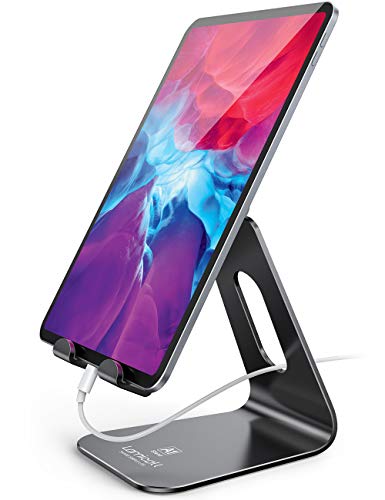
Disclosure: As an Amazon Associate, ilcastellomenu.com earns from qualifying purchases. Links on this page are affiliate links; they cost you nothing extra. Prices and availability change often, so check the current Amazon listing before you buy.
Quick Verdict on Tablet Stand Pros and Cons
Weighing up tablet stand pros and cons honestly: the pros are daily and practical, the cons are mostly about fit and quality rather than the idea itself. A correctly matched, well-made stand delivers the pros and shrinks the cons; a mismatched or flimsy one delivers the opposite. Best for regular viewers, readers, callers and cooks. Not suited to anyone expecting medical benefits or a universal fit for every tablet and case.
Drawing and note-taking with a stylus need a low, firm angle rather than a tall viewing angle. Pressing on the screen with a pen pushes the tablet backwards, so a stand that flexes or slides will fight you the whole session. Some stands fold down to a shallow tilt that works well for sketching, while tall viewing stands are poor for it. If stylus work is your main use, prioritise a stand that locks or rests firmly at a low angle and has a ledge that keeps the tablet from creeping forward under pressure, and test it with the heaviest strokes you normally make.
Travel changes the calculation completely. A folding stand that disappears into a bag, opens in seconds and works on a train tray or a cafe table earns its place even if it is less rock-solid than a heavy desk stand. Weight, folded thickness and how quickly it sets up matter more than ultimate stability, because the alternative on the road is usually propping the tablet against a bag or a cup. Just be honest about the trade: the lightest travel stands are the ones most likely to wobble with a large tablet, so match the travel stand to the device you actually carry.
In this guide
The Pros
Hands-Free Viewing
A stand holds the screen for you, which makes long reading, video and recipe sessions simply more comfortable and frees your hands for notes, cooking or a keyboard.
Better Angles Than Propping
Purpose-built angles beat books, mugs and cushions on both steadiness and safety, and they repeat exactly every session.
Better Video Call Framing
Raising and tilting the camera improves framing and reduces the bounce and drift of a hand-held or flat-lying tablet.
Cleaner Charging and Cable Habits
A regular stand spot creates a regular charging spot, with a clean cable route instead of a tablet buried under papers.
One Accessory, Many Rooms
The same stand can serve desk, counter, bedside and travel, which spreads its usefulness across the whole day.
Safer Kitchen Reference
Lifted off the counter and kept away from water and heat, the tablet stays readable and cleaner during cooking.
Materials tell you a lot about how a stand will age. Metal-bodied stands tend to feel firmer and resist flex, while plastic stands can be lighter and kinder to bag weight but may creak or flex under a big tablet. Rubber or silicone padding where the tablet rests protects the device from scratches and adds a little grip, and padding under the base stops the stand skating across a smooth desk. Check that padding is firmly attached; peeling pads are a common early failure on cheaper stands and they change both the grip and the angle once they start to lift.
Cleaning and care are simple but not optional. Dust and kitchen grease collect in hinges and cradle ledges, grit in the ledge can scratch a tablet edge, and a sticky hinge usually just needs a wipe rather than force. Clean the contact points with a soft, slightly damp cloth, dry everything before use, and never force a stiff hinge with the tablet mounted. Store a folding stand flat rather than half-open under weight in a bag, because a hinge left strained under load is a hinge that loosens faster. Small habits like these are most of what separates a stand that lasts from one that sags.
A stand also has to fit the room it lives in. On a small desk, a wide base can crowd out everything else; on a shared family counter, a stand that folds away keeps surfaces clear. If the tablet is shared between people with different habits, an easily adjustable stand avoids the daily argument about angle. Storage matters too: a stand that lives in a drawer because it is bulky will not be used, while one that folds flat or looks tidy enough to leave out gets used every day. The best stand is the one that is already where you need it.
The Cons
Fit Can Fail on Size or Case
A stand sized for a small tablet tips with a large one, and thick cases may not sit securely on a shallow cradle lip.
Hinges Loosen Over Time
Especially on cheaper stands, hinges lose stiffness and the screen slowly sinks from the angle you set.
Wobble When You Interact
Tapping, typing nearby or stylus pressure can bounce a light stand, which passive viewers never notice but interactive users always do.
Another Thing to Store and Clean
A stand takes space, gathers dust and kitchen grease in its hinge and ledge, and needs occasional wiping to stay grippy.
Port Access Is Not Guaranteed
Some stands block a charging port in one orientation, forcing awkward cable bends or mid-session repositioning.
Comfort Aid, Not a Cure
A stand can make viewing feel more comfortable, but it is not a medical device and does not treat or prevent neck, back or eye problems.
A stand also has to fit the room it lives in. On a small desk, a wide base can crowd out everything else; on a shared family counter, a stand that folds away keeps surfaces clear. If the tablet is shared between people with different habits, an easily adjustable stand avoids the daily argument about angle. Storage matters too: a stand that lives in a drawer because it is bulky will not be used, while one that folds flat or looks tidy enough to leave out gets used every day. The best stand is the one that is already where you need it.
Finally, judge a stand by the session it enables, not by its listing photos. The right stand disappears: the screen sits where you want it, stays there, charges when it needs to, and packs away without thought. The wrong stand nags constantly through wobble, slipping, blocked ports and awkward angles. Most returns happen because of fit issues that a few honest questions prevent: how big and heavy is my tablet, how thick is my case, where do I use it most, and do I tap, type, draw or only watch. Answer those first and the shortlist usually shrinks to one or two obvious candidates.
Stability is the first thing to judge, and it is mostly about matching the stand to the device. A stand sized for a small tablet can tip or wobble when a large, heavy tablet is placed on it, especially in portrait orientation or when you tap near the top of the screen. A broader base, a lower centre of gravity and a cradle that holds the tablet low all help. Test any new stand on a hard, flat surface first, tap the corners of the screen the way you normally would, and only then trust it on a softer surface such as a bed or a sofa arm.
What the Trade-Offs Mean for You
Passive viewers meet mostly pros. Interactive users meet the wobble and hinge cons head-on and should buy firmer, heavier stands. Cooks gain a lot and risk the most if they ignore water and heat. Travellers trade stability for portability with every gram saved. Large-tablet owners live or die by size matching, and thick-case owners by cradle depth.
Stability is the first thing to judge, and it is mostly about matching the stand to the device. A stand sized for a small tablet can tip or wobble when a large, heavy tablet is placed on it, especially in portrait orientation or when you tap near the top of the screen. A broader base, a lower centre of gravity and a cradle that holds the tablet low all help. Test any new stand on a hard, flat surface first, tap the corners of the screen the way you normally would, and only then trust it on a softer surface such as a bed or a sofa arm.
A thick protective case changes the fit more than most buyers expect. Many stands rest the tablet against a front lip on the cradle, and a chunky case, a case with a built-up bumper, or a folio cover folded behind the tablet can be too deep for that lip to hold securely. If you use a rugged case, look for stands described as having a deeper cradle ledge, or plan to remove the case while the tablet is on the stand. A stand that fits a bare tablet perfectly can feel loose and unsafe with a thick case in place, and that is a fit issue, not a defect.
Hinge stiffness is the quiet difference between a stand that stays useful and one that slowly becomes annoying. On cheaper stands the hinge can loosen over time, so the tablet gradually sinks from the angle you set, especially with a heavier device. A hinge that feels firm when new, moves in controlled steps or with steady resistance, and does not creak or slip under a firm tap will usually age better. If a stand needs two hands and real effort to adjust when new, note that too, because hinges rarely get easier with use, and daily adjustment should feel easy, not like a workout.
How a Stand Compares With the Alternatives
A folio case flap is always attached but offers fewer, less steady angles. A desk mount arm offers more height and reach but fixes the tablet to one spot and costs more effort to install. Improvised propping is free and is also how tablets slide, fall and end up in sinks. A stand sits in the sensible middle for most people.
Hinge stiffness is the quiet difference between a stand that stays useful and one that slowly becomes annoying. On cheaper stands the hinge can loosen over time, so the tablet gradually sinks from the angle you set, especially with a heavier device. A hinge that feels firm when new, moves in controlled steps or with steady resistance, and does not creak or slip under a firm tap will usually age better. If a stand needs two hands and real effort to adjust when new, note that too, because hinges rarely get easier with use, and daily adjustment should feel easy, not like a workout.
Charging access is easy to overlook until the battery runs low mid-session. Check where the charging port sits when the tablet is in the stand in the orientation you use most. Some stands block a bottom port in landscape, others route a cable neatly behind the cradle, and some raised designs leave plenty of room underneath. If you often work while plugged in, picture the cable path before you buy: a cable that bends sharply against the desk or pulls sideways on the port will annoy you every single day, while a clean route disappears from your attention completely.
Reference Stands for Context
These real stand lines illustrate the trade-offs above and are presented prose-only while verification is pending.

OMOTON Tablet Stand
The OMOTON Tablet Stand is a stand family known for simple aluminium-style desktop holders often used at kitchen counters and desks. In everyday use it suits readers who want a stand that sets up quickly, holds a steady viewing angle and folds or parks neatly when the session ends. Judge it against your own tablet first: check that your device, in its usual case, sits securely on the cradle ledge, that the base feels planted on your desk or counter, and that the charging port stays reachable in the orientation you use most. Positioned qualitatively, it sits in the mid tier of this category: not the simplest folding plate and not a heavy specialist mount, but a general-purpose option for daily viewing, reading, calls and kitchen use away from water and heat. Check price on Amazon.
Kitchen use is one of the best reasons to own a stand, and one of the easiest places to damage a tablet. A stand lifts the screen off a wet or floury counter and keeps it visible while your hands are busy, which is genuinely useful for recipes and timers. Keep the stand and tablet well away from sinks, splashes, steam and direct heat from hobs and ovens, wipe the stand down after messy sessions, and never leave a tablet charging unattended near water. Treat the kitchen stand as a viewing aid you move into place for cooking, then move back out of the splash zone afterwards.

KABCON Tablet Stand
The KABCON Tablet Stand is a stand line offering both desktop and floor-style options for reading and viewing away from a desk. In everyday use it suits readers who want a stand that sets up quickly, holds a steady viewing angle and folds or parks neatly when the session ends. Judge it against your own tablet first: check that your device, in its usual case, sits securely on the cradle ledge, that the base feels planted on your desk or counter, and that the charging port stays reachable in the orientation you use most. Positioned qualitatively, it sits in the mid tier of this category: not the simplest folding plate and not a heavy specialist mount, but a general-purpose option for daily viewing, reading, calls and kitchen use away from water and heat. Check price on Amazon.
Kitchen use is one of the best reasons to own a stand, and one of the easiest places to damage a tablet. A stand lifts the screen off a wet or floury counter and keeps it visible while your hands are busy, which is genuinely useful for recipes and timers. Keep the stand and tablet well away from sinks, splashes, steam and direct heat from hobs and ovens, wipe the stand down after messy sessions, and never leave a tablet charging unattended near water. Treat the kitchen stand as a viewing aid you move into place for cooking, then move back out of the splash zone afterwards.
How to Buy Smart
Check size and weight matching, cradle depth against your case, port access in your main orientation, and hinge firmness in hand if you can. Prefer a stand that feels controlled rather than merely stiff.
Think about posture in comfort terms only. Raising a tablet closer to a natural viewing height can simply feel more comfortable during long reading, video or recipe sessions, and it can reduce how much you hunch over a flat-lying screen. A stand is not a medical device and it does not treat or prevent anything; it is a comfort and convenience accessory. Pair it with sensible habits anyway: take breaks, change position, keep the screen at a distance that feels easy on your eyes, and stop adjusting your whole room around one fixed setup if a simpler change feels better.
Kitchen use is one of the best reasons to own a stand, and one of the easiest places to damage a tablet. A stand lifts the screen off a wet or floury counter and keeps it visible while your hands are busy, which is genuinely useful for recipes and timers. Keep the stand and tablet well away from sinks, splashes, steam and direct heat from hobs and ovens, wipe the stand down after messy sessions, and never leave a tablet charging unattended near water. Treat the kitchen stand as a viewing aid you move into place for cooking, then move back out of the splash zone afterwards.
Setup and Care That Reduce the Cons
Seat the tablet fully, keep hinges clean, store folding stands flat, and keep kitchen stands out of splash and heat zones. Most cons shrink with these habits.
Desk use rewards a different set of priorities. If the tablet is a second screen beside a keyboard, you want an angle that matches your monitor roughly, a base that does not slide when you tap, and a footprint that does not eat the space your keyboard and notebook need. If you type on the tablet itself with a separate keyboard, the stand becomes the screen half of a small workstation, and stability matters even more because every tap on a nearby desk travels through the surface. Readers comparing setups may also find our guide to portable keyboards for iPad useful alongside this one.
Video calls expose weaknesses that reading never does. A stand that is fine for watching can bounce noticeably when you gesture, type or bump the desk during a call, and a camera angle set too low is unflattering and tiring for the other side. A taller or more adjustable stand helps frame the shot, but only if the base stays planted. Before an important call, set the stand up, join a test call or open the camera preview, and check both the framing and the wobble. Five minutes of testing beats discovering the problem live in front of colleagues or family.
Bottom Line
The pros of a tablet stand are real and daily; the cons are predictable and largely avoidable with honest fit checks. That balance is why stands remain one of the most useful small tablet accessories.
More Practical Notes
Video calls expose weaknesses that reading never does. A stand that is fine for watching can bounce noticeably when you gesture, type or bump the desk during a call, and a camera angle set too low is unflattering and tiring for the other side. A taller or more adjustable stand helps frame the shot, but only if the base stays planted. Before an important call, set the stand up, join a test call or open the camera preview, and check both the framing and the wobble. Five minutes of testing beats discovering the problem live in front of colleagues or family.
Drawing and note-taking with a stylus need a low, firm angle rather than a tall viewing angle. Pressing on the screen with a pen pushes the tablet backwards, so a stand that flexes or slides will fight you the whole session. Some stands fold down to a shallow tilt that works well for sketching, while tall viewing stands are poor for it. If stylus work is your main use, prioritise a stand that locks or rests firmly at a low angle and has a ledge that keeps the tablet from creeping forward under pressure, and test it with the heaviest strokes you normally make.
Travel changes the calculation completely. A folding stand that disappears into a bag, opens in seconds and works on a train tray or a cafe table earns its place even if it is less rock-solid than a heavy desk stand. Weight, folded thickness and how quickly it sets up matter more than ultimate stability, because the alternative on the road is usually propping the tablet against a bag or a cup. Just be honest about the trade: the lightest travel stands are the ones most likely to wobble with a large tablet, so match the travel stand to the device you actually carry.
Materials tell you a lot about how a stand will age. Metal-bodied stands tend to feel firmer and resist flex, while plastic stands can be lighter and kinder to bag weight but may creak or flex under a big tablet. Rubber or silicone padding where the tablet rests protects the device from scratches and adds a little grip, and padding under the base stops the stand skating across a smooth desk. Check that padding is firmly attached; peeling pads are a common early failure on cheaper stands and they change both the grip and the angle once they start to lift.
Cleaning and care are simple but not optional. Dust and kitchen grease collect in hinges and cradle ledges, grit in the ledge can scratch a tablet edge, and a sticky hinge usually just needs a wipe rather than force. Clean the contact points with a soft, slightly damp cloth, dry everything before use, and never force a stiff hinge with the tablet mounted. Store a folding stand flat rather than half-open under weight in a bag, because a hinge left strained under load is a hinge that loosens faster. Small habits like these are most of what separates a stand that lasts from one that sags.
A stand also has to fit the room it lives in. On a small desk, a wide base can crowd out everything else; on a shared family counter, a stand that folds away keeps surfaces clear. If the tablet is shared between people with different habits, an easily adjustable stand avoids the daily argument about angle. Storage matters too: a stand that lives in a drawer because it is bulky will not be used, while one that folds flat or looks tidy enough to leave out gets used every day. The best stand is the one that is already where you need it.
Finally, judge a stand by the session it enables, not by its listing photos. The right stand disappears: the screen sits where you want it, stays there, charges when it needs to, and packs away without thought. The wrong stand nags constantly through wobble, slipping, blocked ports and awkward angles. Most returns happen because of fit issues that a few honest questions prevent: how big and heavy is my tablet, how thick is my case, where do I use it most, and do I tap, type, draw or only watch. Answer those first and the shortlist usually shrinks to one or two obvious candidates.
Stability is the first thing to judge, and it is mostly about matching the stand to the device. A stand sized for a small tablet can tip or wobble when a large, heavy tablet is placed on it, especially in portrait orientation or when you tap near the top of the screen. A broader base, a lower centre of gravity and a cradle that holds the tablet low all help. Test any new stand on a hard, flat surface first, tap the corners of the screen the way you normally would, and only then trust it on a softer surface such as a bed or a sofa arm.
A thick protective case changes the fit more than most buyers expect. Many stands rest the tablet against a front lip on the cradle, and a chunky case, a case with a built-up bumper, or a folio cover folded behind the tablet can be too deep for that lip to hold securely. If you use a rugged case, look for stands described as having a deeper cradle ledge, or plan to remove the case while the tablet is on the stand. A stand that fits a bare tablet perfectly can feel loose and unsafe with a thick case in place, and that is a fit issue, not a defect.
Hinge stiffness is the quiet difference between a stand that stays useful and one that slowly becomes annoying. On cheaper stands the hinge can loosen over time, so the tablet gradually sinks from the angle you set, especially with a heavier device. A hinge that feels firm when new, moves in controlled steps or with steady resistance, and does not creak or slip under a firm tap will usually age better. If a stand needs two hands and real effort to adjust when new, note that too, because hinges rarely get easier with use, and daily adjustment should feel easy, not like a workout.
Charging access is easy to overlook until the battery runs low mid-session. Check where the charging port sits when the tablet is in the stand in the orientation you use most. Some stands block a bottom port in landscape, others route a cable neatly behind the cradle, and some raised designs leave plenty of room underneath. If you often work while plugged in, picture the cable path before you buy: a cable that bends sharply against the desk or pulls sideways on the port will annoy you every single day, while a clean route disappears from your attention completely.
Balancing the Upsides Against the Everyday Annoyances
How the balance shifts over a year of ownership
The pros-and-cons ledger of a tablet stand is not static. In the first month, novelty inflates the pros; by the sixth month, the honest picture is about reliability, running costs and whether the product has earned a permanent place in your routine. Wear parts, consumable availability and the maker’s support responsiveness all matter more at month ten than at day ten. When you read owner feedback, weight the long-term reports accordingly: a complaint about a part that failed after a year tells you more than a first-week rave about unboxing.
The compromise candidate
Many buyers end up choosing neither the strongest nor the cheapest tablet stand but the one whose weaknesses fall where they personally care least. That is a rational strategy, not a failure of research. List the cons of your final two candidates side by side and ask which set you would rather live with daily in a room where noise, heat or clutter quickly becomes a problem for everyone else in it. The product whose drawbacks sit in your blind spots will feel like the better product for years, even if a comparison table scores the other one higher on paper.
The advantage that depends on your habits
The headline advantage of a tablet stand is real, but it is not automatic: it only pays out if your habits match it. Used the way it was designed, in a room where noise, heat or clutter quickly becomes a problem for everyone else in it, the strengths described earlier compound quietly — less friction, fewer workarounds, a smoother routine. Used against its grain, the same design choices become the source of the complaints in the cons column. Before deciding, be honest about which user you are on an ordinary tired weekday, not the organised version of yourself you plan to become next month.
Where the drawbacks bite hardest
The disadvantages of a tablet stand are not evenly distributed across owners. They concentrate in specific situations: tight spaces, shared rooms, heavy daily loads, or workflows that change direction mid-task. If your routine involves any of those, the cons deserve double weight in your decision, because you will meet them weekly rather than rarely. Conversely, an owner whose setup avoids those situations entirely may never encounter the most-criticised weakness at all, which is why verdicts on the same tablet stand can sound like descriptions of two different products.
The maintenance trade-off nobody advertises
Almost every tablet stand trades purchase-day simplicity for a small ongoing maintenance obligation: cleaning, recalibrating, replacing a wear part, updating firmware or simply keeping accessories together. The trade is usually worth it, but it is not free, and it scales with how hard you use the product. In a room where noise, heat or clutter quickly becomes a problem for everyone else in it, skipped maintenance shows up first as small annoyances — a control that feels off, a result that drifts, a noise that was not there before — long before it causes a real failure. Budget the minutes, not just the money.
When the alternative is genuinely better
There are owners for whom skipping the tablet stand altogether is the right call, and naming them is part of an honest pros-and-cons account. If your need is occasional, borrowed or built into something you already own, or if your space cannot give the product the conditions it needs, the alternative route avoids both the cost and the clutter. The pros only outweigh the cons when the problem the tablet stand solves is a recurring one in your week. A problem you meet twice a year rarely justifies a permanent new resident in the Desks category.
If a candidate fails this check, strike it from the list without regret and let the remaining options compete on merit.
Your future self, mid-task on a busy day, is the person this check is really for.
Frequently Asked Questions
Will a tablet stand fit my tablet if it is in a thick case?
It depends on the depth of the cradle ledge. Slim cases usually sit fine, but thick rugged cases and bumpers can be too deep for a shallow front lip, leaving the tablet feeling loose. Check the stand description for case-friendly wording, measure your cased tablet against any stated ledge depth, and be ready to remove a very bulky case during stand use if the fit feels insecure.
Can I charge my tablet while it is on a stand?
Usually yes, provided the stand does not block the charging port in the orientation you use. Portrait often leaves a bottom port clear, while some landscape setups route the cable behind the cradle. Before buying, picture the cable path for your normal setup, and avoid any stand that would force a sharp bend in the cable or pull sideways on the port during long plugged-in sessions.
Why does my tablet wobble when I tap the screen?
Wobble usually means the stand is undersized for the tablet, the hinge is too loose, or the base is too light for how high the screen sits. A stand sized for a small tablet will struggle with a large one. Moving the tablet lower in the cradle, using a firmer surface, and choosing a broader, heavier base for larger devices all reduce wobble noticeably.
Is a tablet stand safe to use in the kitchen?
Yes, with basic care. A stand is genuinely useful for recipes because it lifts the screen off a messy counter and keeps it readable. Keep both stand and tablet away from sinks, splashes, steam and direct heat, wipe the stand after messy cooking, and do not charge a tablet unattended near water. Move the stand out of the splash zone once you finish cooking.
Do tablet stands work for drawing with a stylus?
Some do and some do not. Stylus work needs a low, firm angle that resists the pressure of the pen without sliding or flexing. Tall viewing stands are usually poor for drawing. Look for a stand that settles securely at a shallow tilt with a ledge that stops the tablet creeping forward, and test it with firm strokes before committing to long sketching sessions.
How do I stop a stand hinge from getting loose?
You cannot fully prevent wear, but you can slow it. Avoid forcing a stiff hinge, keep grit and grease out of the joint with a regular wipe, do not leave a folding stand stored half-open under weight, and avoid hanging extra load on the tablet while it is mounted. A hinge that felt firm and controlled when new will generally stay serviceable far longer than one that felt loose on day one.
Related Reading
Keep exploring this corner of your setup with these related guides on this site: best keyboards for an iPad Pro setup portable keyboards for iPad SD cards for tablets home office desks for small spaces the tablet stand buying guide tablet stand reviews how to use a tablet stand well. Each one covers a neighbouring decision, from keyboards that pair with a stand to storage and desk choices that shape how a tablet fits into daily work and leisure.