Disclosure: As an Amazon Associate, ilcastellomenu.com earns from qualifying purchases. Links on this page are affiliate links; they cost you nothing extra. Prices and availability change often, so check the current Amazon listing before you buy.
Any honest account of usb bluetooth adapter pros and cons has to hold two truths at once. The first truth is that this tiny dongle can transform a desktop that had no wireless life at all, adding headphones, speakers, controllers and a cable-free desk for very little money and almost no effort. The second truth is that the same dongle is useless — genuinely, completely useless — on a computer whose Bluetooth already works, and disappointing whenever it is asked to defeat walls or erase gaming delay. This article gives both sides their full weight: the real advantages, explained properly, the real limitations, stated without softening, and then the part that actually helps you decide, which is what those trade-offs mean for your machine, your room and your accessories.
Key Takeaways
- The biggest pro is capability: a PC with no Bluetooth gains the whole wireless accessory world in one step.
- The biggest con is irrelevance: on a PC with working Bluetooth, an adapter adds nothing at all.
- Range and placement are the daily battleground; walls and hidden ports, not specifications, cause most failures.
- Bluetooth audio delay versus wired is a real con for competitive gaming and a non-issue for music, films and calls.
- Support is a hidden pro of named makers and a hidden con of unbranded dongles when a driver is needed.
In this guide
The Pros of a USB Bluetooth Adapter
It Adds a Missing Capability in Seconds
For a desktop built without Bluetooth, the adapter is not an enhancement; it is the missing component itself. There is no case to open, no internal card to fit and no technician to book. You plug it in, pair your devices, and a machine that could not speak to a single wireless accessory suddenly handles headphones, speakers, controllers and desk gear. Few upgrades in computing deliver a whole new capability this quickly or this cheaply, and for older desktops in particular it can postpone a replacement that was only ever about connectivity.
The humble desktop PC is the adapter’s natural home. Many desktops, including capable gaming and office towers, were built without any Bluetooth radio at all, because the motherboard choice prioritised other features. For those machines a dongle is not a workaround; it is the missing component, added in seconds without opening the case. Once fitted, the desktop gains the whole wireless accessory world: headphones for late calls, a speaker for video, a controller for games, a keyboard and mouse that can move freely, and easy transfers from nearby devices where the operating system supports them. If you are building or refreshing a desk setup, treat the adapter as part of the setup rather than an emergency purchase. Fit it early, place it well, pair your core devices calmly, and the desktop stops feeling like the one tethered machine in a wireless house.
It Frees the Desk and the Listener
Cables shape a desk more than we admit: the headset tether that limits how far you can lean back, the keyboard lead that dictates position, the controller cable that keeps you close to the tower. Bluetooth removes those small tyrannies at once. You can stand during a call, play from the sofa side of the room and clear the desk for paper work in seconds. The freedom is modest in description and surprisingly large in daily feeling, which is why so many owners describe the adapter as the purchase that made their existing accessories feel new again.
Keyboards and mice are the least demanding and most immediately rewarding Bluetooth devices. They send small, occasional messages, sip power, and forgive a great deal of imperfect placement, which is why a cable-free desk usually works well even on a modest adapter. The gains are ergonomic as much as aesthetic: a keyboard that can sit exactly where your shoulders want it, a mouse that never drags a cable across the desk edge, and a workspace that can be cleared for writing or drawing in seconds. When you shop for desk gear to pair with an adapter, the keyboard and mouse deserve as much research as the dongle itself, because their switches, shape and layout are what your hands will judge every day. Readers comparing options will find our related guides listed at the end of this article useful alongside the adapter advice here.
It Is Genuinely Easy on a Modern System
On a current Windows PC, a mainstream adapter is about as close to effortless as hardware gets: plug it in, watch the Bluetooth controls appear, pair from settings. There is no account to create, no subscription, no companion application demanding attention. The pairing routine, once learned, transfers to every device you will ever add. For people who are not technical and do not wish to become technical, that simplicity is not a minor pro. It is the difference between a fix they will actually complete and a project that stays in a drawer.
Driver reality is refreshingly dull on a current Windows PC, and it is worth understanding before you buy. On up-to-date Windows, most mainstream adapters are plug-and-play: you insert the dongle, the operating system supplies a standard driver, a Bluetooth section appears in settings, and you pair your devices from there. Older Windows versions, unusual chipsets and some feature-specific adapters may still need the driver supplied by the maker, either from an included disc or, far more sensibly, from the support page for that exact model. Two habits protect you here. First, check that the maker supports your operating system before ordering, especially on older machines. Second, if your computer already has a built-in Bluetooth radio, disable that internal radio in the operating system before relying on the dongle, so the computer is not trying to run two Bluetooth stacks at once. That single step prevents a large share of the pairing confusion people report.
It Rescues Machines Instead of Replacing Them
A failed internal Bluetooth radio can make a perfectly good laptop feel broken, and replacing the whole machine over one small radio is a poor use of money. A nano adapter restores the function from the outside, travels with the laptop, and asks nothing of the machine’s insides. The same rescue logic applies to older desktops and to work computers you are not permitted to modify. Extending the useful life of a sound machine is a financial pro and, quietly, an environmental one too.
Laptops need a more careful conversation. A modern laptop almost certainly has Bluetooth built in, and if that built-in radio works, an adapter adds nothing except a occupied port and potential confusion. The genuine laptop cases are narrower: an internal radio that has failed or become unreliable, an older laptop that predates common Bluetooth inclusion or has a version too old for a device you need, or a machine where the internal card cannot be replaced sensibly. In those cases a tiny nano-style adapter that sits nearly flush with the side of the laptop is the practical shape, because it can stay in place while the laptop moves between bags and desks. Even then, go in with the right expectation: you are replacing a broken function, not upgrading a healthy one, and disabling the faulty internal radio cleanly is part of doing the job properly.
It Costs Little for What It Unlocks
Judged against the accessories it enables — the headphones, speaker and controller you already own or were about to buy — the adapter itself is a small part of the total picture. That asymmetry is the heart of its value case. The pro is not that it is cheap in isolation; many cheap gadgets are cheap and pointless. The pro is that a modest outlay unlocks capability across every Bluetooth device you connect, for years, with almost no running cost or maintenance.
Judged purely as value, a USB Bluetooth adapter is one of the cheapest capability upgrades in computing when it is bought for the right machine. For a modest outlay, a desktop that could not speak to any wireless accessory gains headphones, speakers, controllers and cable-free desk gear in one step. That value collapses just as quickly when the purchase is wrong: bought for a laptop that already works, bought to chase range through walls it cannot deliver, or bought to eliminate gaming latency it cannot remove. The worth-it question is therefore never really about the adapter in the abstract. It is about the gap in front of you. A real gap — no Bluetooth, a broken radio, a device you cannot connect — makes the purchase easy to defend. An imagined gap, created by marketing language about upgrades and boosts, makes the same small box a small waste of money.
It Keeps One Radio in Charge
Used properly — with a failed or unwanted internal radio disabled — an adapter gives the computer one clear Bluetooth manager. Pairings live in one place, troubleshooting has one suspect, and the setup behaves predictably. Owners who make that single configuration choice tend to report the boring, reliable experience everyone wants from infrastructure. Boring, for a radio, is the highest praise available.
Spend five minutes in the operating system’s Bluetooth and sound settings after pairing, because that is where the long-term experience is decided. Set the headphones or speaker you actually use as the default output, check which device owns the microphone for calls, and rename or remove devices you no longer own so the list stays readable. On a desktop that also has wired speakers, decide deliberately which output you want for music and which for calls, rather than letting the computer guess each time something connects. If the machine previously had a built-in radio, confirm that the old radio is disabled and that your devices are paired to the adapter, not stranded on a connection that no longer exists. These are small administrative acts, but they are the difference between a dongle that feels integrated and one that feels like a permanent side project demanding attention every morning.
The Cons of a USB Bluetooth Adapter
It Cannot Upgrade Working Bluetooth
This is the con that invalidates the purchase for a large share of browsers. If the built-in radio works, a dongle offers no faster connection, no better sound and no meaningful extra range, and two active radios can actively confuse pairing. Any listing language implying a general boost for an already-wireless computer should be read as marketing, not engineering. The honest summary is brutal in its simplicity: for a healthy laptop, the best adapter is the one you do not buy.
Here is the limitation that matters most, and the one sales pages rarely state plainly: a dongle does not upgrade a computer whose built-in Bluetooth already works. If your laptop pairs reliably with your headphones and keyboard today, plugging in a second Bluetooth radio will not make that connection faster, longer-ranged or better sounding, and having two radios active at once can actually confuse the operating system about which one should manage your devices. The sensible cases for buying an adapter are clear ones — a desktop PC with no Bluetooth at all, a laptop whose internal radio has failed, an older machine whose Bluetooth is missing or unreliable, or a work computer you are not allowed to open up and modify. Outside those cases, the honest advice is to keep your money, fix the setting or driver that is actually misbehaving, and leave the working radio alone.
Range Is Limited by Physics, Not Effort
Bluetooth is a short-range, room-scale radio. Walls, floors, metal furniture and the listener’s own body all weaken it, so the walk-to-the-kitchen test fails for reasons no adapter can repeal. Buyers who imagine whole-home coverage from a dongle will be disappointed however much they spend, because the limitation is the technology’s design, not a defect in the unit they chose. Expect a good room, not a covered house.
Range is where expectations and physics part company most often. Bluetooth is a short-range radio designed for a desk, a room and nearby devices, not for covering a whole home through several walls. Walls, floors, metal cases, filing cabinets and even the human body absorb and scatter the signal, so a connection that feels rock solid with the computer in the same room can stutter when you walk into the kitchen wearing your headphones. The position of the adapter matters as much as the adapter itself. A tiny dongle tucked into a rear port, hidden behind a large metal tower case under a desk, starts with a real handicap before it transmits anything at all. Moving the adapter into the open — a front port, a port on a monitor, or a short extension that lifts it onto the desk — often improves a weak connection more than swapping one reputable adapter for another, because the radio finally has a clear path to the device it is talking to.
Placement Can Sabotage It
A dongle hidden behind a metal case, beneath a desk or beside busy high-speed USB ports can stutter, crackle and drop in ways that look exactly like faulty hardware. The interference and obstruction are real, and the fix — an extension cable and open air — is an extra step some buyers never learn about. Until they do, a perfectly good adapter gets blamed, returned and replaced by another adapter that suffers identically in the same hidden port.
There is a second placement problem that catches many desktop owners out: interference around busy USB ports. High-speed USB storage and other fast peripherals working hard right beside a small Bluetooth radio can raise the noise floor enough to cause audio crackle, mouse lag or brief dropouts, especially when the adapter sits in a crowded rear panel next to an external drive that is constantly reading and writing. The symptoms look like a faulty adapter, which is why so many perfectly good dongles get blamed and returned. The honest, practical fix costs very little and works for simple physical reasons: put a short USB extension cable between the computer and the adapter, and rest the adapter on top of the desk or on the side of the case facing the room. That small distance from the noisy ports and the metal case gives the radio cleaner air, and for many stuttering setups it is the difference between a connection you tolerate and one you forget about entirely.
Audio Delay Is Real for Competitive Gaming
Bluetooth audio carries an inherent delay that music and film forgive and fast competitive gaming does not. Footsteps and cues arriving a fraction late is a genuine competitive con, and no adapter in this category eliminates it, because the delay belongs to Bluetooth audio itself. Players for whom those margins matter should keep a wired headset for serious sessions and enjoy the dongle for everything else, rather than expecting one small radio to repeal the trade-off.
Audio latency deserves plain language, because it decides whether Bluetooth feels magical or mildly annoying. For music, podcasts, films and ordinary video calls, the small delay in a Bluetooth audio connection is rarely a problem, and most people stop noticing it within minutes. Fast, competitive gaming is different. When the action on screen and the sound in your headset drift apart, even slightly, footsteps, cues and voice timing can feel off, and no USB adapter can fully erase that gap because the delay is part of how Bluetooth audio is encoded and sent. Some adapters and headsets handle the delay better than others, and keeping the connection clean and close helps at the margins, but the honest comparison remains simple: a wired headset connection has no radio delay at all. If split-second audio is the whole point of your setup, wired is still the benchmark, and a dongle should be bought for convenience, not as a latency cure.
Drivers and Support Can Be a Dead End
The plug-and-play story is true on current systems, but older operating systems, unusual setups and unbranded dongles can still lead to a driver hunt with no satisfying end. A maker with no real support page turns a five-minute job into an evening of generic downloads. This con is avoidable by buying named, supported hardware, but it is a real feature of the category’s crowded low end, and it is the con most likely to ambush a buyer who chose on price alone.
Because these adapters are small and inexpensive, the market is crowded with unbranded versions that look identical to named products in photographs. The hardware inside may be broadly similar, but the ownership experience is where the difference shows: a known maker provides a clear support page, a driver that matches the model, compatibility notes for current operating systems and a returns route that actually answers. With an unbranded dongle, a driver problem can become a dead end of generic downloads and guesswork. That does not mean the most expensive adapter is the best one, and it does not mean a modest adapter from a reputable maker is a compromise. It means the brand, the support page and the clarity of the listing are legitimate buying criteria for this category — arguably more useful criteria than the bold claims printed on the box, because the day something does not pair, support is the feature you will actually use.
It Only Helps One End of the Connection
An adapter gives Bluetooth to your computer and to nothing else. The printer without Bluetooth stays without Bluetooth; the accessory that only talks to a phone app stays that way. Buyers who miss this buy a dongle to solve a problem located in a completely different device. The con is not in the adapter, which does its stated job, but in the misunderstanding — and misunderstandings, in this category, are remarkably common.
Printers and older accessories teach an important lesson about Bluetooth expectations. An adapter in your computer gives the computer Bluetooth; it does not give Bluetooth to a printer, speaker or any other device that never had it. Devices connect when both ends have the radio and a shared way of working. That sounds obvious written down, yet a steady stream of disappointed buyers discover it after ordering a dongle for a non-Bluetooth printer. Before buying, check the accessory itself: does it actually offer Bluetooth pairing, and does its maker intend it to pair with a computer rather than only with a phone app? The same check applies to fitness gear, toys and smart home gadgets, many of which use Bluetooth only to talk to their own phone applications. An adapter is a computer upgrade, not a universal translator for every gadget in the house, and confirming the other end of the connection first is the cheapest research you will ever do.
What the Trade-Offs Mean for You
For the desktop owner with no Bluetooth, the pros dominate so completely that the decision is easy: the cons are mostly about placement and expectations, both within your control. For the laptop owner with a failed radio, the pros still win, provided you disable the old radio and choose the travelling shape. For the competitive gamer, the audio-delay con deserves real weight in the headset decision, even while the adapter remains a pro for controllers and desk gear. For the whole-home dreamer, the range con is decisive, and the money belongs in a different category entirely. And for the owner of a healthy, working Bluetooth laptop, the first con ends the discussion. Your profile, not the product, determines which side of this article is about you.
Think carefully about how many devices you expect to use at once. Pairing a keyboard, a mouse and a pair of headphones to one adapter is a normal desk arrangement and a reasonable expectation for a mainstream adapter from a known maker. Pushing further — several audio devices, controllers, a printer and assorted accessories all active together — asks more of the radio, the driver and the computer, and the experience can become uneven even when each individual pairing worked on its own. Audio is the most demanding common job, because it needs a steady stream rather than occasional small messages. A practical approach is to decide your real simultaneous set before you buy: the devices that must work together every day, not every Bluetooth gadget you own. Buy for that set, test that set first when the adapter arrives, and add extras one at a time so that if something becomes unreliable you know exactly which addition caused it.
Speakers and soundbars make the range discussion concrete. A Bluetooth speaker across the room from a desktop is a friendly test: no wall in between, a clear line across open space, and a device that mostly stays in one place. That arrangement usually works beautifully, and it is the right way to enjoy films, background music and podcasts from a PC that lives on a desk. Problems begin when the expectation quietly grows — the speaker moves to another room, a door closes, the listener wanders with headphones into the kitchen — and the connection is asked to behave like a whole-home audio system, which Bluetooth was never designed to be. Judge an adapter by the room it serves. If your real ambition is music that follows you through every room, that is a different product category altogether, and recognising that early saves the cost of an adapter bought to do a job outside its nature.
How an Adapter Compares With the Alternatives
Against replacing the computer, the adapter wins on cost and effort whenever connectivity is the only real problem. Against fitting an internal card, it wins on simplicity and reversibility, and loses only the tidiness of having nothing in a port — a loss most owners never feel. Against staying wired, it wins on freedom and loses on audio delay and absolute reliability, which is why so many good setups keep both: Bluetooth for daily convenience, a cable within reach for the sessions where margins matter. The picks below, presented in prose only, are the roles most buyers end up choosing between once the trade-offs are clear.
TP-Link UB500
The TP-Link UB500 earns its place in this discussion as a mainstream, plug-and-play choice for a desktop that simply needs Bluetooth added cleanly. Judge it by the job described in this article — a buyer who has weighed both sides and has a genuine gap — rather than by the boldest line on its packaging. In prose terms it sits as a sensible option for buyers whose computer has a genuine Bluetooth gap and whose accessories are the ordinary desk and living-room devices most people actually own. Check the current listing for the exact model name, confirm that the maker supports your operating system, and make sure any driver you download later comes from the maker’s own support page for this model. Position it in the open, ideally away from crowded high-speed USB ports, pair your core device first, and test it from the chair and the distance you will really use. If it handles that honest test calmly, it has done everything this category can reasonably promise.

UGREEN Bluetooth Adapter
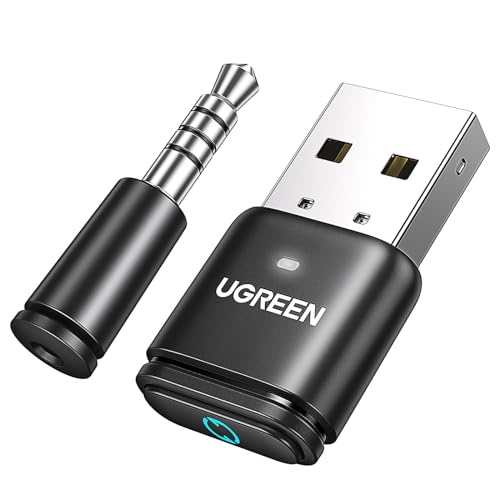
The UGREEN Bluetooth Adapter earns its place in this discussion as a straightforward mid-tier pick from an accessories maker many desk owners already know. Judge it by the job described in this article — a buyer who has weighed both sides and has a genuine gap — rather than by the boldest line on its packaging. In prose terms it sits as a sensible option for buyers whose computer has a genuine Bluetooth gap and whose accessories are the ordinary desk and living-room devices most people actually own. Check the current listing for the exact model name, confirm that the maker supports your operating system, and make sure any driver you download later comes from the maker’s own support page for this model. Position it in the open, ideally away from crowded high-speed USB ports, pair your core device first, and test it from the chair and the distance you will really use. If it handles that honest test calmly, it has done everything this category can reasonably promise.

Avantree Bluetooth Adapter
The Avantree Bluetooth Adapter earns its place in this discussion as a audio-leaning choice to consider when headphones and calls are the main job. Judge it by the job described in this article — a buyer who has weighed both sides and has a genuine gap — rather than by the boldest line on its packaging. In prose terms it sits as a sensible option for buyers whose computer has a genuine Bluetooth gap and whose accessories are the ordinary desk and living-room devices most people actually own. Check the current listing for the exact model name, confirm that the maker supports your operating system, and make sure any driver you download later comes from the maker’s own support page for this model. Position it in the open, ideally away from crowded high-speed USB ports, pair your core device first, and test it from the chair and the distance you will really use. If it handles that honest test calmly, it has done everything this category can reasonably promise.
How to Buy Smart
Because adapters are inexpensive and the market is crowded, your protection as a buyer is the returns route and the clarity of the listing, not the packaging. Buy from a listing that names the exact model, states the operating systems supported, and points to the maker’s own support page. Keep the packaging until your first-hour test is done. If the adapter will not pair with a device it should support, after placement, re-pairing and driver checks have been done calmly, returning it is a reasonable outcome rather than a personal failure — occasionally a specific adapter and a specific accessory simply do not get along. What you should not do is cycle through several unbranded dongles hoping the next one behaves differently, when the evidence points to placement, a conflicting internal radio or the accessory itself. Diagnose once, properly, and the category becomes simple.
When an adapter arrives, give it a fair, structured first hour rather than a scattered first week. Start with placement: an open port or a short extension onto the desk. Pair your single most important device first and test it thoroughly from the places you will really use it — your chair, your standing spot, the sofa. Then add devices one at a time, testing after each addition, and finish with the combination you will use together every day, such as headphones during a call while the keyboard and mouse are active. Walk the honest boundary of the room so you know where the connection starts to thin out, rather than discovering it mid-call. If something misbehaves, change one thing at a time — position first, then the pairing, then the driver — and note what fixed it. An adapter that passes that first hour will very likely serve quietly for years.
Setup and Care That Reduce the Cons
Pairing itself follows the same calm pattern on almost every setup, and learning it once removes most of the mystery. You insert the adapter, confirm that Bluetooth appears in the computer’s settings, switch Bluetooth on, then put the accessory — not the computer — into pairing mode, usually with a long press on a button until a light changes its pattern. The accessory’s name appears in the computer’s list of available devices, you select it, wait for the confirmation, and then test it properly rather than assuming success: type a sentence, play a song, take a short call, or move through a game menu. Pair one device, test it, and only then pair the next. That unglamorous sequence matters because stacking several untested pairings at once makes any later problem impossible to trace. A setup built one verified device at a time almost always stays reliable, while a setup built in a rush tends to be rebuilt from scratch within the week.
When a pairing fails, work through the boring causes before blaming the hardware. Confirm the adapter is fully inserted and recognised, with a Bluetooth section visible in settings. Put the accessory into its pairing mode properly — many failed pairings are simply a device that was never actually discoverable. Remove an old pairing entry for the same device and pair again from scratch, because stale entries cause a surprising amount of stubborn behaviour. Move the device close to the adapter for the first pairing, then test it from where you will really use it. Restarting the computer after a driver change is unfashionable advice that still works. And if one device will not behave while others pair happily, suspect that device — its battery, its firmware, its own pairing list being full — before replacing an adapter that is demonstrably working with everything else in the room.
Looking after an adapter is mostly about not abusing a very small piece of hardware. Avoid using a protruding dongle as a handle when moving a tower, and be careful with adapters left in laptop ports during transport, because a knock can damage both the adapter and the port itself. Keep the contacts clean and dry, and do not force the adapter into a port at an angle. On the software side, accept operating system updates normally, and only revisit the maker’s driver page if an update changes behaviour or you move the adapter to a different machine. If you use an extension cable to position the adapter on the desk, choose a short, sound one and keep the adapter somewhere it will not be buried under papers or pushed behind metal objects. None of this is demanding, which is part of the appeal: a well-placed adapter mostly disappears into the setup and asks for almost nothing in return.
A short, sensible word on everyday security and tidiness. Pair your devices at home rather than in a crowded public place, accept pairing requests only from devices you recognise, and remove pairings for accessories you have sold or thrown away. Keep the operating system updated, because Bluetooth fixes arrive through those updates as surely as any other kind. None of this requires special software or anxiety; Bluetooth in a home desk setup is a mature, ordinary technology. The tidiness point matters as much as the security one. A pairing list full of forgotten phones, borrowed headsets and old controllers makes troubleshooting harder, because the computer may try to reconnect to something that is not really part of your setup any more. A short list of devices you actually use, each paired cleanly and named recognisably, is the quiet foundation of a Bluetooth setup that simply works every morning.
Bottom Line
Weigh this category the way you would weigh any tool: by the job in front of you. The pros — instant capability, freedom from cables, rescue of sound machines, tiny cost — are substantial and real. The cons — no upgrade for working Bluetooth, room-scale range, gaming audio delay, support dead ends at the unbranded end — are equally real and mostly predictable. A buyer who matches a genuine gap to a supported adapter, places it in the open and tests it honestly gets almost all of the pros and very few of the cons. That is as good a deal as small hardware ever offers.
Usb Bluetooth Adapter Pros And Cons: A Deeper Look at Daily Use
A day living with a well-fitted adapter is the fairest test of the whole idea, so it is worth picturing honestly. In the morning the headphones connect as the computer wakes, and a call happens standing up, away from the desk, without any thought about the radio making it possible. Midday, a keyboard and mouse work through documents with no cable crossing the notebook that shares the desk. In the evening a controller pairs for a game from the sofa, and a speaker carries a film from across the room. Nothing in that day is dramatic, and that is precisely the point: the adapter succeeds by disappearing. The days it gets noticed are the days placement, pairing or expectations were neglected, which is why this guide spends so much of its length on those unglamorous subjects rather than on the thirty seconds of plugging the thing in.
The hybrid setup deserves a mention, because it is how many experienced owners actually live. Bluetooth handles the daily work — the calls, the music, the controller, the cable-free desk — while a wired connection stays within reach for the specific jobs where it is simply better, above all competitive gaming audio and the occasional large, impatient task that was never Bluetooth’s strength. Owning an adapter does not oblige you to use it for everything, and judging it as one tool among several, rather than as a replacement for every cable you own, is the mindset that produces satisfied owners. The dongle earns its place by being the right tool often, not by pretending to be the right tool always.
Accessory turnover is the quiet long game. Headphones are replaced, a keyboard wears out, a controller is upgraded, and through all of that churn the adapter stays, pairing with each new arrival in turn. That is another reason the maker’s support page matters more than the launch-day listing: the adapter you buy today will be asked to work with devices and operating system updates that do not exist yet, and a maker who maintains drivers gives it a future. When a new accessory arrives, pair it the same calm way as the first — one device, a proper test, then normal life — and the setup absorbs the change without drama. Bluetooth setups age well when they are administered lightly and consistently, and badly when every new gadget triggers a pile of simultaneous, untested pairings.
Shared and family computers add one more wrinkle worth planning for. Several people may pair their own headphones or controllers to the same machine, and the pairing list grows into a small crowd. That is manageable when each device is named clearly and old pairings are removed as accessories leave the house, and it becomes confusing when nobody curates the list and the computer keeps trying to reconnect to a headset that moved out with a student last year. If the machine is shared, agree on the tidy-list habit as a household rule. It takes a minute, it prevents the classic argument about whose device ‘broke’ the Bluetooth, and it keeps the adapter’s one job simple: connecting the people in the room to the accessories actually in the room.
When the Advantages Flip: Edge Cases and Trade-Offs in Daily Use
How the balance shifts over a year of ownership
The pros-and-cons ledger of a usb bluetooth adapter is not static. In the first month, novelty inflates the pros; by the sixth month, the honest picture is about reliability, running costs and whether the product has earned a permanent place in your routine. Wear parts, consumable availability and the maker’s support responsiveness all matter more at month ten than at day ten. When you read owner feedback, weight the long-term reports accordingly: a complaint about a part that failed after a year tells you more than a first-week rave about unboxing.
The compromise candidate
Many buyers end up choosing neither the strongest nor the cheapest usb bluetooth adapter but the one whose weaknesses fall where they personally care least. That is a rational strategy, not a failure of research. List the cons of your final two candidates side by side and ask which set you would rather live with daily in a desk or bench that doubles as a workspace for two completely different hobbies. The product whose drawbacks sit in your blind spots will feel like the better product for years, even if a comparison table scores the other one higher on paper.
The advantage that depends on your habits
The headline advantage of a usb bluetooth adapter is real, but it is not automatic: it only pays out if your habits match it. Used the way it was designed, in a desk or bench that doubles as a workspace for two completely different hobbies, the strengths described earlier compound quietly — less friction, fewer workarounds, a smoother routine. Used against its grain, the same design choices become the source of the complaints in the cons column. Before deciding, be honest about which user you are on an ordinary tired weekday, not the organised version of yourself you plan to become next month.
Where the drawbacks bite hardest
The disadvantages of a usb bluetooth adapter are not evenly distributed across owners. They concentrate in specific situations: tight spaces, shared rooms, heavy daily loads, or workflows that change direction mid-task. If your routine involves any of those, the cons deserve double weight in your decision, because you will meet them weekly rather than rarely. Conversely, an owner whose setup avoids those situations entirely may never encounter the most-criticised weakness at all, which is why verdicts on the same usb bluetooth adapter can sound like descriptions of two different products.
The maintenance trade-off nobody advertises
Almost every usb bluetooth adapter trades purchase-day simplicity for a small ongoing maintenance obligation: cleaning, recalibrating, replacing a wear part, updating firmware or simply keeping accessories together. The trade is usually worth it, but it is not free, and it scales with how hard you use the product. In a desk or bench that doubles as a workspace for two completely different hobbies, skipped maintenance shows up first as small annoyances — a control that feels off, a result that drifts, a noise that was not there before — long before it causes a real failure. Budget the minutes, not just the money.
Frequently Asked Questions
What is the single biggest pro and the single biggest con?
The biggest pro is capability: a computer with no Bluetooth gains headphones, speakers, controllers and cable-free desk gear in one inexpensive step. The biggest con is irrelevance: a computer whose Bluetooth already works gains nothing from a second radio, and may pair less predictably with two radios active. Almost every buying decision in this category reduces to asking which of those two sentences describes your machine, and being honest about the answer before any money moves.
Will a USB Bluetooth adapter upgrade a PC that already has Bluetooth?
No, and this is the most important expectation to set before buying. An adapter adds Bluetooth to a computer that lacks it, or replaces a radio that has failed. If your built-in Bluetooth already pairs reliably with your headphones, keyboard and controller, a second radio brings no improvement and can confuse the operating system. Spend the money only when there is a genuine gap: no Bluetooth at all, a broken internal radio, or an older machine that cannot connect to a device you need.
Why does my connection stutter even though I am close to the PC?
Proximity on its own does not guarantee a clean signal. An adapter hidden behind a metal tower case, under a desk or beside busy high-speed USB ports starts at a disadvantage, and walls or your own body between the adapter and the device make things worse. Move the adapter into the open, ideally on a short USB extension cable resting on the desk, then re-test. For many stuttering setups that simple change of position fixes more than replacing the adapter ever would.
Do I need to install a driver?
On a current Windows PC, most mainstream adapters work as soon as they are plugged in, because the operating system supplies a standard driver and the Bluetooth controls appear in settings. Older operating systems and some specific models still need the maker’s driver, which you should always download from the support page for the exact model rather than from a generic driver site. If your computer has a built-in radio as well, disable that internal radio so the system is not running two Bluetooth connections at once.
Is Bluetooth audio good enough for gaming?
For most games, films and calls it is perfectly enjoyable, but fast competitive gaming exposes Bluetooth audio delay in a way other uses do not. The sound can trail the action slightly, and no adapter removes that entirely because the delay is part of how Bluetooth audio works. A clean, close connection helps at the margins. If split-second audio cues decide your matches, keep a wired headset as your benchmark and treat the adapter as a convenience for everything else rather than a latency cure.
Can an adapter give Bluetooth to my printer or speaker?
No. An adapter gives Bluetooth to the computer it is plugged into, and a connection needs a radio at both ends. A printer or speaker that was never built with Bluetooth cannot gain it from a dongle in your PC. Before buying, confirm that the accessory itself offers Bluetooth pairing with a computer, rather than only working through a phone app. That one check, made before ordering, prevents the most common disappointed purchase in this whole category.
Related Guides
a Bluetooth keyboard that suits a Windows desk
Bluetooth keyboards made for PC use