Disclosure: As an Amazon Associate, ilcastellomenu.com earns from qualifying purchases. Prices and availability change; check Amazon for the latest.
Where to buy
Check the latest price, availability and delivery on Amazon. Orders are placed on Amazon.
- HP DeskJet 2855e – Check on Amazon
- Brother MFC-J1010DW – Check on Amazon
- Canon PIXMA TS All-in-One Printer – prose-only pick, positioned in the Canon PIXMA TS series (prose-only) tier; check the current listing before buying
- Epson Expression Home All-in-One Printer – prose-only pick, positioned in the Epson Expression Home series (prose-only) tier; check the current listing before buying
- Pantum P2502W – Check on Amazon
- Canon Ivy 2 Mini Photo Printer – Check on Amazon
Read the full guide ↓
Finding the best computer printers under 100 is less about chasing the longest feature list and more about matching a machine or supply to the way you actually print. Honesty first: very few full-size printers reliably stay inside a $100 band once you check live listings, because entry prices move with promotions. Treat this guide as the entry tier itself – the closest honest options, with a clear note on which picks may sit just above the band on any given day. This guide compares six picks side by side – what each one does well, where each one honestly falls short, and which buyer each badge belongs to – so the best computer printers under 100 decision takes minutes instead of an evening of open tabs.
Every pick below was chosen against the same criteria: real-world output quality for its job, the true cost of keeping it fed with ink, toner or paper, how reliably it connects to the devices in a normal home, and whether its paper path suits the media your lens demands. Where a tier or claim could not be supported honestly – a budget band with no genuine full-size option, a photo claim a laser cannot back up – the guide says so in plain language rather than dressing the pick up. Prices move constantly, so linked picks simply say check on Amazon; nothing here prints a static price that would be wrong by next week.
It also helps to know what this guide is not. It is not a ranking of every model on sale, and it does not pretend that one machine can be best at everything: the printer that produces a beautiful photograph is rarely the one that chews through a hundred worksheets cheapest, and the supply that wins for drafts may be wrong for the document that represents you. Instead, each pick carries a badge that names its job, and the reviews explain the trade-offs in the open. Read the badge that matches your situation first, then check its trade-offs honestly against your habits – that two-minute exercise prevents nearly every disappointing purchase in this category.
In this guide
Quick Picks
| Badge | Pick | Why it stands out | Link |
|---|---|---|---|
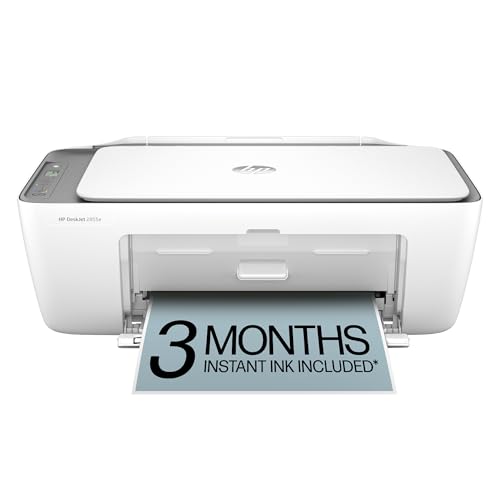
| Closest to the Budget | HP DeskJet 2855e | Stands out for light home users who print now and then from a phone or laptop | Check on Amazon |
| Best Under-Budget Stretch | Brother MFC-J1010DW | Stands out for students and home users who want duplex in a small box | Check on Amazon |
| Best Photo Quality at Entry Tier | Canon PIXMA TS All-in-One Printer | Stands out for families wanting Canon photo quality cheaply | Prose-only |
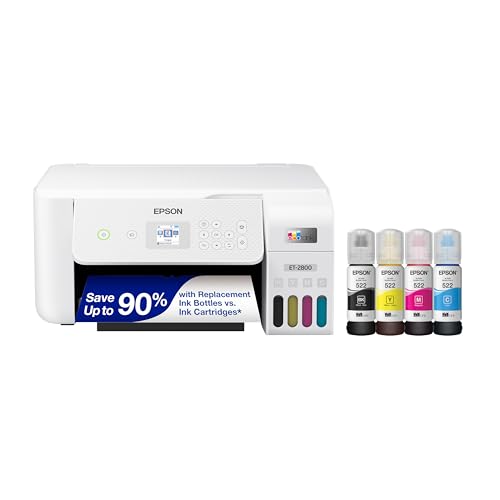
| Best Compact Entry Model | Epson Expression Home All-in-One Printer | Stands out for occasional home printers on a tight budget | Prose-only |
| Best Mono Laser Near the Tier | Pantum P2502W | Stands out for students and home users who print text and nothing else | Check on Amazon |
| Best Pocket Printer Near the Tier | Canon Ivy 2 Mini Photo Printer | Stands out for phone photographers who want instant sticky-back prints | Check on Amazon |
Short on time? The badge winners above are the whole story in one table: start with Best Overall, detour to the badge that matches your situation, and use the full reviews below to confirm the trade-offs you are accepting. Readers comparing options for a neighbouring need may also find Best Wireless Printers For Home Use useful background. If none of the badges sounds like you, that is useful information too: it usually means your real priority is a single factor – ink cost, photo quality, speed or size – and the buying guide further down is organised around exactly those factors, so jump there and let it narrow the table to the two rows worth your attention.
How These Picks Were Chosen
Six picks survived a longer longlist for best computer printers under 100. The selection weighed the criteria below, in roughly this order, and cut anything that failed one of them outright – however impressive its headline specifications looked.
- Print speed and first-page-out time for real home document patterns: Print speed and first-page-out time for real home document patterns
- Running cost: Running cost: toner yield, duplex savings and how the machine behaves between jobs
- Paper handling: Paper handling: tray capacity, duplex and whether thick media feeds straight
- Footprint, noise and heat in a living space, not just an office: Footprint, noise and heat in a living space, not just an office
- Connectivity for the whole household: Connectivity for the whole household: Wi-Fi stability, AirPrint and mobile apps
What was rejected matters as much as what survived. Models with a reputation for hostile setup software, ink systems whose replacement costs dwarf the machine within a year, and paper paths that jam on the very media this lens is about were all cut. So were products whose listings could not be verified against a maker or a major retailer source: in a guide built on trust, an unverifiable pick is worse than a shorter list. The result is deliberately mixed – different ink systems, sizes and duty levels – because the right answer for best computer printers under 100 genuinely depends on which kind of printer you are.
One more rule shaped this list: honesty about fit. A pick can be excellent and still wrong for a lens, and where that tension exists the review says so and points you to the pick that fits better. That is also why some well-known names appear as prose-only comparisons: they help you judge the field even when they are not the linked recommendation.
The longlist itself came from the models households actually buy and keep in this category – the ones with established ink or supply ecosystems, parts and support that will still exist in three years, and a track record long enough for patterns to show. Brand-new launches with no ownership history were treated cautiously, however exciting their launch claims, and ageing models were kept only where their ecosystems remain fully supported. That conservatism is deliberate: a printer is infrastructure for a home, not a gadget, and infrastructure should be boring in all the ways that matter.
The 6 Best Best Computer Printers Under 100
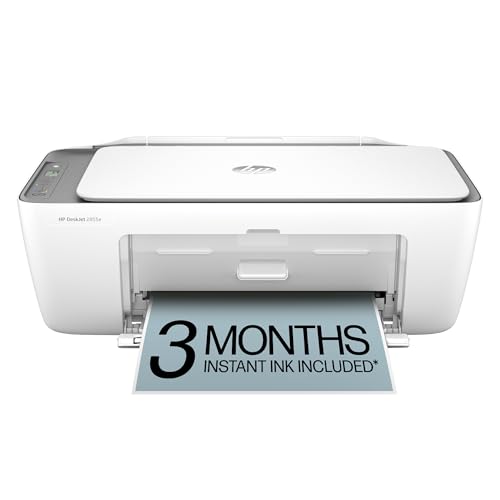
HP DeskJet 2855e (Closest to the Budget)
The HP DeskJet 2855e is built for light home users who print now and then from a phone or laptop. As a entry wireless inkjet all-in-one, it approaches tight-budget printing from a clear direction: get the essentials right, keep the workflow simple, and avoid the gimmicks that look exciting in a listing and irrelevant by the second week. In the context of best computer printers under 100, that focus is exactly why it earns its place here rather than a louder rival with a longer feature list and weaker fundamentals.
Day to day, what you notice is how little friction surrounds the HP DeskJet 2855e. Setup follows the modern pattern – unbox, add ink or toner, join Wi-Fi, print from the device already in your hand – and the machine then settles into the background, which is the highest compliment a home or small-office printer can earn. For tight-budget printing, consistency matters more than novelty: the tenth print should look like the first, the app should find the printer every time, and refills should be a two-minute errand rather than a research project. Owners who print in regular, moderate batches tend to be happiest with machines in this class, because nothing about the experience depends on perfect conditions.
There are limits, and they are listed plainly in the trade-offs above rather than hidden. If your workload grows far beyond what this class of machine was designed for – very long daily runs, specialist media every day, or a whole team sharing one unit – treat the HP DeskJet 2855e as the strong baseline it is and look at the higher-duty picks in this guide. Within its intended lane, though, it is a recommendation made without hesitation: proven type, honest running costs, and output that does its job without drama.
Picture the ordinary week this machine has to survive. There is the urgent job – the form, label or page needed in the next ten minutes – and there is the planned job, the batch you sit down to produce properly. The HP DeskJet 2855e handles that rhythm well because nothing about it is temperamental: it wakes, connects and prints without a negotiation. Where rivals in this class often stumble is the second month, when the starter ink is gone, the app has updated twice and the paper tray holds a different stock from last week. A well-chosen entry wireless inkjet all-in-one shrugs at all of that. Keep its firmware current, feed it the media it was designed for, and it returns the favour with the one quality that matters in tight-budget printing: predictability. You stop thinking about the printer, and the work it was bought for simply gets done.
Strengths
- Simple setup path aimed at non-technical home users
- Print, scan and copy cover occasional home paperwork
- Wireless and mobile printing fit phone-first households
Trade-offs
- Cartridge ink is costly if you print every day
- No automatic two-sided printing at this tier
- Speed suits occasional jobs, not class sets or long reports
- Print technology: inkjet
- Functions: print, scan, copy
- Connectivity: wireless, mobile compatible
- Role: easy home printing
Best for: light home users who print now and then from a phone or laptop / Not suited for: buyers whose needs sit far outside that lane – very heavy daily volume, specialist production work, or a job this product type was never designed to do

Brother MFC-J1010DW (Best Under-Budget Stretch)
The Brother MFC-J1010DW is built for students and home users who want duplex in a small box. As a compact inkjet all-in-one with duplex, it approaches tight-budget printing from a clear direction: get the essentials right, keep the workflow simple, and avoid the gimmicks that look exciting in a listing and irrelevant by the second week. In the context of best computer printers under 100, that focus is exactly why it earns its place here rather than a louder rival with a longer feature list and weaker fundamentals.
Day to day, what you notice is how little friction surrounds the Brother MFC-J1010DW. Setup follows the modern pattern – unbox, add ink or toner, join Wi-Fi, print from the device already in your hand – and the machine then settles into the background, which is the highest compliment a home or small-office printer can earn. For tight-budget printing, consistency matters more than novelty: the tenth print should look like the first, the app should find the printer every time, and refills should be a two-minute errand rather than a research project. Owners who print in regular, moderate batches tend to be happiest with machines in this class, because nothing about the experience depends on perfect conditions.
There are limits, and they are listed plainly in the trade-offs above rather than hidden. If your workload grows far beyond what this class of machine was designed for – very long daily runs, specialist media every day, or a whole team sharing one unit – treat the Brother MFC-J1010DW as the strong baseline it is and look at the higher-duty picks in this guide. Within its intended lane, though, it is a recommendation made without hesitation: proven type, honest running costs, and output that does its job without drama.
Picture the ordinary week this machine has to survive. There is the urgent job – the form, label or page needed in the next ten minutes – and there is the planned job, the batch you sit down to produce properly. The Brother MFC-J1010DW handles that rhythm well because nothing about it is temperamental: it wakes, connects and prints without a negotiation. Where rivals in this class often stumble is the second month, when the starter ink is gone, the app has updated twice and the paper tray holds a different stock from last week. A well-chosen compact inkjet all-in-one with duplex shrugs at all of that. Keep its firmware current, feed it the media it was designed for, and it returns the favour with the one quality that matters in tight-budget printing: predictability. You stop thinking about the printer, and the work it was bought for simply gets done.
Strengths
- Automatic two-sided printing saves paper on homework and handouts
- Compact body with a proper colour display is easy to live with
- Mobile and cloud printing suit phones, Chromebooks and laptops alike
Trade-offs
- Cartridge running costs beat tank models at high volume
- No fax in this compact configuration
- Photo output is fine for school projects, not for framed prints
- Print technology: inkjet
- Functions: print, scan, copy
- Two-sided: automatic duplex printing
- Display: 1.8 in colour display
- Connectivity: wireless, mobile and cloud print
Best for: students and home users who want duplex in a small box / Not suited for: buyers whose needs sit far outside that lane – very heavy daily volume, specialist production work, or a job this product type was never designed to do
Canon PIXMA TS All-in-One Printer (Best Photo Quality at Entry Tier)
The Canon PIXMA TS All-in-One Printer is built for families wanting Canon photo quality cheaply. As a Canon PIXMA TS series (prose-only), it approaches tight-budget printing from a clear direction: get the essentials right, keep the workflow simple, and avoid the gimmicks that look exciting in a listing and irrelevant by the second week. In the context of best computer printers under 100, that focus is exactly why it earns its place here rather than a louder rival with a longer feature list and weaker fundamentals.
Day to day, what you notice is how little friction surrounds the Canon PIXMA TS All-in-One Printer. Setup follows the modern pattern – unbox, add ink or toner, join Wi-Fi, print from the device already in your hand – and the machine then settles into the background, which is the highest compliment a home or small-office printer can earn. For tight-budget printing, consistency matters more than novelty: the tenth print should look like the first, the app should find the printer every time, and refills should be a two-minute errand rather than a research project. Owners who print in regular, moderate batches tend to be happiest with machines in this class, because nothing about the experience depends on perfect conditions.
There are limits, and they are listed plainly in the trade-offs above rather than hidden. If your workload grows far beyond what this class of machine was designed for – very long daily runs, specialist media every day, or a whole team sharing one unit – treat the Canon PIXMA TS All-in-One Printer as the strong baseline it is and look at the higher-duty picks in this guide. Within its intended lane, though, it is a recommendation made without hesitation: proven type, honest running costs, and output that does its job without drama.
Picture the ordinary week this machine has to survive. There is the urgent job – the form, label or page needed in the next ten minutes – and there is the planned job, the batch you sit down to produce properly. The Canon PIXMA TS All-in-One Printer handles that rhythm well because nothing about it is temperamental: it wakes, connects and prints without a negotiation. Where rivals in this class often stumble is the second month, when the starter ink is gone, the app has updated twice and the paper tray holds a different stock from last week. A well-chosen Canon PIXMA TS series (prose-only) shrugs at all of that. Keep its firmware current, feed it the media it was designed for, and it returns the favour with the one quality that matters in tight-budget printing: predictability. You stop thinking about the printer, and the work it was bought for simply gets done.
Strengths
- Strong photo output for the tier
- Compact, tidy designs
- Good first printer for families
Trade-offs
- Two-cartridge models waste colour ink
- Speed is modest
- Check whether the model has duplex before buying
- Type: cartridge inkjet all-in-one
- Use: home photos and documents
- Note: prose-only in this guide
Best for: families wanting Canon photo quality cheaply / Not suited for: buyers whose needs sit far outside that lane – very heavy daily volume, specialist production work, or a job this product type was never designed to do
Epson Expression Home All-in-One Printer (Best Compact Entry Model)
The Epson Expression Home All-in-One Printer is built for occasional home printers on a tight budget. As a Epson Expression Home series (prose-only), it approaches tight-budget printing from a clear direction: get the essentials right, keep the workflow simple, and avoid the gimmicks that look exciting in a listing and irrelevant by the second week. In the context of best computer printers under 100, that focus is exactly why it earns its place here rather than a louder rival with a longer feature list and weaker fundamentals.
Day to day, what you notice is how little friction surrounds the Epson Expression Home All-in-One Printer. Setup follows the modern pattern – unbox, add ink or toner, join Wi-Fi, print from the device already in your hand – and the machine then settles into the background, which is the highest compliment a home or small-office printer can earn. For tight-budget printing, consistency matters more than novelty: the tenth print should look like the first, the app should find the printer every time, and refills should be a two-minute errand rather than a research project. Owners who print in regular, moderate batches tend to be happiest with machines in this class, because nothing about the experience depends on perfect conditions.
There are limits, and they are listed plainly in the trade-offs above rather than hidden. If your workload grows far beyond what this class of machine was designed for – very long daily runs, specialist media every day, or a whole team sharing one unit – treat the Epson Expression Home All-in-One Printer as the strong baseline it is and look at the higher-duty picks in this guide. Within its intended lane, though, it is a recommendation made without hesitation: proven type, honest running costs, and output that does its job without drama.
Picture the ordinary week this machine has to survive. There is the urgent job – the form, label or page needed in the next ten minutes – and there is the planned job, the batch you sit down to produce properly. The Epson Expression Home All-in-One Printer handles that rhythm well because nothing about it is temperamental: it wakes, connects and prints without a negotiation. Where rivals in this class often stumble is the second month, when the starter ink is gone, the app has updated twice and the paper tray holds a different stock from last week. A well-chosen Epson Expression Home series (prose-only) shrugs at all of that. Keep its firmware current, feed it the media it was designed for, and it returns the favour with the one quality that matters in tight-budget printing: predictability. You stop thinking about the printer, and the work it was bought for simply gets done.
Strengths
- Compact bodies for small homes
- Low starting tier for occasional use
- Good Chromebook and phone support on recent models
Trade-offs
- Cartridges are small on entry models
- Not built for class sets or office volume
- Check the ink series before buying spares
- Type: cartridge inkjet all-in-one
- Use: light home printing
- Note: prose-only in this guide
Best for: occasional home printers on a tight budget / Not suited for: buyers whose needs sit far outside that lane – very heavy daily volume, specialist production work, or a job this product type was never designed to do

Pantum P2502W (Best Mono Laser Near the Tier)
The Pantum P2502W is built for students and home users who print text and nothing else. As a compact monochrome laser printer, it approaches tight-budget printing from a clear direction: get the essentials right, keep the workflow simple, and avoid the gimmicks that look exciting in a listing and irrelevant by the second week. In the context of best computer printers under 100, that focus is exactly why it earns its place here rather than a louder rival with a longer feature list and weaker fundamentals.
Day to day, what you notice is how little friction surrounds the Pantum P2502W. Setup follows the modern pattern – unbox, add ink or toner, join Wi-Fi, print from the device already in your hand – and the machine then settles into the background, which is the highest compliment a home or small-office printer can earn. For tight-budget printing, consistency matters more than novelty: the tenth print should look like the first, the app should find the printer every time, and refills should be a two-minute errand rather than a research project. Owners who print in regular, moderate batches tend to be happiest with machines in this class, because nothing about the experience depends on perfect conditions.
There are limits, and they are listed plainly in the trade-offs above rather than hidden. If your workload grows far beyond what this class of machine was designed for – very long daily runs, specialist media every day, or a whole team sharing one unit – treat the Pantum P2502W as the strong baseline it is and look at the higher-duty picks in this guide. Within its intended lane, though, it is a recommendation made without hesitation: proven type, honest running costs, and output that does its job without drama.
Picture the ordinary week this machine has to survive. There is the urgent job – the form, label or page needed in the next ten minutes – and there is the planned job, the batch you sit down to produce properly. The Pantum P2502W handles that rhythm well because nothing about it is temperamental: it wakes, connects and prints without a negotiation. Where rivals in this class often stumble is the second month, when the starter ink is gone, the app has updated twice and the paper tray holds a different stock from last week. A well-chosen compact monochrome laser printer shrugs at all of that. Keep its firmware current, feed it the media it was designed for, and it returns the favour with the one quality that matters in tight-budget printing: predictability. You stop thinking about the printer, and the work it was bought for simply gets done.
Strengths
- Laser text is crisp and waterproof compared with inkjet output
- Small body suits a dorm desk or a student’s bedroom corner
- Toner does not dry out between term-time printing gaps
Trade-offs
- Black and white only, so no colour handouts or photos
- Print-only: no built-in scan or copy
- Basic paper handling suits short runs best
- Print technology: monochrome laser
- Functions: print only, black and white
- Connectivity: wireless and mobile printing
- Design: small footprint
Best for: students and home users who print text and nothing else / Not suited for: buyers whose needs sit far outside that lane – very heavy daily volume, specialist production work, or a job this product type was never designed to do

Canon Ivy 2 Mini Photo Printer (Best Pocket Printer Near the Tier)
The Canon Ivy 2 Mini Photo Printer is built for phone photographers who want instant sticky-back prints. As a pocket mini photo printer, it approaches tight-budget printing from a clear direction: get the essentials right, keep the workflow simple, and avoid the gimmicks that look exciting in a listing and irrelevant by the second week. In the context of best computer printers under 100, that focus is exactly why it earns its place here rather than a louder rival with a longer feature list and weaker fundamentals.
Day to day, what you notice is how little friction surrounds the Canon Ivy 2 Mini Photo Printer. Setup follows the modern pattern – unbox, add ink or toner, join Wi-Fi, print from the device already in your hand – and the machine then settles into the background, which is the highest compliment a home or small-office printer can earn. For tight-budget printing, consistency matters more than novelty: the tenth print should look like the first, the app should find the printer every time, and refills should be a two-minute errand rather than a research project. Owners who print in regular, moderate batches tend to be happiest with machines in this class, because nothing about the experience depends on perfect conditions.
There are limits, and they are listed plainly in the trade-offs above rather than hidden. If your workload grows far beyond what this class of machine was designed for – very long daily runs, specialist media every day, or a whole team sharing one unit – treat the Canon Ivy 2 Mini Photo Printer as the strong baseline it is and look at the higher-duty picks in this guide. Within its intended lane, though, it is a recommendation made without hesitation: proven type, honest running costs, and output that does its job without drama.
Picture the ordinary week this machine has to survive. There is the urgent job – the form, label or page needed in the next ten minutes – and there is the planned job, the batch you sit down to produce properly. The Canon Ivy 2 Mini Photo Printer handles that rhythm well because nothing about it is temperamental: it wakes, connects and prints without a negotiation. Where rivals in this class often stumble is the second month, when the starter ink is gone, the app has updated twice and the paper tray holds a different stock from last week. A well-chosen pocket mini photo printer shrugs at all of that. Keep its firmware current, feed it the media it was designed for, and it returns the favour with the one quality that matters in tight-budget printing: predictability. You stop thinking about the printer, and the work it was bought for simply gets done.
Strengths
- Pocket size goes in a bag, drawer or dorm room without a fight
- Sticky-back prints are made for journals, lockers and scrapbooks
- Prints straight from the phone gallery where the photos already live
Trade-offs
- Mini prints only: no documents, no full-size photos
- Per-print paper cost is high next to a home inkjet
- Colour is fun and casual, not colour-accurate
- Print technology: mini photo printer (ZINK-style sticky-back prints)
- Functions: print from phone
- Compatibility: iOS and Android devices
- Output: sticky-back mini prints
Best for: phone photographers who want instant sticky-back prints / Not suited for: buyers whose needs sit far outside that lane – very heavy daily volume, specialist production work, or a job this product type was never designed to do
Comparison Table
| Pick | Type | Badge | Price |
|---|---|---|---|
| HP DeskJet 2855e | entry wireless inkjet all-in-one | Closest to the Budget | Check price on Amazon |
| Brother MFC-J1010DW | compact inkjet all-in-one with duplex | Best Under-Budget Stretch | Check price on Amazon |
| Canon PIXMA TS All-in-One Printer | Canon PIXMA TS series (prose-only) | Best Photo Quality at Entry Tier | Check price on Amazon |
| Epson Expression Home All-in-One Printer | Epson Expression Home series (prose-only) | Best Compact Entry Model | Check price on Amazon |
| Pantum P2502W | compact monochrome laser printer | Best Mono Laser Near the Tier | Check price on Amazon |
| Canon Ivy 2 Mini Photo Printer | pocket mini photo printer | Best Pocket Printer Near the Tier | Check price on Amazon |
Read the table as a map, not a ranking: the types differ because the buyers differ. A household printing weekly colour will live inside a different row from a student printing essays, and both are right. Cross-check your shortlist against the buying guide that follows, especially the ink-system and paper-handling sections, before you commit. If two rows still look identical after that, choose by the refill you would rather buy twice a year – the bottle, cartridge or toner you will actually live with – because that recurring errand, repeated over the machine’s life, shapes your satisfaction far more than any single feature separating the finalists.
How to Choose the Right Computer Printers Under 100
Ink system: the decision that outlives the printer
The machine is a one-time purchase; the ink system is a subscription you choose once and pay for years. Cartridges are simple and suit light, irregular printing. Refillable tanks cost more on day one and dramatically less per page, which rewards weekly printing. Before you fall for any model in this guide, picture your real monthly page count and choose the system that matches it – that single decision matters more than any feature list.
Speed, honestly interpreted
Makers quote best-case pages per minute on simple text. Real jobs include the first page waking the machine, colour coverage and Wi-Fi transfer. For short home jobs, first-page speed is what you feel; for long runs, the sustained rate takes over. The picks above list maker speed figures only where the manufacturer states them, and the right question is always which kind of job dominates your week.
Paper handling and media limits
Every printer has a comfort zone of paper weights and sizes. Standard copy paper is universal; cardstock, envelopes, labels and photo paper each stress the feed path differently. If your lens involves a special medium, feed one sheet first, select the matching media type so the machine adjusts ink and speed, and never force a stack of thick stock through a path designed for thin paper.
Connectivity that survives real homes
Dual-band Wi-Fi, a stable app and AirPrint or equivalent phone printing decide whether a printer feels effortless or haunted. Place the printer where the signal is strong, keep firmware updated, and prefer models whose apps handle scanning and ink checks without a computer. A printer the whole household can use from their own devices is a printer that actually gets used.
Running costs beyond ink
Paper, replacement cartridges or bottles, and the occasional maintenance item form the true budget. Duplex printing quietly halves paper spend. Keeping the machine dust-free and printing something every week or two keeps inkjet heads healthy, which avoids the cleaning cycles that waste the ink you were trying to save.
Finally, match the guide to your budget as framing, not as a trap. The keyword’s tier – where it names one – describes the neighbourhood to shop in, not a promise that every worthwhile option sits inside it every day. A slightly higher tier with dramatically cheaper ink usually wins over twelve months; a lower tier with expensive cartridges is the classic false economy this whole program of guides exists to warn against. Readers weighing a related route can compare Best Printers For Designers and Best Laser Printers For Home Use before deciding.
How Do You Set Up and Look After Your Printer?
Good printing is mostly good habits, established on day one. Follow these steps in order and most of the problems readers write about never happen.
- Unbox on a table, remove every tape, tab and insert – including inside the trays and scanner lid
- Install ink or toner, load plain paper, and power on to run the first-time priming and alignment
- Join the printer to your Wi-Fi network and install the maker’s app on the phone you print from most
- Update firmware, then print a test page and a photo or document typical of your real work
- Set your defaults now: duplex on or off, quality level and paper type, so future jobs need no fiddling
- Note the exact ink or toner code in your phone; future-you, standing in a shop, will be grateful
Once set up, build the small maintenance rhythm your machine type needs: inkjets want a little colour printing every week or two to keep nozzles wet; lasers want dust kept out and paper kept dry; supply-based projects want a test piece before every batch. None of this takes long, and all of it is cheaper than the repair or replacement it prevents.
Troubleshooting quick list
- Problem: printer shows as offline → fix: confirm it is on the same Wi-Fi network as your device, restart both, and move the printer closer to the router if walls intervene
- Problem: streaks or missing colours → fix: run the nozzle check or print-quality diagnostic from the maintenance menu, clean only if the pattern shows gaps, and use fresh paper
- Problem: paper jams repeatedly → fix: remove the stack, fan it, align the guides snugly, and check for a torn corner left inside the path
- Problem: prints look washed out → fix: match the paper-type setting to the actual paper and raise quality one level for colour work
If a problem survives those fixes, note exactly what changed before it started – new paper, new ink, a router change, an update – because that change is the diagnosis nine times out of ten. Work through the related background in How To Set Up A Printer if the machine is new to you.
Cleaning and care deserve the same calm approach. Dust the paper path and the output area monthly with a dry cloth, keep liquids and food away from the machine (a spilled drink is a common and unglamorous cause of death), and run the built-in maintenance utilities only when the diagnostic patterns actually call for them – every unnecessary cleaning cycle spends the ink or wears the parts you were trying to protect. When you replace a consumable, keep the old one’s code until the new one has printed successfully; it is the fastest way to prove whether a fault came with the new cartridge, bottle or paper, or was already waiting in the machine.
Common Mistakes
Choosing by shelf price alone
The cheapest machine often carries the most expensive ink. Compare the ink system and replacement costs before the discount seduces you.
Skipping the test print
Five minutes with a test page after setup catches alignment, colour and Wi-Fi issues while returning the machine is still painless.
Loading paper carelessly
Overfilled trays, mixed paper types and guides left loose cause most home jams. Load one type, align it, and set the guides.
Letting an inkjet sleep for months
Idle ink dries. A small colour print every couple of weeks keeps heads healthy and costs less than repeated cleaning cycles.
Ignoring firmware and app updates
Updates fix the exact Wi-Fi drops and phone-printing bugs people blame on hardware. Install them when the app offers.
Final Recommendation
For most readers searching best computer printers under 100, start here: Closest to the Budget: HP DeskJet 2855e; Best Under-Budget Stretch: Brother MFC-J1010DW; Best Photo Quality at Entry Tier: Canon PIXMA TS All-in-One Printer. Those three cover the majority of real situations behind this search; the remaining picks exist for the specific situations their badges name. Choose by your ink system and your paper first, your feature list second, and the badge that matches your actual week – not the week you imagine – will steer you right. When you are ready, the remaining comparisons in Best Printers For Photos And Documents and Best Small Printers For Home round out the picture.
One last piece of advice before you order: buy the pick that fits the printing you did last month, not the printing you might do someday. Almost every regret in this category comes from buying for an imaginary workload – the photo studio that never materialised, the home business that stayed a hobby, the class sets that the school ended up printing itself. The honest pick, matched to real habits and fed with the right ink and paper, will still be serving you years from now, and that – not a launch-day discount – is what value actually looks like in a printer.
Frequently Asked Questions
How long should a home printer last?
With basic care – dust kept out, firmware updated, ink kept flowing – a home printer typically serves for years of family use. The ink system and your volume decide whether it stays economical that long.
Do I need a printer with a scanner?
If you ever sign forms, archive schoolwork or copy documents, a scan-and-copy all-in-one earns its slightly larger footprint quickly. Print-only models are smaller and cheaper when you truly never scan.
Can I print from my phone and Chromebook as well as a PC?
The wireless picks in this guide support phone printing through their apps or built-in services, and modern models handle Chromebooks without classic drivers. Check the listing for your exact devices if your setup is unusual.
What is the cheapest way to run a home printer?
Match the ink system to your volume, enable duplex for long documents, print drafts in draft mode, and buy the correct replacement ink the first time – wrong cartridges are the most expensive ink of all.
Should I buy an extended warranty?
For a heavily used home-office machine it can be rational; for a light-use home printer, careful setup and keeping the receipt usually suffice. Decide by how painful a mid-year replacement would be.