Where to buy
These are the three picks from our external hard drive black friday deals shortlist we would check first. Check the latest price, availability and delivery on Amazon. Orders are placed on Amazon, and prices during Black Friday Week can change by the hour, so the figure on the live listing is the one that counts. We may earn a commission from qualifying purchases.
- Best overall: WD 6TB My Passport Portable External Hard Drive
- Best budget portable: WD 4TB Elements Portable External Hard Drive
- Best desktop value: WD 14TB Elements Desktop External Hard Drive
Disclosure: As an Amazon Associate, ilcastellomenu.com earns from qualifying purchases. Links to Amazon on this page are affiliate links; they cost you nothing extra. Listing details such as price and availability change often — during this event they can change several times a day — so check the current Amazon listing before you buy.
External Hard Drive Black Friday Deals: The Storage Worth Your Money
Amazon Black Friday Week runs from November 19 to November 30, 2026. Black Friday itself is November 27, and Cyber Monday closes the event on November 30. External hard drives are the least glamorous category in the sale and, for anyone whose photos, videos and game libraries exist in exactly one place, the most important. A hard drive is how capacity gets cheap: per terabyte, nothing else comes close, which is why the sensible backup strategy for most households still begins with a box like one of these on a shelf. These external hard drive black friday deals are the six we would actually spend money on: a 6TB portable with proper backup software and password protection, a 4TB portable at the budget end, a 6TB desktop drive with data recovery services included, a 14TB desktop drive that anchors a home archive, a 20TB maximum-capacity flagship, and a no-frills 4TB alternative from Toshiba.
Every price in this guide was checked against Amazon’s own catalogue data on November 20, 2026, and every price is written as a dated sighting: “seen at $249.99 on November 20, 2026” means exactly that, no more. Drive prices move hourly during Black Friday Week. A model can be one figure at breakfast and another by dinner, and a lightning deal can expire while it sits in your cart. Where the catalogue also returned a list price for the same drive, we show the percentage that pair of numbers represents; where no list price came back — the case for two picks here — we print the sighting with no percentage at all, because an invented discount is worse than none. Always check the live price on the listing before you buy.
One decision matters more than any single discount here, and it is the shape decision: portable or desktop. Portable drives are 2.5-inch units powered by the USB cable itself — they live in laptop bags and desk drawers, and they top out around 6TB. Desktop drives are 3.5-inch units with their own power supply — they live on a shelf beside the computer, and they climb to capacities portable drives cannot reach. The second decision is what the drive is for, because it decides how many you need: a drive used for backup should be one of at least two copies of anything that matters, while a drive used as overflow storage for a game library or a media collection is the only copy of things that are, at worst, re-downloadable. Every review below states the capacity, the format and the connection plainly, and the buying sections return to the two-copy rule more than once — it is the closest thing storage has to a law.
It also helps to read a hard drive deal the way an archivist would. The headline number is capacity, and capacity is honest — a 6TB drive holds 6TB. What the box cannot tell you is that hard drives are mechanical devices with spinning platters, that they dislike drops and heat, and that any single drive, from any maker, can fail. That is not a reason to avoid them; it is the reason the strategy around them matters more than the brand on the lid, and why this guide spends as much time on how to use these drives as on which one to buy.
In this guide
Quick Picks
Short on time? These are the six deals, the buyer each one suits, and the price we verified on November 20, 2026. Every price is a dated sighting — check the live price before you buy.
| Best for | Deal | Spotted price | Link |
|---|---|---|---|
| Best overall | WD 6TB My Passport Portable External Hard Drive | seen at $249.99 on November 20, 2026 (list $329.99) | Check on Amazon |
| Best budget portable | WD 4TB Elements Portable External Hard Drive | seen at $184.95 on November 20, 2026 (list $239.99) | Check on Amazon |
| Best desktop starter | Seagate Expansion 6TB Desktop External Hard Drive | seen at $229.99 on November 20, 2026 | Check on Amazon |
| Best desktop value | WD 14TB Elements Desktop External Hard Drive | seen at $449.99 on November 20, 2026 (list $674.99) | Check on Amazon |
| Best maximum capacity | WD 20TB Elements Desktop External Hard Drive | seen at $549.99 on November 20, 2026 (list $879.99) | Check on Amazon |
| Best no-frills alternative | Toshiba Canvio Basics 4TB Portable External Hard Drive | seen at $211.80 on November 20, 2026 | Check on Amazon |
How These Deals Were Chosen
We verified every pick in this guide the slow way: by searching Amazon’s own catalogue data for the exact brand and model, matching the returned listing title word for word against the drive we intended to recommend, and recording the price and list price the catalogue returned on November 20, 2026. That process sounds basic, but it eliminates the two failure modes that fill most Black Friday roundups — links that land on a different capacity than the headline promises, and “deals” whose prices were copied from a roundup of a roundup until nobody knows which year they belong to. Drive families are especially treacherous here: a single product line spans 1TB to 24TB under near-identical names, portable and desktop formats share branding, and a “for Mac” variant can sit beside the standard one at a different price. If a search did not return a listing we could match with confidence, the drive did not get a link, however good it looked.
A deal then had to clear three further bars. First, the product had to be a current, genuine external hard drive from its maker’s present range — no marketplace lookalikes trading on a famous name, no bare internal drives in third-party enclosures presented as the real thing, and no previous-capacity clearance stock dressed as a headline deal. Second, the facts stated in the review — capacity, format, interface, included software or services — had to come from the verified listing, not from a sibling model’s page. Third, the price had to be a price worth printing, judged per terabyte as well as in absolute terms: a token few dollars off a drive that sits at that figure all year is not a deal, and where the catalogue returned a list price, we favoured listings sitting meaningfully below it.
We also weighted what the purchase buys in practice. A percentage off a portable drive is worth less to a household archiving a decade of video than the same percentage off a 14TB desktop unit, which is why cost per terabyte is discussed in the desktop reviews and why the big drives earn their slots. Where a figure in a review comes from the maker’s own listing — capacities, interfaces, included services — it is presented as the maker’s figure, not as an independent test result. And where two near-identical models sit a few dollars apart, we chose the one whose specification we could verify completely rather than the one with the bigger headline.
The Six Deals, In Detail
1. WD 6TB My Passport Portable External Hard Drive — Best Overall
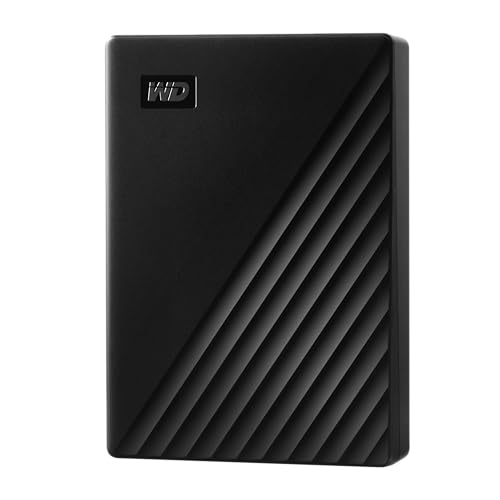
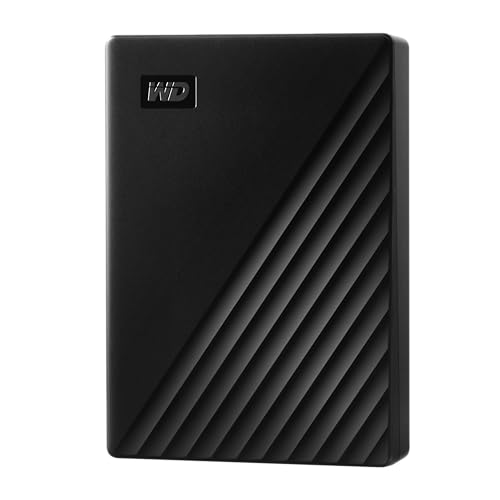
Badge: Best Overall. If one external drive defines the sensible buy, it is this one: the largest capacity the portable format offers, from the line that defined it, with the software layer that turns a drive into a backup system. The My Passport 6TB per the verified listing ships with backup software that includes defence against ransomware, plus password protection with hardware encryption — the two features that separate a backup drive from a mere container. It connects over USB 3.1/USB 3.0, draws its power from the cable, and slips into a laptop bag or a drawer, which matters more than it sounds: a backup drive that lives where you work is a backup that actually happens. Six terabytes holds a family photo library, years of phone video, a full system image or several, and a games overflow shelf besides — in the format you can carry to another building, which the two-copy rule quietly approves of.
Spec snapshot: 6TB portable (2.5-inch format class), bus-powered; USB 3.1/USB 3.0 compatible; backup software with ransomware defence included; password protection; model WDBR9S0060BBK-WESN.
Who it suits: Laptop owners who need a real backup rather than a hope, families consolidating photos and video from several machines, and anyone who wants the most portable capacity money can buy this week.
Deal details: Seen at $249.99 on November 20, 2026, against a $329.99 list price returned by the same catalogue check — 24% below list on the verified figures. Portable capacity at the top of the range rarely discounts deeply, and 6TB is the ceiling of the format: there is no bigger portable drive to wait for. Check the live price before you buy, and note the colour variants of this model can price differently — the sighting above is for the black version in the verified listing.
Strengths
- 6TB — the portable format’s maximum — in a cable-powered, bag-sized drive.
- Backup software with ransomware defence and password protection included.
- Bus-powered: no power brick, so it backs up anywhere the laptop goes.
Trade-offs
- Costs more per terabyte than the desktop picks — portability is the premium.
- Portable drives are the most droppable drives; treat it as luggage, not furniture.
- Backup software is Windows-centred; Mac users will typically pair it with Time Machine instead.
Verdict — Best for: portable backup done properly, at the format’s maximum capacity. Not suited for: stationary archives, where the desktop picks give far more terabytes per dollar. Check on Amazon · See the My Passport 6TB listing · View full specs and the live price
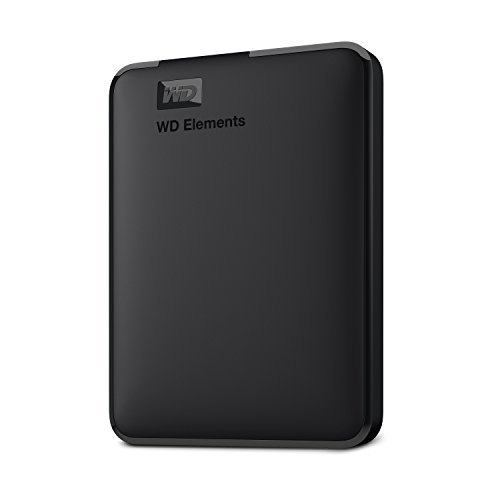
2. WD 4TB Elements Portable External Hard Drive — Best Budget Portable
Badge: Best Budget Portable. Every guide needs the pick that proves the floor has risen, and this is it: 4TB of genuine WD portable storage at the lowest verified price in the guide. The Elements line is the My Passport’s simpler sibling — per the verified listing, a plug-and-play drive for Windows, USB 3.2 Gen 1/USB 3.0, ready for PC and Mac (reformatting may be needed for full Mac use, as with most drives shipped for Windows), with no bundled software suite and no encryption layer. What you give up against pick one is the software and 2TB; what you keep is the same essential proposition — a bus-powered drive that works the moment it is plugged in, from the maker whose portable lines have defined the category. For a first backup drive, a student drive, or a console overflow drive, simple is a feature.
Spec snapshot: 4TB portable, bus-powered; USB 3.2 Gen 1/USB 3.0; plug-and-play for Windows, PC and Mac ready; no bundled backup software; model WDBU6Y0040BBK-WESN.
Who it suits: First-time backup buyers, students, console owners who need room for a game library, and anyone who wants a second copy drive cheaply enough that buying it is an easy decision.
Deal details: Seen at $184.95 on November 20, 2026, against a $239.99 list price returned by the same catalogue check — 23% below list on the verified figures. Judged per terabyte, this sighting undercuts pick one, which is the eternal Elements bargain: the plain drive costs less because it does less, and for a great many buyers “less” is exactly the requirement. Check the live price before you buy; budget drives are among the most volatile listings of the event, and the gap between this and pick one is worth re-checking on the day.
Strengths
- The guide’s lowest price for 4TB of portable, bus-powered storage.
- Plug-and-play simplicity — nothing to install, nothing to subscribe to.
- Better cost per terabyte than the flagship portable at pick one.
Trade-offs
- No bundled backup software or password protection — your OS tools do the work.
- 4TB fills faster than 6TB if this is the household’s only backup drive.
- Ships formatted for Windows; Mac-first households may reformat on arrival.
Verdict — Best for: simple, cheap, capacious portable storage. Not suited for: buyers who want set-and-forget backup software and encryption in the box. Check on Amazon · See the Elements 4TB listing · View budget specs and the live price
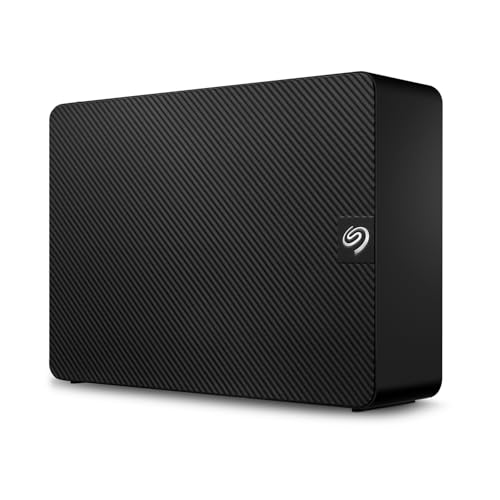
3. Seagate Expansion 6TB Desktop External Hard Drive — Best Desktop Starter
Badge: Best Desktop Starter. The step from portable to desktop drives is a step in philosophy: the drive stops travelling and starts anchoring. The Expansion 6TB is the entry point to that world per the verified listing — a desktop-format drive on USB 3.0 with its own power supply, and one inclusion that sets Seagate’s line apart: Rescue Data Recovery Services, the maker’s programme that attempts laboratory recovery if the drive ever fails mechanically. No service makes failure painless, and a backup strategy should never rest on one drive — but for a desktop archive that will hold a household’s consolidated history, having a recovery path bundled is a genuinely differentiating extra, and it is the reason this drive, rather than a like-for-like rival, holds the desktop-starter slot. Six terabytes at a desktop drive’s price per terabyte is also the natural first step for anyone whose portable drive filled up and whose data has stopped moving around.
Spec snapshot: 6TB desktop format, mains-powered; USB 3.0; Rescue Data Recovery Services included; model STKP6000400.
Who it suits: Households consolidating scattered drives and cloud exports into one home archive, media collectors outgrowing portable drives, and first-time desktop-drive buyers who value the recovery safety net.
Deal details: Seen at $229.99 on November 20, 2026. The catalogue returned no list price for this listing, so we print no percentage — the sighting stands on its own arithmetic: desktop-format 6TB with recovery services included, at a cost per terabyte the portable picks cannot approach. Check the live price before you buy, and remember a desktop drive needs a shelf and a socket: budget the corner of the desk, not just the money.
Strengths
- Rescue Data Recovery Services included — a recovery path if the worst happens.
- Desktop cost per terabyte, far below any portable drive’s.
- 6TB is the right first-archive size for most households’ consolidated history.
Trade-offs
- Mains-powered and shelf-bound: it anchors a desk, it does not travel.
- No list price returned, so no verified percentage — judge it per terabyte.
- A single archive drive is still a single copy; pair it with a portable or cloud copy of what matters.
Verdict — Best for: a first home archive with a recovery safety net. Not suited for: laptop bags, travel, or anyone whose storage must move. Check on Amazon · See the Expansion 6TB listing · View desktop specs and the live price

4. WD 14TB Elements Desktop External Hard Drive — Best Desktop Value
Badge: Best Desktop Value. This is where the arithmetic of hard drives becomes almost absurd. Fourteen terabytes — enough for a serious media library, a photographer’s working archive, years of 4K video projects, or a household’s entire digital history with room for the next decade — at a verified price whose cost per terabyte undercuts every portable pick in this guide several times over. The Elements Desktop is WD’s plain-proposition line per the verified listing: a USB 3.0 desktop drive built for plug-and-play storage, mains-powered, with no software suite to learn and no features to configure. That plainness is the point at this capacity. A drive like this is infrastructure: it sits beside the computer or the NAS, absorbs everything, and is judged on capacity, price per terabyte and the maker’s name — three tests this sighting passes emphatically.
Spec snapshot: 14TB desktop format, mains-powered; USB 3.0; plug-and-play storage; model WDBWLG0140HBK-NESN family (Elements Desktop).
Who it suits: Media collectors, photographers and video creators with growing archives, households consolidating many small drives into one, and NAS owners who want a capacious backup target for the NAS itself.
Deal details: Seen at $449.99 on November 20, 2026, against a $674.99 list price returned by the same catalogue check — 33% below list on the verified figures. Big desktop drives discount in absolute dollars like nothing else in storage, and a cut of this depth on a 14TB unit makes its cost per terabyte the best value relationship in this guide. Check the live price before you buy, and plan its home: a ventilated shelf, a surge-protected socket, and a cable run that does not cross a walkway.
Strengths
- 14TB at the guide’s best cost per terabyte — the archive problem, solved cheaply.
- 33% below list: a genuinely deep cut on a current-capacity model.
- Plain plug-and-play design: no software, no configuration, no subscription.
Trade-offs
- Shelf-bound and mains-powered, like all desktop drives.
- One drive is one copy — an archive this size deserves a backup plan of its own.
- No bundled recovery services; Seagate’s pick three is the alternative if that matters.
Verdict — Best for: home archives and media libraries at the best per-terabyte price here. Not suited for: portable use, or as the sole copy of irreplaceable data. Check on Amazon · See the Elements Desktop 14TB listing · View archive specs and the live price

5. WD 20TB Elements Desktop External Hard Drive — Best Maximum Capacity
Badge: Best Maximum Capacity. At the top of the range, the question stops being “is it big enough?” and becomes “is there anything it cannot swallow?” Twenty terabytes is the current ceiling of the single-drive desktop format per the verified listing — a USB 3.0 Elements Desktop with plug-and-play simplicity at a scale that changes what a home archive can be: entire Blu-ray and game libraries, a videographer’s project history, a family’s every photo and video since the invention of the smartphone, with the next several years already accommodated. Buyers at this tier are usually consolidating — retiring a shelf of small drives into one — and the consolidation itself is a reliability upgrade, provided the rule from this guide’s introduction is honoured: what matters gets a second copy somewhere, because a 20TB single point of failure is a very large point.
Spec snapshot: 20TB desktop format, mains-powered; USB 3.0; plug-and-play storage; model WDBWLG0200HBK-NESN.
Who it suits: Serious collectors and creators consolidating many drives into one, households building a once-a-decade archive, and anyone whose honest answer to “how much storage?” keeps being “more”.
Deal details: Seen at $549.99 on November 20, 2026, against an $879.99 list price returned by the same catalogue check — 38% below list on the verified figures, the deepest percentage in this guide. Maximum-capacity drives usually carry a per-terabyte premium for standing at the ceiling; a cut of this depth erases it, pricing the 20TB at a per-terabyte figure competitive with the 14TB below it. Check the live price before you buy — and if you are consolidating, keep the old drives as the second copy until the new archive has run faultlessly for a while.
Strengths
- 20TB: the single-drive ceiling, ending capacity planning for years.
- 38% below list — the deepest verified cut in the guide.
- Consolidates a shelf of ageing small drives into one current unit.
Trade-offs
- The guide’s highest price, however good the per-terabyte maths.
- A single 20TB copy concentrates risk; budget a second copy of what matters.
- Most households will never fill it — pick four is the proportionate buy for them.
Verdict — Best for: maximum-capacity archives and drive consolidation. Not suited for: ordinary backup needs, where pick four or one deliver the same safety for less. Check on Amazon · See the Elements Desktop 20TB listing · View maximum-capacity specs and the live price
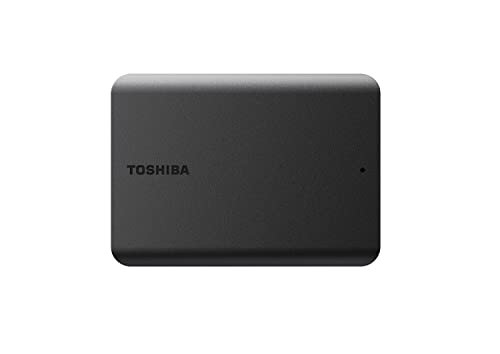
6. Toshiba Canvio Basics 4TB Portable External Hard Drive — Best No-Frills Alternative
Badge: Best No-Frills Alternative. There is a respectable school of storage buying that wants exactly one thing: a reputable maker’s plain drive, with nothing bundled, nothing subscribed and nothing to configure. The Canvio Basics is that school’s textbook. Per the verified listing it is a 4TB portable drive on USB 3.0 in Toshiba’s matte black enclosure — plug in, drag files, unplug — from the third of the industry’s big makers, which matters in a category where no-name alternatives flood the listings at suspicious prices. Against pick two, the comparison is honest: the WD Elements 4TB was sighted cheaper with a list price to judge by, so the Canvio’s case rests on preference for Toshiba, on stock — popular WD capacities sell through during the event — and on the value of a second reputable option when the first pick’s price moves. A guide that pretends only one plain 4TB drive exists would serve you worse.
Spec snapshot: 4TB portable, bus-powered; USB 3.0; plug-and-play, no bundled software; model HDTB540XK3CA.
Who it suits: Buyers who prefer Toshiba, households adding a second-copy drive from a different maker than their first (a genuinely sound backup practice), and anyone whose first-choice drive sold out mid-event.
Deal details: Seen at $211.80 on November 20, 2026. The catalogue returned no list price for this listing, so we print no percentage; the sighting is a plain, current price for a reputable 4TB portable, included as the guide’s alternative rather than its headline bargain. Check the live price before you buy — if it drifts below pick two’s figure during the week, as event pricing often shuffles, the recommendation order between them reverses with it.
Strengths
- A big-three maker’s plain 4TB portable: no frills, no risk brands.
- Different maker from picks one and two — ideal second-copy diversity.
- Simple matte enclosure, bus-powered, works the moment it is plugged in.
Trade-offs
- Sighted above pick two’s price on the day, with no list price to judge a cut by.
- No bundled backup software or encryption — OS tools do the work.
- USB 3.0 only, where pick two’s listing cites the newer USB naming.
Verdict — Best for: a reputable no-frills 4TB portable and second-copy diversity. Not suited for: bargain-first buyers while pick two’s sighting holds. Check on Amazon · See the Canvio Basics 4TB listing · View plain-drive specs and the live price
Deals We Left Out, and Why
A guide is defined as much by what it excludes. Our catalogue checks surfaced plenty of other drive listings on November 20, 2026, and several tempting ones did not make the cut. The no-name portable drives at implausible prices are the clearest example: an unknown brand offering terabytes far below the big makers’ cost per terabyte is not a bargain but a warning, because the classic fraud in this category is a small drive — or a weighted box — reporting a large capacity it does not have, discovered only when your files pass the real limit and silently corrupt. Every pick here comes from WD, Seagate or Toshiba for exactly that reason. Colour and “for Mac” variants at premium prices were passed over where the standard version offered the same hardware for less; a drive’s colour does not change its terabytes. External SSDs were excluded by scope rather than quality: they are faster, tougher and several times the price per terabyte, the right tool for working drives and the wrong one for archives. Finally, several listings carried prices identical to the figures those same drives wear outside the event. A Black Friday banner on an everyday price is marketing, not a deal, and this guide exists to tell the two apart.
Comparison Table
| Pick | Capacity / format | Connection | Seen Nov 20, 2026 | Watch out for |
|---|---|---|---|---|
| WD My Passport 6TB | 6TB portable | USB 3.1/USB 3.0 | $249.99 (list $329.99) | Portable premium per TB |
| WD Elements 4TB | 4TB portable | USB 3.2 Gen 1/USB 3.0 | $184.95 (list $239.99) | No backup software included |
| Seagate Expansion 6TB | 6TB desktop | USB 3.0 | $229.99 | Mains-powered; no list price returned |
| WD Elements Desktop 14TB | 14TB desktop | USB 3.0 | $449.99 (list $674.99) | One drive is one copy |
| WD Elements Desktop 20TB | 20TB desktop | USB 3.0 | $549.99 (list $879.99) | Highest absolute price |
| Toshiba Canvio Basics 4TB | 4TB portable | USB 3.0 | $211.80 | No list price returned |
Portable or Desktop, HDD or SSD: A Plain-English Primer
Three distinctions decide how a drive lives, and they are worth one clear pass. Portable versus desktop is about the platter size inside: portable drives use 2.5-inch mechanisms, draw power from the USB cable, and top out around 6TB; desktop drives use 3.5-inch mechanisms, need their own power supply, and climb past 20TB at far lower cost per terabyte. Hard drive versus solid state is about physics: an HDD stores data on spinning magnetic platters — cheap per terabyte, mechanical, and unhappy about being dropped while running; an SSD has no moving parts, shrugs off knocks, and costs several times more per terabyte, which is why this guide covers HDDs for capacity and backup while SSDs earn their place as working drives. And backup versus storage is about copies: a backup is a second copy of something that also lives elsewhere, while storage is the only copy of whatever sits on it. The famous rule — three copies, two different media, one off-site — sounds like overkill until the day it is the only sentence standing between a household and losing a decade of photographs.
The practical rules follow. Buy portable for anything that travels or backs up a laptop; buy desktop for anything stationary and large. Buy capacity for the archive you will have in three years, not the one you have today — drives fill, and migrating a full archive is a chore you only want to do on your own schedule. And whatever you buy, decide before it arrives which of your files will exist in two places, and make the new drive one of them.
How to Choose the Right External Hard Drive Deal
Start with the job, honestly. Name what the drive will hold. A laptop backup: pick one if you want the software and the maximum portable capacity, pick two if simple and cheap wins. A home archive: pick three to start, pick four when the library is serious. Overflow for games and media that can be re-downloaded: whichever pick fits the shelf and the budget, because the two-copy rule relaxes for replaceable data.
Decide the shape by where it will live. A drive that travels — between home and office, house and relative’s house, desk and drawer — must be portable and bus-powered. A drive that anchors a desk or a media shelf should be desktop format, where the terabytes are cheap. Buying desktop capacity for a travelling job, or portable prices for a stationary one, are the two classic errors in this category.
Count the copies. If this purchase is your backup, what is it backing up — and if this drive and the computer fail in the same week (fire, theft and spills take both), what survives? For most households the honest target is: computer, plus an external drive, plus either a second drive kept elsewhere or a cloud tier for the irreplaceable subset — photos and documents, not the re-downloadable bulk.
Three example shopping lists. For a laptop household: pick one as the backup, scheduled weekly, stored in a different room. For a media family: pick four as the archive, pick two as its portable second copy for the photo library. For a collector consolidating: pick five as the new home, old drives retained as the cold second copy. For a student: pick two or six, and a cloud folder for the coursework that actually matters.
How to Check a Hard Drive Deal Is Real — and Set It Up Right
Compare the sale price with the drive’s own history. The most useful habit in this event is checking what a drive sold for before the banners went up. Free price-history trackers keep years of Amazon data for most listings; thirty seconds there tells you whether a discount is a genuine event low or a list price nobody has paid since spring. Judge drives per terabyte as well as in total: capacity steps within a family often price unevenly during the event, and the model one step up is sometimes the real bargain. Every pick in this guide was verified against live catalogue data on November 20, 2026 — do the same check on anything else you add to the cart.
Read the model and capacity letter by letter. Drive families span a dozen capacities under near-identical names, and portable and desktop lines share branding. The model code and capacity are the product: check them, then check the format and interface on the listing, before you pay — especially on marketplace listings during big events, and doubly so for any listing whose brand you do not recognise.
Check the price at checkout, not just on the page. Prices move hourly during Black Friday Week, and the price in the cart is the price you pay. If a figure jumps between the deal page and checkout, back out and re-check the listing — either the deal ended, or a marketplace seller’s offer has replaced the one you chose. Confirm the seller and the exact capacity are still what you selected.
Prove the drive before you trust it. When it arrives, plug it in and confirm the reported capacity matches the box; copy a large test batch of files and open several from the middle of the batch; then set up the actual job — scheduled backup software, Time Machine, or a calendar reminder for manual copies — on day one, not “soon”. Register the drive with the maker if a recovery service is included, and note the warranty end date somewhere you will find it. A backup that has never been tested is a hope, and the first hour is when hopes become systems.
Backup Habits That Make Any of These Drives Worth Buying
The drive is the easy half of backup; the habit is the other half, and it is free. Automate what can be automated: the software bundled with pick one, or your operating system’s built-in tools, should run on a schedule without asking you — weekly for most households, daily for anyone whose work lives on the machine. Keep the backup drive disconnected between runs if ransomware is your worry, or keep a second, older copy that only connects monthly; malware cannot encrypt what it cannot see. Store one copy somewhere that is not the same building as the computer for the files that cannot be replaced — a relative’s house, an office drawer, a cloud folder — because the disasters that take a computer and its desk-mate backup together are precisely the disasters backups exist for.
Finally, rehearse the restore once. Pick a folder, delete a copy of it somewhere safe, and bring it back from the backup. Five minutes of rehearsal converts a backup from a ritual you perform into a system you trust, and it exposes the two classic failures — the backup that was never actually running, and the password nobody wrote down — while they are still free to fix. Combined with a drive from this guide, that is the whole discipline: buy capacity, automate copies, separate locations, test restores.
Common Mistakes
Treating one drive as a backup strategy. A single external drive holding the only copy of your photos is not a backup; it is a relocation of the risk. Two copies, in two places, is the minimum for anything irreplaceable.
Buying no-name capacity. Terabyte claims far below the big makers’ prices are the category’s classic fraud. WD, Seagate and Toshiba picks fill this guide for a reason.
Paying portable prices for a stationary job. If the drive will never leave the desk, desktop format gives two to four times the capacity for the same money. Match the format to the life it will actually live.
Never testing the restore. Backups fail silently — unplugged drives, full drives, software that stopped running months ago. A five-minute restore rehearsal is the only way to know yours works.
Waiting for Black Friday itself. The event runs November 19–30, and the early days carry full stock at full discount. Waiting for November 27 out of tradition mostly buys sold-out listings and marketplace markups. If the price is at its low today, today is the day.
Final Recommendation
If you buy one external drive this Black Friday Week, make it the WD My Passport 6TB, seen at $249.99 on November 20, 2026: 24% below its verified list price, with the backup software, password protection and maximum portable capacity that suit more households than any other pick. Strict budgets should take the WD Elements 4TB at a seen $184.95, and Toshiba loyalists the Canvio Basics 4TB at a seen $211.80. Home archives should start with the Seagate Expansion 6TB at a seen $229.99 and its included recovery services, grow into the WD Elements Desktop 14TB at a seen $449.99 — the best cost per terabyte here — and top out at the 20TB at a seen $549.99, 38% below list, if consolidation is the project. If the data you are protecting starts on fast internal storage, our roundup of Nvme Ssd Black Friday Deals Nvmessdblackfridaydeals covers the other half of the storage picture — and check the live price before you buy, because during this event the listing is the only price that is real.
Frequently Asked Questions
When do external hard drive deals run on Amazon in 2026?
Amazon Black Friday Week runs November 19–30, 2026, with Black Friday on November 27 and Cyber Monday on November 30. Drive deals appear throughout the window rather than all at once, and popular capacities can sell through early — the prices in this guide were verified on November 20, 2026.
Are the prices in this guide guaranteed?
No. Every price here is a dated sighting verified against Amazon catalogue data on November 20, 2026, and prices move hourly during the event. Treat a sighting as evidence of what the deal has cost, then check the live price on the listing before you buy.
Portable or desktop — which should I buy?
Portable if the drive travels or backs up a laptop: bus-powered, pocketable, up to 6TB. Desktop if it lives on a shelf: mains-powered, far cheaper per terabyte, and the only route past 6TB. Picks one, two and six are portable; picks three, four and five are desktop.
Is one external drive enough for backup?
It is a good start and an incomplete finish. A backup drive plus the original gives you two copies in one building. For irreplaceable files — family photos, documents, creative work — add a third element kept elsewhere: a second drive stored off-site, or a cloud tier for that subset. Re-downloadable data, like installed games, needs no such protection.
Hard drive or external SSD?
For capacity and backup, a hard drive: nothing matches its cost per terabyte, and backup speed is rarely the bottleneck. For a working drive you edit or play from daily — especially one that travels and gets knocked around — an external SSD’s speed and toughness earn their premium. Many households end up with both, doing different jobs.
Should I wait for Cyber Monday instead?
Cyber Monday (November 30, 2026) usually repeats some Black Friday pricing and adds a few fresh offers, but stock is the risk: capacities that sell out during Black Friday Week do not reliably come back for Monday. If a price matches the level you were waiting for now, buying now is the safer play.
Related Guides
- Nvme Ssd Black Friday Deals Nvmessdblackfridaydeals
- Black Friday Monitor Deals 2026 Blackfridaymonitordeals2026
- Best Black Friday Printer Deals 2026 Bestblackfridayprinterdeals2026
- Mechanical Keyboard Black Friday Deals Mechanicalkeyboardblackfridaydeals
- Laser Printer Black Friday Deals Laserprinterblackfridaydeals