Where to buy
These are the three picks from our nvme ssd black friday deals shortlist we would check first. Check the latest price, availability and delivery on Amazon. Orders are placed on Amazon, and prices during Black Friday Week can change by the hour, so the figure on the live listing is the one that counts. We may earn a commission from qualifying purchases.
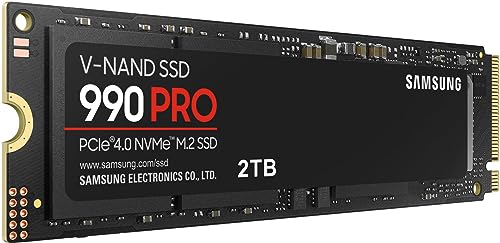
- Best overall: Samsung 990 PRO 2TB PCIe 4.0 NVMe SSD
- Best Gen5 speed: Samsung 9100 PRO 2TB PCIe 5.0 NVMe SSD
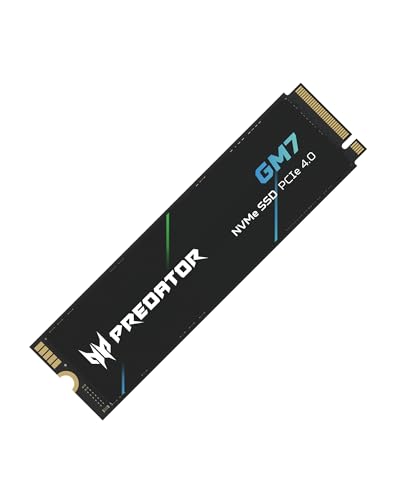
- Best value 2TB: Acer Predator GM7 2TB PCIe Gen4 NVMe SSD
Disclosure: As an Amazon Associate, ilcastellomenu.com earns from qualifying purchases. Links to Amazon on this page are affiliate links; they cost you nothing extra. Listing details such as price and availability change often — during this event they can change several times a day — so check the current Amazon listing before you buy.
NVMe SSD Black Friday Deals: The Drives Worth Your Money
Amazon Black Friday Week runs from November 19 to November 30, 2026. Black Friday itself is November 27, and Cyber Monday closes the event on November 30. Storage is the quiet overachiever of the sale: no other upgrade changes how a PC or a PlayStation 5 feels, every single day, as completely as replacing a slow or full drive — and no other category’s prices swing as hard when the banners go up. These nvme ssd black friday deals are the six we would actually spend money on: the Gen4 flagship most systems should buy, a Gen5 drive whose verified price has fallen below its own Gen4 sibling, a value 2TB drive with flagship-class read speeds, an efficient HMB drive built for laptops, a 4TB flagship for people who are done deleting games, and a 1TB budget pick that still reads at over seven gigabytes per second.
Every price in this guide was checked against Amazon’s own catalogue data on November 20, 2026, and every price is written as a dated sighting: “seen at $389.99 on November 20, 2026” means exactly that, no more. SSD prices move hourly during Black Friday Week — NAND pricing is volatile at the best of times, and this is not the best of times. A drive can be one figure at breakfast and another by dinner, and a lightning deal can expire while it sits in your cart. Where the catalogue also returned a list price for the same drive, we show the percentage that pair of numbers represents; where no list price came back, we print no percentage at all, because an invented discount is worse than none. Always check the live price on the listing before you buy.
One decision matters more than any single discount here, and it is the generation decision, because it is dictated by your motherboard, not by your wallet. A PCIe 5.0 drive like pick two only reaches its headline speed in a Gen5 M.2 slot; in a Gen4 slot it runs at Gen4 speeds, and in a PlayStation 5 — a Gen4 machine — the same is true. A Gen4 flagship like pick one is already fast enough that games, Windows and creative apps cannot tell it apart from anything faster in daily use; sequential read figures beyond seven gigabytes per second mostly show up in benchmarks and in copying very large files. The second decision is capacity, and it is the one buyers most often get wrong in the other direction: games now routinely exceed 100 GB, so a 1TB drive fills faster than its price saving suggests, which is why four of the six picks here are 2TB or larger. Every review below states the interface, the maker’s sequential read figure and the form factor plainly, because those three facts decide whether a drive fits your machine at all.
It also helps to read an SSD deal the way a storage engineer would. The headline number is a sequential read speed measured under ideal conditions with large files; real-world feel comes from random performance, sustained write behaviour after the cache fills, and whether the drive carries its own DRAM or borrows system memory through HMB. None of that makes the picks here bad — it makes them specific. Each review names the design honestly, so a creator copying 200 GB of video knows what they are buying, and a gamer who never will can save the money with confidence.
In this guide
Quick Picks
Short on time? These are the six deals, the buyer each one suits, and the price we verified on November 20, 2026. Every price is a dated sighting — check the live price before you buy.
| Best for | Deal | Spotted price | Link |
|---|---|---|---|
| Best overall | Samsung 990 PRO 2TB PCIe 4.0 NVMe SSD | seen at $389.99 on November 20, 2026 (list $639.99) | Check on Amazon |
| Best Gen5 speed | Samsung 9100 PRO 2TB PCIe 5.0 NVMe SSD | seen at $349.99 on November 20, 2026 (list $679.97) | Check on Amazon |
| Best value 2TB | Acer Predator GM7 2TB PCIe Gen4 NVMe SSD | seen at $293.99 on November 20, 2026 (list $345.99) | Check on Amazon |
| Best for laptops | Samsung 990 EVO Plus 2TB PCIe Gen4 NVMe SSD | seen at $362 on November 20, 2026 (list $579.99) | Check on Amazon |
| Best capacity | Samsung 990 PRO 4TB PCIe 4.0 NVMe SSD | seen at $699.99 on November 20, 2026 (list $1,099.99) | Check on Amazon |
| Best budget | Acer Predator GM7 1TB PCIe Gen4 NVMe SSD | seen at $161.49 on November 20, 2026 (list $189.99) | Check on Amazon |
How These Deals Were Chosen
We verified every pick in this guide the slow way: by searching Amazon’s own catalogue data for the exact brand and model, matching the returned listing title word for word against the drive we intended to recommend, and recording the price and list price the catalogue returned on November 20, 2026. That process sounds basic, but it eliminates the two failure modes that fill most Black Friday roundups — links that land on a different capacity or a heatsink variant than the headline promises, and “deals” whose prices were copied from a roundup of a roundup until nobody knows which year they belong to. SSD listings are especially treacherous here: a single product family spans 500 GB to 8 TB, with and without heatsinks, and marketplace sellers price the same drive at wildly different figures, some of them above the manufacturer’s own store. Where a well-known drive’s listings came back with inflated, no-list-price figures from third-party sellers, we left that drive out rather than print a price we could not stand behind. If a search did not return a listing we could match with confidence, the drive did not get a link, however good it looked.
A deal then had to clear three further bars. First, the product had to be a current, genuine NVMe drive from its maker’s present range — no marketplace lookalikes trading on a famous name, no SATA drives in M.2 clothing, and no previous-generation stock being cleared under a Black Friday banner without that being obvious. Second, the specification had to be honest at the price: the interface generation, form factor and the maker’s sequential figures stated in the review had to come from the verified listing. Third, the price had to be a price worth printing. A token few dollars off a drive that sits at that figure all year is not a deal, so we favoured listings where the verified price sat meaningfully below the list price returned alongside it — in four of the six cases here, by more than a third.
We also weighted what the discount buys in practice. A percentage off a 1TB drive is worth less to a gamer whose library already exceeds that than the same percentage off 2TB, which is why capacity features in every review and why the 4TB pick earns its slot. Where a figure in a review comes from the maker’s own specifications — sequential read speeds above all — it is presented as the maker’s figure (“up to”), not as an independent test result. And where two near-identical models sit a few dollars apart, we chose the one whose specification we could verify completely rather than the one with the bigger headline.
The Six Deals, In Detail

1. Samsung 990 PRO 2TB PCIe 4.0 NVMe SSD — Best Overall
Badge: Best Overall. If one drive defines the sensible high-end upgrade, it is this one: the 990 PRO is Samsung’s Gen4 flagship, an M.2 2280 drive rated by the maker at up to 7,450 MB/s sequential read — effectively the ceiling of what a PCIe 4.0 x4 slot can carry — in the 2TB capacity that has become the sweet spot for a games-plus-everything system drive. It suits desktops, laptops with a full-size slot, and the PlayStation 5, whose expansion bay asks for a Gen4 drive of exactly this class (add a heatsink, or choose the heatsink variant, for console use, since the PS5 requires one). Samsung’s own controller and NAND, a proper DRAM-equipped flagship design, and the company’s Magician software for firmware updates and health monitoring complete a package with no asterisks. It is the drive against which the rest of this guide is measured, which is what the best-overall slot is for.
Spec snapshot: 2TB, M.2 2280; PCIe 4.0 x4 NVMe; up to 7,450 MB/s sequential read (maker’s figure); flagship DRAM-equipped design; PS5-compatible class (heatsink required for PS5).
Who it suits: Gamers and general users who want the one purchase that ends the storage upgrade cycle for years — especially anyone replacing a SATA SSD or a small early NVMe drive who wants the full Gen4 experience in a single step.
Deal details: Seen at $389.99 on November 20, 2026, against a $639.99 list price returned by the same catalogue check — 39% below list on the verified figures. One honest complication: pick two, Samsung’s own Gen5 drive, was sighted the same day for less. If your motherboard has a Gen5 slot, read that review first. If it does not — and most systems in service today do not — this remains the fastest drive your slot can fully use, and its price per terabyte at this sighting is the strongest the 990 PRO line has shown in this event. Check the live price before you buy.
Strengths
- Gen4-ceiling speed: up to 7,450 MB/s reads saturate a PCIe 4.0 slot.
- Flagship design with Samsung controller, NAND and Magician software support.
- 2TB is the capacity sweet spot — a full games library plus room to breathe.
Trade-offs
- Gen5 owners should compare pick two, sighted cheaper on the same day.
- Bare drive: PS5 users must add a heatsink (or buy the heatsink variant instead).
- Premium pricing against the value picks if your use is games alone.
Verdict — Best for: Gen4 desktops, laptops and PS5 owners wanting the definitive drive. Not suited for: Gen5-slot owners, who should start at pick two. Check on Amazon · See the 990 PRO 2TB listing · View full specs and the live price

2. Samsung 9100 PRO 2TB PCIe 5.0 NVMe SSD — Best Gen5 Speed
Badge: Best Gen5 Speed. The argument for Gen5 has always been simple to state and hard to justify: double the interface bandwidth, at flagship prices, for gains most software cannot yet use. This sighting breaks the second half of that sentence. The 9100 PRO is Samsung’s PCIe 5.0 x4 flagship, rated by the maker at up to 14,700 MB/s sequential read — a figure that requires a Gen5 M.2 slot, which current Intel and AMD platforms provide — and on November 20, 2026 it was verified at a price below the Gen4 pick above it. That inversion will not last, and it changes the advice: if your motherboard has a Gen5 slot, this is the drive to buy this week, full stop. Owners of Gen4 boards should note the drive is backward compatible and will run at Gen4 speeds in their slot — still fast, but then pick one’s price makes more sense unless an upgrade is planned. Creators moving very large files, and anyone building a new high-end system meant to last, are the natural audience.
Spec snapshot: 2TB, M.2 2280; PCIe 5.0 x4 NVMe; up to 14,700 MB/s sequential read (maker’s figure); Samsung flagship controller and NAND; backward compatible with Gen4 slots at Gen4 speeds.
Who it suits: New-build and recent-platform owners with a Gen5 M.2 slot, video editors and creators who copy huge files daily, and anyone who wants storage to stop being a consideration for the life of the machine.
Deal details: Seen at $349.99 on November 20, 2026, against a $679.97 list price returned by the same catalogue check — 49% below list on the verified figures, the deepest percentage in this guide. Gen5 drives launched at prices that made them a curiosity; a flagship Gen5 drive sighted below its own Gen4 sibling is the single strangest — and most actionable — price relationship in this year’s storage sale. Check the live price before you buy, and check your motherboard manual for which M.2 slot is the Gen5 one; on many boards only the primary slot carries the new interface.
Strengths
- Up to 14,700 MB/s: double the Gen4 ceiling, for large-file work that can use it.
- Sighted below the Gen4 flagship on the same day — the value anomaly of the event.
- Future-proofing in the literal sense: the interface your next board will also have.
Trade-offs
- Full speed needs a Gen5 slot; in Gen4 hardware it performs as a Gen4 drive.
- Gen5 drives run warm under sustained load — use the motherboard’s heatsink.
- Games today show little difference over Gen4; the case rests on creation work and longevity.
Verdict — Best for: Gen5-platform owners and creators moving large files. Not suited for: PS5 expansion (the console is Gen4) or Gen4 boards with no upgrade planned. Check on Amazon · See the 9100 PRO 2TB listing · View Gen5 specs and the live price

3. Acer Predator GM7 2TB PCIe Gen4 NVMe SSD — Best Value 2TB
Badge: Best Value 2TB. Not every buyer needs the flagship’s badge; most need its speed at a lower price, and that is precisely this drive’s proposition. The Predator GM7 is a PCIe Gen4 x4 M.2 2280 drive on the NVMe 2.0 specification, rated by the maker at up to 7,400 MB/s sequential read per the verified listing — within a rounding error of the flagship figure in pick one — in a 2TB capacity, and listed as suitable for laptop, desktop and PS5 use. The savings come from the design choices value drives make: an HMB architecture that borrows a slice of system memory instead of carrying dedicated DRAM, which in games and general use is a difference benchmarks struggle to find. Where it can show is sustained writing of very large files, where cache behaviour matters more — creators should weigh pick one or two; gamers, students and general upgraders will simply never meet the limit this drive imposes.
Spec snapshot: 2TB, M.2 2280; PCIe Gen4 x4, NVMe 2.0; up to 7,400 MB/s sequential read (maker’s figure); HMB design (no onboard DRAM); listed for PC, laptop and PS5.
Who it suits: Gamers building or upgrading on a sane budget, PS5 owners adding 2TB, and anyone whose workload is reads — loading, launching, playing — rather than marathon writes.
Deal details: Seen at $293.99 on November 20, 2026, against a $345.99 list price returned by the same catalogue check — 15% below list on the verified figures, a shallower percentage than the Samsung picks. We include it anyway because the comparison that matters is absolute, not relative: this is the lowest verified price in the guide for 2TB of 7,400 MB/s-class storage, undercutting the flagship by a wide margin for a specification most users cannot distinguish in use. Check the live price before you buy, and PS5 owners should confirm the heatsink arrangement on the listing, as the console requires one.
Strengths
- Flagship-class read speed (up to 7,400 MB/s) at the guide’s lowest 2TB price.
- 2TB capacity ends the install-delete shuffle for most game libraries.
- HMB design sips power — a genuine plus in laptops.
Trade-offs
- No onboard DRAM: sustained huge writes slow once the cache fills.
- Shallower discount (15% below list) — the value is in the absolute price.
- Acer’s storage software ecosystem is thinner than Samsung’s Magician.
Verdict — Best for: gamers and upgraders who want 2TB of near-flagship speed for less. Not suited for: creators whose daily work is sustained multi-hundred-gigabyte writes. Check on Amazon · See the Predator GM7 2TB listing · View value specs and the live price

4. Samsung 990 EVO Plus 2TB PCIe Gen4 NVMe SSD — Best for Laptops
Badge: Best for Laptops. Laptop storage upgrades live under different rules: the drive must be fast, but it must also be efficient, cool and single-sided enough to fit a thin chassis — and it usually replaces the only drive the machine has, so reliability of the brand matters more, not less. The 990 EVO Plus is Samsung’s answer in that class: a 2TB M.2 2280 drive rated by the maker at up to 7,250 MB/s sequential read per the verified listing, running PCIe Gen 4×4 (and able to operate in Gen 5×2 mode on platforms wired that way), using HMB technology with Intelligent TurboWrite 2.0 to sustain its burst performance without onboard DRAM. The HMB design is the point for a laptop: less heat, less power draw, and performance that in office work, browsing, development and gaming is indistinguishable from the DRAM-equipped flagships — while the Samsung badge brings the firmware support and warranty infrastructure a sole system drive deserves.
Spec snapshot: 2TB, M.2 2280; PCIe Gen 4×4 | 5×2; up to 7,250 MB/s sequential read (maker’s figure); HMB technology, Intelligent TurboWrite 2.0; positioned by the maker for PC and laptop upgrades.
Who it suits: Laptop owners doubling or quadrupling their storage, ultrabook users who need efficiency as much as speed, and desktop builders who want a cool-running second drive for games and media.
Deal details: Seen at $362 on November 20, 2026, against a $579.99 list price returned by the same catalogue check — 38% below list on the verified figures. That places Samsung’s own efficiency drive within sight of the value brands on price while keeping the flagship maker’s support behind it, which for a machine’s only drive is a trade many buyers will gladly make. Check the live price before you buy, and confirm your laptop’s slot length is 2280 and whether it accepts double-sided drives if you are comparing alternatives — this one keeps the standard, widely compatible format.
Strengths
- Up to 7,250 MB/s with an efficient, cool-running HMB design — laptop-shaped performance.
- Samsung firmware, software and warranty support behind your only system drive.
- Flexible interface (Gen 4×4 | 5×2) suits a wide range of current laptops.
Trade-offs
- HMB design: sustained writes trail the DRAM-equipped 990 PRO under marathon loads.
- Costs more than the value pick three for the same capacity.
- Gen5-slot desktops get more speed per dollar from pick two at this sighting.
Verdict — Best for: laptop upgrades and cool, efficient system drives. Not suited for: sustained-write workstation duty, where pick one or two earn their premium. Check on Amazon · See the 990 EVO Plus 2TB listing · View laptop-drive specs and the live price

5. Samsung 990 PRO 4TB PCIe 4.0 NVMe SSD — Best Capacity
Badge: Best Capacity. There is a particular kind of buyer this guide otherwise ignores: the one who has done the delete-a-game-to-install-a-game shuffle for the last time. The 4TB 990 PRO is the flagship of pick one at double the capacity — the same PCIe 4.0 x4 interface and up to 7,450 MB/s sequential read per the verified listing, in an M.2 2280 drive that holds a whole library: dozens of current games, a Windows installation, creative projects and a media collection, simultaneously, with headroom. For creators it doubles as a scratch and project drive that does not force the archive-to-external ritual mid-project. Capacity at this tier is also where price per terabyte usually worsens; the verified sighting below is what makes this pick a deal rather than merely a product.
Spec snapshot: 4TB, M.2 2280; PCIe 4.0 x4 NVMe; up to 7,450 MB/s sequential read (maker’s figure); flagship DRAM-equipped design; same platform as pick one.
Who it suits: Gamers with large libraries, creators keeping active projects on internal storage, and anyone consolidating two smaller drives into one fast, roomy home.
Deal details: Seen at $699.99 on November 20, 2026, against a $1,099.99 list price returned by the same catalogue check — 36% below list on the verified figures. Judged per terabyte, this sighting undercuts buying pick one twice while halving the slot count, and 4TB flagships rarely join the deep-discount class at all. Check the live price before you buy, and check your slot: some thin laptops and handhelds cannot accept the capacity’s physical layout, and the PS5 requires a heatsink for any drive installed in its bay.
Strengths
- 4TB of flagship Gen4 speed: the library problem, solved outright.
- Price per terabyte at this sighting beats two 2TB flagships.
- Same proven platform as pick one — no early-adopter risk at the big capacity.
Trade-offs
- The guide’s highest absolute price, however good the per-terabyte maths.
- Gen5 platforms may prefer pick two plus a future second drive.
- Check physical compatibility in thin devices before ordering.
Verdict — Best for: big libraries and creators who are done rationing space. Not suited for: modest libraries, where pick three delivers the same daily speed for far less. Check on Amazon · See the 990 PRO 4TB listing · View capacity specs and the live price
6. Acer Predator GM7 1TB PCIe Gen4 NVMe SSD — Best Budget
Badge: Best Budget. Every guide needs the pick that proves the floor has risen, and this is it: a PCIe Gen4 NVMe drive reading at up to 7,400 MB/s per the verified listing — the same headline figure as its 2TB sibling at pick three — at the lowest verified price here. The GM7 1TB is an M.2 2280 drive on the NVMe 2.0 specification, listed for laptop, desktop and PS5 use, with the family’s HMB design keeping cost, heat and power down. The honest caveat is capacity, and it deserves stating plainly: 1TB is enough for a focused games library, a laptop that lives in the cloud, or a boot-and-apps drive paired with bulk storage elsewhere — and it is not enough for the install-everything gamer, who should stretch to pick three and never think about it again. Judged as what it is — the cheapest route to full Gen4 speed — it has no weak point.
Spec snapshot: 1TB, M.2 2280; PCIe Gen4 x4, NVMe 2.0; up to 7,400 MB/s sequential read (maker’s figure); HMB design; listed for PC, laptop and PS5.
Who it suits: Budget builders, laptop owners replacing a small or failing drive, PS5 owners adding a first expansion terabyte, and anyone pairing a fast boot drive with bulk storage elsewhere.
Deal details: Seen at $161.49 on November 20, 2026, against a $189.99 list price returned by the same catalogue check — 15% below list on the verified figures. The honest framing is not the percentage but the specification it buys: full Gen4 speed at a figure that used to mean a mid-range Gen3 drive on a good day. Check the live price before you buy; budget drives are among the most volatile listings of the event, and if the 2TB at pick three drifts within reach of your budget during the week, it is the better buy for most people.
Strengths
- Full Gen4 speed — up to 7,400 MB/s reads — at the guide’s lowest price.
- Cool, efficient HMB design suits laptops and the PS5 bay alike.
- The cheapest credible way to retire a SATA or Gen3 boot drive.
Trade-offs
- 1TB fills quickly with modern game sizes; pick three doubles it.
- HMB design trails flagships under sustained heavy writes.
- Shallow discount percentage — the value is the absolute figure.
Verdict — Best for: budget builds and first NVMe upgrades. Not suited for: large game libraries — pick three exists for you. Check on Amazon · See the Predator GM7 1TB listing · View budget specs and the live price
Deals We Left Out, and Why
A guide is defined as much by what it excludes. Our catalogue checks surfaced plenty of other SSD listings on November 20, 2026, and several tempting ones did not make the cut. Some big-name Gen4 drives appeared only through third-party sellers at figures far above the prices in this guide, with no list price returned to judge them against — a famous badge does not make an inflated marketplace price a deal, and we would rather leave a good drive out than print a bad price for it. The Gen3 drives still flooding the budget listings were passed over on generational arithmetic: they are cheap, and for a very old system they can make sense, but Gen4 drives at this year’s sale prices deliver double the interface headroom for a small premium, and a storage purchase is a five-year decision. SATA M.2 drives — same shape, far slower interface — were excluded entirely: they exist to catch buyers who shop by silhouette, and every pick here is genuine NVMe. Finally, several listings carried prices identical to the figures those same drives wear outside the event. A Black Friday banner on an everyday price is marketing, not a deal, and this guide exists to tell the two apart.
Comparison Table
| Pick | Capacity / interface | Maker’s read figure | Seen Nov 20, 2026 | Watch out for |
|---|---|---|---|---|
| Samsung 990 PRO 2TB | 2TB, PCIe 4.0 x4 | Up to 7,450 MB/s | $389.99 (list $639.99) | Gen5 pick sighted cheaper |
| Samsung 9100 PRO 2TB | 2TB, PCIe 5.0 x4 | Up to 14,700 MB/s | $349.99 (list $679.97) | Needs a Gen5 slot for full speed |
| Acer Predator GM7 2TB | 2TB, PCIe Gen4 x4 | Up to 7,400 MB/s | $293.99 (list $345.99) | HMB — sustained writes trail flagships |
| Samsung 990 EVO Plus 2TB | 2TB, PCIe Gen 4×4 | 5×2 | Up to 7,250 MB/s | $362 (list $579.99) | HMB design |
| Samsung 990 PRO 4TB | 4TB, PCIe 4.0 x4 | Up to 7,450 MB/s | $699.99 (list $1,099.99) | Highest absolute price |
| Acer Predator GM7 1TB | 1TB, PCIe Gen4 x4 | Up to 7,400 MB/s | $161.49 (list $189.99) | Capacity fills fast |
NVMe Generations, Explained Plainly: Gen3, Gen4 and Gen5
Three numbers decide how a drive behaves, and they are worth one clear pass. The PCIe generation sets the ceiling: each generation roughly doubles the bandwidth per lane, so an x4 slot offers up to about 3,900 MB/s in Gen3, 7,450 MB/s in Gen4 and 14,700 MB/s in Gen5 territory — the makers’ headline figures in this guide map almost exactly onto those ceilings, which tells you the current drives saturate their interfaces. The catch is that the slot decides, not the drive: a Gen5 drive in a Gen4 slot is a Gen4 drive, and a Gen4 drive in a Gen3 slot halves again. Form factor is simpler: M.2 2280 — 22 mm wide, 80 mm long — is the near-universal standard every pick here uses, but compact laptops and handhelds sometimes take shorter 2230 or 2242 drives, so measure before you order. And the DRAM question decides sustained behaviour: drives with onboard DRAM hold their speed through long writes; HMB drives borrow system memory and lean on a fast cache, which matches DRAM in everyday use and trails only when you write enormous files in one unbroken stretch.
The practical rules follow. Match the drive’s generation to your slot’s generation — one step of headroom is harmless, two is waste. Buy capacity for the library you will have in two years, not the one you have today; storage is the component whose “enough” expires fastest. And if the drive is going into a PlayStation 5, the rules are fixed by the console: Gen4 or faster, a heatsink fitted, and the 2280 format the bay was built around.
How to Choose the Right NVMe Deal for Your Machine
Start with your slot, honestly. Open your motherboard or laptop manual — or the maker’s spec page — and find the M.2 slot’s generation. Gen5 slot: pick two is this week’s anomaly and the correct buy. Gen4 slot: picks one, three, four and five all saturate it; choose by capacity and budget. Gen3 slot: any pick here still works at reduced speed, but the budget pick six is the proportionate spend.
Decide capacity by library, not by price. Count your installed games and your operating system, then double it. Under 800 GB today means 2TB is comfortable; already past that means pick five’s 4TB ends the arithmetic permanently. Laptop owners replacing a sole drive should be the most generous of all — there is no second slot to apologise to later.
Match the design to the workload. Reads — loading games, launching apps, booting — are what most people do, and every pick here excels at them. Sustained writes — video ingest, huge project copies, scratch disks — are the flagship’s home turf: picks one, two and five. Mixed laptop life belongs to pick four’s efficiency.
Three example shopping lists. For a Gen4 gaming desktop: pick three for value, pick one for the flagship badge and software. For a new Gen5 build: pick two, and consider pick five later as the library grows. For a laptop: pick four. For a PS5: pick three or six with a heatsink fitted, sized by how much of your library lives on the console.
How to Check an SSD Deal Is Real — and Install It Right
Compare the sale price with the drive’s own history. The most useful habit in this event is checking what a drive sold for before the banners went up. Free price-history trackers keep years of Amazon data for most listings; thirty seconds there tells you whether a discount is a genuine event low or a list price nobody has paid since spring. SSDs deserve the extra care: the same model is often listed by many sellers at once, at very different prices. Every pick in this guide was verified against live catalogue data on November 20, 2026 — do the same check on anything else you add to the cart.
Read the model and capacity letter by letter. SSD families span capacities and variants under near-identical names: the difference between 1TB and 2TB, or between a bare drive and its heatsink sibling, is a suffix. The model code and capacity are the product: check them, then check the interface generation on the listing, before you pay — especially on marketplace listings during big events.
Check the price at checkout, not just on the page. Prices move hourly during Black Friday Week, and the price in the cart is the price you pay. If a figure jumps between the deal page and checkout, back out and re-check the listing — either the deal ended, or a marketplace seller’s offer has replaced the one you chose. Confirm the seller and the exact capacity are still what you selected.
Install it like you mean it. Ground yourself, seat the drive fully in the slot before fitting the screw — most “dead drive” stories are a half-seated connector — and refit the motherboard heatsink if your board provides one. In Windows, initialise the drive in Disk Management if it is a second drive; if it replaces your system drive, clone with the maker’s software or reinstall cleanly, then update the drive’s firmware with the manufacturer’s tool. Save the order confirmation and the box until the return window closes; holiday windows are longer than usual, which quietly makes this the safest week of the year to buy a drive you are ninety percent sure about.
Cloning, Heatsinks and Settings: The First Hour With a New Drive
The most common disappointment with a new SSD is not a faulty drive — it is a fast drive installed into a slow configuration. Three checks prevent it. First, confirm the slot is running at the width and generation you expect: in the BIOS or with the maker’s software, the link should report PCIe x4 at the drive’s generation; a drive reporting x2 has usually landed in a shared-bandwidth slot, and moving it to the primary slot doubles it. Second, fit cooling: Gen4 flagships and all Gen5 drives assume a heatsink under sustained load — your motherboard’s included plate counts, and the PS5 requires one outright. Third, if you cloned your system, verify the partitions aligned and TRIM is enabled (Windows does this automatically on a clean install; cloned setups deserve the thirty-second check).
Finally, resist the urge to benchmark obsessively and fill the drive to the brim instead. SSDs slow as they approach completely full, because the controller needs free space to manage wear and garbage collection; keeping a tenth of the drive empty is the cheapest performance setting there is. Combined with the right slot, a heatsink and current firmware, it completes the short ritual that turns a specification sheet into the experience you paid for.
Common Mistakes
Buying Gen5 for a Gen4 slot. The drive will work — at Gen4 speed, for a Gen5 price. The exception is this week’s anomaly at pick two; outside a sighting like that, match generations.
Underbuying capacity. The cheapest terabyte is the one you buy once. A 1TB drive that forces monthly deletions costs more in friction than the 2TB upgrade would have in cash.
Forgetting the PS5 heatsink rule. The console requires a heatsink on any installed expansion drive. A bare drive plus a third-party heatsink is a fine combination — a bare drive alone is not.
Confusing M.2 SATA with M.2 NVMe. They share a silhouette and nothing else. Check that the listing says NVMe and PCIe — every pick here does — before assuming a bargain drive is a fast one.
Waiting for Black Friday itself. The event runs November 19–30, and the early days carry full stock at full discount. Waiting for November 27 out of tradition mostly buys sold-out listings and marketplace markups. If the price is at its low today, today is the day.
Final Recommendation
If you buy one drive this Black Friday Week and your system is Gen4 — most are — make it the Samsung 990 PRO 2TB, seen at $389.99 on November 20, 2026: 39% below its verified list price, with the flagship specification that suits more machines than any other. If your board has a Gen5 slot, skip straight to the 9100 PRO 2TB at a seen $349.99, the deepest discount in this guide at 49% below list, and enjoy the anomaly while it lasts. Value hunters should take the Acer Predator GM7 2TB at a seen $293.99, laptop owners the 990 EVO Plus 2TB at a seen $362, big libraries the 990 PRO 4TB at a seen $699.99, and strict budgets the GM7 1TB at a seen $161.49. If you are also upgrading the screen those games play on, our roundup of Black Friday Monitor Deals 2026 Blackfridaymonitordeals2026 is the natural companion read — and check the live price before you buy, because during this event the listing is the only price that is real.
Frequently Asked Questions
When do SSD deals run on Amazon in 2026?
Amazon Black Friday Week runs November 19–30, 2026, with Black Friday on November 27 and Cyber Monday on November 30. Storage deals appear throughout the window rather than all at once, and popular capacities can sell through early — the prices in this guide were verified on November 20, 2026.
Are the prices in this guide guaranteed?
No. Every price here is a dated sighting verified against Amazon catalogue data on November 20, 2026, and prices move hourly during the event. Treat a sighting as evidence of what the deal has cost, then check the live price on the listing before you buy.
Is Gen5 worth it over Gen4?
Only if your motherboard has a Gen5 M.2 slot — otherwise a Gen5 drive runs at Gen4 speeds. With a Gen5 slot, the case rests on large-file work and longevity rather than game loading, where Gen4 is already hard to distinguish. This week, unusually, the Gen5 pick was sighted below the Gen4 flagship, which settles the question for Gen5 owners; everyone else should buy Gen4.
Will these drives work in a PlayStation 5?
The Gen4 picks meet the console’s interface requirements, and the listings for picks three and six name PS5 use directly. Two conditions apply to any drive you install: it must be M.2 2280-class in format, and a heatsink must be fitted — the console requires one. The Gen5 pick two also works in the console but runs at Gen4 speeds there, so console-only buyers should save the money and choose a Gen4 pick.
How much capacity do I actually need?
For a gaming PC or console, 2TB is the current sweet spot: an operating system, a dozen-plus large games and room to spare. 1TB suits focused libraries and laptops that live in the cloud. 4TB is for large libraries and creators who keep active projects internally. Whatever you choose, leave roughly a tenth of the drive empty — SSDs perform best with working room.
Should I wait for Cyber Monday instead?
Cyber Monday (November 30, 2026) usually repeats some Black Friday pricing and adds a few fresh offers, but stock is the risk: capacities that sell out during Black Friday Week do not reliably come back for Monday. If a price matches the level you were waiting for now, buying now is the safer play.
Related Guides
- Black Friday Monitor Deals 2026 Blackfridaymonitordeals2026
- 4k Monitor Black Friday Deals 4kmonitorblackfridaydeals
- Mechanical Keyboard Black Friday Deals Mechanicalkeyboardblackfridaydeals
- Laser Printer Black Friday Deals Laserprinterblackfridaydeals
- Ultrawide Monitor Black Friday Deals Ultrawidemonitorblackfridaydeals