Disclosure: As an Amazon Associate, ilcastellomenu.com earns from qualifying purchases. Prices and availability change; check Amazon for the latest.
Where to buy
Check the latest price, availability and delivery on Amazon. Orders are placed on Amazon.
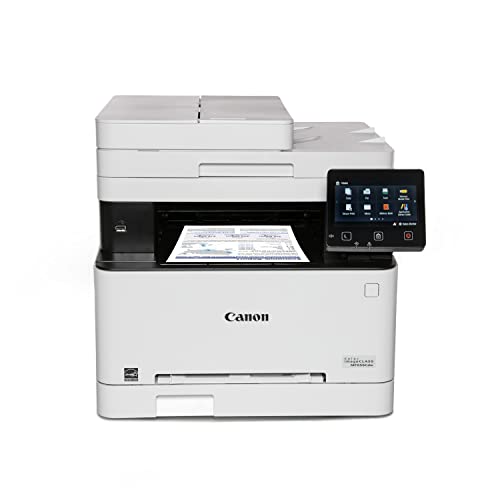
- Canon imageCLASS MF656Cdw — Check on Amazon
- Brother MFC-L3780CDW — Check on Amazon
- HP Color LaserJet Pro MFP 4301fdw — Check on Amazon
- Xerox C235 Colour Multifunction Printer — prose-only.
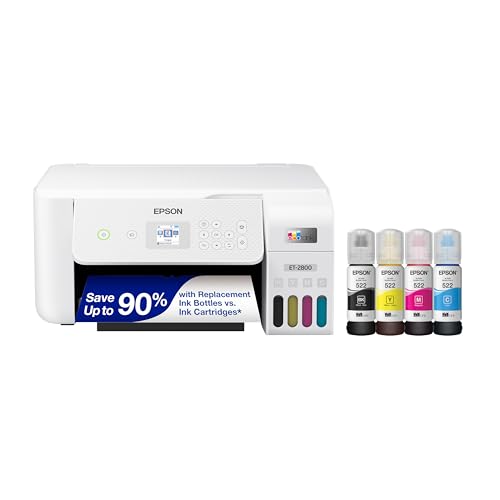
- Epson EcoTank ET-4850 — Check on Amazon
- HP OfficeJet Pro 9125e — Check on Amazon
Read the full guide ↓
Finding the best color laser printers scanner for home use means matching the machine to the work in front of you, not chasing the longest feature list. Adding ‘scanner’ to the home colour-laser brief changes the ranking more than buyers expect: the print engines in this class are close, but the scanners are not. Sheet-fed ADF speed, single-pass duplex scanning, scan-to-email without a PC, and a lid that takes a book spine decide whether the machine digitises a household’s paper life or just occupies space. The picks are ranked as scanning machines first among colour laser MFPs, with two inkjet alternatives for homes whose scanning is occasional but whose colour printing is not.
This guide compares six options across the budgets and use cases that colour laser printer with scanner for home use buyers actually face, explains the trade-offs in plain language, and finishes with a setup walkthrough, the mistakes that waste the most money, and answers to the questions readers ask before they commit. Where a tier or method has an honest limitation, we say so directly, because a shortlist you can trust is worth more than a longer one padded with poor fits.
In this guide
Quick Picks
| Badge | Pick | Why it stands out | Link |
|---|---|---|---|
| Best Overall | Canon imageCLASS MF656Cdw | Laser text is sharp, water-resistant and ready the moment it leaves the tray, ideal for signed documents | Check on Amazon |
| Best Scanner Pick | Brother MFC-L3780CDW | Fast rated throughput and single-pass duplex scanning move big document jobs quickly | Check on Amazon |
| Best HP Pick | HP Color LaserJet Pro MFP 4301fdw | A genuine LaserJet with fast colour throughput for teams that live on documents | Check on Amazon |
| Best MFP Alternative | Xerox C235 Colour Multifunction Printer | Full office feature set from a brand built on workplace printing | Prose-only pick — see notes below |
| Best Inkjet Scanner Alternative | Epson EcoTank ET-4850 | Tank economics plus a document feeder and Ethernet make it the grown-up home office EcoTank | Check on Amazon |
| Best Office Inkjet Alternative | HP OfficeJet Pro 9125e | Office-grade feature set with fax and fast document handling for home offices | Check on Amazon |
How These Picks Were Chosen
Every option here was judged against the criteria that decide real-world satisfaction for a colour laser printer with scanner for home use, using manufacturer specifications, documented features and the ownership patterns that show up again and again in buyer feedback. Products that looked good in a headline but failed on consumable costs, compatibility or workflow were cut, and the shortlist keeps a genuine spread of budgets and approaches rather than six versions of the same machine.
- ADF competence: capacity, duplex scanning speed and jam behaviour on mixed paper
- Scan destinations: computer, email, cloud and USB without fragile software
- Flatbed quality for photos, books and ID at household standards
- Print engine adequacy for home colour documents
- Software sanity: the scan app a household will actually keep using
Two honesty notes apply to the whole list. First, prices move constantly, so this guide never prints a fixed price for a specific product; the keyword’s budget framing is discussed as a tier, and Amazon shows the live figure. Second, where fewer than six linked products honestly fit a specialised lens, we fill the remaining places with clearly marked prose-only alternatives instead of forcing a poor match into the list. You may also find our related reading useful: Best Color And Black And White Printers Under $100 and Best Color Brother Printers For Teachers.
The 6 Best Color Laser Printers Scanner For Home Use

Canon imageCLASS MF656Cdw (Best Overall)
Laser text is sharp, water-resistant and ready the moment it leaves the tray, ideal for signed documents That is the core of its case as best overall in this shortlist. It suits buyers whose work matches its design centre: the people described in the verdict below will get their money’s worth, while the trade-offs listed honestly underneath explain who should keep scrolling. In daily use, it is the combination of its laser design, its consumable economics and its workflow fit that separates it from machines with similar headline specifications.
See the current listing for the Canon imageCLASS MF656Cdw on Amazon for full specifications and delivery options.
Strengths
- Laser text is sharp, water-resistant and ready the moment it leaves the tray, ideal for signed documents
- Full office feature set with ADF and duplex handles legal, business and client paperwork
- Toner cartridges last far longer between changes than inkjet cartridges at document volumes
Trade-offs
- Colour laser photo output is not a match for inkjet photo printers
- Heavier and pricier than home inkjets, with pricier colour toner sets
- Warm-up and fan noise are noticeable in a quiet room
- Type: colour laser all-in-one
- Functions: print, copy, scan, fax
- Rated speed: 22 ppm (manufacturer figure)
- Connectivity: Wi-Fi, Ethernet, USB, mobile ready
- Feature: automatic document feeder, duplex
In practice, ownership rhythm matters as much as the specification sheet. Owners who build this machine into a simple weekly routine — a standing place, consumables in reserve, settings saved as defaults — report the smoothest experience, while occasional users should plan a short warm-up test before important jobs. Noise and footprint shape whether a machine gets used or resented. A printer on a shared desk should be quiet, compact and quick to wake. A production machine can live louder and larger in a utility space where its size buys speed and capacity. Measure the space with trays open and cables attached, not the closed-box dimensions in a listing, and leave room to load media without moving the machine.
Best for: buyers who want overall performance from a colour laser printer with scanner for home use and will use it regularly / Not suited for: buyers whose work falls outside its laser design centre or who need capabilities listed in its trade-offs

Brother MFC-L3780CDW (Best Scanner Pick)
Fast rated throughput and single-pass duplex scanning move big document jobs quickly That is the core of its case as best scanner pick in this shortlist. It suits buyers whose work matches its design centre: the people described in the verdict below will get their money’s worth, while the trade-offs listed honestly underneath explain who should keep scrolling. In daily use, it is the combination of its laser design, its consumable economics and its workflow fit that separates it from machines with similar headline specifications.
See the current listing for the Brother MFC-L3780CDW on Amazon for full specifications and delivery options.
Strengths
- Fast rated throughput and single-pass duplex scanning move big document jobs quickly
- Dual-band Wi-Fi plus Ethernet and NFC give flexible office placement and tap-to-print convenience
- Laser output handles contracts, forms and handouts with professional consistency
Trade-offs
- Premium tier pricing and toner costs to match
- Not a photo printer; glossy art and photo media are inkjet territory
- Substantial footprint and weight for a home office
- Type: digital colour laser all-in-one
- Rated speed: up to 31 ppm (manufacturer figure)
- Functions: print, copy, scan
- Connectivity: dual-band Wi-Fi, Gigabit Ethernet, NFC
- Feature: single-pass duplex copy and scan
In practice, ownership rhythm matters as much as the specification sheet. Owners who build this machine into a simple weekly routine — a standing place, consumables in reserve, settings saved as defaults — report the smoothest experience, while occasional users should plan a short warm-up test before important jobs. Sustainability is a practical topic, not a slogan. Duplex printing halves paper for long documents, refillable systems slash plastic cartridge waste, and buying the right machine once beats replacing a wrong one twice. Recycle cartridges and resin waste responsibly, print test pages on scrap, and prefer designs and settings that succeed first time. The greenest print is the one you do not have to reprint.
Best for: buyers who want scanner pick performance from a colour laser printer with scanner for home use and will use it regularly / Not suited for: buyers whose work falls outside its laser design centre or who need capabilities listed in its trade-offs

HP Color LaserJet Pro MFP 4301fdw (Best HP Pick)
A genuine LaserJet with fast colour throughput for teams that live on documents That is the core of its case as best hp pick in this shortlist. It suits buyers whose work matches its design centre: the people described in the verdict below will get their money’s worth, while the trade-offs listed honestly underneath explain who should keep scrolling. In daily use, it is the combination of its laser design, its consumable economics and its workflow fit that separates it from machines with similar headline specifications.
See the current listing for the HP Color LaserJet Pro MFP 4301fdw on Amazon for full specifications and delivery options.
Strengths
- A genuine LaserJet with fast colour throughput for teams that live on documents
- Strong security and management features suit offices handling client paperwork
- Crisp colour graphics make presentations and proposals look properly professional
Trade-offs
- Office pricing and toner set costs to match
- Colour laser output is for documents and graphics, not photo printing
- Sizeable footprint and weight for a home desk
- Type: colour laser all-in-one
- Functions: print, scan, copy, fax
- Connectivity: Wi-Fi, Ethernet, mobile printing
- Focus: small-team office documents
- Feature: automatic document feeder, duplex
In practice, ownership rhythm matters as much as the specification sheet. Owners who build this machine into a simple weekly routine — a standing place, consumables in reserve, settings saved as defaults — report the smoothest experience, while occasional users should plan a short warm-up test before important jobs. Reliability is mostly environment and habit. Printers of every technology dislike dust, humidity swings and long neglect. Machines that run weekly stay ready; machines that sit for months need cleaning cycles, test prints or first-layer attention before they behave. If your use is occasional, favour technologies and models known for sitting gracefully, keep consumables sealed, and build a small monthly test print into your routine so problems surface on a quiet Tuesday rather than on deadline day.
Best for: buyers who want hp pick performance from a colour laser printer with scanner for home use and will use it regularly / Not suited for: buyers whose work falls outside its laser design centre or who need capabilities listed in its trade-offs
Xerox C235 Colour Multifunction Printer (Best MFP Alternative)
Full office feature set from a brand built on workplace printing That is the core of its case as best mfp alternative in this shortlist. It suits buyers whose work matches its design centre: the people described in the verdict below will get their money’s worth, while the trade-offs listed honestly underneath explain who should keep scrolling. In daily use, it is the combination of its laser design, its consumable economics and its workflow fit that separates it from machines with similar headline specifications.
This is a prose-only pick in this guide: we describe it so you can compare the approach, and recommend checking current availability and pricing at reputable retailers, since we only link products verified in our research pool.
Strengths
- Full office feature set from a brand built on workplace printing
- Simple setup aimed at non-technical small teams
- Solid document and graphics output for proposals and handouts
Trade-offs
- Toner yields and costs need checking against your monthly volume
- Photo media is not its territory
- Interface polish trails the best consumer rivals
- Type: colour laser all-in-one
- Functions: print, scan, copy, fax
- Connectivity: Wi-Fi, Ethernet, mobile printing
- Focus: small office documents
In practice, ownership rhythm matters as much as the specification sheet. Owners who build this machine into a simple weekly routine — a standing place, consumables in reserve, settings saved as defaults — report the smoothest experience, while occasional users should plan a short warm-up test before important jobs. Colour deserves respect and a small amount of process. Screens show light; prints reflect it, so prints will always read slightly differently. Work in a consistent light, let prints dry fully before judging them, and change one variable at a time. For documents, insist on crisp text and clean graphics. For images, judge skin tones and shadow detail rather than chasing the most saturated output, because the most vivid setting is rarely the most accurate one.
Best for: buyers who want mfp alternative performance from a colour laser printer with scanner for home use and will use it regularly / Not suited for: buyers whose work falls outside its laser design centre or who need capabilities listed in its trade-offs

Epson EcoTank ET-4850 (Best Inkjet Scanner Alternative)
Tank economics plus a document feeder and Ethernet make it the grown-up home office EcoTank That is the core of its case as best inkjet scanner alternative in this shortlist. It suits buyers whose work matches its design centre: the people described in the verdict below will get their money’s worth, while the trade-offs listed honestly underneath explain who should keep scrolling. In daily use, it is the combination of its inkjet design, its consumable economics and its workflow fit that separates it from machines with similar headline specifications.
See the current listing for the Epson EcoTank ET-4850 on Amazon for full specifications and delivery options.
Strengths
- Tank economics plus a document feeder and Ethernet make it the grown-up home office EcoTank
- Refill bottles keep per-page costs low for document-heavy households
- Full fax and ADF feature set covers real office paperwork, not just printing
Trade-offs
- Print speeds are steady rather than fast next to laser rivals
- Costs more upfront than cartridge all-in-ones with similar headline features
- Tank inkjets need regular use to keep nozzles clear
- Type: refillable-tank colour all-in-one
- Functions: print, scan, copy, fax
- Connectivity: Wi-Fi, Ethernet, USB
- Feature: automatic document feeder
- Ink system: EcoTank refill bottles (502 series)
In practice, ownership rhythm matters as much as the specification sheet. Owners who build this machine into a simple weekly routine — a standing place, consumables in reserve, settings saved as defaults — report the smoothest experience, while occasional users should plan a short warm-up test before important jobs. Warranty and support are part of the product, especially for machines that earn money. A seller, studio or office should weigh support hours, parts availability and advance-replacement terms alongside specifications. Hobby users can lean on community knowledge, which is deep for popular models and thin for obscure ones. Popularity itself is a feature: every common problem on a common machine already has a documented answer.
Best for: buyers who want inkjet scanner alternative performance from a colour laser printer with scanner for home use and will use it regularly / Not suited for: buyers whose work falls outside its inkjet design centre or who need capabilities listed in its trade-offs
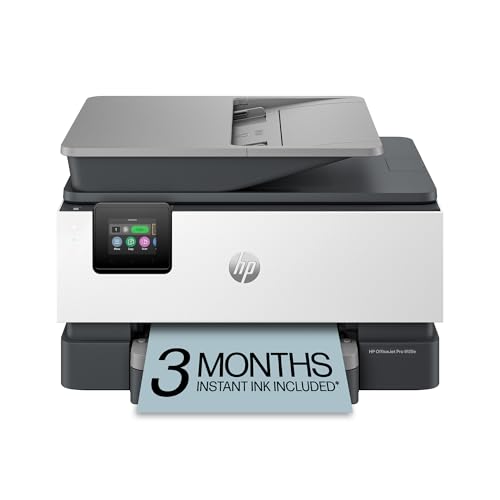
HP OfficeJet Pro 9125e (Best Office Inkjet Alternative)
Office-grade feature set with fax and fast document handling for home offices That is the core of its case as best office inkjet alternative in this shortlist. It suits buyers whose work matches its design centre: the people described in the verdict below will get their money’s worth, while the trade-offs listed honestly underneath explain who should keep scrolling. In daily use, it is the combination of its inkjet design, its consumable economics and its workflow fit that separates it from machines with similar headline specifications.
See the current listing for the HP OfficeJet Pro 9125e on Amazon for full specifications and delivery options.
Strengths
- Office-grade feature set with fax and fast document handling for home offices
- Strong mobile compatibility for printing from phones and tablets on the go
- Crisp text output suits contracts, invoices and client documents
Trade-offs
- Larger and more businesslike than casual home models
- Ink subscription prompts and cartridge costs need an honest look before buying
- Photo and art work is secondary to its document strengths
- Type: colour inkjet all-in-one
- Functions: print, scan, copy, fax
- Connectivity: Wi-Fi, Ethernet, mobile printing
- Focus: home office productivity
- Feature: automatic document feeder class features
In practice, ownership rhythm matters as much as the specification sheet. Owners who build this machine into a simple weekly routine — a standing place, consumables in reserve, settings saved as defaults — report the smoothest experience, while occasional users should plan a short warm-up test before important jobs. Running costs deserve a paragraph of their own in any honest guide, because the purchase price is the smallest cheque most owners write. Consumables, media, spare parts and your own time all belong in the ledger. A machine that costs more upfront but halves consumable spending usually wins by the second year, while a bargain machine with expensive supplies quietly becomes the priciest option in the drawer. Before buying, price the consumables you will actually use, at the volumes you actually run, and compare cost per finished job rather than cost per box.
Best for: buyers who want office inkjet alternative performance from a colour laser printer with scanner for home use and will use it regularly / Not suited for: buyers whose work falls outside its inkjet design centre or who need capabilities listed in its trade-offs
Comparison Table
| Pick | Type | Key specs | Price |
|---|---|---|---|
| Canon imageCLASS MF656Cdw | laser | Type: colour laser all-in-one; Functions: print, copy, scan, fax; Rated speed: 22 ppm (manufacturer figure) | Check price on Amazon |
| Brother MFC-L3780CDW | laser | Type: digital colour laser all-in-one; Rated speed: up to 31 ppm (manufacturer figure); Functions: print, copy, scan | Check price on Amazon |
| HP Color LaserJet Pro MFP 4301fdw | laser | Type: colour laser all-in-one; Functions: print, scan, copy, fax; Connectivity: Wi-Fi, Ethernet, mobile printing | Check price on Amazon |
| Xerox C235 Colour Multifunction Printer | laser | Type: colour laser all-in-one; Functions: print, scan, copy, fax; Connectivity: Wi-Fi, Ethernet, mobile printing | Check price on Amazon |
| Epson EcoTank ET-4850 | inkjet | Type: refillable-tank colour all-in-one; Functions: print, scan, copy, fax; Connectivity: Wi-Fi, Ethernet, USB | Check price on Amazon |
| HP OfficeJet Pro 9125e | inkjet | Type: colour inkjet all-in-one; Functions: print, scan, copy, fax; Connectivity: Wi-Fi, Ethernet, mobile printing | Check price on Amazon |
Read the table as a map, not a ranking: the right row is the one whose type and key specs match your workload, which the buying guide below unpacks. Related comparisons worth reading next include Best Color Inkjet Printers For Art and Best Printers For Black And White Photos.
How to Choose the Right Colour Laser Printer With Scanner for Home Use
The ADF is the feature that matters
A flatbed alone means page-by-page babysitting. An ADF turns a bank statement bundle into a two-minute job; single-pass duplex turns it into a one-minute job. For a scanner-led brief, that outranks print speed.
Scan-to-email and cloud independence
Homes digitise best when the printer can send a scan without a computer awake. The top picks do this natively; the inkjet alternatives match them through their apps.
What home scanning actually is
Forms, letters, school documents, receipts, ID, the occasional photo for sharing. All the picks cover this; archival photo scanning is a dedicated-scanner or inkjet-flatbed conversation.
Print side, kept honest
These are colour lasers: documents excellent, photos limited. The inkjet alternatives invert that balance, and the badges say which household each serves.
Budget framing deserves one direct paragraph. Treat the keyword’s price band, where it has one, as a tier signal rather than a promise: entry tiers buy capability with compromises in speed, capacity or consumable cost, mid tiers are where most buyers should live, and premium tiers buy time, consistency and support. Spend first on the constraint you hit weekly, not the feature you might use yearly. Readers comparing neighbouring topics should also see Best Inexpensive Printers For Home.
How Do You Digitise a Household Paper Pile With a Laser MFP?
- Sort the pile into stacks: single sheets for the ADF, fragile or thick items for the flatbed, and recycling for everything else.
- Set up scan destinations first — a folder on the household computer, or email — and test with one sheet.
- Create scan presets: ‘Documents’ (300 dpi PDF, duplex), ‘Receipts’ (compact PDF), and ‘Photos’ (high-resolution image).
- Run ADF stacks in batches, fanning pages and removing staples; the feeder rewards five seconds of preparation.
- Check each batch’s file immediately for skew, missing backs and upside-down pages while re-scanning is easy.
- Name files as they land (date plus subject) rather than accumulating scan001 through scan400.
- Back up the archive folder with the rest of the household’s files; a scan that exists in one place is a rumour.
- Shred or file the paper originals per your records policy once the digital copies are verified.
Problem: output quality drops suddenly → fix: stop changing settings at random. Return to the last known-good configuration, run the machine’s own test or calibration routine, check consumable levels and media settings, and change one variable at a time until quality returns.
Problem: the machine will not connect or respond → fix: restart the printer and the sending device, confirm both are on the same network, and fall back to a cable connection to separate a network problem from a machine problem before reinstalling anything.
Common Mistakes
- Buying on print speed for a brief that was really about scanning.
- Feeding stapled or mixed-size stacks into the ADF and blaming the machine for jams.
- Scanning everything at maximum resolution and drowning in giant files.
- Never testing scan-to-email until the day an urgent form depends on it.
- Digitising without a file-naming habit, creating a digital pile as unsearchable as the paper one.
Most of these mistakes share one root: deciding from a headline instead of from your own workload. A ten-minute audit of what you actually produce each week prevents nearly all of them. For a neighbouring angle on the same category, see Best Printers For Under $75 Dollars.
Ownership Notes: Living With Your Choice
Connectivity sounds like a footnote until the whole household shares one machine. Dual-band Wi-Fi, Ethernet for a fixed desk, and phone printing through the maker’s app cover nearly every real situation. What matters is not the longest feature list but whether the printer stays visible on your network month after month, wakes predictably, and accepts jobs from the devices your family or team actually uses. When in doubt, place the printer where the signal is strong and the paper is close.
Paper and media handling separate toys from tools. Straight paper paths handle thick stock, rear feeds protect delicate surfaces, and honest tray capacities decide whether a long job needs babysitting. Always match the media setting to what you loaded: that single dropdown controls feed speed, ink or toner behaviour and drying assumptions. Most mysterious quality problems trace back to a mismatch between the paper in the tray and the paper the driver believes is there.
Maintenance is cheaper than repair in every category. Keep firmware and drivers current, clean paper paths and print heads on the maker’s schedule rather than after failures, and use the machine’s own test pages to diagnose before changing parts. Keep one set of consumables in reserve so a low warning never becomes a missed deadline, and keep notes: the date, the change and the result turn future troubleshooting from folklore into lookup.
Finally, buy for the work you have, not the work you imagine. List the jobs from the last three months, count them, and size the machine to that reality with modest headroom. Aspirational purchases fill cupboards; honest ones fill order books. If a bigger need genuinely arrives, a well-chosen first machine becomes the backup rather than the mistake, and the upgrade decision makes itself with real numbers behind it.
Real-World Workloads: How These Picks Behave
Consider the high-volume week: the deadline, the event, the seasonal rush, the class set, the order spike. Equipment bought for average weeks fails in peak weeks, usually at the consumables tray or the duty cycle rather than in dramatic breakdowns. The defence is unglamorous: headroom in rated capacity, spare consumables on the shelf before the rush, and a rehearsed fallback, even if the fallback is a slower second machine or a local print service. Judge the picks above by how they behave in your peak week, and stock accordingly.
Consider the quality-critical job: the piece that will be framed, sold, signed, worn or handed to a client. For these jobs the workflow matters as much as the machine: a test piece first, settings recorded, output inspected under the light it will live in, and enough consumable reserved to redo the job once without a shopping trip. Every pick in this guide can produce quality-critical work within its design centre; the discipline around it is what separates a showcase result from an almost.
Consider the budget year rather than the budget day. Spread across twelve months, the honest comparison between two machines is purchase price plus consumables plus media plus the value of your reprints and your time. Entry machines often win month one and lose month twelve; tank, laser and thermal systems often do the opposite. None of that makes one universally right: a light user should absolutely buy the cheap machine and never think about it again. It makes the right choice personal, which is why this guide gives you the per-job economics instead of a single verdict.
Consider the learning investment. An hour spent on the manufacturer’s own tutorials and a calibration routine returns more quality than any accessory. New owners should schedule that hour in the first week, run the built-in tests, and keep the results as a baseline. Months later, when quality drifts, that baseline tells you whether the machine changed or the materials did. The picks above were chosen partly for the quality of this onboarding path, because a machine that teaches its owner well gets better results from the same hardware.
Consider the upgrade path. Few buyers keep their first machine forever; they either outgrow it or specialise. A sensible first purchase remains useful as the second machine: the generalist becomes the backup when the specialist arrives, and the beginner machine becomes the classroom, household or travel unit. When two picks tie, prefer the one that will still have a job in your setup after an upgrade, because that is the purchase you will never regret making.
Consider reliability over a three-year horizon. Moving parts wear, heads and screens and rollers are consumables in slow motion, and the difference between brands shows up in parts availability and documented repair procedures. Popular models win here almost by definition: their parts are stocked, their error codes are searchable and their communities have photographed every repair. For equipment that earns money or anchors a household, that boring popularity is a genuine feature and this guide weights it accordingly.
Consider the deadline scenario in its purest form: the job must exist, finished, at a fixed hour, and there is no second chance to order parts. Professionals defend deadlines with redundancy and rehearsal: consumables stocked, a test run completed the day before, and a plan B that has actually been tried. Whatever pick you choose from this guide, run your deadline job once in rehearsal at low stakes. The confidence that buys is worth more than any specification on the box.
Consider the weekday-morning workload, because that is where equipment choices are truly tested. Jobs arrive in bursts, nobody has time to coax a reluctant machine, and the person printing is often not the person who set it up. Equipment that earns its place in this scenario shares three traits: it wakes fast, it defaults correctly without supervision, and it fails loudly and early rather than silently and late. When you read the picks above, judge each one against your own busiest hour, not your calmest afternoon, and favour the option whose defaults you can set once and trust.
Consider the beginner’s first month. Every technology in this guide has a learning curve measured not in intelligence but in small, avoidable failures: the wrong setting, the wrong material, the skipped test. A good first purchase shortens that month with clear documentation, forgiving defaults and a large community that has already made your mistakes for you. If two picks look equal on specifications, choose the one with the deeper pool of tutorials, profiles and answered questions, because that pool is what you will actually use at 11 p.m. when something goes wrong.
Consider the shared-household or small-team scenario. Different people bring different devices, patience levels and job types, and the machine becomes infrastructure rather than a personal tool. Infrastructure rewards boring virtues: one-button routines, visible consumable levels, a paper path that tolerates imperfect loading, and controls a guest can understand without a manual. The picks flagged as all-in-ones and all-rounders in this guide exist precisely for this scenario, and they usually outlast cleverer specialist machines in shared spaces.
Consider the side-business workload, where output is sold and every reprint is margin lost. Here the maths changes: consumable cost per sellable unit, batch consistency and turnaround time dominate, and a machine that is merely good enough at home becomes expensive. Sellers should track three numbers from the first week: cost per finished unit, failure rate per batch, and minutes of hands-on time per order. The right pick is the one that improves those numbers, and it is often the mid-tier workhorse rather than the flagship or the bargain.
Consider the space-constrained scenario: a dorm room, a studio flat, a market stall, a corner of a kitchen table that must be cleared for dinner. Footprint is not just width and depth; it is the space with trays open, lids up and material loaded, plus storage for consumables. Compact picks in this guide were chosen with that full working envelope in mind. If space is your binding constraint, measure your surface, check the working footprint, and let that honest measurement veto otherwise attractive machines.
What Owners Learn After the First Month
Environmental choices in this category are mostly about waste avoidance. Print once, correctly: proof small, check settings, then commit. Use duplex where the job allows, refillable or high-yield consumables where volumes justify them, and the manufacturer’s recycling route for what cannot be refilled. None of this requires buying anything marketed as green; it requires running the machine you bought with a little discipline, which this guide’s how-to and mistakes sections are designed to build.
If your workload is about to change (a new business, a course, a growing shop, a child starting school), buy for the workload twelve months out, not the one twelve months back. Equipment in this category is cheapest when bought once at the right size. The picks are tiered deliberately so you can locate your future workload in the list, and the trade-offs state plainly which direction each machine fails in when outgrown: speed, capacity, quality ceiling or consumable cost.
Support communities are an invisible specification. For every pick above, thousands of owners have already hit your future problem and documented the fix, but the depth varies by model popularity. Before finalising a choice, it is worth two minutes searching your intended model’s name plus your intended job; if the results are rich and recent, you are buying into a living ecosystem, and if they are thin, price that loneliness into the decision.
One final calibration: no printer in this guide, at any tier, does everything. The six picks are six different answers to the same question, each correct for a different owner. The verdict lines exist to match you to your answer quickly, and the final recommendation names the default for the majority. If your workload is unusual, trust the criteria sections over the ranking order; they were written for exactly your situation.
Keep the box and packaging until the returns window closes and the machine has survived your hardest typical job. It feels like clutter and it is, briefly, but repacking a large machine without its moulded packaging is miserable and sometimes impossible. After the window, recycle the packaging, file the receipt with your consumable note, and let the machine get on with the unglamorous business of working every time you ask it to.
After the first month, owners consistently say the specification they underrated was the unglamorous one: tray capacity, warm-up time, app quality or the price of the second set of consumables. None of those photograph well in a listing, and all of them decide daily satisfaction. If you are choosing between two finalists in this guide, spend your last comparison minutes on exactly those unglamorous lines of the spec box, because that is where your future self will feel the difference every single week.
A word about buying timing and channels. Prices for machines in this category move with seasons, sales events and stock cycles, sometimes by a lot within a month. The sensible approach is to choose the model first using this guide, then buy when the live price on the listing is one you are comfortable with, from a seller whose returns window covers your first real workload. A great printer bought in a panic at a bad price still stings; the same printer bought calmly rarely disappoints.
Accessories are where budgets quietly leak. A spare set of consumables is a genuine necessity; most other accessories are optional until a specific job demands them. Buy the machine, run your real work for a fortnight, and let that experience write your accessory list. Owners who follow that order spend less and own fewer gadgets in drawers, because every later purchase answers a problem they have actually met rather than one a listing suggested they might.
Setup day deserves more respect than it gets. Ninety unhurried minutes (unboxing, calibration, network setup, test prints from every device, defaults configured, consumable codes photographed into a note) prevent the majority of the complaints that fill support forums. Rushing setup to save half an hour is the most expensive time-saving in this entire category. The how-to section in this guide is written to be followed in order, once, on that first day.
There is a particular pleasure in a workflow that disappears. When the machine wakes reliably, accepts jobs from any device, produces the expected output and asks for consumables with fair warning, printing stops being an event and becomes infrastructure, like hot water. Every pick in this guide was weighed on its ability to reach that state of boring reliability in its category, because boring, in equipment you depend on, is the highest praise available.
Think about who else will use this machine and what they will do wrong. They will load the wrong paper, send a huge job twice, ignore the low-ink warning and close the lid mid-maintenance. Forgiving machines survive households and small teams; temperamental precision tools belong with a single careful owner. The trade-off lists above quietly encode this: where a pick demands process discipline, it says so, and generalists are praised for tolerating chaos.
Total cost has a time dimension most comparisons miss: your attention. A machine that needs weekly coaxing costs more than its consumables; it costs the mental slot it occupies. When two picks are close, choose the one you will think about least. That principle explains several rankings in this guide that look surprising on specifications alone, and it is the principle experienced owners apply without being able to name it.
Second-hand and refurbished routes deserve an honest mention. For established models with available consumables, manufacturer-refurbished units can be excellent value, and the picks above are popular enough that refurb channels exist for many of them. The cautions are warranty length, consumable state on arrival, and (for inkjets) printhead health after storage. If you go this route, run the full test sequence in the returns window, not after it.
Document your setup as if a stranger must run it, because one day the stranger is you, tired, in six months. Photograph the consumable codes, save the working settings with names that describe jobs rather than numbers, and keep one printed test page from setup day in a drawer. When quality drifts, that page is your reference; when you replace consumables, the photo is your order form. Five minutes of documentation outperforms an hour of forum searching.
Final Recommendation
For most readers, start with the Canon imageCLASS MF656Cdw (Best Overall): it covers the widest range of real work with the fewest compromises. If your priorities lean the way the second pick leans, the Brother MFC-L3780CDW (Best Scanner Pick) is the alternative to beat. Budget-focused buyers should weigh the value picks in the table against their consumable costs over a full year, and specialists should choose by the lens that matches their actual output rather than by headline specifications. Every linked pick above leads to its live Amazon listing, where current pricing and availability decide the final timing of the purchase.
Frequently Asked Questions
Is a laser MFP scanner good enough for photos?
For sharing and records, yes. For archival photo digitising, a dedicated scanner or the inkjet alternatives’ flatbeds do better; the guide badges them accordingly.
What does single-pass duplex scanning mean?
The ADF scans both sides in one pass through the feeder — twice as fast as flipping mechanisms and gentler on paper.
Can I scan without a computer?
The top picks scan to email, cloud or USB directly. The inkjet alternatives do the same through their ecosystems.
What resolution should home documents use?
300 dpi PDF is the household standard: legible, searchable with OCR software, and small. Photos for keeping deserve 600 dpi.
Do I still need the flatbed if I have an ADF?
Yes, for books, fragile paper, ID cards and thick items. Every pick here includes both.