Disclosure: As an Amazon Associate, ilcastellomenu.com earns from qualifying purchases. Prices and availability change; check Amazon for the latest.
Where to buy
Our shortlist for best gaming mouse pad for speed starts here. Check the latest price, availability and delivery on Amazon. Orders are placed on Amazon.
- Razer Firefly V2 — Best Overall Hard (premium RGB hard pad tier; sold through major retailers).
- Logitech G440 Hard Gaming Mouse Pad — Best Hard Alternative (hard pad tier; sold through major retailers).
- Razer Sphex V3 — Best Ultra-Thin (ultra-thin hard pad tier; sold through major retailers).
- Razer Strider Chroma — Best Hybrid (premium RGB hybrid pad tier; sold through major retailers).
- SteelSeries QcK Prism Cloth — Best Cloth With Speed (RGB cloth pad tier; sold through major retailers).
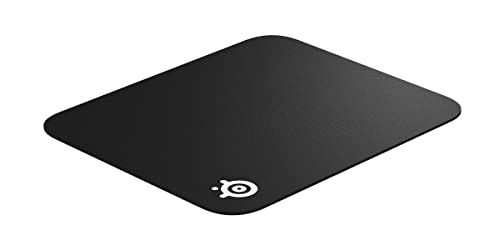
- SteelSeries QcK Gaming Mouse Pad (Small) — Best Budget Cloth. Check on Amazon
Read the full guide ↓
Finding the best gaming mouse pad for speed sounds like a narrow question, but it opens onto almost every decision in a gaming setup: shape, sensor, weight, buttons, connection, and the games and platforms those choices have to serve. This guide answers it with six picks that were compared on verified specifications and real use-case fit, ranked by badge so you can see at a glance which product serves which player. Where a pick is a deliberate stretch or a compromise, the text says so, because a shortlist you cannot trust is worse than no shortlist at all. If you are still deciding how you will use the setup day to day, Best Gaming Mouse Mat For Reliner Armchair is worth a look alongside this guide.
Speed pads make the opposite trade from control pads, and this guide will not blur it: they minimise friction so the mouse starts moving with almost no effort and glides long, which serves high-sensitivity players, fast target switching and genres built on constant repositioning. The costs are real and stated under every pick — stopping depends on your hand rather than the surface, and hard speed surfaces wear mouse feet faster, so a spare set of feet belongs in the drawer of anyone who commits to this category. Hard and hybrid surfaces lead the ranking because cloth has a speed ceiling, and the cloth picks that close the list are badged as the fastest of their kind rather than as equals of the hard leaders.
The speed player trades stopping friction for effortless glide, so hard and hybrid surfaces lead and the trade-offs are printed, not hidden.
In this guide
Quick Picks
| Badge | Pick | Why it stands out | Link |
|---|---|---|---|
| Best Overall Hard | Razer Firefly V2 | Hard micro-textured surface gives a fast. | Retailers |
| Best Hard Alternative | Logitech G440 Hard Gaming Mouse Pad | Hard polymer surface gives a fast, consistent glide that cloth cannot match. | Retailers |
| Best Ultra-Thin | Razer Sphex V3 | Ultra-thin profile adds a consistent gaming surface without a pad edge your wrist can feel. | Retailers |
| Best Hybrid | Razer Strider Chroma | Hybrid surface blends hard-pad speed with cloth-pad control in one mat. | Retailers |
| Best Cloth With Speed | SteelSeries QcK Prism Cloth | Keeps the proven QcK cloth glide while adding RGB edge lighting. | Retailers |
| Best Budget Cloth | SteelSeries QcK Gaming Mouse Pad (Small) | Micro-woven cloth surface gives optical sensors a consistent. | Check on Amazon |
How These Picks Were Chosen
Every pick in this guide earned its place against the same checklist, applied in the same order, so the badges below mean something consistent rather than reflecting whichever product shouted loudest in an advert.
Surface honesty came first. Every pad here states what its surface actually is, cloth, hard or hybrid, and what that means for glide and stopping power, because a pad’s material decides aim feel more than any lighting or branding ever will.
Size truth came second. Pads were matched to the sensitivity and desk they claim to serve, with real dimensions used wherever the manufacturer publishes them, and size classes stated plainly where they do not.
Base and edge quality came third. A pad that creeps across the desk or frays at the wrist line fails its one job, so non-slip bases, edge treatments and thickness were judged as performance features, not finishing details.
Finally, we weighed upkeep. Pads are consumables that absorb dust, moisture and skin oil; the ranking favours surfaces whose glide can be restored with a wash, and says plainly which colours and materials demand the most care.
One more filter deserves stating openly: nothing here was included because of a brand relationship, a launch window or a discount event. Prices move too fast to build a guide on, which is why this site never prints them; the rankings are built on specifications, fit and track record, and they are designed to still make sense when a sale ends.
Two habits governed the whole process. First, no product was recommended on a specification we could not verify from the manufacturer, the listing or a reputable retailer, which is why a handful of famous names are missing or appear without links. Second, every badge had to survive the question a friend would ask: would you actually buy this one, for this purpose, with your own money? Related reading that informed the shortlist includes Best Gaming Mouse Pad For Strength.
The 6 Best Gaming Mouse Pad For Speed
Razer Firefly V2 (Best Overall Hard)
The Razer Firefly V2 is the kind of pick that makes shortlists look easy. As Best Overall Hard, it covers the core demands of this brief, RGB setup builders who prefer a fast hard surface, with the sort of polish that only shows up after a few weeks of use, when lesser products have started to creak, drift or annoy.
Judged specifically against best gaming mouse pad for speed, the Razer Firefly V2 makes its case on fit rather than flash. The brief behind this search punishes vague all-rounders, and this pick’s strengths map onto it point for point, while its trade-offs land in places this particular audience is least likely to feel. That alignment, more than any single specification, is what the badge is certifying.
Strengths
- Hard micro-textured surface gives a fast, low-friction glide that suits high-sensitivity play
- Chroma RGB edge lighting syncs with other Razer gear for a matched setup
- Built-in cable catch keeps a wired mouse cable routed and out of the swipe path
Trade-offs
- Hard surfaces wear mouse feet faster than cloth pads do
- The RGB needs a USB connection and Razer software to control properly
- Fast glide offers less stopping control than cloth for low-sensitivity players
Key specs
- Surface: Micro-textured hard surface
- Lighting: Chroma RGB edge lighting
- Extras: Integrated cable catch
- Base: Non-slip rubber
In longer sessions the Razer Firefly V2 shows its breeding in small ways: consistent clicks at the end of the day as at the start, a glide that does not change character as the pad warms up, and software that applies a profile and then gets out of the way. It is a product built by people who clearly use their own gear.
A few ownership details are worth knowing before you commit. The Razer Firefly V2 sticks to proven component choices rather than experiments, which means community knowledge, replacement parts and troubleshooting advice are easy to find years from now. Keep the receipt and the box until the return window closes, as with any peripheral, because shape fit is personal and no review can feel your hand for you.
One more test worth running during your first week with the Razer Firefly V2: swap back to your old mouse for a single session. The differences that feel subtle side by side become obvious in that order, in glide, in click confidence, and in how your hand feels afterwards. Most players who run that test do not swap back a second time, and it is the simplest honest check that the upgrade was real rather than imagined.
Best for: RGB setup builders who prefer a fast hard surface / Not suited for: low-sensitivity players who rely on cloth-pad stopping friction
Available from major retailers; this pick sits in the premium RGB hard pad tier.
Logitech G440 Hard Gaming Mouse Pad (Best Hard Alternative)
Some products earn a badge on specifications and lose it in the hand. The Logitech G440 Hard Gaming Mouse Pad keeps its Best Hard Alternative badge because the specification sheet and the lived experience agree: this is a product designed for speed and easy-clean fans who want a hard Logitech surface, executed without an obvious weak point that a rival exploits.
There is a version of this shortlist ranked purely on specifications, and the Logitech G440 Hard Gaming Mouse Pad would not necessarily top it. Ranked for best gaming mouse pad for speed, with the audience’s games, rooms and habits in view, it rises, because its design decisions read like answers to this brief’s specific questions rather than to a generic buyer’s.
Strengths
- Hard polymer surface gives a fast, consistent glide that cloth cannot match
- Wipes clean in seconds, so dust, spills and pet hair never soak in
- Firm surface keeps its glide character for years without a wash cycle
Trade-offs
- Fast glide offers less stopping friction for low-sensitivity control players
- Hard surfaces wear PTFE mouse feet faster than cloth
- Can feel noisy and unforgiving under a heavy clicking hand
Key specs
- Surface: Hard polymer, low-friction
- Base: Rubber
- Profile: Firm, thin hard pad
- Compatibility: Optical and laser sensors
Treat the Logitech G440 Hard Gaming Mouse Pad as a long-term piece of your setup rather than a seasonal experiment. It rewards a week of acclimatisation, pairs happily with any pad and PC, and holds its value in the only currency that matters here: sessions where the equipment never becomes the story.
A few ownership details are worth knowing before you commit. The Logitech G440 Hard Gaming Mouse Pad sticks to proven component choices rather than experiments, which means community knowledge, replacement parts and troubleshooting advice are easy to find years from now. Keep the receipt and the box until the return window closes, as with any peripheral, because shape fit is personal and no review can feel your hand for you.
Think about who notices the Logitech G440 Hard Gaming Mouse Pad most: not the player in a highlight clip, but the same player in week six, when novelty has worn off and only behaviour remains. Its clicks still land where they landed in week one, its settings have not drifted, and its shape has taught your hand a consistent home position. Equipment that behaves identically for months is what lets practice compound, and that quiet consistency is engineered into this pick’s sensor, switches and overall restraint.
Best for: speed and easy-clean fans who want a hard Logitech surface / Not suited for: control players who rely on cloth stopping friction
Available from major retailers; this pick sits in the hard pad tier.
Razer Sphex V3 (Best Ultra-Thin)
If you only read one pick closely, make it this one. The Razer Sphex V3 is here as Best Ultra-Thin because its design priorities line up with what this search actually demands: smooth-desk owners who want an almost invisible speed surface. The details below explain where that quality comes from, and just as honestly, where it stops.
What seals the Razer Sphex V3 for best gaming mouse pad for speed is the absence of a deal-breaker. Every product in this guide gives something up; this one gives up nothing that this search’s audience ranks highly, and it does the central jobs with a consistency that flashier rivals match only at their best moments.
Strengths
- Ultra-thin profile adds a consistent gaming surface without a pad edge your wrist can feel
- Hard surface glides fast and wipes clean instantly
- Adhesive backing keeps it exactly where you placed it on a smooth desk
Trade-offs
- Adhesive mounting is a commitment; it is not a pad you reposition daily
- Hard fast glide is wrong for control-first players
- Removal from delicate desk finishes needs care
Key specs
- Surface: Hard polycarbonate
- Profile: Ultra-thin, sits almost flush with the desk
- Base: Adhesive-backed to stay fixed on smooth desks
- Compatibility: Optical and laser sensors
Treat the Razer Sphex V3 as a long-term piece of your setup rather than a seasonal experiment. It rewards a week of acclimatisation, pairs happily with any pad and PC, and holds its value in the only currency that matters here: sessions where the equipment never becomes the story.
It is also worth setting expectations about the ecosystem around the Razer Sphex V3. Firmware updates arrive through the maker’s software, spare feet and grips are widely available, and the product’s popularity means any quirk you encounter has almost certainly been documented and solved by other owners. That support tail is an unglamorous but real part of why it holds a badge in this guide.
Think about who notices the Razer Sphex V3 most: not the player in a highlight clip, but the same player in week six, when novelty has worn off and only behaviour remains. Its clicks still land where they landed in week one, its settings have not drifted, and its shape has taught your hand a consistent home position. Equipment that behaves identically for months is what lets practice compound, and that quiet consistency is engineered into this pick’s sensor, switches and overall restraint.
Best for: smooth-desk owners who want an almost invisible speed surface / Not suited for: players who move their setup around or prefer cloth
Available from major retailers; this pick sits in the ultra-thin hard pad tier.
Razer Strider Chroma (Best Hybrid)
The Razer Strider Chroma is the kind of pick that makes shortlists look easy. As Best Hybrid, it covers the core demands of this brief, players who want one huge RGB mat with a middle-ground glide, with the sort of polish that only shows up after a few weeks of use, when lesser products have started to creak, drift or annoy.
For best gaming mouse pad for speed, the question is never whether a product is good in the abstract; it is whether its particular compromises point away from what you do most. The Razer Strider Chroma passes that test cleanly. Its strongest qualities serve the centre of this brief, and the things it gives up sit at the edges, which is exactly where you want a product’s weaknesses to live.
Strengths
- Hybrid surface blends hard-pad speed with cloth-pad control in one mat
- XXL footprint covers a full keyboard-and-mouse station
- Chroma lighting integrates with a Razer-centred setup
Trade-offs
- Hybrid feel is a compromise neither cloth loyalists nor hard-pad fans asked for
- Premium tier pricing
- Large mats dominate a desk visually, lit or not
Key specs
- Surface: Hybrid soft/hard mat
- Lighting: Chroma RGB edge lighting
- Size class: XXL
- Base: Anti-slip rubber
Day to day, what you notice about the Razer Strider Chroma is how little you notice it. Settings stay where you left them, the shape stops being a topic, and your attention goes back to the game, which is the highest compliment a peripheral can earn. Players inside its target audience rarely replace it for anything except its own newer generation.
A few ownership details are worth knowing before you commit. The Razer Strider Chroma sticks to proven component choices rather than experiments, which means community knowledge, replacement parts and troubleshooting advice are easy to find years from now. Keep the receipt and the box until the return window closes, as with any peripheral, because shape fit is personal and no review can feel your hand for you.
One more test worth running during your first week with the Razer Strider Chroma: swap back to your old mouse for a single session. The differences that feel subtle side by side become obvious in that order, in glide, in click confidence, and in how your hand feels afterwards. Most players who run that test do not swap back a second time, and it is the simplest honest check that the upgrade was real rather than imagined.
Best for: players who want one huge RGB mat with a middle-ground glide / Not suited for: purists who know they prefer pure cloth or pure hard surfaces
Available from major retailers; this pick sits in the premium RGB hybrid pad tier.
SteelSeries QcK Prism Cloth (Best Cloth With Speed)
The SteelSeries QcK Prism Cloth is the kind of pick that makes shortlists look easy. As Best Cloth With Speed, it covers the core demands of this brief, players who want QcK cloth control with setup lighting, with the sort of polish that only shows up after a few weeks of use, when lesser products have started to creak, drift or annoy.
What seals the SteelSeries QcK Prism Cloth for best gaming mouse pad for speed is the absence of a deal-breaker. Every product in this guide gives something up; this one gives up nothing that this search’s audience ranks highly, and it does the central jobs with a consistency that flashier rivals match only at their best moments.
Strengths
- Keeps the proven QcK cloth glide while adding RGB edge lighting
- Cloth surface gives controlled stopping friction for low-sensitivity aim
- Lighting zones can signal in-game alerts through SteelSeries software
Trade-offs
- RGB edge adds cost and a USB cable compared with a plain QcK
- Medium footprint is small for very low sensitivity play
- Cloth needs periodic washing to keep glide consistent
Key specs
- Surface: Micro-woven cloth
- Lighting: 2-zone RGB edge lighting
- Base: Non-slip rubber
- Compatibility: Optimised for gaming sensors
In longer sessions the SteelSeries QcK Prism Cloth shows its breeding in small ways: consistent clicks at the end of the day as at the start, a glide that does not change character as the pad warms up, and software that applies a profile and then gets out of the way. It is a product built by people who clearly use their own gear.
A few ownership details are worth knowing before you commit. The SteelSeries QcK Prism Cloth sticks to proven component choices rather than experiments, which means community knowledge, replacement parts and troubleshooting advice are easy to find years from now. Keep the receipt and the box until the return window closes, as with any peripheral, because shape fit is personal and no review can feel your hand for you.
There is also a practical resale and hand-me-down angle that rarely gets mentioned: products like the SteelSeries QcK Prism Cloth hold their appeal because the fundamentals do not date quickly. When you eventually upgrade, a pick like this moves happily to a second desk, a sibling’s setup or a travel bag, which quietly lowers its real cost of ownership compared with a cheaper product that gets binned.
Best for: players who want QcK cloth control with setup lighting / Not suited for: players who need a desk-size pad
Available from major retailers; this pick sits in the RGB cloth pad tier.

SteelSeries QcK Gaming Mouse Pad (Small) (Best Budget Cloth)
The SteelSeries QcK Gaming Mouse Pad (Small) takes the Best Budget Cloth badge because it fits this brief at a fundamental level: it is built for players who need a reliable small cloth pad for a mouse-and-keyboard station. Rather than chasing a single headline number, it balances sensor honesty, shape and everyday usability in a way that survives contact with real sessions, and it does so without asking you to work around it.
Judged specifically against best gaming mouse pad for speed, the SteelSeries QcK Gaming Mouse Pad (Small) makes its case on fit rather than flash. The brief behind this search punishes vague all-rounders, and this pick’s strengths map onto it point for point, while its trade-offs land in places this particular audience is least likely to feel. That alignment, more than any single specification, is what the badge is certifying.
Strengths
- Micro-woven cloth surface gives optical sensors a consistent, tested texture for predictable tracking
- Non-slip rubber base stays planted during fast swipes
- A long-proven pad design that pairs with every mouse in this guide
Trade-offs
- Small size suits high-sensitivity players only; low-sensitivity arm aimers need a larger pad
- Cloth surface slows slightly as it absorbs moisture and dust, so it needs periodic washing
- No stitched-edge premium finish in this basic version
Key specs
- Surface: Micro-woven cloth
- Base: Non-slip rubber
- Size class: Small
- Compatibility: Optimised for gaming optical and laser sensors
Day to day, what you notice about the SteelSeries QcK Gaming Mouse Pad (Small) is how little you notice it. Settings stay where you left them, the shape stops being a topic, and your attention goes back to the game, which is the highest compliment a peripheral can earn. Players inside its target audience rarely replace it for anything except its own newer generation.
It is also worth setting expectations about the ecosystem around the SteelSeries QcK Gaming Mouse Pad (Small). Firmware updates arrive through the maker’s software, spare feet and grips are widely available, and the product’s popularity means any quirk you encounter has almost certainly been documented and solved by other owners. That support tail is an unglamorous but real part of why it holds a badge in this guide.
Best for: players who need a reliable small cloth pad for a mouse-and-keyboard station / Not suited for: low-sensitivity players who need a desk-size pad
Comparison Table
| Pick | Sensor / Type | Weight / Form | Connection | Buttons | Price |
|---|---|---|---|---|---|
| Razer Firefly V2 | Hard RGB pad | Medium | Pad | Chroma RGB | Check retailer listings |
| Logitech G440 Hard Gaming Mouse Pad | Hard polymer | Medium | Rubber base | Low friction | Check retailer listings |
| Razer Sphex V3 | Hard polycarbonate | Ultra-thin | Adhesive base | Flush fit | Check retailer listings |
| Razer Strider Chroma | Hybrid RGB pad | XXL | Pad | Chroma RGB | Check retailer listings |
| SteelSeries QcK Prism Cloth | Cloth RGB pad | Medium | Pad | 2-zone RGB | Check retailer listings |
| SteelSeries QcK Gaming Mouse Pad (Small) | Cloth pad | Small | Pad | — | Check price on Amazon |
How to Choose the Right Gaming Mouse Pad
Choosing a mouse pad is choosing half of your sensor system. Work through size, surface, thickness and upkeep in that order, and the right pad usually names itself. If you are also settling your mouse, Best Gaming Mouse Pad For Smooth Surface Desk pairs well with this section.
Size follows sensitivity
Start with how you aim. High-sensitivity wrist players turn fully inside roughly 25 cm of pad. Medium-sensitivity players want around 35 to 45 cm of width. Low-sensitivity arm players should treat an extended desk mat, roughly 90 by 40 cm, as the default, because a flick that ends on bare desk is a flick the pad failed. Measure your desk before ordering: subtract the keyboard’s footprint and any monitor stand, and buy the largest pad that fits the remainder without hanging off an edge.
Surface: cloth, hard or hybrid
Cloth is the safe default: controlled glide, real stopping friction, kind to mouse feet, and washable when it slows. Hard pads glide faster and feel crisper for high-sensitivity play, but they wear feet quicker and punish players who rely on friction to stop. Hybrids sit between the two and suit players who have tried both and want the compromise on purpose, not by accident. Whatever you choose, keep the whole pad one surface; a mouse that crosses textures mid-swipe tracks two different games.
Thickness, base and edges
Thin pads (around 2 mm) feel direct and suit perfect desks. Standard 3 to 4 mm pads forgive minor desk imperfections, and thick cushioned pads trade a little precision feel for wrist comfort on hard surfaces. The base must be genuine non-slip rubber that re-grips after the pad is moved, and stitched edges are worth having wherever they are offered, because the wrist line is where unstitched pads peel and fray first.
RGB and extras, honestly
Lighting does not change tracking; it changes your desk, your photos and your bill. Buy RGB because you enjoy the setup it completes, and prefer pads whose lighting joins software you already run, because a third lighting app for one pad is a tax you pay forever. USB pass-through ports, by contrast, are quietly practical: a wireless receiver plugged into the pad sits centimetres from the mouse, which is exactly where receiver guidance says it should be.
Colour and upkeep
Dark pads hide a month of desk life; light and white pads show a day of it. Neither is wrong, but choose with your habits in view: a white pad beside a coffee cup and a pen is a washing schedule, not a colour. All cloth pads slow as the centre absorbs moisture and dust, and a gentle hand-wash with mild soap, air-dried flat, restores most of the original glide. Plan to wash a daily-use cloth pad every month or two, and to replace it when washing stops helping.
Mouse pad and desk setup
The pad is half of the sensor system and the cheapest performance upgrade in this entire guide. Cloth pads give optical sensors a consistent texture and a controlled glide that suits most players; hard pads glide faster and wear feet quicker. Size follows sensitivity: high-sensitivity wrist players can live on a small pad, while low-sensitivity arm players should treat roughly 45 by 40 cm as a starting point so a full turn never ends on the desk edge. Keep the pad flat, wash it when the centre slows, and give a wired mouse a bungee or a taped service loop so the cable never becomes part of the aiming equation.
Start with the complaint, not the product
Every successful pad purchase begins as a sentence: my flicks run off the edge; my glide feels scratchy by Friday; my pad creeps towards the monitor all week. Write your sentence down before you shop, then buy the single pad that answers it. Players who skip this step collect pads the way they collect settings changes, while players who name the problem find that one well-chosen surface outperforms a drawer of hopeful purchases.
How to test a pad properly
Judge a pad over a week, not a warm-up. Play your main game in real matches, run the same flick and tracking drills you use for a mouse, and pay attention to the last session of the day, when a warmed, slightly humid pad shows its true glide. Then wash it once and test again: a pad whose character survives washing is a pad you can live with for a year, and that, more than day-one speed, is the quality worth paying for.
Pairing the pad with your mouse
Pads and mouse feet are one friction system. Soft cloth with worn feet feels slower than the same cloth with fresh PTFE; a hard pad with fresh feet can feel almost frictionless. When you change one half of the system, give the other half a session before judging either, and keep a spare set of feet in the drawer so a pad upgrade never waits on a parts order.
When a new pad is the wrong purchase
Sometimes the honest answer is that the pad is fine and something else is not. A sensor that stutters on every surface has a lens or cable problem; aim that feels inconsistent on a clean pad is usually a sensitivity or acceleration problem. Wash the pad you own, test on a second surface, and only then spend money, because a new pad cannot fix a fault that follows the mouse from surface to surface.
Budgeting for a consumable
Set a simple rule: one pad, bought at the quality level you will not immediately want to upgrade, replaced when washing stops restoring it. Premium pads earn their money in bases that stay planted, edges that do not fray and weaves that wash back to life; budget pads earn theirs as experiments that tell you which size and surface you actually like. Both strategies are respectable. The wasteful middle is replacing a cheap pad every few months forever.
One pad, whole mousing area
Whatever size you choose, arrange the desk so your entire mousing area, from your most centred aim to your widest turn, stays on the pad. A keyboard pushed partly onto a desk mat is fine and even desirable, since it levels the keyboard and deadens its sound; a mouse that crosses from pad to desk mid-swipe is not, because the friction change lands exactly where your aim is most committed. If space forces a choice, give the mouse hand the pad and let the keyboard share the desk.
How Do You Choose, Set Up and Look After a Gaming Mouse Pad?
A pad rewards ten deliberate minutes on day one and a wash every month or two afterwards. The steps below cover choosing the size, laying the pad, pairing it with your mouse and keeping its glide honest.
- Measure before you order. Measure the clear desk width, subtract the keyboard footprint, and match the remainder to your sensitivity: small pads for wrist aim, mid-size for mixed play, extended desk mats for low-sensitivity arm aim.
- Unroll and flatten it. New cloth pads ship rolled. Lay the pad flat, place a book on any curled corner overnight, and never start judging glide until the surface lies completely flat.
- Position it deliberately. Square the pad to your body, leave its full width for the mouse hand, and route any pad or mouse cables so they never cross the mousing area.
- Re-tune your feel, not your settings. A new surface changes glide, so give your existing sensitivity a few sessions before changing DPI. Most players find the same settings work once their hand recalibrates.
- Wash it when the centre slows. Hand-wash cloth pads in lukewarm water with a drop of mild soap, rinse thoroughly, and air-dry flat away from direct heat. Never machine-dry a rubber-backed pad.
- Replace it when washing stops helping. A pad whose centre stays slow and shiny after washing has worn out its weave; replacement restores the glide your settings were built on.
Troubleshooting quick fixes
- Problem: Pad creeps across the desk during play → fix: clean dust from the rubber base and the desk, and confirm the pad is not hanging off an edge where your wrist drags it.
- Problem: Glide feels fast at the edges and slow in the middle → fix: the centre has absorbed moisture and dust; wash the pad and let it dry completely before judging it again.
- Problem: Mouse stutters on the new pad → fix: clean the sensor lens, test on the old surface to isolate the fault, and avoid glossy or printed areas while you test.
- Problem: Edges curl or fray → fix: flatten curled corners under weight overnight; for the next pad, choose stitched edges, which resist exactly this failure.
Photograph your desk before you change pads. A quick phone photo of your pad position, keyboard placement and cable routing sounds trivial, but it gives you a baseline to return to when an experiment disappoints. Pad tuning is a series of small trials, and the players who improve their setups steadily are the ones who can undo a change exactly, compare honestly, and keep only what survives the comparison. Keep the photo with your sensitivity notes, and your desk becomes a system you understand rather than a pile of gear you hope is right.
Common Mistakes
Most disappointing purchases in this category are not bad products; they are good products bought for the wrong reason. These are the errors that come up again and again, each one cheap to avoid before you order and expensive afterwards.
Buying size by desk envy. A desk mat that hangs off your desk or crowds your keyboard helps nobody. Measure the clear space first, then buy the largest pad that fits it and your sensitivity, in that order.
Ignoring your sensitivity. Pad size and sensitivity are one decision. Low-sensitivity players on small pads lift and re-centre constantly, and no surface quality compensates for running out of room mid-flick.
Never washing the pad. Cloth pads slow gradually as the centre absorbs dust and moisture, and players blame their mouse for months. A wash restores most pads; a pad that stays slow after washing is worn out, not dirty.
Paying for lighting before surface. RGB changes how a pad looks, not how it tracks. Spend on size, surface and base first, and treat lighting as the last line of the budget, bought for enjoyment with eyes open.
Playing on a curled pad. A pad that has not flattened after unrolling lifts at the corners and changes glide exactly where flicks end. Flatten it overnight before judging it, and store pads flat or loosely rolled, print side out.
Mixing surfaces. Half on the pad and half on bare desk means two friction levels in one swipe. Position the pad so your full mousing area, including your lowest-sensitivity turn, stays on one surface.
Final Recommendation
If you want one answer, take the Razer Firefly V2 (Best Overall Hard): it is the pick that serves the widest range of players under this brief without a serious weakness. If your priorities lean the other way, the Logitech G440 Hard Gaming Mouse Pad (Best Hard Alternative) is the alternative we would defend just as strongly, and the remaining badges exist precisely because this category rewards specialisation.
Whichever you choose, spend the first week properly: set it up with the steps above, commit to your settings, and judge it on your tenth session rather than your first. Players comparing adjacent briefs may also find Best Mouse Wrist Rest For Gaming and Best Gaming Mouse For Butterfly Clicking helpful, since hand size, budget and platform have a habit of changing the answer. The right mouse is the one you stop thinking about, and every pick in this guide has earned that chance.
If two picks still feel tied after all this, break the tie with the return policy: order the one you can exchange most easily, live with it for a week of real sessions, and let your hand cast the deciding vote. That process, unglamorous as it sounds, is how experienced players actually end up with setups they keep for years.
Frequently Asked Questions
What size mouse pad should I buy for gaming?
Match the pad to your sensitivity. Wrist aimers at high sensitivity can play happily on a small pad around 25 cm wide. Mixed players should start near 40 to 45 cm of width. Low-sensitivity arm players should default to an extended desk mat around 90 by 40 cm so a full turn never leaves the surface. When in doubt, size up: spare pad at the edge costs nothing, while running out of pad mid-flick costs rounds.
How do I clean a gaming mouse pad?
Hand-wash cloth pads in lukewarm water with a small amount of mild soap, working the centre where glide slows first. Rinse until the water runs clear, press the water out with a towel rather than wringing, and air-dry the pad flat away from radiators and direct sun. Hard pads need only a wipe with a damp cloth. Let any pad dry completely before playing; a damp cloth pad tracks noticeably slower.
Do I need a special mouse pad?
You need a consistent one. Any decent cloth gaming pad gives an optical sensor a uniform surface to read, which is what tracking accuracy depends on. Glass and glossy desks are the real enemies. Beyond that, size matters more than branding: low-sensitivity players should want at least 40 cm of width so a full swipe never runs off the edge mid-fight.
Does an RGB mouse pad improve gaming?
No, and any guide claiming otherwise is selling atmosphere as performance. RGB lighting changes how your desk looks and feels to sit at, which is a legitimate reason to buy it, but tracking depends on the surface under the lights. Judge an RGB pad as a pad first, surface, size and base, and only then judge its lighting, its software and whether it joins the ecosystem your other gear already uses.
Key Takeaways
- Best Overall Hard: Razer Firefly V2 — best for RGB setup builders who prefer a fast hard surface.
- Best Hard Alternative: Logitech G440 Hard Gaming Mouse Pad — best for speed and easy-clean fans who want a hard Logitech surface.
- Best Ultra-Thin: Razer Sphex V3 — best for smooth-desk owners who want an almost invisible speed surface.
- Best Hybrid: Razer Strider Chroma — best for players who want one huge RGB mat with a middle-ground glide.
- Best Cloth With Speed: SteelSeries QcK Prism Cloth — best for players who want QcK cloth control with setup lighting.
- Best Budget Cloth: SteelSeries QcK Gaming Mouse Pad (Small) — best for players who need a reliable small cloth pad for a mouse-and-keyboard station.
- For best gaming mouse pad for speed, honest fit for your hand, grip and games matters more than headline specifications; confirm size, connection and button layout with the buying guide above before ordering, and check price on Amazon since pricing moves.