Disclosure: As an Amazon Associate, ilcastellomenu.com earns from qualifying purchases. Prices and availability change; check Amazon for the latest.
Where to buy
Check the latest price, availability and delivery on Amazon. Orders are placed on Amazon.
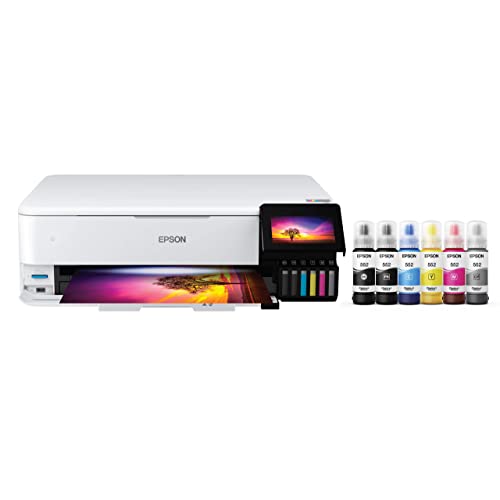
- Epson EcoTank Photo ET-8550 — Check on Amazon
- Epson EcoTank ET-15000 — Check on Amazon
- Premium Wide-Format All-in-One Class (beyond the pool) — no link.
- Other-Maker Wide All-in-One Class (Canon/HP wide MFP pattern) — no link.
- Two-Device Route (wide printer + separate scanner) — no link.
- Standard All-in-One + Scan-Stitching Route — no link.
Read the full guide ↓
Finding the best photo printers wide format 13 by 19 with scanner means matching the machine to the work in front of you, not chasing the longest feature list. This search’s combination is rarer than it sounds: a printer that produces 13 x 19 inch photo prints AND carries a scanner. In the verified shortlist, exactly two machines honestly qualify — both Epson EcoTank wide-format all-in-ones — and this guide builds around that truth rather than padding the list with print-only machines wearing a scanner costume. The remaining picks are the honest surrounding routes: the premium wide all-in-one class, the two-device route (best wide printer plus a real scanner), and the stitch-scanning budget route. One more honesty note carried through every pick: the scanners in wide all-in-ones scan at letter/legal glass size, not 13×19.
This guide compares six options across the budgets and use cases that wide-format (13×19) photo printer with scanner buyers actually face, explains the trade-offs in plain language, and finishes with a setup walkthrough, the mistakes that waste the most money, and answers to the questions readers ask before they commit. Where a tier or method has an honest limitation, we say so directly, because a shortlist you can trust is worth more than a longer one padded with poor fits.
In this guide
Quick Picks
| Badge | Pick | Why it stands out | Link |
|---|---|---|---|
| Best Overall | Epson EcoTank Photo ET-8550 | Six-colour ink set is built for photographs and art reproduction, with smoother gradients than 4-colour machines | Check on Amazon |
| Best Office Alternative | Epson EcoTank ET-15000 | Prints up to 13 x 19 inches, opening up posters, large art prints and oversized documents | Check on Amazon |
| Best Premium Class | Premium Wide-Format All-in-One Class (beyond the pool) | Step-up wide all-in-ones add bigger touchscreens, faster engines and deeper paper handling | Unlinked pick — see notes below |
| Best Other-Maker Class | Other-Maker Wide All-in-One Class (Canon/HP wide MFP pattern) | Keeps wide printing and scanning inside the ecosystem a studio already runs | Unlinked pick — see notes below |
| Best Two-Device Route | Two-Device Route (wide printer + separate scanner) | Each device is best-in-class at its own job; the printer choice widens to every model in our 13 x 19 guide | Unlinked pick — see notes below |
| Best Budget Route | Standard All-in-One + Scan-Stitching Route | Costs nothing beyond software you may already own | Unlinked pick — see notes below |
How These Picks Were Chosen
Every option here was judged against the criteria that decide real-world satisfaction for a wide-format (13×19) photo printer with scanner, using manufacturer specifications, documented features and the ownership patterns that show up again and again in buyer feedback. Products that looked good in a headline but failed on consumable costs, compatibility or workflow were cut, and the shortlist keeps a genuine spread of budgets and approaches rather than six versions of the same machine.
- True 13 x 19 in photo printing AND a built-in scanner in the same machine (both halves, no exceptions for linked picks)
- Scanner reality: glass size, resolution class and feeder presence, stated per pick
- Six-colour photo quality on the ET-8550 pattern versus four-colour office width on the ET-15000 pattern
- Tank running costs at wide-format photo coverage
- The alternative routes’ real costs: money, space and workflow friction
Two honesty notes apply to the whole list. First, prices move constantly, so this guide never prints a fixed price for a specific product; the search’s budget framing is discussed as a tier, and Amazon shows the live figure. Second, where fewer than six linked products honestly fit a specialised lens, we fill the remaining places with clearly marked as unlinked alternatives instead of forcing a poor match into the list. You may also find our related reading useful: Best Multi Printers With 11×17 Capacity and Best Multifunction Air Printers.
The 6 Best Photo Printers Wide Format 13 By 19 With Scanner

Epson EcoTank Photo ET-8550 (Best Overall)
Six-colour ink set is built for photographs and art reproduction, with smoother gradients than 4-colour machines That is the core of its case as best overall in this shortlist. It suits buyers whose work matches its design centre: the people described in the verdict below will get their money’s worth, while the trade-offs listed honestly underneath explain who should keep scrolling. In daily use, it is the combination of its inkjet design, its consumable economics and its workflow fit that separates it from machines with similar headline specifications.
See the current listing for the Epson EcoTank Photo ET-8550 on Amazon for full specifications and delivery options.
Strengths
- Six-colour ink set is built for photographs and art reproduction, with smoother gradients than 4-colour machines
- Wide-format 13 x 19 in output suits portfolio prints and sellable art prints
- Tank refills make test prints and proofing far less painful than cartridge photo printers
Trade-offs
- Priced as a creator tool, well above everyday home printers
- Big and heavy for a home desk; plan a permanent home for it
- Using the wrong paper profile wastes the colour advantage, so media settings need care
- Type: 6-colour refillable-tank photo all-in-one
- Max paper size: 13 x 19 in
- Functions: print, scan, copy
- Connectivity: Wi-Fi, Ethernet, USB
- Rated speed: up to 16 ppm (manufacturer figure)
In practice, ownership rhythm matters as much as the specification sheet. Owners who build this machine into a simple weekly routine — a standing place, consumables in reserve, settings saved as defaults — report the smoothest experience, while occasional users should plan a short warm-up test before important jobs. Reliability is mostly environment and habit. Printers of every technology dislike dust, humidity swings and long neglect. Machines that run weekly stay ready; machines that sit for months need cleaning cycles, test prints or first-layer attention before they behave. If your use is occasional, favour technologies and models known for sitting gracefully, keep consumables sealed, and build a small monthly test print into your routine so problems surface on a quiet Tuesday rather than on deadline day.
Best for: buyers who want overall performance from a wide-format (13×19) photo printer with scanner and will use it regularly / Not suited for: buyers whose work falls outside its inkjet design centre or who need capabilities listed in its trade-offs

Epson EcoTank ET-15000 (Best Office Alternative)
Prints up to 13 x 19 inches, opening up posters, large art prints and oversized documents That is the core of its case as best office alternative in this shortlist. It suits buyers whose work matches its design centre: the people described in the verdict below will get their money’s worth, while the trade-offs listed honestly underneath explain who should keep scrolling. In daily use, it is the combination of its inkjet design, its consumable economics and its workflow fit that separates it from machines with similar headline specifications.
See the current listing for the Epson EcoTank ET-15000 on Amazon for full specifications and delivery options.
Strengths
- Prints up to 13 x 19 inches, opening up posters, large art prints and oversized documents
- EcoTank refills keep the cost of big, ink-heavy pages far below cartridge machines
- Full office feature set with fax and Ethernet suits a small studio or home office
Trade-offs
- Large footprint needs a dedicated surface, not a small desk corner
- Higher upfront cost than standard-format tank printers
- Wide-format paper and media cost more and are usually bought online rather than locally
- Type: refillable-tank wide-format all-in-one
- Max paper size: 13 x 19 in
- Functions: print, scan, copy, fax
- Connectivity: Wi-Fi, Ethernet, USB
- Rated speed: up to 17 ppm (manufacturer figure)
In practice, ownership rhythm matters as much as the specification sheet. Owners who build this machine into a simple weekly routine — a standing place, consumables in reserve, settings saved as defaults — report the smoothest experience, while occasional users should plan a short warm-up test before important jobs. Colour deserves respect and a small amount of process. Screens show light; prints reflect it, so prints will always read slightly differently. Work in a consistent light, let prints dry fully before judging them, and change one variable at a time. For documents, insist on crisp text and clean graphics. For images, judge skin tones and shadow detail rather than chasing the most saturated output, because the most vivid setting is rarely the most accurate one.
Best for: buyers who want office alternative performance from a wide-format (13×19) photo printer with scanner and will use it regularly / Not suited for: buyers whose work falls outside its inkjet design centre or who need capabilities listed in its trade-offs
Premium Wide-Format All-in-One Class (beyond the pool) (Best Premium Class)
Step-up wide all-in-ones add bigger touchscreens, faster engines and deeper paper handling That is the core of its case as best premium class in this shortlist. It suits buyers whose work matches its design centre: the people described in the verdict below will get their money’s worth, while the trade-offs listed honestly underneath explain who should keep scrolling. In daily use, it is the combination of its inkjet design, its consumable economics and its workflow fit that separates it from machines with similar headline specifications.
This is an unlinked pick in this guide: we describe it so you can compare the approach, and recommend checking current availability and pricing at reputable retailers, since we only link products verified in our research pool.
Strengths
- Step-up wide all-in-ones add bigger touchscreens, faster engines and deeper paper handling
- Dealer setup and extended warranties suit business duty
- The class exists for buyers who outgrow the linked Epson pair
Trade-offs
- Price climbs steeply for features light users never touch
- Scanner lids at this size still cap scan area at the glass, not the print width
- Availability rotates with product cycles; buy the current generation, not a closeout orphan
- Type: 13 x 19 in all-in-one class above the linked picks’ tier
- Functions: print, scan, copy at wide format
- Channel: office and photo dealers
- Use: studios standardising on one wide machine
In practice, ownership rhythm matters as much as the specification sheet. Owners who build this machine into a simple weekly routine — a standing place, consumables in reserve, settings saved as defaults — report the smoothest experience, while occasional users should plan a short warm-up test before important jobs. Warranty and support are part of the product, especially for machines that earn money. A seller, studio or office should weigh support hours, parts availability and advance-replacement terms alongside specifications. Hobby users can lean on community knowledge, which is deep for popular models and thin for obscure ones. Popularity itself is a feature: every common problem on a common machine already has a documented answer.
Best for: buyers who want premium class performance from a wide-format (13×19) photo printer with scanner and will use it regularly / Not suited for: buyers whose work falls outside its inkjet design centre or who need capabilities listed in its trade-offs
Other-Maker Wide All-in-One Class (Canon/HP wide MFP pattern) (Best Other-Maker Class)
Keeps wide printing and scanning inside the ecosystem a studio already runs That is the core of its case as best other-maker class in this shortlist. It suits buyers whose work matches its design centre: the people described in the verdict below will get their money’s worth, while the trade-offs listed honestly underneath explain who should keep scrolling. In daily use, it is the combination of its inkjet design, its consumable economics and its workflow fit that separates it from machines with similar headline specifications.
This is an unlinked pick in this guide: we describe it so you can compare the approach, and recommend checking current availability and pricing at reputable retailers, since we only link products verified in our research pool.
Strengths
- Keeps wide printing and scanning inside the ecosystem a studio already runs
- Some models add fax and larger feeders than the linked pair
- Dealer bundles sometimes include extended warranty the pool listings lack
Trade-offs
- Generation turnover makes specific model advice expire fast — buy the current generation only
- Photo quality in this class is office-first; the six-colour linked pick remains the photo benchmark
- Not in this guide’s verified shortlist, so no link is offered; verify current models at the maker
- Type: 13 x 19 in all-in-one class from makers beyond the linked Epson pair
- Functions: print, scan, copy at wide format
- Channel: office dealers and maker stores; generations rotate quickly
- Use: buyers loyal to another maker’s ink system or service network
In practice, ownership rhythm matters as much as the specification sheet. Owners who build this machine into a simple weekly routine — a standing place, consumables in reserve, settings saved as defaults — report the smoothest experience, while occasional users should plan a short warm-up test before important jobs. Running costs deserve a paragraph of their own in any honest guide, because the purchase price is the smallest cheque most owners write. Consumables, media, spare parts and your own time all belong in the ledger. A machine that costs more upfront but halves consumable spending usually wins by the second year, while a bargain machine with expensive supplies quietly becomes the priciest option in the drawer. Before buying, price the consumables you will actually use, at the volumes you actually run, and compare cost per finished job rather than cost per box.
Best for: buyers who want other-maker class performance from a wide-format (13×19) photo printer with scanner and will use it regularly / Not suited for: buyers whose work falls outside its inkjet design centre or who need capabilities listed in its trade-offs
Two-Device Route (wide printer + separate scanner) (Best Two-Device Route)
Each device is best-in-class at its own job; the printer choice widens to every model in our 13 x 19 guide That is the core of its case as best two-device route in this shortlist. It suits buyers whose work matches its design centre: the people described in the verdict below will get their money’s worth, while the trade-offs listed honestly underneath explain who should keep scrolling. In daily use, it is the combination of its route design, its consumable economics and its workflow fit that separates it from machines with similar headline specifications.
This is an unlinked pick in this guide: we describe it so you can compare the approach, and recommend checking current availability and pricing at reputable retailers, since we only link products verified in our research pool.
Strengths
- Each device is best-in-class at its own job; the printer choice widens to every model in our 13 x 19 guide
- A failed scanner never takes the printer down with it
- Scanner can be a large-format or film specialist later
Trade-offs
- Two footprints, two power supplies, two things to maintain
- Copying becomes a two-step scan-then-print instead of one button
- Total cost usually exceeds the all-in-one route
- Type: route: a dedicated 13 x 19 in printer paired with a separate scanner
- Use: buyers who want the best printer and an adequate scanner, not one compromise box
- Fit: photo-led studios whose scanning is occasional
In practice, ownership rhythm matters as much as the specification sheet. Owners who build this machine into a simple weekly routine — a standing place, consumables in reserve, settings saved as defaults — report the smoothest experience, while occasional users should plan a short warm-up test before important jobs. Paper and media handling separate toys from tools. Straight paper paths handle thick stock, rear feeds protect delicate surfaces, and honest tray capacities decide whether a long job needs babysitting. Always match the media setting to what you loaded: that single dropdown controls feed speed, ink or toner behaviour and drying assumptions. Most mysterious quality problems trace back to a mismatch between the paper in the tray and the paper the driver believes is there.
Best for: buyers who want two-device route performance from a wide-format (13×19) photo printer with scanner and will use it regularly / Not suited for: buyers whose work falls outside its route design centre or who need capabilities listed in its trade-offs
Standard All-in-One + Scan-Stitching Route (Best Budget Route)
Costs nothing beyond software you may already own That is the core of its case as best budget route in this shortlist. It suits buyers whose work matches its design centre: the people described in the verdict below will get their money’s worth, while the trade-offs listed honestly underneath explain who should keep scrolling. In daily use, it is the combination of its route design, its consumable economics and its workflow fit that separates it from machines with similar headline specifications.
This is an unlinked pick in this guide: we describe it so you can compare the approach, and recommend checking current availability and pricing at reputable retailers, since we only link products verified in our research pool.
Strengths
- Costs nothing beyond software you may already own
- Keeps the household printer small, cheap and simple
- Works today, with the equipment already on the desk
Trade-offs
- Stitching seams show on detailed artwork unless overlaps are generous
- Slow and fiddly; a weekly oversize workflow will hate it within a month
- Colour consistency across sections needs care and even lighting discipline in the scan settings
- Type: route: scan oversize originals in sections on a normal all-in-one and stitch in software
- Use: occasional oversize scanning on a letter-size budget
- Fit: artists digitising the odd large sketch or poster
In practice, ownership rhythm matters as much as the specification sheet. Owners who build this machine into a simple weekly routine — a standing place, consumables in reserve, settings saved as defaults — report the smoothest experience, while occasional users should plan a short warm-up test before important jobs. Maintenance is cheaper than repair in every category. Keep firmware and drivers current, clean paper paths and print heads on the maker’s schedule rather than after failures, and use the machine’s own test pages to diagnose before changing parts. Keep one set of consumables in reserve so a low warning never becomes a missed deadline, and keep notes: the date, the change and the result turn future troubleshooting from folklore into lookup.
Best for: buyers who want budget route performance from a wide-format (13×19) photo printer with scanner and will use it regularly / Not suited for: buyers whose work falls outside its route design centre or who need capabilities listed in its trade-offs
Comparison Table
| Pick | Type | Key specs | Price |
|---|---|---|---|
| Epson EcoTank Photo ET-8550 | inkjet | Type: 6-colour refillable-tank photo all-in-one; Max paper size: 13 x 19 in; Functions: print, scan, copy | Check price on Amazon |
| Epson EcoTank ET-15000 | inkjet | Type: refillable-tank wide-format all-in-one; Max paper size: 13 x 19 in; Functions: print, scan, copy, fax | Check price on Amazon |
| Premium Wide-Format All-in-One Class (beyond the pool) | inkjet | Type: 13 x 19 in all-in-one class above the linked picks’ tier; Functions: print, scan, copy at wide format; Channel: office and photo dealers | Check price on Amazon |
| Other-Maker Wide All-in-One Class (Canon/HP wide MFP pattern) | inkjet | Type: 13 x 19 in all-in-one class from makers beyond the linked Epson pair; Functions: print, scan, copy at wide format; Channel: office dealers and maker stores; generations rotate quickly | Check price on Amazon |
| Two-Device Route (wide printer + separate scanner) | route | Type: route: a dedicated 13 x 19 in printer paired with a separate scanner; Use: buyers who want the best printer and an adequate scanner, not one compromise box; Fit: photo-led studios whose scanning is occasional | Check price on Amazon |
| Standard All-in-One + Scan-Stitching Route | route | Type: route: scan oversize originals in sections on a normal all-in-one and stitch in software; Use: occasional oversize scanning on a letter-size budget; Fit: artists digitising the odd large sketch or poster | Check price on Amazon |
Read the table as a map, not a ranking: the right row is the one whose type and key specs match your workload, which the buying guide below unpacks. Related comparisons worth reading next include Best Name Tag Label Printers and Best Printers For Linux.
How to Choose the Right Wide-Format Printer-Scanner
Two machines qualify; choose between their patterns
Photo-led buyers want the six-colour ET-8550: it is a photo printer that also scans. Document-led buyers want the ET-15000: an office wide all-in-one whose photos are good rather than gallery-class. The scanner is common to both; the printing personality is the decision.
The glass is letter-size — plan around it
Digitising a 13×19 original needs the two-device route (a large-format scanner) or stitch-scanning. If oversize scanning is weekly, this entire product category is the wrong purchase and the route picks say so.
Copying at width has the same limit
One-button copies cap at what the glass/feeder accepts. Tabloid and 13×19 copying workflows use the feeder where fitted or scan-then-print in two steps.
Tank economics make the combination viable
Wide photo printing drinks ink; that both qualifying machines are tanks is why this category is practical at home at all.
Budget framing deserves one direct paragraph. Treat the search’s price band, where it has one, as a tier signal rather than a promise: entry tiers buy capability with compromises in speed, capacity or consumable cost, mid tiers are where most buyers should live, and premium tiers buy time, consistency and support. Spend first on the constraint you hit weekly, not the feature you might use yearly. Readers comparing neighbouring topics should also see Best Small Printers For Laptops.
How Do You Set Up a Wide-Format All-in-One for Photo Printing and Scanning?
- Place it with rear-feed and lid clearance: the scanner lid needs vertical room and 13×19 sheets need rear space
- Connect by Ethernet or strong Wi-Fi, update firmware, and fill/load the ink system per the manual
- Install the full driver and scan software on the computer that will handle photos; the scan half lives there
- Calibrate the print side: alignment, nozzle check, test image at 8×10, then a first 13×19
- Calibrate the scan side: scan a known photo and a document, checking colour and sharpness against the originals
- Create paired presets: Photo Print 13×19, Photo Scan (high resolution, dust care), Document Scan (PDF, feeder)
- Test the copy path with the largest original the glass honestly takes, so its limit is learned today, not on a deadline
- Log the first month’s ink use at width; wide-format costs should be known numbers in your studio
Problem: output quality drops suddenly → fix: stop changing settings at random. Return to the last known-good configuration, run the machine’s own test or calibration routine, check consumable levels and media settings, and change one variable at a time until quality returns.
Problem: the machine will not connect or respond → fix: restart the printer and the sending device, confirm both are on the same network, and fall back to a cable connection to separate a network problem from a machine problem before reinstalling anything.
Common Mistakes
- Assuming the scanner scans at the size the printer prints — the single most common disappointment in this category
- Buying a print-only wide machine ‘plus scanning later’ without pricing the scanner half
- Feeding 13×19 fine-art sheets without rear clearance and crumpling the expensive mistake
- Scanning photos at document resolution presets and archiving the disappointment permanently
- Judging the ET-15000’s photos against the ET-8550’s six-colour output and calling the office machine defective
Most of these mistakes share one root: deciding from a headline instead of from your own workload. A ten-minute audit of what you actually produce each week prevents nearly all of them. For a neighbouring angle on the same category, see Best Printers For Black And White Photos.
Ownership Notes: Living With Your Choice
Noise and footprint shape whether a machine gets used or resented. A printer on a shared desk should be quiet, compact and quick to wake. A production machine can live louder and larger in a utility space where its size buys speed and capacity. Measure the space with trays open and cables attached, not the closed-box dimensions in a listing, and leave room to load media without moving the machine.
Sustainability is a practical topic, not a slogan. Duplex printing halves paper for long documents, refillable systems slash plastic cartridge waste, and buying the right machine once beats replacing a wrong one twice. Recycle cartridges and resin waste responsibly, print test pages on scrap, and prefer designs and settings that succeed first time. The greenest print is the one you do not have to reprint.
Finally, buy for the work you have, not the work you imagine. List the jobs from the last three months, count them, and size the machine to that reality with modest headroom. Aspirational purchases fill cupboards; honest ones fill order books. If a bigger need genuinely arrives, a well-chosen first machine becomes the backup rather than the mistake, and the upgrade decision makes itself with real numbers behind it.
Connectivity sounds like a footnote until the whole household shares one machine. Dual-band Wi-Fi, Ethernet for a fixed desk, and phone printing through the maker’s app cover nearly every real situation. What matters is not the longest feature list but whether the printer stays visible on your network month after month, wakes predictably, and accepts jobs from the devices your family or team actually uses. When in doubt, place the printer where the signal is strong and the paper is close.
Real-World Workloads: How These Picks Behave
Consider the deadline scenario in its purest form: the job must exist, finished, at a fixed hour, and there is no second chance to order parts. Professionals defend deadlines with redundancy and rehearsal: consumables stocked, a test run completed the day before, and a plan B that has actually been tried. Whatever pick you choose from this guide, run your deadline job once in rehearsal at low stakes. The confidence that buys is worth more than any specification on the box.
Consider the weekday-morning workload, because that is where equipment choices are truly tested. Jobs arrive in bursts, nobody has time to coax a reluctant machine, and the person printing is often not the person who set it up. Equipment that earns its place in this scenario shares three traits: it wakes fast, it defaults correctly without supervision, and it fails loudly and early rather than silently and late. When you read the picks above, judge each one against your own busiest hour, not your calmest afternoon, and favour the option whose defaults you can set once and trust.
Consider the beginner’s first month. Every technology in this guide has a learning curve measured not in intelligence but in small, avoidable failures: the wrong setting, the wrong material, the skipped test. A good first purchase shortens that month with clear documentation, forgiving defaults and a large community that has already made your mistakes for you. If two picks look equal on specifications, choose the one with the deeper pool of tutorials, profiles and answered questions, because that pool is what you will actually use at 11 p.m. when something goes wrong.
Consider the shared-household or small-team scenario. Different people bring different devices, patience levels and job types, and the machine becomes infrastructure rather than a personal tool. Infrastructure rewards boring virtues: one-button routines, visible consumable levels, a paper path that tolerates imperfect loading, and controls a guest can understand without a manual. The picks flagged as all-in-ones and all-rounders in this guide exist precisely for this scenario, and they usually outlast cleverer specialist machines in shared spaces.
Consider the side-business workload, where output is sold and every reprint is margin lost. Here the maths changes: consumable cost per sellable unit, batch consistency and turnaround time dominate, and a machine that is merely good enough at home becomes expensive. Sellers should track three numbers from the first week: cost per finished unit, failure rate per batch, and minutes of hands-on time per order. The right pick is the one that improves those numbers, and it is often the mid-tier workhorse rather than the flagship or the bargain.
Consider the space-constrained scenario: a dorm room, a studio flat, a market stall, a corner of a kitchen table that must be cleared for dinner. Footprint is not just width and depth; it is the space with trays open, lids up and material loaded, plus storage for consumables. Compact picks in this guide were chosen with that full working envelope in mind. If space is your binding constraint, measure your surface, check the working footprint, and let that honest measurement veto otherwise attractive machines.
Consider the high-volume week: the deadline, the event, the seasonal rush, the class set, the order spike. Equipment bought for average weeks fails in peak weeks, usually at the consumables tray or the duty cycle rather than in dramatic breakdowns. The defence is unglamorous: headroom in rated capacity, spare consumables on the shelf before the rush, and a rehearsed fallback, even if the fallback is a slower second machine or a local print service. Judge the picks above by how they behave in your peak week, and stock accordingly.
Consider the quality-critical job: the piece that will be framed, sold, signed, worn or handed to a client. For these jobs the workflow matters as much as the machine: a test piece first, settings recorded, output inspected under the light it will live in, and enough consumable reserved to redo the job once without a shopping trip. Every pick in this guide can produce quality-critical work within its design centre; the discipline around it is what separates a showcase result from an almost.
Consider the budget year rather than the budget day. Spread across twelve months, the honest comparison between two machines is purchase price plus consumables plus media plus the value of your reprints and your time. Entry machines often win month one and lose month twelve; tank, laser and thermal systems often do the opposite. None of that makes one universally right: a light user should absolutely buy the cheap machine and never think about it again. It makes the right choice personal, which is why this guide gives you the per-job economics instead of a single verdict.
Consider the learning investment. An hour spent on the manufacturer’s own tutorials and a calibration routine returns more quality than any accessory. New owners should schedule that hour in the first week, run the built-in tests, and keep the results as a baseline. Months later, when quality drifts, that baseline tells you whether the machine changed or the materials did. The picks above were chosen partly for the quality of this onboarding path, because a machine that teaches its owner well gets better results from the same hardware.
Consider the upgrade path. Few buyers keep their first machine forever; they either outgrow it or specialise. A sensible first purchase remains useful as the second machine: the generalist becomes the backup when the specialist arrives, and the beginner machine becomes the classroom, household or travel unit. When two picks tie, prefer the one that will still have a job in your setup after an upgrade, because that is the purchase you will never regret making.
Consider reliability over a three-year horizon. Moving parts wear, heads and screens and rollers are consumables in slow motion, and the difference between brands shows up in parts availability and documented repair procedures. Popular models win here almost by definition: their parts are stocked, their error codes are searchable and their communities have photographed every repair. For equipment that earns money or anchors a household, that boring popularity is a genuine feature and this guide weights it accordingly.
What Owners Learn After the First Month
Environmental choices in this category are mostly about waste avoidance. Print once, correctly: proof small, check settings, then commit. Use duplex where the job allows, refillable or high-yield consumables where volumes justify them, and the manufacturer’s recycling route for what cannot be refilled. None of this requires buying anything marketed as green; it requires running the machine you bought with a little discipline, which this guide’s how-to and mistakes sections are designed to build.
If your workload is about to change (a new business, a course, a growing shop, a child starting school), buy for the workload twelve months out, not the one twelve months back. Equipment in this category is cheapest when bought once at the right size. The picks are tiered deliberately so you can locate your future workload in the list, and the trade-offs state plainly which direction each machine fails in when outgrown: speed, capacity, quality ceiling or consumable cost.
Support communities are an invisible specification. For every pick above, thousands of owners have already hit your future problem and documented the fix, but the depth varies by model popularity. Before finalising a choice, it is worth two minutes searching your intended model’s name plus your intended job; if the results are rich and recent, you are buying into a living ecosystem, and if they are thin, price that loneliness into the decision.
One final calibration: no printer in this guide, at any tier, does everything. The six picks are six different answers to the same question, each correct for a different owner. The verdict lines exist to match you to your answer quickly, and the final recommendation names the default for the majority. If your workload is unusual, trust the criteria sections over the ranking order; they were written for exactly your situation.
Keep the box and packaging until the returns window closes and the machine has survived your hardest typical job. It feels like clutter and it is, briefly, but repacking a large machine without its moulded packaging is miserable and sometimes impossible. After the window, recycle the packaging, file the receipt with your consumable note, and let the machine get on with the unglamorous business of working every time you ask it to.
After the first month, owners consistently say the specification they underrated was the unglamorous one: tray capacity, warm-up time, app quality or the price of the second set of consumables. None of those photograph well in a listing, and all of them decide daily satisfaction. If you are choosing between two finalists in this guide, spend your last comparison minutes on exactly those unglamorous lines of the spec box, because that is where your future self will feel the difference every single week.
A word about buying timing and channels. Prices for machines in this category move with seasons, sales events and stock cycles, sometimes by a lot within a month. The sensible approach is to choose the model first using this guide, then buy when the live price on the listing is one you are comfortable with, from a seller whose returns window covers your first real workload. A great printer bought in a panic at a bad price still stings; the same printer bought calmly rarely disappoints.
Accessories are where budgets quietly leak. A spare set of consumables is a genuine necessity; most other accessories are optional until a specific job demands them. Buy the machine, run your real work for a fortnight, and let that experience write your accessory list. Owners who follow that order spend less and own fewer gadgets in drawers, because every later purchase answers a problem they have actually met rather than one a listing suggested they might.
Setup day deserves more respect than it gets. Ninety unhurried minutes (unboxing, calibration, network setup, test prints from every device, defaults configured, consumable codes photographed into a note) prevent the majority of the complaints that fill support forums. Rushing setup to save half an hour is the most expensive time-saving in this entire category. The how-to section in this guide is written to be followed in order, once, on that first day.
There is a particular pleasure in a workflow that disappears. When the machine wakes reliably, accepts jobs from any device, produces the expected output and asks for consumables with fair warning, printing stops being an event and becomes infrastructure, like hot water. Every pick in this guide was weighed on its ability to reach that state of boring reliability in its category, because boring, in equipment you depend on, is the highest praise available.
Think about who else will use this machine and what they will do wrong. They will load the wrong paper, send a huge job twice, ignore the low-ink warning and close the lid mid-maintenance. Forgiving machines survive households and small teams; temperamental precision tools belong with a single careful owner. The trade-off lists above quietly encode this: where a pick demands process discipline, it says so, and generalists are praised for tolerating chaos.
Final Recommendation
For most readers, start with the Epson EcoTank Photo ET-8550 (Best Overall): it covers the widest range of real work with the fewest compromises. If your priorities lean the way the second pick leans, the Epson EcoTank ET-15000 (Best Office Alternative) is the alternative to beat. Budget-focused buyers should weigh the value picks in the table against their consumable costs over a full year, and specialists should choose by the lens that matches their actual output rather than by headline specifications. Every linked pick above leads to its live Amazon listing, where current pricing and availability decide the final timing of the purchase.
Related guides
Frequently Asked Questions
Which printers here truly print 13×19 AND scan?
The two linked Epson EcoTank all-in-ones. That is the complete honest list in the verified shortlist, and the guide’s remaining picks are routes, clearly labelled.
Can the scanner scan a 13×19 print?
No — the glass is letter/legal class. Oversize originals need a separate large-format scanner or stitch-scanning software, covered in the route picks.
Which pick is better for photographs?
The ET-8550: six colours, photo-first design. The ET-15000 is the office-width machine whose photos are respectable.
Is there a Canon or HP equivalent?
Not in the verified shortlist at this size with a scanner; the premium class pick describes what to look for beyond the pool, unlinked.
What does 13×19 photo printing cost to run?
Tank ink keeps it to a sane per-print figure, but a full-coverage 13×19 uses several times a letter page’s ink. Check live bottle prices for the finalist and log your first prints.
Key Takeaways
- Best Overall: Epson EcoTank Photo ET-8550 — Six-colour ink set is built for photographs and art reproduction, with smoother gradients than 4-colour machines
- Best Office Alternative: Epson EcoTank ET-15000 — Prints up to 13 x 19 inches, opening up posters, large art prints and oversized documents
- Best Premium Class: Premium Wide-Format All-in-One Class (beyond the pool) — Step-up wide all-in-ones add bigger touchscreens, faster engines and deeper paper handling
- Judge a wide-format (13×19) photo printer with scanner by your real workload first: true 13 x 19 in photo printing AND a built-in scanner in the same machine (both halves, no exceptions for linked picks) — and the other criteria in How These Picks Were Chosen matter more than headline specifications.
- Running costs decide long-term satisfaction more than the purchase tier: consumables, paper and your weekly volume are the numbers to check before any headline specification.
- Prices and availability change constantly, so this guide prints no fixed product prices; check the live figure on Amazon when you are ready to buy.