Disclosure: As an Amazon Associate, ilcastellomenu.com earns from qualifying purchases. Links on this page are affiliate links; they cost you nothing extra. Prices and availability change often, so check the current Amazon listing before you buy.
A small-form-factor build is a negotiation conducted in millimetres, and the processor cooler is where the negotiation gets serious. Learning how to choose a cpu cooler for small form factor means accepting the SFF world’s first law: height is destiny. The case grants the cooler a fixed vertical allowance, often less than a deck of cards standing on edge, and inside that allowance the cooler must move enough air to keep a modern processor honest, clear the memory and the board’s tallest components, and do it quietly enough for a machine that will live on the desk rather than under it. This guide teaches the choosing. You will learn to read a case’s true cooler allowance, to match a processor’s heat class to the cooler heights that can honestly serve it, and to judge the four verified low-profile coolers reviewed below, which span the category from a 36mm whisper to a 57mm bruiser with a full-size fan. The neighbouring disciplines are CPU cooler height limits explained for towers and choosing a cooler for RAM clearance for the socket’s sideways wars; this guide is for the machines where every direction is sideways.
How To Choose A Cpu Cooler For Small Form Factor: Height Is Destiny
Begin with the only number that cannot be negotiated: the case’s cooler height allowance, stated by the case maker and verified by reviewers, measured from the processor’s surface to the side panel or the power supply or whatever the case parks above the socket. Every SFF decision flows from it. Below roughly forty millimetres, the ultra-low-profile class lives, coolers built like coins, serving efficient processors with grace and gaming processors with effort. Between forty and sixty millimetres sits the category’s heartland, where five-heatpipe designs with slim or even full-size fans can cool genuinely powerful silicon, and where most thoughtfully designed SFF cases aim their allowance. Above sixty, the small towers begin, and the build is leaving the true low-profile world for the compact-tower one, with all the case choices that implies. The processor must be chosen inside the same conversation, because its heat class, the subject of how CPU cooler TDP ratings work, decides which height band is honest: pairing a flagship-class processor with a 37mm cooler is not optimism but a throttling schedule, while pairing an efficient processor with the same cooler is a silent, elegant machine. The board participates too, since mini-ITX layouts crowd the socket with memory, power stages and the first slot, the geography surveyed in motherboard sizes and layouts compared, and the cooler’s footprint must be read against the specific board, not the form factor in the abstract.
In this guide
Airflow in a Shoebox: The SFF Cooling Difference
A tower case forgives a cooler many sins by surrounding it with moving air; an SFF case offers no such absolution. The low-profile cooler’s fan typically draws air through a vented panel a few millimetres from its blades, a starvation diet that punishes coolers whose fans were designed for open air, and it exhausts into a volume small enough that the whole system’s temperature is one conversation rather than several. Two design responses matter when you judge products. The first is the fan duct and the sealed intake: some makers offer, and some cases encourage, a duct that seals the cooler’s intake to the panel, so the fan breathes outside air only, and the measured difference in a tight case can be the difference between throttling and comfort. The second is fan size within the height: a cooler that spends its allowance on a larger, thinner fan moves more air per decibel than one spinning a small fan heroically, which is why the 120mm-fan design reviewed below is such an interesting citizen of the 57mm class. Noise is not a luxury specification here, it is the machine’s social licence on a desk, and CPU cooler noise levels explained prices it properly. Verify whatever you choose with the three-workload method in checking CPU temperature ranges, run in the case, panels on, because an SFF cooler’s open-air numbers are a rumour about a machine nobody owns.
Four Verified Low-Profile Coolers, From Coin to Bruiser

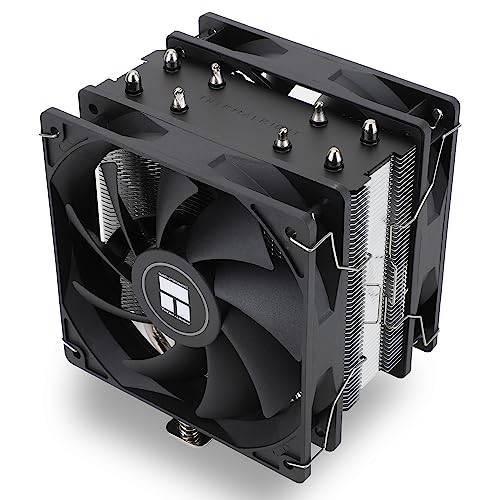
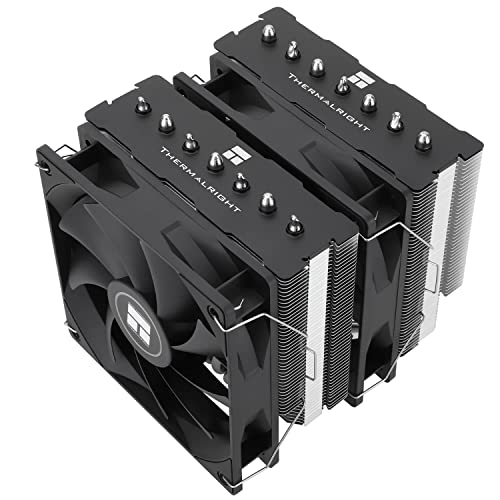
Thermalright AXP90 X36
The 36mm option for the tightest cases
| Specification | Detail |
| Height | 36mm (per API title) |
| Fan | Slim 92mm-class PWM fan (per API title) |
| Sockets | AMD AM4/AM5 and Intel 115x/1200/1700/1851 (per API title) |
The AXP90 X36 exists for the cases other coolers cannot enter: at 36mm it fits allowances that begin with a three, the sandwich-style and console-style enclosures where the processor lives in a slot of air. Within that severe brief it is a serious object, a proper heatpipe design rather than a slab of aluminium, and its maker’s value tradition holds. Its honest territory is the efficient processor classes, chips chosen for the case as much as the case for them, and in that territory it produces the small, silent machines the SFF world exists to make.
Choose it when the case’s allowance is truly minimal and the processor has been chosen with the discipline this guide preaches. Asking it to cool flagship silicon is not a test it fails so much as a question it was never asked in design, and the throttling that follows belongs to the pairing, not the product.
Strengths
- Genuinely fits the tightest allowances
- Real heatpipe design at a coin’s height
- Strong value in its class
Trade-offs
- Cooling ceiling suits efficient processors
- Slim fan works audibly under sustained load
- Footprint still needs a board-level check
Best for: ultra-compact cases and efficient processors. Not suited for: high-TDP silicon or silence-at-any-load demands.

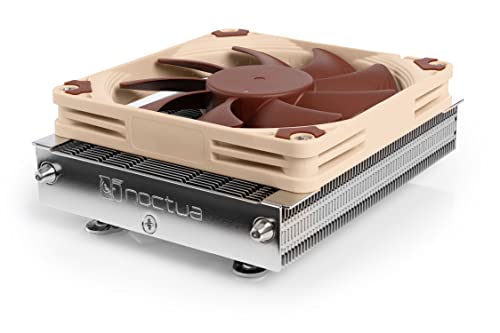
Noctua NH-L9a-AM5
The 37mm reference for quality and quiet
| Specification | Detail |
| Height | 37mm (per API title) |
| Fan | 92mm slim fan (per API title) |
| Clearance | No RAM or PCIe overhang (per API title) |
| Socket | AMD AM5 (per API title) |
The NH-L9a is the category’s reference object, the cooler against which other 37mm designs are measured, and its title carries the two promises that define it: the height, and the absence of overhang over memory or the first slot, which on a crowded mini-ITX board is worth as much as cooling. Its maker’s mounting system, documentation and accessory kit are the class benchmark, and its fan’s acoustic character, a low, even note, is why these coolers furnish so many bedroom and studio machines. A fan-duct kit exists in the maker’s ecosystem for cases where sealing the intake to the panel pays, which in this height class is most of them.
This variant serves the current AMD socket named in its title; sibling variants serve the other platforms, and choosing the right one is the only complicated step in an otherwise serene ownership. Its ceiling is the class’s ceiling, efficient and mainstream processors cooled beautifully, and it should be bought for exactly that with both eyes open.
Strengths
- Reference quality, mounting and documentation
- No memory or slot overhang, guaranteed by design
- Acoustics tuned for desks and quiet rooms
Trade-offs
- Premium price for the height class
- Platform-specific variants require care when ordering
- Not a flagship-processor cooler
Best for: quality-first compact builds on its named platform. Not suited for: high-power processors or buyers counting every unit of currency.

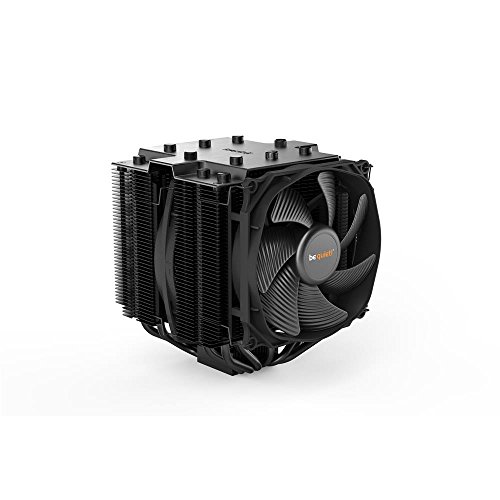
be quiet! Pure Rock Low Profile
The stated 100W class citizen
| Specification | Detail |
| Height class | Low profile for SFF systems (per API title) |
| Rating | 100W TDP class (per API title) |
| Heat pipes | 3 x 6mm (per API title) |
The Pure Rock Low Profile earns its place here by doing something rare in this category: stating its thermal class in its title. A 100W TDP rating, three 6mm heat pipes and a design brief aimed squarely at small-form-factor systems make it the legible choice, the cooler a builder can pair against a processor’s specification without translating between marketing dialects. Its maker’s acoustic priorities are the brand’s whole identity, and the stated maximum noise figure in the listing continues that honesty.
Place it in the middle of the guide’s map: more cooling ambition than the 37mm coins, in a package still loyal to compact cases, for processors whose draw lives honestly inside its stated class. Builders who think in specifications, and who distrust categories that will not state theirs, will find this the most comfortable product in the roundup.
Strengths
- Thermal class stated plainly in the listing
- Brand-wide obsession with quiet operation
- serves both major platforms (per API title)
Trade-offs
- Middle height excludes the tightest cases
- Three heat pipes set its ceiling
- Less headroom theatre than the 57mm class
Best for: compact builds whose processor sits inside the stated class. Not suited for: minimal-height cases or processors beyond its rating.

ID-COOLING IS-55 Black
The 57mm bruiser with a full-size fan
| Specification | Detail |
| Height | 57mm (per API title) |
| Heat pipes | 5 (per API title) |
| Fan | 120 x 120 x 15mm slim fan (per API title) |
| Sockets | Intel 1851/1700/1200/115X and AMD AM4/AM5 (per API title) |
The IS-55 is what the low-profile category does with a real allowance: five heat pipes under a full-size 120mm slim fan, in 57mm, a specification that cools processors the coins cannot approach and does it with the acoustic advantage of a large fan turning slowly. For the SFF cases designed around a fifty-something-millimetre allowance, this is the performance citizen, the cooler that lets a compact build keep a genuinely fast processor honest through long sessions.
Its size writes its cautions: at 57mm it is a citizen of the heartland band only, its footprint with a 120mm fan must be checked against the specific board’s memory and slot geography, and in the tightest cases it simply does not exist as an option. Where the case grants the room, it converts that room into the thing SFF builds are usually short of, thermal headroom, and headroom is silence and longevity in another vocabulary.
Strengths
- Most cooling in this roundup
- Full-size slim fan for quiet air movement
- Broad, current socket support
Trade-offs
- Needs the heartland height allowance
- 120mm footprint demands a board check
- Overkill for efficient-processor builds
Best for: performance SFF builds in cases allowing roughly 57mm. Not suited for: ultra-compact cases or minimal processors.
The Choosing Drill, and the SFF Mistakes That Survive It
The drill is five checks in order. One: the case’s stated cooler allowance, confirmed in a review’s measurements where one exists. Two: your processor’s heat class set against the cooler’s honest class, with the efficient chips matched to the coins and the powerful ones to the heartland, and no pairings made on hope. Three: the cooler’s footprint against your exact board, memory height, slot position and the board’s tall components, from the maker’s compatibility notes where published. Four: the intake path, whether the case’s panel vents align with the cooler’s fan and whether a duct exists for the pairing. Five: the acoustic budget of the room the machine will live in, because an SFF machine is a desk companion and its voice is a specification. The mistakes that survive the drill are the genre’s classics: the processor chosen for benchmarks and the cooler left to cope, the allowance read from the case’s marketing rather than its measurements, the fan starved behind an unvented panel in a case chosen for its face. Every one is a version of the same error, choosing components as individuals in a form factor that only forgives systems.
Case Studies: Three Small Machines and Their Cooling Answers
Abstract bands become decisions when they are spent on machines. The first is the living-room console replacement, a slim case under a television with an allowance in the high thirties of millimetres and an efficient processor chosen for silence: the coin-class coolers in this guide are its whole shortlist, the fan duct is its best upgrade, and its owner’s discipline is to let the processor’s efficiency, not the cooler’s heroism, set the performance. The second is the desk’s small tower, a case with a heartland allowance around sixty millimetres and a genuinely fast processor: the 57mm class exists for this machine, converting its allowance into headroom, and its owner should spend the remaining care on the intake path, because at this performance level the case’s vents are half the cooler. The third is the travel machine, a sandwich case built to be carried, where the cooler must survive being the structural neighbour of a graphics card in motion; there the low-profile cooler’s mounting quality, the reference class represented in this roundup, matters as much as its thermals, and every screw of its celebrated mounting kit earns its reputation. Three machines, three different right answers, one method: allowance first, classes matched, footprint checked.
The Processor Side of the Bargain: Efficiency as a Cooling Feature
Small-form-factor cooling is co-authored by the processor, and the wisest SFF builders choose the chip as a cooling component. Modern processor ranges include models whose performance per watt is their headline, chips that deliver most of the gaming experience inside a fraction of the flagship’s heat, and in a small case those chips are not compromises but enablers, the difference between a machine that is small and a machine that is small and quiet and fast. Power limits are the owner’s side of the same bargain: most current platforms let the processor’s ceiling be set in firmware, and an SFF build that caps its chip a class below its maximum typically surrenders a few percent of peak performance for a transformation in temperature and noise, because the top of the power curve is where the exchange rate is worst. This guide’s coolers should therefore be shopped alongside a willingness to tune, since the combination of a heartland cooler and a considered power limit produces the machines the SFF world brags about, and neither half achieves it alone.
Acoustics in a Small Room: The Specification You Live With
A tower under a desk can hide its voice; a small machine on the desk, at ear level, beside the monitor, cannot, and its cooler’s acoustic character becomes the build’s most-lived specification. Small fans at high speed produce the category’s characteristic note, higher in pitch than a tower’s murmur, and the designs in this roundup divide audibly on exactly that axis: the full-size slim fan of the 57mm class turns slowly and speaks low, the coins’ smaller fans speak higher when pressed, and the reference maker’s fan tuning is an audible product in itself. The buyer’s method is to decide the machine’s acoustic budget before its thermal one, because in SFF the two are the same budget spent in different currencies: a cooler run at its limit is loud by definition, and the headroom bought by the taller classes and the efficient processors is, in the end, quiet. Read the noise figures in listings where makers state them, favour the ones who do, and remember that the room’s other sounds, or their absence at 2 a.m., are part of the specification.
The Graphics Card Next Door: SFF Cooling Is a Two-Body Problem
In a small case the processor cooler does not live alone; it shares a few litres of air with a graphics card that may be the larger heater, and the two cooling systems interact in ways tower builders never meet. In the sandwich layouts that define much of the category, the card and the processor sit back to back across a spine, each breathing from its own panel, and the arrangement’s elegance depends on both intakes being honoured by the case’s vents and neither exhaust poisoning the other’s supply. In classic layouts the card sits below the socket and its exhaust rises through the processor’s territory, making the CPU cooler the downstream citizen of the card’s weather. Either way, the SFF builder must think in system thermals: the processor cooler’s allowance is only half its environment, and a card upgrade can change the processor’s temperatures without the processor’s cooler being touched. This is why the verification method in this guide insists on whole-system sessions, games rather than processor-only stress tests, because the machine that must stay cool is the machine entire, in the configuration its owner actually plays.
Dust, Travel and Time: The Small Case Ages Differently
Small cases age on a faster clock than towers, for geometric reasons. Their intake vents are close to their components, so the dust that a tower’s long air path would drop along the way arrives at the small cooler’s fins nearly intact. Their fans are small and their fin stacks are shallow, so a given mass of dust is a larger fraction of the whole system’s capacity. And their owners move them, to desks, to televisions, to other houses, and every journey shakes the dust deeper and tests the mounting hardware’s torque. The maintenance rhythm must therefore be set by the form factor, not by tower habits: filters and vents inspected quarterly in ordinary rooms, the cooler’s fins cleared before they look dirty, and a temperature baseline remeasured after any move, because the baseline is how a small machine reports that its journey cost it something. None of this is onerous; it is the ordinary husbandry of a dense machine, and the owners who practise it find their small builds as durable as any tower, which is the category’s founding promise kept.
When Small Is Not the Constraint: The Honest Limits of This Guide
A closing honesty: not every reader of this guide should build small, and the cooler question is where that truth surfaces. If the machine’s job is sustained maximum performance, rendering through the night, flagship silicon at full song, the small case’s constitution will tax it in temperature, noise or throttling, and no cooler in this roundup repeals that arithmetic. The SFF world’s genuine miracles are at the efficient and heartland bands, where its machines match towers experience for experience in a tenth of the volume. Beyond those bands, the honest advice is a larger case bought without shame, because the goal was never smallness itself but a machine that serves its owner’s life, and for some lives that machine is a tower. This guide’s drill, allowance, classes, footprint, will tell you which side of that line your build lives on, if it is run before the purchases rather than after them, and a guide that talks a reader out of its own category, when the arithmetic says so, has earned the trust it asks for everywhere else.
The Fan Itself: Bearing, Blades and the 15mm Compromise
In the low-profile world the fan is not an accessory to the cooler; it is half the product, and its engineering deserves the buyer’s eye. Slim fans, the 15mm-thick citizens of this category, live under a compromise their full-thickness cousins escape: at equal diameter they move less air against the fin stack’s resistance, and their designers answer with blade shapes and speeds that trade noise for pressure in varying proportions. Bearing type writes the fan’s biography, the fluid and premium bearings promising the long, quiet life that a desk machine needs, the simpler sleeve bearings asking to be replaced in the machine’s middle age. The practical buying residue is to read the fan’s specification as carefully as the heatsink’s, to favour coolers whose fans are standard sizes that the aftermarket can replace, and to treat a maker’s acoustic claims for a slim fan with the scepticism this series applies to all unverified numbers. A cooler is bought for years; its fan is the part most likely to ask for attention inside those years, and choosing a replaceable one is choosing the form of that attention in advance.
Installation in the Small: Order of Operations
Small builds punish improvisation, and the cooler’s installation has an order that the form factor dictates. The cooler is usually mounted to the board before the board enters the case, because the case’s walls will deny access to at least one mounting point the moment the board is seated. Memory and the board’s own tall neighbours should be test-fitted at the same bench stage, while everything can still be rearranged without surgery. Cables are routed before the cooler where the design allows, because the cooler’s footprint covers the very territory the fan headers and front-panel leads live in. And the first power-on should happen with the case open and the builder watching the fan, since in a small build a cable resting in a slim fan’s blades is a commoner fault than any electronic one, and the cheapest to cure at minute one and the most annoying at month one. None of this is difficult; all of it is sequence, and sequence is the small builder’s substitute for space.
The Cooler as the Small Build’s Centrepiece: Planning Around It
Experienced small-build planners invert the usual order and choose the cooler early, because in the small case the cooler is not a component among others but the volume around which the rest of the build is negotiated. Its height sets the case’s minimum, its footprint claims the board’s centre, its fan’s voice becomes the machine’s voice, and its clearance decisions pre-answer the memory and cable questions that larger builds get to improvise. Planning around it means the case is chosen against its dimensions, the board against its keep-outs, the memory against its shadow, and the processor, honestly, against its ceiling, in that order, before money moves. The inversion feels strange to builders raised on towers, where the cooler is nearly an afterthought, and it is the single most reliable predictor of a small build that assembles without a returns process. The small machine is a solved puzzle or an unsolved one, and the solving begins at its centre.
Silence as a Specification in the Small
Small machines live close to their owners, on desks and under televisions, and their acoustic specification deserves the same rigour as their thermal one, because in the small the two are one negotiation conducted in a tiny room. The specification should be written in situations rather than numbers: inaudible at idle from the listening position; unobtrusive under the evening’s game at that position; and never, at any load, possessed of a character, a whine, a rattle, a hunting surge, that draws attention to itself, because character is what the ear cannot habituate to. Achieving it is the accumulated craft of this guide, the ceiling respected, the fan chosen for its bearing and its replaceability, the curve tuned in the machine’s real home. The reward is the small form factor’s founding promise kept in full: a machine with a desktop’s manners and a fraction of its presence, present in the room only when its screen says so.
The Travel Build: Coolers That Survive the Journey
A population of small machines exists to move, between rooms, between houses, in luggage to the event or the relative’s spare desk, and travel rewrites the cooler’s requirements in a dialect worth learning. Mass is the traveller’s first variable: a cooler’s weight, cantilevered from the board through every jolt of the journey, argues for the low and the light, and for mounting hardware that clamps rather than merely rests. The second variable is the fan and heatsink’s vulnerability to the case’s flex, since a travelled case is a flexed case, and clearances that were adequate on the desk can become contacts on the road. The prudent traveller’s programme adds a pre-journey audit to this guide’s installation order, mounts verified, cables secured, the cooler’s fasteners given their final check, and a post-journey first power-on with the panel open and an ear for the fan. None of this is onerous, and all of it is the difference between a machine that travels as luggage and a machine that travels as a patient. Portability is a specification; the cooler is where it is kept.
The Small Build’s Upgrade Ethic: Designing for the Second Owner of Your Own Machine
Close with the ethic that ties this guide to its siblings: the small build should be designed for its second owner, who is usually its first owner in three years, with a different processor, a different card and no memory of the original compromises. That future owner is served by the standard fan size that can still be bought, the mounting kit whose maker still lists it, the clearance margins that admit the next memory kit, and the record, the build’s audits filed together, that explains what was chosen and why. They are ill-served by the heroic one-off, the cooler that fit only this board, the fan that exists only in this product, the compromise that lives only in the builder’s head. Small builds tempt heroism because their constraints are tight, and the temptation should be resisted precisely there, because a tight machine with no margins has no future tense. Design the small machine as a going concern and it will go, through upgrades and years, at the size its owner fell in love with.
The Small Cooler at the Counter: Questions That Fit in a Pocket
The retail form of this guide is a pocketful of questions, because small coolers are sold in the same fog of adjectives as their tower cousins and the fog is thicker at small sizes, where every millimetre is contested. Ask for the height in millimetres and the footprint’s keep-out diagram, and treat a maker who cannot produce the diagram as a maker who has not measured the product’s own territory. Ask what fan it wears, its size and thickness and bearing, and whether the aftermarket can replace it. Ask which processors it has been measured on, at what sustained load, in what case, since a small cooler’s chart without a case is a rumour. And ask about the mounting kit’s future, the maker’s history of supporting the next socket. Four questions, each answerable from documents, and the fog lifts. The small build’s whole discipline is in those questions: in a machine with no room for surprises, the documents are the room where surprises are prevented.
The Small Build’s Thermal Dossier
The small machine’s method deserves its document, and in the small the document matters more than anywhere, because the margins it records cannot be re-measured by eye once the panels close. The dossier states the cooler and its measured ceiling against the processor’s sustained figure; the clearances on every side, memory, panel, card, in millimetres as built; the fan’s identity and its replacement’s name, since the small fan is the build’s likeliest future purchase; the equilibrium temperatures from the commissioning session, in the machine’s real home; and the verdict for the next processor the case could honestly cool. Filed with the build, the dossier converts the small machine from a solved puzzle, whose solution lives in its builder’s memory, into a maintained system whose solution is on paper. Small builds are the ones most often sold, gifted and inherited whole, and the dossier is the difference between a machine that arrives with its knowledge and a machine that arrives as a riddle in a beautiful box. Write the five lines. The next owner is frequently you, three years older, and no wiser about a build you have forgotten.
Small, Cool and Quiet: The Triangle Stated as a Creed
End with the creed the whole guide has been assembling. The small machine asks for three virtues that ordinary builds may treat as separate wishes: smallness, coolness and quiet, and it grants them only together, as a negotiated settlement among physics, geometry and budget. The negotiation’s rules are the guide’s chapters in one breath: respect the ceiling, because watts are the currency both other virtues are bought with; spend the millimetres deliberately, because in the small they are the budget itself; choose the fan as a citizen, because its voice is the machine’s; verify in the real home, because the desk is not the bench; and write the settlement down, because a small machine’s compromises are too intricate to bequeath by memory. A builder who holds those five rules can design the settlement fresh for any case, any processor and any generation, which is the definition of having learned a subject rather than a product. The products will shrink and change. The triangle will not, and neither will the creed that negotiates it.
The Small Machine’s Evidence Locker
Gather the small build’s papers into their final inventory, because in the small the paperwork is load-bearing. The cooler’s dossier from this guide, ceiling, clearances, fan and verdict. The case’s true internal dimensions as measured, which will differ from its brochure in at least one place worth knowing. The board’s keep-out map, the neighbourhood as built. The thermal baseline from the commissioning session, taken in the machine’s real home. And the cable plan, drawn, because in a small case the cables are architecture and the next pair of hands inside the machine deserves the architect’s drawings. Five documents for the smallest machine in the house, which is not disproportion but proportion itself: the smaller the machine, the more of its truth lives outside its panels, in the records of the person who solved it. Solve it on paper and the machine stays solved. Solve it in memory and it becomes a fresh puzzle at every upgrade, in a case with no room for puzzling. The small machine’s last specification is its file. Keep it complete.
Small’s Last Word: Constraint Is a Design Partner
End with the reframe the whole guide has been earning. The small build’s constraints are usually described as its enemies, the millimetres rationed, the watts capped, the neighbours crowding, and the description is exactly backwards. Constraint is the small build’s design partner, the force that makes every decision deliberate, every margin priced, every component earn its volume in a way the cavernous tower never demands. That is why small builders are, disproportionately, the hobby’s most literate: their machines would not forgive anything less. The cooler at the centre of this guide is the partnership’s emblem, a component whose ceiling, footprint and voice must all be chosen in one act of judgement, with documents, against a case that will audit the judgement at the first power-on. Choose it well and the small machine delivers the form factor’s founding promise entire, a computer that is all capability and no furniture. The constraint did that. Thank it, measure it, and build inside it like you mean it.
The Small Machine’s Handover: A Box, a File and a Warning
Small machines are gifted and sold whole more often than any other kind, because their unity is their charm, and the handover deserves its protocol. The box should contain the machine, its power supply, and the spares the form factor makes precious: the cooler’s alternate brackets, the spare slim fan if one was bought, the case’s extra panels and screws, each labelled, because small parts for small cases are the easiest in the world to lose and the hardest to replace. The file should contain the dossier entire, ceiling, clearances, fan, baselines and cable plan, with the current verdict in one sentence. And the warning, given cheerfully and in writing, should name the machine’s one non-negotiable: its processor ceiling, the appetite its cooler and case were settled around, so the next owner’s upgrade ambitions are informed before they are expensive. A small machine handed over that way arrives as a going concern rather than as a riddle, and its second life begins at the standard its first life maintained. Unity was the charm. Documentation is how the charm survives the journey.
Standing Orders for the Small Household
The small household deserves standing orders in their final form, proportionate to the machines they govern: short, strict and nearly free. First, no small case is ordered until its centrepiece is chosen, the cooler’s ceiling, height and keep-outs known from documents, because in the small the order of decisions is the design. Second, no processor is admitted whose sustained appetite the settlement cannot cool in the machine’s real home, verified in the commissioning session rather than assumed from a bench. Third, the fan is bought as a citizen, standard in size, honest in bearing, replaceable from the aftermarket, because it is the build’s likeliest second purchase and should be its easiest. Fourth, the dossier is written at the build and amended at every change, five lines that carry the settlement’s whole memory. Fifth, the handover includes the ceiling’s warning in writing, so the machine’s next owner inherits its limits as knowledge rather than discovering them as faults. Five orders, and the small machine’s triangle, size, coolness and quiet, is governed by procedure instead of by the luck of the first assembly. Luck is a poor architect at any scale. At this scale it is simply unaffordable.
The Small Machine’s Manifesto: Less, Deliberately
End with the manifesto the form factor has been arguing throughout this guide. Less is not the small machine’s apology; it is its thesis, that a computer’s virtue is measured by the life it enables per unit of the room it occupies, the noise it makes and the attention it demands. Judged by that measure, the well-built small machine is not a compromised desktop but a perfected one, every millimetre accounted for, every watt negotiated, every compromise chosen in daylight and written in the file. The builders who love the form factor love it for exactly that discipline, the way sonnet writers love the fourteen lines: the constraint is where the craft lives. This guide has taught the craft in its central component, the cooler, because the cooler is where the sonnet’s rules bind tightest. Master it there, and the rest of the small machine follows as a matter of habit. Less, deliberately, verified and filed. That is the whole poem, and it fits, as it should, in a very small space.
A Last Exercise: Three Small Machines, Settled
Close the guide with the exercise that tests its whole teaching at once, the settling of three small machines the reader is likely to meet. The first is the desk machine for work and play in a shared room, where the triangle’s binding vertex is quiet: the processor chosen a class below the case’s ceiling, the fan a premium citizen, the curve tuned at the listening position, and the settlement verified across an evening rather than across a benchmark. The second is the living-room machine, where the binding vertex is presence: the cooler’s height and the case’s furniture manners decided together, the idle state treated as the main event, the television’s profiles drawn as calmly as the game’s. The third is the travel machine, where the binding vertex is survival: mass low and clamped, clearances audited before and after journeys, the dossier travelling with the machine it describes. Three settlements, one negotiation: ceiling respected, millimetres spent deliberately, fan chosen as a citizen, verification in the real home, settlement written down. A reader who can settle all three without reopening the guide owns the subject, and owns with it the small builder’s central secret, which was never really about size: that constraint, met with documents and daylight, produces machines more deliberate, and usually more loved, than freedom ever does.
One More Settlement: The Reader’s Next Small Machine, Negotiated in Advance
A guide should end by handing its negotiation to the reader in advance, against a machine that exists so far only as an intention. When the next small build is first imagined, in a sale, in a video, in the sight of a beautiful case, perform the settlement’s opening moves before the desire hardens into a cart: name the case’s true internal room from documents and owners rather than from the brochure; name the cooler that room implies, ceiling, height and keep-outs; name the processor that cooler honestly serves in the room the machine will live in; and write the three names together, because in the small, those three names are the build, and everything else is furnishing. The exercise takes fifteen minutes and a download of two manuals, and it prevents the form factor’s one unforgivable waste, the beautiful case returned, or worse, kept and resented, because its centrepiece was chosen by a photograph. Settle early, in writing, with the triangle open on the desk. The machine that results will still be small, which was the point, and it will also be deliberate, which was the method, and the two together, as this guide has argued from its first page, are the whole of the form factor’s considerable charm.
The Dossier’s Last Blank Line
A last line for the small machine’s dossier, left deliberately blank, offered as the guide’s farewell to the settlement it has spent its length negotiating. The blank line stands beneath the recorded ceiling, clearances and verdict for the citizen not yet admitted, the processor not yet launched, whose appetite will one day be weighed against the same triangle in the same plain figures. Dossiers that expect their own amendment are consulted at every upgrade; dossiers that pretend the settlement is eternal are abandoned at the first chip that does not fit their memory of it. Leave the line. When the next generation’s small machines are drawn, tighter, quieter and more ambitious, the household will not need a new philosophy, only the old negotiation, conducted in the space that was reserved for it by a builder who understood that settlements, like machines, survive by expecting their own revision. The triangle will still be there, size, coolness and quiet, patient as geometry. So will the line. Between the two of them, the next small machine is already half designed.
Related guides
Frequently Asked Questions
What is the maximum cooler height in most SFF cases?
It varies by design philosophy, from under forty millimetres in the slimmest sandwich and console-style cases to sixty or seventy in compact towers that accept small tower coolers. There is no standard, which is why the case’s stated allowance, verified where possible, is the first number in this guide’s drill and the one every product is judged against.
Can a 37mm cooler handle a gaming processor?
It can handle an efficient gaming processor, the classes designed to deliver their performance inside a modest power envelope, and it will do so quietly and well. It cannot honestly handle flagship silicon at full power; the result is throttling, not damage, because the processor protects itself, but the performance you bought evaporates. Match the classes and the little coolers are superb.
Is a fan duct worth it in a small case?
Frequently, yes. Sealing the cooler’s intake to the case’s vent stops the fan from recirculating the case’s warm interior air, and in tight enclosures the measured gain can be several degrees, which in this category is the distance between throttling and comfort. Where the cooler’s maker offers a duct for your combination, it is among the cheapest performance in the build.
Should I choose the processor or the cooler first?
Choose the case first, because its allowance is the fixed law; then choose the processor and cooler as a pair inside that law, their heat classes matched. The SFF builds that disappoint are almost always the ones where a processor was chosen in a tower’s freedom and then introduced to a small case’s constitution.
Do low-profile coolers work for a PC that games for hours?
Yes, when the classes are matched: the heartland designs in this guide are built for exactly that duty, and the efficient-processor pairings in the coin class game indefinitely within their envelope. Duration is not the variable that breaks SFF cooling; mismatch is. Verify with a long session in the closed case and let the thermometer vote.
What about liquid cooling in a small case?
Compact all-in-one liquid coolers are the SFF world’s other great answer, moving the heat to a radiator at the case’s edge and leaving the socket nearly empty. They import their own allowances, radiator dimensions, tube routing, pump noise, in exchange. This guide’s air coolers remain the simpler, quieter-to-own answer wherever their height fits, which is more builds than their reputation suggests.
The Bottom Line
Small-form-factor cooling is a constitution, not a compromise: the case sets the height, the processor’s class must live inside it, and the cooler’s footprint must respect a crowded board. Read the allowance, match the classes, check the footprint, and the four coolers here cover the territory from the slimmest coin to the heartland’s bruiser. Build inside the law, and the small machine runs as cool and quiet as the large one it replaced.