Disclosure: As an Amazon Associate, ilcastellomenu.com earns from qualifying purchases. Links on this page are affiliate links; they cost you nothing extra. Prices and availability change often, so check the current Amazon listing before you buy.
The most common way to ruin a PC build’s first evening is also the most avoidable: a beautiful tower cooler, a set of tall, light-bedecked memory modules, and the discovery that the two intend to occupy the same air. Learning how to choose a cpu cooler for ram clearance is really learning to read two dimension sheets as one document, the cooler’s footprint over the memory slots and the memory’s height above them, before money changes hands. This guide teaches that reading. You will learn where the collision actually happens, which cooler architectures are born clearance-friendly and which must be checked millimetre by millimetre, how to measure your own board and memory, and the three verified coolers reviewed below that solve the problem in three different ways: an offset single tower, a dual tower whose front fan can step aside, and a low-profile design that never enters the memory’s airspace at all. Height, the cooler’s other famous dimension, is the subject of CPU cooler height limits explained; this guide is about the sideways war over the slots.
How To Choose A Cpu Cooler For Ram Clearance: Where the Collision Happens
A motherboard’s memory slots sit immediately beside the processor socket, and a tower cooler’s fin stack and front fan extend outward from the socket in exactly that direction. The collision zone is therefore precise: the cooler’s fan and the lowest fins overhang the first one or two memory slots, and any module taller than the space beneath that overhang either cannot be installed, cannot be removed without unmounting the cooler, or forces the fan to ride higher on the fins, which raises the cooler’s total height and can break the case’s limit instead. Memory height is the variable the industry made theatrical: plain modules stand modestly above the slot, while gaming modules with sculpted heatspreaders and light bars stand far taller, and the same cooler can be a perfect fit over one and an impossibility over the other. Three numbers govern every pairing: the memory’s height in millimetres, the cooler’s clearance beneath its fan and fins over the slots, and the fan’s adjustability if the first two numbers quarrel. Cooler makers increasingly publish the second number, and memory makers have always published the first; the buyer’s entire job is to compare them, a job the rest of this guide turns into a drill. Socket fit is the prior question, settled by CPU cooler socket compatibility, and the cooler’s thermal adequacy is settled by how CPU cooler TDP ratings work; clearance is the third leg of the stool, and builds fall off it more than the other two combined.
In this guide
The Architectures, Ranked by Their Manners Over Memory
Cooler designs have distinct clearance personalities. The offset single tower is the diplomat: its fin stack is shifted away from the memory side, or its fan sits in a cutaway, so standard and moderately tall modules pass beneath untouched. The full-width dual tower is the heavyweight with a movable chair: its front fan overhangs the slots completely, but the fan mounts on rails or clips that let it slide upward to clear tall memory, at the price of total height, or be removed entirely for a small performance cost. The top-down and low-profile coolers are the neighbours who never visit: their fans blow down across the board from a height that keeps the whole footprint inside the socket’s keep-out zone, and their listings say so, in phrases like no RAM overhang, which the Noctua reviewed below carries in its very title. Liquid cooling’s radiator blocks leave the socket area nearly empty, which is why small and showcase builds flee to them, though they import their own clearances at the case’s edges. Noise is the shadow specification across all four, since a fan displaced upward or a second fan added changes the acoustic picture, a trade priced in CPU cooler noise levels explained. Judge architectures first and models second, and most clearance disasters are prevented at the category level before a single product is compared.
Three Verified Coolers That Solve It Three Ways

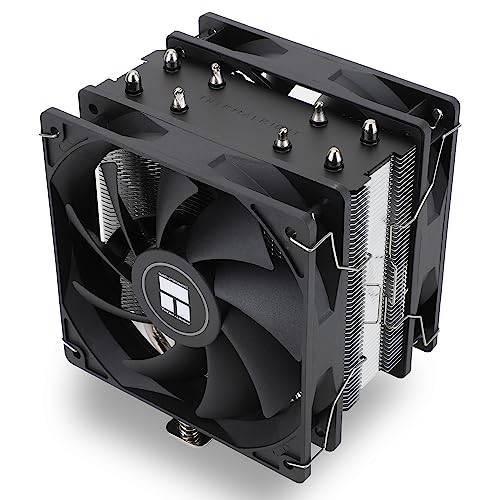
Thermalright Assassin X 120R SE PLUS
The value single tower for mainstream builds
| Specification | Detail |
| Type | Single-tower air cooler, 4 heat pipes (per API title) |
| Fan | 120mm PWM fan (per API title) |
| Sockets | AMD AM4/AM5 and Intel 1700/115x/1851 (per API title) |
The Assassin X 120R SE PLUS represents the sensible centre of this guide: a single 120mm tower on four heat pipes, sized and priced for the mainstream processors most builds actually contain, in a category where single towers are the easiest architecture to keep clear of memory trouble. Its single fan and compact stack leave the build’s geometry simple, and for the plain and moderately dressed memory modules most systems run, the pairing is uneventful, which is the highest praise a clearance guide can give.
Buy it with the drill, not on faith: confirm your modules’ height against the space beneath its fan once installed, and remember that single towers ask the least of every other dimension too, case height included. For a first build or a quiet mainstream machine, this is the shape of cooler around which no clearance drama has ever been written.
Strengths
- Straightforward geometry that suits most memory
- Mainstream price class for its category
- Broad socket support across current platforms
Trade-offs
- Tall light-bar modules still deserve a measurement
- Single tower ceiling suits mainstream, not flagship, processors
- Fan position is less adjustable than dual-tower designs
Best for: mainstream gaming and general builds with standard-height memory. Not suited for: flagship processors run hard, or showpiece memory chosen before the cooler.
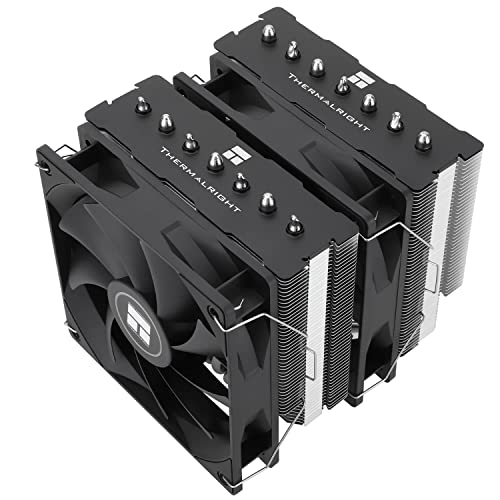
Thermalright Peerless Assassin 120 SE
Dual-tower performance with a movable front fan
| Specification | Detail |
| Type | Dual-tower air cooler, 6 heat pipes (per API title) |
| Fans | Dual 120mm PWM fans (per API title) |
| Sockets | AMD AM4/AM5 and Intel 1700/115x/1851 (per API title) |
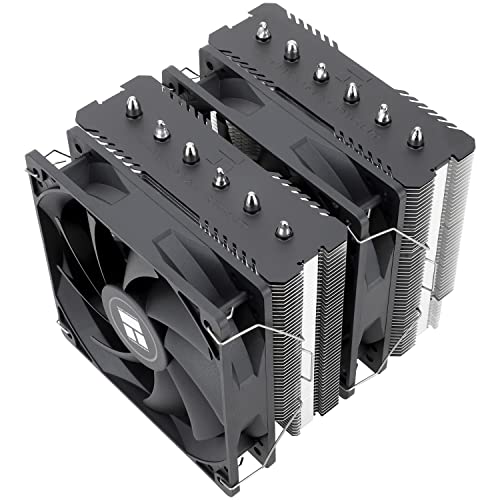
The Peerless Assassin 120 SE is the performance answer in this roundup: two fin stacks, six heat pipes and a pair of 120mm fans, a specification that cools processors the single towers cannot, at a price the category’s famous names should find embarrassing. Its clearance story is the dual tower’s classic bargain. The front fan overhangs the memory, and the fan’s mounting lets it slide upward to clear tall modules, converting a memory problem into a height question, which is why this cooler and CPU cooler height limits explained must be read together: check that your case has the height for the fan’s raised position before you need it.
Run with both fans where memory allows, since the front fan is part of the design’s performance; where memory forbids it, raising the fan preserves nearly everything and removing it preserves most, and either is a better answer than forcing a module under a fan that resents it. This is the cooler for the builder who refuses to choose between performance and their chosen memory kit, and is willing to spend ten minutes with a ruler to have both.
Strengths
- Genuine flagship-class cooling in its category
- Front fan adjusts to clear tall memory
- Value that embarrasses the famous names
Trade-offs
- Raised front fan adds total height
- Front fan overhang demands the measurement drill
- Heavier build; check board and case accordingly
Best for: high-performance processors paired with tall memory, in cases with height to spare. Not suited for: height-limited cases, or buyers unwilling to measure.
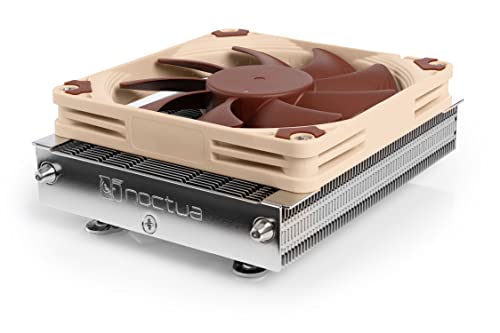
Noctua NH-L9x65
The low-profile cooler that never overhangs memory
| Specification | Detail |
| Type | Low-profile top-down cooler, 65mm height (per API title) |
| Fan | 92mm slim fan (per API title) |
| Clearance | No RAM or PCIe overhang (per API title) |
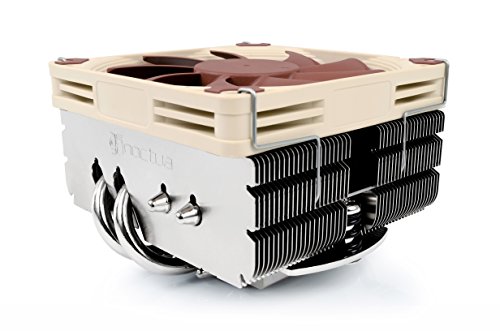
The NH-L9x65 solves the clearance problem by declining to have it: a 65mm low-profile design whose footprint stays inside the socket’s own territory, with its title promising no overhang over memory or the first expansion slot. That makes it the answer for compact builds, for boards crowded by design, and for any builder who wants the memory slots permanently accessible, modules swapped at will, without unmounting anything. Its maker’s reputation for mounting hardware, documentation and long socket support is the category’s benchmark, and the accessory kit in the box is famously complete.
Its trade is written in its height: a low-profile cooler moves less air than a tower, and its honest territory is the efficient and mainstream processor classes rather than flagship silicon run at full song. Within that territory it is close to perfect, quiet, accessible and forgettable in the way the best components are. The same philosophy, pressed even flatter, is the subject of choosing a cooler for a small form factor build.
Strengths
- Guaranteed memory clearance by design
- Memory stays removable with the cooler mounted
- Exemplary mounting kit and documentation
Trade-offs
- Cooling ceiling below tower class
- Premium price for its size
- 92mm fan character differs from 120mm towers
Best for: compact builds, crowded boards, and anyone who swaps memory often. Not suited for: flagship processors under sustained heavy load.
The Measurement Drill, and the Mistakes That Survive It
The drill is four numbers and five minutes. One: your memory modules’ height, from the maker’s specification, measured from the slot, not from the board. Two: the cooler’s published memory clearance, or, where the maker is silent, the height of its lowest fin and fan underside over the slots, taken from a thorough review’s measurements. Three: if the cooler’s fan can slide, the cooler’s total height in the raised position, checked against your case’s limit. Four: the distance from the socket to the first slot on your specific board, because boards vary in how close they park the memory. The mistakes that survive the drill are social rather than mathematical: buying the memory for its looks before the cooler is chosen, assuming a famous cooler must fit because it is famous, forgetting that the fourth slot’s module is the one the fan meets, and discovering at installation that “clearance” in a listing meant the fins, not the fan. Every one of them is prevented by choosing the cooler and the memory in the same sitting, from each other’s dimension sheets, which is this series’ refrain in every category it touches. Verify the result in the first week with the method in checking your CPU temperature range, because a fan raised or removed for clearance changes the cooling you actually bought, and the thermometer is the audit of every compromise.
The Four Geometries of Conflict, Illustrated in Words
Clearance failures come in four geometries, and naming them helps a buyer interrogate a listing like a detective. The first is the fan overhang, the commonest: the cooler’s fin stack clears the memory but its front fan, thicker than the fins’ edge and mounted proud, does not, and the fix is the fan’s adjustability, which is why this guide keeps asking whether the fan can slide. The second is the fin overhang proper, where the stack itself reaches over the first slot; no fan adjustment cures it, and the pairing is simply forbidden with tall modules. The third is the heatpipe bend, where a pipe’s curve at the stack’s base dips into the memory’s airspace at one end, a local conflict that photographs reveal and specifications hide. The fourth is the mounting hardware’s revenge: a bracket, clip or fan wire that lives exactly where a module’s latch needs to travel, so the memory fits but can never be removed. A buyer who checks a prospective cooler against all four geometries, in reviews’ installation photographs as much as in dimension tables, will not be surprised on installation night, because there is no fifth geometry for the surprise to hide in.
Liquid Cooling and the Clearance It Abolishes, at a Price
Every clearance guide owes its readers the liquid paragraph. An all-in-one liquid cooler moves the heat exchange to a radiator at the case’s edge and leaves above the socket only a compact block and two tubes, which abolishes the memory conflict entirely and returns the slots to permanent, unmountable-free access. For the builder whose heart is set on the tallest, most theatrical memory and the most powerful processor in a case that cannot host a dual tower’s raised fan, liquid is not an indulgence but the honest solution. Its prices are paid elsewhere: the radiator’s own clearance at the case’s edge, which is the same geometry exam sat in a different room; a pump’s acoustic signature in place of a fan’s; a finite service life against air’s effective immortality; and a cost that, set against the air coolers in this guide, buys the memory’s freedom at a premium. The air coolers reviewed here exist because most builds do not need that freedom at that price. But the builder who does need it should buy it without guilt and without pretending a tower was going to fit.
A Pre-Flight Checklist for the Whole Socket Neighbourhood
Close the subject with the checklist that treats the socket as a neighbourhood rather than a point. Memory height against cooler overhang, in millimetres, both makers’ figures. Fan adjustability and the cooler’s total height in its adjusted position, against the case’s limit. The first expansion slot’s clearance against the cooler’s width, for the graphics card’s backplate. The board’s tall components, power-stage heatsinks and decorative covers, against the cooler’s footprint diagram where the maker publishes one. The mounting system’s demands, backplate access and the order of installation, read in the manual before the paste is opened. And the exit strategy: can the memory be removed, can the cooler be removed, can the processor be reached, in the finished machine, without a full teardown? A build whose owner can answer yes to the last question has been designed; a build that answers no has been assembled. The distinction is this guide’s whole thesis, and it costs five minutes a component.
Memory Makers’ Side of the Story: Why Modules Grew Tall
Fairness requires hearing the other defendant. Memory modules grew tall for reasons that were, at each step, defensible: the heatspreader began as a genuine thermal and handling aid, spreaders protect the chips and give fingers something that is not a circuit board to hold, and in the high-performance era the spreader became a canvas, carrying brand, light and identity in a case that had become a display object. The light bar is not frivolous to the buyer who chose a glass case as furniture; it is the product working as designed. The collision this guide exists to prevent is therefore not a villainy but a coordination failure between two industries designing for the same few centimetres without a shared referee. The buyer is the referee, and the dimension sheets are the rulebook. There are signs of the industries learning: cooler makers publish clearance figures their predecessors never printed, memory makers offer low-profile lines beside their theatrical ones, and case reviewers measure the socket neighbourhood as a matter of course. Until the coordination is complete, the drill in this guide is the price of a glass case and tall memory and a big cooler, three legitimate desires that must be introduced to each other on paper before they meet in aluminium.
The Workstation and Server Echo: Clearance at Scale
The clearance problem has a professional cousin worth a visit, because it proves the principle at scale. Workstation and server boards park many memory slots beside large sockets, and their coolers are designed inside a discipline where the keep-out zones are specified, published and obeyed by every party, because a data centre cannot return a thousand coolers that meet a thousand modules. The consumer market’s chaos is, by contrast, a coordination luxury: thousands of combinations, no central referee, and the returns system as the de facto standard. The lesson the professional world offers the home builder is not its hardware but its habit: in that world, nobody buys a cooler without the board’s keep-out diagram open beside it, and the diagram is treated as part of the product. Home makers increasingly publish the same diagrams for gaming boards and coolers, in manuals and compatibility lists that most buyers never open. Opening them is the entire upgrade this guide asks for, and it costs less time than one returned parcel.
Troubleshooting a Build That Will Not Close: A Triage
For the reader who arrives with the build already bought and the panel already refusing, a triage in order of reversibility. First, reseat and re-measure: a fan clipped one notch higher, a module not fully latched and riding proud, a cooler mounted a degree rotated can each manufacture a conflict that measurement dissolves. Second, exchange the fan’s position for height knowingly: raise it by the module’s excess, confirm the case still closes and the temperatures still satisfy, and record the compromise as a chosen one. Third, reorder the population: many boards run two modules in the far slots by design for dual-channel operation, and a two-module kit may live entirely outside the conflict zone that a four-module kit cannot escape. Fourth, exchange the cooler within its return window for the architecture that fits, which is what the window is for, and let the lesson, not the loss, be the purchase’s residue. What the triage never recommends is force, modification of modules, or the removal of a fan as a permanent silent decision; each converts a geometry problem into a hardware risk, and geometry problems always have a geometric solution one step earlier in the list.
The Graphics Card Side of the Socket: Clearance in the Other Direction
The socket has two neighbours, and this guide’s subject is only the louder one. On the other side sits the first expansion slot, whose graphics card presents its backplate, and sometimes its power cables’ territory, to the cooler’s flank. Wide towers and some low-profile designs extend toward that slot, and the conflicts there are quieter than the memory’s because they are discovered as a card that will not seat rather than as a module that will not fit. The same dimension-sheet discipline governs both directions: the cooler’s footprint diagram, where the maker publishes one, shows the keep-out in every direction at once, and the five minutes spent reading it covers neighbours the buyer had not thought to worry about. Boards vary in the socket-to-slot distance as they vary in the socket-to-memory distance, which is why compatibility lists name boards rather than form factors. The socket is a neighbourhood with four borders, and the prepared builder surveys all of them.
A Word for the Airflow You Disturb
Clearance decisions are also airflow decisions, though they are rarely introduced as such. A front fan raised to clear tall memory changes the cooler’s intake geometry and can spill air over the fin stack’s top that the design intended to pass through it. A fan removed entirely converts a push-pull tower into a single-fan instrument with a different voice and a different ceiling. A low-profile cooler chosen for its manners blows downward across the board, feeding the power stages and the memory a breeze that tower designs never give them, a side benefit that occasionally makes the “compromise” cooler the system’s thermal winner. None of these effects is large enough to choose by, and all of them are large enough to measure after the fact, which is why this guide’s refrain, verify with the thermometer in the first week, applies to clearance compromises with the same force as to cooler choices. Geometry is decided on paper; its consequences are audited in degrees.
Clearance as a Resale and Reuse Virtue
A cooler’s clearance manners follow it beyond the first build, and the thoughtful buyer counts that in its favour. Towers with generous, honestly published geometry are the used market’s easiest citizens, because they fit the next owner’s unknown memory and unknown board without negotiation, and their makers’ maintained mounting kits keep them current across sockets. The eccentric cooler, the one that fit one build by a millimetre and a prayer, is a liability in every subsequent machine and a hard sell in every listing. The same logic applies within one owner’s life: the cooler that clears everything can be carried across the memory upgrade, the board change and the second build, amortising its price across a decade, while the tight-fitting specialist must be re-bought at every change of neighbourhood. Clearance, in other words, is not only a fit specification but a longevity specification, and it should be priced as one. Buy the cooler your future builds can also use, and the socket’s crowded neighbourhood stops being a recurring toll.
The Five-Minute Pre-Purchase Routine, Final Form
This guide’s whole method compresses into a routine short enough to perform at the point of purchase, and it is worth stating in its final form. One: name the memory kit’s true height from its maker’s sheet, heat spreader included. Two: read the cooler’s clearance figure and its conditions, fan position and configuration named. Three: compare, and demand daylight between the figures, because paper tolerances stack. Four: check the board’s name on the maker’s compatibility list, or measure the socket’s neighbourhood yourself. Five: confirm the return path, because even perfect arithmetic meets the occasional eccentric board. Five minutes, five checks, and the most common fit failure in air cooling becomes a story other builders tell. The routine’s brevity is its virtue: a method that takes an hour will be skipped under the pressure of a sale, and a method that takes five minutes becomes a habit, and habits, as this series keeps concluding, are what actually protect machines.
The Neighbourhood in the Fifth Year: What Changes Around a Cooler
A cooler is installed into a neighbourhood that will not hold still, and planning for its fifth year is part of choosing it. Memory is the neighbour most likely to change, kits growing taller as their lighting and branding ambitions grow, so the clearance bought today should be priced against the memory of the next upgrade, not only the kit in the cart. The graphics card below thickens by the generation, as the slot guide in this series documents, and a cooler whose lower fins or fan clips live close to the first slot will meet that thickening personally. Even the board may change beneath the cooler if the platform is kept and the board is not, which is why the mounting kit’s continued availability, filed in this guide’s earlier advice, is a fifth-year question asked in the first week. The buyer who runs the neighbourhood forward five years buys the cooler with the forgiving geometry and the maintained kit, and is repaid in the only currency that matters then: options that are still open.
Clearance and the Aesthetics of the Visible Build
A candid closing note on looks, since the windowed case has made the socket’s neighbourhood a displayed landscape and clearance decisions are partly composition decisions. A fan raised asymmetrically to clear tall memory reads, through glass, as a mistake even when it is a solution, and a cooler chosen for its manners lets the build’s lines stay parallel and intended. Memory chosen without its lighting ambitions, in a build whose window faces a wall, spends nothing on an audience that does not exist; memory chosen as the build’s jewellery, under a tower that was selected to frame it, is a coherent aesthetic programme. The guide’s only insistence is that the programme be chosen rather than collided into: fit first, verified by measurement, and then beauty, arranged inside the verified space, where it can be enjoyed without an asterisk. A build that is both cool and composed was not lucky. It was measured, and then it was decorated, in that order, permanently.
The Clearance Question at the Counter: Three Sentences That Settle It
End with the retail form of the method, because most clearance failures are born at the counter in a fog of adjectives. The buyer who can say three sentences will not be among them. My memory kit stands this tall, from its maker’s sheet. Your cooler clears this much, in this configuration, by its maker’s diagram. And if the two figures meet without daylight, the sale waits until they do not. Those sentences convert a negotiation about impressions into an exchange of measurements, and they expose, instantly, the products whose makers will not commit to a diagram, which is itself the loudest information in the shop. Sellers of honest coolers welcome the sentences, because their products were designed by people who publish geometry. Carry the three sentences the way this series’ drills are meant to be carried, short enough to survive a sale’s excitement, and the socket’s crowded neighbourhood becomes what it should have been all along: a place you measured before you moved in.
The Socket’s Neighbourhood in the Age of the Decorative Board
Modern boards dress their socket neighbourhoods with covers, shields and decorative armour, and the clearance audit must now include the board’s own furniture among the neighbours. The tall cover over the rear connections, the armour over the storage beside the socket, the shroud that turns a plain board into a styled one, all occupy airspace that cooler diagrams drawn against bare boards do not account for. The audit’s amendment is simple: measure the neighbourhood as the specific board presents it, furniture included, and where a cover is removable, note whether its removal is a price the build is willing to pay in looks for fit. Makers’ compatibility lists, which name boards rather than form factors, exist precisely because the furniture varies, and they deserve the trust this guide has repeatedly recommended. The socket was always a neighbourhood; the modern board has merely built on the plots. Survey the buildings, not the map’s empty streets, and the cooler will fit the board that exists rather than the board the diagram imagined.
A Clearance Dossier in Five Lines
The method’s document, in final form, is five lines long and belongs in the machine’s papers. Line one: the memory kit, its exact model and its measured height. Line two: the cooler, its clearance figure and the configuration it assumes. Line three: the daylight between them, in millimetres, as installed. Line four: the other neighbours audited, card side, board furniture, case roof, each with its margin. Line five: the verdict for the next upgrade, the tallest memory and the widest cooler the neighbourhood will accept. Five lines, written once at the build and consulted at every subsequent purchase that touches the socket’s airspace, which in a machine’s life is most of them. The dossier’s brevity is its survival strategy: documents that fit on an index card get kept, and documents that get kept get used. File the card. The socket’s future tenants will thank the archivist, who is, as usual in this series, the owner’s earlier and wiser self.
Clearance in the Age of the Tall Everything
The socket’s neighbourhood is growing upward in every direction at once, and a forward look belongs in the guide. Memory’s spreaders grow for thermal and theatrical reasons; boards armour their edges; cards thicken below; and coolers, caught in the middle of the vertical arms race, have begun to answer with designs that treat clearance as their headline engineering rather than as a footnote, offset heat pipes, stepped fin stacks, fans that sit in sculpted recesses. The buyer’s position improves as the makers compete on the dimension this guide prices, and the evidence to demand is the same evidence as ever, published diagrams against named boards, measured rather than rendered. The arms race itself should be read with the series’ usual calm: each generation’s furniture is taller, and each generation’s audit is the same five minutes. The neighbourhood changes; the surveying does not. Buy the cooler whose maker surveys with you, and the tall everything becomes a style question again, which is all it ever should have been.
The Clearance Method, Handed On
The last service of a method is to be teachable, and this one fits in a single demonstration that any builder can give at the next assembly they attend. Hold the memory kit beside the cooler before either is installed; show the two figures, the kit’s height and the cooler’s clearance, and the daylight or the debt between them; then show the diagram, the maker’s own geometry, and the board’s name on the compatibility list. Three objects, two numbers, one list, and the novice has learned the subject in the time a kettle takes, because the subject was never really about coolers. It is about the order of operations in all building: measure the neighbours before you marry the components, trust documents over impressions, and leave daylight for the tolerances nobody printed. A builder taught that order at the socket will apply it at the slot, at the panel, at the port chain and at the power path, which is to say that this modest guide about a fan’s shadow is, like all its siblings, a door into the whole craft. Teach it once. It compounds.
Daylight, Defined as a Building Principle
The guide’s recurring word deserves its definition at the end, because daylight is the principle beneath every measurement in it. Daylight is the margin between what a specification promises and what the assembly needs, kept deliberately, in millimetres here and in watts, lanes and degrees elsewhere in this series. It is not waste; it is the price of tolerances, of the next upgrade’s ambitions, of the fifth year’s changed neighbourhood, paid once at purchase when it is cheap rather than at failure when it is dear. Builders who keep daylight find that their machines assemble without force, upgrade without archaeology and age without drama, and they rarely know which specific disaster the margin prevented, because prevented disasters leave no evidence. That invisibility is daylight’s only public-relations problem, and this guide exists partly to solve it: to name the margin, price it, and teach buyers to purchase it on purpose. Measure the kit, read the diagram, and keep the daylight. The socket’s crowded neighbourhood will take care of everything else.
The Neighbourhood’s Fifth-Year Survey
Survey the socket’s neighbourhood in the cooler’s fifth year, because the district will have changed around the original tenant and the dossier’s predictions deserve their audit. The memory may have been replaced, taller or shorter than the founding kit, and the daylight figure in the dossier should be reconciled with the kit that actually stands there. The card below will likely have thickened by a generation, testing the lower margins the audit recorded. The board’s furniture may have changed with a board, or the cooler itself may have migrated, carried across a platform change on the strength of its maintained mounting kit, exactly as this guide hoped when it priced that kit at purchase. Each change is a line in the survey, and the survey’s verdict, the clearances as they now stand, becomes the dossier’s new first page. Neighbourhoods are not surveyed once; they are surveyed at every change of tenancy, and the socket’s is no exception. The five lines take five minutes. The alternative, discovering the district’s new geometry during an installation, with the machine in pieces, takes the evening the survey was designed to protect.
Standing Orders for the Socket’s Neighbourhood
The socket’s neighbourhood deserves standing orders, agreed at the first build and applied at every subsequent one without renegotiation. First, no cooler is ordered until the memory kit’s true height is known from its maker’s sheet, and no memory is ordered until the installed cooler’s clearance is known from its diagram, the two purchases introduced to each other on paper before either is made in metal. Second, daylight is kept between the figures, always, because tolerances stack and fifth years change neighbourhoods. Third, the board’s name is checked on the compatibility list, or the neighbourhood is measured by hand, one of the two, never neither. Fourth, the dossier’s five lines are written at the build and amended at every change of tenancy, memory, card or board. Fifth, the method is taught, once, with the kit held beside the cooler, to the next builder the household produces. Five orders, and the commonest fit failure in air cooling retires from the household’s history permanently. That is what standing orders are for, in this series’ repeated experience: not the improvement of the next build, but the abolition of a whole category of its surprises.
The Neighbourhood’s Manifesto: Fit Is a Form of Respect
End with the principle beneath the measurements, because the socket’s crowded corner teaches it better than any other place in the machine. Fit is a form of respect: respect for the components, which were designed against geometries their makers published in good faith; respect for the builder’s future self, who will upgrade this machine at midnight and deserves margins instead of puzzles; and respect for the craft itself, whose first rule in every trade that assembles things is to measure the space before marrying the parts. The builder who internalises that rule at the socket will be discovered, years later, applying it everywhere, at the slot, at the panel, at the port chain, at the power path, and their machines will share a family resemblance that no brand can confer: they go together without force, they come apart without damage, and they accept their upgrades like hosts rather than like opponents. That resemblance is the true product this guide has been selling beneath its millimetres. Measure the neighbourhood. Keep the daylight. The rest of the craft follows from those two courtesies, as reliably as cooling follows from contact.
A Last Exercise: Three Neighbourhoods, Surveyed
Close the guide with the exercise that tests its whole teaching at once, the surveying of three neighbourhoods the reader is likely to meet. The first is the showpiece build, tall lit memory beneath a flagship tower, where the survey’s answer is usually a cooler chosen from the offset and stepped designs this guide described, its diagram read against the exact kit, its daylight measured in the build’s most photographed corner, because in a displayed machine the fit will be judged by eyes as well as by thermometers. The second is the budget build, where the survey runs the other way: the memory chosen short and honest, the cooler a mainstream tower with published geometry, and the money the eccentric options would have cost redirected to the parts the evenings will notice. The third is the inherited build, a friend’s or a relative’s machine arriving with its neighbourhood already populated and its documents lost, where the survey is pure measurement, kit height by ruler, clearance by card and patience, dossier written from scratch. Three districts, one surveying kit: the maker’s figures, the diagram, the list, the tape, the five lines. A reader who can survey all three without reopening the guide owns the subject, and owns with it the craft’s first principle in its most portable form: measure the space before marrying the parts, and write the measurements where the future can find them.
One More Survey: The Reader’s Next Socket, Taken in Advance
A guide should end by handing its instruments to the reader, and this one does so with a survey taken in advance, against a build that does not yet exist. The next time a cooler is even contemplated, in a sale, in a video, in a friend’s recommendation, perform the five minutes before the desire hardens: the contemplated memory’s height, from its maker; the contemplated cooler’s clearance and its conditions, from its diagram; the daylight between them, demanded in writing; the contemplated board’s name, found or not found on the list; and the return path, confirmed while it is still a formality. The survey costs nothing when the answer is no, and it is worth the whole build when the answer is yes, because it converts the purchase from a hope with a receipt into a measurement with a dossier already opened. That conversion, repeated across every component in this series’ library, is the craft itself, and the socket’s neighbourhood, crowded and unforgiving, is simply where the craft is most cheaply learned. Survey early. Survey in writing. And let the next cooler arrive, whenever it arrives, as a tenant whose room was measured by a landlord who had read, and kept, the five lines.
The Dossier’s Last Blank Line
A last line for the clearance dossier, left deliberately blank, offered as the guide’s farewell to the neighbourhood it has spent its length surveying. The blank line stands beneath the five recorded ones for the tenant not yet admitted, the memory kit not yet designed, the cooler not yet drawn, whose heights and clearances will one day need the same five minutes and the same daylight. Dossiers that expect their own amendment are consulted for decades; dossiers that pretend the district is finished are quietly abandoned at the first change they cannot describe. Leave the line. When the next kit’s spreaders rise a little taller, as spreaders do, the household will not need a new philosophy, only a new measurement, entered in the space reserved for it by a builder who understood, in a calm week years before, that neighbourhoods change and surveys are how civilised builders keep up. The socket will go on being crowded. The dossier, blank line and all, will go on being equal to it. That equality, between a changing district and a kept document, is the whole craft in miniature.
Frequently Asked Questions
How much clearance do memory modules actually need?
The module must fit beneath the cooler’s lowest overhanging part, fan included, with a small margin for installation: modules are inserted at a slight angle and clipped down, so a pairing that fits on paper to the last millimetre can still refuse the journey. Prefer a few millimetres of grace, and remember the fan can often be raised slightly to manufacture it.
Can I just install the memory before the cooler?
Installation order solves today’s fit and mortgages tomorrow’s access: memory installed first under an overhanging cooler may be trapped there, unremovable without unmounting the cooler, for the machine’s life. If that trade is knowingly accepted it can be legitimate, but choose it as a trade, not as a surprise at the first upgrade.
Does raising the front fan hurt cooling much?
Slightly, in most designs: the fan’s coverage of the fin stack changes at the margins. The measured effect is usually small compared with the difference between cooler classes, and it is vastly preferable to a module forced or a fan removed entirely. Recheck temperatures after the change so the compromise is a number, not an anxiety.
Are low-profile coolers always safe for RAM clearance?
Nearly always, because their design brief includes staying inside the socket’s keep-out zone, and the good ones state “no RAM overhang” explicitly, as the Noctua in this guide does. Verify the claim on the maker’s page for your exact board where a compatibility list exists, since “nearly” is doing real work in that sentence.
What if my memory is already bought and too tall for every tower?
Your honest options are the low-profile architecture, a liquid block that vacates the socket area, or a fan raised or removed on a dual tower with the temperatures rechecked. What is not an option is modifying modules or forcing a fit; memory and coolers are both cheaper than the board they would damage between them.
Do I need to worry about clearance for the graphics card too?
Wide coolers can also meet the back of a long graphics card in the first slot, and some low-profile designs advertise no overhang in that direction as well. Check both neighbours of the socket, memory on one side and the first expansion slot on the other, with the same dimension-sheet discipline.
The Bottom Line
RAM clearance is a geometry exam that the prepared pass in five minutes and the unprepared fail on installation night. Choose the architecture for its manners, compare the two dimension sheets as one document, and let the three coolers here stand as the category’s three personalities: the diplomat, the heavyweight with a movable chair, and the neighbour who never visits. Measure first, and the build’s first evening stays the celebration it was supposed to be.