ilcastellomenu.com is reader-supported. When you buy through links on our site, we may earn an affiliate commission.
Where to Buy
Shop this tier from sellers with honest returns, because at this level the differences live in your hands — grip, dials, viewfinder — as much as in any laboratory. Amazon and the specialist dealers stock all six bodies below. If you are choosing the best cameras body under 2000, understand the tier’s identity first: this is where cameras stop being purchases and become platforms. The body will serve perhaps five years; the mount it admits you to will serve twenty. Every recommendation below is therefore really two recommendations — a body for now, and a lens library for the decades — and the guide scores both halves without apology.
Body-only pricing also changes the arithmetic of wisdom. A body at the ceiling leaves nothing for the lens that makes it sing; a body below the ceiling, inside the right system, can produce the stronger total kit. Two of the six picks exploit that gap deliberately, and their inclusion is the guide’s central argument: at this budget, strategy beats specification.
What the ceiling does guarantee, spent on any of these six, is the end of equipment excuses. Detection autofocus, serious sensors, dual-slot safety in the professional picks, video that clients accept — the tools of working photography are all present at this level. What remains variable is fit: to your subjects, your light, your hands and your lens future. The guide’s job is to make that fit legible.
Timing counsel for this tier: body prices move predictably around successor announcements and seasonal promotions, and a patient buyer at this level can shift a whole lens tier with the saving. Patience is unglamorous and, at two thousand, worth real glass. Set the alert, hold the nerve, and let the calendar do part of the funding.
One more consideration before the picks: handle the finalists if humanly possible. Two of these bodies can tie on every measurable axis and separate instantly in a particular pair of hands — a dial’s placement, a viewfinder’s relief, a grip’s depth. At this investment level, ten minutes of handling is due diligence, not indulgence.
Key Takeaways
- At this tier you are buying a mount for decades and a body for years — score both.
- A body below the ceiling plus a professional lens often beats a body at the ceiling plus a kit lens.
- Detection autofocus and dual slots are the professional dividing lines at this price.
- Low-light cleanliness and cropping headroom trade against each other; your archive knows which you need.
- APS-C at this budget is a philosophy, not a failure: resolution and lightness versus sensitivity.
In this guide
Quick Picks
| Camera | Badge | Why it earns its place |
|---|---|---|
| Sony Alpha 7 IV | Best body under the ceiling overall | The hybrid benchmark: resolution, detection autofocus and the deepest lens catalogue at this level. |
| Canon EOS R6 Mark II | Best low-light and action body | Canon’s sensitivity champion with fast bursts and beloved colour for people and events. |
| Panasonic LUMIX S5II | Best value body under the ceiling | Full-frame quality, elite stabilisation and video depth while leaving serious money for lenses. |
| Fujifilm X-T5 | Best high-resolution body under the ceiling | Huge APS-C resolution and beloved colour in a dial-driven body for deliberate photographers. |
| Canon EOS R10 | Best body far under the ceiling | Spend a fraction of the budget on the body and the rest on RF glass — a legitimate strategy. |
| Nikon Z50 II | Best compact body under the ceiling | Nikon colour and Z-mount future in a small body that leaves budget for the Z glass ladder. |
How Did We Choose Bodies at This Price?
We scored each body on the professional fundamentals that survive fashion: sensor behaviour at the sensitivities its genre actually uses, autofocus that finds the subjects its buyers actually chase, dual-slot safety where paid work demands it, and a viewfinder and grip that a photographer can live inside for a six-hour day. Video was scored as a working tool — colour consistency with stills, recording endurance, stabilisation — not as a bullet list.
Each mount was audited as an investment: the attainable lenses a buyer adds in year one, the professional glass of year three, the used and rental depth that determines real-world cost. A magnificent body in a thin library lost to a very good body in a deep one, repeatedly and deliberately.
Finally, total-kit simulations disciplined the ranking. For each body we priced the plausible two-lens working kit beneath a common total, and asked which photographer ends the exercise best equipped. That simulation is why two APS-C bodies stand in this company without apology — and why the value full-frame makes such a strong claim on the strategic buyer’s money.
Ergonomics were tested the unglamorous way: long simulated days, gloves for the outdoor bodies, one-handed operation for the event bodies. A camera is held far longer than it is admired, and the guide treated the hand’s verdict as data equal to the sensor’s — because after the first month, the hand’s verdict is the one that decides whether the camera gets carried to the marginal, portfolio-making assignment.
We discounted launch-period enthusiasm deliberately, weighting bodies by their settled reputations — firmware matured, quirks documented, used prices honest. At this budget a camera is a multi-year colleague, and colleagues are hired on references, not interviews.
Which Camera Bodies Deserve a Two-Thousand Budget?
Three full-frame professionals, one high-resolution APS-C philosopher, and two pathway bodies executing a lens-first strategy. The right choice depends on which future you are funding.
Each verdict is written from the buyer’s second year backwards — because the right body at this price is the one whose second year feels like a deepening rather than a ceiling, and whose lens shelf still has somewhere meaningful to go when the first flush of ownership has settled into practice.
Budget figures in the verdicts refer to the guide’s ceiling as a planning line, not to any day’s street price — check current listings, because this tier’s prices breathe with seasons and successors.

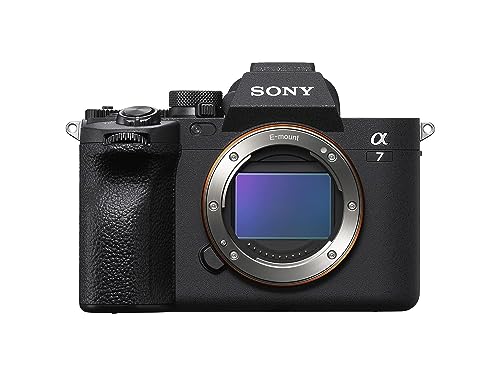
Sony Alpha 7 IV — Best body under the ceiling overall
Two thousand for a body is the tier where compromises stop being excuses, and the Alpha 7 IV is the reference the others are measured against. Its resolution gives working headroom — crops for composition, prints at serious sizes — while its detection autofocus handles the subjects that pay: faces at weddings, birds at reserves, products on tables. It is the rare body that a photographer can buy for one genre and discover, two years later, serving three others without embarrassment.
The E-mount catalogue is the long argument. At this body price, the buyer is really purchasing admission to a lens library — native and third-party, new and used, rentable in every city — that no rival matches for breadth. A body is a three-year decision; a mount is a decade’s, and Sony’s decade looks exceptionally well stocked at every focal length a working photographer visits.
Video completes the hybrid case: clean, gradeable, and consistent with the stills in colour, so a one-person media business can deliver packages that look like a crew made them. The honest costs are ergonomic and bureaucratic — menus that reward an afternoon of configuration, and a feature depth that can intimidate for the first month. Configure it once, properly, and the body disappears into the work, which is the finest compliment this tier offers.
Its third-party lens support has quietly become an economic ecosystem: Sigma, Tamron and others compete on its mount, which disciplines prices across the whole library. A mount with competition is a mount whose lenses get cheaper while you own it — a rare and welcome direction for costs to travel.
For hybrid businesses its file consistency is the sleeper asset: stills and video from one body intercut and interleave in a client gallery without colour negotiation, so a one-person studio delivers a coherent product that feels crewed. Coherence is what premium clients are actually purchasing.
Its resale market is the deepest in the guide, which quietly lowers the true cost of ownership: a body that sells in a weekend at a fair price is a body whose upgrade path is always open.
Wedding photographers running two-body setups find its files interleave seamlessly with its bigger siblings in the same mount, which protects the upgrade path: today’s second body is tomorrow’s main body’s partner, not its replacement problem.
Its accessory ecosystem — grips, cages, monitors — is the industry’s default, which matters to hybrid producers building rigs incrementally. A body everything fits is a body that never blocks a production idea for want of a bracket.
- Sensor: full-frame, generous resolution
- Autofocus: subject detection across people and animals
- Lens system: E-mount, broadest catalogue available
- Video: professional-leaning hybrid pipeline
- Storage: dual slots for paid work
Strengths
- One body serves several genres credibly
- Lens library unmatched at any price
- Cropping and print headroom built in
Trade-offs
- Menu system takes real setup effort
- Rolling shutter care needed in fast video
- Premium glass still costs premium money
Best for: working hybrids — weddings, media packages, serious enthusiasts — wanting one body for years.
Not suited for: minimalists who want a stills-only tool without video complexity.

Canon EOS R6 Mark II — Best low-light and action body
If your photography happens where light goes to die — reception halls, forests, theatres, dawn marshes — the R6 Mark II is this budget’s natural home. Its high-sensitivity files hold together with a cleanliness that buys shutter speed exactly when shutter speed is the difference between a photograph and a smear, and its burst performance and pre-capture manners serve action and behaviour work that the resolution-led bodies envy.
Canon’s colour for people remains a professional argument in itself. Skin under mixed event lighting is where files go to be judged, and Canon’s rendering arrives at the editor needing decisions rather than apologies. Wedding and event photographers building a business under this ceiling have repeatedly chosen this body for that reason, and their clients’ albums are the evidence.
The trade is printed on the specification sheet: fewer pixels than the Sony or the Fujifilm, which caps aggressive cropping and the largest prints. Canon’s counter is that most paid work never crops aggressively, while most paid work absolutely happens in bad light. Judge by your own archive: if your near-misses are dark and moving, this is your body; if they are distant and static, look elsewhere in this guide.
Its burst and pre-capture behaviour converts behaviour photography — the toast’s laugh, the bouquet’s arc, the heron’s strike — from luck into inventory. Event photographers monetise exactly those unrepeatable half-seconds, and this body manufactures them.
Ownership manners are polished: weather sealing that shrugs at confetti and drizzle alike, a grip that balances professional zooms without fatigue, and battery behaviour that respects a full wedding day with a spare rather than a charger safari. Professional tools are judged on whole days, and its days are calm.
Theatre and concert photographers value its silent manners and sensitivity in combination — the two traits their venues demand simultaneously and most bodies offer only separately.
Its colour consistency across a long event — noon portraits to midnight dancing — reduces editing time measurably, and time is the margin in event businesses. Bodies are bought with money and repaid in hours.
Sports parents and club photographers discovered it as the attainable action body: the keeper rate on muddy Saturday football justifies it to a whole tribe the marketing never addressed.
- Sensor: full-frame, sensitivity-led design
- Burst: fast with pre-capture behaviour tools
- Autofocus: people and animal detection
- Lens system: RF mount with maturing range
- Colour: event-proven skin rendering
Strengths
- Cleanest difficult-light files in the guide
- Action and behaviour burst manners
- Skin tones clients love
Trade-offs
- Cropping headroom is limited
- RF professional glass is pricey
- Video heat care on longest takes
Best for: event, wedding, wildlife and theatre photographers whose work lives in poor light.
Not suited for: landscape and studio shooters who crop heavily and print enormous.

Panasonic LUMIX S5II — Best value body under the ceiling
The S5II is the thinking photographer’s arbitrage: a full-frame body with professional manners — phase-detect autofocus, class-leading stabilisation, deep video — priced enough below the ceiling to fund the lens that a rival buyer must postpone. Since lenses outlast bodies and define images, that arithmetic deserves more respect than it usually gets in body-led guides. Bought wisely, the Panasonic kit at this total budget can outshoot the Sony or Canon kit at the same total, purely because its glass is a tier better.
Stabilisation is its field signature. Hand-held work at shutter speeds that read like typographical errors — architectural details, environmental portraits, low-light street frames — comes home sharp with a regularity that changes how its owners shoot. For video, the same system steadies walkthroughs and documentary footage toward gimbal-like calm without the gimbal’s ceremony.
Its concessions are resolution and ecosystem youth: cropping headroom is the full-frame group’s most modest, and while the L-mount alliance’s lens shelf grows yearly and includes excellent value options, the exotic corners — the longest telephotos, the strangest primes — are thinner than Sony’s library. For the majority of working subjects, neither concession bites weekly, and the saved money bites never.
Alliance glass deserves a closer look from sceptics: the shared mount means Sigma’s and Leica’s optics join Panasonic’s own, and the value tier of that combined shelf is where this body’s strategy becomes undeniable. The lens you postponed on another system is simply affordable on this one.
Its video endurance and heat manners suit the documentary reality of long interviews and ceremonies, where a body that stops is a story lost. Production buyers weigh such manners above peak specifications, and on production manners this Panasonic is quietly aristocratic.
Solo documentary makers praise its one-body completeness: interviews, b-roll, stills for the poster, all from a single case. Completeness is a budget feature when the crew is one person.
Real-estate and interior media producers have adopted it for the stabilisation-and-value combination, delivering walkthroughs that look gimbal-shot from a body that also takes the listing stills. Niche dominance is still dominance.
Its fan-assisted thermal manners give long-form video a calm that stills-first rivals envy; ceremonies and interviews end when the subject does, not when the body decides.
- Sensor: full-frame, stabilisation-led
- Stabilisation: best in this guide
- Autofocus: phase-detect, dependable
- Lens system: L-mount alliance, value-rich
- Video: deep, production-friendly feature set
Strengths
- Leaves real budget for better lenses
- Hand-held low-light stills are superb
- Video depth exceeds its price class
Trade-offs
- Modest resolution for heavy cropping
- Alliance lens shelf still maturing
- Smaller rental availability
Best for: budget strategists and video-leaning photographers who think in total kit cost.
Not suited for: heavy croppers or shooters needing exotic telephoto glass immediately.

Fujifilm X-T5 — Best high-resolution body under the ceiling
The X-T5 embarrasses the assumption that this budget must mean full-frame. Its sensor out-resolves every full-frame body in this guide, in a smaller, lighter system whose lenses cost and weigh less across the board — so the total kit at this ceiling is not a compromise kit but a different philosophy: maximum detail and colour character, minimum burden. Landscape, travel, editorial and print photographers have built serious practices on exactly that philosophy.
Fujifilm’s colour is the other half of the case. Its film simulations are not nostalgia decoration; they are a working photographer’s shortcut to cohesive, deliverable sets, and its JPEGs free their owners from editing queues that consume rival shooters’ evenings. The dial-driven body enforces a deliberate pace — shutter and sensitivity chosen physically, before the frame — that many photographers find makes them better rather than merely slower.
The boundaries are sensor physics and speed: in the darkest venues its files ask more of noise reduction than the full-frames, and its autofocus, while capable, is not the tool for chaotic sport or erupting wildlife. Within the deliberate genres — which is most of photography — it offers this budget’s most distinctive combination of resolution, colour and portability, and it is not close.
Its files print with a richness that has built it a following among photographers who sell walls rather than feeds. At this budget, a body whose output is exhibition-ready without a grading department is offering a business model, not just a sensor.
The X system’s lens prices deserve emphasis: a full working set of primes costs what one professional zoom costs elsewhere, so the Fujifilm photographer’s kit completes sooner and travels lighter. Completion is an underrated professional state — it is when spending stops and style starts.
Its aspect-ratio discipline and in-camera cropping help photographers compose for final use — the book page, the print ratio — rather than for the sensor, a professional habit its design encourages.
Street and documentary photographers value its discretion: a small, classic body draws less attention than a professional slab, and unposed life continues around it. Invisibility is a feature with a long photographic pedigree.
Book and zine photographers build entire publications on its files and colour, because the system’s look coheres across years of shooting — an archive with one accent is an archive with an author.
- Sensor: high-resolution APS-C
- Controls: physical dials for core exposure
- Colour: film simulations, deliverable JPEGs
- Lens system: X-mount, compact and complete
- Body: smallest serious option here
Strengths
- Resolution beyond the full-frame picks
- Kit weight and lens costs stay sane
- Colour character clients recognise
Trade-offs
- Darkest-light files trail full-frame
- Action autofocus is not its parish
- No full-frame upgrade within the mount
Best for: landscape, travel, editorial and print photographers who shoot deliberately.
Not suited for: sports and low-light event specialists needing flagship tracking and sensitivity.

Canon EOS R10 — Best body far under the ceiling
Including the R10 in a guide about bodies under this ceiling is a deliberate provocation: the most powerful move at this budget is sometimes not spending it on the body. The R10 is a genuinely capable APS-C camera — clean files, reliable detection autofocus, honest colour — at a fraction of the ceiling, and the remainder buys the professional RF lens that will still be defining its owner’s images when the second body arrives. Photographers who think in decades rather than product cycles make exactly this move.
Its apprenticeship virtues are real. Controls teach without condescending, the RF mount means no purchase is wasted, and its files at low sensitivities in decent light stand comparison with far pricier work in the genres — portraiture, travel, product, family — where light is manageable and subjects cooperate. It is also the natural second body for an R6-series owner, sharing lenses, menus and batteries’ philosophy.
The professional absences must be named: no in-body stabilisation, a single card slot, and APS-C sensitivity limits. Paid work with no backup and no second slot is a risk decision, not a detail. But as a first serious body inside a lens-led budget strategy — or as the spare that makes a one-body professional safe — the R10 is this guide’s smartest money.
As a teaching body for an assistant or a partner, it has a second professional life: productions run smoother when the second shooter shares your mount, and this is the cheapest competent second-shooter body Canon offers. Kits are social systems too.
Its video is honest — clean, simple, entirely adequate for behind-the-scenes and social deliverables — so the lens-led strategist is not exiled from the hybrid economy while the collection grows. Strategy should never mean exile.
For students it threads the needle perfectly: serious enough for a portfolio course, affordable enough that a stolen or dropped body is a bad week rather than a ruined year.
Its lightness makes it the travel body of professionals who own bigger Canons — the one that goes on holiday and therefore takes the holiday photographs that actually get printed. Presence, once again, outranks pedigree.
Content teams buy it as the shared pool camera: competent in everyone’s hands, cheap enough that its calendar fills without anxiety. Utilisation is a return on investment too.
- Sensor: APS-C, clean at low sensitivities
- Lens system: RF mount, full professional ladder
- Autofocus: face and animal detection
- Storage: single card slot
- Role: lens-led strategy body and future backup
Strengths
- Frees most of the budget for lasting glass
- Every lens purchase survives upgrading
- Capable files in manageable light
Trade-offs
- No in-body stabilisation
- Single slot limits paid-work safety
- APS-C low-light ceiling
Best for: strategic buyers building a lens collection first, and Canon owners needing a second body.
Not suited for: professionals who need dual slots and stabilisation as non-negotiables today.

Nikon Z50 II — Best compact body under the ceiling
Nikon’s entry in this guide plays the same long game as the Canon, in Nikon’s accent: a compact, capable APS-C body whose true product is admission to the Z system at a total cost that leaves the lens ladder affordable. Its colour and metering carry the mature Nikon behaviour that a generation of editorial photographers trusted, and its subject detection — birds included — is startlingly complete for its class.
The Z mount’s structure rewards the strategy. Full-frame Z lenses mount and work beautifully today with a crop, and become native citizens of the full-frame Z body that ambition eventually buys; the excellent Z telephoto and standard zooms give the ladder real rungs rather than promises. Ergonomics — a grip shaped by a company that thinks about hands — make long days pleasanter than the specification sheet can convey.
Its limits mirror its Canon counterpart: APS-C sensitivity, a growing but incomplete native DX lens shelf, and features trimmed for size and price. For Nikon loyalists, designer-shooters and travellers who want a serious system at a sane total, it is the right door — and doors, at this budget, matter more than the rooms’ furniture, because the furniture can always be upgraded later.
Nikon’s colour in skin and landscape alike has a steadiness that editors describe as trustworthy: files arrive needing little persuasion. For the designer-shooter and the travelling documenter, that trustworthiness is worth more than a specification victory elsewhere.
Its bird detection keeps surprising owners at reserves, where it holds its own socially among far costlier rigs on perched and passing subjects. A pathway body that can attend the serious outing without embarrassment keeps its owner in the rooms where the next decade’s decisions get made.
Its simplicity makes it the body professionals hand to a client or a subject for behind-the-scenes frames without a briefing — an odd, real production virtue on modern shoots.
Landscape beginners love its honest metering in mountain light, where its conservatism protects skies that other systems’ exuberance blows out. Trustworthy exposure is a fine first inheritance.
Its quiet operation suits ceremonies, galleries and wildlife hides alike — the small courtesies of a body that does not announce itself compound across a career of access.
- Sensor: APS-C with Nikon colour behaviour
- Autofocus: subject detection including birds
- Lens system: Z mount, full-frame lenses compatible
- Body: compact with a serious grip
- Role: pathway body for the Z system
Strengths
- Nikon colour in an attainable body
- Z glass purchases are permanent
- Detection features exceed its class
Trade-offs
- Native DX lenses are still few
- Low-light headroom is APS-C class
- Not a dual-slot professional tool
Best for: Nikon loyalists and compact-system builders planning a full-frame future.
Not suited for: buyers needing a complete native crop lens shelf immediately.
How Do the Six Compare Side by Side?
The essentials at a glance. Read the watch-out column as seriously as the strength column; at this tier, the wrong strength is just an expensive irrelevance.
One pattern in the table deserves naming: no row wins on sensor alone. At this level the sensors are all good enough that the decision migrates to autofocus character, lens libraries, stabilisation and strategy — which is another way of saying the tier has matured, and mature tiers reward thoughtful buyers disproportionately.
| Camera | Type | Standout strength | Watch out for |
|---|---|---|---|
| Sony Alpha 7 IV | Full-frame mirrorless | All-round hybrid excellence | Menus reward configuration time |
| Canon EOS R6 Mark II | Full-frame mirrorless | Sensitivity and burst speed | Resolution below the Sony and Fujifilm |
| Panasonic LUMIX S5II | Full-frame mirrorless | Value plus stabilisation | Resolution modest for cropping |
| Fujifilm X-T5 | APS-C mirrorless, high resolution | Resolution and colour per size | APS-C in the darkest light |
| Canon EOS R10 | APS-C mirrorless | Budget liberation for lenses | No in-body stabilisation or dual slots |
| Nikon Z50 II | APS-C mirrorless | Compact Nikon pathway | DX lens range still growing |
How Should the Rest of the Budget Be Spent Around the Body?
Begin with the lens the body will wear most, and buy it at the highest quality the total allows — even if that means choosing the body one rung lower in this guide. A standard zoom or the prime your genre lives on will be in more of your photographs than any body feature, and it will still be there, defining images, when the body is replaced. This is the single most reliable spending rule in serious photography, and the one most often inverted by marketing.
Second, fund safety: the second card the dual slots invite, the backup drive the archive deserves, and — once paid work begins — the second body plan, which several picks here fulfil for each other. Professionalism at this tier is mostly redundancy purchased calmly in advance, rather than heroics performed after a failure.
Third, light before length. A modest lighting kit transforms portrait, product and interior work more than a longer lens transforms anything, and it costs less than the difference between body tiers. Photographers chronically underinvest in light because light is unglamorous to unbox; clients, who see only results, consistently reward the ones who did not.
Finally, keep a reserve for the unphotogenic: insurance, sensor cleaning, the tripod head that finally levels properly, the bag that fits the actual kit. A budget fully spent on glass and body, with nothing for the infrastructure of using them, is a budget that will be re-spent badly under pressure. Strategy, again, is the product this tier is really selling.
Do not forget the computer’s quiet vote. Higher-resolution bodies tax storage, backup and editing hardware in ways that belong in the total budget; a body whose files bring an ageing laptop to its knees has hidden costs that a slightly humbler body avoids. Price the pipeline, not just the camera, and the tier’s arithmetic stays honest.
Storage arithmetic deserves one concrete habit: buy cards in matched pairs for dual-slot bodies, rotate them as sets, and format in camera after every verified backup. Card discipline sounds like fussiness until the first failure; afterwards it sounds like the cheapest professionalism ever sold, because it is.
Travel and working space belong in the arithmetic too: a kit that fits the bag you actually carry, in the places you actually work, will outshoot a theoretically superior kit that needs its own logistics. Photographers chronically price cameras and forget the carrying — then wonder why the expensive system attends fewer of the moments that mattered.
How Do You Set Up a New Professional Body in Its First Week?
Configure before you create. Assign the custom buttons to your genre’s vital functions — detection subject switching, exposure compensation, silent shooting — while the manual is open and the stakes are zero, because in the field you will operate by touch or not at all. Save the configuration, back it up if the body allows, and then forbid yourself from reconfiguring for a month; fluency grows from stable layouts, not optimal ones.
Calibrate the boring essentials: format both slots, set the file naming to something your archive will thank you for in five years, synchronise the clock, and run one deliberate test of the backup workflow — shoot, transfer, restore — before any photograph matters. Professional bodies fail their owners almost exclusively through untested workflows, not broken hardware.
Then shoot your hardest ordinary subject in your worst ordinary light, and study the files at full size. Every body in this guide has a personality in those conditions — a sensitivity ceiling, a colour tendency, an autofocus habit — and an hour of honest testing teaches more of it than a month of reviews. The body becomes yours when its surprises are known quantities.
One more first-week ritual: photograph a colour-critical subject you know intimately — a face you love, a product you sell — and print it small. The print is the body’s handshake with reality, revealing colour tendencies no screen calibration argument settles. Knowing your body’s print personality in week one prevents a year of mysterious dissatisfaction.
Learn the body’s silent and low-light modes before you need them, in a darkened room at home, because venues that demand silence rarely permit rehearsal. The photographer who has practised quiet operation owns the ceremony, the theatre and the hide; the one who has not, owns a menu search conducted in whispers while the moment leaves.
And set the unglamorous defaults that protect a career: copyright and contact metadata written into every file at capture, file numbering that never repeats, and a folder structure on the card that matches the archive at home. Metadata is invisible until the day it proves ownership, finds a client or saves a licence fee — after which it is never skipped again.
Why Does the Mount Matter More Than the Body at This Price?
Because the body is the only part of the kit designed to be replaced. Lenses, by contrast, are bought against a mount’s promise: that the glass purchased this year will mount on the bodies of the next decade. Every mount in this guide keeps that promise credibly, but they keep it with different libraries — different depths of used stock, different rental shelves, different third-party enthusiasm — and those differences compound into real money and real capability over a photographer’s life with the system.
The practical test is autobiographical. List the five lenses your photography will plausibly want across ten years: the standard zoom, the fast prime, the wide, the telephoto, the specialist. Price them, new and used, in each system you are considering. The mount whose five-lens future fits your realistic budget is your mount, whatever the bodies’ review scores say — because you will live in that library daily and in the body only until its successor.
This is also why switching systems is the most expensive sentence in photography. It converts a library into resale losses and starts the collection again at retail. Photographers contemplating a switch should demand a genre-changing reason — a professional pivot, a defining feature their work provably lacks — and should otherwise let the sunk library be what it also is: an asset, appreciating in familiarity every year.
There is a corollary for the used market: mount depth is what makes used buying safe. A system with thousands of circulating lenses offers choice, price competition and easy resale of your own mistakes; a thin system makes every purchase a commitment. Beginners at this tier should treat the used shelf’s depth as a feature of the mount itself, because for the first years, the used shelf is where much of the library will actually come from.
What Separates a Professional Body From an Enthusiast One Here?
Redundancy and responsibility. Dual slots so a card failure is an anecdote rather than a catastrophe; sealing so weather is a condition rather than a cancellation; a shutter and build rated for the volume of paid work; service and rental networks that can replace the body mid-season. The professional bodies in this guide carry those traits in different proportions, and buyers should weight them by the cost of failure in their own work, not by specification envy.
The second separator is consistency under repetition. An enthusiast body delights across a weekend; a professional body behaves identically across the four-hundredth frame of a wedding, the tenth hour of a festival, the freezing dawn after a month of dawns. Heat manners, battery honesty and control stability are unglamorous precisely because professionals cannot afford glamour’s opposite: surprise.
None of which makes the enthusiast bodies here lesser purchases. It makes them different contracts. The photographer whose work is repeatable, whose clients are patient and whose budget strategy is lens-led is rationally served by the pathway bodies — provided the contract is chosen with eyes open, which is the entire function of guides like this one.
Insurance and registration belong in the same unglamorous paragraph as dual slots. Bodies at this value should be scheduled on a policy, serial numbers recorded, and warranties registered in the first week — the administrative hour that separates a theft or failure being a story from it being a business interruption. Professionals are not luckier than amateurs; they are merely documented.
How Should You Test a Body Before Committing at This Level?
Rent or borrow the exact body with the exact lens you intend to pair, and shoot your hardest ordinary assignment — not a test chart, not a photogenic excursion, but the dim hall, the restless subject, the deadline. Hands learn in an hour what reviews cannot say in a month: whether the grip fits your fingers, whether the viewfinder pleases your eye, whether the menus obstruct or vanish. At this price, that weekend’s rental is the cheapest certainty available.
Then interrogate the files at home, at full size, in your own editor. Check the sensitivities you will actually use, the colour your clients will actually judge, the autofocus misses your genre actually produces. A body is a file factory before it is an object, and the factory’s output, judged calmly at a desk, should have the final vote.
Finally, price the whole first year before buying any of it: body, the lens it will wear, cards, a spare battery, the bag that fits, the backup drive. A purchase that survives whole-year arithmetic without flinching is a purchase that will not be regretted in instalments. This tier rewards exactly one virtue above all others — deliberation — and testing is deliberation with evidence.
Ask, during that test weekend, the question nobody puts in reviews: does this body make me want to shoot on a tired Tuesday? Desire is a working specification at this tier, because the body will be carried through years of ordinary days, and the photographs that build a practice are disproportionately made on ordinary days by photographers who felt like going. A body that sparks that feeling is not a luxury; it is utilisation, and utilisation is return on investment in its purest form.
When Does It Make Sense to Exceed a Body Budget Deliberately?
Rarely, and only for named, billable reasons. If a specific body’s defining feature — a sensitivity ceiling, a detection mode, a video capability — is the documented difference between winning and losing a class of commissions you already serve, the excess is an investment with a return address. If the reason is admiration, comparison anxiety or a reviewer’s superlative, the excess is a donation to a manufacturer, made from the lens fund your future self needed.
The test is written evidence: a season of near-miss files, a client’s stated requirement, a rental weekend where the feature demonstrably changed outcomes. Photographers who keep such evidence upgrade wisely and seldom; photographers who upgrade on weather — the vague feeling that the grass is sharper elsewhere — upgrade often and photograph no better, a pattern every used-camera shelf in the world silently documents.
Staying, too, is a decision with returns. A body kept for its full life funds lenses, light, travel and tuition with the money its replacement would have consumed, and mastery of one body’s habits is itself a photographic capability. The photographers whose work you admire mostly did it on bodies the forums considered obsolete, which tells you where quality actually lives.
The same discipline applies to the lens fund the excess would have raided. Name the photograph the better lens will make possible, file the near-misses that prove the need, and let that folder — not a launch event — set the date of the purchase. Evidence-based upgrading is slower than desire-based upgrading in exactly the way compound interest is slower than a lottery ticket, and with the same ending.
What Mistakes Do Buyers Make at This Price Level?
Spending the entire budget on the body is the signature error — the flagship-adjacent body wearing a kit lens, outshot daily by the humbler body behind professional glass in this very guide. Second is buying for a genre you admire rather than the one you practise: the wildlife body for a portraitist, the resolution body for an event shooter, each excellent and each wrong. Your last five hundred frames are the only honest market research available; consult them.
Third, switching systems lightly. Every mount change taxes the photographer a lens library’s worth of resale losses, and the gains are usually smaller than the forums promised. The bodies here are close enough in capability that ecosystem fit — your existing glass, your peers, your rental shop — should usually outrank marginal specification victories. Buy the mount you will still be feeding in ten years, then stop reading comparisons and go shooting.
Fourth, neglecting the exit. Bodies in deep ecosystems resell quickly and kindly; bodies in thin ones linger. Even photographers certain they will never sell should value liquidity, because certainty about equipment has a notoriously short half-life, and the option to change one’s mind cheaply is worth money at purchase time.
Fifth: buying the body your favourite reviewer uses, in a genre you do not shoot, with hands unlike yours. Admiration is not ergonomics. The correct body is the one whose compromises are invisible in your work — which is why this guide keeps returning you, impolitely, to your own archive, your own light and your own subjects. They are the only reviewers who know your photography.
Final Recommendation
The Sony Alpha 7 IV is the default answer for the undecided professional: the deepest library, the broadest competence. The Canon R6 Mark II owns difficult light and fast subjects; the Panasonic S5II owns the strategy of spending less to shoot more; the Fujifilm X-T5 owns detail and deliberation; and the Canon R10 and Nikon Z50 II own the lens-first long game in their respective mounts. Choose the future your lenses will live in, fund that future before the body’s vanity, and this budget — spent once, strategically — can equip a decade.
Buy once, buy strategically, and then give the body the compliment of being ignored for years while the work accumulates. That is what this budget is actually for.
And handle the finalists. The spreadsheet ends where the hand begins, and at this price the hand deserves the casting vote it will exercise every working day for years.
Related guides
Frequently Asked Questions
Is full-frame necessary at this budget, or is APS-C a mistake?
Neither necessity nor mistake — a trade. Full-frame buys sensitivity and separation; APS-C buys resolution per size, reach and lens economy, as the Fujifilm in this guide proves by out-resolving the full-frames. The error is choosing by status rather than by subject: dark venues argue full-frame; daylight, travel and print detail argue that the crop bodies here are not compromises at all.
Should I buy the body at the ceiling or a cheaper body plus a better lens?
For most photographers, the cheaper body plus the better lens produces better photographs for longer, because lenses define images and outlast bodies. The exceptions are buyers whose work specifically needs the top body’s defining feature — dual slots for weddings, sensitivity for events, detection for wildlife. Name the feature your paid work cannot lack; if you cannot name one, buy the lens.
How long will a body at this level remain competitive?
Bodies at this tier now age gracefully: five to seven years of professional relevance is normal, because sensor and autofocus progress has slowed into refinement. The mount beneath the body matters more to longevity than the body itself, which is why this guide scores lens libraries so heavily. Buy the platform calmly and the body will take care of its own years.
Is buying the previous generation a smart move at this price?
Often the smartest move in the tier. Outgoing bodies drop toward the middle of this budget while retaining professional fundamentals, and the saving funds the lens upgrade that actually changes photographs. Insist on warranty or reputable used grading, check shutter counts where relevant, and the strategy is sound — this guide’s value pick exists precisely because the market rewards such thinking.
Do I need dual card slots for paid work?
If a lost shoot would be unrepeatable and reputationally expensive — weddings, events, commissions — yes, treat dual slots as professional infrastructure rather than a feature. For repeatable work like product or portfolio shoots, disciplined same-day backup can substitute. The honest question is what a vanished card would cost you; let that number, not pride, decide.
Body only or kit — which is the smarter buy at this level?
Body only, for almost everyone reading this guide. Kit zooms bundled at this tier are designed for a different buyer, and their resale value rarely matches the discount they appear to offer. Buy the body bare, put the difference toward the lens your genre actually lives on, and the kit starts life as a working tool rather than a compromise awaiting replacement.
Should I wait for the next model before buying at this level?
Only if a dated announcement promises a feature your work demonstrably needs — not a rumoured one, and not a marginal one. Camera generations at this tier now differ by refinement, and a season spent waiting is a season of photographs unmade with a library unbuilt. Buy the current body when the need is current; the mount ensures the decision ages well even when the body is eventually succeeded.
Related Guides
Keep exploring with best cameras body under 2000 buying guide best cameras and lenses for wildlife photography best cameras and lens for interior design photography.


