ilcastellomenu.com is reader-supported. When you buy through links on our site, we may earn an affiliate commission.
Where to Buy
Buy at this level from sellers with fair returns and, for the used and sale routes this guide recommends, from listings whose grading and return terms are explicit. Amazon stocks everything below. If you are choosing the best cameras for 200 dollars, know what the extra money over the cheapest tier actually purchases, because it is not fifty dollars’ worth of specification — it is a change of category. This tier is where outgoing flagships arrive on sale, where desk cameras become studio instruments, and where home cameras cut their wires. The guide is organised around those three arrivals.
That is also how this guide differs from the one a step below. The cheaper tier is about completing a job for the least money; this tier is about buying refinement where refinement is visible — stabilisation you can see, a desk picture clients can see, a battery you can forget. Buyers who cannot name the refinement they want should honestly stay below and bank the difference; buyers who can name it will find this tier the best-value step in the entire camera market.
Pricing at this level is weather, not climate: models cross the line with seasons, successors and sales, and two picks here qualify through the used and discount routes rather than the ticket. Treat the two hundred as a hunting budget — set the alerts, grade the used listings carefully — and it buys cameras that were launched to applause at twice the ambition.
For the used flagship route specifically, buy the bundle listings with care: a camera sold with its mounts, batteries and case by an upgrading owner is often the tier’s single best transaction, because the accessories that complete it arrive at used prices too. Read the bundle as a kit list and price what you would genuinely use.
One timing note: this tier’s prices move most around successor launches and the big seasonal events, and the patient buyer who has already chosen can simply wait for the weather. Decide in a calm week, buy in a loud one, and let other people’s launch excitement fund your discount.
And keep the whole purchase inside the returns window’s protection until the forty-eight-hour grading is done. Confidence at this tier is a procedure, not a feeling.
Key Takeaways
- This tier buys yesterday’s flagships, studio-grade desk cameras and wire-free home watching.
- Name the refinement you want — stabilisation, desk image, battery freedom — or stay a tier below.
- Sale and used routes are legitimate strategies here; insist on returns and grade carefully.
- Desk creators should budget the microphone pairing honestly alongside the camera.
- Instant photography at this level becomes camera plus a season of film — a better gift and a better practice.
In this guide
Quick Picks
| Camera | Badge | Why it earns its place |
|---|---|---|
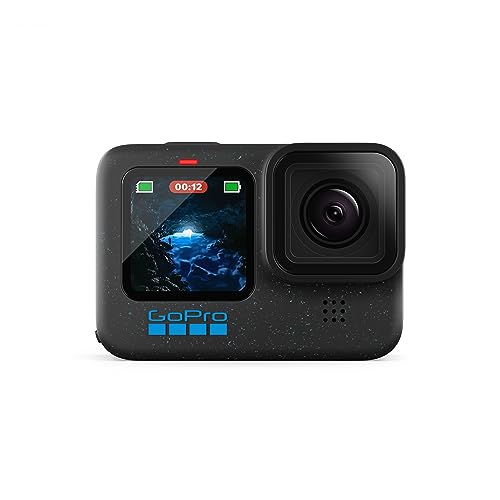
| GoPro HERO12 Black | Best camera at this level overall | The outgoing flagship drifts into this territory on sale and used — stabilisation nothing else here touches. |
| Logitech StreamCam | Best desk camera at this level | The premium webcam that turns a two-hundred desk setup into a credible studio corner. |
| Elgato Facecam | Best streamer camera at this level | Fixed focus, full manual control and a clean signal: the streamer’s consistency machine. |
| AKASO Brave 7 LE | Best value action camera | The complete kit from the tier below, still here because two hundred does not beat completeness by much. |
| Fujifilm Instax Mini 12 | Best instant camera at this level | At this tier the Instax becomes a gift set: camera plus a season of film inside the same budget. |
| Blink Outdoor 4 | Best outdoor home camera at this level | Battery-powered outdoor watching with a famously long battery life — the set-and-forget guardian. |
How Did We Choose Cameras at This Step Up?
We asked what the step buys, pick by pick, in visible results rather than specifications. The action flagship had to stabilise visibly better than the tier below; the desk cameras had to produce a picture a client would remark on; the outdoor camera had to remove a wire and a chore, not merely add features. Candidates whose premium bought only numbers were returned to the tier below with our thanks.
Used and sale legitimacy was audited as carefully as the cameras. A pick qualifies through the discount route only if that route is deep, continuous and safe — high-volume models with honest grading and returns — because a bargain that exists for one weekend in one listing is not a recommendation, it is a rumour. The GoPro here passes that audit easily; thinner markets did not.
Finally, completeness was still scored, if less harshly than below. At this tier a bare camera is acceptable when its ecosystem is cheap and universal — action mounts, USB microphones — and unacceptable when its essentials are proprietary and dear. The year’s cost, as always in this series, is the real price.
We also scored the tier’s honesty about its own limits. Picks whose makers publish clear specifications, maintain their software visibly and support their accessories for years were preferred over technically similar rivals with quieter afterlives — because at this level the buyer is purchasing a few years of a company’s attention as surely as a sensor.
We weighted the verdict of the biggest screen available to the buyer — the family television, the client’s monitor — because this tier is precisely where footage starts being watched there, and where the refinements either survive enlargement or are exposed as brochure poetry.
Which Cameras Justify Two Hundred?
Three arrivals — flagship action, studio desk, wire-free home — plus the value anchors that keep the tier honest.
Two of the six are honest carry-overs from the tier below, and their presence is a recommendation in itself: a guide that promotes every pick at every price is a catalogue, not advice. Where the step buys nothing visible, this guide says so and keeps the cheaper camera in the frame.
Each verdict names the pain the pick removes, because at this tier a camera without a pain to remove is just a more expensive version of the one below it.

GoPro HERO12 Black — Best camera at this level overall
The step from the previous tier to this one buys a specific miracle, and its name is the outgoing flagship. The HERO12 Black, displaced by a newer model, now visits this budget through sales, bundles and the used market while retaining the stabilisation, ruggedness and sensor format that made it the default professional action camera. Footage from violent motion — bikes, boards, water, animals — emerges with a steadiness that still looks like a gimbal was involved, and no new camera actually priced at this level matches it.
Its tall sensor format is the creator-era feature: one recording becomes widescreen, vertical and square deliverables in the edit, which for anyone publishing to several platforms is a weekly time saving disguised as a specification. Battery endurance improved meaningfully over its predecessors, and the accessory ecosystem is the deepest in action filming — every mount, case and mod exists, cheaply, everywhere.
The cautions are the known ones: it warms up at maximum settings in still air, and GoPro’s software nudges toward subscriptions owners may decline. Bought at this tier’s prices — especially clean used examples with returns — it is not merely the best action camera here; it is the best argument in the whole guide for buying yesterday’s flagship instead of today’s midrange.
Its reframing workflow rewards a small discipline: shoot the master take tall, mark the moments, and cut the platform versions in one sitting. Creators who build that assembly line describe the camera as a staff member — the one who always brings back options.
The used market’s depth creates a second virtue: accessories and spares are everywhere, cheaply, forever. A camera whose ecosystem cannot die is a camera whose owner need never improvise a mount or mourn a battery, and that permanence is worth money at any tier.
Its slow-motion headroom gives young athletes their favourite mirror: the trick analysed frame by frame. Coaching value was never in the marketing, and it is in every owner’s report.
Mount it low and close for the footage that defines the genre — the wheel at the tarmac, the paddle at the waterline. Its size and sealing license angles no other camera in this guide would survive an afternoon attempting.
Its time-lapse and night modes give travellers a second creative instrument inside the same small body — the harbour at dusk, the storm arriving — broadening a sports camera into a travel artist.
- Video: high-resolution with flagship stabilisation
- Sensor format: tall capture for multi-platform reframing
- Body: waterproof without a housing
- Ecosystem: the deepest action accessory range
- Power: improved endurance generation
Strengths
- Stabilisation that flatters chaos
- One take serves every platform’s shape
- Used and sale prices reach this tier
Trade-offs
- Heat at maximum settings in still air
- Subscription nudges in software
- Touchscreen and gloves remain enemies
Best for: action creators, travellers and sports filmmakers who publish across platforms.
Not suited for: long static recordings in hot rooms, or owners who hate app ecosystems.

Logitech StreamCam — Best desk camera at this level
Two hundred spent at a desk buys something the previous tier only promised: a webcam whose picture makes colleagues and audiences stop noticing the camera. The StreamCam’s lens and sensor produce a clean, dimensional image at conversational distance, its autofocus follows natural movement without hunting, and its party trick — physically rotating between landscape and portrait — serves the modern desk’s double life of meetings by day and vertical content by evening.
This is the tier where desk video stops being a compromise and becomes a specialism. Paired with even a modest lamp, the StreamCam’s image has the modelling and calm that laptop cameras cannot approach, and its companion software speaks plainly to non-technical owners. For teachers, consultants, sellers and streamers starting out, it converts the home desk into the cheapest professional studio available.
Its limits are the honest webcam limits: it is tethered to a computer, it is a light snob that rewards a lamp and punishes a cave, and its microphones serve speech rather than music. Within its parish — the fixed desk, the lit face, the daily call — it is the most complete purchase at this level, and its owners’ only common regret is not buying the lamp sooner.
Its portrait rotation has found an unadvertised profession in online selling, where the vertical frame is the shop window. Sellers who present products live on this camera report that the format change alone professionalised their broadcasts.
The privacy shutter and the honest indicator light matter in households where the desk is also the kitchen table: a camera that visibly rests earns trust from the family it shares a home with, and trusted cameras stay plugged in.
For households sharing one good desk, its stored profiles let each user recall their framing in seconds. Shared equipment that respects each user gets used by all of them.
Teachers recording asynchronous lessons praise its forgiving autofocus during demonstrations — hands entering frame with objects stay intelligible, which is the whole grammar of taught-by-video subjects.
It flatters without deceiving: skin looks like skin on a good day, which is the precise register professional calls require. Audiences trust faces that look unprocessed.
- Connection: USB webcam, monitor mount
- Orientation: rotates landscape to portrait
- Autofocus: continuous, desk-distance tuned
- Audio: dual microphones for speech
- Software: companion app for framing
Strengths
- Instant professional credibility on calls
- Physical rotation for vertical video
- Autofocus behaves at desk distances
Trade-offs
- Desk-bound by design
- Demands decent light
- Microphones are speech-grade
Best for: remote professionals, online teachers and starter streamers at a fixed desk.
Not suited for: anyone needing standalone or room-wide recording.

Elgato Facecam — Best streamer camera at this level
The Facecam’s proposition at this level is consistency, and streamers understand its value instantly: automatic webcams reinterpret the room whenever light or content changes, while this camera’s manual exposure and white balance, set once in its software, hold the picture identical night after night. A channel’s look becomes a place viewers recognise, and recognition is the currency small channels are built from.
Elgato spent the budget where streamers feel it: the sensor, the lens and an uncompressed-leaning signal path, at the deliberate cost of autofocus and any microphone at all. Fixed focus is set for the desk distance streamers actually sit at, and the result is a crispness that survives platform compression better than softer rivals — the picture viewers describe as professional without knowing why.
Budget honestly around it: a separate microphone is not optional, since the camera has none, and at this tier that pairing — Facecam plus a competent USB microphone bought used or on sale — is the classic two-hundred streaming foundation. For the seated creator who controls their corner, nothing else at this level delivers the same repeatable, grown-up picture.
Its software’s discipline extends to groups: production teams standardise on its settings so every remote guest’s tile matches the host’s. Consistency across a grid of faces is a broadcaster’s quiet obsession, and this camera industrialised it at a home price.
Owners upgrading from automatic webcams consistently describe the first broadcast as a relief — the picture simply stops moving. Relief is an unusual product for a camera to sell, and regular streamers pay for it gladly, nightly.
It respects the second monitor: its software sits quietly, holds its settings and never demands attention mid-broadcast. Tools that behave during the performance are the ones professionals keep.
Its lack of a microphone has an accidental benefit: streamers learn audio properly, once, instead of apologising for a built-in microphone for a year. Constraints that force the right purchase are features in stern clothing.
Its thread mount invites proper small tripods, freeing it from the monitor for the occasional standing presentation. Versatility in a specialist is a bonus, not a dilution, when the specialism stays this deep.
- Focus: fixed at desk distance
- Control: manual exposure and white balance, persistent settings
- Audio: none — external microphone required
- Signal: clean, compression-friendly image
- Mounting: monitor mount plus tripod thread
Strengths
- Identical picture every session
- Lens and sensor quality for the tier
- Settings survive restarts
Trade-offs
- Microphone must be bought separately
- Fixed focus punishes leaning
- Needs deliberate lighting
Best for: streamers and presenters building a recognisable channel look at a fixed desk.
Not suited for: plug-and-play callers or anyone filming at varying distances.

AKASO Brave 7 LE — Best value action camera
Honesty requires this camera’s presence in a guide one tier up: for buyers whose two hundred must also buy the memory cards, the mounts and the holiday itself, the Brave 7 LE’s complete kit remains the rational action purchase. Everything needed is in the box — housing, mounts, spare battery — and the footage in daylight is cheerful, stabilised and entirely adequate for the family archive and the social feed.
What the extra money buys elsewhere in this guide is refinement: the GoPro’s stabilisation and sensor format, principally. What it does not buy is completeness — a flagship bought bare at the top of this budget still needs its accessories, and the AKASO owner is filming while the flagship owner is shopping. There is a real philosophy in that difference, and families on a total budget should weigh it seriously.
As a second camera it also earns its place in bigger kits: the risky angle, the child’s camera, the loaner. At this tier, the Brave is the value anchor against which the flagship’s premium must justify itself — and for many households, after honest viewing of sample footage, it will find that it cannot.
In this tier it becomes the connoisseur’s second camera: the one mounted where the flagship must not go. Fleets of creators run exactly this pairing, and the footage intercuts well enough in daylight that audiences never ask which was which.
Its kit economics also serve institutions — schools, clubs, camps — buying several cameras for a programme. Completeness per unit is what procurement actually measures, and few action cameras complete a programme budget like this one.
Its honest daylight footage makes it the camera schools hand out for field courses — loss-tolerant, complete and instructive. Institutions are the tier’s most unsentimental buyers, and they buy this.
For travel insurance purposes alone some owners prefer it abroad: a camera whose loss is a shrug changes how bravely a holiday gets filmed, and brave filming is memorable filming.
It remains the recommendation when the question is a child’s first action camera — complete, capable and priced so that learning by doing includes learning by dropping.
- Video: 4K with electronic stabilisation
- Screens: front and rear
- Kit: housing, mounts and spare battery included
- Power: affordable replaceable batteries
- Mounting: standard action fit
Strengths
- Nothing else to buy before filming
- Front screen for self-framing
- Cheap enough for risky angles
Trade-offs
- Stabilisation a generation behind
- Low-light footage softens
- App polish is basic
Best for: total-budget families, second angles and young riders’ first action camera.
Not suited for: creators needing flagship stabilisation and reframing.

Fujifilm Instax Mini 12 — Best instant camera at this level
The extra money transforms the Instax proposition from a camera into a season. At the previous tier the film budget was a warning; at this one, the same total buys the camera and a generous stock of film — enough for the parties, the holiday and the wall to fill without rationing anxiety. The camera itself is unchanged and still delightful: automatic exposure, a selfie mirror, and prints that develop in the hand while friends gather round.
That shift matters because instant photography’s joy is volume-dependent. A camera whose owner counts frames produces careful, sparse work; a camera stocked for the season produces the glorious sprawl — the fridge covered, the album filled, the prints traded — that is the format’s actual culture. Two hundred, spent as camera-plus-film, buys the culture rather than the device.
Its limits remain its format’s: small prints, no digital file, no zoom. But as the print-making pick at this level, nothing else converts the budget into kept photographs as directly, and kept photographs — on walls, in wallets, in albums — are the output by which family cameras are ultimately judged.
As a wedding or party instrument at this budget, camera plus film plus a basket for finished prints is a complete entertainment line item — guests produce the favours and the couple keeps the spares. Event value per pound is remarkable.
The season-of-film framing changes the owner’s psychology usefully: abundance permits generosity, and instant photography generous with itself — prints given away freely — is the format at its best. Rationed Instax is a hobby; stocked Instax is a culture.
Its prints in a guest book outlast every digital guest book app yet devised, because paper needs no migration. Hosts planning a season of gatherings should budget it as stationery, not electronics.
Its learning curve is measured in minutes, which makes it the camera grandparents and grandchildren genuinely share — the same operation, the same prints, two generations in one archive.
Offices have quietly adopted it for the wall of joins, wins and birthdays — institutional memory in its happiest form. A camera that documents a workplace’s joy outearns its price in morale.
- Format: instant prints, credit-card size
- Exposure: fully automatic
- Power: AA batteries
- Budget role: camera plus film stock fits the tier
- Body: light, colourful, giftable
Strengths
- A whole season of prints in budget
- Zero learning curve
- Prints become gifts and decor
Trade-offs
- Small print size
- No video or zoom
- Film remains a future cost too
Best for: families and gift-buyers wanting camera and film together for a season of prints.
Not suited for: digital archivists or video makers.

Blink Outdoor 4 — Best outdoor home camera at this level
The step up in home cameras buys freedom from wires. The Blink Outdoor 4 runs on batteries with a stamina measured in seasons rather than weeks, which means it can live where the watching matters — the gate, the shed, the driveway tree, the holiday home — without an electrician or a cable run. Placement freedom is the real feature at this tier, because a camera that can go anywhere watches what fixed cameras merely wish they could see.
Its video and night vision handle the outdoor brief competently, motion alerts reach the phone with the usual configurability, and the Blink ecosystem keeps multi-camera households sane. Weather resistance is genuine rather than nominal, and the camera’s small, unobtrusive body draws little attention to itself — a virtue in a guardian.
The ecosystem caveats apply: the richest cloud features sit behind Blink’s plan, and owners should price the year honestly. Even so, as this tier’s outdoor answer it has a clarity the others lack — no wires, no ladders after installation day, no monthly battery ritual. For driveways, gardens and second properties, that set-and-forget character is worth the whole step up.
Holiday homes are its showcase: a camera that watches an empty property for a season on one set of batteries, reporting the storm, the delivery and the deer with equal calm. Absent owners buy exactly that sentence.
Its unobtrusiveness deters by uncertainty — visitors cannot tell whether it is watched live, which security professionals consider half the effect. A guardian that might be watching usually is, in the only sense that matters.
Its alerts teach households their own wildlife — the fox’s hour, the hedgehog’s route — an accidental nature documentary that owners cite, surprisingly often, as the purchase’s lasting pleasure.
Its sync ecosystem lets a household start with the gate and grow to the garden without changing apps or habits. Systems that grow gracefully are systems that get grown.
Its small size suits listed buildings and rental rules where drilling and cabling are forbidden. Constraints choose cameras more often than brochures admit, and this one wins on constraints.
- Power: long-life batteries, wire-free placement
- Body: weather resistant, compact
- Video: HD with infrared night vision
- Alerts: motion notifications to phone
- Ecosystem: Blink app and sync system
Strengths
- Mount anywhere, no cables
- Battery life measured in seasons
- Ideal for gates, sheds and second homes
Trade-offs
- Best cloud features need a plan
- Batteries are consumables eventually
- Indoor detail rivals are sharper
Best for: driveways, gardens, rentals and holiday homes needing wire-free watching.
Not suited for: continuous recording or subscription-free purists.
How Do the Six Compare Side by Side?
Compressed, the step up buys refinement in three directions. Pick the direction your filming actually faces.
Read the watch-out column as the shopping list’s second half: the microphone, the lamp, the graded listing. This tier’s cameras are honest about what they leave to you, and the guide has tried to be equally honest in the same places.
| Camera | Type | Standout strength | Watch out for |
|---|---|---|---|
| GoPro HERO12 Black | Action camera, flagship lineage | Stabilisation and durability | Runs warm at maximum settings |
| Logitech StreamCam | USB webcam | Desk image and rotating mount | Needs light to shine |
| Elgato Facecam | USB webcam, streamer focused | Control and consistency | No microphone, fixed focus |
| AKASO Brave 7 LE | Action camera kit | Kit value at any tier | A step behind flagship stabilisation |
| Fujifilm Instax Mini 12 | Instant film camera | Prints with the film budget included | Prints are small by design |
| Blink Outdoor 4 | Outdoor security camera | Battery endurance and placement freedom | Cloud features need a plan |
When Is the Step Up Worth It — and When Is It Not?
The step is worth it when the refinement is load-bearing. If your footage is ruined by shake, the flagship’s stabilisation is not a luxury but the difference between an archive and a bin. If your income arrives through a webcam, the desk picture is not vanity but premises. If the camera’s location has no power, wire-free is not a feature but the whole purchase. In each case the extra money buys the removal of a specific, recurring pain — and recurring pains are the correct things to spend on.
The step is not worth it when the pain is imaginary or rare. The family that films two holidays a year in daylight will not see fifty dollars of difference between the action picks here; the household that needs one room watched gains nothing from outdoor wire-free freedom. Honest buyers audit their actual footage and their actual frustrations, and let the audit — not the tier’s glamour — sign the cheque.
Used buying deserves its own paragraph at this level, because it is where the tier’s value hides. Outgoing flagships circulate in enormous volume; buy from sellers with returns, check lens covers and seals, run a test recording on arrival, and the discount route is a strategy rather than a gamble. The same discipline applies to open-box desk cameras, whose first owners often upgraded for reasons that say nothing about the camera.
Finally, remember that this tier still rewards completeness. The streamer needs the microphone; the action flagship needs its cards and mounts; the instant gift needs its film. A two-hundred camera with its essentials funded beats a two-hundred camera alone, at this level exactly as at the one below — the arithmetic of readiness does not respect price tiers.
One more step-up test, the simplest in this series: show a friend two clips — one from the tier below, one from the pick you are considering — without naming either. If the friend cannot see your refinement, do not buy it. Refinements that require a specification sheet to be visible are not refinements; they are donations.
Consider, too, the household’s second screen: footage and calls are watched on televisions and monitors far larger than the ones they were made on. Refinements that survive enlargement — stabilisation, clean desk images, honest night vision — are the ones this tier sells, and judging sample material on the biggest screen available is the buyer’s most reliable test at this level, exactly as it is at every level above it.
And give the step-up a season before judging it against the next tier’s temptations. Every level of this market whispers that one more step would settle everything; it would not, because the whisper is the business model. The cameras here settle the pains they were bought for. Let them, and spend the difference on the filming itself.
And remember the household fleet principle that this tier makes possible: the stepped-up camera does not retire the cheaper one, it promotes it — to second angle, to the child’s hands, to the risky mount. A two-camera household across two tiers documents more life than a one-camera household at twice the price, which is the deepest value secret in this entire series of guides.
One sentence of summary for the torn buyer: if the pain is in the footage, step up; if the pain is in the budget, stay below and shoot more. Both decisions are victories when they are made from evidence.
How Do You Get the Most From a Camera at This Level?
Exploit the refinement you paid for, deliberately. The flagship action owner should shoot the vertical and widescreen versions from the same take and build the multi-platform habit; the desk owner should spend an evening on light and background until the picture looks like a place; the wire-free owner should walk the property and place for the incidents that matter, not the view that flatters. Refinements unused are just expenses with good reviews.
Learn the one professional setting your tier unlocks: reframing in the action flagship’s editor, manual exposure discipline on the Facecam, patrol schedules on the outdoor camera. Each pick here has a depth its cheaper sibling lacks, and an hour of deliberate learning in the first week is what converts the premium from a specification into a style.
And maintain the step up like it matters — seals cleaned, firmware current, batteries rotated, mounts inspected. Cameras at this level are good enough to serve for many years, and their longevity is decided less by their build than by their owners’ habits. The premium you paid deserves the courtesy of care.
Keep the old camera working. The tier below’s camera, retained as the second angle, the loaner or the child’s hand-me-down, doubles the household’s documentary capacity for zero additional spend. Upgrading households throw away more value in retired-but-working cameras than in any other line of the budget; the archive notices, and thanks the households that kept them in service.
Photograph your receipts and serial numbers with the new camera itself — a small ritual that creates the insurance record in the archive it protects. It takes one minute, on the first day, and it is the minute owners are most grateful for on the worst day.
Finally, teach someone else the setup. Explaining the desk’s light, the flagship’s reframing or the outdoor camera’s patrol to a partner or a teenager doubles the household’s competence and halves the chance that the system dies with one person’s memory. Documented households keep their cameras working for years; undocumented ones rediscover them in drawers.
Why Do Yesterday’s Flagships Cluster at This Price?
Because camera ranges renew on a calendar, and the calendar is indifferent to merit. When a successor launches, the outgoing flagship — its development paid for, its reputation established, its accessories everywhere — must be cleared, and its price falls toward the tier where value hunters wait. The camera has not become worse; it has become unfashionable, which in durable goods is the most exploitable condition a buyer can find.
The strategy generalises beyond action cameras. Previous-generation bodies, desk cameras and compacts all pass through this tier on their way down, and the buyer who learns to shop the wake of launch events rather than the events themselves consistently owns better equipment than the buyer who shops the headlines. Patience and a returns policy are the whole technique.
There is a maturity dividend too: the outgoing model’s firmware is finished, its quirks are documented by a thousand owners, and its sample footage fills the internet. Buying at this tier is buying with the reviews already written by time — the most honest reviewer there is — and that certainty is part of what the two hundred purchases.
The same calendar logic explains why this tier’s desk cameras are so strong: professional streaming gear trickles down as creators upgrade, and the models that defined the category’s look become the next cohort’s foundation. Buying the look that already built a thousand channels is not settling; it is inheriting a tested aesthetic with the tutorials included.
There is a corollary for sellers of attention: audiences cannot name stabilisation or sensor formats, but they feel the difference as production value, and production value is what the step up is actually purchasing for creators. Two hundred spent where the audience can feel it outperforms a thousand spent where only the owner can measure it — a sentence worth taping above every creator’s desk in this tier.
What Does a Two-Hundred Desk Actually Need Around the Camera?
Light first, and it need not be elaborate: one soft source, high and to the side, transforms every desk camera in this guide more than any setting. Background second — a tidy, dimmer backdrop separates the presenter from the room and reads as professionalism to every audience. The camera is third, which is why this guide can recommend two webcams with such different philosophies: once light and background are right, both look excellent, and the choice becomes about control versus convenience.
Audio is the desk’s other half, and the Facecam’s missing microphone makes the point unavoidable: audiences forgive soft pictures and abandon bad sound. A competent USB microphone — bought used without shame — completes the two-hundred desk more decisively than any camera upgrade. Streamers who internalise the audio rule early save themselves the most common year of beginner regret.
Finally, the desk needs repeatability: marks for the chair, saved settings, a background that does not migrate. The professional look is mostly the same look, and the equipment in this guide was chosen to hold a look steady while its owner gets on with the work the look is for.
There is a final desk discipline worth the money it saves: record a weekly test minute and watch it on the largest screen available. Desk setups drift — lamps move, backgrounds accumulate, chairs change height — and the weekly minute catches the drift while it is still free to fix. Professionals call this quality control; at home it is simply the habit that keeps the two hundred looking like two hundred.
The desk, once built, becomes an argument for the whole tier: a two-hundred camera, a lamp and a microphone outperform equipment costing several times more in a careless room, because production value is a system and the camera is only its most visible third. Buyers who grasp the system stop upgrading cameras and start upgrading rooms — the cheapest professional decision in this entire guide.
How Should You Grade a Used Camera Before the Returns Window Closes?
With a checklist, in the first forty-eight hours, while the decision is still reversible. For action cameras: inspect the lens cover under bright light, run the seals under a tap, record a stabilisation walk and a low-light clip, and cycle the batteries. For desk cameras: test the full frame for dead areas, check the mount’s grip, and run a long call to surface heat or driver quirks. For home cameras: verify night vision in a genuinely dark room and alerts at the real mounting distance.
Write the results down, however briefly. A graded used camera with notes is an asset with a known history; an untested one is a hope. Sellers of quality welcome the process — it is how they earn their grading premiums — and sellers who resist returns have told you the most important specification of all.
Done this way, used buying at this tier stops being a gamble and becomes what the professionals treat it as: procurement. The discount is real, the risk is scheduled, and the camera that passes its forty-eight hours will very likely serve for years.
The checklist habit scales beyond this purchase. Photographers who grade their used buys keep the notes, and the notes become the provenance that makes their own eventual resale faster and kinder. In a market built on circulating equipment, documented honesty is a currency — one this tier, with its heavy used traffic, rewards more than any other.
What Is the Right Relationship With Subscriptions at This Tier?
A deliberate one. Several ecosystems here offer plans that add cloud history, richer detection or software features, and some are genuinely worth their modest cost for the households that use them daily. The error is not subscribing; it is drifting into a subscription as a default, unexamined, attached to a camera bought for its cheapness. Price the plan into the year’s cost at purchase, review it annually like any household contract, and cancel without sentimentality when its value stops arriving.
The local and one-time alternatives deserve their hearing too: cards that record in the camera, software that is bought once, ecosystems that treat the plan as an enhancement rather than a toll. This guide favoured picks that leave the owner a choice, because choice — renewed annually, with evidence — is what keeps a two-hundred camera from quietly becoming a four-hundred one.
And keep perspective: a small plan that protects a home or a channel can be the best-value line in the household budget. The sin is never the subscription. The sin is the surprise.
The same annual review applies to the camera’s whole cost stack — storage, batteries, mounts consumed, plans renewed. A five-minute audit each year keeps the tier honest and occasionally frees enough money for the accessory the footage has been requesting. Ownership, done deliberately, is a creative skill like any other in this series.
What Mistakes Do Buyers Make Stepping Up to This Tier?
Buying the flagship’s name for the family’s needs is the first: the stabilisation miracle is invisible in footage of a birthday in a garden, and the complete cheaper kit would have served better. Second is the bare-body trap at a higher level — the two-hundred camera whose microphone, mounts or cards push the real total far beyond it, bought by someone who audited the ticket instead of the year. Third is used-market carelessness: the ungraded listing, the no-returns bargain, the lens scratch discovered in month two.
A fourth mistake is tier loyalty — assuming the step up is always right because it is a step. This guide’s own value anchors exist to refute it: two picks here are carry-overs from the tier below, included because for their buyers the extra money buys nothing they will ever see. Knowing when not to step up is the mark of the buyer this tier rewards.
Fifth: forgetting that this tier’s cameras invite accessories with real ecosystems — and that ecosystems are where budgets go to be nibbled. Set the accessory line when you buy the camera, fund it from the same decision, and let the camera’s first season argue for any additions with evidence rather than enthusiasm.
Sixth: selling the tier-below camera before the new one has survived its first month. Overlap is not waste during a transition; it is insurance, comparison material and, frequently, the discovery that the old camera had a second career waiting as the household’s other angle.
And the quietest mistake: never watching your own footage on the big screen where its audience lives. Phones forgive; televisions testify. The step up was bought for the testimony — schedule the screening, take the notes, and adjust the one habit or setting the testimony indicts.
Final Recommendation
The GoPro HERO12 Black is the tier’s headline: a flagship’s stabilisation and format at a hunter’s price. The StreamCam and Facecam divide the desk between polish and control; the AKASO keeps value honest; the Instax becomes a season of prints; and the Blink Outdoor 4 cuts the home camera’s wires. Name your refinement, audit the year’s cost, grade the used listings carefully — and two hundred, spent this deliberately, buys cameras that feel like they cost far more, because once, they did.
Whichever refinement you came for, test it in the first weekend on the footage that motivated the purchase. If the pain is gone, the tier has done its work — keep the camera for years and let the next step up wait until a new pain introduces itself properly.
Then stop stepping and start filming. The tiers will always be there; the season will not.
Buy the refinement, keep the old soldier in service, and let the footage make the argument from here.
Evidence, as always in this series, is the only salesman worth listening to.
Frequently Asked Questions
Is the step from the cheapest tier to this one really noticeable?
In the three directions this guide is organised around, yes, immediately: stabilisation that turns chaos watchable, a desk picture that changes how clients perceive you, and a home camera that can live anywhere. In other directions — daylight stills, basic holiday clips — the difference is modest, which is why the guide insists on naming your refinement before paying for it.
Is buying a used flagship action camera risky?
Less than most used purchases, if done properly. The model circulates in huge volume, its failure points — lens cover scratches, seal grit, battery health — are inspectable, and reputable sellers offer returns. Run a test recording and a stabilisation walk on arrival, inside the return window, and the risk is managed to near zero while the saving stays real.
Webcam or camera for a two-hundred streaming setup?
For a fixed desk, the webcams here win on simplicity and consistency — particularly the Facecam paired with a separate microphone, which is the classic foundation at this total. A standalone camera wins only if the same device must also leave the desk for location filming. Most starter streamers are desk-bound for their first year, and should buy for the desk they have.
Should the instant camera buyer step up or buy more film?
Buy the film. The camera at the lower tier is the same delightful instrument; the step-up money converts directly into a season of prints, which is where instant photography’s joy actually lives. This is the guide’s clearest case of the tier below winning — spend the difference on the consumable, not the hardware.
Do wire-free home cameras really last seasons on batteries?
In typical motion-activated duty, yes — that endurance is the category’s founding promise and the Blink system’s reputation rests on it. Continuous viewing and very busy locations shorten it, as physics requires. For the average doorway, gate or shed, owners report changing batteries rarely enough that the chore effectively disappears, which is the entire point of the design.
How do I know if a sale price on the flagship is genuine value or a warning?
Check the seller before the discount. Authorised retailers and high-volume marketplaces with returns run genuine clearances on outgoing models constantly; anonymous listings with impossible prices and no returns are the warning. The model itself is a known quantity with a finished firmware and a documented history — at a reputable seller, a deep discount on it is simply the calendar working in your favour.
What should I do with my cheaper camera after stepping up?
Keep it in service. It becomes the second angle, the loaner, the child’s camera, the risky mount — roles where its completeness and cheapness are virtues the new flagship cannot match. Households that run a small fleet across the tiers document their lives far more completely than households with one precious camera, which is the outcome all of this spending was for.
Related Guides
Keep exploring with best cameras for 150 dollars best camera video cameras under 300 best cameras for 1000.


