ilcastellomenu.com is reader-supported. When you buy through links on our site, we may earn an affiliate commission.
Where to Buy
A budget written as a number with two decimal places — five hundred, exactly — tells a story: this is money that was counted. If you are shopping the best cameras for 500.00, you do not need a lecture about saving more; you need to know what this tier genuinely buys, where its traps are, and which camera turns a fixed sum into the most photography. That is the contract of this guide, and every pick below was chosen to honour a hard ceiling rather than to upsell past it.
Understand the tier’s shape first. Around five hundred, the market splits into three honest goods: entry mirrorless cameras sold as kits or discounted bodies, premium compacts from recent generations, and action cameras at their flagship end. Each is a different answer. The mirrorless kit is an investment in a system your lenses outlive; the compact is a finished instrument that asks nothing more of your wallet; the action camera is a specialist that happens to share the price tag. Choosing your category is the real decision — the model follows from it.
Kit mathematics matter enormously at this level. A mirrorless body priced at the ceiling with no lens is not a five-hundred camera; it is the first instalment of a more expensive one. Read every listing as a total: body, the lens it will actually wear, a card, and ideally a second battery. Several picks below earn their places by arriving complete — the camera whose box contains a working photography kit beats the technically superior body that leaves you photographing nothing while you save for glass.
Expect prices to breathe around the line with seasons, bundles and successors, and use that movement rather than fearing it. A generation-old model discounted into this tier is often the smartest money in photography, because camera progress is incremental while discounts are not. Refurbished manufacturer stock belongs in the same conversation. The five hundred is a planning line: buy the configuration that delivers the most complete, working, enjoyable kit at or near it, and let other people pay launch premiums.
Finally, a word about the cameras not here: phones. Your phone is excellent and already paid for, so a dedicated camera at this tier must justify itself on the things phones cannot do — interchangeable lenses and real optical reach, large-sensor depth and low-light grace, physical controls, or survival in water and weather. Every pick below clears that bar in its own way. If a camera cannot say what it does that your phone cannot, it has no business in this guide, and none of them is silent on the question.
One more discipline before the picks: decide what the five hundred must include before you look at a single camera. Write the list — camera, lens if separate, card, battery, bag, and the first month of actually using it — and price the list, not the headline. Buyers who do this exercise almost never buy the camera they first clicked on, and almost always end up happier, because the list exposes which purchases were complete and which were merely begun.
Key Takeaways
- Read every price as a kit total: body, lens, card and battery — a bare body at the ceiling is not a 500.00 camera.
- The tier splits three ways: entry mirrorless systems, premium compacts, and flagship action cameras.
- Last-generation and refurbished models discounted into this tier are often the smartest buys in photography.
- A dedicated camera must beat your phone at something specific — lenses, light, reach or ruggedness.
- Seasonal movement around the line is normal; buy the configuration, not the headline.
In this guide
Quick Picks
| Camera | Badge | Why it earns its place |
|---|---|---|
| Canon EOS R50 | Best mirrorless value at this tier | A genuinely modern RF system camera whose kit form is the complete beginner outfit. |
| Nikon Z30 | Best video-leaning buy at the tier | Creator-focused Nikon with long recording manners and a screen built for self-filming. |
| Sony ZV-E10 II | Best creator camera around the line | Sony’s creator formula — product focus, face tracking, E-mount depth — at its most accessible. |
| Sony ZV-1F | Best simple vlogging compact at the tier | Fixed wide lens, one-button background blur, zero decisions — vlogging distilled. |
| Canon PowerShot G7 X Mark III | Best premium compact for photos and clips | A pocket camera with a fast lens and real photographic quality — the photographer’s compact. |
| AKASO Brave 7 LE | Best rugged action value at the tier | The budget’s adventure answer: waterproof, stabilised action footage with money left for mounts. |
How Did We Choose Cameras for a Hard Five-Hundred Ceiling?
We imposed the discipline the keyword implies: every pick must be realistically purchasable as a working kit at or around this tier in its common configurations — kit bundles, body-plus-starter-lens combinations, or complete compacts — accepting that street prices move and that a given week’s listing may sit a little either side of the line. Cameras that only touch this money as stripped bodies needing expensive glass to function were excluded, however good they are, because they break the budget’s actual promise.
Second, we demanded a clear answer to the phone question for each pick, as the intro argued. The mirrorless choices answer with systems and sensors; the compacts with optics and pocketable quality; the action camera with survival and stabilisation. A camera that merely duplicated a phone’s competence at a photographer’s price would be a disservice at any budget, and at a counted budget it would be an insult.
Third, we protected the future unevenly on purpose. Two picks are doors into lens systems, for buyers whose five hundred is a first step. Two are complete instruments, for buyers whose five hundred is the whole journey. One is a video-leaning hybrid of those ideas, and one is the rugged specialist. A budget guide should respect that identical sums mean different things to different buyers — the list is built so each of those buyers finds their answer without subsidising someone else’s.
We also screened for repairability and support at this tier, because a counted budget cannot absorb a camera that becomes e-waste at its first fault. Every pick is backed by a real service network or, in the action camera’s case, priced honestly as a consumable with a warranty. Manufacturer refurbishment programmes were treated as first-class buying routes for the same reason — a warranted refurbished camera is a budget strategy, not a compromise.
Which Are the Best Cameras for 500.00 When the Whole Budget Counts?
Six ways to spend the same money, argued honestly — including what each choice quietly costs you later, because at this tier the follow-on costs are where budgets live or die.

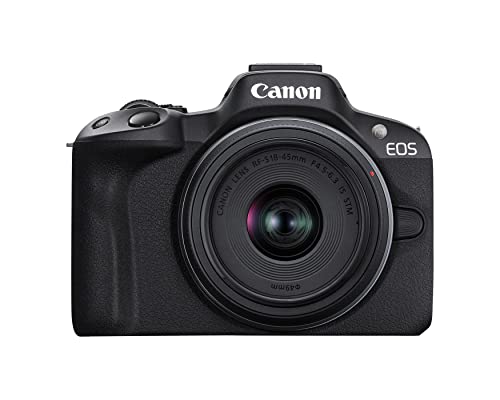
Canon EOS R50 — Best mirrorless value at this tier
The R50 is the strongest argument that this budget can buy into a living system. In kit form it arrives as a complete photography outfit — body, standard zoom, and Canon’s current autofocus and colour — and it behaves like a camera from a class above its price: subject-detection autofocus that finds eyes, 4K video for hybrid shooters, and handling friendly enough that beginners produce keepers in their first weekend while still having manual control to grow into. As a first serious camera, it is remarkably difficult to outgrow quickly.
The strategic value sits in the mount. Every RF lens you ever buy — and Canon’s range spans from affordable primes to professional glass — starts here, so money spent on lenses is never stranded when a future body upgrade comes. That compounding is what separates buying a system from buying a gadget, and at five hundred it is the difference between an expense and an investment. Canon’s colour, especially for people, flatters beginners’ most common subjects straight out of camera.
Be honest about the kit lens’s limits: it is a daylight companion, and low-light work will have you saving for a fast prime sooner than you expect — budget mentally for that lens as chapter two. The body also omits in-body stabilisation, leaning on lens stabilisation instead. Neither point dents the recommendation; they define its shape. This is the pick for the buyer whose five hundred is the start of a photography habit, not the whole of it.
A word for parents and gift-buyers lands naturally here: the R50 is the rare first camera that suits a teenager’s present and an adult’s standards simultaneously — automatic enough for the first weekend, deep enough for the school photography course, and backed by a lens system that birthday money can extend for years. Gifts of system cameras fail when the system is a dead end; this one’s mount is a main road, and that is why it keeps winning the ‘first real camera’ conversation at this money.
For students the R50 has an institutional virtue: photography courses and camera clubs are full of Canon shooters, which means borrowed lenses, shared settings advice and instructors fluent in your menus. Learning is social, and a beginner embedded in a community of same-system owners progresses measurably faster. It is an unglamorous reason to choose a mount, and working teachers will tell you it is one of the strongest — at any budget, and doubly at this one.
- Format: APS-C mirrorless, Canon RF mount
- Focus: subject and eye detection autofocus
- Video: 4K recording for hybrid use
- Kit form: body with standard zoom commonly bundled
Strengths
- Current autofocus and colour at an entry price
- RF lenses compound in value across future bodies
- Friendly handling with real manual depth
Trade-offs
- Kit zoom is a daylight-first lens
- No in-body stabilisation
- Fast prime is an inevitable chapter two
Best for: beginners buying a first system camera, and families wanting one camera that grows with its photographer.
Not suited for: buyers who want a finished, pocketable instrument with no further purchases ever.

Nikon Z30 — Best video-leaning buy at the tier
The Z30 is Nikon’s answer to a specific modern buyer: the person whose camera work is mostly video — tutorials, streams, reviews, vlogs — and whose stills are a supporting act. It skips the viewfinder photographers expect and spends the savings on what creators use: a flip screen for self-framing, a tally light so you know it is recording, microphone input, and recording stamina designed for long creator sessions rather than thirty-second clips. Within this budget, it is the most purpose-shaped tool for that job.
Image quality rests on Nikon’s APS-C sensor and the Z mount, whose lens range includes the compact primes and zooms a desk or travel creator actually carries. Footage colour is pleasing without grading, autofocus tracks faces dependably for talking-head work, and the whole package is small enough to live semi-permanently on a small tripod in a corner of a room — the unglamorous trait that determines whether a creator camera gets used daily or admired monthly.
Photographers should note the missing viewfinder every time it is mentioned, because for stills-first shooters it is a genuine absence, and there is no in-body stabilisation for handheld walking shots. But judged as what it is — a creator’s video camera that also photographs — the Z30 at this tier is coherent in a way generalist cameras rarely are. Buy it for the channel, the classroom or the stream, and it will feel designed rather than discounted.
Streamers should register one more Z30 kindness: it is designed to run for long sessions powered and connected like a streaming appliance, not merely a camera that tolerates the job — clean output, webcam-style connectivity and ergonomics that assume hours at a desk. For the teacher recording a course or the creator whose live sessions are the business, that stamina-by-design removes the overheating-and-battery vigilance that haunts adapted photo cameras, and removes it at a price this tier can hold.
Teachers recording courses are a Z30 constituency worth naming separately from streamers: multi-hour lessons, demonstrations filmed from above the desk, and talking-head segments all play to its stamina and screen, while its stills cover the course’s handouts and thumbnails. Educational content is a marathon format, and this is the marathon camera of the tier — a niche, certainly, but a large and growing one that generalist picks serve noticeably worse.
- Format: APS-C mirrorless, Nikon Z mount
- Design: video-first, no viewfinder, flip screen
- Audio: microphone input, tally light fitted
- Stabilisation: lens-based; no in-body system
Strengths
- Purpose-built creator ergonomics
- Long-form recording manners
- Z-mount lens path for growth
Trade-offs
- No viewfinder for stills shooters
- No in-body stabilisation
- Less of a photographer’s camera by design
Best for: video creators, teachers and streamers whose camera lives on a tripod and films them talking.
Not suited for: viewfinder traditionalists, or handheld walk-and-talk shooters.

Sony ZV-E10 II — Best creator camera around the line
Sony’s ZV line exists because the company noticed creators were buying photo cameras and fighting them; the ZV-E10 II is the mature version of that insight, and when its configurations land around this tier it is the creator pick to beat. Product-showcase focus for reviewers, face and eye tracking that holds while you gesture, a flip screen, a directional microphone arrangement with a windscreen in the box’s spirit, and colour tuned to look finished without a grade — it is a small machine that understands its owner’s working day in unusual detail.
The E-mount beneath it is the long game: the deepest mirrorless lens library available, including the wide, fast primes desk creators love and every upgrade path a growing channel could want. Its 4K quality and autofocus are inherited from Sony’s current generation rather than invented for the price point, which is why footage from this camera cuts comfortably alongside far pricier bodies in multi-camera creator setups.
The compromises mirror the Z30’s and add one of their own: no viewfinder, no in-body stabilisation, and a control scheme that assumes touch and menus. Solo creators filming from tripods will never miss what is missing. Photographers and handheld movers will. At this budget, specialisation is not a flaw — it is how a camera this capable exists at this money at all — but buy the specialisation you actually need.
There is a resale-and-growth footnote to the ZV-E10 II that budget buyers should appreciate: because it sits in the most popular creator ecosystem, its lenses hold their usefulness across every future Sony body, and the camera itself remains in demand among starting creators. Budget purchases that retain a future — as trade-ins, as second cameras, as the lens shelf’s foundation — cost less over five years than their stickers suggest, and this pick’s five-year story is among the strongest here.
A small ZV-E10 II mercy for the budget-conscious: it sips power in desk setups and can run from external power for long sessions, trimming the spare-battery count a creator kit needs. Budget guides should count such mercies, because the tier’s real enemy is the accumulation of small necessities. A camera whose design keeps the accessory list short is, in effect, cheaper than its sticker — and this one’s list is admirably short for what it does.
- Format: APS-C mirrorless, Sony E mount
- Design: creator-first, vari-angle screen
- Focus: face/eye tracking plus product showcase
- Lenses: full E-mount library compatible
Strengths
- Creator features that genuinely save time
- Class-leading autofocus inheritance
- Deepest lens ecosystem at the tier
Trade-offs
- No viewfinder or in-body stabilisation
- Menu-and-touch handling bias
- Rolling shutter asks for calm pans
Best for: YouTubers, reviewers and tutors filming themselves, especially those planning to grow within E-mount.
Not suited for: stills-first photographers, or anyone filming handheld while walking.

Sony ZV-1F — Best simple vlogging compact at the tier
The ZV-1F makes a bet the other picks do not: that its buyer wants fewer decisions, not more capability. Its fixed wide lens is chosen for arm’s-length filming, its background-defocus switch blurs a room at a button press, its product mode focuses on held-up objects without menus, and its whole control scheme can be learned in an afternoon. For the vlogger whose content is personality rather than production, that simplicity is not a limitation — it is the feature that keeps filming happening on tired days.
Within its brief it is genuinely good: faces are tracked and exposed kindly, the wide lens flatters small rooms and arm’s-length framing, and the camera is small enough to be carried the way phones are carried, which is the only carry that guarantees use. It also serves as a superb second camera for creators whose main rig is a system body — the pocketable B-camera for the car, the kitchen and the walk to the location.
Name the boundaries plainly: the lens does not zoom and does not come off, low-light reach is compact-class rather than system-class, and a photographer who discovers a love of lenses will outgrow it entirely rather than gradually. It is a finished instrument for a defined job. Buyers certain of that job get a bargain in focus; buyers unsure of it should take the R50’s open future instead.
The ZV-1F also quietly serves a second audience: the family documentarian who wants one simple camera that any relative can operate at the gathering. Its automation is genuinely trustworthy — hand it to a grandparent, point at the button, receive a watchable clip — and that hand-off-ability is a real feature in family life, where the best camera is often the one nobody needs explained. Specialists sneer at simplicity; families, who live by it, should not.
The ZV-1F’s fixed lens carries one hidden economy: there is nothing else to buy. No lens lust, no filter sizes, no mount decisions — the camera is a closed system whose total cost of ownership is its price plus a card. For buyers whose five hundred must be a final number rather than a first instalment, that closure is not a limitation but the entire appeal, and this guide respects it as a legitimate philosophy of ownership.
- Format: compact with fixed wide lens, one-inch type sensor
- Design: vlogging-first, defocus switch and product mode
- Screen: vari-angle for self-filming
- Carry: pocketable, everyday-carry size
Strengths
- Simplest path to good-looking vlogs
- Wide lens ideal for arm’s-length framing
- Truly pocketable everyday carry
Trade-offs
- Fixed lens, no zoom, no lens changes
- Compact-class low-light limits
- Nothing to grow into within the body
Best for: vloggers and social creators who value speed and simplicity over system growth.
Not suited for: budding photographers who will want lenses, reach or manual depth.

Canon PowerShot G7 X Mark III — Best premium compact for photos and clips
The G7 X Mark III is what photographers buy when the system camera stays home: a one-inch-type sensor behind a genuinely fast zoom, in a body that fits a jacket pocket and behaves like a camera rather than a phone with ambitions. Its lens speed is the headline — bright enough to keep low-light shutter speeds sane and to give portraits real background separation at the long end — and its stills quality remains the benchmark its class is judged by. For travel, family and everyday carry, it makes photographs your phone simply cannot.
It also speaks fluent creator: 4K video, a screen that flips up for self-framing, a microphone input unusual in its class, and even live-streaming support. That combination made it a fixture in creator bags as the compact that covers both crafts, and it remains the pick here for the buyer whose five hundred should produce excellent stills first and very capable video second, without a lens shelf ever entering the story.
Age is its context: this is a mature design, and its autofocus and menus feel a generation behind the newest system cameras, while its battery life asks for a spare on heavy days. None of that changes what comes out of it. As a complete, finished, pocketable instrument at this tier, it is the connoisseur’s answer — the camera for someone who knows exactly why a compact, and wants the good one.
Photographers who shoot raw should note the G7 X Mark III’s files reward the habit unusually well for a compact: the one-inch sensor’s dynamic range and the lens’s sharpness give editors real material, so the camera serves both the straight-from-camera social shooter and the deliberate editor in the same household. That dual citizenship — snapshot ease, serious files — is the premium compact’s whole thesis, and this model remains its clearest expression at money this tier can reach.
Travel photographers add the G7 X’s customs-and-cafes argument: it attracts no attention, fits the jacket during the museum visit, and is ready before the moment at the next table dissolves. A surprising fraction of beloved travel photographs are really portraits of unguarded life, and unguarded life requires an unobtrusive camera. The system bodies here are better instruments; this one is the better witness, and witnesses write the travel archive.
- Format: compact, one-inch type sensor, fast zoom lens
- Video: 4K with microphone input and streaming support
- Screen: tilting, flips up for self-framing
- Controls: proper dials and a lens control ring
Strengths
- Fast lens, excellent pocketable stills
- Creator features rare in compacts
- Finished instrument — nothing more to buy
Trade-offs
- Autofocus feels a generation old
- Battery life wants a spare
- No lens flexibility, ever
Best for: photographers wanting a premium pocket camera for travel and family, and creators wanting one compact for both crafts.
Not suited for: system builders, or action and wildlife shooters needing reach and speed.

AKASO Brave 7 LE — Best rugged action value at the tier
Every budget guide should include the camera that spends its life where the others cannot go, and at this tier the Brave 7 LE is that camera: a waterproof action camera with electronic stabilisation, a front screen for self-framing, and a price position that leaves most of the five hundred unspent — money that buys the mounts, cases and spare batteries that action filming actually consumes. As an adventure purchase, the complete package it enables is the point, not the spec sheet duel with flagship rivals.
Footage is honest action-camera footage: wide, stabilised, colourful in daylight, and entirely adequate for the kayaking, cycling, skiing and snorkelling films it will actually shoot. Dual screens solve the framing guesswork that plagued early action cameras, and weather sealing plus its waterproof housing story cover the environments that justify its existence. For a family’s holiday camera that a teenager can be trusted with at the waterline, its value is difficult to argue with.
Calibrate expectations to its class: low-light footage softens, audio is action-camera audio, and the app experience is functional rather than beloved. It is also not competing with the mirrorless picks on stills — it is a different instrument that shares a budget line. Buy it when the five hundred is for adventure footage and durability; buy the compacts or systems when it is for photography. The guide’s job is to make that fork clear, and this pick exists so the adventure fork is properly served.
Parents of teenagers may value one more Brave 7 LE trait: it converts pocket money into participation. Its mounts, cases and spare batteries sit at accessory prices a young owner can fund themselves, so the camera becomes a hobby the teenager extends rather than a gift the parent maintains. Equipment a young person can afford to grow is equipment they actually grow with, and at this tier that self-sufficiency may be the most educational feature any pick offers.
School outdoor programmes and scout troops are the Brave’s institutional niche: cheap enough to issue, tough enough to survive issuance, and simple enough that a leader can teach its operation in five minutes at the trailhead. Group adventure documentation — the trip film every participant’s family watches — is a real genre with real requirements, and this camera meets them at a price that lets a troop own three. Scale is a feature, and at this tier it wins arguments.
- Format: action camera, waterproof design
- Stabilisation: electronic image stabilisation
- Screens: front and rear displays
- Kit culture: mounts and accessories widely available
Strengths
- Leaves budget for mounts and spares
- Waterproof, worry-free adventure use
- Front screen fixes self-framing
Trade-offs
- Low-light footage is modest
- Audio is basic without accessories
- Stills are a side feature
Best for: adventurers, families and teens filming water, wheels and snow on a counted budget.
Not suited for: photographers seeking stills quality, or low-light filmmakers.
How Should You Stretch a Fixed Camera Budget Furthest?
Spend on the lens the camera wears daily, not the body tier above. At this level, the difference between a kit zoom and a fast prime is the difference between daylight photography and all-day photography — the prime’s extra light buys shutter speeds and ISO headroom no body upgrade at this money can match. If a configuration choice forces the trade, take the humbler body with the better lens path and a plan; bodies depreciate toward each other, while the right lens stays right for a decade.
Buy the previous generation deliberately. Camera development is incremental — a sensor here, a focus improvement there — while launch pricing is not. The model replaced last year, discounted into this tier, typically delivers ninety percent of the current experience for the counted budget, and its quirks are documented by years of owners rather than discovered by you. The exception is autofocus for fast subjects, where generational jumps are real; sports and wildlife buyers should weight newness higher than everyone else.
Treat accessories as part of the camera, because a camera without a card, a spare battery and a way to carry it is a sculpture. The cheapest version of each essential is usually fine — cards from reputable brands at the speed your camera needs, a basic bag that fits the actual kit — but skipping them to afford a badge is the budget error this guide sees most. Price the working kit, always, and let the body be what remains affordable after the kit is honest.
Finally, protect the purchase: buy from sellers whose returns window covers a month of real use, register warranties, and test everything in week one — focus accuracy, video recording length, battery behaviour, screen and dials. Budget cameras are built to cost, and the occasional lemon exists in every line; the buyers who suffer are the ones who discover it in month three. A disciplined first week converts a gamble into a purchase.
Timing deserves a paragraph in any budget guide: camera pricing breathes with product launches, holiday seasons and retailer clearances, and a buyer who can wait a few weeks for the predictable dips routinely pulls a tier-above camera into this budget. The skill is distinguishing patience from paralysis — set a deadline tied to the photography you want to do (the trip, the birthday, the course), watch prices until then, and buy the best complete kit available when the deadline arrives rather than mourning the dip that came after.
Second-hand within the tier deserves its own rule: at this money, a used example of a tier-above camera often beats a new example of the tier itself — provided the used purchase keeps the protections this guide insists on (tested, returnable, warranted where possible). The mirrorless picks’ recent predecessors circulate abundantly for exactly this reason. Treat ‘new’ as a feature with a price, not a virtue, and let the arithmetic decide which form your five hundred takes.
A final stretching technique: buy the camera and lens in the order your photography needs them, not the order shops display them. If your subjects are people in ordinary rooms, the fast prime may matter more than the body tier and should be bought first or bundled deliberately; if your subjects are landscapes, the wide zoom leads. Sequencing purchases by use rather than by prestige routinely saves a full tier of spending across a first year — the quiet arithmetic that separates photographers who own kits from shoppers who own beginnings.
How Do You Get Great Results From a Budget Camera in Week One?
Learn the three controls that govern everything — aperture, shutter speed, ISO — on your specific camera’s dials until changing them is reflex. Budget cameras hide nothing important, but they do bury settings in menus; spend an evening building your mental map, set the camera to save files in the highest quality it offers, and turn off the digital zoom and novelty filters that quietly degrade images. One evening of setup returns itself on every subsequent photograph.
Shoot the same scene at every ISO and aperture your camera offers, and look at the results large. This unglamorous exercise teaches you your own camera’s real limits — where noise becomes objectionable to you, where the kit lens sharpens up, how slow a shutter you can handhold — which no review can know, because the answers depend on your subjects and your standards. Photographers who know their camera’s edges produce better work on budget gear than tourists produce on flagships.
Give the camera light and it will repay you beyond its price. Budget sensors and kit lenses are daylight aristocrats and low-light strugglers, so the beginner’s highest-value skill is seeing light: window light for portraits, open shade for even colour, golden hour for landscapes, and a cheap continuous light for video. Every technique costs nothing, and each one moves your results more than the next body tier would. Photography at this budget is a craft contest, and craft is free.
Back up from the first card. Budget discipline that stops at purchase is half a discipline: copy every shoot to two places the day you shoot it, format cards in the camera only after the copies verify, and keep the habit when the sums involved feel small. The photographs from a five-hundred camera are worth exactly as much as the memories they hold, which is to say the backup routine matters more than the badge on the strap.
Protect the learning investment with one organisational habit from the start: a simple folder system and a weekly review. Budget cameras produce photographers who shoot a lot — that is their glory — and unreviewed abundance teaches nothing. Fifteen minutes a week choosing your best five frames and asking what they share builds the eye faster than any tutorial, and it costs the one currency this guide’s readers demonstrably manage well: attention rather than money.
One more week-one exercise, the cheapest education in photography: photograph one subject — a person, a building, a tree — at every focal length and aperture your new camera offers, in one session, and study the grid of results. An hour of that teaches what a lens does more durably than a month of reading, and on budget equipment it has a second function: it reveals your specific copy’s sweet spots and quirks while returns are still painless. Knowledge and consumer protection in a single exercise is this guide’s favourite kind of bargain.
Keep the camera where life happens for the first month — by the door, on the kitchen table, in the bag you actually carry — rather than stored correctly in a cupboard. Budget cameras earn their keep through frequency, and frequency is a furniture decision before it is a photographic one. The photographers who grow fastest on this tier are not the most talented; they are the ones whose camera was present for the most ordinary Tuesdays, because ordinary Tuesdays are where seeing is trained.
How Do the Six Budget Buys Stack Up Against Each Other?
| Camera | Badge | Format / type | Standout trait | Watch out for |
|---|---|---|---|---|
| Canon EOS R50 | Best mirrorless value at this tier | Format: APS-C mirrorless, Canon RF mount | Current autofocus and colour at an entry price | Kit zoom is a daylight-first lens |
| Nikon Z30 | Best video-leaning buy at the tier | Format: APS-C mirrorless, Nikon Z mount | Purpose-built creator ergonomics | No viewfinder for stills shooters |
| Sony ZV-E10 II | Best creator camera around the line | Format: APS-C mirrorless, Sony E mount | Creator features that genuinely save time | No viewfinder or in-body stabilisation |
| Sony ZV-1F | Best simple vlogging compact at the tier | Format: compact with fixed wide lens, one-inch type sensor | Simplest path to good-looking vlogs | Fixed lens, no zoom, no lens changes |
| Canon PowerShot G7 X Mark III | Best premium compact for photos and clips | Format: compact, one-inch type sensor, fast zoom lens | Fast lens, excellent pocketable stills | Autofocus feels a generation old |
| AKASO Brave 7 LE | Best rugged action value at the tier | Format: action camera, waterproof design | Leaves budget for mounts and spares | Low-light footage is modest |
Systems versus finished instruments is the tier’s true comparison. The R50, Z30 and ZV-E10 II are beginnings — their five hundred buys a mount and a future — while the ZV-1F and G7 X Mark III are endings, complete on day one and complete forever. Neither philosophy is thriftier in the abstract: the system buyer spends more later by design, the compact buyer spends nothing later by design. Know which buyer you are before the money moves, because the wrong philosophy is the only genuinely wasted purchase here.
The action camera stands outside that comparison as the specialist: judged on photography it loses, judged on surviving the holiday it wins outright. Budgets are best served by honesty about the dominant use — a camera bought for the two weeks of adventure and used for fifty weeks of family life should be bought as a family camera, and the Brave rented or borrowed for the fortnight.
What Budget-Camera Mistakes Waste the Most Money?
Buying a bare body at the ceiling is the classic: the camera arrives, the lens fund is empty, and the five hundred sits in a drawer photographing nothing while enthusiasm cools. The defence is arithmetic performed before desire — total the working kit, and if the total breaks the ceiling, step the body down a tier or wait for the bundle. A complete lesser kit out-photographs an incomplete greater body every day of the year, because only one of them can take a picture.
Chasing megapixels and zoom range on the box is the second waste. At this tier, sensor size and lens quality decide image quality; headline resolution and extreme digital zooms are marketing’s cheapest ingredients. Read for the sensor format and the lens’s brightness, try to handle the camera, and let the unglamorous specifications — the ones this guide repeats — carry the decision.
The third mistake is skipping the protection of the purchase: grey imports with no warranty, marketplace sellers with no returns, cards from unknown brands that fail on the holiday. A counted budget deserves counted risk. Buy through channels that stand behind the sale, test in week one, and keep the receipts with the same care you kept the savings.
A fourth budget mistake is insuring the wrong risk: elaborate extended warranties on a robust compact while shooting on a single bargain memory card from an unknown seller. Spend protection money where failure actually lives — genuine cards, a decent bag, a strap that cannot slip — and let the camera’s standard warranty do its job. Budget wisdom is mostly risk placed correctly, and at this tier the risks are mundane, cheap to cover, and chronically ignored.
Final Recommendation
If the five hundred is a beginning, buy the R50 kit and plan the fast prime as chapter two; if it is a video channel’s beginning, the ZV-E10 II or Z30 divides by ecosystem taste. If the five hundred is the whole story, the G7 X Mark III is the photographer’s complete answer and the ZV-1F the vlogger’s. And if the money is for adventure, the Brave 7 LE plus its mounts is the package that comes home with footage.
Above all, hold the line the keyword set: a complete kit at the number beats a fragment of a grander kit above it. Cameras reward the photographers who shoot them, and a budget honoured is a camera used — which is the only return on five hundred that has ever mattered.
Remember, finally, what the number cannot buy and was never meant to: it cannot buy the photographer’s eye, which is free and developed by shooting; it cannot buy light, which is free at dawn and cheap in a window; and it cannot buy the subject’s trust, which is earned. The five hundred buys a competent instrument and the right to practise. Every photographer you admire started with less instrument than these picks offer — the rest of the recipe was always the practising.
Hold one thought against every future upgrade temptation: at this tier, the difference between the camera you own and the camera you covet is almost always smaller than the difference between your current light, lens and practice and what they could be. Exhaust the free improvements first — they are listed throughout this guide and they are embarrassingly effective — and let the five hundred you already spent finish its work before another number enters the conversation.
Spent this way, five hundred stops being a limitation and becomes what it secretly always was: a forcing device for the decisions that make photographers — category chosen honestly, kit totalled truthfully, lens prioritised over badge. Readers who internalise those decisions at this tier make them at every tier afterwards, and that habit, compounded across a photographic life, is worth more than any camera in this guide or any other.
Frequently Asked Questions
Can I really get a good camera for around 500.00?
Yes — this is one of photography’s healthiest tiers, because entry mirrorless systems, mature premium compacts and capable action cameras all pass through it. What the tier will not buy is a flagship or a full-frame system, and it punishes bare-body purchases that ignore kit costs. Spent on a complete kit in the right category, five hundred buys years of photography that would have been professional-grade not long ago.
Is a mirrorless kit or a premium compact better at this price?
It depends entirely on whether the budget is a beginning or a whole. The mirrorless kit starts a system whose lenses compound in value and whose ceiling rises with future bodies; the premium compact is finished on day one, pockets beautifully and never asks for another cent. Beginners who sense a growing hobby should buy the system; buyers who want one excellent camera forever should buy the compact.
Should I buy last year’s model to fit the budget?
Usually, yes — deliberately. Camera generations improve incrementally, and the replaced model’s discount is often the largest single saving available in this tier. Its behaviour is also fully documented by long-term owners. The exception is fast-action autofocus, where recent generations jumped meaningfully; everyone else can buy the discount with confidence and put the difference toward the lens or the light.
What extra costs should I expect after buying?
A memory card, ideally a second battery, a bag that fits, and — for system cameras — the eventual fast prime that transforms low-light work. None is large, but together they are why this guide insists on totalling the kit before choosing the body. Buyers who reserve a modest accessories allowance inside the five hundred end up with a working outfit; buyers who spend it all on the badge end up with a drawer camera.
Is refurbished a safe way to fit this budget?
Manufacturer-refurbished stock is one of the tier’s best routes: inspected, restored and warranted by the maker, at prices that pull better cameras into the line. Independent refurbishment quality varies, so the warranty is the product — buy refurbished where a real warranty backs it, and treat unwarranted ‘refurbished’ claims as ordinary used goods with better marketing.
Will a camera at this price beat my phone?
At the things this guide chose for, yes, clearly: interchangeable lenses and optical zoom, larger-sensor depth and low-light quality, physical controls and ergonomics, or waterproof ruggedness, depending on the pick. Your phone remains the better spontaneous snapshot device and the better sharing machine. Most owners use both — the phone for the moment, the camera for the photography — and find the division natural within a month.
If your basket creeps past five hundred, what should you cut first?
Trim accessories before touching the camera or lens decision itself, because bodies and optics shape every photograph while extras can arrive gradually over following months. A padded bag borrowed from home, careful handholding and free editing software will carry a new owner surprisingly far. Postpone the second battery, premium strap, filter sets and extended warranties offered at checkout, since those purchases remain available later at similar cost, whereas swapping a disappointing lens afterwards usually means selling at a loss.
Protect three modest essentials inside the ceiling instead: one memory card with enough capacity for a full day out, a basic cleaning cloth for fingerprints and dust, and whatever charger or cable arrangement the particular model actually requires. Also leave a small contingency untouched rather than spending every last unit of currency, because postage, a card reader or an unexpected adapter can otherwise push a carefully planned purchase into frustration during its very first weekend.
Consider also where money quietly leaks away during the first month of ownership. Impulse purchases of novelty effects, decorative cases or duplicate straps feel harmless individually, yet together they can consume the price difference between the camera you settled for and the stronger model you originally wanted. A short cooling-off rule works well: wait a fortnight after the camera arrives, note what genuinely annoyed you during real outings, and only then spend remaining funds solving an observed problem. Perhaps the factory strap digs into your neck, the screen proves unreadable in glare, or the battery truly lasts less than a day trip requires. Each discovery points to one purposeful accessory instead of a drawer of regrets. Keeping receipts and packaging during that trial period also preserves your options if an early fault appears, and photographing the serial label on your phone takes seconds while simplifying any warranty conversation later.
Related Guides
Keep exploring with our guide to the best cameras for beginners on a budget and our roundup of cameras body options under higher tiers and our explainer on affordable cameras for photos and videos.


