ilcastellomenu.com is reader-supported. When you buy through links on our site, we may earn an affiliate commission.
Where to Buy
A videographer is not a person with a camera; a videographer is a person whose camera must not fail in front of a client. If you are choosing the best cameras for a videographer — building a practice, upgrading a practice, or standardising a small company’s kit — the criteria invert the consumer ones: reliability outranks resolution, ecosystem outranks novelty, and the best camera is the one whose behaviour you can predict at hour six of a wedding, minute forty of a keynote, and take three of a commercial with the client watching the monitor. This guide is written to that professional standard.
Start with the business truth nobody puts on a box: clients cannot see your sensor. They see whether you delivered, whether the footage matched across cameras, whether the audio was clean, whether you were calm when the schedule collapsed. Equipment serves those outcomes or it is jewellery. Every pick below was therefore assessed as a business asset — its failure modes, its rental and resale depth, its lens economics, its behaviour in a two-camera kit — before its image quality was allowed into the conversation, where the modern professional field is honestly close.
The second truth is that a videographer’s camera is a system purchase wearing a body’s price tag. Lenses, media, batteries, audio and support gear follow the mount decision for years, and the mount’s professional culture — what can be hired in a strange city, what a second shooter is likely to own, what the rental house stocks — has cash value. The list spans the mounts a working videographer can rationally build on, and says plainly which practice each suits: the all-round production house, the event marathoner, the colour-led boutique, the nimble documentary unit.
Finally, growth: a practice’s camera should be promotable. The body bought this year becomes the B-camera when the cinema body arrives, the streaming rig when the live work grows, the backup that saves the one day everything else fails. Picks were favoured for their second lives. Buy the camera your future practice will thank you for keeping, and the purchase stops being an expense and becomes what it should be — infrastructure.
One more professional reality frames the list: the videographer’s camera is also their shop window. Clients who know nothing of sensors recognise the rig that looks like the films they admired, and a practice’s equipment quietly argues its rates before a word is spoken. That is not a reason to buy jewellery — it is a reason to keep the working kit clean, caged sensibly and presented like the business it is. The picks here all dress for work convincingly, which their owners may count as a minor but real dividend.
Key Takeaways
- For paid work, predictability is the top specification: no surprises at hour six.
- Choose the mount as a business decision — hire availability, second-shooter compatibility, lens economics.
- Clients judge delivery, audio and calm, not sensors; buy the kit that protects those.
- A professional body should be promotable to B-camera, streaming rig or backup as the practice grows.
- Two matched bodies often serve a practice better than one flagship and a stranger.
In this guide
Quick Picks
| Camera | Badge | Why it earns its place |
|---|---|---|
| Sony Alpha 7 IV | Best A-camera for most practices | The industry’s default for a reason: autofocus trust, lens depth, and a resale and hire market everywhere. |
| Panasonic LUMIX S5II | Best for long-form and live-event practices | Fan-cooled endurance, open gate for deliverable variety, and monitoring tools for serious operators. |
| Canon EOS R6 Mark II | Best for weddings and fast-moving events | Tracking autofocus for processions and first dances, kind skin tones, and stills speed for hybrid days. |
| Fujifilm X-T5 | Best for boutique and brand-led practices | A signature look in camera: film simulations as a house style clients can recognise and request. |
| Sony ZV-E10 II | Best B-camera and streaming body for practices | The second angle, the streaming rig and the travel kit in one small, ecosystem-matched body. |
| DJI Osmo Pocket 3 | Best specialist for movement and gimbal shots | The professional’s secret weapon: venue reveals, walk-throughs and transitions no rig matches for speed. |
How Did We Choose Cameras for Professional Videographers?
We weighted failure modes as a client experiences them: overheating during the unrepeatable, media that cannot be backed up on site, audio that cannot be monitored, autofocus that wanders during a vow or a keynote sentence. Each candidate’s professional reputation — the accumulated verdict of people who film for money — was treated as evidence, because a body that working videographers trust with weddings has passed an examination no laboratory replicates.
Second, the kit mathematics of a practice: what the lenses a videographer actually rents and owns cost within the system, whether batteries and media standardise across bodies, and how the camera behaves caged, gimballed and tripod-mounted across a twelve-hour day. A camera is bought once and its ecosystem is bought forever; the guide priced the forever, not the once.
Third, role honesty across a company’s life: an A-camera for hero work, a marathon body for long-form events, a colour instrument for boutique and brand work, and the small bodies that serve as B-cameras, streaming rigs and travel kits. A one-person practice and a three-person company will weight these differently — the badges and verdicts are written so each can assemble its own answer from the same six honest parts.
We gave additional weight to a quality clients never name but always feel: consistency of colour and exposure across a long day, as light changes and batteries swap. Bodies whose files drift in character between morning and midnight tax every edit and every multi-camera match. The picks here hold their look across a working day — a professional virtue that showreels, shot in golden minutes, never demonstrate and order books always reward.
Which Are the Best Cameras for a Videographer on Paid Work?
Assessed as employees, not ornaments: what each body does on the worst day of the year, what it costs the practice around it, and where it sits in a growing company’s kit.

Sony Alpha 7 IV — Best A-camera for most practices
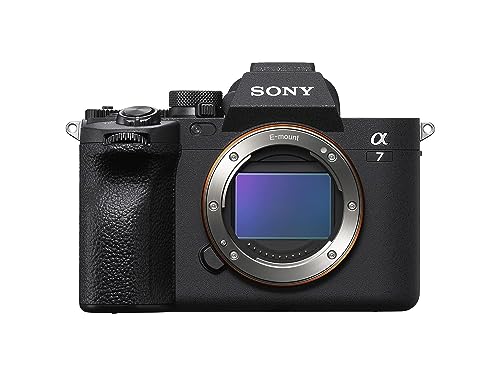
If a practice must standardise on one body, the A7 IV is the standard the industry keeps arriving at. Its professional case rests on accumulated trust: autofocus that can be given a face during a ceremony and forgotten, colour that grades predictably and matches Sony’s cinema line when the production scales, and an E-mount lens bench so deep that any focal length, at any budget, in any hire shop, exists. A videographer’s emergencies are solved by ecosystems, and no ecosystem solves more of them.
Its working manners suit the paid day: proper audio inputs and monitoring, dual media for backup discipline, custom modes that store the ceremony configuration and the reception configuration a dial-turn apart, and a stills side strong enough to cover the hybrid commissions — the brand shoot that also wants photographs — that increasingly pay a practice’s rent. It is, in the best sense, the boring choice: the one nobody was ever fired for buying, because it never becomes the story of the day.
The professional caveats are managed rather than hidden: top-rate recording crops, hot long takes deserve testing, and its very popularity means clients occasionally own one too — which the wise videographer treats as a B-camera opportunity rather than an insult. As the anchor of a practice’s kit, it remains the reference against which the other five argue their specialisms.
Corporate practices add an A7 IV virtue worth naming: it is the body most likely to be matchable by a freelance second shooter at short notice, because the freelance market owns it in depth. A practice that standardises on the industry’s common body buys itself a labour market — cover for illness, a second angle for the big day, a replacement by evening if the worst happens. Standardisation is usually discussed as a technical convenience; its real value is human redundancy.
Livestream-adjacent practices — the conference filmed and streamed in one pass — lean on the A7 IV’s clean output and long-session manners as their house standard, because a body that behaves identically in the record and the stream halves the monitoring burden. Hybrid delivery is the industry’s direction, and this body’s fluency in both dialects is a quiet, compounding advantage for the practices that adopted it early.
- Format: full-frame mirrorless, Sony E mount
- Audio: mic input, headphone monitoring
- Media: dual slots for backup workflows
- Role: A-camera standard for mixed practices
Strengths
- Autofocus a ceremony can be trusted to
- Lens and hire depth unmatched
- Promotes naturally alongside cinema bodies
Trade-offs
- Top frame rates crop the sensor
- Heat on extreme takes needs testing
- Popularity means little client wow factor
Best for: practices shooting weddings, brand and corporate work that need one trusted standard body.
Not suited for: boutique practices whose brand is a distinctive in-camera look.

Panasonic LUMIX S5II — Best for long-form and live-event practices
Practices built on duration — conferences, ceremonies in full, theatre, worship, training days — should look at the S5II first, because its fan cooling converts the professional’s central anxiety into a non-event. A camera that records the whole keynote, the whole service, the whole show without a thermal negotiation is worth more to an event practice than any resolution advantage, and Panasonic’s filmmaker tooling (waveforms, shutter-angle thinking, serious profiles) respects the operator who runs it.
Open-gate recording is its business feature in disguise: one master performance yielding landscape, vertical and square deliverables answers the modern client’s actual order — the film, plus the socials — without extra shoot days. Event and corporate practices live on that deliverable stack, and a body that captures it in a single pass compresses the most expensive line in any production, which is time on site.
The trade-offs are ecosystem arithmetic: L-mount’s bench is capable and growing but thinner in hire shops than Sony’s, and a practice standardising here should budget to own its core lenses rather than rent them. Autofocus, transformed in this generation, still cedes the chaos crown to Sony and Canon. For the long-form specialist, those are the right prices for the stamina — this is the marathon runner of professional bodies, and marathons are a business.
Worship and ceremony specialists give the S5II a particular professional endorsement: services run long, sanctuaries run warm, and the congregation’s important moments do not repeat for a camera’s convenience. A fan-cooled body that treats a two-hour service as a normal Tuesday has ended the prayer-and-watch-the-temperature era for those practices. Reliability of that kind is pastoral as much as technical, and it is why this body owns its niche so completely.
Documentary practices working in institutions — hospitals, schools, factories — value the S5II’s unobtrusive stamina: long interviews and observational days recorded without the crew’s attention ever visibly shifting to the camera’s temperature or media. In rooms where trust is the entire production, a camera that never interrupts is an ethical feature as much as a technical one, and this body has built a documentary reputation on exactly that discretion.
- Format: full-frame mirrorless, L mount
- Cooling: built-in fan for continuous recording
- Recording: open-gate full-sensor capture
- Tools: waveform monitoring and pro profiles
Strengths
- Uninterrupted long-form recording
- Deliverable variety from one master
- Operator-grade monitoring built in
Trade-offs
- Thinner hire market for lenses
- Autofocus behind the chaos leaders
- Owning core glass is the sensible plan
Best for: event, conference, worship and corporate practices filming long takes and many deliverables.
Not suited for: practices dependent on renting exotic lenses locally.

Canon EOS R6 Mark II — Best for weddings and fast-moving events
The wedding videographer’s day is a sequence of unrepeatable movements in deteriorating light, and the R6 Mark II is built like it knows: subject tracking that holds a bride through a crowd, stabilisation that keeps the handheld recessional composed, and colour — especially skin in mixed tungsten and window light — that arrives in the edit needing rescue least often of any system here. In a genre where delivery speed is a competitive weapon, footage that grades fast is a margin, not a nicety.
Its hybrid completeness suits the modern wedding business, where the same supplier often owes the couple film and photographs or works shoulder-to-shoulder with a photographer on the same mount. Burst speed, low-light stills and video authority in one body simplify the bag and the insurance. RF’s fast primes are the low-light instruments this work runs on, and their focusing behaviour in video is properly engineered rather than adapted.
Heat on the longest, hottest, highest-quality recordings remains the due-diligence item — test the full ceremony in your summer, at your settings — and the RF lens family’s prices belong in the practice’s capital plan. For the event professional whose work moves, those terms buy the most capable movement-and-colour combination Canon has offered this class, and the wedding industry has noticed.
Real-estate and venue practices exploit a different R6 strength: its stabilisation and tracking make walk-through footage — the operator moving backwards through rooms ahead of an agent — smooth enough to deliver without a gimbal on many jobs, trimming the kit and the setup time per property. In volume businesses, minutes saved per job are the margin, and this body’s handheld competence is a margin with a lens mount.
Sports-content practices — the club’s weekly film, the athlete’s channel — exploit the R6 Mark II’s crossover into fast stills more than any other group: one body delivering the match film and the action photographs the club’s channels run on. In the content economy of local sport, that single-body completeness is a business model, and it is why this camera keeps appearing in press boxes above its price.
- Format: full-frame mirrorless, Canon RF mount
- Focus: subject detection for people in motion
- Stabilisation: in-body with RF lens cooperation
- Role: wedding and event A/B camera
Strengths
- Tracking built for processions and dances
- Skin tones that grade fast
- Stills speed matches the video authority
Trade-offs
- Test ceremony-length takes in summer heat
- RF glass is a capital commitment
- Mixed card formats in its two slots
Best for: wedding and event videographers, especially hybrid film-and-photo practices.
Not suited for: static long-form specialists better served by fan cooling.

Fujifilm X-T5 — Best for boutique and brand-led practices
Some practices sell a look, and for them the X-T5 is not a compromise but a positioning statement. Fujifilm’s film simulations let a boutique videographer deliver footage with a recognisable, filmic identity straight from the camera — the wedding film that looks like a memory, the brand film with a palette a client can point at and request by name. In a market of identical clinical footage, a house style is a pricing argument, and this body manufactures one daily without a colourist’s invoice.
The practice economics around it are kind: X-mount lenses are compact and comparatively affordable, the whole kit travels light (a genuine advantage for destination and documentary-leaning practices), and the stills quality lets the same body headline the photography side of a boutique’s commissions. Dial-led handling suits deliberate, directed work — brand films, music-adjacent pieces, narrative shorts — where the operator sets the camera like an instrument rather than chasing events with it.
Its professional limits are the known ones: autofocus that trails the event specialists with chaotic subjects, an APS-C ceiling in the very darkest venues, and a hire market thinner than the big three’s. A boutique practice owns its glass and chooses its gigs, so those limits bind less than they would an event generalist. Judged as a brand instrument, the X-T5 is the most distinctive tool in this guide.
Destination wedding practices have a logistical X-T5 story: the whole system — body, three primes, the lot — travels in a carry-on that bigger systems check into the hold and pray over. For the boutique that flies to its work, that portability is not convenience but risk management, and the look the system delivers is the brand the clients booked. Small kit, signature footage, no checked-baggage anxiety: the boutique equation in full.
Music-adjacent practices — session films, artist portraits, the visual world around a record — find the X-T5’s stills-video unity and filmic colour collapse two commissions into one kit bag. Where the client is an artist, the camera’s own artistry is a credential the client can see, and boutique practices report that the Fujifilm’s presence in the room is itself part of what was booked.
- Format: APS-C mirrorless, Fujifilm X mount
- Colour: film simulations as a deliverable look
- Handling: dial-led, deliberate operation
- Kit: compact lenses, light travel footprint
Strengths
- Recognisable house style in camera
- Affordable, compact lens shelf
- Excellent stills for hybrid boutique work
Trade-offs
- Autofocus not for chaotic events
- Low-light ceiling below full frame
- Thinner hire availability
Best for: boutique wedding, brand and narrative practices selling a distinctive look.
Not suited for: high-volume event generalists needing hire depth and chaos-proof tracking.

Sony ZV-E10 II — Best B-camera and streaming body for practices
Every practice needs the camera that does the unglamorous jobs, and the ZV-E10 II does them inside the Sony ecosystem most practices already run: the locked-off second angle at the ceremony, the streaming and webinar rig in the studio corner, the travel B-camera that matches the A-camera’s colour closely enough to cut without a fight. Its autofocus inheritance means it can even be trusted with a moving subject unattended — the wide shot that follows the speaker while the operator works the close-up.
As a business purchase its virtues are arithmetic: it costs a fraction of a second A-body, shares the mount and much of the accessory logic, sips batteries in desk setups, and produces client-acceptable footage for the angles clients actually scrutinise least and need most. Practices routinely report this class of body quietly pays for itself in rescued coverage — the angle that caught the moment the A-camera missed is a delivery saved and a reputation kept.
Its limits define its station: no viewfinder, no in-body stabilisation, creator-grade build. It is not the camera to hang a ceremony on alone. But a practice is a company of cameras, and this is the company’s most versatile employee — the one that is somehow on every job, in some capacity, earning.
Training and course businesses run ZV-E10 IIs as their studio fleet for a sound reason: identical, affordable, ecosystem-matched bodies on every desk make a set that any team member can operate, with footage that matches without a colourist. Standardisation at the humble end is still standardisation, and course businesses — whose product is reproducibility — understand the principle better than most of the industry.
Agencies white-labelling creator content run ZV-E10 IIs as their standard issue for a structural reason: any competent operator can be productive on one within the hour, and its footage grades into the house look without heroics. Fleets beat heroes when the work is volume — a lesson the creator economy teaches every business that scales inside it, and this body is its standard equipment.
- Format: APS-C mirrorless, Sony E mount
- Role: B-camera, streaming rig, travel kit
- Focus: face/eye tracking for unattended angles
- Power: efficient for desk and stream setups
Strengths
- Matches Sony A-camera colour closely
- Trusted autofocus for locked-off angles
- Fraction of a second hero body’s cost
Trade-offs
- No viewfinder or in-body stabilisation
- Creator-grade build and controls
- Not a solo ceremony camera
Best for: Sony-based practices needing second angles, streaming and travel coverage.
Not suited for: anyone buying it as their only professional body.

DJI Osmo Pocket 3 — Best specialist for movement and gimbal shots
Clients increasingly expect the moving shots — the glide into the venue, the walk-through of the property, the orbit of the product — and the Pocket 3 delivers them at a speed and price that has made it a fixture in professional bags far above its station. Its gimbal movement is broadcast-smooth, its sensor holds up in real interiors, and it deploys in seconds where a mirrorless gimbal rig needs balancing, building and a second bag. On a wedding morning or a property shoot, that deployment speed is the difference between the shot existing and not.
Its professional discipline is knowing its station: it is a specialist for movement and transitions, cut against the hero bodies’ coverage, and its footage is graded as an accent rather than a master. Used that way, it punches absurdly above its cost — editors reach for its shots when a sequence needs life. Its wireless audio pairing extends it to walk-and-talk pieces, and its vertical mode serves the social deliverables without a second setup.
No practice should mistake it for a system camera: fixed lens, internal battery, its own look. But as the company’s special-forces unit — first out of the bag at every location, last to be left behind — it earns a professional place that five years ago would have required a rig costing many times more and travelling in its own case.
Estate agents’ and venues’ in-house teams have adopted the Pocket 3 as their standard for a telling reason: it is the camera a non-specialist staff member can be taught in an afternoon to produce usable, smooth walk-throughs with. Professional equipment that survives delegation is a category of its own, and practices that must sometimes hand the camera to the willing amateur will find no safer hands to put it in.
Hospitality and tourism practices — hotels, venues, experiences — shoot their social films substantially on Pocket 3s, because the glide through a lobby or a landscape must be captured between guests, in minutes, by whoever is free. Professional quality at staff-member speed is a genuinely new capability in videography’s history, and this little camera is where it lives.
- Format: pocket gimbal camera, fixed lens
- Sensor: one-inch type for interiors
- Screen: rotating for vertical deliverables
- Audio: wireless microphone pairing
Strengths
- Broadcast glide without a rig
- Deploys in seconds on location
- Accents edits with movement clients notice
Trade-offs
- Fixed lens and fixed character
- Internal battery planning for long days
- Specialist, not a system anchor
Best for: wedding, property, travel and brand practices wanting movement shots on every job.
Not suited for: anyone needing interchangeable lenses or a ceremony-distance tool.
What Should a Videographer Buy After the Camera?
Audio, before everything: clients forgive soft focus and abandon bad sound, so the practice’s second purchase is microphones — a wireless system for voices, a shotgun for the camera, a recorder for the room — and the headphones that prove they worked. Budget audio as a system with the same seriousness as the body, because in client memory the film sounds like its worst thirty seconds, and those seconds are never the sensor’s fault.
Lenses follow, in the working order: the standard zoom that covers a day, the fast prime that saves the evening, the wide that makes rooms honest. Buy for the mount’s long term, favour video manners (quiet focus, calm breathing), and resist exotic glass until the practice’s actual commissions argue for it — rental exists precisely for the lens a job needs twice a year, and ownership is for the lens it needs twice a week.
Support and power are the invisible third: tripod and head that pan like they mean it, the gimbal if movement is your signature, batteries counted against the longest day rather than the average one, media rotated and retired on schedule, and a backup workflow that runs the same night without being asked. Practices fail on these unglamorous lines more than on any camera specification, and clients never learn the reason — they only learn the outcome.
Finally, the business layer itself: insurance that names the kit, contracts that name the deliverables, and a backup body — even a humble one — whose existence converts a catastrophe into an anecdote. The cameras in this guide were chosen partly for how gracefully they occupy those supporting roles as a practice grows. Professionalism is a system; the camera is merely its most visible employee.
Insurance and maintenance belong in the after-camera guide without apology: a practice’s kit should be insured by serial number, serviced on a rhythm rather than on failure, and carried in cases that assume the car boot and the venue stairs are hostile environments. Sensor cleaning, mount care and firmware discipline are the videographer’s equivalent of a tradesman’s sharp tools — invisible to clients, decisive to outcomes, and the first thing cut by practices that later wonder why their footage softened.
Second shooters deserve the guide’s closing advice, because a practice’s B-camera strategy is also its people strategy: standardise the second body on the same mount, brief its operator on the house configurations, and treat its footage as a first-class citizen in the edit rather than an apology. Practices that respect the second angle — in kit, in briefing, in credit — attract better second shooters, and the work shows it in every multi-camera film they deliver.
Rates and kit are secretly the same conversation, and the guide will end it plainly: a practice that owns reliable, standardised, redundant equipment can promise delivery dates and keep them, and kept promises are what professional rates are actually made of. When you price the bodies in this list, price them against the bookings they make safe rather than against each other’s stickers — the arithmetic reverses several apparent bargains and confirms the professional’s instinct that reliability is the cheapest thing a practice buys.
Mentoring and community close the professional guide: the videographers who lend a body, brief a newcomer and share a settings bible are building the local ecosystem their own emergencies will one day draw on. Standardised, common equipment — the bodies this list favours — makes that generosity practical. A practice’s camera choice is therefore also a citizenship choice, and the industry’s healthiest local scenes are the ones whose members can cover for each other without a colour-matching crisis.
How Does a Videographer Prepare a Kit for a Paid Day?
The night before is the shoot: batteries charged and counted, media formatted in camera and verified, the bag packed by checklist rather than memory, and the day’s configurations — frame rates, profiles, custom modes — set while calm rather than at the venue. Professionals are not less forgetful than amateurs; they have outsourced remembering to paper. A laminated checklist in the bag lid is worth more than a stop of dynamic range, and every working videographer in this guide’s intended audience owns one or is about to.
Arrive and build the room before the room builds you: scout the light, claim the angles, set the B-camera’s locked-off position while nobody needs anything, and record thirty seconds of test — picture and sound — and actually review it. Most paid-day disasters announce themselves in that test to anyone who watches it: the hum, the flicker, the autofocus hunting a backdrop. The test is the cheapest insurance in the industry and the most commonly skipped.
During the work, run the silent disciplines: glance at audio levels on a rhythm, swap media before it is full rather than after, keep the backup body within reach rather than in the car, and shoot the safety wide before the artistic close. When the schedule collapses — it will — the disciplines are what remain standing, and clients remember the videographer whose footage survived the collapse, not the one whose excuses were beautifully lit.
Wrap like a professional: cards backed up twice before the celebration, batteries on charge, the kit inventoried against the checklist while the venue is still around you to search. Then log the day — what failed, what surprised, what to buy or rent next time. A practice is that log, compounded over years; the cameras are just what it currently shoots with.
Add the client-facing rehearsal to the preparation: the two minutes spent showing the couple, the manager or the organiser where you will stand, what you need from them, and when you will be invisible. Paid videography is a service performed in other people’s important moments, and the kit’s readiness is only half of professionalism — the other half is the client’s calm, which is manufactured by exactly such small, confident briefings.
Build the practice’s memory deliberately: a shared settings bible for the house bodies, a naming convention for media that survives tired midnights, and a post-shoot log that the next job’s preparation reads first. Videography businesses scale on such clerical infrastructure far more than on any camera — the bodies in this guide will be replaced in due course, but the systems around them are the practice itself, and they compound.
Rehearse the failure, once, before it is real: mid-shoot, on a practice day, simulate the A-camera dying — and run the drill of the backup body, the spare media, the second angle becoming the first. Practices that have performed that drill stay calm inside the real event, and calm is contagious to clients in exactly the way panic is. The cameras in this guide were chosen to make the drill short; the drill itself is the practice’s responsibility, and it is worth an afternoon a year.
Schedule the kit’s own maintenance like a booking: a quarterly afternoon for cleaning, firmware, cable inspection, case repair and the bag audit the mistakes section prescribed. Equipment that is maintained on a calendar fails on its own schedule far less often, and the afternoon doubles as inventory for the insurer and the accountant. Professionalism is mostly calendars, and this is one of the calendars that pays.
How Do the Six Professional Picks Compare for Paid Work?
| Camera | Badge | Format / type | Standout trait | Watch out for |
|---|---|---|---|---|
| Sony Alpha 7 IV | Best A-camera for most practices | Format: full-frame mirrorless, Sony E mount | Autofocus a ceremony can be trusted to | Top frame rates crop the sensor |
| Panasonic LUMIX S5II | Best for long-form and live-event practices | Format: full-frame mirrorless, L mount | Uninterrupted long-form recording | Thinner hire market for lenses |
| Canon EOS R6 Mark II | Best for weddings and fast-moving events | Format: full-frame mirrorless, Canon RF mount | Tracking built for processions and dances | Test ceremony-length takes in summer heat |
| Fujifilm X-T5 | Best for boutique and brand-led practices | Format: APS-C mirrorless, Fujifilm X mount | Recognisable house style in camera | Autofocus not for chaotic events |
| Sony ZV-E10 II | Best B-camera and streaming body for practices | Format: APS-C mirrorless, Sony E mount | Matches Sony A-camera colour closely | No viewfinder or in-body stabilisation |
| DJI Osmo Pocket 3 | Best specialist for movement and gimbal shots | Format: pocket gimbal camera, fixed lens | Broadcast glide without a rig | Fixed lens and fixed character |
The professional comparison is a triangle: trust, stamina and look. Sony maximises trust and ecosystem; Panasonic maximises stamina and deliverable efficiency; Canon maximises movement and skin; Fujifilm maximises look per unit of grading. The small bodies maximise coverage per unit of money. A practice’s shape — its gigs, its crew, its clients’ expectations — picks its vertex, and the error is not choosing any of them but choosing against your own order book: the wedding marathoner with a boutique body suffers exactly as much as the boutique with a marathoner’s.
Total cost deserves the final comparison word: bodies differ by less than the lens shelves behind them across a five-year practice. Price the system you will actually own in year three — three lenses, two bodies, audio, media, support — and several apparent bargains reverse themselves. The guide’s verdicts were written on that five-year arithmetic, which is why ecosystem depth keeps defeating headline specifications in these pages.
What Professional Mistakes Cost Videographers Clients?
Single points of failure are the unforgivable class: one body, one card, one battery set, one copy of the footage. Clients do not audit your kit list; they experience your failures, once, at their unrepeatable event. Redundancy is not paranoia but the product itself — the couple is buying certainty that the film will exist — and a practice that cannot afford a backup body cannot yet afford the booking. Build redundancy before reach, always.
The second mistake is buying for the portfolio instead of the order book: the cinema body for the wedding practice, the action specialist for the conference specialist. Equipment should follow demonstrated demand with a half-step of ambition, not lead it by a fantasy. The picks here were role-labelled precisely so a practice can buy its actual life — and rent its aspirations until the aspirations start paying invoices.
The third is neglecting the unglamorous crafts — audio, backup, contracts — while polishing the visible one. Clients experience a videographer as a total service: the calm, the communication, the delivery date kept. Practices grow on referrals from that total experience, and referrals are the only marketing that compounds. The camera is the easiest part of the business to buy and the least of what the client is paying for.
A fourth professional mistake is silent scope creep in equipment: buying the accessory for the one job, then carrying it forever — the rig that grows until setup takes an hour and the practice’s nimbleness, its actual competitive edge, is gone. Audit the bag quarterly against the order book, sell what the work no longer uses, and keep the kit at the size the next ten bookings need. Practices are killed by their shelves as often as by their competitors.
Final Recommendation
Assemble by practice: the generalist standard is the A7 IV, ideally paired with the ZV-E10 II as its second angle; the long-form practice builds on the S5II; the wedding movement specialist on the R6 Mark II; the boutique on the X-T5; and every one of them is improved by the Pocket 3 riding along for movement. Two matched bodies and honest audio will out-earn a lone flagship in almost any order book — buy the company, not the hero.
Then insure it, checklist it, and go and film. A videographer’s reputation is a delivery record, and every camera here is capable of building one — the rest is the practice you run around it.
Hold the long view when the decision feels close: you are not buying a camera, you are buying the next three hundred shooting days and the reputation they will build. Choose the body whose failures you can plan around, whose system you can afford to complete, and whose footage your clients will mistake for a larger company’s. Then keep it longer than fashion suggests — mastery of one body is itself a marketable quality, and clients can see it in the work.
Choose, finally, as the business you intend to be in three years rather than the one you are in today — a half-step of ambition in the mount, the lenses and the redundancy — because practices grow into their equipment decisions and shrink inside timid ones. The bodies here can all carry that half-step. Buy the company of cameras your future order book needs, insure it like you mean it, and let the work compound.
The decision, stripped of everything else, is this: which of these six will you still trust at the worst moment of your biggest booking next year? Buy that one, twice if the practice can, and spend the difference in price between this list’s rows on the audio and redundancy that clients actually experience. That is the whole professional secret, and it was never really about cameras at all.
Frequently Asked Questions
Should a videographer buy two bodies or one better body?
Two matched bodies, in almost every real order book: the second angle, the backup and the simultaneous wide-and-close coverage are worth more to clients and editors than one body’s incremental quality. Matched matters — same mount, same colour family — because mixed footage taxes every edit. The exception is the specialist whose single camera is the product (a boutique look, a cinema package), and even they carry a backup of some description.
Which mount is safest to build a practice on?
The one your local ecosystem supports: hire shops, second shooters and rental depth differ by city, and they are worth real money in emergencies. Sony’s E-mount is the deepest in most markets today, Canon’s RF is the wedding industry’s other lingua franca, and L-mount and X-mount practices thrive where the owner owns their glass. Ask your local rental house what they stock before you standardise — their answer is market research you cannot buy cheaper.
How important is 4K for client work now?
As a capture format, standard: it buys reframing, cropping for vertical deliverables and future-proof masters, even when the delivered film is lower resolution. Clients increasingly order the social cutdowns with the main film, and 4K masters make those cutdowns respectable. Shoot 4K for the options; deliver what the client ordered; archive the master like the asset it is.
What audio kit should a starting videographer prioritise?
A wireless lavalier system for the principal voice, a camera-mounted shotgun for ambience and backup, and a standalone recorder for a room feed or a desk feed at events — plus closed headphones, without which the rest is guesswork. That trio covers weddings, corporate and interviews honestly. Audio is the half of the product clients actually judge harshly, and it is the cheaper half to make excellent.
When should a practice upgrade its A-camera?
When the current body demonstrably costs work: the gig declined for stamina, the grade that fights you weekly, the autofocus that missed the moment a client noticed. Upgrade against evidence from your own order book, promote the old body to B-camera, and let the practice’s revenue — not a launch event — set the calendar. Cameras bought on evidence pay; cameras bought on announcements merely arrive.
Is the Pocket 3 really professional enough for client work?
As a specialist, yes — its movement shots appear in delivered professional work constantly, because clients judge the shot, not the device list. It is not a system anchor and should never be the only camera on a paid job, but as the movement and transition unit beside a hero body it earns professionally out of all proportion to its size and price. Kit snobbery is expensive; footage is what invoices.
One final habit separates the practices that grow from the ones that merely continue: after every job, a ten-minute review — what the kit did, what the day taught, what the next booking needs changed — written down while the cards are still warm. Cameras record footage; that review records judgment, and judgment is the asset a practice actually sells. The bodies in this guide will serve either kind of practice faithfully, but they reward the reviewing kind with something close to partnership: predictable tools in the hands of a learning business become, over years, a house style and a reputation that no launch event can buy and no rival can shortcut.
Always book the next real job before you buy the next lens, and let the order book — not the catalogue — authorise every purchase the practice makes from here. That single rule, kept for a career, builds a kit that is always exactly the business’s size: no shelf of might-have-beens, no missing tool on the day. The videographers clients recommend are, without exception, the ones whose equipment decisions look boring in retrospect, because every item earned its place against real work and the work kept coming. Boring kit, brilliant delivery, growing practice — that is the whole formula, and it starts with the body you choose after reading this guide.
Trust the drill, keep the log, and let the next booking find the practice readier than the last one did — that readiness, repeated across a career, is the entire brand.
That is the practice in one sentence: reliable bodies, honest audio, redundant everything, and a log that makes each job smarter than the one before it.
What should a working videographer carry as backup on every paid shoot?
Redundancy is what separates a professional from a hopeful guest when equipment misbehaves in front of a client. Duplicate the small, cheap, catastrophic items: memory cards from different production batches, at least one spare battery beyond your calculated need, duplicate cables for audio and power, and a second way of capturing sound even if that means a humble recorder tucked near a speaker. Cards and cables fail far more often than camera bodies, yet their failure stops a job just as completely.
Build the habit of copying footage before you leave the venue whenever the schedule permits, keeping the copy physically separate from the original cards on the journey home. A laptop drive in your bag and the cards in a hard case in your pocket means one theft or spill cannot take both. For longer commissions, rotate media so no single card holds an entire day, label everything with the date and job name immediately, and never format a card until two verified copies exist elsewhere. Clients forgive a brief pause to swap gear; they rarely forgive losing the only recording of an unrepeatable moment, however charming the apology.
Backups extend to settings and paperwork, not only hardware. Photograph your menu configurations, keep a phone copy of release forms, location permissions and the day’s running order, and store a charging cable in the car permanently rather than trusting yourself to remember it at dawn. Experienced operators also rehearse failure: pull a card mid-practice and notice how your camera behaves, swap a battery while still recording an interview drill, and learn which warnings appear before audio drops out entirely. Those small rehearsals convert emergencies into routine. On the day itself, build slack into the schedule wherever you control it, arriving early enough to troubleshoot in private. Calm problem-solving, done before guests or executives gather, protects your reputation far more effectively than any single feature printed on a specification sheet.
That quiet preparation is, in practice, a large part of what clients are actually paying for.
Related Guides
Keep exploring with our guide to cameras for 4K videography and our roundup of cameras for a music video and our explainer on cameras for streaming and client work.


