Disclosure: As an Amazon Associate, ilcastellomenu.com earns from qualifying purchases. Links on this page are affiliate links; they cost you nothing extra. Prices and availability change often, so check the current Amazon listing before you buy.
This barcode scanner review starts with the only question that matters: a barcode scanner is a small machine with one job, reading a printed or displayed code and delivering its characters to your till, computer or inventory system instantly and accurately, and the differences between a satisfying one and a frustrating one are almost never about raw speed. They are about whether the engine matches your codes, whether the form matches your counter, and whether the scanner forgives the battered real-world labels your products actually wear. Over the sections below we take one representative class of scanner, the modern two-dimensional handheld imager, apart properly: what it is, how it is built, how it performs across real jobs, where it beats the alternatives, and who should and should not buy one.
Key Takeaways
- An imager reads 1D barcodes, QR and DataMatrix codes, and phone screens; a laser reads 1D only.
- First-pass read rate on damaged and awkward codes matters more than headline scan speed.
- Corded suits a fixed till; wireless suits shelves, pallets and stalls.
- Never stare into a laser beam or point it at eyes; LED imagers sidestep the question.
- Check POS and inventory compatibility qualitatively before choosing a model.
Verdict in brief: a modern imager-based handheld is the right default for most shops, cafés, clinics and small warehouses buying today. It suits anyone whose codes include, or might soon include, anything beyond the classic product barcode. It does not suit the narrow case of a single fixed till scanning nothing but clean manufacturer barcodes on a tight tier, where a basic corded reader does the same job with less to charge and less to configure.
In this guide
Barcode Scanner Review: What a Barcode Scanner Is and Where It Fits
Start with the codes themselves, because everything else follows from them. A one-dimensional barcode is a row of bars and spaces: the familiar lines on groceries, books and shipping cartons. A two-dimensional code packs information into a grid or pattern instead, which is how a QR code can hold a web address, a payment link or a long serial string in a small square. DataMatrix codes, common on electronics and medical items, work the same way in miniature. The trade-off is absolute: a basic laser or linear scanner reads the one-dimensional family well, but a two-dimensional code needs an imager, a camera-based engine that photographs the code and decodes the picture. Match the engine to the codes you actually meet.
An imager changes what a scanner can do in ways that compound quietly. Because it captures an image, it reads codes from phone and tablet screens, which is how loyalty codes, digital coupons, event tickets and wallet passes get scanned at a till. It reads damaged, faded, wrinkled and poorly printed codes more forgivingly than a laser line that needs a clean sweep across intact bars. It also reads in any orientation, so staff stop rotating products to line the bars up. The honest trade-offs are that imagers sit in the mid and premium tiers more often than basic laser models, and that very long-range reading of small codes across a warehouse aisle remains the territory of specialised long-range engines rather than general-purpose imagers.
The scanner sits at the front of a chain that ends in your records, and its position in that chain explains its value. Downstream of it sits the point-of-sale or inventory software that prices, counts and reports; upstream of it sit the labels your suppliers print and the ones you print yourself. A scanner cannot fix bad labels or confused software, which is why this barcode scanner review keeps returning to the whole system rather than the handset alone. Shops that grasp that buy once; shops that treat the scanner as a magic wand buy twice.
At a retail till, the scanner’s job is to be invisible. Customers remember the queue, not the equipment, and a scanner earns its place by never being the reason the queue stops. That means instant wake from standby, a clear good-read beep that staff can hear without it irritating customers, and reading the awkward codes real baskets contain: crumpled multipack film, cold bottles with condensation, tiny codes on jewellery and cosmetics, and a phone screen held up with a loyalty code on it. That last one is decisive for many shops now: only an imager reads screens, so a laser-only till scanner increasingly meets codes it physically cannot read.
For inventory work, the scanner is one end of a system whose other end is discipline. A stocktake goes well when locations are scanned in a planned order, when damaged labels are replaced on the spot rather than worked around, and when the scanner’s stored scans are uploaded and reconciled the same day. Batch-capable wireless scanners shine here because the count does not depend on staying near a computer. The qualitative compatibility question is whether your inventory software accepts scanner input in the order and format your count produces, or whether scans need to land in a spreadsheet first. Either route works; what fails is discovering the mismatch with a storeroom half counted.
Within the family, the handheld imager reviewed here is the generalist. Presentation units serve fixed grocery-style lanes, ring and wearable scanners serve hands-busy picking, and rugged long-range units serve forklifts and racking. A generalist handheld will not beat each specialist on its home ground, and this review will say so where it matters, but it covers the widest spread of ordinary work with one purchase, which is exactly why it is the form most first and second scanners take. See also our barcode scanner buying guide for the full category map.
Design, Build and Setup
Ergonomics decides whether a scanner is loved or quietly avoided by the people who use it all day. A pistol-grip handheld suits deliberate, aimed scanning at a counter or bench. A lighter, straighter handheld suits mixed work where the scanner is picked up and put down constantly. Presentation scanners sit on or under the counter and read codes passed in front of them, freeing both hands for bagging and handling goods, which is why busy grocery-style tills use them. Weight, trigger feel and the balance of the handle sound like small things until a Saturday rush turns them into the difference between a tool that disappears into the work and one that aches by lunchtime.
Durability splits this category along honest lines. Retail scanners are built for counters: occasional drops onto hard floors, dust from a shop environment, and thousands of trigger pulls. Warehouse and industrial models add sealing against dust and moisture and are tested against repeated drops onto concrete, because a scanner that dies mid-pick costs more than the price difference ever saved. The qualitative rule is to buy for the roughest day the scanner will actually see. A scanner that lives on a boutique counter does not need industrial sealing, and paying for it buys nothing; a scanner that rides a forklift route or a loading dock absolutely does, and saving money there is false economy.
First setup is shorter than most buyers fear, and it rewards ten unhurried minutes. Connect or pair the scanner, open a plain text document, and scan a few known codes to confirm the characters arrive correctly and in full. Then scan the configuration codes in the manual that set the basics your workflow needs: the keyboard language layout if your codes come out garbled, any prefix or suffix your software expects, and the beep and indicator behaviour your environment prefers. Test with your worst real codes, not the clean sample in the box: a faded label, a curved bottle, a code behind plastic film. A scanner configured and tested on day one rarely surprises you on day thirty.
Good-read confirmation is the scanner’s half of the conversation with its operator, and it deserves more attention than it gets. The beep is standard, but volume and tone matter in a quiet boutique versus a loud warehouse, and the best setups add a visual signal, a flash or a projected indicator on the code itself, so the operator’s eyes confirm what their ears might miss. Some models vibrate, which settles the question in noisy aisles and in silent reading rooms alike. A scanner whose confirmation you trust gets waved at the next item instantly; one you doubt gets a hesitation and a glance at the screen on every scan, and that hesitation, multiplied by a day of scanning, is real time.

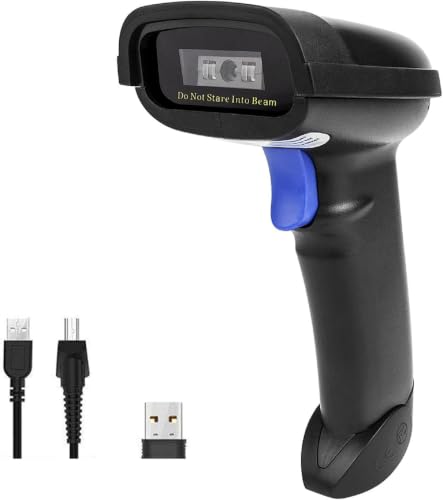
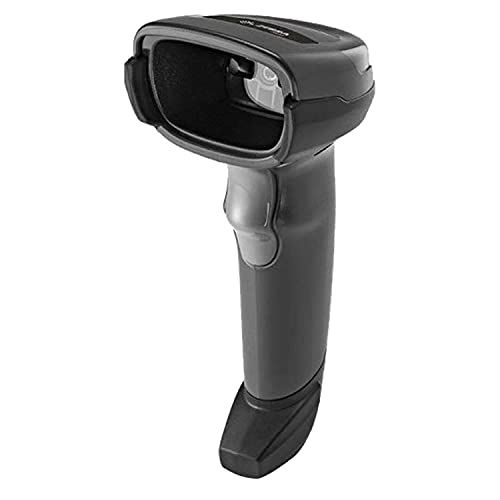
Zebra DS2208
The Zebra DS2208 is a corded two-dimensional imager from Zebra’s long-running retail line, positioned in the mid tier. In prose terms, without any verified listing data attached to this draft, its natural home is retail counters that want one scanner for product barcodes, QR codes and phone screens without moving to wireless. Judge it the way this guide judges every model: does its engine match your codes, does its form match your counter or your rounds, and does it present itself to your software as the kind of input your software happily accepts? A model that answers yes three times is a good buy at its tier; a famous name that answers no to the first question is not.
Best for: retail counters that want one scanner for product barcodes, QR codes and phone screens without moving to wireless. Not suited for: buyers whose codes, software or environment contradict that home ground, or who need a capability this model’s family does not claim. As the corded benchmark in this class it shows what the form does best: no charging, no pairing, and an imager that treats screens and damaged codes as routine.
A corded scanner is the simplest machine in this category, and simplicity is a genuine feature. It draws power from the same USB connection that carries its data, so there is no battery to charge, no pairing to lose and no cradle to knock off a counter. At a fixed till or packing bench that never moves, corded is often the rational default, and entry-tier corded models are where the category’s value concentrates. The limits are physical: the cable sets your working radius, cables snag and eventually fray, and a corded scanner cannot ride along to a stockroom shelf, a delivery van or a market stall. Choose corded when the work comes to the scanner, and wireless when the scanner must go to the work.
Performance in Real Use
At the Till, Queue Moving
Scanning speed in real life is less about the engine’s theoretical rate and more about first-pass success. A scanner that reads the code the first time, every time, at whatever angle the product happens to be held, moves a queue faster than a nominally quicker scanner that makes staff re-present items, flatten labels or type codes by hand. Motion tolerance matters here: the ability to read a code while it is moving, as on a conveyor or a hurried hand sweep at a till. When you test a scanner, test it the way your busiest hour behaves, quickly and a little carelessly, because that is the performance you are actually buying.
Presentation scanning deserves its own moment because it changes the shape of a till. Instead of picking up a scanner for every item, the operator passes items across a fixed scan zone with both hands, which is faster, less tiring and kinder to awkward, heavy or fragile goods. Countertop presentation imagers also read phone screens gracefully, since the customer simply holds the screen over the window. The trade-offs are counter space, a fixed position that cannot wander to a shelf, and a tier above basic handhelds. Shops with a genuine queue problem often find a presentation unit plus one handheld for oversized items beats two handhelds, even though the arithmetic looks similar on paper.
In the Stockroom and on the Shelf
Warehouse work stretches scanners differently. Volume is higher, codes are dirtier, gloves are common, and the cost of a mis-scan is a wrong shipment rather than a beep and a retry. Larger triggers that work with gloves, louder or vibrating confirmation for noisy aisles, and housings that shrug off drops onto concrete all matter more than countertop elegance. Scanning distance stretches too, from carton labels at arm’s length to rack labels overhead. Many warehouses run two classes of scanner side by side, general handhelds for picking and longer-range models for rack work, rather than forcing one model to be mediocre at both jobs.
The codes themselves are half the system, and neglected labels defeat good scanners. A code printed too small for its reading distance, rendered in low contrast, wrapped around a tight curve or placed under glossy film that reflects the light will frustrate any engine. Quiet zones, the blank margins around a code, matter more than most people expect: crowd a barcode against text or a label edge and reads become unreliable. If scanning feels unreliable after a change of scanner, print one known-good test label at a sensible size with clean margins and test again before blaming the hardware. Many scanning problems are printing problems wearing a disguise.
On Screens, Passes and Damaged Codes
Returns and repairs desks scan differently from tills, and the difference is worth naming. The codes arrive on worn receipts, on products months into their life with labels scuffed by use, on emailed QR codes displayed on cracked phone screens. Forgiveness matters more than raw speed here, which points to an imager with a tolerant decode, good performance on damaged codes and screen reading as standard. A returns desk is also where configuration flexibility pays, because the same scanner may serve a returns system in the morning and a spreadsheet of serial numbers in the afternoon. If one scanner must cover till and returns, buy for the returns desk’s harder codes and the till will be more than satisfied.
Screen reading deserves the emphasis this review gives it, because it is the capability gap that ends the useful life of older laser units still otherwise working. Every loyalty scheme, wallet pass and emailed ticket your customers carry assumes an imager at the other end. Our companion piece, barcode scanner reviews, compares how the main model families handle exactly this test.
Wireless Rounds and Batch Counting
Wireless scanners trade that simplicity for freedom, and the freedom is real the moment a queue, a pallet or a storeroom shelf enters the picture. Bluetooth models pair with phones, tablets and computers, which suits mobile point-of-sale and market trading. Models with a USB receiver suit a fixed computer that lacks Bluetooth or where pairing several devices would cause confusion. Many wireless scanners also store scans in memory when they wander out of range and upload them later, which turns a stocktake into a walk rather than a tethered shuffle. The costs are charging discipline, the small risk of a lost receiver, and one more battery in the building whose health decides whether the tool works on a busy morning.
Battery behaviour is the quiet specification that governs wireless ownership. A scanner used for a full trading day needs either a battery that comfortably outlasts the shift or a charging routine so automatic that nobody has to remember it, which is what a cradle on the counter provides: the scanner lives in the cradle, charges whenever it is parked, and is always ready. Handhelds charged by cable demand a habit, and habits fail on busy weeks. Ask how the scanner behaves as the battery fades, whether it warns early, and whether it can keep working while plugged in, because a scanner that can fall back to corded operation during a flat-battery emergency is worth more than a slightly longer headline battery life.
Strengths and Trade-Offs
Strengths
- Reads the full modern code mix: 1D barcodes, QR and DataMatrix codes, and phone screens, in any orientation.
- Forgiving on damaged, faded, curved and film-covered codes, which is where real queues are won.
- One tool covers till, stockroom and receiving, in handheld or stand-based presentation style.
Trade-offs
- Sits in the mid tier and above more often than basic laser or linear readers.
- Wireless versions add charging discipline and a battery that ages; corded versions add a tether.
- Generalist range: rack labels across a warehouse aisle still belong to specialised long-range engines.
Eye safety deserves a plain statement before any talk of speed. Laser scanners project a real laser beam, and even though retail and warehouse models are built to low-power laser classes intended for ordinary workplace use, the safe habit is absolute: never stare into the beam, and never point a scanner at anyone’s eyes or face, your own included. Treat the scan window the way you would treat any light source you would not aim at a person. Where staff work face to face with customers, where children are present, or where a workplace simply prefers to remove the question, an LED-based imager is the calmer choice, because it lights the code with ordinary visible light and a camera rather than a laser line.
How It Compares
| Option | Reads | Best setting | Watch out for |
|---|---|---|---|
| Handheld imager (this review) | 1D, 2D, screens | Mixed till and stockroom work | Mid tier; battery care if wireless |
| Basic laser scanner | 1D only | Clean barcodes at a fixed till | No screens or QR; laser eye-safety discipline |
| Presentation imager | 1D, 2D, screens | High-volume fixed lanes | Fixed position; counter space |
| Phone camera and app | 1D, 2D, screens | A handful of scans a day | Slow focus; fragile; battery shared with the phone |
The comparison everyone makes is with a phone, so it deserves a fair hearing. A phone camera with a scanning app costs nothing extra, handles QR codes naturally, and is genuinely adequate for a handful of scans a day: checking a price, cataloguing a shelf at home, a market stall’s first week. It loses on everything volume exposes. Focusing takes time, especially in poor light or on glossy packaging; there is no trigger, no stand, no rugged housing, and the battery is also your phone’s battery. A dedicated scanner reads in a fraction of the time, thousands of times a day, and survives the drop onto the stockroom floor. The crossover point arrives quickly once scanning becomes a job rather than an errand.

Honeywell Voyager
The Honeywell Voyager is Honeywell’s Voyager family, a retail name with decades of counter history, spanning laser heritage models and modern imager versions in the mid tier. In prose terms, without any verified listing data attached to this draft, its natural home is established tills and grocery-style counters where presentation-style, hands-busy scanning is the daily pattern. Judge it the way this guide judges every model: does its engine match your codes, does its form match your counter or your rounds, and does it present itself to your software as the kind of input your software happily accepts? A model that answers yes three times is a good buy at its tier; a famous name that answers no to the first question is not.
Best for: established tills and grocery-style counters where presentation-style, hands-busy scanning is the daily pattern. Not suited for: buyers whose codes, software or environment contradict that home ground, or who need a capability this model’s family does not claim.
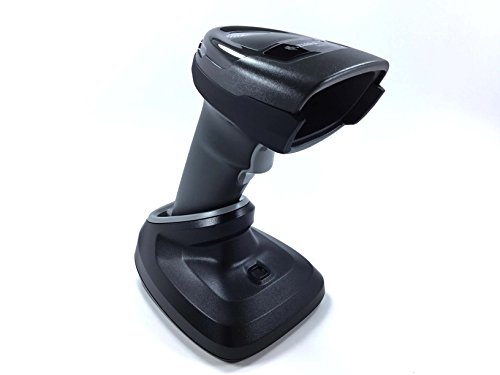
Zebra DS2278
The Zebra DS2278 is the cordless companion in Zebra’s retail imager line, a mid-to-premium tier wireless imager with a counter cradle. In prose terms, without any verified listing data attached to this draft, its natural home is busy counters that want imager versatility with the scanner free to leave the till for bulky items and queue-busting. Judge it the way this guide judges every model: does its engine match your codes, does its form match your counter or your rounds, and does it present itself to your software as the kind of input your software happily accepts? A model that answers yes three times is a good buy at its tier; a famous name that answers no to the first question is not.
Best for: busy counters that want imager versatility with the scanner free to leave the till for bulky items and queue-busting. Not suited for: buyers whose codes, software or environment contradict that home ground, or who need a capability this model’s family does not claim.
Who Should Buy It and Who Should Skip It
For a small business buying its first scanner, the category can look more complicated than the decision really is. The honest shortlist of questions is short. What codes will you scan: product barcodes only, or also QR codes and screens? Where will you scan: one fixed till, or around a shop and stockroom? What will receive the scans: a POS system, a tablet, or a computer with inventory software? Answer those three and the category narrows to a handful of sensible models at a tier you can justify. Everything else, the badges and the bundle extras, is secondary to those three answers being right.
Buy the imager handheld if your codes already include QR or screens, if your labels live hard lives, or if one scanner must cover till and stockroom. Skip it, and save the tier difference, if a single fixed till scans only clean supplier barcodes and will for years; and skip the whole handheld form if your real problem is a fixed high-volume lane, where the pros and cons breakdown will help you weigh a presentation unit instead. Before ordering, run this checklist: list every code type on your shelves and screens; confirm your software accepts standard scanner input; decide corded versus wireless by where your feet stand; and plan where the scanner will live and charge.
Setup, Care and Maintenance Essentials
Care is minimal but not zero. The scan window is the scanner’s eye: keep it clean with a soft, dry or lightly dampened cloth, and never with abrasive cleaners that cloud the surface and slowly strangle reading performance. Keep cables un-kinked and strain-relieved where they leave the handle, because cable fatigue at that joint is the classic corded-scanner death. Charge wireless models in their cradle rather than letting them live flat in a drawer, and wipe down shared scanners between shifts in food or healthcare-adjacent settings, following the manufacturer’s guidance on which cleaning agents the housing tolerates. Five unglamorous minutes a month is the whole programme.
When a scanner misbehaves, work from the code outward. First, try a known-good code: if that reads, the scanner is fine and the problem label is the story. Second, check the obvious physical layer: window clean, cable seated, battery charged, receiver plugged into the port you think it is. Third, consider configuration drift: scanners are programmed by scanning special codes, and a well-meaning experiment or a borrowed unit’s settings can add prefixes, change modes or disable the symbology you need; a factory-reset configuration code from the manual cures most haunted scanners. Fourth, test into a plain text document to separate scanner problems from software problems. That order resolves the great majority of faults without any support call.
Trigger modes sound like a footnote and behave like a feature you use hourly. Manual trigger mode reads only when the button is pressed, which suits deliberate item-by-item work. Presentation or auto-sense mode wakes and reads when a code appears in front of the scanner, which suits hands-free stands and counters. Continuous mode reads everything in view, useful in some inventory sweeps and chaotic everywhere else. A scanner that offers a stand plus auto-sense can live two lives: handheld during a stocktake, hands-free at the till during a rush. When comparing models, check which modes exist and how you switch between them, because a mode buried behind configuration codes you have lost is a mode you do not have.
Final Verdict
The modern handheld imager is the scanner most businesses should buy in this decade, not because it tops any single specification but because it refuses the fewest real-world codes. It reads the barcode on the carton, the QR on the loyalty screen and the scuffed label on the return, and it does so at a mid tier that a small business can justify the first time a queue forms. If your situation matches its home ground, buy with confidence; if it does not, the honest alternatives are named above and explored in our worth-it analysis and our step-by-step usage guide.
Going Deeper: Field Notes That Change Buying Decisions
Events and pop-ups add their own twists: tickets and passes arrive as QR codes on screens and paper, light ranges from marquees to evening gloom, and the team may be volunteers using the equipment for the first time. Imagers are the only sensible engine here, and simplicity outranks configurability, because a scanner that a new volunteer can use correctly in thirty seconds beats a powerful one with modes to misunderstand. Battery discipline matters doubly when the venue has three sockets for twenty devices, and a corded fallback or a charged spare turns a potential gate problem into a shrug. Test at the venue, in its real light, with a real ticket on a dimmed phone screen.
In clinics, pharmacies and care settings, scanning carries extra weight: codes identify medication, samples and records, so a misread is not a till delay but a safety issue, and the premium sits on decode reliability and on housings that tolerate the disinfectants those environments require. Two-dimensional codes dominate here, since DataMatrix carries the dense information medical packaging needs in a tiny space. This guide stays at the level of general principles: choose imagers, demand tolerant decoding of small and damaged codes, confirm housing compatibility with your cleaning regime, and treat eye-safe, LED-based illumination as one more reason imagers fit these rooms well. Local protocols and approved-device lists always outrank general buying advice.
Food businesses scan in the least forgiving conditions outside a warehouse: flour dust, steam, wet hands, cold rooms and delivery crates stacked in a doorway. Ingredient and case codes are one-dimensional, but loyalty and payment codes at the counter are two-dimensional and on screens, so many cafés and food retailers end up imager-equipped by necessity. Sealing against moisture, a housing that wipes clean, and a scanner that reads a condensation-fogged bottle without a dance are the practical tests. A cradle that keeps the scanner off food-preparation surfaces is a small hygiene point with daily value, and a tether or lanyard stops the scanner migrating into a crate and out with the empties.
Two trends are reshaping this category from below. The first is the spread of two-dimensional codes into ordinary retail: loyalty, payments, product information and recall notices increasingly ride in QR codes, which steadily converts the imager from a premium choice into the default one. The second is the phone in everyone’s pocket, whose camera and apps can scan adequately for occasional work, which honestly covers very light use and sets a floor under the category: a dedicated scanner must justify itself with speed, durability and first-pass reliability, and at any real volume it does so easily. Buying an imager today is partly buying insurance against the codes your suppliers will print tomorrow.
Working range means two different things, and confusing them wastes money. Scan range is how far from a code the scanner can read it: a counter scanner reads at arm’s length, while long-range warehouse engines read rack labels from a forklift. Wireless range is how far the scanner can wander from its receiver or paired device before it must store scans or stop. Most shops need neither extreme. What they need is reliable reading at natural working distance, on their actual label sizes, under their actual lighting. A bigger code can be read from farther away, which is why warehouse rack labels are printed large; matching label size to distance is often a cheaper fix than buying a longer-range scanner.
The true cost of a scanner is wider than its shelf tier, though none of it needs inventing numbers to understand. There is the scanner itself, then the accessories the workflow quietly requires: a stand or cradle, a spare cable or receiver, perhaps a second unit so one can charge while the other works. There is the small ongoing cost of labels and printing if you generate your own codes. And there is the cost of downtime, which dwarfs the rest the first time a sole scanner fails on the busiest day of the year. Buying one tier up in durability, or keeping an inexpensive backup corded unit in a drawer, is usually cheaper insurance than any extended plan.
Consider the humble test label as a permanent fixture of a well-run scanning setup. Print or keep one known-good code of each type you use, at a sensible size with clean margins, and pin the set near the till or the packing bench. When anyone suspects the scanner, the test set settles the argument in seconds: if the test codes read instantly, the scanner and its configuration are healthy and the problem lives in a label, a light or a software field. If the test codes fail too, you have a genuine equipment or configuration fault and a clear next step. This tiny ritual prevents more misdiagnosis than any other habit in this guide.
Lighting deserves a sentence in any serious scanning discussion, because it silently shapes read rates. Strong light falling directly on glossy packaging creates reflections that can blind an imager at one angle and vanish at another, which is why a slight tilt so often rescues a stubborn code. Very dim stockrooms slow camera-based reading of faint codes, while bright sunlight can wash out a phone screen being presented at an outdoor stall. None of this requires special equipment to manage: adjust the angle, shade the code with a hand, or move the item a step. It requires only knowing that light, not luck, is the variable you are adjusting.
Queue psychology is an underrated part of scanner value. Customers judge a shop by its slowest moment, and a till that pauses for typed codes, repeated attempts and supervisor overrides teaches the queue to expect delay. A scanner that reads first time, every time, changes the emotional weather of the counter: staff relax, conversation returns, and the line moves at a pace that feels respectful of everyone’s time. That atmosphere is difficult to price and easy to feel, and it is one reason owners describe the purchase in terms of calm rather than seconds.
Think about who else touches the scanner before you finalise a choice. Cover staff, weekend staff, a neighbouring department borrowing it for a count, a volunteer at a one-day event: the scanner will meet all of them. Equipment that a newcomer can use correctly after a thirty-second demonstration is worth more than a marginally faster unit with modes and menus that invite error. Simplicity is a feature that pays out every time someone new picks the tool up, which in most businesses is far more often than the specification sheet assumes.
Seasonal peaks rewrite the rules for scanning equipment, and a wise buyer tests against the peak rather than the average. The scanner that ambles happily through a quiet Tuesday may become the bottleneck in the December rush, when temporary staff, gift packaging with awkward codes and relentless queues arrive together. If your trade has a peak, borrow its conditions for your test: your fastest operator, your least experienced one, the shiniest packaging you sell, the longest queue you can simulate. A scanner chosen for the peak will find the rest of the year easy.
Data formatting sounds technical and is, at heart, about tidiness. Some software wants the code alone; some wants a prefix that says which field the code belongs to; some warehouses append a check character or strip a leading zero. Better scanners can be taught these courtesies through configuration codes, so the data arrives already house-trained. When you compare models for receiving or multi-code work, ask about this capability in plain language: can the scanner add, remove or rearrange characters before sending them? The answer separates clerical-grade tools from merely optical ones.
The second scanner is a purchase worth planning from the day you buy the first. Not necessarily the same model: many businesses pair a capable main unit with an inexpensive corded spare that lives in a drawer and exists purely so that a failure, a flat battery or a borrowed unit never stops the till. The spare also covers the stocktake, when two people counting in parallel finish in half the time and with a useful cross-check. Framing the second unit as insurance and capacity, rather than duplication, makes its modest tier easy to justify.
Ask how a scanner behaves at the edges of its day, because edges are where tools earn trust. Does it wake instantly from standby when the trigger is touched or a code is presented, or does the first customer of a rush wait for it to think? Does it announce a low battery early and clearly, or silently at the worst moment? Does it keep working while charging, turning a flat battery into a tethered inconvenience instead of a stoppage? These behaviours rarely headline a product page, and they decide more real shifts than headline specifications do.
For businesses that sell by weight, bundle or measure alongside coded goods, the scanner is one citizen in a small parliament of counter tools, and it should be chosen to get along with the others. It shares the counter with scales, card readers, receipt printers and screens, each with cables, stands and claims on the same sockets and the same square feet. Sketch the counter before ordering: where each tool lives, where its cable runs, where the scanner parks so it is neither in the food zone nor in the bagging path. Ten minutes with a tape measure prevents a year of small daily irritations.
What a Careful First Week With a Barcode Scanner Reveals
Compare what the listing promised with what the box actually contained, item by item, and treat any mismatch as a reason to pause before the return window closes. Recheck the return window and the condition requirements before you discard any packaging, especially for a barcode scanner whose fit only becomes clear after several real sessions. Think about the longest session you realistically run, not the average one, since heat, noise, clutter and small annoyances all grow more noticeable over time. Allow a short settling period for your own habits to adapt, but set a firm date to decide, well inside the return window, whether this barcode scanner has earned its place.
As a concrete listing check, take the Zebra DS2208 and the Honeywell Voyager named earlier in this article and confirm, line by line, that each variant offered matches the size, connection and contents described for it here. Keep a short note of what worked, what annoyed you and what you adjusted, because that note is more useful than memory when you later replace or add another barcode scanner. Avoid forcing a connector, bracket or moving part that resists you, because resistance is usually information about alignment or fit rather than an invitation to push harder. When you compare notes with other owners, match their comments to setups like yours, because advice from a very different room, workload or routine can mislead. When you check a single barcode scanner closely, work from the outside in: condition and finish first, then controls and connections, then behaviour during a real task from start to finish.
Write the exact model name and variant from the packaging into your notes, so replacement parts, accessories and support conversations start from certainty rather than guesswork. Check that nothing you place on, under or beside the barcode scanner blocks airflow, movement, visibility or access that the design quietly depends on. Start this final check away from the listings, with the space, the equipment and the routine you already have written down in plain terms. Check the connection points you rely on every day, and note which ones are already occupied, shared or awkward to reach once furniture is back in place.
A calm final test is to walk away mid-task, come back later, and see whether the setup still makes sense at a glance without reconstructing what you were doing. Prefer a setup you can explain to another person in a minute, because simple arrangements are easier to troubleshoot, share and repeat than fragile clever ones. A fair test repeats the same task at least twice, once while you are paying attention and once while you work normally, because concentration can hide clumsy design. Plan where the cables or materials connected to this barcode scanner will run when the room is tidy, not just while you are testing on an empty surface. Decide in advance what good enough looks like for your use, so a minor cosmetic flaw does not distract you from performance that genuinely meets the brief.
Run one deliberately awkward task early on, the kind you usually avoid, and see whether this barcode scanner handles your edge cases or only your easiest work.
Frequently Asked Questions
Do I need a 1D or a 2D scanner?
Look at the codes in front of you, not the codes in a catalogue. If everything you scan is a conventional product barcode on packaging, a one-dimensional reader covers the work. The moment QR codes, DataMatrix codes, digital loyalty passes, payment codes or phone screens enter the picture, you need a two-dimensional imager, because a laser or linear engine physically cannot decode a grid pattern. Many buyers choose an imager even for barcode-only work today, simply because suppliers keep adding QR codes to cartons, and the imager reads ordinary barcodes just as well while leaving that door open.
Can a barcode scanner read a phone screen?
An imager can, because it photographs the code with a camera and decodes the image, and screens are simply another surface to photograph. A traditional laser scanner generally cannot, because its reflected beam is defeated by the screen’s surface and emitted light. This single difference decides many modern purchases: if customers will ever present a loyalty code, coupon, ticket or payment code on a phone at your counter, an imager is not a luxury but the only tool that completes the transaction without typing the code by hand.
Will a scanner work with my till or inventory software?
In most cases, yes, and the reason is reassuringly simple: most scanners behave like a keyboard, sending the decoded characters as if they were typed, followed by Enter. Any software that accepts typed input in a field, from a full point-of-sale system to a spreadsheet, can usually accept a scanner. The checks worth making are qualitative ones: confirm your software accepts standard USB or Bluetooth input, and confirm the scanner can be configured with any prefix, suffix or line ending your software expects. Test into a plain document first to separate scanner behaviour from software behaviour.
Is wireless worth it over a corded scanner?
Wireless earns its place when the scanning point moves: stockroom shelves, pallets, delivery bays, market stalls, bulky items that cannot come to the till. At a single fixed counter where products always arrive within cable reach, a corded scanner is simpler, always powered and impossible to mislay, and many shops rationally choose it. The honest question is not which technology is better but where your feet are while you scan. If the answer is always the same square metre, save the complexity. If the answer changes by the hour, wireless pays for itself in un-done trips.
How do I stay safe with a laser scanner?
Follow one principle without exception: never stare into the beam and never point the scanner at anyone’s eyes or face. Retail laser scanners are built to low-power classes for ordinary workplace use, but the habit costs nothing and removes the risk entirely. Keep the scanner aimed at codes, store it facing a surface rather than a room, and teach the rule to every new starter on day one. If your setting involves constant face-to-face work, children, or anyone who would rather the question never arises, choose an LED-based imager instead, which lights codes with ordinary visible light.
Why does my scanner miss some codes?
Work outward from the label. Damaged, faded, low-contrast or tightly curved codes defeat honest scanners, and codes crowded against text lose the blank quiet zone they need around them. Glossy film and condensation add reflections that break up the image. Clean the scan window, test a fresh, well-printed label of sensible size, and if that reads instantly, the scanner is healthy and the labels are the project. If even good labels fail, check configuration: the symbology may be disabled, or a prefix setting may be confusing your software rather than the scan itself.
Related Guides
Keep reading within this cluster and the wider site: our barcode scanner reviews guide. our barcode scanner buying guide guide. our barcode scanner pros and cons guide. our is a barcode scanner worth it guide. our guide to label printers for eBay sellers. how to choose a printer. our guide to printers and scanners for small business.