Disclosure: As an Amazon Associate, ilcastellomenu.com earns from qualifying purchases. Links on this page are affiliate links; they cost you nothing extra. Prices and availability change often, so check the current Amazon listing before you buy.
An honest account of cfexpress card pros and cons has to hold two truths at once: this is the media format that finally lets flagship cameras be flagship cameras, and it is also a premium-priced, two-type, counterfeit-plagued system that punishes casual buying. The pros below are the reasons professionals standardised on it anyway. The cons are the frictions those same professionals plan around every working day. Neither list is a sales pitch or a warning-off — together they describe what ownership actually feels like, so you can decide with your eyes open and your workflow ready.
Quick Verdict and Key Takeaways
Key Takeaways: The pros — sustained pace, unlocked video modes, fast offloads, professional build — are decisive for burst and video shooters with CFexpress bodies. The cons — premium cost, a second reader to buy, two incompatible types, heat, and a counterfeit market — are real but manageable with disciplined buying and handling. Suited to: owners of CFexpress-slot cameras who shoot action, events or high-bitrate video. Not suited to: SD-only camera owners, for whom the format is physically unusable.
In this guide
The Pros — Cfexpress Card Pros And Cons
Sustained Pace That Matches Flagship Bodies
Headline speeds are burst speeds, and honest buying means understanding the difference. The large numbers printed on CFexpress packaging describe short peaks under ideal conditions. What decides whether a camera clears its buffer smoothly, and whether a high-bitrate video mode records a full take without stopping, is sustained performance — what the card can keep doing minute after minute as it warms up and fills. Camera makers signal this through the recording modes they certify for a card, and card makers signal it through sustained-write positioning on their professional lines. Judge a card for video by its sustained reputation and your camera’s approved-media guidance, not by the biggest number on the box, and judge it for stills by how it behaves at the end of a long burst, not the start.
Video Modes Lesser Media Cannot Unlock
Several of the most desirable recording modes on modern bodies exist only when the camera trusts the media, and CFexpress is the media it trusts. That makes the card less a storage purchase and more a feature purchase: the codec, frame rate or resolution you bought the camera for may be waiting on this card. No other single accessory unlocks capability in quite this direct a way.
Offloads That Give You Your Evenings Back
A CFexpress card needs a CFexpress reader, and that reader must match your card type — a Type B reader does not read Type A cards unless it is explicitly a dual-type model. Budget for the reader as part of the purchase, because without one your offload speeds fall back to whatever the camera’s own port can manage, if direct camera transfer is supported at all. Use the cable that came with the reader or a known-good short cable; a surprising share of ‘slow card’ complaints are actually cheap-cable complaints. Keep the reader in the same bag as the cards, treat its connector gently, and test the whole chain — card, reader, cable, port — at home before a travel day depends on it.
Professional Build and Support
The major CFexpress lines are built like professional tools — reinforced, sealed, and backed by makers who answer working photographers’ support calls and publish recovery tools. That ecosystem matters across years of ownership: firmware guidance, approved-media lists, warranty handling. You are buying into a support relationship, not just a storage chip in a shell.
One Standard Across Most Flagship Brands
Type B in particular has become the shared professional standard across most flagship lines, which simplifies life for shooters who run two brands or rent bodies: one card type, one reader type, one wallet. Standardisation is an unglamorous pro that compounds quietly every time kit is packed, shared or replaced under pressure.
Headroom for the Next Body
Media bought well tends to outlast a body generation. A professional CFexpress card purchased for today’s camera is very likely the right media for its successor in the same system, which spreads the premium across more years and more shoots than the price first suggests — provided the type matches, which is one more reason the type check opens every guide in this cluster.
The Cons
Premium Pricing, Plus a Reader
There is no budget tier hiding in this format: professional CFexpress media costs professional money, and the dedicated reader is a second purchase on top. For a two-card rotation with a reader, the honest total is a real line in a kit budget. The mitigation is perspective — media is still among the cheapest components relative to bodies, lenses and the value of the work — but the sting at checkout is genuine and should be planned, not discovered.
Two Types That Do Not Interchange
Start with the physical fact that shapes everything else: CFexpress comes in sizes that do not swap. Type B is the larger card used by most brands’ flagship mirrorless and cinema bodies. Type A is the smaller card used by a smaller set of Sony bodies. They share a name and a technology family, but a Type A card rattles uselessly in a Type B slot and a Type B card simply does not fit a Type A slot. There is no adapter, no workaround and no firmware trick. Your camera decides the type for you, completely and permanently, so the first step of any purchase is reading the slot, not comparing brands.
Headline Numbers That Mislead
The most misleading number in memory cards is the one in the largest type. Peak speeds are measured in short bursts on empty cards in cool labs; your camera writes long bursts and long clips to a warming, filling card in the real world. Sustained write performance is the honest metric, and it is why two cards with similar headline figures can behave very differently ten minutes into a sports match or a ceremony. For stills, sustained performance shows up as buffer clearing that stays brisk deep into an event. For video, it is the difference between a mode that records until you press stop and one that ends the take for you. Buy for the sustained behaviour, and treat headline numbers as advertising, not specification.
Heat During Long Offloads
New CFexpress owners often worry the first time a reader gets hot during an offload. That heat is the physics of moving data at professional speeds, and reader housings are deliberately made of materials that pull heat away from the electronics — the warm shell is the cooling system working. Cards themselves also warm during long recording and long transfers. Normal warmth needs no action beyond sensible airflow. Abnormal signs are different: repeated transfer errors, speeds collapsing mid-offload, or heat you cannot comfortably touch. Those point to a failing card, a poor cable, or a reader that needs replacing, and they are worth investigating before the kit goes out on paid work again.
A Counterfeit Market Aimed at You
Counterfeit and grey-market memory cards are rampant, and CFexpress is no exception — the high price of genuine professional media is exactly what makes faking it profitable. A counterfeit card may report a large capacity it does not have, corrupting files silently once the real, smaller storage fills. Buy only from authorised sellers and established photographic retailers, be suspicious of prices that undercut every legitimate listing, and keep the packaging and receipt until the card has proven itself. Before any paid shoot, test a new card properly: format it in-camera, fill it with real shooting — long bursts and a long video clip — offload it, and check the files open correctly. A card that has survived a full honest test at home is a card you can trust on a job.
Discipline Is Not Optional
The formatting rule is short enough to tape inside a camera bag: format in the camera, every time, and never manage a card by deleting files selectively in the field. In-camera formatting aligns the card with the body’s own file system expectations and gives you a clean, fast surface for bursts and long clips. Selective deletion, by contrast, leaves a patchwork of gaps that the camera must write around, and it invites the worst kind of mistake — the hurried deletion of an un-backed-up frame. The professional sequence never changes: shoot, offload, verify two copies, then format in-camera. A card that errors during formatting should be retired from paid work immediately, however expensive it was.
What the Trade-Offs Mean for You
Capacity planning is really risk planning. A very large card is convenient — fewer swaps, fewer interruptions — but it concentrates a whole day, or a whole trip, onto one small object. Many working photographers prefer two mid-sized cards to one enormous one, swapping at natural breaks so that no single loss, failure or theft can take everything. Video shooters run the calculation the other way: high-bitrate modes consume capacity so quickly that large cards become a practical necessity, and the risk is managed instead with same-day offloads. There is no universal right answer, only an honest one: estimate how much you shoot in a session, leave generous headroom, and decide in advance what a single card is allowed to hold before it gets swapped or offloaded.
For the sports and wildlife shooter, the pros are the job itself — the format’s sustained pace is what their frame rates are made of — and the cons reduce to a budget line. For the filmmaker, everything hinges on sustained behaviour and the camera maker’s guidance, weighed in cfexpress card buying guide. For the event photographer, the deciding trade-off is capacity strategy: convenience against concentration of risk. For the casual owner of a CFexpress body who shoots gently, the honest reading of this list may be that the cons outweigh the pros for now — a conclusion whether a CFexpress card is worth it explores without embarrassment.
How CFexpress Compares With the Alternatives
Against SD UHS-II, CFexpress trades money and a stricter workflow for a higher sustained ceiling and unlocked modes. Against XQD, it is the successor standard with broader support. Against external USB recording on cinema rigs, it trades cost-per-capacity for field simplicity. None of these alternatives is foolish; each suits a defined shooter. The table your decision really needs is not specifications but honesty about which column your own shooting lives in.

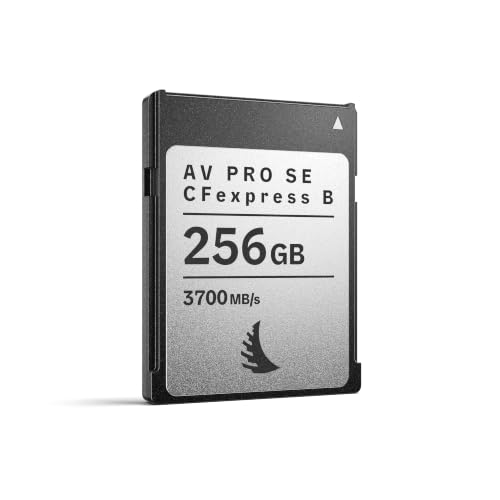
Angelbird AV Pro CFexpress Type B
Angelbird designs its AV Pro line specifically around sustained recording, and that focus is the reason filmmakers keep naming it. The card is positioned in the premium tier, with an emphasis on stable performance across a long take rather than a short benchmark burst, plus a ruggedised build intended for sets, travel and repeated daily offloads.
In daily handling the card behaves like professional media should: it formats cleanly in-camera, clears long bursts without the camera feeling held back, and offloads through a proper CFexpress reader at the pace a working day demands. None of that is glamorous, and that is exactly the point — media should disappear into the background of a shoot.
Who it suits is easy to describe: a shooter whose camera actually requires or rewards CFexpress, who records long clips or long bursts, and who would rather pay the premium tier once than troubleshoot media mid-assignment. Who should skip it is equally clear: anyone whose camera only takes SD cards, because this card will not fit that slot at all, in any adapter, ever.

Delkin Devices Black CFexpress Type B
Delkin’s Black series is the durability flagship of the Delkin range, marketed around a reinforced build and a replacement-focused support promise. It sits in the premium tier and appeals to photographers who shoot in harsh conditions — cold, wet, dusty locations where a card’s physical toughness matters as much as its electronics.
In daily handling the card behaves like professional media should: it formats cleanly in-camera, clears long bursts without the camera feeling held back, and offloads through a proper CFexpress reader at the pace a working day demands. None of that is glamorous, and that is exactly the point — media should disappear into the background of a shoot.
Who it suits is easy to describe: a shooter whose camera actually requires or rewards CFexpress, who records long clips or long bursts, and who would rather pay the premium tier once than troubleshoot media mid-assignment. Who should skip it is equally clear: anyone whose camera only takes SD cards, because this card will not fit that slot at all, in any adapter, ever.
How to Buy Smart
Treat sourcing as part of the product. Fake professional media is a mature business, complete with convincing packaging, and a too-cheap CFexpress card from an unknown marketplace seller is one of the most expensive bargains in photography. The defence is boring and total: authorised sellers only, receipts kept, and a full test before the card ever sees paid work. Fill the card completely with real files, offload them, and open a sample from the beginning, middle and end. Counterfeits typically fail exactly there, revealing a fraction of the stated capacity. Discovering that at your desk costs an afternoon; discovering it after a wedding costs something you cannot refund.
Build the habit that protects everything else in this guide: the card’s job ends when the files are safely copied twice. Offload the same day you shoot, verify the copies actually open, and keep them on separate storage — a working drive and a backup drive at minimum. Only then does the card go back into the camera to be formatted. It is tempting to treat a large, expensive card as a little archive, but capacity is not safety: one lost camera bag takes the archive with it. The card is the last copy you should trust, and professionals plan as if it will fail, get lost, or be formatted by mistake — because across a career, one of those eventually happens.
Setup and Care That Reduce the Cons
Always format a card in the camera that will use it, and do it as a habit at the start of a shoot day, never as an afterthought. Formatting in-camera writes the exact file structure that body expects, clears the remnants of previous sessions, and surfaces early warnings — a card a camera refuses to format is a card telling you something important. What you should not build a workflow around is deleting images one by one in-camera: selective deletion fragments the card’s file system over time, slows the clearing of bursts, and dramatically raises the chance of deleting the one frame you meant to keep. Offload everything, back it up, verify the copies, and only then format the card in-camera for its next use.
One field habit worth copying: label every card. A small label or a numbered wallet slot turns ‘which card is full?’ from a guess into a glance, and prevents the catastrophic error of formatting the wrong card. Professionals rotate cards in a fixed order — shoot, offload, verify, format, back of the wallet — so the card’s position tells its state. Improvised systems fail at exactly the tired, rushed moments when errors happen.
When a camera offers two slots, learn what your body does with the second one. Overflow writing, backup writing, and separating stills from video are different strategies with different risk profiles. For paid work, same-moment backup to a second card is the only configuration that protects against a card failure mid-event — but it cannot protect against a stolen camera, which is why the same-day offload habit still matters.
Bottom Line
Weighed fairly, CFexpress’s pros are about capability and its cons are about cost and discipline — and capability, for the shooters this format serves, wins. The cons do not disappear with the right attitude; they shrink into a checklist: right type, genuine source, tested card, in-camera formats, same-day backups. Run that checklist and what remains is the pro list, which is why the format owns the flagship tier.
Deeper Look at Ownership
Consider how a card behaves on its hundredth shoot, not its first. Professional media ownership is a long relationship measured in hundreds of insertions, thousands of files and dozens of thermal cycles. The makers’ professional lines are built and supported for exactly that horizon, which is why experienced shooters talk about their media the way they talk about their lenses — as infrastructure. When you evaluate any card in this cluster, evaluate the five-year version of the purchase: support, availability of replacements, and whether the line will still exist when you want a second identical card.
There is a quiet economics to fast offloads that rarely gets counted. A photographer who shoots forty event days a year and saves even twenty minutes an evening to faster media and a proper reader has bought back more than a full working day annually — time that can go to editing, clients or sleep. Media speed is usually discussed as a shooting specification, but for working professionals its largest dividend is paid at the desk, at midnight, when the day is not over until the progress bar says so.
Dual-slot bodies change the CFexpress conversation in a useful way. Writing the same files to two cards at once turns a card failure from a catastrophe into an inconvenience, and several flagship bodies let the second slot hold a different media type for overflow or separation of stills and video. If your body offers it, price the second card as insurance rather than capacity. But remember the limit of the trick: both cards leave in the same camera, so the same-day offload to separate storage remains the real archive.
Weather deserves a paragraph in any honest media guide. Professional CFexpress lines are built to shrug off the cold, heat, dust and knocks of location work far better than consumer media, but no card enjoys being inserted with wet or gritty contacts, and no camera slot enjoys it either. In rain, snow or desert dust, the discipline is simple: change cards under shelter, keep the wallet closed between swaps, and blow grit away before a card goes anywhere near the slot. Most ‘environmental failures’ are really handling failures at the moment of the swap.
The relationship between card and camera firmware is underappreciated until it bites. Bodies gain media compatibility through updates, and demanding video modes in particular can depend on both current body firmware and the specific card class. Before a major job on a new body-and-card pairing, check for firmware updates and read the maker’s current media notes. It is a fifteen-minute ritual that has saved more shoots than any accessory, and it costs nothing but the decision to do it before the day rather than during it.
Think carefully before mixing media generations in one wallet. An older card carried as an emergency spare is better than no spare, but a spare that cannot sustain your video mode or your burst pace is only half a spare. Label generations clearly, keep the demanding work on the cards bought for it, and let older media retire gracefully into gentler duties — second-body stills, travel backup, or the test card you reach for when trying new firmware.
Card wallets sound like a trivial accessory until you watch a professional work. The wallet is a system: full cards face one way, empty cards the other; the rotation order never changes; nothing lives loose in a pocket. That tiny choreography eliminates the two classic media errors — formatting a full card and shooting on a card you believed was empty — more reliably than any technology. Whatever you spend on CFexpress media, spend the small extra on the wallet and the labels that make the system visible at a glance.
A word about borrowing and lending media, because it happens on real sets. A borrowed card arrives with an unknown history, an unknown file system state and, occasionally, someone else’s files still on it. If you must use one, format it in your camera, run your test, and return it formatted. Better practice for anyone who works with others regularly: carry your own spare, and let your media discipline be the thing colleagues borrow — as a standard, not as a card.
Recovery software is the seatbelt of this category: you hope never to need it, and you buy from makers who include it anyway. Several professional media brands provide their own recovery tools, and they work best under two conditions — the card has not been written to since the loss, and the loss is discovered before a format. That is one more reason the offload-verify-format sequence matters: it is the workflow that keeps recovery possible when something does go wrong, instead of quietly overwriting the evidence.
Studio shooters sometimes ask why they should care about any of this when tethering exists. The honest answer is that tethered and card workflows protect against different failures: the tether shows you the file immediately, the card keeps recording when the cable, the laptop or the software has a bad moment. Many studios run both, treating the card as the silent backup of the tethered session. In that arrangement CFexpress earns its place not through speed but through capacity and indifference — it simply keeps up, all day, without being thought about.
Time-lapse and interval work write a distinctive signature: thousands of modest files over hours, often in cold or heat, often unattended. The media demand is less about peak pace than about unwavering consistency and capacity planning — a sequence that stops at ninety percent because the card filled is a ruined night. Size for the whole sequence with headroom, prefer proven cards over fresh experiments for unattended work, and let the camera’s power and the card’s capacity be planned as one system.
For hybrid shooters, the stills-versus-video tension is the daily reality CFexpress was built to dissolve. The same card that clears a burst at a press conference must then hold a long interview take without complaint, and the professional lines are positioned to do both without a media swap between assignments. That versatility is easy to underrate on a specification sheet and impossible to overrate on a day that keeps changing its mind about what it needs from you.
Resale and hand-me-down logic applies to media differently than to lenses. A used lens can be inspected; a used card’s history — its write cycles, its thermal past, whether it is even genuine — cannot. That is why this cluster consistently advises buying CFexpress new from authorised sellers even by photographers happily buying used bodies and glass. The saving on used media is small, the unknowns are large, and the files the card will hold are usually worth more than either.
Air travel concentrates every media risk into one journey: loss, theft, security handling, and the temptation to pack shot cards in checked luggage. The professional pattern is unvarying — shot media stays on your person, copies live in two different bags, and evenings end with an offload however tired the day was. CFexpress cards are small enough to make this easy, which removes the last excuse. The images are the trip; everything else in the bag is replaceable at a shop.
There is a temptation, once a very large card is in the camera, to treat capacity as a filing system — last week’s shoot still on the card, this week’s accumulating beside it. Resist it completely. A card holding multiple un-backed-up shoots multiplies every risk at once: one failure, one theft, one mistaken format, and several days of work share the same fate. The format-after-verified-offload habit exists precisely to keep the blast radius of any single accident down to hours, not days.
New owners often ask whether they should ‘rest’ cards or rotate them to spread wear. Rotation is good practice for a simpler reason than wear mathematics: a card used regularly is a card whose health you know, while a card that sits for a year and emerges for the biggest job of the season is an unknown. Keep your working set small, current and constantly exercised, and let every card in the wallet be one you used recently enough to trust without thinking.
The sound a workflow makes matters more than it should. Experienced shooters develop an ear for the normal rhythm of their camera — the burst, the brief clearing pause, the ready signal. A change in that rhythm is often the first symptom of media trouble, long before an error message. When the camera starts feeling hesitant in a way it did not last week, believe your hands: swap the card, note which one it was, and test it at your desk before it goes back into rotation.
Consider the second body problem. Many professionals run two bodies that may not share a card type, and the media plan has to survive the worst moment — main body down, second body up, light fading. Mixed-type fleets demand ruthless labelling and separate wallet sections, and they are the strongest practical argument for standardising bodies within a system when you next upgrade. Until then, the wallet system carries the load: no card should ever be identifiable only by the body it was last in.
Environmental extremes test media in ways benchmarks never will. Cold stiffens batteries long before it troubles a professional card, but the combination — a body working hard in deep cold — deserves a home test before an expedition depends on it. Heat is the mirror case: a camera recording long takes in direct sun is running its media at the top of its comfort, which is when sustained behaviour, not peak numbers, decides whether the take completes. Buy for the conditions you actually shoot in.
One under-discussed benefit of the professional media ecosystem is documentation. The major makers publish compatibility lists, care guidance and firmware notes that treat the card as part of a system rather than a commodity. When something does go wrong, that documentation — plus a receipt from an authorised seller — is what turns a support conversation from an argument into a replacement. File your receipts with the same care as your images; both are records you will be glad exist exactly once, on a bad day.
Beginners sometimes apologise for asking whether the expensive card is ‘really necessary’, as if the question were naive. It is the best question in the category. Necessity here is defined entirely by your camera’s slot and your shooting’s demands, and for a large share of photographers the honest answer is that excellent SD media serves them fully. The CFexpress premium buys specific capabilities — sustained pace, unlocked modes, professional build — and capabilities you will never use are not a bargain at any tier.
Look at the total kit you are actually assembling when judging any single card price. Body, lenses, media, reader, spare cards, storage at home: the card is one line among many, and usually not the largest. Shooters who economise hard on media while spending freely on glass have the ratio backwards, because the glass makes images the media can lose. Balanced kits spend in proportion to risk, and by that measure professional media, bought genuine and handled well, is among the best-value lines in the bag.
Finally, cultivate the habit of the post-shoot debrief, thirty seconds long. Which card is in which state? What gets offloaded tonight? Did anything feel unusual — a hesitation, a warm reader, a slow clear? That half-minute, repeated after every shoot, is where media disasters are actually prevented: not in the purchase, however careful, but in the unbroken chain of small attentions that follows it. Every guide in this cluster is, in the end, a description of that chain.
Ask any rental house what kills media and the answer is rarely exotic: it is the accumulation of small handling sins — cards pocketed loose, contacts touched, insertions forced at an angle in a hurry. CFexpress cards are tougher than the media they replaced, but the slot they enter is a precision connector in an expensive body. Slow down for the two seconds an insertion takes, keep the wallet between the card and the world, and your media will outlast several camera bodies. Treat cards casually and no tier of card, however premium, can protect you from yourself.
The offload is part of the shoot, and professionals schedule it that way. Build the transfer into the day’s plan — during the drive, during dinner, during the edit — rather than discovering at midnight that a full day of high-resolution files still sits on the card. This is where reader quality and cable quality quietly pay rent: a chain that runs at full pace without errors turns the offload into background, while a flaky chain turns it into a second job. Test the chain at home, replace weak links without sentiment, and never debut a new cable on a travel day.
There is a specific anxiety new CFexpress owners feel the first time they format a card holding a day’s work, and it is healthy. The cure is not courage; it is verification. Open the copied folder, count it against the camera’s file count, play a clip, zoom into a raw file — then format with a clear conscience. That two-minute verification is the hinge the whole safety system swings on, because every other habit assumes the copies are real. Skip it once and you have not saved two minutes; you have gambled a day.
Think about who else touches your media. Second shooters, assistants, partners digitising the family archive — every additional pair of hands is an argument for systems over memory. Labelled cards, a fixed rotation, a written offload checklist taped near the desk: these survive tired evenings and unfamiliar helpers in a way that ‘I always remember to…’ does not. The larger your operation grows, the more your media safety depends on making the right action the obvious action for whoever is standing at the reader.
Power cuts and sleeping laptops have corrupted more offloads than defective cards ever will. When you copy a card, let the copy finish, verify it, and only then let the machine sleep or the card leave the reader. Pulling a card mid-write — or letting a laptop die mid-copy — is how healthy media acquires an unhealthy file system. The fix costs nothing: plug in, copy, verify, eject properly, in that order, every time, including the times you are in a hurry, which are precisely the times it matters.
Metadata and file naming belong in a media conversation because the card is where your naming discipline begins. Consistent in-camera file naming, a sane folder habit, and an offload routine that renames and files by date and job will save you more hours across a year than any speed specification. Cards get formatted; archives are forever. The shooters with the calmest archives are not the ones with the fastest cards but the ones whose routine from card to archive never varies, shoot after shoot.
Consider keeping one card permanently assigned as your test and training card. New firmware to try? Use the test card. A new assistant learning the offload routine? Test card. A borrowed body to evaluate? Test card, formatted, with nothing on it you would mourn. This small fleet discipline keeps experiments away from working media and gives every new variable in your system a safe place to fail — because new variables do fail, and the only choice you get is where.
When a manufacturer announces a new card generation, resist the reflex to replace a working set. Media generations improve incrementally, while your current cards have the one specification no new card can match: a history you personally trust. Upgrade when capacity, a new body’s requirements, or a genuine failure pattern gives you a reason — and even then, introduce new cards one at a time through the full test, never as a whole untested fleet the week before a major job.
The psychology of the spare deserves respect. Shooters with no spare unconsciously ration their shooting — fewer bursts, shorter clips, a background worry that follows them through the day. Shooters with a genuine, tested spare in the wallet shoot the work in front of them. That difference never appears on a specification sheet, but it appears in contact sheets. When you total the cost of entering this format, count the spare not as an extra card but as the removal of a hesitation.
Humidity is the quiet traveller in every camera bag that has ever been to the coast. Cards tolerate a great deal, but a wallet that lives in a damp bag between shoots is asking for slow contact corrosion. Store media at home in a dry place, let cold kit warm up before opening it in a warm room so condensation forms on bags rather than electronics, and give cards that have been to the beach the same fresh-water respect you give the rest of the kit. Small climates, carefully managed, add years.
Do not overlook the humble act of reading your camera’s error messages properly. A media warning is specific information, not an annoyance to dismiss — note the exact wording, which card was mounted, and what you were doing. That note, taken in ten seconds, turns a later support call or forum question from guesswork into diagnosis. And if the same card’s name keeps appearing in your notes, the pattern is the diagnosis: retire it from paid work and let it live out its days as a test card.
Group shoots and workshops create a special media hazard: identical cards, several owners, one table. If you ever shoot alongside others, mark your cards unmistakably — a label with your name, not just a number — and keep your wallet on your person rather than on the shared table. More media has been lost to honest mix-ups than to theft, and the fix is entirely social: make your cards identifiable at a glance, and glance before every format, every time, whoever you believe the card belongs to.
A note on leaving cards in readers and cameras long-term. A card parked in a warm reader for weeks, or left in a body stored in a hot car, is living a harder life than a card in a wallet in a drawer. Media likes what electronics generally like: cool, dry, undisturbed. When a shoot ends and the offload is verified, the card’s home is the wallet, and the wallet’s home is with the kit you control — not in a vehicle, not in a reader, not in a pocket awaiting laundry day.
Budget honestly for the whole media line when you plan a kit, because partial systems fail at their gaps. A premium card with a bargain reader, or two fine cards and no wallet, or fast media feeding a single laptop drive with no backup — each is a chain with one weak link, and the work only ever discovers the weak link. The complete line is short: genuine cards, matching reader, good cable, wallet, labels, and two destinations for every file. Buy the line, not just the card.
The Trade-Offs That Only Show Up After the First Month
When the alternative is genuinely better
There are owners for whom skipping the cfexpress card altogether is the right call, and naming them is part of an honest pros-and-cons account. If your need is occasional, borrowed or built into something you already own, or if your space cannot give the product the conditions it needs, the alternative route avoids both the cost and the clutter. The pros only outweigh the cons when the problem the cfexpress card solves is a recurring one in your week. A problem you meet twice a year rarely justifies a permanent new resident in the SD Cards category.
How the balance shifts over a year of ownership
The pros-and-cons ledger of a cfexpress card is not static. In the first month, novelty inflates the pros; by the sixth month, the honest picture is about reliability, running costs and whether the product has earned a permanent place in your routine. Wear parts, consumable availability and the maker’s support responsiveness all matter more at month ten than at day ten. When you read owner feedback, weight the long-term reports accordingly: a complaint about a part that failed after a year tells you more than a first-week rave about unboxing.
The compromise candidate
Many buyers end up choosing neither the strongest nor the cheapest cfexpress card but the one whose weaknesses fall where they personally care least. That is a rational strategy, not a failure of research. List the cons of your final two candidates side by side and ask which set you would rather live with daily in a desk or bench that doubles as a workspace for two completely different hobbies. The product whose drawbacks sit in your blind spots will feel like the better product for years, even if a comparison table scores the other one higher on paper.
The advantage that depends on your habits
The headline advantage of a cfexpress card is real, but it is not automatic: it only pays out if your habits match it. Used the way it was designed, in a desk or bench that doubles as a workspace for two completely different hobbies, the strengths described earlier compound quietly — less friction, fewer workarounds, a smoother routine. Used against its grain, the same design choices become the source of the complaints in the cons column. Before deciding, be honest about which user you are on an ordinary tired weekday, not the organised version of yourself you plan to become next month.
Where the drawbacks bite hardest
The disadvantages of a cfexpress card are not evenly distributed across owners. They concentrate in specific situations: tight spaces, shared rooms, heavy daily loads, or workflows that change direction mid-task. If your routine involves any of those, the cons deserve double weight in your decision, because you will meet them weekly rather than rarely. Conversely, an owner whose setup avoids those situations entirely may never encounter the most-criticised weakness at all, which is why verdicts on the same cfexpress card can sound like descriptions of two different products.
The maintenance trade-off nobody advertises
Almost every cfexpress card trades purchase-day simplicity for a small ongoing maintenance obligation: cleaning, recalibrating, replacing a wear part, updating firmware or simply keeping accessories together. The trade is usually worth it, but it is not free, and it scales with how hard you use the product. In a desk or bench that doubles as a workspace for two completely different hobbies, skipped maintenance shows up first as small annoyances — a control that feels off, a result that drifts, a noise that was not there before — long before it causes a real failure. Budget the minutes, not just the money.
If a candidate fails this check, strike it from the list without regret and let the remaining options compete on merit.
Frequently Asked Questions
What is the biggest disadvantage of CFexpress cards?
For most buyers it is total cost of entry: premium card pricing plus a dedicated reader. A close second is the two-type system — Type A and Type B are physically different and not interchangeable — which makes careless ordering a common and entirely avoidable frustration.
What is the biggest advantage of a CFexpress card?
Sustained performance. It lets flagship bodies clear long bursts without hesitation and unlocks high-bitrate video modes that lesser media cannot support. The benefit is not a benchmark number; it is the camera behaving at its full specification for an entire working day.
Do CFexpress cards get hot?
They and their readers run warm during long offloads and long recordings, which is normal — reader housings are designed to shed that heat. Treat errors, collapsing transfer speeds or uncomfortable heat as the real warning signs, and give readers airflow rather than stacking them on hot equipment.
Are CFexpress cards reliable enough for paid work?
Yes, when bought genuine and handled professionally: authorised sellers only, a full test before the first paid shoot, in-camera formatting, and same-day backups to two places. Most paid-work media failures trace back to counterfeit sourcing or workflow lapses, not to genuine professional cards.
Can I use a CFexpress card in an SD slot with an adapter?
No. There is no adapter that makes CFexpress work in an SD slot, and Type A and Type B do not fit each other’s slots either. Your camera’s slot defines your media completely; if the body takes only SD, your upgrade path is the best SD media, not CFexpress.
How long does a CFexpress card last?
Professional cards are built for years of service, but they are consumables on a long fuse. Retire a card from paid work if it ever produces repeated errors, and keep the rotation labelled and tested. A suspect card costs little to replace compared with the shoot it could ruin.
Related Guides
Keep researching with these companion reads: cfexpress card buying guide, whether a CFexpress card is worth it, how to choose a CFexpress card, the CFexpress card reviews roundup, the fastest SD cards for photography, SD cards for videography, SD cards for the Sony a7S III, SD cards for the Sony a7R II.