Disclosure: As an Amazon Associate, ilcastellomenu.com earns from qualifying purchases. Links on this page are affiliate links; they cost you nothing extra. Prices and availability change often, so check the current Amazon listing before you buy.
Learning how to choose a usb bluetooth adapter is mostly learning what not to be distracted by. The category is small, inexpensive and crowded with lookalike listings, and the loudest claims — range, versions, boosts — are the least reliable guides to a good purchase. The reliable guides are quieter: the gap in your computer, the devices you will pair, the operating system you run, the physical spot the adapter will live in, and the maker’s support page. This guide turns those into a step-by-step method you can follow in one sitting, then applies the method to three worked examples, and finishes with the mistakes and tips that separate a calm purchase from a returned one. Follow the steps in order; each one eliminates a class of wrong answers before you spend anything.
Key Takeaways
- Step zero is honesty: confirm your computer actually lacks working Bluetooth before choosing anything.
- Choose for your devices, not for a version label — both ends of the connection must support a feature.
- Shape follows machine: nano for a travelling laptop, larger or antenna styles for a fixed, awkwardly placed desktop.
- Placement is a buying decision; budget attention, and possibly a short extension cable, for open air.
- A named maker with a real driver page is a feature, and in this category it may be the deciding one.
In this guide
What You Need to Know Before Comparing
A USB Bluetooth adapter, often called a dongle, is a small radio that plugs into a USB port and gives a computer a Bluetooth connection it did not have, or replaces a Bluetooth radio that has stopped working properly. Once it is recognised by the operating system, the computer can pair with wireless headphones, speakers, keyboards, mice, game controllers and other Bluetooth devices in much the same way a laptop with built-in Bluetooth does. The adapter itself does not make sound, store files or boost anything else about the machine. It simply adds the missing wireless link, and everything else — the pairing menus, the audio settings, the device list — is handled by the computer and its operating system. That narrow, honest job description is the right starting point for every judgement in this guide, because most disappointment with these tiny devices comes from expecting them to do more than add a radio.
Here is the limitation that matters most, and the one sales pages rarely state plainly: a dongle does not upgrade a computer whose built-in Bluetooth already works. If your laptop pairs reliably with your headphones and keyboard today, plugging in a second Bluetooth radio will not make that connection faster, longer-ranged or better sounding, and having two radios active at once can actually confuse the operating system about which one should manage your devices. The sensible cases for buying an adapter are clear ones — a desktop PC with no Bluetooth at all, a laptop whose internal radio has failed, an older machine whose Bluetooth is missing or unreliable, or a work computer you are not allowed to open up and modify. Outside those cases, the honest advice is to keep your money, fix the setting or driver that is actually misbehaving, and leave the working radio alone.
Bluetooth versions sound like a simple ladder where a bigger number always wins, but in daily use the version only helps when both ends of the connection support it. An adapter built around a newer Bluetooth version cannot give an older pair of headphones features those headphones were never built with, and it cannot make an older device connect in a newer, more efficient way. What a newer adapter can do is be ready for the newer devices you own now or buy next, and handle several modern connections in a tidier way. So the practical question is not which adapter has the most impressive version label in isolation. The practical question is what you are pairing it with. Match the adapter to the newest devices you actually use, accept that older accessories will simply connect at the level they were designed for, and do not pay a premium for a version story that your current headphones, keyboard or controller cannot take advantage of.
How to Choose a USB Bluetooth Adapter in Seven Steps
Step One: Confirm the Gap
Before comparing any products, prove that you need one. Check whether your computer has Bluetooth in its settings, and if it does, test it with a device you own. A working radio ends the search — close the listings and keep the money. A missing radio, a radio that has failed, or an older machine that cannot connect to a needed device confirms the gap and defines it. Write the gap down in one sentence, because every later step is judged against it: this adapter exists to close that specific gap, for that specific machine, and not to improve anything else in your setup.
Laptops need a more careful conversation. A modern laptop almost certainly has Bluetooth built in, and if that built-in radio works, an adapter adds nothing except a occupied port and potential confusion. The genuine laptop cases are narrower: an internal radio that has failed or become unreliable, an older laptop that predates common Bluetooth inclusion or has a version too old for a device you need, or a machine where the internal card cannot be replaced sensibly. In those cases a tiny nano-style adapter that sits nearly flush with the side of the laptop is the practical shape, because it can stay in place while the laptop moves between bags and desks. Even then, go in with the right expectation: you are replacing a broken function, not upgrading a healthy one, and disabling the faulty internal radio cleanly is part of doing the job properly.
Step Two: List the Devices It Must Serve
Name the accessories the adapter must work with on day one: the headphones, the speaker, the keyboard, the mouse, the controller. Check each one actually offers Bluetooth pairing with a computer, because an adapter cannot give Bluetooth to a device that never had it. Note which of them must work at the same time, since that simultaneous set is your real requirement. This list, not the listing page, is your specification sheet. Any adapter that serves the whole list calmly is a candidate; any adapter bought for devices you do not own is a gamble dressed as future-proofing.
Think carefully about how many devices you expect to use at once. Pairing a keyboard, a mouse and a pair of headphones to one adapter is a normal desk arrangement and a reasonable expectation for a mainstream adapter from a known maker. Pushing further — several audio devices, controllers, a printer and assorted accessories all active together — asks more of the radio, the driver and the computer, and the experience can become uneven even when each individual pairing worked on its own. Audio is the most demanding common job, because it needs a steady stream rather than occasional small messages. A practical approach is to decide your real simultaneous set before you buy: the devices that must work together every day, not every Bluetooth gadget you own. Buy for that set, test that set first when the adapter arrives, and add extras one at a time so that if something becomes unreliable you know exactly which addition caused it.
Step Three: Match the Version to Your Devices
With the device list in hand, the version question answers itself. Look at the newest devices you actually use and choose an adapter that belongs in their generation, knowing older accessories will connect at their own level regardless. Do not pay a premium for a version story your headphones and keyboard cannot participate in, and do not fear a mainstream adapter whose version matches your desk today. The version is a compatibility question, not a performance promise, and treating it that way keeps the budget pointed at things that matter more, like support and placement.
Finally, think about the adapter as a small piece of a changing desk. Accessories are replaced more often than computers, so an adapter bought today will probably meet several generations of headphones, keyboards and controllers over its life. That argues for buying a solid, well-supported mainstream model rather than the absolute cheapest option, and for keeping expectations anchored to the devices you own rather than promises about the future. It also argues against stockpiling adapters or buying a second one as a spare for a problem you do not have. One good adapter, placed well, with its internal-radio conflicts resolved and its pairing list kept tidy, covers the job for years in most homes. When the computer itself is eventually replaced, check whether the new machine already has Bluetooth before moving the dongle across — because, as this guide keeps returning to, the best adapter purchase is the one made for a genuine gap, and the best outcome of all is not needing one.
Step Four: Choose the Shape for the Machine
Decide the physical form now. A laptop that travels wants a nano adapter that sits nearly flush and can stay in place. A fixed desktop can take a standard or antenna-style adapter, especially if the PC lives in a corner or a cabinet and the signal needs every honest advantage of position. Consider the port it will occupy and what sits beside that port. Shape sounds like a cosmetic choice and is actually a reliability choice, because it decides where the radio lives for the next several years.
The humble desktop PC is the adapter’s natural home. Many desktops, including capable gaming and office towers, were built without any Bluetooth radio at all, because the motherboard choice prioritised other features. For those machines a dongle is not a workaround; it is the missing component, added in seconds without opening the case. Once fitted, the desktop gains the whole wireless accessory world: headphones for late calls, a speaker for video, a controller for games, a keyboard and mouse that can move freely, and easy transfers from nearby devices where the operating system supports them. If you are building or refreshing a desk setup, treat the adapter as part of the setup rather than an emergency purchase. Fit it early, place it well, pair your core devices calmly, and the desktop stops feeling like the one tethered machine in a wireless house.
Step Five: Plan the Placement Before You Order
Walk to the computer and decide, concretely, where the adapter will sit. A front port with a clear view of the room, a port on a monitor, or a short extension cable bringing the dongle onto the desk are the good answers. A rear port behind a metal case, beside an external drive working hard, is the answer that manufactures stutter. If the extension cable is part of the plan, order it in the same basket. Placement decided in advance is the closest thing this category has to a guarantee.
There is a second placement problem that catches many desktop owners out: interference around busy USB ports. High-speed USB storage and other fast peripherals working hard right beside a small Bluetooth radio can raise the noise floor enough to cause audio crackle, mouse lag or brief dropouts, especially when the adapter sits in a crowded rear panel next to an external drive that is constantly reading and writing. The symptoms look like a faulty adapter, which is why so many perfectly good dongles get blamed and returned. The honest, practical fix costs very little and works for simple physical reasons: put a short USB extension cable between the computer and the adapter, and rest the adapter on top of the desk or on the side of the case facing the room. That small distance from the noisy ports and the metal case gives the radio cleaner air, and for many stuttering setups it is the difference between a connection you tolerate and one you forget about entirely.
Step Six: Verify Operating System Support and the Driver Page
Find the maker’s support page for the exact model you are considering and confirm your operating system is listed. On current Windows the adapter will very likely be plug-and-play, but the page’s existence is your insurance for older systems, future machines and strange days. If a model has no findable support page, treat that as the product telling you something about itself and move to a maker who publishes one. This step takes three minutes and eliminates the category’s most frustrating failure mode entirely.
Driver reality is refreshingly dull on a current Windows PC, and it is worth understanding before you buy. On up-to-date Windows, most mainstream adapters are plug-and-play: you insert the dongle, the operating system supplies a standard driver, a Bluetooth section appears in settings, and you pair your devices from there. Older Windows versions, unusual chipsets and some feature-specific adapters may still need the driver supplied by the maker, either from an included disc or, far more sensibly, from the support page for that exact model. Two habits protect you here. First, check that the maker supports your operating system before ordering, especially on older machines. Second, if your computer already has a built-in Bluetooth radio, disable that internal radio in the operating system before relying on the dongle, so the computer is not trying to run two Bluetooth stacks at once. That single step prevents a large share of the pairing confusion people report.
Step Seven: Buy With a Test Plan and a Returns Route
Choose a listing that names the exact model clearly, and keep the packaging until you have run a proper first-hour test: pair your most important device first, test from your real positions, then add the rest one at a time. A clear returns route is part of the purchase, because occasionally a specific adapter and a specific accessory simply disagree. Buying with a test plan turns that rare outcome into a minor errand instead of an argument, and it disciplines the whole setup process in a way that pays off for years.
Because adapters are inexpensive and the market is crowded, your protection as a buyer is the returns route and the clarity of the listing, not the packaging. Buy from a listing that names the exact model, states the operating systems supported, and points to the maker’s own support page. Keep the packaging until your first-hour test is done. If the adapter will not pair with a device it should support, after placement, re-pairing and driver checks have been done calmly, returning it is a reasonable outcome rather than a personal failure — occasionally a specific adapter and a specific accessory simply do not get along. What you should not do is cycle through several unbranded dongles hoping the next one behaves differently, when the evidence points to placement, a conflicting internal radio or the accessory itself. Diagnose once, properly, and the category becomes simple.
Gear for This Guide
The prose-only picks below map to the steps: a mainstream default for the common gap, a nano rescue shape for the travelling laptop, a straightforward mid-tier option for the ordinary desk, and a budget-conscious option where basic pairing is genuinely the whole job. None is presented with a link or an image in this edition; each is a role to match against your gap, your device list and your room before you check the current listing.
TP-Link UB500
The TP-Link UB500 earns its place in this discussion as a mainstream, plug-and-play choice for a desktop that simply needs Bluetooth added cleanly. Judge it by the job described in this article — the step-by-step method above, applied to a real gap — rather than by the boldest line on its packaging. In prose terms it sits as a sensible option for buyers whose computer has a genuine Bluetooth gap and whose accessories are the ordinary desk and living-room devices most people actually own. Check the current listing for the exact model name, confirm that the maker supports your operating system, and make sure any driver you download later comes from the maker’s own support page for this model. Position it in the open, ideally away from crowded high-speed USB ports, pair your core device first, and test it from the chair and the distance you will really use. If it handles that honest test calmly, it has done everything this category can reasonably promise.

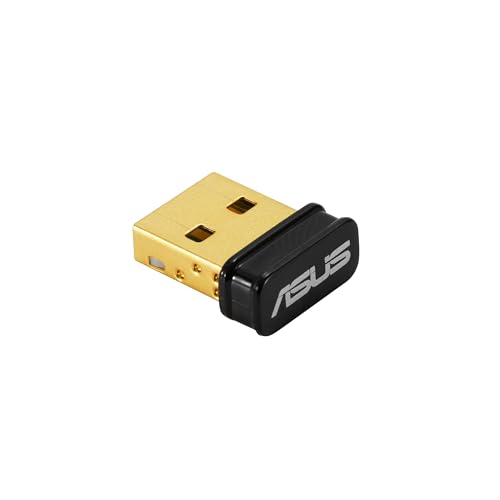
ASUS USB-BT500
The ASUS USB-BT500 earns its place in this discussion as a compact option from a maker with a clear support page and tidy driver story. Judge it by the job described in this article — the step-by-step method above, applied to a real gap — rather than by the boldest line on its packaging. In prose terms it sits as a sensible option for buyers whose computer has a genuine Bluetooth gap and whose accessories are the ordinary desk and living-room devices most people actually own. Check the current listing for the exact model name, confirm that the maker supports your operating system, and make sure any driver you download later comes from the maker’s own support page for this model. Position it in the open, ideally away from crowded high-speed USB ports, pair your core device first, and test it from the chair and the distance you will really use. If it handles that honest test calmly, it has done everything this category can reasonably promise.

UGREEN Bluetooth Adapter
The UGREEN Bluetooth Adapter earns its place in this discussion as a straightforward mid-tier pick from an accessories maker many desk owners already know. Judge it by the job described in this article — the step-by-step method above, applied to a real gap — rather than by the boldest line on its packaging. In prose terms it sits as a sensible option for buyers whose computer has a genuine Bluetooth gap and whose accessories are the ordinary desk and living-room devices most people actually own. Check the current listing for the exact model name, confirm that the maker supports your operating system, and make sure any driver you download later comes from the maker’s own support page for this model. Position it in the open, ideally away from crowded high-speed USB ports, pair your core device first, and test it from the chair and the distance you will really use. If it handles that honest test calmly, it has done everything this category can reasonably promise.
Techkey Bluetooth Adapter
The Techkey Bluetooth Adapter earns its place in this discussion as a budget-conscious prose-only option where basic pairing is the whole requirement. Judge it by the job described in this article — the step-by-step method above, applied to a real gap — rather than by the boldest line on its packaging. In prose terms it sits as a sensible option for buyers whose computer has a genuine Bluetooth gap and whose accessories are the ordinary desk and living-room devices most people actually own. Check the current listing for the exact model name, confirm that the maker supports your operating system, and make sure any driver you download later comes from the maker’s own support page for this model. Position it in the open, ideally away from crowded high-speed USB ports, pair your core device first, and test it from the chair and the distance you will really use. If it handles that honest test calmly, it has done everything this category can reasonably promise.
Common Mistakes
The common buying mistakes in this category are remarkably consistent. The first is buying an adapter for a computer that already has working Bluetooth, in the hope of an upgrade that a second radio cannot deliver. The second is ignoring the other end of the connection: ordering a dongle for a printer, speaker or accessory that has no Bluetooth of its own. The third is choosing purely on the boldest range language on the box, when placement and walls will decide the real result. The fourth is neglecting the driver and support page, especially for older operating systems. The fifth is hiding the adapter behind a metal case beside busy high-speed ports and then blaming the radio for the resulting stutter. Every one of these mistakes is avoidable with ten minutes of checking before you order, which is why this guide returns to them so often: in a category this inexpensive, information is worth more than money.
Printers and older accessories teach an important lesson about Bluetooth expectations. An adapter in your computer gives the computer Bluetooth; it does not give Bluetooth to a printer, speaker or any other device that never had it. Devices connect when both ends have the radio and a shared way of working. That sounds obvious written down, yet a steady stream of disappointed buyers discover it after ordering a dongle for a non-Bluetooth printer. Before buying, check the accessory itself: does it actually offer Bluetooth pairing, and does its maker intend it to pair with a computer rather than only with a phone app? The same check applies to fitness gear, toys and smart home gadgets, many of which use Bluetooth only to talk to their own phone applications. An adapter is a computer upgrade, not a universal translator for every gadget in the house, and confirming the other end of the connection first is the cheapest research you will ever do.
Pro Tips
Range is where expectations and physics part company most often. Bluetooth is a short-range radio designed for a desk, a room and nearby devices, not for covering a whole home through several walls. Walls, floors, metal cases, filing cabinets and even the human body absorb and scatter the signal, so a connection that feels rock solid with the computer in the same room can stutter when you walk into the kitchen wearing your headphones. The position of the adapter matters as much as the adapter itself. A tiny dongle tucked into a rear port, hidden behind a large metal tower case under a desk, starts with a real handicap before it transmits anything at all. Moving the adapter into the open — a front port, a port on a monitor, or a short extension that lifts it onto the desk — often improves a weak connection more than swapping one reputable adapter for another, because the radio finally has a clear path to the device it is talking to.
A short, sensible word on everyday security and tidiness. Pair your devices at home rather than in a crowded public place, accept pairing requests only from devices you recognise, and remove pairings for accessories you have sold or thrown away. Keep the operating system updated, because Bluetooth fixes arrive through those updates as surely as any other kind. None of this requires special software or anxiety; Bluetooth in a home desk setup is a mature, ordinary technology. The tidiness point matters as much as the security one. A pairing list full of forgotten phones, borrowed headsets and old controllers makes troubleshooting harder, because the computer may try to reconnect to something that is not really part of your setup any more. A short list of devices you actually use, each paired cleanly and named recognisably, is the quiet foundation of a Bluetooth setup that simply works every morning.
When an adapter arrives, give it a fair, structured first hour rather than a scattered first week. Start with placement: an open port or a short extension onto the desk. Pair your single most important device first and test it thoroughly from the places you will really use it — your chair, your standing spot, the sofa. Then add devices one at a time, testing after each addition, and finish with the combination you will use together every day, such as headphones during a call while the keyboard and mouse are active. Walk the honest boundary of the room so you know where the connection starts to thin out, rather than discovering it mid-call. If something misbehaves, change one thing at a time — position first, then the pairing, then the driver — and note what fixed it. An adapter that passes that first hour will very likely serve quietly for years.
Worked Examples
The Office Tower and the Evening Headphones
A capable desktop with no Bluetooth, used for work by day and music and calls in the evening. The gap is real, the device list is headphones plus a keyboard and mouse together, placement can be an extension onto the desk, and the operating system is current. The method lands on a mainstream adapter, placed in the open, tested with a call before the first important meeting. Every step was easy because the situation is the category’s home ground.
For work calls, a Bluetooth connection changes the posture of the whole day. You can stand, stretch, fetch water and stay in the conversation, and a headset paired to the desktop stops you being chained to the chair by a cable that is always slightly too short. The honest caveats are about microphones and switching. The microphone in many wireless headphones is serviceable rather than superb, and a computer juggling several audio devices can occasionally route a call to the wrong output until you correct it in settings. Test your call setup before an important meeting, not during its first minute: join a practice call, confirm colleagues can hear you clearly, and confirm the ringing and the voices land in the same device. Once that routine is proven, the adapter quietly becomes part of how the home office works, and most owners only think about it again on the rare day they use a different computer.
The Older Laptop and the New Controller
An older laptop whose Bluetooth cannot handle a modern controller reliably, carried between rooms daily. The gap is a failing, outdated radio; the shape must be nano; the internal radio must be disabled so the controller pairs to the adapter alone. The method lands on a supported nano model, with the honest caveat kept in view: relaxed and mid-paced games will feel great, and a cable stays in the drawer for the most demanding sessions.
Game controllers are one of the most satisfying reasons to add Bluetooth to a desktop. A controller paired wirelessly frees you from playing tethered close to a tower, lets you lean back at a sensible viewing distance, and makes a PC in the living room feel like a proper games setup rather than an office machine pressed into service. Keep expectations grounded in two places. First, the controller itself must support Bluetooth pairing with a PC, which most modern controllers do but some older or platform-specific models do not. Second, the adapter should sit where the signal can reach your hands without passing through the case, the desk and your own body all at once — the extension-cable trick described in this guide earns its keep here. For relaxed and mid-paced games the result is excellent. For the most demanding competitive play, many players still keep a cable nearby, and that is a preference about margins, not a failure of the adapter.
The Healthy Laptop and the Tempting Listing
A recent laptop with working Bluetooth and a listing promising an upgrade. Step one ends the process: there is no gap, so there is no purchase, and the money goes toward the accessory the owner actually wanted — better headphones. This example belongs in every choosing guide, because the most valuable choice the method produces is sometimes no adapter at all, and a guide that cannot say so is not a guide. It is a catalogue.
Judged purely as value, a USB Bluetooth adapter is one of the cheapest capability upgrades in computing when it is bought for the right machine. For a modest outlay, a desktop that could not speak to any wireless accessory gains headphones, speakers, controllers and cable-free desk gear in one step. That value collapses just as quickly when the purchase is wrong: bought for a laptop that already works, bought to chase range through walls it cannot deliver, or bought to eliminate gaming latency it cannot remove. The worth-it question is therefore never really about the adapter in the abstract. It is about the gap in front of you. A real gap — no Bluetooth, a broken radio, a device you cannot connect — makes the purchase easy to defend. An imagined gap, created by marketing language about upgrades and boosts, makes the same small box a small waste of money.
How To Choose A Usb Bluetooth Adapter: A Deeper Look at Daily Use
A day living with a well-fitted adapter is the fairest test of the whole idea, so it is worth picturing honestly. In the morning the headphones connect as the computer wakes, and a call happens standing up, away from the desk, without any thought about the radio making it possible. Midday, a keyboard and mouse work through documents with no cable crossing the notebook that shares the desk. In the evening a controller pairs for a game from the sofa, and a speaker carries a film from across the room. Nothing in that day is dramatic, and that is precisely the point: the adapter succeeds by disappearing. The days it gets noticed are the days placement, pairing or expectations were neglected, which is why this guide spends so much of its length on those unglamorous subjects rather than on the thirty seconds of plugging the thing in.
The hybrid setup deserves a mention, because it is how many experienced owners actually live. Bluetooth handles the daily work — the calls, the music, the controller, the cable-free desk — while a wired connection stays within reach for the specific jobs where it is simply better, above all competitive gaming audio and the occasional large, impatient task that was never Bluetooth’s strength. Owning an adapter does not oblige you to use it for everything, and judging it as one tool among several, rather than as a replacement for every cable you own, is the mindset that produces satisfied owners. The dongle earns its place by being the right tool often, not by pretending to be the right tool always.
Accessory turnover is the quiet long game. Headphones are replaced, a keyboard wears out, a controller is upgraded, and through all of that churn the adapter stays, pairing with each new arrival in turn. That is another reason the maker’s support page matters more than the launch-day listing: the adapter you buy today will be asked to work with devices and operating system updates that do not exist yet, and a maker who maintains drivers gives it a future. When a new accessory arrives, pair it the same calm way as the first — one device, a proper test, then normal life — and the setup absorbs the change without drama. Bluetooth setups age well when they are administered lightly and consistently, and badly when every new gadget triggers a pile of simultaneous, untested pairings.
Shared and family computers add one more wrinkle worth planning for. Several people may pair their own headphones or controllers to the same machine, and the pairing list grows into a small crowd. That is manageable when each device is named clearly and old pairings are removed as accessories leave the house, and it becomes confusing when nobody curates the list and the computer keeps trying to reconnect to a headset that moved out with a student last year. If the machine is shared, agree on the tidy-list habit as a household rule. It takes a minute, it prevents the classic argument about whose device ‘broke’ the Bluetooth, and it keeps the adapter’s one job simple: connecting the people in the room to the accessories actually in the room.
Diagnosing audio crackle is a small skill that saves adapters from unfair blame, so here is the order an experienced troubleshooter follows. First, position: is the adapter in the open, or hidden behind the case beside busy ports? Second, distance and obstacles: did the listening spot move, or a door start closing between rooms? Third, company: is a high-speed drive working hard beside the adapter right now? Fourth, the pairing: does removing and re-pairing the headphones clean it up? Fifth, the accessory itself: does the crackle follow the headphones to a phone, in which case the adapter was never the problem? Worked in that order, most crackle is explained by the first two questions, and the fix is a short extension cable and a better listening position rather than a replacement purchase.
There is also a budgeting lesson hiding in this small category. Because the adapter itself is inexpensive, the temptation is to spend the savings immediately on the boldest accessory claims instead — and the same honesty applies there. Headphones, keyboards and controllers are where your ears, hands and hours will live, so they deserve the larger share of research and money, bought for comfort and fit rather than for version labels they share with the adapter. The healthiest total purchase in this whole topic usually looks like this: a mainstream, well-supported adapter bought without drama, placed properly on a short extension if the desk demands it, and the real budget spent on the accessory you will touch every day. Readers who allocate that way rarely regret any part of the order.
Finally, a note on patience as a feature. Bluetooth problems feel urgent because they interrupt a call, a game or a film, and urgency pushes people toward the biggest available action: new drivers from strange sites, a replacement adapter ordered in frustration, a full reset of everything. Almost every fault described in this guide yields to the smallest available action instead — a moved adapter, a removed and renewed pairing, a disabled internal radio, a default reset in sound settings. Try the small action first, test it honestly, and only escalate when the evidence says the small action was not the cause. That temperament, more than any particular model choice, is what separates the owners who describe their adapter as invisible from the owners who describe it as temperamental.
Consider, too, what a good outcome actually sounds like six months later. It sounds like nothing. The owner cannot tell you when they last opened the Bluetooth settings, cannot remember a pairing failing, and has stopped thinking of the desktop as the tethered machine. That invisibility is the product working as intended, and it is worth naming because it explains why this category generates such puzzling reviews in the wild: the satisfied majority has almost nothing to report, while the frustrated minority usually shares a placement, a conflicting radio or an expectation that was never the adapter’s to meet. If you set yours up by the method in this guide, plan to join the silent majority, and treat that silence as the success metric it is.
Getting It Right the Second Time: Adjustments and Troubleshooting
Know when the problem is not technique
Some failures are the product telling you something: a part at the end of its life, a consumable past its best, or a task beyond the model’s design limits. If the same failure survives correct setup, fresh consumables and careful settings, stop refining your technique and inspect the hardware, or check whether the job needs a heavier-duty usb bluetooth adapter than the one you own. Recognising that boundary is a skill in itself. Persisting with technique fixes for a hardware problem is how an afternoon disappears, and how a basically sound product earns an unfair reputation.
Teach the second user
In a home where children, pets and visitors all interact with the setup, you may not be the only person who operates the usb bluetooth adapter, and a technique that lives only in your head is a fragile one. Once your process is stable, walk the other user through it once, then let them run it while you watch for the step where your instructions were ambiguous. Their mistakes are diagnostic gold: they show exactly which step depends on tacit knowledge you have not written down. Fix the written version, not just the user, and the whole household’s results become as consistent as your own.
Diagnose before you adjust
When a usb bluetooth adapter task goes wrong, the temptation is to change three things at once and hope. Resist it. Work through the likely causes in order of probability — setup, materials or media, settings, then the hardware itself — and change one variable at a time, noting what each change does. In a home where children, pets and visitors all interact with the setup, most failures trace back to the first two categories, which are free to fix. This ordered approach feels slower for ten minutes and saves hours across the life of the product, because you build a personal map of cause and effect instead of a pile of superstitions.
The recovery sequence for a job gone wrong
Mid-task failures with a usb bluetooth adapter follow a pattern worth memorising: stop safely, preserve whatever state you can, identify the earliest point where things diverged, and restart from the step before that point rather than from the beginning. Rushing a restart from zero wastes materials and often repeats the same error at the same step. If the failure damaged a consumable or a wear part, replace it before retrying; a compromised part makes the next attempt fail in a new, confusing way that sends your troubleshooting in the wrong direction entirely.
Your future self, mid-task on a busy day, is the person this check is really for.
Keep the notes with the product’s paperwork; they become the baseline every later adjustment is judged against.
Write the conclusion of that check down before you order, so the decision survives contact with a tempting listing.
Frequently Asked Questions
What is the most important step in choosing an adapter?
The first one: confirming that your computer genuinely lacks working Bluetooth. Every later step — devices, version, shape, placement, support — only matters once a real gap exists. Buyers who skip that check are the ones who end up with a second radio confusing a healthy laptop, or with a dongle bought for an accessory that has no Bluetooth of its own. Ten minutes of checking at the start is worth more than any feature comparison that follows it.
Will a USB Bluetooth adapter upgrade a PC that already has Bluetooth?
No, and this is the most important expectation to set before buying. An adapter adds Bluetooth to a computer that lacks it, or replaces a radio that has failed. If your built-in Bluetooth already pairs reliably with your headphones, keyboard and controller, a second radio brings no improvement and can confuse the operating system. Spend the money only when there is a genuine gap: no Bluetooth at all, a broken internal radio, or an older machine that cannot connect to a device you need.
Why does my connection stutter even though I am close to the PC?
Proximity on its own does not guarantee a clean signal. An adapter hidden behind a metal tower case, under a desk or beside busy high-speed USB ports starts at a disadvantage, and walls or your own body between the adapter and the device make things worse. Move the adapter into the open, ideally on a short USB extension cable resting on the desk, then re-test. For many stuttering setups that simple change of position fixes more than replacing the adapter ever would.
Do I need to install a driver?
On a current Windows PC, most mainstream adapters work as soon as they are plugged in, because the operating system supplies a standard driver and the Bluetooth controls appear in settings. Older operating systems and some specific models still need the maker’s driver, which you should always download from the support page for the exact model rather than from a generic driver site. If your computer has a built-in radio as well, disable that internal radio so the system is not running two Bluetooth connections at once.
Is Bluetooth audio good enough for gaming?
For most games, films and calls it is perfectly enjoyable, but fast competitive gaming exposes Bluetooth audio delay in a way other uses do not. The sound can trail the action slightly, and no adapter removes that entirely because the delay is part of how Bluetooth audio works. A clean, close connection helps at the margins. If split-second audio cues decide your matches, keep a wired headset as your benchmark and treat the adapter as a convenience for everything else rather than a latency cure.
Can an adapter give Bluetooth to my printer or speaker?
No. An adapter gives Bluetooth to the computer it is plugged into, and a connection needs a radio at both ends. A printer or speaker that was never built with Bluetooth cannot gain it from a dongle in your PC. Before buying, confirm that the accessory itself offers Bluetooth pairing with a computer, rather than only working through a phone app. That one check, made before ordering, prevents the most common disappointed purchase in this whole category.
Related Guides
a Bluetooth keyboard that suits a Windows desk
Bluetooth keyboards made for PC use
a keyboard and mouse combo for gaming