Disclosure: As an Amazon Associate, ilcastellomenu.com earns from qualifying purchases. Links on this page are affiliate links; they cost you nothing extra. Prices and availability change often, so check the current Amazon listing before you buy.
Weighing up usb sound card pros and cons honestly means resisting two temptations: the marketing temptation to promise transformed sound, and the cynical temptation to dismiss a genuinely useful little device because its job is unglamorous. This article lists the real advantages and the real limitations, explains what each one means for different kinds of users, and finishes with the buying and setup habits that shrink the cons list in practice. If you read nothing else, read this: the pros are about connection and convenience, and the cons are mostly about expectations.
Quick Verdict and Key Takeaways
Suits: anyone with a broken, missing, or badly placed audio connection, and anyone who wants a dependable spare. Does not suit: recording, performing, or listeners chasing a dramatic upgrade from budget headphones. The balance of pros and cons tilts strongly positive when the purchase is aimed at a connection problem, and strongly negative when it is aimed at a sound fantasy. Aim matters more than model choice in this category.
In this guide
The Pros of a USB Sound Card: USB Sound Card Pros and Cons in Balance
It resurrects a machine with a dead jack
For people with hearing or accessibility needs, an adapter can quietly solve real problems. It can put a jack within reach on a machine whose ports are at the back of a desk, let a preferred headset be used with a machine that otherwise excludes it, and provide a consistent connection that does not depend on a worn socket. Volume controls on the adapter itself can also help when system controls are buried in menus. These are unglamorous benefits, and for the people who need them, they are the entire point of the product.
Finally, a word about spares. Because these adapters are small, inexpensive, and instantly useful when a jack fails at the worst moment, many experienced users simply keep one spare in a drawer or travel kit. It is the audio equivalent of a spare charging cable: unexciting right up until the morning it saves a presentation, an exam, an interview, or a call that could not be rescheduled. If you rely on a headset for work, that insurance logic is worth taking seriously when you decide how many to buy.
It adds a jack where none exists
A USB sound card is, at heart, a tiny audio device that lives outside your computer instead of inside it. Your machine sends digital audio out through a USB port, and the adapter turns that signal into sound you can hear through headphones or speakers, while also carrying a microphone signal back the other way. Because the conversion happens outside the case, the adapter does not care whether your built-in audio hardware is healthy, missing, or simply not wired to a jack you can reach. That independence is the whole appeal: one small device, plugged into a port almost every computer has, gives you a working place to plug in a headset.
The most common reason people buy one of these adapters is embarrassingly simple: the headphone jack on their laptop or desktop has stopped working. Jacks wear out. They get loose, they crackle when the plug turns, they fill with lint, or one channel quietly disappears. Replacing a jack inside a laptop is rarely a sensible repair for most owners, and on a desktop the front-panel jack is often connected with a flimsy cable that fails long before the rest of the machine. A USB adapter sidesteps all of that in about a minute, with no tools and no opening the case.
It can move you away from built-in noise
The third job people hope for is escaping the hum, buzz, and faint whining that some built-in audio produces. Noise from inside a computer case can leak into sensitive headphone outputs, and the symptom is familiar: a soft buzz that changes when you move the mouse or when the graphics card works hard. Moving the conversion outside the case sometimes helps a great deal, and sometimes helps only a little, because noise can also arrive through the USB connection itself or from a ground loop elsewhere in the setup. Honesty matters here: an adapter is a reasonable thing to try, not a guaranteed cure.
It is just as important to say what one of these adapters will not do. It will not turn budget headphones into studio headphones, because the headphones themselves are doing most of what you hear. It will not rescue a bad microphone, fix a damaged cable, or make a noisy room sound quiet on a call. And it is not a recording studio in a stick: anyone who wants to record instruments, use a professional microphone, or monitor themselves while recording should be looking at a proper audio interface instead, which is a different and larger category of device built for exactly that work.
It is genuinely plug-and-play
Plug-and-play behaviour is the norm on current systems, and it is one of the category’s genuine strengths. On a modern laptop or desktop you normally plug the adapter in, wait a few seconds while the system recognises it as a standard audio device, and then choose it as the output and input in your sound settings. No disc, no hunting for downloads, and usually no restart. The step people forget is the choosing: many a supposedly broken adapter was simply never selected as the default device, while the computer kept cheerfully playing through its speakers.
Consoles and other devices deserve a cautious word. Some adapters work happily when plugged into a game console or another host, and some do not, because support depends on the host rather than the adapter. If your plan involves anything other than a computer, check that specific pairing before relying on it, and treat forum reports about your exact console and model as more useful than general promises. On a computer, by contrast, you can be reasonably confident: standard USB audio support is built into every current mainstream operating system.
It travels between machines with you
Sharing one adapter between machines is an underrated pattern. Because the device is recognised automatically, you can move it from a work laptop to a home desktop in seconds, carrying your headset setup with it. People who hot-desk, who split time between two computers, or who keep a spare machine for calls often end up valuing this more than any specification. It also makes the adapter a useful diagnostic tool: if sound works through the adapter but not the built-in jack, you have learned something important about where your problem actually lives.
Troubleshooting these adapters is mercifully short, because there is so little to go wrong. If there is no sound, confirm the adapter is selected for output. If people cannot hear you, confirm it is selected for input, because systems happily let you listen through one device and record through another. Try a different USB port, ideally one directly on the machine rather than through a hub, and try the headset in a phone to confirm the headset itself still works. That short sequence resolves the overwhelming majority of problems people report with this category.
It makes a thoughtful spare
Finally, a word about spares. Because these adapters are small, inexpensive, and instantly useful when a jack fails at the worst moment, many experienced users simply keep one spare in a drawer or travel kit. It is the audio equivalent of a spare charging cable: unexciting right up until the morning it saves a presentation, an exam, an interview, or a call that could not be rescheduled. If you rely on a headset for work, that insurance logic is worth taking seriously when you decide how many to buy.
A USB sound card is, at heart, a tiny audio device that lives outside your computer instead of inside it. Your machine sends digital audio out through a USB port, and the adapter turns that signal into sound you can hear through headphones or speakers, while also carrying a microphone signal back the other way. Because the conversion happens outside the case, the adapter does not care whether your built-in audio hardware is healthy, missing, or simply not wired to a jack you can reach. That independence is the whole appeal: one small device, plugged into a port almost every computer has, gives you a working place to plug in a headset.
The Cons
It will not transform your headphones
It is just as important to say what one of these adapters will not do. It will not turn budget headphones into studio headphones, because the headphones themselves are doing most of what you hear. It will not rescue a bad microphone, fix a damaged cable, or make a noisy room sound quiet on a call. And it is not a recording studio in a stick: anyone who wants to record instruments, use a professional microphone, or monitor themselves while recording should be looking at a proper audio interface instead, which is a different and larger category of device built for exactly that work.
The single most practical buying decision is the jack layout. Some adapters offer one combined jack that carries both headphone sound and microphone signal on a single plug, matching the headsets made for phones and game controllers. Others offer two separate jacks, one for headphones and one for a microphone, matching older headsets and separate desk microphones. Neither layout is better in the abstract; the right one is simply the one that matches the headset you already own. Buying the wrong layout means adapters on adapters, which is exactly the clutter this purchase was supposed to remove.
Hum reduction is a hope, not a promise
The third job people hope for is escaping the hum, buzz, and faint whining that some built-in audio produces. Noise from inside a computer case can leak into sensitive headphone outputs, and the symptom is familiar: a soft buzz that changes when you move the mouse or when the graphics card works hard. Moving the conversion outside the case sometimes helps a great deal, and sometimes helps only a little, because noise can also arrive through the USB connection itself or from a ground loop elsewhere in the setup. Honesty matters here: an adapter is a reasonable thing to try, not a guaranteed cure.
It is just as important to say what one of these adapters will not do. It will not turn budget headphones into studio headphones, because the headphones themselves are doing most of what you hear. It will not rescue a bad microphone, fix a damaged cable, or make a noisy room sound quiet on a call. And it is not a recording studio in a stick: anyone who wants to record instruments, use a professional microphone, or monitor themselves while recording should be looking at a proper audio interface instead, which is a different and larger category of device built for exactly that work.
It is not recording equipment
Microphone quality is where modest expectations pay off most. For calls, classes, meetings, and casual voice chat, the microphone input on a typical adapter is entirely adequate: clear, intelligible, and usually better than a laptop’s built-in microphone simply because your headset microphone sits near your mouth. For anything beyond that — streaming to an audience, recording narration, podcasting — the honest advice is to step up to a proper interface or a dedicated USB microphone. A dongle that makes your voice clear in a meeting has done its job; asking it to be a studio chain is asking the wrong product.
Latency, the tiny delay between action and sound, is rarely a problem for the things these adapters are bought for. Music, films, meetings, and ordinary gaming all tolerate the small delays involved without anyone noticing. The exception is performing or recording music, where you need to hear yourself at the exact moment you play or sing. That is another situation where the correct answer is a proper audio interface with direct monitoring, not a general-purpose adapter. Knowing which side of that line your use sits on saves both money and frustration.
Build quality is modest by design
Build quality in this category is modest by design, and expectations should be set accordingly. These are small, inexpensive accessories, not heirloom hardware. What you want is a housing that does not flex alarmingly, a plug that sits firmly without wobbling, strain relief where a cable meets the body, and jacks that grip a plug with a reassuring click rather than letting it drift out during a call. A metal shell can feel nicer than plastic, but grip, fit, and strain relief matter more to lifespan than the material on the outside.
Microphone quality is where modest expectations pay off most. For calls, classes, meetings, and casual voice chat, the microphone input on a typical adapter is entirely adequate: clear, intelligible, and usually better than a laptop’s built-in microphone simply because your headset microphone sits near your mouth. For anything beyond that — streaming to an audience, recording narration, podcasting — the honest advice is to step up to a proper interface or a dedicated USB microphone. A dongle that makes your voice clear in a meeting has done its job; asking it to be a studio chain is asking the wrong product.
The wrong jack layout makes it useless
The single most practical buying decision is the jack layout. Some adapters offer one combined jack that carries both headphone sound and microphone signal on a single plug, matching the headsets made for phones and game controllers. Others offer two separate jacks, one for headphones and one for a microphone, matching older headsets and separate desk microphones. Neither layout is better in the abstract; the right one is simply the one that matches the headset you already own. Buying the wrong layout means adapters on adapters, which is exactly the clutter this purchase was supposed to remove.
Headset plugs add one more wrinkle worth understanding before you buy. A combined headset plug carries an extra contact for the microphone, and a combined-jack adapter expects exactly that plug. A separate-jack headset has two plugs, and a combined adapter cannot accept both at once without a splitter. Checking your headset takes ten seconds: count the plugs, look at what your current setup uses, and match the adapter to it. That tiny check prevents the most common disappointment with these products, which is not sound quality at all but a microphone that silently does nothing on the first important call.
It adds one more small thing to lose
Keeping an adapter working is mostly about not abusing it. Avoid hanging heavy headphone cables from a rigid stick plugged into a laptop, coil leads loosely rather than wrapping them tightly around the body, and pull plugs out by the plug rather than the cable. If an adapter lives in a bag, a small pouch keeps lint out of the jacks, and lint, once again, is the quiet enemy of every small audio connection. None of this is demanding; it is the same care you would give any small accessory you rely on daily.
There is also a fair question about whether to repair instead of adapt. If a desktop’s rear jack still works and only the front one has failed, a cable or a setting may solve the problem for free. If a laptop is under warranty, a dead jack is the manufacturer’s problem, not yours. The adapter earns its place when repair is impractical, too slow, too expensive relative to the machine’s age, or simply not worth opening the device for. It is a workaround, proudly so, and a good workaround is often the smartest purchase in the whole setup.
What the Trade-Offs Mean for You
Consoles and other devices deserve a cautious word. Some adapters work happily when plugged into a game console or another host, and some do not, because support depends on the host rather than the adapter. If your plan involves anything other than a computer, check that specific pairing before relying on it, and treat forum reports about your exact console and model as more useful than general promises. On a computer, by contrast, you can be reasonably confident: standard USB audio support is built into every current mainstream operating system.
Volume and controls vary more than people expect. Some adapters are plain pass-through sticks with no buttons at all, leaving volume entirely to the system and your apps. Others add a small volume wheel, a mute switch, or buttons along the cable. Neither approach is automatically better. Desk users who adjust volume constantly may love a wheel within reach, while laptop users who carry the adapter in a bag may prefer nothing that can snag or turn by accident. Think about where the adapter will live, not just what it does on day one.
Cable style is a small decision with daily consequences. A short rigid stick is tidy and travels well, but it puts the jack right against the side of the laptop, where a stiff headphone plug can lever against the port when the cable gets tugged. An adapter on a short flexible lead moves the jack away from the machine and is kinder to both ports and plugs, at the cost of a little more desk clutter. People who have already lost one jack to mechanical wear often prefer the lead, and their reasoning is sound.
Build quality in this category is modest by design, and expectations should be set accordingly. These are small, inexpensive accessories, not heirloom hardware. What you want is a housing that does not flex alarmingly, a plug that sits firmly without wobbling, strain relief where a cable meets the body, and jacks that grip a plug with a reassuring click rather than letting it drift out during a call. A metal shell can feel nicer than plastic, but grip, fit, and strain relief matter more to lifespan than the material on the outside.
Context: Adapter, Repair, or Interface?
Latency, the tiny delay between action and sound, is rarely a problem for the things these adapters are bought for. Music, films, meetings, and ordinary gaming all tolerate the small delays involved without anyone noticing. The exception is performing or recording music, where you need to hear yourself at the exact moment you play or sing. That is another situation where the correct answer is a proper audio interface with direct monitoring, not a general-purpose adapter. Knowing which side of that line your use sits on saves both money and frustration.
Sharing one adapter between machines is an underrated pattern. Because the device is recognised automatically, you can move it from a work laptop to a home desktop in seconds, carrying your headset setup with it. People who hot-desk, who split time between two computers, or who keep a spare machine for calls often end up valuing this more than any specification. It also makes the adapter a useful diagnostic tool: if sound works through the adapter but not the built-in jack, you have learned something important about where your problem actually lives.
Troubleshooting these adapters is mercifully short, because there is so little to go wrong. If there is no sound, confirm the adapter is selected for output. If people cannot hear you, confirm it is selected for input, because systems happily let you listen through one device and record through another. Try a different USB port, ideally one directly on the machine rather than through a hub, and try the headset in a phone to confirm the headset itself still works. That short sequence resolves the overwhelming majority of problems people report with this category.
How to Buy Smart
The most common reason people buy one of these adapters is embarrassingly simple: the headphone jack on their laptop or desktop has stopped working. Jacks wear out. They get loose, they crackle when the plug turns, they fill with lint, or one channel quietly disappears. Replacing a jack inside a laptop is rarely a sensible repair for most owners, and on a desktop the front-panel jack is often connected with a flimsy cable that fails long before the rest of the machine. A USB adapter sidesteps all of that in about a minute, with no tools and no opening the case.
A second, equally practical job is adding a jack where there never was one. Plenty of modern laptops ship with a single combined port or none at all, some small desktops hide their audio connections awkwardly at the back, and many people work through a dock that sits out of easy reach. An adapter plugged into a front port, a hub, or the side of a laptop puts a headphone and microphone connection exactly where your hand expects it to be. For people who join calls all day, that convenience alone can justify keeping one in a desk drawer permanently.
The third job people hope for is escaping the hum, buzz, and faint whining that some built-in audio produces. Noise from inside a computer case can leak into sensitive headphone outputs, and the symptom is familiar: a soft buzz that changes when you move the mouse or when the graphics card works hard. Moving the conversion outside the case sometimes helps a great deal, and sometimes helps only a little, because noise can also arrive through the USB connection itself or from a ground loop elsewhere in the setup. Honesty matters here: an adapter is a reasonable thing to try, not a guaranteed cure.

Creative Sound Blaster Play
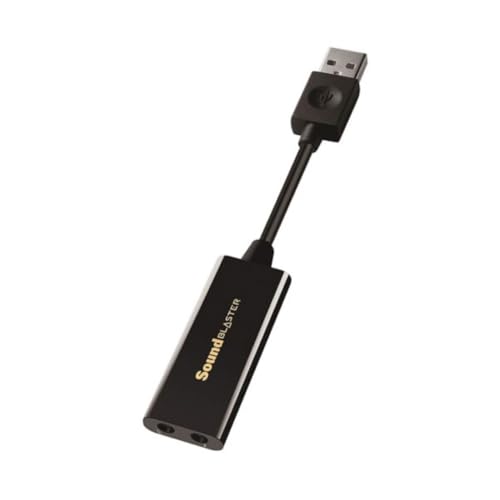
Creative Sound Blaster Play is a step-up adapter from a familiar audio brand, aimed at listeners who want a little more polish than a basic dongle provides. In daily use what matters is the unglamorous list: the jack layout matches your headset, the plug sits firmly, the housing does not flex when you swap cables, and the system recognises it the moment it is plugged in. Judge it on those things and on how it behaves in your calls and your games, not on promises printed on a box.
UGREEN USB Sound Card
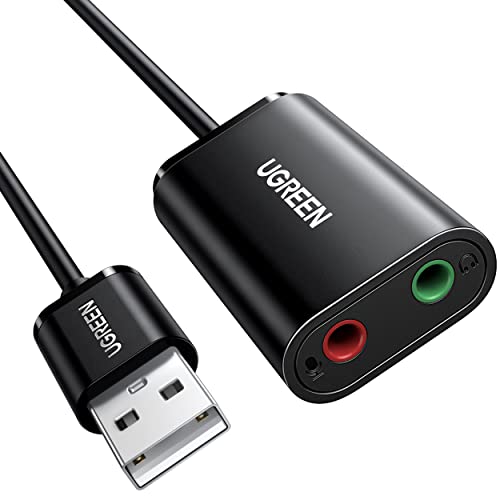
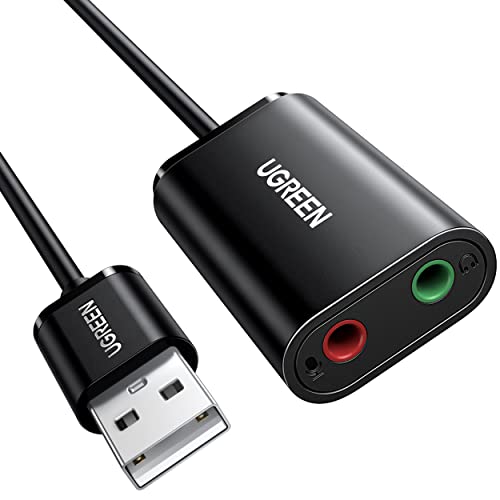
UGREEN USB Sound Card is a straightforward, widely available adapter that suits everyday headset and speaker use. In daily use what matters is the unglamorous list: the jack layout matches your headset, the plug sits firmly, the housing does not flex when you swap cables, and the system recognises it the moment it is plugged in. Judge it on those things and on how it behaves in your calls and your games, not on promises printed on a box.
Syba USB Sound Card
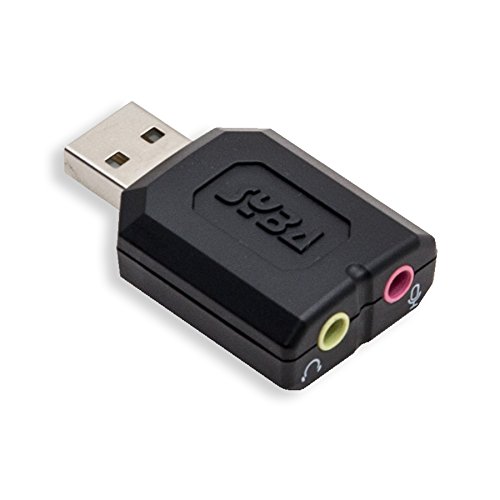
Syba USB Sound Card is a practical adapter often chosen when separate microphone and headphone jacks matter. In daily use what matters is the unglamorous list: the jack layout matches your headset, the plug sits firmly, the housing does not flex when you swap cables, and the system recognises it the moment it is plugged in. Judge it on those things and on how it behaves in your calls and your games, not on promises printed on a box.
Setup and Care That Reduce the Cons
Headset plugs add one more wrinkle worth understanding before you buy. A combined headset plug carries an extra contact for the microphone, and a combined-jack adapter expects exactly that plug. A separate-jack headset has two plugs, and a combined adapter cannot accept both at once without a splitter. Checking your headset takes ten seconds: count the plugs, look at what your current setup uses, and match the adapter to it. That tiny check prevents the most common disappointment with these products, which is not sound quality at all but a microphone that silently does nothing on the first important call.
Plug-and-play behaviour is the norm on current systems, and it is one of the category’s genuine strengths. On a modern laptop or desktop you normally plug the adapter in, wait a few seconds while the system recognises it as a standard audio device, and then choose it as the output and input in your sound settings. No disc, no hunting for downloads, and usually no restart. The step people forget is the choosing: many a supposedly broken adapter was simply never selected as the default device, while the computer kept cheerfully playing through its speakers.
Consoles and other devices deserve a cautious word. Some adapters work happily when plugged into a game console or another host, and some do not, because support depends on the host rather than the adapter. If your plan involves anything other than a computer, check that specific pairing before relying on it, and treat forum reports about your exact console and model as more useful than general promises. On a computer, by contrast, you can be reasonably confident: standard USB audio support is built into every current mainstream operating system.
Bottom Line
The pros of a USB sound card are concrete, immediate, and easy to verify within a minute of plugging it in. The cons are mostly what happens when the product is asked to be something it never claimed, in its honest moments, to be. Buy it for connection, judge it on connection, and the balance lands firmly in its favour.
Living With the Adapter Day to Day
Cable style is a small decision with daily consequences. A short rigid stick is tidy and travels well, but it puts the jack right against the side of the laptop, where a stiff headphone plug can lever against the port when the cable gets tugged. An adapter on a short flexible lead moves the jack away from the machine and is kinder to both ports and plugs, at the cost of a little more desk clutter. People who have already lost one jack to mechanical wear often prefer the lead, and their reasoning is sound.
Build quality in this category is modest by design, and expectations should be set accordingly. These are small, inexpensive accessories, not heirloom hardware. What you want is a housing that does not flex alarmingly, a plug that sits firmly without wobbling, strain relief where a cable meets the body, and jacks that grip a plug with a reassuring click rather than letting it drift out during a call. A metal shell can feel nicer than plastic, but grip, fit, and strain relief matter more to lifespan than the material on the outside.
Microphone quality is where modest expectations pay off most. For calls, classes, meetings, and casual voice chat, the microphone input on a typical adapter is entirely adequate: clear, intelligible, and usually better than a laptop’s built-in microphone simply because your headset microphone sits near your mouth. For anything beyond that — streaming to an audience, recording narration, podcasting — the honest advice is to step up to a proper interface or a dedicated USB microphone. A dongle that makes your voice clear in a meeting has done its job; asking it to be a studio chain is asking the wrong product.
Latency, the tiny delay between action and sound, is rarely a problem for the things these adapters are bought for. Music, films, meetings, and ordinary gaming all tolerate the small delays involved without anyone noticing. The exception is performing or recording music, where you need to hear yourself at the exact moment you play or sing. That is another situation where the correct answer is a proper audio interface with direct monitoring, not a general-purpose adapter. Knowing which side of that line your use sits on saves both money and frustration.
Sharing one adapter between machines is an underrated pattern. Because the device is recognised automatically, you can move it from a work laptop to a home desktop in seconds, carrying your headset setup with it. People who hot-desk, who split time between two computers, or who keep a spare machine for calls often end up valuing this more than any specification. It also makes the adapter a useful diagnostic tool: if sound works through the adapter but not the built-in jack, you have learned something important about where your problem actually lives.
Troubleshooting these adapters is mercifully short, because there is so little to go wrong. If there is no sound, confirm the adapter is selected for output. If people cannot hear you, confirm it is selected for input, because systems happily let you listen through one device and record through another. Try a different USB port, ideally one directly on the machine rather than through a hub, and try the headset in a phone to confirm the headset itself still works. That short sequence resolves the overwhelming majority of problems people report with this category.
Small Details That Decide Satisfaction
Latency, the tiny delay between action and sound, is rarely a problem for the things these adapters are bought for. Music, films, meetings, and ordinary gaming all tolerate the small delays involved without anyone noticing. The exception is performing or recording music, where you need to hear yourself at the exact moment you play or sing. That is another situation where the correct answer is a proper audio interface with direct monitoring, not a general-purpose adapter. Knowing which side of that line your use sits on saves both money and frustration.
Sharing one adapter between machines is an underrated pattern. Because the device is recognised automatically, you can move it from a work laptop to a home desktop in seconds, carrying your headset setup with it. People who hot-desk, who split time between two computers, or who keep a spare machine for calls often end up valuing this more than any specification. It also makes the adapter a useful diagnostic tool: if sound works through the adapter but not the built-in jack, you have learned something important about where your problem actually lives.
Troubleshooting these adapters is mercifully short, because there is so little to go wrong. If there is no sound, confirm the adapter is selected for output. If people cannot hear you, confirm it is selected for input, because systems happily let you listen through one device and record through another. Try a different USB port, ideally one directly on the machine rather than through a hub, and try the headset in a phone to confirm the headset itself still works. That short sequence resolves the overwhelming majority of problems people report with this category.
Keeping an adapter working is mostly about not abusing it. Avoid hanging heavy headphone cables from a rigid stick plugged into a laptop, coil leads loosely rather than wrapping them tightly around the body, and pull plugs out by the plug rather than the cable. If an adapter lives in a bag, a small pouch keeps lint out of the jacks, and lint, once again, is the quiet enemy of every small audio connection. None of this is demanding; it is the same care you would give any small accessory you rely on daily.
There is also a fair question about whether to repair instead of adapt. If a desktop’s rear jack still works and only the front one has failed, a cable or a setting may solve the problem for free. If a laptop is under warranty, a dead jack is the manufacturer’s problem, not yours. The adapter earns its place when repair is impractical, too slow, too expensive relative to the machine’s age, or simply not worth opening the device for. It is a workaround, proudly so, and a good workaround is often the smartest purchase in the whole setup.
For people with hearing or accessibility needs, an adapter can quietly solve real problems. It can put a jack within reach on a machine whose ports are at the back of a desk, let a preferred headset be used with a machine that otherwise excludes it, and provide a consistent connection that does not depend on a worn socket. Volume controls on the adapter itself can also help when system controls are buried in menus. These are unglamorous benefits, and for the people who need them, they are the entire point of the product.
What Experience Teaches About This Category
Keeping an adapter working is mostly about not abusing it. Avoid hanging heavy headphone cables from a rigid stick plugged into a laptop, coil leads loosely rather than wrapping them tightly around the body, and pull plugs out by the plug rather than the cable. If an adapter lives in a bag, a small pouch keeps lint out of the jacks, and lint, once again, is the quiet enemy of every small audio connection. None of this is demanding; it is the same care you would give any small accessory you rely on daily.
There is also a fair question about whether to repair instead of adapt. If a desktop’s rear jack still works and only the front one has failed, a cable or a setting may solve the problem for free. If a laptop is under warranty, a dead jack is the manufacturer’s problem, not yours. The adapter earns its place when repair is impractical, too slow, too expensive relative to the machine’s age, or simply not worth opening the device for. It is a workaround, proudly so, and a good workaround is often the smartest purchase in the whole setup.
For people with hearing or accessibility needs, an adapter can quietly solve real problems. It can put a jack within reach on a machine whose ports are at the back of a desk, let a preferred headset be used with a machine that otherwise excludes it, and provide a consistent connection that does not depend on a worn socket. Volume controls on the adapter itself can also help when system controls are buried in menus. These are unglamorous benefits, and for the people who need them, they are the entire point of the product.
The Long View: Owning a Simple Adapter
Finally, a word about spares. Because these adapters are small, inexpensive, and instantly useful when a jack fails at the worst moment, many experienced users simply keep one spare in a drawer or travel kit. It is the audio equivalent of a spare charging cable: unexciting right up until the morning it saves a presentation, an exam, an interview, or a call that could not be rescheduled. If you rely on a headset for work, that insurance logic is worth taking seriously when you decide how many to buy.
A USB sound card is, at heart, a tiny audio device that lives outside your computer instead of inside it. Your machine sends digital audio out through a USB port, and the adapter turns that signal into sound you can hear through headphones or speakers, while also carrying a microphone signal back the other way. Because the conversion happens outside the case, the adapter does not care whether your built-in audio hardware is healthy, missing, or simply not wired to a jack you can reach. That independence is the whole appeal: one small device, plugged into a port almost every computer has, gives you a working place to plug in a headset.
Balancing the Upsides Against the Everyday Annoyances
The maintenance trade-off nobody advertises
Almost every usb sound card trades purchase-day simplicity for a small ongoing maintenance obligation: cleaning, recalibrating, replacing a wear part, updating firmware or simply keeping accessories together. The trade is usually worth it, but it is not free, and it scales with how hard you use the product. In a busy shared workspace where several people use the same setup across the day, skipped maintenance shows up first as small annoyances — a control that feels off, a result that drifts, a noise that was not there before — long before it causes a real failure. Budget the minutes, not just the money.
When the alternative is genuinely better
There are owners for whom skipping the usb sound card altogether is the right call, and naming them is part of an honest pros-and-cons account. If your need is occasional, borrowed or built into something you already own, or if your space cannot give the product the conditions it needs, the alternative route avoids both the cost and the clutter. The pros only outweigh the cons when the problem the usb sound card solves is a recurring one in your week. A problem you meet twice a year rarely justifies a permanent new resident in the Sound Cards category.
How the balance shifts over a year of ownership
The pros-and-cons ledger of a usb sound card is not static. In the first month, novelty inflates the pros; by the sixth month, the honest picture is about reliability, running costs and whether the product has earned a permanent place in your routine. Wear parts, consumable availability and the maker’s support responsiveness all matter more at month ten than at day ten. When you read owner feedback, weight the long-term reports accordingly: a complaint about a part that failed after a year tells you more than a first-week rave about unboxing.
The compromise candidate
Many buyers end up choosing neither the strongest nor the cheapest usb sound card but the one whose weaknesses fall where they personally care least. That is a rational strategy, not a failure of research. List the cons of your final two candidates side by side and ask which set you would rather live with daily in a busy shared workspace where several people use the same setup across the day. The product whose drawbacks sit in your blind spots will feel like the better product for years, even if a comparison table scores the other one higher on paper.
The advantage that depends on your habits
The headline advantage of a usb sound card is real, but it is not automatic: it only pays out if your habits match it. Used the way it was designed, in a busy shared workspace where several people use the same setup across the day, the strengths described earlier compound quietly — less friction, fewer workarounds, a smoother routine. Used against its grain, the same design choices become the source of the complaints in the cons column. Before deciding, be honest about which user you are on an ordinary tired weekday, not the organised version of yourself you plan to become next month.
Frequently Asked Questions
Why can people not hear me even though I can hear them?
Because playback and recording are chosen separately, and your system has probably kept your old microphone — often the laptop’s built-in one, or nothing useful at all — as the recording device while sending sound to your headset. Open the input or recording settings, choose the adapter, and watch the level meter respond when you speak. Also confirm your headset plug is fully seated and that a combined plug is in a combined jack. This one setting explains most microphone complaints with these adapters.
Is a combined jack or separate jacks better?
Neither is better; they serve different headsets. Combined jacks suit the single-plug headsets made for phones, controllers, and modern laptops. Separate jacks suit older headsets with two plugs and setups with a standalone desk microphone. The mistake is not choosing one style over the other, it is choosing without looking at your own headset first. Count your plugs before you order, and the question answers itself in about ten seconds.
Can I leave it plugged in all the time?
Yes, and many people do, especially on desktops and docks where it becomes the permanent audio connection. Just be sensible about strain: a rigid stick with a heavy cable hanging from it puts leverage on the port, so route the cable so its weight is supported, or choose an adapter on a short lead for a permanent desk position. On a laptop that travels daily, unplugging it for the bag is kinder to both the adapter and the port.
Will it work through a USB hub or dock?
Generally yes, and this is a common and sensible way to use one, since the dock becomes a single connection point for your whole desk. If you ever get dropouts or odd behaviour, test the adapter plugged directly into the computer to rule the hub in or out before blaming the adapter. Busy hubs shared with drives and other hungry devices are the usual suspects when a simple device behaves strangely, and the direct-connection test takes under a minute.
Will a USB sound card improve my headphone sound?
Only in specific ways. If your current output is noisy, crackling, or broken, an adapter can sound dramatically better simply by being clean and working. If your current output is already clean, expect the adapter to sound much the same, because your headphones do most of the work in what you hear. It is a fix and a convenience first, and only occasionally an upgrade. Anyone promising a transformation of budget headphones is selling you a story rather than a small, honest accessory.
Can it fix a broken headphone jack?
Yes, in the practical sense that matters: it gives you a new place to plug in, so the broken jack stops being part of your day. It does not repair the jack itself, and the built-in socket will stay broken, but your headset, speakers, and microphone all work through the adapter instead. For most people that is the outcome they actually wanted. If the machine is under warranty, though, claim the repair first and keep the adapter as a spare for later.
Related Reading
whether one is worth buying at all
Bluetooth adapter pros and cons