ilcastellomenu.com is reader-supported. When you buy through links on our site, we may earn an affiliate commission.
Where to Buy
Every camera below is a current model from Canon, Sony or Fujifilm, sold through the usual camera retailers, and each sits in our verified pool with a proper product link. The line-up spans a fixed-lens favourite, two full-frame flagships of the enthusiast class, a retro-styled system camera, a friendly starter model and a premium pocket compact — because beautiful photographs are made at every budget, and the differences are about character as much as capability.
‘Best cameras for beautiful photos’ is the most honest search in photography and the hardest to answer with a specification. Beauty in a photograph is not resolution. It is colour that feels like the day felt, skin that looks like skin, backgrounds that melt instead of distracting, and light rendered the way your eyes remember it. Two cameras with identical sensors can produce noticeably different beauty, because manufacturers tune colour, contrast and grain as matters of taste — and taste, fortunately, can be compared.
So this guide judges six cameras as instruments of beauty rather than of measurement. We care about colour science and how each maker treats faces, skies and foliage; about the lenses available and the way they draw; about how much editing the files invite or forgive; and about the intangible that decides everything — whether the camera makes you want to take it out and use it on an ordinary Tuesday, because beautiful photos are mostly taken on ordinary Tuesdays by people who brought their camera.
The six picks represent six philosophies of beauty. Fujifilm’s two entries bet on film-born colour and finished files. Canon and Sony’s full-frame cameras bet on superb sensors married to the world’s deepest lens catalogues. The little Canon R50 proves the entry level has joined the beauty business, and Sony’s RX100 VII argues that the most beautiful camera is the one in your pocket when the light turns. We will rank them by the kind of beauty you are after, then talk about light, lenses and settings — because the camera is only half the recipe.
Key Takeaways
- Colour science is the beauty specification: how a maker renders skin, sky and green matters more to a photograph’s beauty than its megapixel count.
- Lenses draw the picture — a camera system’s beauty ceiling is set by the glass available for it, not the body alone.
- Finished files are a philosophy: Fujifilm aims to complete the photograph in-camera, while Canon and Sony reward a little editing with enormous flexibility.
- Light outranks equipment every time; the most beautiful upgrade available is learning to shoot in the first and last hours of the day.
- The beautiful camera is the carried camera — size and joy of use decide how many beautiful moments you are present for.
In this guide
Quick Picks
| Pick | Badge | Why it is here |
|---|---|---|
| Fujifilm X100VI | Most beautiful straight from camera | Film simulations and a superb fixed lens produce finished, nostalgic photographs with zero editing. |
| Canon EOS R6 Mark II | Most beautiful all-rounder | Full-frame richness, Canon’s beloved colour and a vast lens catalogue for every kind of beauty. |
| Sony Alpha 7 IV | Most beautiful for editors | Files with enormous flexibility that reward colour grading, plus the deepest third-party lens shelf. |
| Fujifilm X-T5 | Most beautiful system camera | Fujifilm colour and dials with interchangeable lenses — beauty you can grow and specialise. |
| Canon EOS R50 | Most beautiful starter camera | Friendly, light and genuinely lovely colour — proof that beautiful photos no longer need a flagship budget. |
| Sony RX100 VII | Most beautiful pocket camera | A one-inch sensor and real zoom in your pocket, present for the moments the big cameras miss. |
How Did We Choose These Cameras for Beautiful Photos?
We began with output, not hardware: the photographs each camera produces in the hands of a competent owner, judged on the qualities viewers actually respond to — colour that flatters people and places, tonal transitions that keep skies smooth and shadows rich, and rendering that holds together when a photograph is printed large or merely loved on a screen. Cameras whose files need rescue before they please were marked down; cameras whose files please immediately, or reward skill lavishly, rose.
Second, the lens question, because beauty is drawn by glass. We weighed each system’s catalogue for the lenses that make beautiful photographs: fast primes for portraits and evenings, characterful standard zooms, and the specialist glass a growing photographer will want in year three. A beautiful body orphaned by a thin lens shelf is a short story; we preferred novels.
Third, the experience of making the picture — dials that invite adjustment, viewfinders that show you the photograph rather than the data, and colour tools in-camera that let you finish a photograph at the moment of taking it. Beauty is partly workflow: the less time between the feeling and the finished file, the more beautiful photographs survive contact with real life. Finally we spread the six across budgets and sizes deliberately, because the search that brought you here does not come with one wallet or one pair of hands.

Fujifilm X100VI — Most beautiful straight from camera
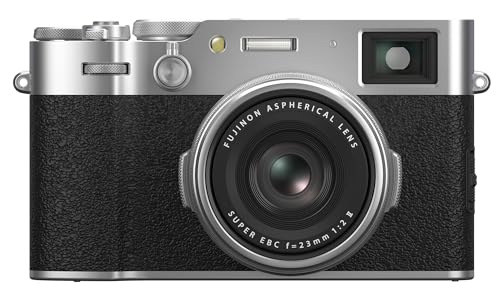
Ask photographers which camera’s photographs they can identify blind, and the X100VI is the name that keeps coming up. Its secret is Fujifilm’s film simulations — colour recipes descended from actual film stocks — applied to a superb sensor and a fixed lens of real character. Portraits come out with skin that glows rather than shines, greens sit where memory puts them, and the whole file has the gentle contrast of a photograph rather than the punch of a screen. People do not say the pictures look processed; they say they look like the day.
The fixed lens is the philosophy made physical. One focal length, chosen by Fujifilm as the classic reportage view, means the camera disappears and the seeing begins: owners famously take more, better photographs because there is nothing to decide except where to stand. The leaf-quiet shutter, the hybrid viewfinder that can show the scene optically like a window, and the analogue dials all serve the same end — a camera that behaves like the beautiful film cameras it evokes, with a modern sensor’s low-light grace underneath.
Its constraints are real and should be bought knowingly. No zoom, no lens changes: the deer, the distant steeple and the tight headshot are all beyond its polite reach, answered only by walking or by accepting the wider, more environmental photograph — which, devotees argue, is usually the more beautiful one anyway. Weather resistance is modest and asks for care. And the model’s fame has made it genuinely difficult to buy at times; patience or a waitlist may be part of the purchase.
Files need almost nothing afterwards, which changes your evenings. Photographs move from camera to phone to family in minutes, finished — and that velocity is why X100 owners’ albums are full while technically superior cameras’ owners are still ‘getting to’ their edits from March.
Buy it if your beauty ideal is the finished, filmic photograph and your subjects are people, streets, travel and daily life. It is less a camera purchase than a style decision, and it is the easiest recommendation on this page to make to the right person.
- Format: fixed-lens compact, large APS-C sensor
- Lens: classic wide-normal prime, no zoom
- Colour: Fujifilm film simulations in-camera
- Viewfinder: hybrid optical/electronic
- Beauty role: finished filmic photographs with no editing
Strengths
- Colour and grain with genuine film ancestry
- Fixed lens simplifies you into seeing better
- Files finish in-camera — albums actually get made
Trade-offs
- No zoom or lens changes, ever
- Weather resistance is modest
- Popularity makes it hard to find in stock
Best for: a photographer of people, streets and travel who loves finished files.
Not suited for: anyone who needs reach, versatility or a zoom.

Canon EOS R6 Mark II — Most beautiful all-rounder
Canon’s colour is the industry’s longest-running love affair, and the R6 Mark II is where that colour meets a superb modern full-frame sensor. Skin tones are its legend: across every skin colour, Canon’s rendering keeps faces luminous and believable, which is why wedding and portrait photographers stake businesses on it. Add dynamic range that holds a bride’s dress and a dark reception hall in the same evening, and in-body stabilisation that lets beautiful available-light photographs happen at dusk without a tripod, and you have the all-rounder against which beauty is usually measured.
The system around it completes the argument. Canon’s RF lenses include some of the most beautiful-drawing glass ever made for a mirrorless camera — fast primes that render backgrounds like watercolour, and zoos of specialist options as your taste develops. The camera’s ergonomics serve long, happy shooting days: a deep grip, sensible dials, and autofocus that finds eyes — human and animal — and simply stays there, so your attention goes to expression and light instead of focus points.
Where does it ask anything of you? Its files are beautiful straight from the camera in Canon’s picture styles, but the fullest beauty — the graded, printed, gallery version — rewards a little editing, and Canon’s raw files happily take it. The body is a serious size next to the Fujifilms here; this is a camera you carry deliberately, in a bag you chose for it. And the system’s best glass is priced like the professional equipment it is, so the beauty budget should include a lens plan, not just a body.
None of that dims the central fact: if one camera had to photograph a whole life — portraits, travel, landscapes, family, evenings — beautifully and without excuses, this is the one most working photographers would reach for.
Its video, for families who film as well as photograph, carries the same colour virtues into motion, and the stabilisation keeps handheld clips graceful rather than seasick. Many owners buy it as a stills camera and discover a second talent; the beauty, it turns out, moves.
Start it with a fast standard prime and the kit zoom, and the R6 Mark II will make the photographs your family keeps. It is the safe pair of hands at the top of this page.
- Format: full-frame mirrorless, interchangeable lenses
- Sensor strengths: dynamic range and low-light grace
- Colour: Canon’s portrait-famous rendering
- Stabilisation: in-body, for handheld dusk work
- Beauty role: the complete all-round beautiful camera
Strengths
- Skin tones that flatter everyone, famously
- Huge, superb RF lens catalogue to grow into
- Stabilisation makes beautiful low-light handhelds routine
Trade-offs
- Size and price are serious-camera territory
- Fullest beauty rewards some editing
- Best lenses carry professional prices
Best for: a photographer who wants one camera for a whole life’s subjects.
Not suited for: a minimalist who wants pocket size and zero editing.

Sony Alpha 7 IV — Most beautiful for editors
The A7 IV’s beauty is the kind that emerges in the edit, and for photographers who love that stage it is the most rewarding camera here. Its full-frame sensor captures files of unusual flexibility: shadows that lift cleanly, highlights that roll off gently, colours that can be steered from documentary honesty to full cinematic grade without falling apart. Where the Fujifilm philosophy finishes the photograph in the camera, Sony hands you the finest raw material and trusts you with it — and a generation of creators has built a look on exactly that trust.
The ecosystem argument is overwhelming. Sony’s own lens line is vast, and the third-party shelves — Sigma, Tamron and friends — make this the system where a beautiful fast prime exists at every price, including prices the other systems cannot match. For a photographer building a beauty kit over years on a real budget, that catalogue is not a detail; it is the decision. The camera itself is a refined tool: excellent autofocus with eye tracking, strong stabilisation, and video credentials that make it the hybrid choice for people whose beautiful photos share a life with beautiful films.
Its demands are honest ones. Straight from the camera, Sony’s default colour is accurate rather than flattering — clinicians love it, portrait subjects are merely fine with it — and the menus and handling reward owners who invest an evening in setup. The beauty is absolutely in there; Sony simply invoices you in effort where Fujifilm pays in advance. Photographers divide by temperament on exactly this point, and both camps are right.
Choose the A7 IV if you enjoy the darkroom half of photography, digital edition — grading, printing, crafting a signature look. Its ceiling for a skilled editor is arguably the highest on this page, and its lens economics make reaching that ceiling affordable in stages.
It is also the future-proof pick: skills and lenses gathered here transfer across Sony’s whole range, from pocket compacts to cinema cameras, which no other beauty on this page can quite claim.
- Format: full-frame mirrorless, interchangeable lenses
- Sensor strengths: flexible files, clean shadows
- Colour: accurate defaults, superb grading headroom
- Lenses: deepest catalogue including third-party value
- Beauty role: the editor’s beautiful camera
Strengths
- Files reward grading like nothing else here
- Lens choice at every budget, unmatched
- Hybrid photo-video strength for creators
Trade-offs
- Default colour flatters less than Canon or Fujifilm
- Menus reward a setup evening
- Beauty arrives after editing, not before
Best for: a photographer who loves editing and building a look.
Not suited for: a shooter who wants finished files with no desk time.

Fujifilm X-T5 — Most beautiful system camera
The X-T5 takes the X100VI’s film-born beauty and removes its one great constraint: here, the lenses change. Fujifilm’s colour science and film simulations — the same finished-file magic — now sit behind a compact, dial-covered body with a high-resolution sensor and a lens catalogue of small, characterful primes that photographers describe the way musicians describe favourite guitars. If you fell for the X100’s look but your subjects include portraits at portrait distances, wildlife, or anything requiring reach, this is your camera.
The analogue handling is a beauty feature in disguise. Shutter speed, ISO and exposure compensation live on physical dials you can read with the camera off, and that tactile slowness — a half-second of intention per frame — visibly improves the photographs of everyone who adopts it. The sensor’s resolution gives landscapes and detail work real grandeur, and the film simulations multiply across the lens range: one recipe for family, one for travel, one for the black-and-white walks.
Its trade-offs are the system’s nature. The sensor is APS-C, so the last stop of low-light performance and the shallowest depth effects belong to the full-frame picks — though Fujifilm’s fast primes claw much of it back, and the smaller lenses keep the whole kit travel-light in a way full-frame cannot imitate. Autofocus, while much improved, plays catch-up to Sony and Canon for fast action. Beauty, fortunately, is rarely fast.
For travel, street, family and landscape — the four subjects that fill most albums — the X-T5 may be the sweetest camera on this page: beautiful files, beautiful object, beautiful weight in the bag. It is the system for people who photograph for love.
Pair it with the small 23mm or 35mm primes for daily carry and one portrait lens, and you own a kit that makes beautiful photographs feel like the default outcome of an afternoon.
- Format: APS-C mirrorless, interchangeable lenses
- Sensor: high-resolution for landscape detail
- Colour: Fujifilm film simulations in-camera
- Handling: full analogue dial layout
- Beauty role: Fujifilm beauty, with lenses
Strengths
- Film-simulation beauty across a whole lens system
- Dials make shooting deliberate and joyful
- Compact lenses keep travel kits genuinely light
Trade-offs
- APS-C ceiling in extreme low light
- Autofocus trails Sony and Canon for action
- High resolution asks for good technique and glass
Best for: a travel, street and family photographer in love with film colour.
Not suited for: an action specialist or a full-frame depth perfectionist.

Canon EOS R50 — Most beautiful starter camera
The R50 is the proof that beautiful photography’s entry ticket has collapsed in price. It carries Canon’s colour — the same portrait-flattering rendering as its flagship siblings — in a small, light, friendly body that a complete beginner can be making lovely photographs with by the end of the first afternoon. The guided interfaces explain rather than intimidate, the autofocus finds faces and eyes automatically, and the files, especially with Canon’s picture styles, come out warm and finished in a way that phone photographs, for all their cleverness, still do not.
Its beauty economics are the story. The kit zoom covers daily life competently, and the system’s inexpensive fast prime — the classic first lens — transforms it: suddenly there is background blur, evening light becomes usable, and portraits take the step from snapshot to photograph that hooks people on this hobby for life. That two-step purchase, body kit then prime, is the best-value beauty education on this page, and it happens inside a system you can grow for a decade without replacing the camera’s lessons.
The limits are the class’s limits. The sensor is APS-C, the body is light on weather sealing, the viewfinder and controls are simplified, and serious low-light or fast-action work will eventually point you up the range. But notice what is not limited: the colour, the lenses it can grow into, and the photographs it makes at family distance in family light — which is to say, the photographs most people actually mean by beautiful.
One more audience finds this camera quietly perfect: the parent upgrading from a phone for a child’s first years. The R50 is light enough for the one-handed shots parenthood specialises in, its face and eye autofocus forgives the chaos, and the photographs — warm, finished, printable — mark the exact quality step that makes grandparents frame them. Several cameras here do that job at higher prices and higher ceilings; none does it with less friction per pound spent.
As a first camera, a gift camera, or a family’s shared camera, the R50 is the recommendation that requires no caveats about budget. It also makes a telling second camera for enthusiasts who own big systems and keep leaving them at home.
Beautiful photographs are a habit before they are a technique. The R50 is built to start the habit kindly — and a habit started kindly tends to last.
- Format: APS-C mirrorless, interchangeable lenses
- Colour: Canon rendering, beginner-friendly styles
- Handling: guided modes plus real controls to grow into
- Lenses: Canon RF system, affordable fast primes
- Beauty role: beautiful photographs from day one
Strengths
- Canon’s flattering colour at a starter price
- Friendly guidance that teaches as you shoot
- Grows into a full professional lens system
Trade-offs
- APS-C sensor and light sealing set a ceiling
- Simplified controls for serious manual work
- Kit zoom is competent, not magical — budget for the prime
Best for: a beginner, a family, or a gift that should spark a hobby.
Not suited for: a professional needing flagship speed and sealing.

Sony RX100 VII — Most beautiful pocket camera
The RX100 VII’s claim on beauty is presence. Beautiful light does not schedule appointments with people carrying camera bags; it happens on the school run, the evening walk, the holiday where the big camera stayed in the hotel safe. This camera — a one-inch sensor and a real zoom from wide to telephoto, in a jacket pocket — is present for all of it, and its photographs are not consolation prizes: the sensor is several times a phone’s, the lens is genuinely sharp, and Sony’s autofocus tracks a running child or a dog with professional composure.
Battery and card discipline are its only trail rituals worth naming: the small battery is a half-day heart in a busy photographer’s hands, so the pocket kit is two spares and the habit of swapping at lunch rather than at the decisive moment. Cards fill slowly given the sensible file sizes, and the camera’s quick sharing means the album grows during the trip rather than after it — a rhythm holiday photographers increasingly refuse to give up.
Its beauty style is bright, clean and modern. Colours are accurate and lively rather than filmic, files edit willingly, and the pop-up viewfinder rescues composition in the glare where phone screens surrender. For the social, share-tonight rhythm of modern photography it is perfectly tuned: photographs move to the phone in moments, looking like photographs — with real depth, real zoom compression, real low-light reach beyond computational tricks.
The pocket format sets the boundaries. The sensor, for all its quality, is not full-frame: ultimate low-light and the shallowest depth belong to the big cameras, and the small body asks small fingers to forgive its controls and its battery’s appetite — spares are part of the kit. It is not sealed against weather, and it costs what serious compacts cost, which surprises people until they compare its files with a phone’s at dusk.
Yet judged by albums rather than arguments, the RX100 VII quietly wins a category nobody awards: most beautiful photographs actually taken, per year, by a normal person with a life. That is a beauty crown worth having.
If you know the big camera would stay home, buy the camera that will not. Beauty rewards the present.
- Format: pocket compact, one-inch sensor
- Lens: real zoom, wide to telephoto
- Viewfinder: pop-up electronic finder
- Handling: fast autofocus, phone-friendly sharing
- Beauty role: beautiful photographs, everywhere, always
Strengths
- Present for every moment the big cameras miss
- Real zoom and depth a phone cannot fake
- Bright, clean files that share beautifully
Trade-offs
- Sensor ceiling below the system cameras
- Small battery and small controls
- No weather sealing
Best for: a person whose beautiful moments happen on the move.
Not suited for: a studio photographer or a low-light specialist.
How Do the Six Beautiful Cameras Compare Side by Side?
| Pick | Key specification | Standout trait | Watch out for |
|---|---|---|---|
| Fujifilm X100VI | Fixed lens, film simulations | Finished filmic beauty | No zoom, scarce stock |
| Canon EOS R6 Mark II | Full-frame system | Skin tones and range | Size, lens prices |
| Sony Alpha 7 IV | Full-frame system | Grading flexibility | Beauty needs editing |
| Fujifilm X-T5 | APS-C system, dials | Film beauty with lenses | Low-light ceiling |
| Canon EOS R50 | APS-C starter system | Beautiful from day one | Simplified body limits |
| Sony RX100 VII | Pocket zoom compact | Presence everywhere | Small-sensor ceiling |
The cleanest reading of the table is by where beauty is finished. Fujifilm finishes it in the camera, at the moment of the photograph, and hands you a file that asks for nothing. Canon finishes most of it in the camera and leaves the door open. Sony deliberately under-finishes, banking everything on the edit. None of these is a compromise — they are three honest crafts, and your temperament, honestly assessed, is the sharpest buying tool on this page.
The second reading is by presence. The X100VI and RX100 VII will be with you daily; the X-T5 on every trip; the full-frame pair when you go out to photograph. A beauty you must schedule is a different hobby from a beauty that ambushes you on a Tuesday — both are wonderful, and confusing one for the other is how excellent cameras end up sold, mint, a year later.
What Actually Makes a Photograph Beautiful, Beyond the Camera?
Light first, and it is not close. The hour after sunrise and the hour before sunset gild everything they touch; an overcast noon flattens a palace and a great photographer will choose a rainy dawn with a cheap camera over a harsh noon with a flagship. Every camera on this page rewards the same discipline: turn your subject toward window light, wait for the cloud, step into the shade at midday and let the soft shadow do what no filter can. Beautiful photographs are mostly appointments kept with good light.
Second, simplicity. Beautiful photographs usually contain one idea: one face, one tree, one shaft of light, with everything else either excluded or quieted. This is where the fixed-lens cameras teach their famous lesson — limitation prunes — but any camera benefits from the walk-around: circle the subject, watch the background empty and fill, and press the shutter when the frame contains nothing that is not helping.
Third, the background. Beginners watch the subject; photographers watch everything behind it, because beauty dies by distractions at the edges — the bin behind the portrait, the branch through the head. Fast lenses help by melting backgrounds, which is why a cheap fast prime transforms a starter camera, but the free version is two steps sideways. Camera choice amplifies these three habits; it cannot substitute for any of them.
Which Lens Should You Buy First for Beautiful Photographs?
For the system cameras here, the answer is one of photography’s few certainties: a fast prime near your natural view of the world. On the Canon and Sony full-frame bodies that means the classic 50mm-class or 35mm-class fast prime; on the Fujifilm and Canon APS-C bodies, their equivalents. The reasons are beauty-specific: wide apertures melt backgrounds into the softness portraits love, the sharpness embarrasses kit zooms, and the low-light reach turns evenings — candlelight, streetlight, the blue hour — from impossible to signature.
The second lens depends on your subjects. Portraitists go longer, to the classic short-telephoto that flatters faces and compresses backgrounds into watercolour. Travellers and landscape lovers go wider, for interiors, streets and vistas that step back from. Families often find the humble standard zoom, upgraded one tier, serves more beauty per day than either — children do not hold still for prime-lens choreography.
What to avoid is the collector’s trap: three mediocre lenses where one beautiful one would do. Glass outlives bodies — the R6 Mark II’s successor will mount the lens you buy today — and a single great prime teaches more beauty in a year than a bag of compromises. Buy the lens your photographs are asking for, and let the kit grow at the speed of your seeing.
How Do You Set Up a Camera for Beautiful Skin Tones?
Start with the maker’s portrait intelligence rather than against it: Canon’s and Fujifilm’s portrait-oriented picture styles, Sony’s softer colour profiles, and in every case a deliberate white balance — auto white balance is good, but in mixed evening light a manual nudge toward warmth flatters skin more reliably than any filter applied later. Shoot a test frame of a willing face in the light you actually live in, and adjust once, at home, rather than per photograph forever.
Exposure is the quiet half of skin beauty. Faces a touch brighter than the meter’s democracy suggests — the meter averages the whole scene, you are exposing for one face — glow in a way no editing fully imitates. Every pick here offers easy exposure compensation; the dial-covered Fujifilm makes it a physical habit. And protect the highlights: a forehead or cheek blown to featureless white cannot be recovered, while a slightly deep shadow can always be lifted, especially from the Sony and Canon files.
Finally, the lens and distance do more than any setting. A modest telephoto at a conversational distance flatters facial proportions; a wide lens up close caricatures them, however honest the colour. The beautiful-skin recipe is mostly standing in the right place with the right glass and a kind exposure — the camera’s colour science, which we chose these six for, simply refuses to ruin it.
Should Beautiful Photographs Be Edited, or Finished In-Camera?
Both schools produce masters, and this page deliberately stocks both. The in-camera school — Fujifilm’s heartland, Canon’s picture styles close behind — argues that a photograph finished at the moment of feeling keeps the feeling, and that evenings belong to life rather than to sliders. Its modern tools are far beyond filters: film simulations are decades of colour science, and a well-chosen recipe is a darkroom master’s lifetime, borrowed.
The editing school answers that raw files are negatives, and no negative was ever the finished print: the A7 IV’s flexible files and Canon’s raw depth exist to be interpreted, and a personal grade is a signature no recipe can lend you. Its cost is time and its risk is the backlog — the unedited thousands that quietly stop people photographing. Its glory is a look that is unmistakably yours.
The practical synthesis most photographers reach: finish in-camera for family and daily life, where velocity is beauty, and edit deliberately for the photographs you intend to print, frame or publish. The six picks respect that split — even the Sony can be coaxed into pleasing finished files with a chosen profile, and even the Fujifilm rewards an editor with deep files. Buy for your dominant mode, and let the other mode visit.
How Do You Make Beautiful Photographs of Ordinary Places?
The beautiful photograph of an ordinary street is photography’s graduation exercise, and it is mostly about timing and attention rather than scenery. Return to the same place at different hours — the market at dawn, the station in rain, your own street in fog — and the ordinary reveals its scheduled beauties. The cameras that serve this practice are the carried ones: the X100VI and RX100 VII exist in this guide largely because ordinary-place beauty ambushes people who are simply out in the world with a camera.
Look for the stage sets light builds: the shaft between buildings, the lit window in a blue evening, the wet pavement doubling every colour after rain. Compose for those, then let life walk into them — a figure, a cyclist, a dog with opinions. The photograph becomes beautiful because it is about light and moment rather than location, and it could have been taken anywhere, which is exactly why it says something about everywhere.
Ordinary places also forgive — indeed reward — the filmic looks: Fujifilm’s simulations turn a rainy bus stop into cinema, and Canon’s warm colour finds the gold in a grey high street. The lesson generalises beyond any pick here: beauty is a property of attention first, of geography last. The camera’s job is to be present and to render kindly, and those two jobs are this page’s entire selection criteria restated.
How Do You Print Beautiful Photographs So They Stay Beautiful?
A printed photograph is where camera differences finish their argument. The files from the full-frame pair and the high-resolution X-T5 hold large prints with grace — skin stays smooth, skies stay banding-free — while the R50 and X100VI print beautifully to the sizes family walls actually hold, and even the RX100 VII’s files make handsome mid-size prints in good light. Printing is also editing’s best teacher: a photograph on paper forgives nothing and teaches you, in one frame, what your screen habits have been hiding.
Choose paper as part of the photograph. Matte and fine-art papers flatter the filmic Fujifilm look and portraits generally; glossy and metallic papers serve the bright, modern Sony files and landscapes with drama. Every pick here produces files that a good lab can honour — the discipline is simply to print regularly and small at first, building the wall one honest photograph at a time rather than awaiting a masterpiece worthy of the big frame.
And print other people’s favourites, not only your own. The photograph your family asks for is data about beauty no chart provides. The cameras on this page were chosen for how their photographs live in homes — albums, walls, frames on grandparents’ shelves — and a print habit is how you audit that choice with your own eyes, monthly, for years.
How Do You Take Beautiful Photographs of Children and Family Life?
Family beauty is a logistics problem disguised as an art problem. The moments are brief, the light is kitchen light, and the subjects have legal representation in the form of grandparents demanding copies. The cameras that win are the fast and the present: autofocus that finds a child’s eye before the expression changes — a genuine strength of the Canon and Sony picks — and a size that keeps the camera in the room where life happens, which is the X100VI’s and RX100 VII’s whole argument.
Work at the child’s height, in the window light, with the background simplified to one calm wall or one soft garden. Fast primes earn their legend here: the R50 with its inexpensive prime, the Fujifilms with theirs, transform an ordinary Tuesday bath-time into the photograph that gets framed, purely by melting the laundry basket into watercolour and letting the face carry the frame. Burst mode is not cheating; childhood is a contact sport and the keeper rate is the tax.
Share fast, while the feeling is current. The finished-file cameras shine again — a Fujifilm or Canon photograph can be with the grandparents before bedtime, unedited and beautiful — and that velocity is not a compromise of the art. It is the art’s delivery mechanism, and it is why the most beautiful family albums increasingly come from cameras chosen for their colour rather than their charts.
When Does a Phone Beat These Cameras — and When Does It Stop Mattering?
Honesty strengthens this page, so: in bright daylight, for screen-sized sharing, a current phone’s photograph is beautiful, and its computational tricks — night modes, portrait blur — are genuine. The phone is also always present, which this guide has argued is half of beauty. If your photography begins and ends there, several picks here are luxuries, and the RX100 VII is the only one arguing it can out-present the phone in your own pocket.
The cameras pull away exactly where beauty gets difficult: real zoom instead of digital reach, skin in mixed evening light, depth that comes from glass rather than software, files that print large and grade deeply, and the simple fact that a camera invites intention — you photograph differently, and better, holding an instrument built for one purpose. The crossover point is personal and arrives at different times: a holiday of a lifetime, a first child, a print on the wall that disappointed.
Many photographers end with both, phone for the diary and camera for the album, and the six picks here are content to be the album. Beauty was never a contest between devices; it is a standard you notice yourself holding, and the day a phone photograph of a moment you loved starts to feel like a draft of the photograph you wanted, this page is waiting.
How Do You Build a Personal Style From These Starting Points?
Style is what remains when you stop copying settings and start repeating decisions. The cameras here offer three honest starting points — a Fujifilm recipe you adopt and refine, a Canon look you lean into, a Sony grade you develop — and the method is the same for each: choose one look for one season of photographs, shoot only in it, and print the results. Within a hundred frames you will know which parts of the borrowed style are yours; within a year the borrowings fall away and the signature remains.
Keep a small notebook, physical or otherwise, of what worked: the light, the recipe or grade, the lens, the distance. Beautiful photographs feel like luck in the moment and read like method in the notebook, and the gap between those two feelings is exactly what style is made of. The dial-covered cameras quietly encourage this — settings you can see are settings you can record and repeat.
Do not rush to be original. Every style on this page descends from film stocks, portrait traditions and cinema looks that photographers have shared for a century, and standing inside a tradition beautifully is worth more than a novelty nobody wants to look at twice. Originality in photography is usually just a tradition, kept faithfully, in a life only you are present for.
What Mistakes Do Buyers Make When Chasing Beautiful Photos?
Buying resolution and calling it beauty. A sharper photograph of dull light is a dull photograph in high definition. Spend on colour, lenses and your own light-chasing before megapixels — the ranking of this page is the argument.
Judging cameras by test charts instead of photographs of people. Beauty lives in skin, sky and foliage rendering, none of which appears on a resolution target. Look at real albums from owners, of faces you find beautiful, before any chart.
Owning three mediocre lenses. One beautiful prime teaches more and pleases longer than a bag of compromises, and glass outlives every body on this page. Buy the lens your photographs keep asking for.
Shooting everything at noon. The flagship at midday loses to the starter camera at dawn, reliably, forever. The cheapest beauty upgrade in photography is an alarm clock and a walk.
Photographing people against the light of a bright window and blaming the camera. Every camera here will silhouette a face against daylight unless you expose for the face or move the person; the fix is a step and a dial, and learning it will beautify more photographs than any purchase on this page.
Letting the backlog win. Thousands of unedited, unshared photographs quietly end hobbies. Choose a workflow — finished files, or a ruthless weekly edit — that returns photographs to your life while the feeling is fresh.
Final Recommendation
If beauty straight from the camera is the dream, the Fujifilm X100VI is the recommendation — with the X-T5 as its system-camera twin for anyone who needs lenses to change. They produce the photographs people frame without ever opening an editor, and they make the taking itself a pleasure, which compounds daily.
If your beauty is broader or more ambitious, the Canon EOS R6 Mark II is the all-round answer — the faces, the range, the lenses — while the Sony A7 IV is the editor’s instrument, with the deepest lens economics and files that become whatever you imagine. The Canon EOS R50 starts the whole journey kindly and cheaply, and the RX100 VII guarantees the journey includes the unplanned moments. Choose by temperament: finish in-camera or finish at the desk, carry always or carry deliberately — then go and keep an appointment with the evening light. Print the first photograph you are proud of, however small, and put it where you will see it daily; that print will teach your eye faster than a year of reading about cameras, this page included. That appointment, kept weekly, will do more for your photographs than any camera on this page, including the one you are about to buy.
Frequently Asked Questions
Which camera here takes the most beautiful photos with no editing at all?
The Fujifilm pair, by design. The X100VI’s film simulations finish photographs in-camera with film-born colour, and the X-T5 offers the same recipes across interchangeable lenses. Canon’s picture styles are the closest rival, particularly for portraits. Sony’s A7 IV can produce pleasing finished files with a chosen profile, but its heart is in the edit — buy it for the opposite workflow.
Is full-frame necessary for beautiful photographs?
No. Full-frame buys low-light ease and the shallowest depth effects, and the R6 Mark II and A7 IV use both beautifully — but the X-T5 and R50’s APS-C files, and even the RX100 VII’s one-inch files, are beautiful by any honest standard in the light most life happens in. Composition, light and lens choice move beauty further than sensor size does, at every level on this page.
What matters more for beauty, the camera or the lens?
The lens, once the camera is competent — and all six here are far past competent. A fast prime on the R50 will out-beautify a kit zoom on a flagship for portraits and evenings, which is why our lens advice runs through this guide: bodies are replaced, glass is kept, and the beauty you see in a photograph was drawn by the lens in front of the sensor.
Why do Fujifilm photos look different from Sony and Canon photos?
Because the makers tune colour as a matter of philosophy. Fujifilm simulates its film stocks — soft contrast, particular greens and skin — aiming for a finished, nostalgic photograph. Canon tunes for flattering, warm realism, especially in skin. Sony tunes for accuracy and flexibility, leaving interpretation to the editor. None is the truth; they are three ideas of what a photograph should feel like, and choosing between them is choosing a house style.
Can a beginner actually use these cameras, or are they for experts?
Every pick here has a genuinely automatic mode that produces beautiful results while you learn, and the R50 is designed to teach as it goes. The deeper controls reveal themselves at your pace. The honest beginner’s risk is not difficulty but workflow: choose the finished-file route — Fujifilm or Canon — if editing software sounds like homework, because beautiful photographs you never finish help no one. Give any of these cameras one season of regular use and one printed photograph a month, and the beginner question answers itself: the expertise was never in the camera, it was in the appointments with light you kept while carrying it.
How do I stop my most beautiful photos from looking flat when I share or print them?
The disappointment usually begins with brightness rather than colour. Most screens run far brighter than a print ever can, so an image that glows on a phone at midnight will sink when it reaches paper or a dimmer display unless you judge it at a moderate brightness first. Lower your screen, view the file against a neutral grey surround, and give your eyes a minute away from saturated feeds before deciding whether contrast needs help. For sharing, export a dedicated copy instead of sending the master file, letting the platform receive an image already sized and sharpened for viewing rather than one it will compress blindly. For printing, choose paper with intention: glossy stock deepens shadows and suits bold colour, matte stock softens contrast and often flatters portraits and quiet landscapes, while a simple test strip of the same frame on two papers teaches more than any profile setting. Keep the original untouched in your archive, save each finished version with a clear name, and compare the result in ordinary room light the next day rather than under the lamp you edited beside. Beauty survives the journey from camera to wall when the final step receives the same patience as the moment of capture. One further habit separates files that travel well from files that disappoint: keep a single reference photograph whose printed result you already love, and glance at it beside each new edit as a quiet anchor for contrast and saturation. When the new frame starts drifting far beyond that anchor without a deliberate reason, pull it back. Taste becomes consistent not by chasing every platform trend, but by returning to a standard your own wall has already approved, season after season.
Related Guides
Keep exploring with best cameras for portraits and best cameras for travel photography and best cameras for beginners with flip screen.


