ilcastellomenu.com is reader-supported. When you buy through links on our site, we may earn an affiliate commission.
Where to Buy
Five of the six cameras below are current models in our verified pool with proper product links; the sixth, Blackmagic’s Pocket Cinema Camera, sits outside the pool and is covered in prose with no link, per our rule that unverified products get no purchase link. The line-up spans full-frame and crop-sensor cameras across four systems, because beginner cinematography is learned on all of them — what matters is the filmmaking toolkit each one teaches.
The best cameras for beginner cinematography are not simply the best video cameras with the word beginner attached. Cinematography is a specific craft — the deliberate control of light, movement, focus and colour to make an audience feel something — and a beginner’s camera should teach that craft rather than merely record footage. The difference shows up in the toolkit: manual control that stays manual, focus tools that train your eye, colour you can grade, and stabilisation and recording stamina that let a one-person crew finish a scene.
This page is the filmmaking sibling of our general beginner camera guide. That guide serves the beginner photographer; the site also covers beginner cameras for everyday video. This one is for the beginner who means cinema: short films, music videos, narrative scenes, the deliberate image. If your ambition is a film that looks intended — lit, composed, graded — rather than captured, these six cameras are the film schools that fit in a bag.
They divide by philosophy. Panasonic’s S5II is the complete filmmaker’s instrument at a sane price. Sony’s ZV-E10 II is the fast, autofocus-blessed route for creators crossing into cinema. Canon’s R10 brings speed and colour that flatters actors. Nikon’s Z30 is the pocketable starter for filming everything while you learn. Fujifilm’s X-T5 teaches through film colour and analogue control. And Blackmagic’s Pocket 6K is the deep end — a true cinema camera that teaches the professional workflow itself, covered here in prose. We will match each to its student, then walk the beginner’s curriculum: frame rates, focus, colour and light.
Key Takeaways
- Cinematography is control: choose the camera that keeps manual settings manual and shows you focus and exposure honestly.
- Colour you can grade beats colour that is merely pretty — log profiles and flexible files are a beginner’s film school.
- Focus is the beginner’s steepest craft: cameras split between autofocus you can trust and manual tools that train you.
- Stabilisation decides your crew size — strong in-body stabilisation is a tripod, a gimbal and a second pair of hands you do not have to hire.
- Sound and stamina are cinematography too: microphone and headphone ports and all-day recording matter more than a headline resolution.
In this guide
Quick Picks
| Pick | Badge | Why it is here |
|---|---|---|
| Panasonic LUMIX S5II | Best complete beginner cinema camera | Full-frame image, superb stabilisation, pro colour tools and cooling for long takes — the filmmaker’s full toolkit. |
| Sony ZV-E10 II | Best for creators crossing into cinema | Autofocus you can trust with actors, creator ergonomics and a lens system with student-priced glass. |
| Canon EOS R10 | Best for colour and speed | Canon’s flattering colour for faces, fast handling and oversampled-looking footage from a beginner-priced body. |
| Nikon Z30 | Best pocketable film starter | A tiny, screen-based camera that films seriously and travels anywhere while you learn the craft. |
| Fujifilm X-T5 | Best for film colour and stills too | Film simulations and analogue dials teach cinematography as a visual style, with superb stills alongside. |
| Blackmagic Pocket Cinema Camera 6K | Best true cinema teacher | A dedicated cinema camera whose raw workflow and interface teach the professional method itself. |
How Did We Choose These Cameras for Beginner Cinematography?
We judged these cameras as teaching instruments for a specific craft, so the criteria differ from a vlogging round-up. First, image control: full manual exposure that stays where you set it, shutter and frame-rate options that include the cinematic standards, and monitoring tools — waveforms, zebras, focus peaking or their equivalents — that let a beginner see exposure and focus rather than guess them. A camera that hides the craft behind automation teaches its owner to operate, not to cinematograph.
Second, colour with a future. Cinematography’s look is built in the grade, so log profiles, high-bit-depth recording where available, and files that tolerate being pushed earned real weight. We also credited the opposite virtue where it is genuine — Fujifilm’s and Canon’s finished colour — because a beginner whose footage looks good immediately will finish more films while learning to grade.
Third, the one-person-crew test: stabilisation that replaces support gear, autofocus that can be trusted with a moving actor or manual focus tools honest enough to pull by hand, microphone and headphone connections, and recording stamina without overheating drama. Finally, system sense: lenses a student can afford, in mounts with futures, because a cinematography education is mostly a lens education wearing a camera.

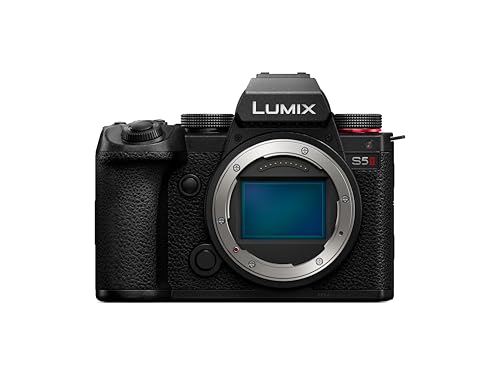
Panasonic LUMIX S5II — Best complete beginner cinema camera
If a film school could issue one camera, it would look like the S5II. It is a full-frame camera whose video toolkit reads like a cinematography syllabus: log recording with real dynamic range, waveform and vectorscope monitoring built in, shutter-angle thinking encouraged by its menus, and in-body stabilisation so strong that handheld footage acquires the floating calm beginners associate with gimbals they do not own. Active cooling means the long take — the interview, the play, the wedding speech — finishes because the camera does, not despite it.
The image is the argument’s core. Panasonic’s colour is respected by working filmmakers precisely because it behaves in the grade: skin stays skin under mixed light, shadows hold detail to be sculpted later, and the log profile teaches a beginner the professional workflow — expose deliberately, monitor honestly, grade intentionally — on files that reward every step. Its autofocus, rebuilt around phase detection in this generation, is finally trustworthy with actors, while the manual-focus aids remain excellent for students learning to pull focus the classical way.
The L-mount system completes the student economics: Sigma’s and Panasonic’s own affordable primes give a beginner cinematographer the fast glass cinema is shot on, at prices a course budget survives. The body is not small and the menus reward an evening’s setup — this is an instrument, and it behaves like one — but nothing about it will need replacing as the student becomes a filmmaker. That is the definition of the right first cinema camera.
Choose it if cinematography is the goal rather than a flavour of content. Of the six, it asks the most of a beginner and returns the most, and its footage will not embarrass the filmmaker you are becoming in three years’ time.
Its recording stamina deserves a beginner-specific underline: student films die of logistics — overheating, full cards, flat batteries — more often than of aesthetics, and a camera with cooling, generous media options and honest battery reporting removes the logistics from the list of things a first-time director must fear. Boring reliability is a creative feature.
It is also the pick most likely to be rented-out, borrowed and fought over in a film society — a social fact about cameras that students underestimate and benefit from.
- Format: full-frame mirrorless, interchangeable lenses
- Colour: log profiles with strong dynamic range
- Monitoring: waveform, vectorscope, pro assists
- Stabilisation: class-leading in-body system
- Endurance: active cooling for long recordings
Strengths
- The complete filmmaking toolkit in one body
- Stabilisation replaces a beginner’s missing crew
- Files teach the professional grading workflow
Trade-offs
- Size and menus are an instrument’s, not a toy’s
- Autofocus, while good now, trails Sony’s best
- Full-frame lenses are a real budget commitment
Best for: a beginner filmmaker who wants one camera for the whole education.
Not suited for: a casual creator who wants filming to feel like a phone.

Sony ZV-E10 II — Best for creators crossing into cinema
The ZV-E10 II is the bridge camera: built for creators, increasingly used by filmmakers, and ideal for the beginner whose cinematography grows out of filming themselves. Its superpower is trust — Sony’s autofocus holds an actor’s eye through movement, dialogue and doubtful light with a reliability that lets a one-person crew direct and perform simultaneously, which is the actual production condition of most beginner cinema. Focus breathing compensation, product modes and a tally light are creator features that turn out to be filmmaking features the moment the creator starts staging scenes.
The image supports the ambition. The sensor’s footage is detailed and clean, Sony’s colour has become accurate and gradeable, and log recording opens the same colour education as the bigger cameras. The lens system is the beginner cinematographer’s economic miracle: fast primes and cinema-friendly zooms exist at student prices from Sony and third parties alike, so the classic three-lens student kit — wide, normal, portrait — is achievable without inheritance money.
What it lacks is the cinema body’s furniture: no viewfinder for bright exteriors, a creator’s grip rather than a rigging platform, and stabilisation that is good rather than Panasonic’s sorcery. Beginners shooting dialogue-driven shorts, music videos and narrative sketches will rarely hit those walls; beginners shooting landscapes at noon with manual everything might prefer the S5II’s instrument feel.
As a first cinematography camera it optimises for finished films, which is the correct beginner metric. A student who completes six shorts on the Sony learns more cinema than one who abandons two on a more demanding instrument — and when the Sony’s ceiling finally appears, its lenses and habits transfer upward through Sony’s cinema line itself.
Buy it if your films have actors, dialogue and deadlines — including the actor being you.
- Format: APS-C mirrorless, interchangeable lenses
- Focus: class-leading eye autofocus for actors
- Colour: log recording, gradeable files
- Handling: creator layout, tally light, flip screen
- Growth: Sony E lenses at student prices
Strengths
- Autofocus a one-person crew can direct with
- Lens economics built for student budgets
- Optimised for finished films, not spec sheets
Trade-offs
- No viewfinder for bright exterior work
- Stabilisation good, not class-leading
- Creator body rigs less happily than cinema bodies
Best for: a beginner filmmaker who acts, directs and shoots alone.
Not suited for: a purist who wants a traditional cinema instrument.

Canon EOS R10 — Best for colour and speed
The R10’s cinematography case begins with faces. Canon’s colour rendering — warm, smooth, famously kind to skin — is a beginner’s secret weapon, because audiences judge a film’s professionalism by its faces before they can name a single technical quality. A student short shot on the R10 looks cast and lit better than it was, and that flattery buys a beginner the confidence and the festival comments that keep them filming. Its footage is crisp, its handling fast, and its price leaves budget for the lens and the light, where beginner cinema is actually decided.
The body’s speed serves narrative more than specs suggest. Quick, confident autofocus tracking follows actors through a scene; the deep grip and fuller controls suit longer handheld takes; and Canon’s menus remain the friendliest place to learn the video settings that intimidate beginners elsewhere. Its log profile opens the grading curriculum at a gentler slope than Panasonic’s — enough flexibility to learn on, with Canon’s finished colour as the safety net when a deadline outruns the grade.
The limits are the class’s: a crop sensor’s low-light ceiling, stabilisation that lives in lenses rather than the body, and recording stamina suited to scenes and sketches rather than event-length takes. A beginner shooting dialogue, shorts and music videos inside normal locations will feel none of these as walls; a beginner shooting concerts in the dark should be looking at the S5II.
Within its brief, though, the R10 might be the most encouraging camera here: its footage flatters beginners, and flattery, early in an art, is a teaching tool. Students finish films on cameras whose footage they love.
Its ergonomics on a long dialogue day deserve the beginner’s attention: buttons that fall where a learner’s fingers expect, a screen that angles for the low and high shots student films are full of, and a general absence of the menu-diving that eats a small crew’s morale. Cinematography is partly morale management, and friendly cameras finish shoots.
Pair it with one fast prime and it becomes a portrait-lens cinema kit — faces, dialogue, shallow depth, the grammar of most beloved short films — for less than many single lenses in grander systems.
- Format: APS-C mirrorless, interchangeable lenses
- Colour: Canon’s face-flattering rendering, log available
- Focus: fast, confident subject tracking
- Handling: deep grip, beginner-friendly menus
- Growth: Canon RF system and affordable primes
Strengths
- Faces look cast and lit beyond your budget
- Friendly menus lower the craft’s entry cost
- Price leaves room for lens and light
Trade-offs
- Crop sensor ceiling in deep low light
- No in-body stabilisation
- Recording stamina suits scenes, not events
Best for: a beginner whose films are faces, dialogue and story.
Not suited for: an event filmmaker or a low-light specialist.

Nikon Z30 — Best pocketable film starter
The Z30 teaches cinematography the way travel teaches geography: by being there. It is a small, screen-based Nikon that slips into a jacket with its compact zoom, films in a clean, capable 4K, and offers the beginner the radical advantage of presence — the camera at the rehearsal, the location scout, the friend’s gig, the street at magic hour — where a bigger instrument would have been left at home and the lesson with it. Beginner cinematography is reps, and the Z30 maximises reps per week.
Do not mistake the size for a toy’s image. The sensor is a real APS-C Nikon sensor with the family’s honest colour, the footage grades more willingly than a beginner expects, and the Z mount in front of it accepts the same lenses as Nikon’s flagships — the pocket camera is secretly the foundation of a serious system, which is the correct way for a starter camera to cheat. Its creator touches — the tally light, the articulating screen, product-friendly focus — suit the beginner who films themselves learning, which is most beginners.
The compromises are the miniaturisation’s own: no viewfinder, so bright exteriors are composed on a screen; a small battery that makes a spare part of the kit; and controls simplified enough that the manual craft is learned through menus rather than dials. A student who falls hard for cinematography will feel the Z30’s ceiling within a couple of years — and will step up inside the same mount, lenses intact, which is exactly the graduation this guide keeps designing for.
Its long-recording manners suit another beginner genre worth naming: the filmed play, talk and workshop, where a small camera that runs and runs without drama is the whole requirement. Students are always being asked to film the school’s evening, the society’s panel, the friend’s set — and a camera that says yes to those favours builds the network that later casts and crews their real films.
As a first film camera for a traveller, a student or a second camera for a growing kit, it is the easiest Nikon to recommend. Its footage will surprise the people who judged it by its size — including, pleasantly, its owner.
Buy it if your film school is the world, and your campus is wherever you happen to be standing.
- Format: APS-C mirrorless, interchangeable lenses
- Size: pocketable with compact kit zoom
- Video: capable 4K, creator-friendly features
- Colour: Nikon’s honest rendering
- Growth: full Nikon Z lens system
Strengths
- Presence — the camera that is always with you
- Real system future behind a tiny body
- Footage grades beyond beginner expectations
Trade-offs
- No viewfinder for bright locations
- Small battery and simplified controls
- A keen student will outgrow it in time
Best for: a travelling, self-filming beginner who values presence.
Not suited for: a studio-bound student wanting a full instrument now.

Fujifilm X-T5 — Best for film colour and stills too
The X-T5 approaches cinematography from the direction of look. Fujifilm’s film simulations — including the revered Eterna profile, born for cinema — give a beginner’s footage a considered, filmic character straight from the camera, and its F-Log profiles open the grading path for when the student is ready. For beginners whose ambition is a signature image rather than a neutral one, no camera here teaches visual style faster, because the style is practised at the moment of shooting, in the viewfinder, not deferred to a plug-in.
The analogue body is a cinematography teacher in disguise. Dials for the exposure fundamentals make the craft tactile, and the camera’s stills excellence — this is a superb photographer’s camera that films beautifully, rather than the reverse — suits the beginner whose cinema and photography are one visual education. Festivals are full of filmmakers who found their eye through stills; the X-T5 is built for that biography.
Its filmmaking limits are real and should be bought knowingly. Autofocus, while improved, is not the actor-tracking equal of the Sony or Panasonic; the crop sensor and body size set their usual ceilings; and its talents tilt toward the deliberate, composed scene rather than run-and-gun coverage. A beginner shooting weddings or sport should look elsewhere in this list; a beginner shooting considered short films, essays and music pieces will find the X-T5’s footage has a gravity the others work harder to achieve.
The lens system suits the aesthetic path: small primes with character, each a visual signature, at sizes that keep a film kit portable. A two-prime X-T5 kit and a story is a complete film school that fits in a shoulder bag.
Choose it if your cinematography begins with the words ‘I want my films to look like…’ — this is the camera that answers in looks.
- Format: APS-C mirrorless, interchangeable lenses
- Colour: film simulations including cinema-born looks, F-Log
- Handling: analogue dials teach exposure by touch
- Stills: a superb photographer’s camera alongside
- Growth: Fujifilm X primes with character
Strengths
- A signature film look from the first short
- Teaches exposure and style simultaneously
- Stills and cinema in one education
Trade-offs
- Autofocus trails Sony and Panasonic for actors
- Deliberate scenes over run-and-gun coverage
- Premium price for a beginner body
Best for: a beginner filmmaker led by look and style.
Not suited for: an event or action filmmaker needing tracking above all.
Blackmagic Pocket Cinema Camera 6K — Best true cinema teacher
The Pocket Cinema Camera 6K is the only true cinema camera in this guide — no stills worth mentioning, no autofocus to lean on, no automation worth the name — and for a certain beginner it is therefore the best teacher here. It records in Blackmagic RAW, a professional codec that makes the grading suite a second camera; it ships with a licence for DaVinci Resolve Studio, the industry’s colour instrument; and its touchscreen interface, organised like a film set’s logic rather than a camera’s, teaches the professional workflow by making the student live inside it.
The image is why students endure its demands. The 6K sensor’s footage has the dynamic range and colour depth that make grading feel like developing rather than rescuing, and the camera’s whole design — proper monitoring, false colour, frame guides, metadata slates — assumes the footage is going somewhere serious. A beginner who learns on this learns exposure, focus pulling and colour as crafts with standards, because the camera offers no shortcuts to hide behind. Its footage intercuts with professional cinema cameras in a way that quietly recalibrates a student’s ambitions.
The costs are the profession’s costs. It is a camera that wants support: manual focus discipline, external power for real shoots, storage that fills at cinema rates, and a rigging mindset — it is the sensor and brain of a camera system you assemble. It does not stabilise, it does not track faces, and it will not save a badly lit scene with kindness. Beginners who need a camera to also be a family camera, a travel camera or a safety net should choose literally any other pick on this page.
We include it, linkless because it sits outside our verified pool, as the honest deep end: the camera for the beginner who is not sampling filmmaking but enlisting in it. Film courses build curricula around it for a reason.
If that description thrills rather than warns you, you are its student — buy it after the lighting, and learn the profession from inside its menus.
- Format: dedicated cinema camera, interchangeable lenses
- Recording: Blackmagic RAW, professional codec
- Software: DaVinci Resolve Studio included
- Monitoring: cinema assists — false colour, frame guides
- Workflow: fully manual, professional method
Strengths
- Teaches the actual professional workflow
- Raw footage makes grading a real education
- Resolve Studio licence is a film school in software
Trade-offs
- No autofocus, stabilisation or automation to lean on
- Needs power, storage and rigging investment
- Not a stills or family camera in any sense
Best for: a beginner enlisting in filmmaking as a profession.
Not suited for: a hobbyist wanting one camera for films and family alike.
How Do the Six Beginner Cinema Cameras Compare Side by Side?
| Pick | Key specification | Standout trait | Watch out for |
|---|---|---|---|
| Panasonic LUMIX S5II | Full-frame, pro tools | Complete toolkit, stabilisation | Instrument’s size and menus |
| Sony ZV-E10 II | APS-C creator body | Autofocus trust | No viewfinder |
| Canon EOS R10 | APS-C, Canon colour | Faces flattered | No in-body stabilisation |
| Nikon Z30 | APS-C pocket body | Presence and price | Screen-only, small battery |
| Fujifilm X-T5 | APS-C, film looks | Style from day one | Autofocus not for actors at speed |
| Blackmagic Pocket 6K | Dedicated cinema camera | Professional workflow | Demands a full rig |
Read the table as a spectrum of assistance. At one end the Sony and Canon help constantly — autofocus, friendly colour, forgiving handling — and at the other the Blackmagic helps never, teaching by refusal. The Panasonic sits in the filmmaker’s middle: professional tools with modern assistance. The Fujifilm helps aesthetically, the Nikon by being present. Beginner cinematography has no single correct amount of help; it has the amount that keeps you finishing films, which is the only metric that compounds.
The second reading is by what each camera makes cheap. Sony makes lenses cheap. Panasonic makes support gear unnecessary. Canon makes faces look expensive. Fujifilm makes style cheap. Nikon makes presence cheap. Blackmagic makes professional colour cheap and everything else honestly priced. A beginner’s budget is a story about which of those cheapnesses their films need most.
What Frame Rates and Shutter Settings Does Beginner Cinema Actually Use?
The cinematic baseline is 24 frames per second — the rate of a century of film — shot with a shutter near twice the frame rate, the famous 180-degree rule, which gives movement the blur the eye reads as cinema. Every camera here shoots it, and the beginner’s first discipline is simply consistency: pick 24p for narrative work, set the shutter accordingly, and let the camera’s other rates be tools rather than temptations. Slow motion — 60p and beyond for a graceful half-speed moment — is the spice, not the meal; a short film at mixed rates with 24p as its grammar looks intentional, while one that lives in slow motion looks like a showreel.
Exposure then comes from aperture, ISO and light, in that order of preference, because the shutter is spoken for by the motion look. This constraint is cinematography’s founding lesson, and the cameras teach it differently: the S5II’s monitoring shows you the cost of each choice, the X-T5’s dials make it physical, and the Blackmagic assumes you already speak the language. Neutral-density filters — the cinematographer’s sunglasses — enter the kit when bright exteriors meet wide apertures, and they are the first accessory most beginners should buy after a lens.
Learn this triangle of rate, shutter and light on any pick here and you have learned the technical spine of the craft. Everything else — colour, movement, composition — is built on a correctly exposed, correctly shuttered frame.
How Should a Beginner Handle Focus: Autofocus or Manual?
Both, in sequence, like learning to drive in an automatic and then mastering a manual. Modern autofocus — Sony’s above all, Panasonic’s and Canon’s close behind — lets a beginner director-performer keep actors sharp while thinking about performance, and early films are better for it. The craft’s other half is manual focus: pulling focus deliberately between two actors is a storytelling gesture no algorithm performs, and the cameras’ peaking and magnification tools exist to teach it on dialogue scenes where the stakes are kind.
The pragmatic curriculum: autofocus for movement, entrances and solo work; manual for seated dialogue, product-like inserts and any shot you rehearse. Mark focus positions with tape on the lens barrel for rehearsed moves — the professional’s trick costs pennies — and rehearse the pull at performance speed, because focus pulled late is a note the audience feels without naming.
The Blackmagic inverts the curriculum by force: manual only, from day one, with cinema’s monitoring to learn by. Its graduates pull focus beautifully and shoot slowly. The Sony’s graduates shoot fast and pull adequately. Neither is wrong; they are the profession’s two temperaments, and a beginner should pick the temperament that matches the films they actually intend to finish this year.
What Does a Beginner Need to Know About Log and Grading?
Log is a way of recording that keeps more of the scene’s brightness range by looking, deliberately, washed out and grey — a negative, not a photograph. The beginner’s bargain is this: log footage demands a grade before it can be shown, and rewards that grade with skies that hold, shadows that open, and a look that can be authored rather than accepted. Every system here offers a flavour — Panasonic’s and Blackmagic’s files are the deepest classrooms, Sony’s and Canon’s the gentlest introductions, Fujifilm’s F-Log beside its finished film looks as the alternative path.
Learn grading in the order the professionals respect: first correct — exposure, white balance, contrast — until the shot looks true; only then create, steering colour toward the film’s feeling. Beginners who create before they correct build castles on a colour cast. The free and bundled tools are genuinely sufficient: the Blackmagic’s Resolve licence is the industry’s own, and every other system’s footage grades happily in the same software’s free edition.
And keep the finished-look cameras in perspective: a Fujifilm simulation or Canon’s colour, chosen deliberately, is not a failure to grade — it is a grade chosen at the camera, by masters of the palette, at the moment of maximum information about the scene. Many working cinematographers shoot exactly that way on purpose. The craft is choosing, and both roads are the craft.
How Important Is Lighting for a Beginner Cinematographer?
It is the cinematography. The word itself means writing with light, and a beginner’s footage improves faster from one affordable LED panel and a curtain than from any camera upgrade on this page. The beginner’s lighting curriculum is three lessons: direction — light from the side models a face, light from the front flattens it; softness — a large, close source flatters, a small, distant one accuses; and control — turning off the room’s practical chaos so your one chosen source can be the scene’s author.
The cameras divide by how they forgive bad light. The full-frame S5II and the generous sensors forgive most; Canon’s colour flatters faces under light that should not work; every camera here, without exception, looks professional the moment the light is deliberate. A beginner with the humblest pick and a window, a sheer curtain and an evening can produce footage that out-cinematographs a flagship under ceiling tubes — a fact film schools demonstrate in week one and students spend careers relearning.
Budget accordingly: after the camera and one fast lens, the next purchase is light, then sound, then support. The glamorous order — body, lens, gimbal — is the beginner’s classic misallocation, and this page’s final sections exist largely to talk you out of it.
What Sound Does Beginner Cinema Need?
Audiences forgive a soft image and abandon a bad soundtrack in ninety seconds; sound is half the film and most of the professionalism. The beginner’s kit is one microphone that is not on the camera — a wireless lavalier for dialogue or a short shotgun near the action — because microphones obey distance, and the camera is rarely where the voices are. Every pick here except the smallest accepts external audio properly, and the headphone jack, present on the filmmaker-leaning bodies, is the difference between hoping the sound worked and knowing.
Record room tone — sixty seconds of the location’s silence — at every setup; editors use it to stitch dialogue invisibly, and its absence is unfixable later. Monitor with headphones always, because the fridge hum, the traffic swell and the rustling costume are inaudible to a director’s hopes and obvious to a microphone. And treat the camera’s built-in microphones as the emergency spare they are: fine for ambience, fatal for dialogue.
None of this requires the cinema bodies: the Z30 with a wireless microphone kit out-sounds the Blackmagic recording on its internals. Sound is the beginner’s cheapest professionalism, which is why it is this guide’s most repeated purchase advice after light.
How Should a Beginner Choose a First Lens for Filmmaking?
Cinema is shot on primes — fixed lenses — for reasons a beginner can use immediately: they are fast, so interiors and evenings open up; they are consistent, so a film’s look holds across focal lengths; and they force the camera to be placed rather than zoomed, which is the discipline that separates cinematography from coverage. The student’s classic first is the normal lens — the view closest to human attention — followed by a wider for rooms and a short telephoto for faces, bought in the order your scripts demand them.
Each system here prices that education differently, which is a legitimate reason to choose the system itself: Sony’s third-party shelf is the student’s friend, Panasonic’s L-mount offerings are close behind, Canon’s own primes are lovely and priced like it, Fujifilm’s are small works of art, and the Blackmagic takes the world’s cinema-adapted glass through its mount. Buy the lens your next film needs, not the set a forum admires.
One manual virtue is worth seeking even on autofocus lenses: a focus ring that turns smoothly and predictably, because your focus pulls are performances recorded in the footage. Test it in the shop with the camera in video mode. A lens that focuses by twitchy wire will fight every pull you rehearse; a lens with a mechanical-feeling ring becomes an instrument you can play.
How Do You Shoot a First Short Film With Any of These Cameras?
Small, finished and soon beats ambitious, abandoned and eventually — the whole of beginner film wisdom in one line. Write three pages, two actors, one room, daylight. Cast the room for its window. Rehearse the actors while the camera stays in its bag, then block the scene for the camera you own: the S5II can float through it handheld, the Sony can hold faces while you direct from behind it, the Blackmagic wants its tripod and its marks, and each of those is a legitimate film waiting to be made correctly.
Shoot coverage in the classical order — the wide that establishes, the singles that feel, the inserts that explain — and slate every take aloud, because the edit is where unlabelled footage goes to be forgotten. Keep takes short and resets shorter; beginner sets die of waiting. At the day’s end, copy the cards twice before anyone sleeps, and watch the footage with the cast while the feeling is warm: that screening, however rough, is the moment a beginner becomes a filmmaker with a next film.
Then make the next one harder in exactly one dimension — a night scene, a moving scene, a scene in a car — and let the camera you chose reveal its next lesson. Six shorts in a year on any pick here is a film education; the cameras were chosen so that none of them is the reason a seventh does not happen.
What Is the Beginner’s Path From Here to Working Cinematography?
The path is portfolios and people. Festivals, even small ones, take the finished shorts these cameras enable; local productions take the beginner who owns a camera, a light and the discipline this guide describes, and set experience teaches what no camera can — speed, diplomacy, the management of chaos at 6 a.m. The gear ladder, when it comes, is climbed by named frustrations: a body for its colour on a paid job, a lens the rental house keeps being out of, lights before either.
Notice that the systems here were chosen to climb with you: Sony’s and Panasonic’s cinema lines, Canon’s and Fujifilm’s and Nikon’s upper bodies, all accept the lenses and habits a beginner builds on these six. The Blackmagic is already standing where its owner is headed. Nobody on this page has to sell their education to continue it.
The last milestone is taste: the year your references stop being other people’s films and start being your own footage, regraded. Every camera here can carry a beginner to that year. The choosing matters less than the finishing — so choose this week, and finish something by the end of the month.
How Should a Beginner Move the Camera — and When Should They Not?
Movement is cinematography’s rhetoric: a push-in argues intimacy, a pan surveys, a tracking shot commits. The beginner’s error is moving because the camera can — gimbal walks through scenes that wanted stillness — and the corrective discipline is to shoot every scene locked off first, then earn one move whose reason you can state in a sentence. The stabilised picks, the S5II above all, make handheld calm available as a style; the Blackmagic’s tripod honesty teaches the classical grammar; both are preferable to the seasick middle of unconsidered motion.
When you do move, move on something: a doorway track of two steps, a slow arc around a conversation, a reveal from behind a foreground object. Foreground is movement’s secret — a passing shoulder, a doorframe, leaves — because motion reads through parallax, and a move across an empty room reads as a mistake. Rehearse moves at half speed and shoot at three-quarter; beginner moves are always faster on screen than they felt in the body.
And protect the still shot’s dignity in your editing: a film that is ninety percent composed stillness and ten percent motivated movement looks directed. A film in constant drift looks filmed. The cameras cannot make this choice for you, which is precisely why it is the craft.
How Do You Expose a Scene With Mixed Light as a Beginner?
Mixed light — window daylight against warm practicals, shade against sun — is where beginner footage goes to look accidental, and the fix is a decision, not a device. Choose the scene’s dominant light and expose and white-balance for it, letting the other become atmosphere: daylight scenes balanced for the window, with lamplight glowing warm at the edges, look like cinema; the reverse looks like a mistake. Every pick here lets you lock white balance manually, and that lock is the beginner’s single most professional button.
Then shape with what you have: close the curtain a third to tame a nuclear window, move the actor two steps toward the key light, bounce your one LED off a wall rather than aiming it like a torch. The monitoring tools earn their keep here — zebras on the window tell you what will clip, the waveform shows the actor’s face sitting where faces belong — and the S5II’s and Blackmagic’s assists make this visible to a beginner in a way that builds instinct fast.
The lesson generalises beyond any camera: cinematography is mostly refusing light — flagging, dimming, choosing — rather than adding it. A beginner who learns refusal on a Z30 will out-shoot a flagship owner who only adds. Buy the camera whose tools show you the light honestly, then practise saying no to half of it.
What Mistakes Do Beginner Cinematographers Make?
Buying the camera and nothing else. A beginner kit is camera, one fast lens, one light and one microphone — in that funding order. A flagship body filming under ceiling light into its own microphone loses to every pick here properly accompanied.
Living in slow motion and high frame rates. Cinema’s grammar is 24 frames per second with a matched shutter; slow motion is a word in that language, not the language. Beginners who master the baseline look professional immediately.
Trusting the screen in bright sun without tools. Zebras, waveforms and false colour exist because eyes lie in daylight. Learn one monitoring tool properly and your exposure stops being weather.
Recording dialogue on the camera’s microphone. Distance is sound quality, and the camera is never close enough. A modest external microphone, placed near the actor, is the cheapest professionalism in filmmaking.
Upgrading the body before the craft. A named frustration — this light, this lens, this sound — justifies a purchase; a vague feeling that a grander camera would make you a cinematographer does not, and the six here were chosen to keep that feeling at bay for years.
Grading before correcting. Fix exposure and white balance until the shot is true, then — and only then — make it beautiful. Beginners who reverse the order build looks on top of errors and wonder why nothing matches.
Final Recommendation
For the beginner who wants the complete filmmaking instrument, the Panasonic LUMIX S5II is the recommendation: full-frame image, professional colour tools, stabilisation that replaces a crew, and the stamina to finish long takes. The Sony ZV-E10 II is the creator-filmmaker’s alternative — autofocus you can direct with, student-priced lenses, films finished fast — and the Canon R10 the colour-led choice for directors whose cinema is faces and dialogue.
The Nikon Z30 starts the pocketable path, the Fujifilm X-T5 the stylish one, and the Blackmagic Pocket 6K — covered in prose, as it sits outside our pool — is the professional deep end for beginners enlisting rather than sampling. Whichever you choose, fund the lens, the light and the microphone before upgrading anything, shoot at cinema’s baseline until it is reflex, and finish a short film this month. Cinematography is learned by finishing, and every camera here is chosen to be finishable on.
Frequently Asked Questions
Is 24 frames per second really necessary for a cinematic look?
It is the foundation of it. A century of cinema trained audiences to read 24p motion — with a shutter near twice the frame rate — as ‘film’, and other rates read as television, sport or video game. Shoot your narrative work at 24p as the default grammar, and use higher rates deliberately for slow motion. Every camera here offers 24p; the discipline of staying there is the beginner’s first professional habit.
Do I need a full-frame camera for cinematography?
No. Full-frame — the S5II here — buys low-light ease and shallow depth, both lovely, but most beloved independent cinema of the digital era was shot on smaller sensors, including the Blackmagic’s and every other pick here. Story, light and lenses outrank sensor size at every level; buy full-frame for its specific gifts, not as a licence to be taken seriously.
Can I learn cinematography on a camera that also takes stills?
Yes — five of the six picks are hybrid cameras, and generations of filmmakers learned exactly that way. The stills discipline of composition and exposure transfers directly, and the hybrid’s video tools are now professional grade. The dedicated cinema camera, the Blackmagic, is the specialist alternative for students who want the professional workflow unmixed with anything else.
What is the first accessory a beginner cinematographer should buy?
Light, then sound — before any gimbal, cage or matte box. One affordable LED panel with a softbox and a wireless or short shotgun microphone will improve your footage more than any camera upgrade in this guide’s price world. After those, neutral-density filters for bright exteriors, and spare batteries and media, because finished shoots are built on unglamorous reliability.
How long before my footage looks like a film?
The honest answer is: the first time you control the light, expose deliberately at 24p, place the microphone near the actor and grade a corrected shot — which can be your first weekend with any camera here. After that, ‘looking like a film’ deepens with practice in composition and movement, but the threshold is crossed by discipline, not by budget, and it is crossed early by beginners who follow the order in this guide. What takes longer is taste — knowing which film look is yours — and that arrives by finishing films and rewatching them critically, a curriculum no purchase accelerates and every pick here supports equally.
How do I plan a short practice scene so I actually learn lighting and movement instead of just testing the camera?
Treat the exercise like a tiny production with a beginning you can finish in one afternoon. Write four lines of action rather than dialogue, for example someone entering a kitchen, searching a drawer, reacting to a note and leaving, because simple movement reveals focus, exposure and blocking problems far better than a seated talking shot. Sketch the room from above, mark where the actor starts and ends, decide where your single main light will live, and choose in advance whether the camera stays locked, pans once, or follows on a short walk, since one planned move teaches more than five improvised ones. Rehearse without recording, watching for moments where the actor crosses into shadow, turns away at the key line of action, or forces you to hunt for focus, then shift a mark on the floor or angle a curtain before you shoot. Film three complete takes without stopping to admire playback, slate each one aloud, and only then review them in order, noting one strength and one specific fix per take. Finish by re-shooting a single corrected version rather than starting a new scene, because that closing repetition is where observation becomes craft and the camera finally becomes a tool serving a decision. Keep the finished exercise, however rough, and date it rather than deleting it in embarrassment. A month later, after two or three more practice scenes, that early kitchen take becomes the most encouraging evidence you own, because improvements in steadiness, exposure discipline and timing are unmistakable when the same modest location reappears. Students who preserve their beginnings learn to judge growth against their own past work instead of against polished productions made with crews, schedules and resources no beginner should use as a measuring stick.
Related Guides
Keep exploring with best cameras for beginner sport photographer and best cameras for begining photographers and best cameras for vlogging.


