ilcastellomenu.com is reader-supported. When you buy through links on our site, we may earn an affiliate commission.
Where to Buy
Every camera in this guide is available through Amazon, where creator bundles — extra batteries, mini tripods, wireless microphones — are easy to compare side by side. If you are choosing among the best action cameras for vlogging, note the phrase carefully: some of the strongest vlogging tools below began life as action cameras, and a couple are not action cameras at all, because the right answer to “what should I vlog with” is a camera that fits your format, not a label.
Vlogging looks easy from the audience’s side of the screen, which is precisely the trap. The viewer sees a person walking, talking, living — and never sees the three failed takes where the face was out of focus, the take ruined by wind noise on the microphone, or the afternoon of footage shot at an angle that made everyone look like a surveillance still. A vlogging camera earns its money in the invisible department: focus that finds your face and stays there, audio that survives a breezy street, a screen you can actually see while it faces you, and a size that does not turn every café, market, and mountain path into a negotiation about whether filming is worth the awkwardness.
That is why this guide mixes categories on purpose. The action-camera bloodline contributes the toughest, smallest, most mountable tools — cameras that film a ski descent and a hotel-room debrief in the same hour. But vlogging’s center of gravity is the talking-to-camera shot, and some of the best tools for it are a pocket gimbal camera that floats like a steadicam, a compact built from the ground up for creators, and a small interchangeable-lens camera for the vlogger whose channel is becoming a production. Six picks, six honest answers to six different vlogging lives: the traveler, the daily poster, the adventurer who vlogs, the beginner who needs simple, the aesthete who wants a particular look, and the grower who will be adding lenses and lights within the year.
One principle runs through every verdict below: the best vlogging camera is the one you will carry when you did not plan to film. Vlogs are made of unplanned material — the detour, the weather turning, the person you meet — and a camera that lives in a bag at home records none of it. Size, startup speed, and the absence of friction beat spec sheets at this trade, and the picks are ranked with that truth held firmly in mind.
Key Takeaways
- Audio and autofocus decide vlogging quality more than resolution does — viewers forgive soft footage, never bad sound.
- The DJI Osmo Pocket 3 is the most complete vlogging tool here: gimbal-smooth, face-tracking, and genuinely pocketable.
- The Sony ZV-1F is the beginner’s friend — fixed lens, simple controls, and a look that flatters without effort.
- The Insta360 Ace Pro 2 is the action vlogger’s pick, with a flip screen and low-light strength the cubes cannot match.
- The Sony ZV-E10 II is the growth path: interchangeable lenses for the channel that is becoming a production.
- Buy the wireless microphone before the second lens — it upgrades every video you will ever post.
In this guide
Quick Picks
| Pick | Badge | Why vloggers reach for it |
|---|---|---|
| DJI Osmo Pocket 3 | Best Overall | A pocket gimbal camera with face tracking and buttery walking footage — the vlog itself, miniaturized. |
| Sony ZV-1F | Best for Beginners | Fixed wide lens, simple menus, and flattering color that asks almost nothing of its owner. |
| Insta360 Ace Pro 2 | Best Action Vlogger | Flip screen, big sensor, and full action-camera toughness for channels that move fast. |
| GoPro HERO13 Black | Best Do-Everything | The mount-anywhere workhorse for adventure channels, with media mods that grow its audio game. |
| Canon PowerShot G7 X Mark III | Best Compact Classic | The pocket compact a generation of vloggers built channels on, with Canon’s beloved color. |
| Sony ZV-E10 II | Best to Grow Into | Interchangeable lenses and creator-first design for the vlogger becoming a filmmaker. |
How We Chose These Picks
We judged these cameras as vlogging instruments first and cameras second, which rearranges the usual priorities. Autofocus on faces and eyes came first — a vlog is a face talking, and a camera that hunts for focus while its owner walks and talks produces footage that feels seasick. Audio came second, assessed as a system: the built-in microphones’ behavior in wind and street noise, and the upgrade path — a microphone input, a hot shoe for a receiver, or a wireless system in the same family — because every serious vlogger eventually buys the microphone, and the camera should make that easy rather than exotic.
The self-filming experience came third. A flip or front screen the creator can actually compose on, face tracking that reframes as you move, a product-showcase mode or background-blur control for the desk-based formats — these are the features that decide whether a solo creator’s workflow is sustainable five days a week. Size and startup speed ran through everything: we favored cameras that live in a jacket pocket or a small sling, power on instantly, and record without a ritual, because vlogging opportunities have the lifespan of a facial expression.
Image quality still mattered, judged in vlogging light rather than laboratory light: the mixed lighting of restaurants and trains, the harsh noon of a market square, the dim warmth of an evening kitchen. Low-light grace and pleasing skin tones outranked raw resolution every time — your audience watches faces, not test charts. Finally, we insisted on range: a genuine beginner option, a genuine growth option, and adventure-capable options, because “vlogger” describes a travel channel filming volcanoes and a parent filming school-run mornings with equal accuracy, and a guide that serves only one of them has failed the other.
A word on the category question, since the keyword that brought you here says “action cameras”: the two true action cameras in this guide earned their seats by being excellent vlogging tools, and the other four earned theirs by beating action cameras at vlogging’s core jobs. We consider that honesty, not drift — you came for a camera to vlog with, and these are the six we would hand you.
What Actually Makes Footage Feel Like a Vlog Rather Than a Home Movie?
Three things, and none of them is resolution. The first is presence: the camera is close, wide, and at arm’s length, so the viewer stands inside the scene instead of observing it — which is why vlogging lenses are wide and vlogging cameras are small enough to hold out at the end of an arm for an hour without regret. The second is stability with life in it: footage that glides when you walk but still breathes a little, so the world feels real rather than rendered. Gimbals do this mechanically, flagship stabilization does it electronically, and both philosophies appear in this guide because both work — the choice between them is about the rest of your kit and your tolerance for charging one more device.
The third is sound, and it is the one beginners chronically underrate. A viewer will watch slightly soft footage with clear, close, warm audio all day; they will abandon razor-sharp footage with echoing, windy, distant audio in under a minute, usually without knowing why. This is why the microphone question appears in every verdict below, and why the single most valuable sentence in this guide might be the one in the takeaways: the wireless microphone is the first upgrade, ahead of lenses, lights, and everything else, for every camera on this list.
Underneath all three sits the unglamorous virtue of reliability at volume. A vlogger does not shoot a clip; they shoot a lifestyle’s worth of clips, on tired evenings and chaotic travel days, and the camera that starts fast, focuses without supervision, and produces a good-looking file without a color-grading session is the camera that keeps a channel alive in month nine. Every pick here was chosen partly for how it behaves on the creator’s worst day, not just their best.
What Are the Best Action Cameras for Vlogging? Six Picks in Detail

DJI Osmo Pocket 3 — Best Overall
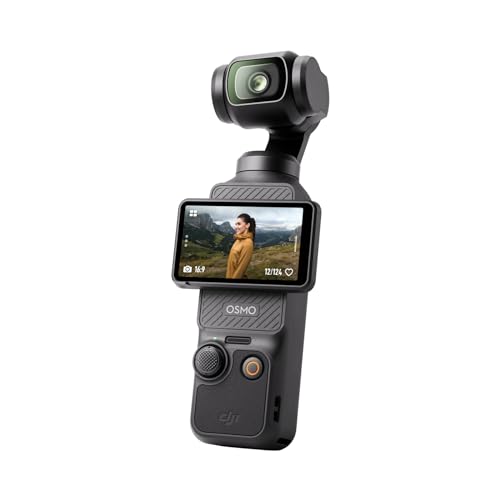
The Pocket 3 is what happens when a company asks what a vlogging camera would look like if it were designed from a blank page. A one-inch sensor sits on a three-axis gimbal in a body the size of a chocolate bar, and the result is walking footage with an almost unfair smoothness — the floating, gliding look that used to require a rig — while the camera tracks your face and keeps you framed as you move, turn, and gesture. The screen rotates to start recording the moment you pick it up, the focus is fast and confident, and the whole thing vanishes into a jacket pocket, which means it is present for the moments that make vlogs: all of them.
The audio story is the best in this guide out of the box, and better with its natural partner: DJI’s wireless microphone system connects directly and elegantly, turning the Pocket into a two-piece production studio that fits in one hand and a pocket. Low-light performance from the large sensor embarrasses most action cameras, and the creator-focused touches — beauty modes you can tastefully restrain, product-friendly focus behavior — show a design team that watches vlogs. The honest limits: it is a precision instrument, not a rugged one, and the gimbal head wants its case and a moment’s care in a bag; it is not waterproof, and it will not mount to a helmet or a surfboard. It is also not cheap. But as a pure vlogging machine — the thing this guide is about — nothing else here is as complete, as easy, or as likely to be in your hand when life happens.
- Sensor: large one-inch class sensor on a three-axis mechanical gimbal
- Tracking: face tracking keeps the creator framed hands-free
- Audio: strong built-in microphones plus direct wireless-mic pairing in the DJI ecosystem
- Form: pocket-sized, rotating screen, instant-on when the screen turns
Strengths
- Walking footage smoother than any electronic stabilization can offer.
- The most carry-able serious camera in this guide — it will actually be with you.
- Face tracking and audio that make solo filming feel staffed.
Trade-offs
- A delicate gimbal compared with action-camera toughness; not waterproof.
- Fixed lens and perspective — no mounting it to vehicles or helmets.
- Premium pricing, especially in creator bundles with the microphone.
Best for: travel, daily-life, and talking-to-camera vloggers who film solo and value smoothness above all. Not suited for: adventure sports filming or anyone whose camera must survive being dropped in a river.

Sony ZV-1F — Best for Beginners
The ZV-1F makes a bet that most camera companies are afraid to make: that the beginning vlogger wants less camera, not more. Its lens is fixed and wide — the correct width for arm’s-length filming, with your surroundings visible behind you — and it does not zoom, because beginners zoom when they should walk closer, and this camera politely removes the temptation. What it offers instead is the friendliest possible path to a good-looking video: dependable face and eye autofocus, a background-defocus switch that blurs the room behind you with one press, color that flatters skin without a grading session, and menus that assume you have a life to film rather than a manual to study.
It is genuinely small and light, slips into a coat pocket, and starts fast — the three virtues that decide whether a first vlogging camera becomes a habit. The microphone is a proper three-capsule design that hears the person in front of the lens better than most, and a furry windscreen in the box shows Sony understands where vlogs happen. The compromises are the fixed lens’s inflexibility for anything distant, stabilization that is electronic and merely decent rather than magical — walk gently — and no upgrade path: this camera is a complete answer, not a first step in a system. For the new creator, the student, the parent starting a family channel, that completeness is the kindest feature in this guide. Buy it, film with it for a year, and let your own footage tell you if you ever need more.
- Lens: fixed wide-angle, purpose-chosen for arm’s-length vlogging
- Focus: face and eye autofocus with a one-touch background defocus mode
- Audio: directional three-capsule microphone with an included windscreen
- Form: pocketable, light, and fast to start
Strengths
- The shortest distance between opening the box and posting a good-looking vlog.
- Flattering color and skin tones with zero grading effort.
- Small enough to carry daily, which is where vlogs actually come from.
Trade-offs
- Fixed lens cannot reach distant subjects.
- Stabilization is adequate, not gimbal-class.
- No lens or system growth — it is a destination, not a doorway.
Best for: new vloggers, students, and anyone who wants to film their life without learning a camera first. Not suited for: wildlife, sports from a distance, or creators already planning a lens collection.

Insta360 Ace Pro 2 — Best Action Vlogger
If your vlog involves motion — cycling across a country, skiing the season, building a van and driving it somewhere ridiculous — the Ace Pro 2 is the action camera that vlogs like it means it. The flip screen is the headline for creators: a proper, bright display that faces you while you talk, big enough to genuinely compose on, on a camera that remains fully an action camera — waterproof, mountable everywhere, and stabilized for the rough stuff. Its large sensor and Leica co-engineered lens deliver the cleanest low-light footage of any action camera here, which matters more to vloggers than to athletes: evenings, restaurants, night markets, and winter afternoons are vlogging prime time.
The creator details are thoughtful: gesture and voice control for starting a take when your hands are full, strong in-camera color that needs no grading, and an app workflow that can pull a vertical clip from a horizontal recording without the usual quality collapse. Audio from the built-ins is respectable and a wind guard helps outdoors, though like every camera here it blossoms with an external microphone for serious dialogue. The debits are size — it is a chunkier carry than the Pocket 3 — and an accessory ecosystem still a shelf behind GoPro’s. For the channel whose content is movement, though, this is the most vlogger-serious action camera on the market, and it is not particularly close.
- Sensor: large-format sensor with AI-assisted low-light processing
- Screen: flip display for genuine self-framing
- Build: full action-camera waterproofing and mounting compatibility
- Creator tools: voice and gesture control, flexible aspect handling for vertical clips
Strengths
- A real self-framing screen on a genuinely rugged action camera.
- Evening and indoor footage the other action cameras cannot keep clean.
- Equally at home on a helmet and on a café table.
Trade-offs
- Bulkier in a pocket than the Pocket 3 or ZV-1F.
- Accessory catalog still trails GoPro’s depth.
- Serious dialogue still wants an external microphone.
Best for: adventure, travel-action, and sports vloggers who film themselves at speed. Not suited for: the pocket-minimalist or the studio-only creator.

GoPro HERO13 Black — Best Do-Everything
The HERO13 Black’s vlogging case rests on a word no other pick can claim: anywhere. It mounts to the helmet, the handlebar, the chest strap, the car, the boat rail, and the tripod with equal fluency, its stabilization is the benchmark for action footage, and for the talking-to-camera half of the job, GoPro’s media mod ecosystem adds the things vlogging demands — a microphone input, an HDMI path, a light — around the same small waterproof core. A channel that films a mountain descent in the morning and a gear debrief at the trailhead in the afternoon can do both with this one camera, and thousands do.
As a pure talking-head tool it asks more of its owner than the creator-first picks: there is no flip screen for self-framing (the front screen shows a cropped preview that works, once you learn its framing), the built-in audio is action-grade rather than interview-grade until the media mod and a microphone join, and its soul is happiest moving. Battery swaps are quick, the app and subscription ecosystem is mature, and the footage’s look — punchy, wide, unmistakable — is practically a genre of its own. Choose it when your vlog’s identity is doing things in places, and accept its small talking-head taxes as the price of a camera that never has to stay home because the plan got adventurous.
- Mounting: the deepest ecosystem in the guide, for every surface and sport
- Stabilization: flagship smoothing for action segments
- Expansion: media mod adds microphone input and connectivity for desk segments
- Build: waterproof bare, with replaceable lens cover
Strengths
- One camera covers the adventure and the debrief.
- Mounts and accessories exist for every filming idea you will ever have.
- Footage look is a proven, audience-loved genre in itself.
Trade-offs
- Self-framing relies on a small front preview rather than a true flip screen.
- Best audio requires the media mod and an external microphone.
- Creator-first rivals are easier for pure talking-to-camera work.
Best for: adventure and multi-sport channels that vlog everything they do. Not suited for: desk-bound creators who will never use the mounting superpowers they paid for.

Canon PowerShot G7 X Mark III — Best Compact Classic
There is a look that defined an era of vlogging — warm skin, gentle background blur, colors that feel like late-afternoon light even at noon — and it belongs to this camera’s bloodline. The G7 X Mark III is the pocket compact a generation of creators built channels on, and its virtues have not expired: a fast zoom lens that covers arm’s-length vlogging and reaches a little when needed, Canon’s famously kind color science, a flip-up screen for self-framing, and a microphone input that many compacts of its era omitted. It even speaks the modern language of vertical video and direct streaming that its predecessors lacked.
Age shows in specific places. Autofocus, while serviceable, is a generation behind the Sony and DJI systems in this guide for walking-and-talking reliability; stabilization is optical and fine for seated and slow work rather than athletic; and long recording sessions in warm rooms need the usual compact-camera heat awareness. None of that erases its proposition for the right creator: the lifestyle, beauty, food, and daily-life vlogger whose footage lives at conversational distances and whose audience responds to a look, not a spec. It slips into a small bag, asks little, and returns footage with a warmth the clinical cameras envy. Classics become classics by being right about the things that do not change.
- Lens: fast zoom covering wide vlogging angles through short portrait reach
- Screen: flip-up display for self-framing
- Audio: microphone input — rare and valuable in a pocket compact
- Creator features: vertical video support and live-streaming capability
Strengths
- The warm, flattering look audiences associate with classic vlogging.
- A real zoom and a microphone jack in a true pocket camera.
- Simple, proven, and deeply understood by its huge user community.
Trade-offs
- Autofocus trails the newest creator cameras for moving subjects.
- Stabilization suits calm filming, not action.
- Heat and battery need managing on long recording days.
Best for: lifestyle, beauty, food, and daily-life vloggers who prize look and simplicity. Not suited for: sports, harsh environments, or creators who need the newest autofocus.

Sony ZV-E10 II — Best to Grow Into
Every other pick in this guide is a finished answer. The ZV-E10 II is a beginning — the camera for the vlogger who can feel the channel outgrowing a fixed lens. It takes interchangeable lenses from Sony’s enormous E-mount catalog, which means the wide vlogging prime today, the portrait lens for interviews next year, and the low-light glass for evening work when the channel can justify it, all on the same body. Around that mount, Sony built a creator’s camera in earnest: superb face and eye autofocus, a product-showcase mode that snaps focus to whatever you hold up, background defocus control, and color science tuned for skin straight out of the camera.
The growth path extends beyond lenses: a proper hot shoe and microphone input welcome real audio, the body pairs with lights and grips as a small studio forms, and the footage’s ceiling rises with every skill the creator learns — this is the pick that can end up shooting the channel’s documentaries, not just its diaries. The costs of admission are real: the body is only the start of the spending, it is a bag camera rather than a pocket camera, and a beginner can absolutely buy too much lens too soon and film nothing while researching glass. Buy it with the kit or one good wide lens, film for six months, and let the footage — not the forums — nominate the second lens. For the vlogger becoming a filmmaker, there is no other honest recommendation in this guide.
- Lens mount: interchangeable E-mount with a vast lens catalog
- Focus: top-tier face and eye autofocus plus product-showcase mode
- Audio: microphone input and multi-interface shoe for real sound upgrades
- Video: high-quality recording with strong low-light lenses available
Strengths
- A ceiling that rises with the creator’s skill and ambitions.
- The strongest autofocus and creator-mode package here.
- One body that grows from diary vlogs to produced work.
Trade-offs
- Total cost grows with every lens the system tempts you with.
- Bag-sized, not pocket-sized — it will miss some spontaneous moments.
- Choice overload is a real risk for beginners.
Best for: committed creators whose channels are growing into productions. Not suited for: minimalists, true beginners on a budget, or anyone whose vlog lives in a jacket pocket.
How Do the Six Compare for a Working Creator?
| Camera | Badge | Standout trait | Watch out for |
|---|---|---|---|
| DJI Osmo Pocket 3 | Best Overall | Gimbal smoothness and face tracking | Delicate, not waterproof |
| Sony ZV-1F | Best for Beginners | Simplicity and flattering color | Fixed lens, modest stabilization |
| Insta360 Ace Pro 2 | Best Action Vlogger | Flip screen plus rugged low-light power | Chunky carry, growing ecosystem |
| GoPro HERO13 Black | Best Do-Everything | Mounts everywhere, films everything | Audio and framing need accessories |
| Canon PowerShot G7 X Mark III | Best Compact Classic | Warm look, zoom, microphone jack | Older autofocus and stabilization |
| Sony ZV-E10 II | Best to Grow Into | Lens system and creator modes | Cost and size grow with ambition |
What Audio Setup Should a Vlogger Actually Buy First?
Start where the audience lives: your voice, close and clear. Every camera here records usable built-in audio in a quiet room at arm’s length, and every one of them is transformed by the same first purchase — a wireless microphone system with a small transmitter that clips to a collar. Wireless beats wired for vlogging’s essential movement: walking away from the camera to show the room, cooking while narrating, interviewing a stranger at a market. The DJI ecosystem’s pairing with the Pocket 3 is the most seamless version of this idea; the Sonys and Canon accept receivers through their shoes and jacks; the GoPro joins via its media mod. Budget the microphone before any second lens, light, or drone — it is the only accessory that upgrades footage you have already shot habits for, on day one, in every location.
Then learn the two free upgrades. Distance is destiny: halving the distance between mouth and microphone improves sound more than doubling the microphone’s price, which is why a camera on a short grip with a decent built-in can beat a flagship across the room. And wind is the enemy that furry covers exist to defeat — if your vlog lives outdoors, the windscreen is not an accessory, it is the difference between a take and a retake. Save the shotgun microphone and the lights for the desk setup you build later; the collar mic and the windscreen are the vlogging audio kit, full stop.
How Do You Set Up a Solo Vlogging Workflow That Survives a Busy Week?
The creators who post daily are not more disciplined than you; their setup is faster. Standardize ruthlessly: one camera, one grip or mini tripod that lives attached, one microphone, settings that never change — the same resolution, the same color profile, stabilization on — so that filming is a single gesture rather than a configuration session. Keep the kit assembled in the bag or by the door; a camera that must be built before use will be used on weekends, and vlogs are a weekday medium. Charge on a schedule, not on a hope, and let the camera’s card be big enough that a full day never threatens it.
Film in the shape of the edit. Open each segment facing the camera with the sentence the segment is about, shoot the action, then close with the reaction — that three-beat habit turns a day of wandering into a story an editor (future you, tired, at midnight) can assemble in minutes. Back up nightly to the same folder structure with dates, and keep a running notes file of video ideas on your phone, because the blank-page morning is the true channel killer and a list of twenty half-ideas is its cure. The cameras in this guide were chosen to disappear into exactly this kind of routine — quick to start, hard to misconfigure, kind to tired operators. Build the routine and the gear will feel better every month; chase gear instead and the routine never forms.
Which Camera Fits Your Format — Travel, Daily, Family, or Desk?
Travel vlogging is a weight negotiation conducted daily. Every gram rides in your bag through every airport, market, and mountain, so the travel creator’s hierarchy is brutal: the Pocket 3 first, because it is the smallest serious tool here and its gimbal replaces a tripod for most shots; the ZV-1F or G7 X as the stills-capable second; the action cameras when the itinerary includes water, bikes, or altitude. The traveler’s other law is redundancy in miniature — two batteries, two cards, one cable that charges everything — because the nearest camera shop is a day’s journey in the wrong direction when you need it most.
The daily-life and family vlogger’s camera lives a different life: out of the kitchen drawer twenty times a week, in rain and playground dust, operated one-handed while the other hand holds a child, a dog, or a coffee. For that life the ZV-1F’s simplicity and the Pocket’s instant-on are worth more than any lens system, and the action cameras earn a place as the designated rough-duty unit — the one that goes to the beach and the bike ride without a protective thought. The desk-based creator — reviews, tutorials, commentary — inverts everything again: the camera lives on a tripod in good light, size stops mattering, and the ZV-E10 II’s lens growth, product-showcase focus, and clean desk audio path make it the format’s natural endgame, with the G7 X as its pocketable understudy for filming away from base.
Hybrids are the norm, and the guide’s picks were chosen to hybridize gracefully: the Ace Pro 2 that films the ride and the café debrief, the HERO13 that films the descent and, with its media mod, the gear review. Name your primary format honestly, buy for it, and let the camera’s secondary talents cover the rest — the vlogger who buys for a fantasy format films neither it nor their real one.
How Much Does Lighting Matter, and What Should a Beginner Do About It?
Lighting is the cheapest image-quality upgrade in existence, and the only one that improves every camera in this guide equally. The beginner’s entire lighting education fits in three habits. First, face the light: a vlogger between the camera and a window is a silhouette, while the same vlogger turned around, window-light on their face, looks professionally lit — the sun is the best key light you will ever own, and it is free. Second, respect the golden hours and fear the noon: overhead midday sun carves shadows into faces that no camera fixes, while morning and evening light flatters everything it touches, which is why experienced travel vloggers schedule their talking segments at the day’s edges.
Third, indoors, one soft source beats three harsh ones. A single inexpensive LED panel with diffusion, placed just out of frame at a gentle angle, transforms a desk setup more than a camera upgrade twice its price; the Ace Pro 2 and Pocket 3’s low-light strength stretches how far ambient light alone can take you, but no sensor repeals the difference between lit and unlit. Buy the panel after the microphone and before the second lens — the guide’s recurring shopping order — and learn it on the camera you already own. Lighting skill, unlike gear, transfers to every camera you will ever buy.
How Should a Vlogger Handle Files, Backups, and the Archive?
A vlogging archive grows from a folder into a liability faster than any beginner expects, and the creators who survive it treat offloading as part of filming, not as housekeeping. The nightly rule: cards are copied to the computer and a second drive (or a cloud folder) before they are formatted, every time, no matter how tired the travel day was — the one night you skip it is the night the card fails or the camera walks away, and a vlog archive, unlike a camera, cannot be re-bought. Name folders by date and place in the moment; future you, searching for “the market clip from Lisbon,” will not remember that it lives in a folder called Card3.
Be honest about retention. Raw footage of everything is a hoard, not an archive; most working creators keep the published edit, the project file, and a ruthlessly chosen set of best raw clips, and let the rest go on a schedule. The high-resolution and 360 picks in this guide make this discipline urgent — their files are the largest here, and a month of unedited everything can fill a drive that was supposed to last the year. Decide the retention rule while the archive is small, because nobody has ever successfully decided it while staring at four full drives and a deadline.
What Should Your First Thirty Days With a New Vlogging Camera Look Like?
Week one is for friction removal. Learn exactly three things: how to start recording instantly, how to check that you are framed and in focus without breaking your stride, and how the files get off the camera and into your editor. Film something short every day — the walk, the errand, the kitchen experiment — with no intention of publishing any of it, because the goal is muscle memory, and muscle memory only forms at volume. By day seven the camera should feel like a notebook: out, open, recording, before the moment cools.
Weeks two and three are for the voice. Publish — or privately share with one honest friend — two or three real vlogs, and watch them the way an audience does: on a phone, at normal speed, noting exactly where your own attention wanders. Those wandering points are your curriculum: the slow openings, the muffled street segment, the story that started in the middle. Fix one flaw per video, not all of them per video, and resist with all your strength the conclusion that a different camera fixes any of them — at this stage every flaw on the list is a technique, and technique is free. Add the wireless microphone this fortnight if you have not already; you will hear the before and after in your own archive forever.
Week four is for the system: the bag packed and left packed, the charging routine automatic, the backup habit unbroken, the ideas list growing faster than you can film it. Make one video that stretches the format — a full day, a trip, a project — and notice how the camera disappears when the routine carries it. That disappearance is the actual product you bought. The creators you admire are not operating better cameras; they reached this week and kept going. Your only remaining job is the keeping going.
A Short Word on Filming People Who Did Not Ask to Be in Your Vlog
The small cameras in this guide are discreet, which makes courtesy a discipline rather than an accident. The working rules most creators settle on are simple: your companions get asked, and a no is complete and unexamined; strangers in public are atmosphere, not content, and anyone who becomes a subject — interviewed, followed, featured — gets the chance to decline; children, other people’s above all, stay out of frame unless their adults have clearly agreed. Shops, restaurants, and workplaces are private ground wearing a public face, and a cheerful “mind if I film a little for my channel?” earns yeses at a rate that surprises beginners — along with the goodwill that keeps locations welcoming the next creator.
This is not merely manners; it is craft. People who have consented relax, and relaxed people are the difference between footage that feels alive and footage that feels stolen. The vlogger’s camera is small enough to be forgotten, and the professional habit is to make sure it is forgotten by agreement rather than by stealth. Every camera in this guide will serve you for years; your reputation in the places you film will serve you longer.
Which Mistakes Quietly Sink New Vlogging Channels?
The first is buying the system camera before the habit exists — a bag of lenses filming nothing while the creator researches a third lens. The second is ignoring audio for a year while upgrading everything else, producing a library of beautiful, unlistenable videos. The third is filming everything at maximum settings, filling cards and drives with files so heavy that editing becomes a punishment postponed forever; your audience’s screen is smaller than your ambition, and mid-range settings edited tonight beat maximum settings edited never.
Fourth is the tripod-shaped trap: waiting for the perfect setup, the quiet room, the free afternoon, while the pocketable camera that would have caught the real moment sits un-bought. Fifth is comparing every frame to creators with crews — the solo vlogger’s aesthetic is immediacy, and audiences reward it precisely because it is not television. And sixth is quitting in month three, which is when every channel feels invisible and when the compounding quietly begins for the ones who continue. The camera advice in this guide exists to remove excuses: pick the tool that fits your life, carry it, press the button. The rest is reps.
One Last Consideration Before You Spend Anything
Spend a moment with the footage you already have. If your phone’s camera roll holds a hundred unwatched clips, the honest bottleneck is not equipment, and the cheapest camera in this guide plus a real thirty-day routine will teach you more than a flagship bought in hope. If, instead, you can point to the exact moments a better tool would have saved — the walk ruined by bounce, the interview lost to wind, the evening that came out as grain — then you have a shopping list written by experience, and the picks above are ranked to answer it. Buy for the flaw you have actually suffered, in the format you actually publish, and the camera will feel less like a purchase and more like a repair.
Final Recommendation
If you buy one camera from this guide, buy the DJI Osmo Pocket 3: it is the most complete, most carry-able, most forgiving vlogging instrument here, and its footage looks like a crew shot it. Beginners who want simpler and cheaper should take the Sony ZV-1F and start filming today. Adventure channels should choose between the Ace Pro 2’s creator-first polish and the HERO13’s mount-everything versatility — your filming style, not our table, breaks that tie. Choose the G7 X Mark III for the classic look and the pocket, and the ZV-E10 II when you know, not hope, that lenses are in your future. Then buy the wireless microphone, set the camera to the settings you will never change, and go film your actual life. That is the whole secret, and it always was. Your first videos will embarrass you a little by summer, which is not a warning but a promise worth keeping — it means the archive is working, the eye is training, and the channel you are building is becoming the one you imagined when you started reading camera guides.
Related guides
- Best Cameras for HD: Sharp 1080p and HD-Ready Picks for Everyday Shooting
- Best Cameras for Hikes: Lightweight, Weather-Ready Picks for the Trail
- Best Cameras for Drone Videos: 6 Honest Picks for Aerial-Style Footage
- Best Cameras for Facebook: 6 Picks for Photos and Videos Worth Posting
- Best Cameras for Fictional Filmmaking: 6 Picks for Narrative Shorts and Features
- Best Cameras for Church Streaming: 6 Picks for a Small Media Team
- Best Cameras for Cinema Students: 6 Picks for Film School Shoots
- Best Cameras for College Photography Student: 6 Picks for Coursework and Portfolio
- Best Cameras for Designers: 6 Picks for Portfolio, Product and Studio Work
- Best Bullet Cameras for Racecars: 6 Onboard Picks From Data Cameras to Pit-Lane Storytellers
- Best Cable for NVR Cameras: Pure-Copper Cat6 and the Right Cable for Every Run
- Best Bang for Your Buck Vlogging Cameras: 6 Cameras Judged by the Whole Rig
- Best Backpacks for Cameras and Lenses: 6 Packs for Every Kind of Photographer
- Best App for Funlux Cameras: 6 Options for Owners of a Retired Brand
Frequently Asked Questions
Is an action camera really good enough for vlogging?
For the moving half of vlogging, it is often the best tool outright — nothing else mounts everywhere, survives everything, and stabilizes like the flagships here. For the talking half, the action cameras in this guide close most of the gap with flip or front screens and microphone upgrades, and the Ace Pro 2 was plainly designed by people who vlog. Where pure talking-to-camera is the entire channel, the creator-first picks — Pocket 3, ZV-1F, ZV-E10 II — hold an edge in screens, tracking, and audio polish.
What matters more, a flip screen or a front screen?
Both solve the same problem — seeing yourself while you film — with different costs. A flip screen is larger and doubles as a normal display, but adds a hinge and bulk; a front screen is instant and rugged but smaller. In practice, seated and lifestyle creators love flips, action creators live happily with fronts, and the Pocket 3 sidesteps the debate with a rotating screen and face tracking that makes precise self-framing almost unnecessary.
Do I need 4K for a vlog?
Need is a strong word. Most audiences watch on phones, and a clean, well-lit, well-recorded lower-resolution video beats a noisy maximum-resolution one every time. Higher resolution earns its keep as editing headroom — cropping a vertical clip from a horizontal frame, punching in to hide a jump cut — which is why the high-resolution picks here are valued for flexibility rather than for the number itself. Shoot at the highest setting your workflow handles without pain, and no higher.
How important is a microphone input?
Very — eventually. Built-in audio covers quiet rooms and close talking, but the moment your format includes distance, wind, or a second voice, external audio stops being optional. A microphone input (or a shoe that accepts a receiver, or DJI’s direct wireless pairing) is the camera’s promise that your sound can grow up. If two otherwise-equal cameras differ on this, take the one with the audio path; it is the tiebreaker that matters in year two.
Can I live-stream with these cameras?
Several picks support streaming directly or through a phone or computer connection, with the creator-focused models — the G7 X Mark III and the Sony ZV line among them — designed with streaming in mind. For a serious streaming setup, most creators eventually pair the camera with a capture device and a computer for control and reliability. For casual going-live from the field, the phone apps in these ecosystems are the practical route, and the camera you already own for vlogging is the right sensor for the job.
Should I buy a camera bundle or build my kit piece by piece?
Creator bundles — the Pocket 3’s microphone combo is the famous example — are worth it when every component is something you would buy within the year anyway, which for vloggers usually means the microphone, the extra battery, and the case. They are a poor deal when they pad the box with mounts and accessories for activities you do not film. Price the bundle against the camera plus the two items you genuinely need; if the bundle wins and adds nothing useless, take it, and if it wins by including a microphone you were about to buy separately, take it without a second thought.
Which camera is best for vertical, short-form video?
The Pocket 3, whose rotating screen and tracking were practically invented for it, and the Ace Pro 2, whose flexible capture lets you pull clean vertical clips from horizontal footage, lead this guide for short-form. The deeper truth is that vertical success is a workflow, not a sensor: frame with the crop in mind, keep the subject central, and any pick here can feed a short-form channel. Creators who post both formats daily tend to standardize on the Pocket or the Ace for exactly this flexibility.
Why does a flip screen matter so much when you vlog alone?
Because when you film yourself, you are simultaneously the presenter, the camera operator and the only person who can see a mistake — and without a forward-facing screen, you cannot do the third job at all. Solo creators discover the failure modes in order: the take where the framing cut off half a face, the walk-and-talk where focus settled happily on the background, the product held up just outside the frame it was meant to fill. A flip screen converts all of those from editing-room discoveries into two-second corrections on location. It also changes how naturally you perform. Speaking to a lens while watching your own framing is a learnable skill, but speaking blind to a black box while wondering whether you are even in shot taxes exactly the attention your audience wants spent on them. The workarounds — mirroring to a phone over Wi-Fi, recording test clips and reviewing — all work and all cost minutes and momentum on every setup. That is why, for this one job, a screen you can see from in front of the camera outweighs a longer specification list: the best vlog footage is the footage you knew was right while there was still time to fix it.
Related Guides
Extend the kit with best action cameras for surfing for the waterborne side of an adventure channel, best action cameras for drones when your vlog is ready for aerial establishing shots, and best action cameras for preteens if the youngest member of your production crew needs a first camera of their own.


