ilcastellomenu.com is reader-supported. When you buy through links on our site, we may earn an affiliate commission.
Where to Buy
Buy once, mount properly, and the camera question leaves your season alone — which is the highest praise any piece of racing equipment can earn, in a sport where the equipment you notice is usually the equipment that just failed.
Amazon carries the mainstream half of this guide, and specialist motorsport retailers carry the rest — the data-integrated cameras live where the data loggers live. If you are choosing the best bullet cameras for racecars, start by knowing what “bullet” means in a paddock: a compact, cylindrical or near-cylindrical camera built to mount on a roll cage, a chassis tube, a helmet, or a fender, and to keep recording through vibration, heat, and weather that would retire a consumer camera in a weekend. The bullet form is not a style choice. It is aerodynamics, mounting geometry, and survival, in that order.
What a racecar camera is for divides the field immediately. Half the paddock films for memory and coaching — the driver reviewing their own hands, the team sharing the weekend. The other half films for evidence and data: synchronised with the logger, stamped with speed and throttle and gear, so that a lap can be dissected rather than remembered. The six picks below serve both halves honestly, and their reviews say which half each belongs to, because a superb entertainment camera is a poor data instrument and the finest data camera is an expensive way to film a birthday.
Keep those three demands in mind as you read the picks, because the reviews return to them the way a race returns to its hardest corner — they are where the lap is won.
Three race-specific demands shape every verdict. Vibration is the first: a racecar is a paint shaker with a seat, and a camera’s stabilisation and mount must defeat frequencies that turn lesser footage into jelly. Heat is the second: a closed cockpit in summer is an oven, and cameras that overheat and stop mid-race are a known species of heartbreak. Power is the third: races are long, batteries are short, and the professional answer — hardwired power from the car’s own supply — separates the purpose-built tools from the adapted action cameras, however brilliant those adaptations are.
A note on links: four of these cameras appear in this site’s verified product pool and carry purchase links under their exact pool names. The two specialist motorsport cameras are prose-only recommendations, because they are sold through racing channels rather than the pool. No prices are quoted, per site policy — and in motorsport, the honest price of a camera is anyway the camera plus its mounts, its power solution, and its data plan with your future self.
Key Takeaways
- The best bullet cameras for racecars divide into data cameras, which talk to your logger, and action cameras, which talk to your audience.
- The AiM SmartyCam is the paddock’s purpose-built answer; the GoPro HERO13 is the versatile one most teams actually run.
- Vibration, cockpit heat, and power supply decide race reliability more than resolution ever will.
- Hardwired power and a cage-rated mount are not accessories — they are the difference between footage and a story about footage.
- Check your series’ rules before mounting anything: camera positions and tethering are regulated in many championships.
- Four picks here are pool-verified and linked; the two specialist racing cameras are prose-only.
In this guide
Quick Picks
| Pick | Badge | Why racers reach for it |
|---|---|---|
| AiM SmartyCam 3 Sport | Best Data Camera | The bullet camera built for racing, overlaying speed, throttle, and lap data straight from the car’s logger. |
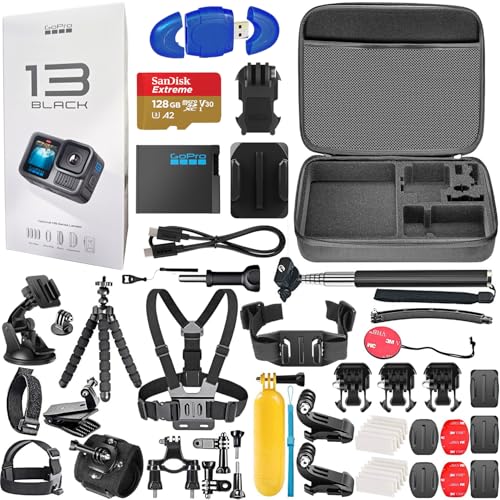
| GoPro HERO13 Black | Best All-Rounder | Superb stabilisation, endless mounts, and the footage quality sponsors and coaches both accept. |
| DJI Osmo Action 5 Pro | Best Endurance | Long battery life and cool running for endurance races and hot cockpits. |
| GoPro HERO12 Black | Best Value GoPro | Nearly the flagship experience for the second angle, the spare, and the riskier mount. |
| Replay XD 1080 Mini | Smallest True Bullet | A genuine lipstick-bullet form for tight spaces and aerodynamic placements. |
| Insta360 Ace Pro 2 | Best Pit-Lane Camera | A flip screen and strong low light for the garage, the grid, and the night stint’s human story. |
How Did We Choose These Picks?
We also weighted the paddock’s unwritten evidence: which cameras appear, season after season, on the cages of teams that could afford anything. Longevity in that environment is a peer review no laboratory replicates, and it is why this guide’s centre of gravity sits where it does — on the data camera the serious teams standardised on, and on the action cameras whose ecosystems the rest of the sport has effectively voted for with its own money.
We judged these cameras the way a race engineer judges anything: by whether it finishes. A camera that records a qualifying lap beautifully and stops in hour two of the race is not a race camera, whatever its sensor. So reliability under vibration came first — stabilisation that survives a kerb strike, mounts and housings that do not creep, and file systems that write in segments so a power interruption costs a clip rather than a stint. Thermal behaviour came second, because the cockpit of a closed car in August is one of consumer electronics’ most hostile legal environments, and the picks below are the ones known to keep their composure in it.
Data integration was the third axis, and it is binary in a way image quality is not. A camera either speaks to your logger — receiving speed, rpm, throttle, gear, and lap timing to burn into the picture or save alongside it — or it does not, and no firmware wish will change that. The SmartyCam exists on one side of that line; the action cameras, for all their brilliance, live on the other, with GPS-based overlays as their partial answer. We scored both sides honestly rather than pretending the line is not there.
Finally, the ecosystem test: motorsport consumes mounts, cables, and housings, so we favoured cameras whose accessories are deep, standardised, and available at paddock notice. A camera you cannot re-mount on Saturday morning is a paperweight with a pedigree.
Which Bullet Cameras Belong in a Racecar?
AiM SmartyCam 3 Sport — Best Data Camera
The SmartyCam is what the bullet camera idea becomes when engineers rather than marketers hold the pen. A compact metal-bodied unit, designed from the first sketch for the roll cage, it connects to AiM’s data loggers and dashes — and through them to the car’s own sensors — so the video it records carries the lap inside it: speed, throttle, brake, gear, rpm, and the track map, rendered as overlays that turn footage into evidence. A coach does not watch a SmartyCam lap and guess where the time went; the lap confesses, frame by frame.
Everything about it is race-bred. It powers from the car, starts and stops with the logger, writes robust files, and shrugs off the vibration and heat that define its workplace because that workplace is the only one it was designed for. The bullet form mounts where a boxy camera cannot — on a cage tube behind the driver, low on a chassis rail — and its wide lens takes in cockpit and track in the single fixed view endurance teams favour.
The honest costs are specialisation and price of entry: the SmartyCam’s magic requires the AiM ecosystem around it, and as a pure entertainment camera it is outshone by the action cameras below, whose stabilisation and colour science serve the eye rather than the stopwatch. But for a team already running AiM data — which is to say, a large fraction of serious paddocks — this is not one option among six. It is the camera the data was always waiting for.
- Form: compact metal bullet body for cage and chassis mounting
- Data: direct integration with AiM loggers and dashes, overlay rendering
- Power: hardwired from the vehicle via the logger system
- Operation: automatic start/stop with the data system
- Lens: wide fixed view for cockpit-and-track framing
Strengths
- Video and telemetry in one synchronised record — the coach’s dream.
- Purpose-built for vibration, heat, and hardwired power.
- Automatic operation: the driver never touches it.
Trade-offs
- Needs the AiM ecosystem to justify itself.
- Entertainment polish trails the action cameras.
- A specialist purchase through motorsport channels.
Best for: data-driven teams and drivers coached by the numbers.
Not suited for: casual track-day filming or content creation.

GoPro HERO13 Black — Best All-Rounder
The HERO13 is the camera the paddock actually runs, in the way the most common answer to any paddock question is the one with the deepest ecosystem. Its stabilisation is the benchmark the others chase, and on a vibrating cage mount that stabilisation is the difference between footage a coach can read and footage that induces seasickness. Image quality is superb in the daylight racing mostly happens in, the lens options and digital crops cover everything from a cockpit two-shot to a fender’s view of a kerb, and the mount ecosystem — cage clamps, suction, adhesive, tethers — is effectively unlimited.
Racecraft with a GoPro is a known discipline. Power it from the car by USB with the battery door solution your mount allows, or accept battery swaps at pit stops; set it recording before the driver is belted, because its controls are not cockpit-friendly in gloves; and use its GPS overlays as a light-touch data answer when no logger integration exists. Thermal management has improved across generations, though a sealed cockpit in high summer still tests it, and shading the camera or choosing the cage position with airflow in mind is paddock wisdom rather than paranoia.
It is not a data camera, and its files know nothing of your throttle traces. But as the one camera that can film the race on Saturday, the celebration on Sunday, and the holiday on Monday, the HERO13 has no rival in this guide — which is why it is the default second camera even in teams whose first camera is a SmartyCam.
- Form: compact action body, vast mount ecosystem
- Stabilisation: class-leading electronic stabilisation
- Data: GPS-based overlays; no logger integration
- Power: battery, USB power options for long stints
- Lenses: interchangeable lens mods in this generation’s system
Strengths
- The most readable footage under race vibration.
- Mounts and spares available everywhere, immediately.
- Superb daylight quality for coaching and content alike.
Trade-offs
- No telemetry integration with race loggers.
- Cockpit heat demands placement thought on the hottest days.
- Battery life needs a power plan for endurance races.
Best for: most racers, most of the time — the versatile default.
Not suited for: teams whose coaching is built on synchronised data.

DJI Osmo Action 5 Pro — Best Endurance
Endurance racing asks a different question — not “how good is the footage?” but “will there be footage at hour nine?” — and the Osmo Action 5 Pro is built around the answer. Its battery endurance is the class’s marathon standard, its operating temperatures are managed with a coolness its rivals envy, and its stabilisation, while a half-step behind the GoPro’s sorcery, is more than sufficient for cage-mounted work. For the long race, the hot cockpit, and the team that cannot spare a pit-lane thought for a camera, those traits outrank every spec-sheet flourish.
The picture quality is excellent, with a larger sensor’s confidence in the mixed light of dawn and dusk stints — precisely the hours when endurance races produce their mythology and when lesser cameras produce murk. The dual screens help the pit crew frame a driver-facing angle in seconds. DJI’s mount compatibility follows the standard fitting, so the cage clamps and tethers of the ecosystem serve it directly.
Like the GoPro, it knows nothing of your logger. Unlike the GoPro, it will still be awake at the finish to prove it. In a guide organised by racecraft rather than marketing, that is a first-rank virtue, and it earns the DJI its badge outright.
- Form: compact action body, standard mount fitting
- Battery: class-leading endurance per charge
- Sensor: strong low-light performance for dawn and dusk stints
- Screens: front and rear displays
- Thermal behaviour: cool running in hot cockpits
Strengths
- Finishes the race — endurance is its headline act.
- Confident footage in the low light of long stints.
- Cool operation where rivals overheat.
Trade-offs
- Stabilisation a shade behind the HERO13’s best.
- No race-logger data integration.
- Ecosystem deep but younger than GoPro’s.
Best for: endurance teams, hot climates, and long single-stint filming.
Not suited for: telemetry-led coaching programmes.

GoPro HERO12 Black — Best Value GoPro
Every race team needs a camera it can afford to lose — for the fender mount that meets the gravel, the underbody experiment, the loan to the sister car — and the HERO12 is that camera wearing a flagship’s clothes. One generation behind the HERO13, it keeps the stabilisation lineage, the mount ecosystem, the GPS overlays, and daylight quality that shames most of the field, at the friendlier price a previous generation always offers. As a second or third angle beside a HERO13, its footage cuts together seamlessly, which editors and coaches both appreciate.
Its known compromises are generational rather than conceptual: battery endurance is shorter than its successor’s, and the newest lens accessories pass it by. In race use those translate into a power plan — USB power or pit-stop swaps — that any organised team already has. What does not compromise is the core record: readable, stable, honest footage of the lap.
Budget in motorsport is a strategy, not an embarrassment, and the HERO12 is the strategy’s camera: spend the saving on tyres, spend the camera where the risk is, and lose nothing that matters on screen.
- Form: previous-generation flagship action body
- Stabilisation: same celebrated lineage, a step behind the newest
- Data: GPS overlays
- Power: battery or USB; plan for long races
- Compatibility: full standard mount ecosystem
Strengths
- Flagship-grade footage for second angles and risky mounts.
- Cuts seamlessly with HERO13 material.
- The whole GoPro accessory world fits it.
Trade-offs
- Shorter battery life than the current generation.
- Newest lens accessories are not supported.
- Still no logger integration.
Best for: multi-angle setups, spares, and mounts placed in harm’s way.
Not suited for: buyers who want the newest features and longest endurance.
Replay XD 1080 Mini — Smallest True Bullet
The Replay XD is the answer to a packaging problem: where does a camera go when there is no room for a camera? A true lipstick bullet — a slim cylinder that can live inside a fairing, on a suspension component’s sightline, in a helmet’s profile, or anywhere a boxy action camera’s frontal area is aerodynamically or physically unwelcome — it has served racers, riders, and aviators who need the lens in a place only a bullet fits. Its aluminium body shrugs off the environment, and its simple operation suits a device that is mounted, aimed, and forgotten until the session ends.
Its footage belongs to an earlier generation’s honesty: perfectly serviceable in daylight, outclassed in stabilisation and dynamic range by every action camera in this guide. That is the correct trade for its buyers, who are purchasing geometry, not cinema. A Replay on a chassis rail, filming a damper work, is doing a job no GoPro can be persuaded to do at any price.
Availability in this niche comes and goes through specialist channels, and teams treat the cameras as consumable instruments. If your mounting problem is genuinely a shape problem, this is the shape that solves it.
- Form: true lipstick-bullet cylinder, aluminium body
- Mounting: thrives in tight, aerodynamic, and hidden placements
- Operation: simple, set-and-forget
- Footage: serviceable daylight quality
- Role: instrument camera for angles nothing else can reach
Strengths
- Fits where no boxy camera can.
- Tough metal construction for hostile placements.
- Minimal aerodynamic and visual footprint.
Trade-offs
- Image quality and stabilisation trail the action cameras clearly.
- No data integration or modern app ecosystem.
- Specialist availability.
Best for: engineers and racers needing a lens in an impossible place.
Not suited for: anyone whose priority is beautiful footage.

Insta360 Ace Pro 2 — Best Pit-Lane Camera
A race weekend is only partly the race, and the Ace Pro 2 is the camera for the rest of it: the garage at midnight, the grid walk, the driver’s face after the stint, the story the sponsors actually share. Its flip screen makes self-framing and crew interviews effortless, its low-light performance leads this guide — night paddocks and dawn garages are its home light — and its stabilisation is strong enough that, cage-mounted as a second angle, it holds its own beside the leaders.
As a primary race camera it is a half-step behind the HERO13 in motorsport-specific polish, and its form is a conventional action body rather than a true bullet. But teams increasingly run exactly this division of labour: a data or hero camera for the lap, and an Ace for the human film around it. Its magnetic mounting system speeds the swaps between those duties in a way pit crews, whose minutes are rationed, genuinely feel.
If your racing is also your storytelling — the club racer building a following, the team feeding a sponsor’s feed — the Ace Pro 2 may be the most-used camera in your bag by Sunday night, whatever films the race itself.
- Form: action body with flip-up touchscreen
- Low light: best in this guide
- Mounting: fast magnetic system plus standard fittings
- Stabilisation: strong, race-capable
- Role: pit-lane, garage, and second-angle storytelling
Strengths
- Flip screen transforms interviews and self-filming.
- Superb in the paddock’s low light.
- Quick mount swaps suit a busy pit lane.
Trade-offs
- Not a true bullet form.
- Motorsport polish a step behind the HERO13.
- No logger data integration.
Best for: teams and creators filming the whole weekend, not just the laps.
Not suited for: pure data or single-purpose cage duty.
How Do the Six Picks Compare?
| Pick | Data integration | Form | Strongest suit |
|---|---|---|---|
| AiM SmartyCam 3 Sport | Full logger telemetry | True bullet | Coaching evidence |
| GoPro HERO13 Black | GPS overlays | Action body | All-round footage |
| DJI Osmo Action 5 Pro | GPS overlays | Action body | Endurance and heat |
| GoPro HERO12 Black | GPS overlays | Action body | Value second angle |
| Replay XD 1080 Mini | None | True bullet | Impossible placements |
| Insta360 Ace Pro 2 | GPS overlays | Action body | Pit-lane storytelling |
One line divides the table: the SmartyCam knows what the car was doing; the others know what the car looked like doing it. Both knowledges win races — one in the debrief, one in the sponsor’s heart — and serious teams increasingly refuse to choose, running a data camera for the engineers and an action camera for everyone else.
What Should You Look for in a Bullet Camera for Racing?
Start with the finish line test: will it record the whole race? That decomposes into power (hardwired beats battery, battery endurance beats hope), heat (a camera’s thermal shutdown is a DNF with a lens), and file discipline (segmented recording, so a failure costs seconds rather than stints). Then vibration: read stabilisation claims sceptically and mount quality seriously, because the finest electronic stabilisation cannot rescue a camera on a mount that itself oscillates — a short, stiff, cage-clamped mount is a picture-quality accessory.
Decide the data question before spending, because it is the one decision that cannot be revised by accessories. If coaching by numbers is your programme, the logger-integrated camera is the programme, and the action cameras are garnish. If your programme is memory, content, and a coach’s experienced eye, the action cameras’ stabilisation and colour serve better and cost less. Hybrid teams should buy in that order: data first, beauty second, because the debrief is where lap time lives.
Finally, read your rulebook. Many series regulate camera mounting — positions, tether requirements, prohibitions on suction mounts or external placements — and scrutineers enforce them with the serene indifference of all scrutineers. The best camera in this guide is worthless in a car it is not allowed to enter, so the rulebook is, unusually for buying guides, the first document to consult.
How Do You Mount and Run a Camera in a Racecar Properly?
Mount to structure, not to trim: the roll cage is the camera’s home, via a proper clamp sized to the tube, tightened and then tethered, because a loose camera in a cockpit is not a filming problem but a safety incident. Aim with the driver seated and belted — the cockpit view that matters includes the hands, the wheel’s work, and enough windscreen to read the road — and then lock every adjustment the mount offers, because vibration is a patient loosening agent across a race distance.
Solve power before the race, not during it. Hardwire where the camera and rules allow; where batteries rule, build the swap into a scheduled stop and rehearse it until it costs seconds. Start recording on the dummy grid as part of the belt-in checklist, because a driver at racing heart rate will not remember a camera, and should not have to. After the race, the footage joins the data in the download ritual before memory edits it — the lap you think you drove and the lap on the card are cousins, not twins, and the card is the honest one.
What Mistakes Do Racers Make With Onboard Cameras?
The classic is the beautiful qualifying camera that dies in the race — untested endurance, untested heat, discovered at the download. Test every camera across a full race distance in practice, in summer if the race is in summer, because the cockpit does not grade on intention. Second is the swinging mount: a long flexible arm reads as convenience in the paddock and as jelly on the card, every lap, forever. Third is filming only the hero angle; the second camera on the pedals, the suspension, or the driver’s hands routinely teaches more than the windscreen view everyone already imagines accurately.
Fourth is neglecting the tether and the rulebook together — the two documents of motorsport humility. And fifth is letting footage pile unreviewed: an onboard camera’s value compounds only when the debrief happens while the sensations are fresh, ideally the same evening, with the data or the coach beside it. A card full of unreviewed laps is not an archive; it is a debt.
Final Recommendation
There is a temptation, in a guide full of ecosystems and overlays, to forget what the camera is ultimately for: the season is short, the car is loud, and the people you race with will not all be there in ten years. The footage outlives the results sheet. Film it properly — mounted rigidly, powered reliably, reviewed honestly — and whichever of these six you choose will have been the right camera, because the right camera is the one that was running.
If your team runs data — and if you are serious, it should — the AiM SmartyCam 3 Sport is the bullet camera this guide exists to point at: nothing else here turns a lap into evidence. For everyone else, and as the second camera even for them, the GoPro HERO13 Black is the paddock’s default for sound reasons, with the DJI Osmo Action 5 Pro the endurance specialist’s answer and the HERO12 the strategist’s bargain. The Replay XD solves the placements nothing else can, and the Ace Pro 2 films the weekend around the race. Choose by the question your Sundays actually ask — what happened, or what did it feel like — and buy the camera that answers it.
Which Camera Suits Which Kind of Racing?
Discipline decides. The club sprinter and hillclimber, running short violent bursts with a laptop debrief between them, is the SmartyCam’s congregation if the data system exists, and the HERO13’s if it does not — the runs are too short for endurance to matter and too valuable for the footage to wobble. The endurance team’s hierarchy inverts: the DJI’s stamina and cool head become the primary camera’s virtues, the data camera rides along for the debrief, and the HERO12 takes the risky exterior angle whose loss, at hour twenty, would be mourned only briefly. Rallying adds its own clause — dust, darkness, and impacts — favouring the sealed, simple, and cheap-to-replace, which is why rally cars so often carry the previous generation’s cameras in multiples.
Motorcycle racing and karting compress the problem onto the rider and the tiny chassis, where the Replay XD’s lipstick form and the action cameras’ helmet mounts divide the field by shape. Open-wheel cars, with their exposed cockpits and violent airflow, reward the bullet form and hard mounting over any screen or convenience. Historic racing adds a period problem — the camera must not vandalise a car older than its driver — favouring discreet placements and the Replay’s minimal footprint. In every case the method is the same: name the discipline’s dominant hardship, and the shortlist writes itself from the reviews above.
How Do Multi-Camera Setups Change the Picture?
One camera tells you what the road did; two begin to tell you what the driver did. The classic pairing — windscreen view plus pedal or hands camera — separates the car’s story from the human’s, and coaching changes character the day the second angle arrives: inputs become visible, and arguments about what happened at turn three end. Adding the data camera’s overlays completes the tribunal. The practical disciplines of multi-camera work are unglamorous and decisive: a synchronisation event at the start of each session — a hand clap, a horn, a visible throttle blip — without which the editing becomes archaeology; matched settings where the cameras allow, so the angles cut together without colour arguments; and a download ritual that treats every card as evidence until it is backed up twice.
Cost strategy follows the HERO12’s logic: the hero angle gets the best camera, the risky and secondary angles get the previous generation, and the whole array costs less than one flagship lost to a fender. Teams stepping into multi-camera work should add one angle per season rather than four in a panic — each new viewpoint has its own mounting lessons, and the debrief must grow to absorb the evidence or the cameras become decoration.
What About Sound, Night Races, and Wet Races?
Sound is the race footage’s underrated half. An engine note carries gear changes, wheelspin, and the lift before a corner more legibly than any overlay, and coaches listen to laps as much as they watch them. Action cameras record usable cockpit audio when shielded from direct wind blast; an external microphone, where the camera supports one and the rules allow, transforms the record. Place the camera’s ear where the engine speaks and the wind does not, and your archive gains a sense no telemetry can supply.
Night racing inverts the daylight hierarchy: the Ace Pro 2’s low-light confidence and the DJI’s larger-sensor composure come forward, while sheer resolution retreats in importance. Headlight glare and floodlit sections punish dynamic range, and the cameras that hold both the lit track and the dark cockpit earn their keep in the small hours. Wet races are the bullet form’s vindication — sealed cameras, simple lenses, water beading off a housing — and they reward the team that tested its seals in the sink during the week rather than discovering them in the spray during the race. In all three conditions the lesson repeats: the race’s hardest hour is the camera’s examination, and preparation is the only revision.
How Do You Build a Footage Habit That Actually Improves Lap Times?
The camera is not the improvement; the review is. The teams that gain time from onboard footage run a liturgy: download the same evening, watch the best lap and the worst corner before dinner, and write down — physically write — the one thing the evidence proved, because a debrief that produces no sentence produces no change. Compare across weekends with the same camera in the same position, so the footage is a controlled experiment rather than a scrapbook; the SmartyCam’s overlays make this scientific almost by default, but a disciplined action-camera habit achieves a honourable version of the same rigour.
Share the footage selectively. A coach sees everything; a driver under instruction often improves faster on three chosen corners than on a whole race’s evidence, and sponsors see the Ace Pro 2’s cut — the humans, the night, the noise — rather than the telemetry’s confession. Archived properly, season over season, the footage becomes the team’s memory in a sport whose personnel change constantly: new engineers inherit not anecdotes but evidence, and that inheritance is the deepest return a camera in this guide can pay.
What Does the Mount Matter — Really?
More than the camera, on the evidence of a thousand ruined laps. A mount is a mechanical filter between the car’s violence and the sensor, and a bad one manufactures motion the stabilisation must then fight, badly, at the cost of the picture’s edges and the viewer’s stomach. The hierarchy of mounting virtue runs: rigid cage clamp first, short and triangulated wherever possible; chassis or seat-mount bolts second; suction and adhesive only where rules allow and speeds forgive — which, in most serious racing, they do not. Every joint in a mount is a future wobble, so the best mount is the one with the fewest articulations that still achieves the angle, and the pre-race ritual of checking each joint’s tightness is worth more than any camera upgrade in this guide.
Tethering is the mount’s conscience. A secondary restraint — wire, strap, or lanyard rated for the job — converts the mount’s failure from a loose missile in the cockpit into an embarrassment, and scrutineers who demand tethers are not being bureaucratic; they have collected the evidence. Build the tether into the installation from the start, route it so it cannot foul the driver’s hands or the belts, and inspect it like brake lines: on schedule, without optimism.
How Should a Beginner Team Start Filming?
With one camera, one position, and one habit. The HERO13 on a cage clamp, powered thoughtfully, recording every session, reviewed the same evening — that modest apparatus, run with discipline for a season, will teach a team more than a four-camera array reviewed never. The beginner’s errors are all in this guide’s mistakes section, and they are all survivable in practice sessions: the dying battery, the swinging arm mount, the forgotten record button. Make them in testing, where they cost a lap, rather than in the race, where they cost the record of the best drive of someone’s year.
Graduate by evidence. When the debrief keeps asking a question the windscreen view cannot answer — what were the feet doing, what did the damper see, what did the driver’s face know — that question names the second camera and its position. When the arguments turn on numbers the picture cannot supply, the data camera has announced itself. Bought in that order, every camera in the pit lane has a job description written by the team’s own curiosity, and the budget follows the learning instead of preceding it.
A Note on Budgets, Spares, and the Paddock Economy
Motorsport budgets are triage, and the camera competes with tyres. The honest hierarchy this guide implies is: mount and power first, because they decide whether any camera works; the data camera second, if the programme is serious, because it is the only purchase that cannot be improvised later; the hero action camera third; and the second angles last, bought as previous-generation bargains when the season’s tyre bill allows. Spares follow the racing rule that anything consumed will be consumed at the worst moment — a spare mount clamp, a spare cable, a spare card, and a charged spare battery constitute the camera kit’s equivalent of the pit lane’s spare nose: unglamorous, decisive, and cheap at the price.
There is also a paddock economy in used action cameras, refreshed every time a new generation launches, and the HERO12’s presence in this guide is partly an acknowledgement of it. Buy the previous flagship from a team upgrading, verify it across a full practice day inside the return understanding you have with the seller, and the second-angle problem solves itself at half the expected cost. Racing has always run on handed-down equipment; cameras are simply the newest thing to hand down.
How Do You Protect the Footage Itself?
A race’s footage is irreplaceable in the literal sense — the lap will not be driven again for your convenience — and it deserves the paddock’s standard paranoia. Cards are formatted in the camera before the event, never borrowed from a drone or a holiday, and labelled by car and session with a discipline that survives tired evenings. The download happens before the car is loaded, to two destinations where the stakes justify it, because a card in a pocket through a wash cycle is a documented species of loss. Cameras write in segments on the models that support it, so a power failure in a crash costs the last seconds rather than the race — verify the setting in testing, not from the manual’s memory.
Physical protection runs parallel: the lens or housing port is cleaned and inspected as part of the pre-session ritual, because a stone chip’s starburst across every frame is discovered at the download by teams who skipped the ten-second check. Spare housings and lens protectors ride in the kit for the cameras that accept them. None of this is glamorous, and all of it is the difference between a team with an archive and a team with stories about the archive it used to have.
What Changes at Night, in the Rain, and in the Heat — A Summary for the Pit Wall
Pin this to the pit wall. In heat: the DJI leads, shade the camera, power externally, test the full stint in practice. At night: the Ace Pro 2 and the DJI’s sensor lead, sound matters more, and glare discipline — a clean lens, a considered angle — is worth a stop of exposure. In rain: sealed cameras and bullet forms lead, seals are checked before the session, the lens gets its hydrophobic moment in the ritual, and the HERO12 earns its fee on the exterior mount nobody would risk a flagship on. Across all three: the data camera does not care, because it was built for a workplace that includes all three before breakfast, which is the deepest argument for the SmartyCam in any serious programme — the conditions that reorganise this entire guide are, to it, simply conditions.
What Do Drivers and Coaches Each Want From the Same Footage?
The same lap is two documents. The coach reads it forensically — brake points, throttle traces in the sound, the hands’ honesty in the fast corner — and wants the camera that tells the truth in numbers and in frames, which is why the SmartyCam’s overlays and a rigid mount are coaching equipment before they are filming equipment. The driver reads it emotionally first and forensically second: for confidence, for the memory of the good lap’s rhythm, for the argument with the engineer conducted in evidence rather than adjectives. A team that understands this dual readership edits twice — the data cut for the debrief, the story cut for the humans — and keeps both, because the season is long and each document will be needed on the day the other cannot help.
Sponsors, the third readership, want the weekend’s noise and faces, and it is neither cynical nor optional to serve them: their money buys the tyres the data camera analyses. The Ace Pro 2’s presence in a serious team’s kit is the acknowledgement that a race programme is also a media programme now, and that the camera budget, argued properly, is partly a marketing budget wearing overalls.
How Does Onboard Footage Settle Protests and Teach Racecraft?
Beyond coaching lies the footage’s legal life. In club racing’s protest rooms, a clear onboard record — timestamped, continuous, from a camera whose position the rules approved — ends arguments that memory would fuel for a season. Drivers who run cameras partly as witnesses are not being paranoid; they are being literate in their sport’s realities, and the data camera’s synchronised record is the strongest witness of all because it testifies in numbers. Choose the camera and the angle with this duty somewhere in mind: the windscreen view that coaches best also testifies best, which is a further argument for the classic cage position as any team’s first installation.
And racecraft — the positioning, the patience, the defence and the attack — is taught by footage better than by any lecture, because the student can watch their own decisions from outside their own adrenaline. A young driver’s education now routinely includes an evening a week with the card and a notebook. The cameras in this guide, at every level from the SmartyCam’s tribunal to the HERO12’s honest witness, are the faculty of that school, and the tuition, by the standards of everything else in motorsport, is remarkably cheap.
The One-Paragraph Briefing for a Team Buying This Weekend
If the truck leaves on Friday and decisions must be made tonight, here is the whole guide compressed. Check the rulebook for mounting and tether requirements. If the car runs an AiM logger and the programme is serious, order the SmartyCam and its cage mount and be done — the debrief will repay it by the second meeting. Otherwise, buy the HERO13 for the cage position, power it from the car, and add a HERO12 when the budget breathes for the angle you are currently imagining. If the race is long or the cockpit is an oven, substitute the DJI for the hero camera. Add the Ace Pro 2 when someone on the team is responsible for the sponsors’ film. Whatever arrives, mount it rigidly, tether it, test it across a full practice stint, and review the card the same evening. That sequence — rulebook, mount, power, test, review — has saved more footage than any camera ever built, and it is available at every budget in this guide.
Frequently Asked Questions
What is the difference between a bullet camera and an action camera in racing?
A bullet camera is defined by its compact cylindrical form and, in its purest motorsport expression, by integration with the car — hardwired power, automatic operation, and telemetry from the logger. Action cameras are self-contained all-rounders with batteries and screens. Many teams run both: the bullet for data, the action camera for angles and story.
Can a GoPro replace a dedicated data camera?
For memory, coaching by eye, and content, yes. For synchronised telemetry — throttle, brake, gear, and lap data locked to the picture — no: that requires a logger-integrated camera like the SmartyCam, or a separate data overlay workflow in post-production that approximates it with effort. Know which debrief you actually run before deciding the GoPro is enough.
Where is the best place to mount a camera in a racecar?
On the roll cage behind and slightly above the driver is the classic position: it captures the hands, the wheel, and the road ahead in one frame, and it mounts to structure. Secondary angles — pedals, suspension, rearward — teach specific lessons. Whatever the position, use a rigid clamp, tether the camera, and confirm your series’ mounting rules first.
How do I stop my camera overheating in a closed cockpit?
Choose a cool-running model like the Osmo Action 5 Pro for the hottest duties, mount with airflow in mind rather than against a sun-baked panel, power externally where possible since battery heat compounds, and test across a full stint in practice. If a camera still shuts down, a lower recording load and shading the body are the paddock’s standard mitigations.
Do I need permission to film onboard at a race meeting?
Usually the meeting’s regulations govern it: many series welcome onboard cameras under mounting and tether rules, some require registration of the camera, and a few restrict external placements entirely. Check the supplementary regulations for your event — scrutineering is the wrong place to discover them.
Can I use a bullet camera on a motorcycle or kart as well?
Yes — the bullet form was born as much on bikes and karts as in cars. The Replay XD’s lipstick shape suits fairings and kart chassis where a boxy camera has nowhere to live, and the action cameras serve via helmet and chest mounts where rules allow. The disciplines are the same: rigid mounting, tethering without exception, and a rulebook check, since two-wheeled and karting regulations are often stricter about protrusions and helmet attachments than car rules are.
What resolution and frame rate should I use for racing?
Prioritise smoothness and readability over raw resolution: a high frame rate makes wheel work, kerb strikes, and slide corrections legible for coaching, and keeps motion clean for viewers. Endurance and storage argue the other way for very long races, where the DJI’s battery discipline at moderate settings is the pragmatic champion. Match the setting to the debrief, not to the box’s largest number.
Related Guides
A final word on proportion: the camera budget in a racing programme should stay small enough to argue about and large enough to respect. Teams that spend nothing on the record of their season are choosing to forget it efficiently; teams that spend like a film studio have mistaken the instrument for the endeavour. The six cameras here mark the sensible territory between those errors — from the Replay’s narrow genius to the SmartyCam’s tribunal — and a season filmed honestly from any of them will teach more, prove more, and be rewatched more than any other purchase of comparable size in the entire racing budget.
Onboard filming is one corner of the action camera world. See also our guide to the best action cameras for military helmet mounting, the best action cameras for drones, and our roundup of the best action cameras for surfing.


