ilcastellomenu.com is reader-supported. When you buy through links on our site, we may earn an affiliate commission.
Where to Buy
Film school is the one place where a camera is judged the way professionals judge it: by the footage, under deadline, in front of a class that will pause your short and discuss its shadows. The best cameras for cinema students are therefore not the best stills cameras with a record button; they are teaching instruments for cinematography. They need honest manual control, focus tools a student can learn on, codecs and colour that survive a grade, audio inputs for real microphones, and recording stamina for a shooting day that starts at dawn and ends when the location permit does.
A cinema student’s budget behaves differently from a photographer’s, too. The camera body is only the visible third of the spend; lenses, media, batteries, a tripod that pans without juddering and a microphone that does not embarrass the picture all compete for the same loan. So this guide weighs ecosystems as heavily as sensors: what a student can borrow from the department cage, hire cheaply for a weekend, or buy once and keep into their first professional work. Six cameras survive that accounting, from a dedicated cinema body described prose-only to mirrorless hybrids that shoot stills for the day job while they learn to light.
One boundary before the picks: this guide is about moving images. Frame rates, shutter angle thinking, monitoring, sound and colour pipelines get the attention here, while the stills-first questions of resolution and burst shooting belong to the photography student’s guide elsewhere on this site. If your course is film, read on; the cameras below were chosen by what they teach, not merely what they capture.
Key Takeaways
- A cinema camera is a teaching tool first: manual control and monitoring matter more than resolution.
- Budget for the ecosystem, not the body: lenses, media, power and sound share the same loan.
- Colour you can grade is worth more to a film student than colour that merely looks finished.
- Borrowability is a specification: departments and rental houses stock some systems deeply.
- Every pick here records real audio through real microphones, because student films fail on sound first.
- Buy the body you will still respect in your final year, not the one that flatters your first term.
In this guide
Quick Picks
| Pick | Badge | Why it is here |
|---|---|---|
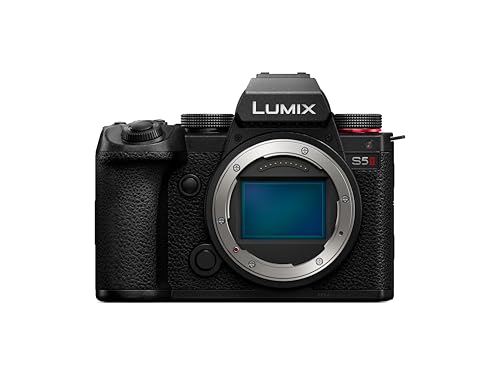
| Panasonic LUMIX S5II | Best all-round film school body | The most complete cinematography education in a hybrid body: serious video tools, full-frame depth and a lens ecosystem students can grow. |
| Blackmagic Pocket Cinema Camera 6K Pro | Best dedicated cinema teacher | A true cinema camera whose raw workflow and colour science teach grading like nothing else a student can own. |
| Sony Alpha 7 IV | Best low-light hybrid for night shoots | The night-exterior and available-light champion, for students whose films live in real locations after dark. |
| Fujifilm X-T5 | Best for film-look colour straight away | Fujifilm’s film simulations give students a discussable colour language in camera, on dials that teach exposure physically. |
| Canon EOS R6 Mark II | Best for fast-moving coursework | For sports-adjacent coursework, dance films and energetic handheld work where focus and frame rates carry the scene. |
| Sony ZV-E10 II | Best budget entry to serious video | The affordable way into interchangeable-lens filmmaking, leaving budget alive for the lens, light and microphone that matter. |
How Did We Choose These Cinema Student Picks?
We judged each camera against a semester’s actual assignments: the locked-off lighting exercise, the handheld documentary, the dialogue scene shot in a flat with one window, the night exterior, and the final short that has to survive a big screen in front of examiners. A camera earned its place by teaching something specific in those situations, metering and focus tools that make exposure a decision rather than an accident, recording formats that let a student attempt a grade without the image falling apart, and ergonomics that work on a tripod, a shoulder and a gimbal across a long day.
Three filters finished the sorting. Sound first, because examiners forgive soft focus and never forgive bad audio: every pick takes proper microphones and lets the student monitor what is being recorded. Stamina second: student shoots run long, locations run hot or cold, and a camera that limits takes or overheats mid-scene teaches only frustration. Ecosystem third: lens mounts with deep second-hand markets and departmental loan stock, because a student who can borrow a lens owns a bigger kit than a student who cannot. Cameras failing any filter were admired and excluded.
What Does a Cinema Camera Teach That a Stills Camera Does Not?
It teaches that exposure is a sentence spoken over time. A stills photographer chooses a moment; a cinematographer chooses a duration, and the camera must hold that choice while actors move through light, clouds cross the sun and a scene breathes. The tools differ accordingly: waveforms and false colour instead of a histogram glanced at afterwards, focus peaking and magnification that work while recording, shutter expressed as an angle so motion blur stays a deliberate, consistent language across every setup in the film. A student camera that hides those tools behind automatic confidence is not simplifying cinematography; it is withholding it.
It also teaches humility about the frame’s edges. Cinema students shoot in borrowed flats, borrowed cafés and streets they do not control, so a camera’s dynamic range, its behaviour under mixed practical lighting and its willingness to be rigged small and quiet are working virtues, not specification trivia. The six picks below each illuminate a different corner of that education, and the sections after them are honest about which corner each one leaves dark.

Panasonic LUMIX S5II — Best all-round film school body
The S5II is where most cinema students should start their shortlist, because Panasonic builds video cameras that happen to take photographs rather than the reverse. Its video specification reads like a syllabus: high-quality internal recording with real latitude for grading, monitoring tools that teach exposure properly, in-body stabilisation that rescues the handheld documentary exercise, and cooling that treats a student shooting day as a normal request rather than an endurance event. The full-frame image gives students the shallow-focus language of contemporary cinema while its autofocus, much improved in this generation, still allows manual discipline to be learned rather than forced.
The ecosystem argument seals it. The L-mount alliance means lenses arrive from several makers at several price levels, the second-hand market is deepening yearly, and the same body that shoots a student’s final film can shoot the music videos and wedding films that pay their rent after graduation. Against the dedicated cinema body below it concedes some rigging purity; against everything else here it concedes remarkably little, which is why it anchors the guide.
- Sensor class: full-frame, generous in low light
- Video: internal recording built for grading
- Stabilisation: in-body, for handheld coursework
- Mount: L-mount, several makers’ lenses
Strengths
- A cinematography syllabus in one body.
- Footage that survives a real grade.
- Lenses at every student price level.
Trade-offs
- Hybrid shape needs a cage for rigs.
- Full-frame lenses cost more than crop ones.
- Autofocus good, not the class leader.
Best for: the film student buying one body for the whole degree. Not suited for: a course standardised on another system entirely.
Coursework counsel: shoot the first term in a flat, ungraded profile even when the footage looks dull in the viewfinder. Learning to expose for the grade, protecting highlights and placing skin tones deliberately, is the single skill that separates students who light from students who merely record, and this camera’s monitoring tools exist to teach exactly that.
A second, quieter virtue matters on student sets: the S5II behaves identically hour after hour. Sets run on borrowed time and borrowed locations, and a camera whose colour, stabilisation and recording never surprise the operator lets a student director spend their limited authority on performances and light instead of troubleshooting. Reliability is a creative feature on a student shoot, and this body has it in unusual depth.
Blackmagic Pocket Cinema Camera 6K Pro — Best dedicated cinema teacher
The Pocket 6K Pro is the purist’s answer, and film schools quietly love it because it refuses to let students hide. It records raw footage through a workflow built around DaVinci Resolve, which many students already receive with the camera, so the path from set to grade teaches professional colour practice from the first assignment: white balance as a metadata decision, exposure defended by scopes, skin tones built rather than accepted. Its internal ND filtration, a feature borrowed from far pricier cinema bodies, teaches light control at the lens instead of desperation at the settings, and its large screen makes it a monitor and a camera in one rig.
The honesty section matters. This is not a hybrid: stills are an afterthought, autofocus is a manual-focus education whether the student wants one or not, battery life demands a rigged power solution, and the body wants a cage, a handle and patience. Students whose courses are documentary-heavy or run-and-gun will feel those costs weekly. Students headed for narrative work will recognise them as the actual texture of cinema production, learned early and cheaply. It is described prose-only because its bundles and media kits vary widely; buy the body, then budget the rig as part of the camera, because it is.
- Form: dedicated cinema body, rig-based
- Workflow: raw recording, Resolve-centred
- Filtration: internal ND for light control
- Focus: a manual-focus education, by design
Strengths
- Grading taught properly, from raw.
- Internal ND changes how you light.
- Footage with genuine cinema texture.
Trade-offs
- No meaningful autofocus or stills life.
- Rig, power and media are extra spend.
- Documentary spontaneity suffers.
Best for: narrative-focused students who want cinema discipline. Not suited for: run-and-gun documentary coursework.
Prose-only note: this camera sits outside the verified pool and carries no link. When costing it, price the complete working rig, cage, power, media and a first lens, because the body price alone understates the commitment by a wide and predictable margin.
One pedagogical gift deserves emphasis: because the Pocket makes automatic shooting nearly impossible, its students develop set habits, checking scopes, pulling focus by hand, calling slates, that transfer intact to the professional cameras they will meet on graduation. Departments notice which graduates arrive with those habits. This camera is where many of them learned.

Sony Alpha 7 IV — Best low-light hybrid for night shoots
Student films are shot where permission and poverty allow: real streets, real flats, real pubs, overwhelmingly at night, lit by whatever the location provides. The Alpha 7 IV is the camera for that curriculum. Its full-frame sensor produces the cleanest available-light footage in this guide, holding a night exterior’s sodium glow and shadow detail in the same frame without the image dissolving into noise, and its autofocus performs the cinematographer’s least glamorous miracle, keeping a moving actor sharp in light too dim to focus manually with confidence.
Sony’s lens ecosystem, the deepest available to students, compounds the advantage: fast primes are everywhere second-hand, departments stock them, rental houses discount them. The body’s compromises are a hybrid’s usual ones, rolling shutter that punishes whip pans and a menu culture that rewards setup time, but for the student whose showreel will be built from night shoots and real locations, this is the body that makes those films look intended rather than endured.
- Sensor class: full-frame, the low-light leader
- Focus: tenacious in genuinely dim scenes
- Mount: the deepest student lens market
- Role: night exteriors, real locations
Strengths
- Available light becomes a style.
- Autofocus that saves night scenes.
- Lenses borrowable almost anywhere.
Trade-offs
- Whip pans reveal rolling shutter.
- Menus reward a setup afternoon.
- Premium body price for a student.
Best for: students shooting narrative work in real locations. Not suited for: bright studio-based coursework on a budget.
Night-shoot counsel: expose for the practical lights in frame, the streetlamp, the shop sign, the window, and let the shadows fall where they fall. The Alpha 7 IV’s clean shadows forgive that discipline beautifully, while lifting exposure to brighten darkness only manufactures noise and betrays the night the scene was written for.
Its stills life is a genuine financial footnote for students: the same body covers the unit photography, poster shoots and paid weekend work that subsidise many a final film. A camera that earns between assignments is not merely a purchase but a small business asset, and several of this guide’s readers will fund their graduation short partly through exactly that double life.

Fujifilm X-T5 — Best for film-look colour straight away
The X-T5 teaches cinematography through its hands. Its dedicated dials for shutter, sensitivity and exposure make settings physical and visible, the way the film cameras it honours worked, and students learn faster when a setting is a position they can see rather than a value buried in a menu. Its video is thoroughly modern beneath the retro skin, with high-quality recording and Fujifilm’s celebrated colour science offering film simulations that give a class something concrete to debate: what does this stock-like rendering do to skin, to night streets, to the story’s temperature, compared with a neutral profile graded later?
The APS-C sensor is the considered trade. It gathers less light than the full-frame picks and its depth of field runs deeper at the same framing, which some students will experience as a limitation and others, particularly documentary makers who need focus to hold across a room, as a gift. Lens prices in the system are student-survivable, the bodies are the ones photography classmates also carry, and a film society can share glass across both crafts. For courses where the conversation about look matters as much as the mechanics of capture, the X-T5 is the most articulate teacher here.
- Sensor class: APS-C, deep and forgiving focus
- Controls: physical dials for core settings
- Colour: film simulations with real character
- Role: the look-and-craft teacher
Strengths
- Settings you learn with your hands.
- Colour worth arguing about in class.
- Focus depth that helps documentary work.
Trade-offs
- Less low-light reach than full-frame.
- Shallow focus takes faster lenses.
- Video stamina below the Panasonic.
Best for: students who learn through look and craft. Not suited for: night-exterior specialists needing full-frame.
Classroom counsel: shoot one exercise three ways, a neutral profile for grading, a bold film simulation baked in, and a gentle one, then project all three. The X-T5 makes that comparison vivid, and the discussion it provokes about when a look should be decided is worth a week of lectures on colour pipelines.
There is also a social virtue: the X-T5 is the camera students actually carry between shoots, to location scouts, rehearsals and the café where the script gets rewritten. A camera that lives in the bag rather than the cupboard accumulates the informal footage, tests, frames, accidents, out of which a student’s visual instincts quietly form.

Canon EOS R6 Mark II — Best for fast-moving coursework
Some film courses lean toward movement: dance documentation, sports features, music performance, the kinetic documentary. The R6 Mark II is the movement specialist in this guide. Its autofocus tracks bodies in motion with a confidence that lets a student operator think about framing instead of focus, its high frame rate recording turns the dance piece and the skate film into slow, examinable beauty, and its stabilisation steadies the handheld following shot that student work so often attempts and so rarely lands. Canon’s colour, particularly on skin under stage light, flatters performers in footage that must be shown to the performers.
It is a hybrid first and a cinema camera second, and the guide is honest about the ordering: the monitoring and codec depth sit a step below the Panasonic, and long takes in warm halls deserve the same thermal respect as any hybrid. But a student whose showreel is movement will graduate with footage their peers cannot match, and Canon’s RF lens path, with its deep pool of adaptable older glass, keeps the system’s cost survivable across a degree.
- Sensor class: full-frame, movement-friendly
- Focus: tracking that follows performers
- Recording: high frame rates for slow motion
- Role: dance, sport and performance film
Strengths
- Movement footage others cannot match.
- Slow motion with real quality.
- Skin tones performers approve of.
Trade-offs
- Codec depth below the Panasonic.
- Long hot takes need management.
- Hybrid menus, cinema second.
Best for: students filming dance, sport and performance. Not suited for: dialogue-heavy narrative purists.
Performance counsel: rehearse the camera move with the dancers, not before them. The R6 Mark II’s tracking forgives much, but a student operator who knows the choreography’s geography produces footage with intention in it, and examiners can see the difference between followed movement and anticipated movement in a single viewing.
Its hybrid strength also suits the student who becomes the course’s unofficial documenter, filming everyone’s rehearsals, talks and showcases. That student graduates with a network as well as a showreel, and the camera that made them useful to every production on the course deserves some credit for the introductions that follow.

Sony ZV-E10 II — Best budget entry to serious video
Every film school cohort contains students for whom the full-frame picks are simply not purchasable, and the ZV-E10 II exists so that constraint does not become an exclusion. Its APS-C sensor and Sony’s lens mount put real cinematography, manual exposure, interchangeable lenses, proper microphone inputs and footage that grades respectably, within a first-year budget, leaving money for the fast prime lens and the microphone that will improve a student film more than any body upgrade. Its autofocus is genuinely excellent, which matters when a crew of three is also the cast.
The compromises are the budget tier’s honest ones: no in-body stabilisation, so tripods and gimbals do that work; a smaller sensor’s low-light limits; a creator-oriented control layout that takes a term to stop feeling like a vlogging camera. None of them prevents excellent work, and the department’s history is full of festival-selected shorts shot on cameras beneath this one’s station. Buy it, light well, record sound properly, and the examiners will discuss your film rather than your equipment, which is the entire point.
- Sensor class: APS-C, the budget gateway
- Audio: proper microphone input fitted
- Mount: Sony E, deep and borrowable
- Role: first serious student body
Strengths
- Real filmmaking within a first-year loan.
- Autofocus that helps tiny crews.
- Leaves budget for lens and sound.
Trade-offs
- No in-body stabilisation.
- Low light reaches its limit sooner.
- Creator layout, cinema by effort.
Best for: budget-held students who light and listen well. Not suited for: handheld night shooting as a style.
Budget counsel: with this body, the tripod is not an accessory but half the camera. A student who locks off beautifully, lights a face with one borrowed lamp and records clean dialogue will outshoot a full-frame owner waving their camera in available darkness, in coursework and in the industry’s opinion alike.
Its size is a permission slip. The ZV-E10 II films in cafés, buses and family kitchens without announcing itself as a production, and documentary students learn early that access, the subject forgetting the camera, is a currency no sensor can buy. Small cameras gather honest footage; this one gathers it with interchangeable-lens quality.
How Do the Six Compare Side by Side?
| Camera | Best coursework | Sensor | Signature lesson | Watch out for |
|---|---|---|---|---|
| Panasonic LUMIX S5II | The whole degree | Full-frame | Grading and monitoring | Cage needed for rigs |
| Blackmagic Pocket Cinema Camera 6K Pro | Narrative shorts | Cinema crop | Raw colour discipline | Rig and power costs |
| Sony Alpha 7 IV | Night locations | Full-frame | Available-light craft | Rolling shutter |
| Fujifilm X-T5 | Look-driven work | APS-C | Colour as a decision | Low-light reach |
| Canon EOS R6 Mark II | Dance and sport | Full-frame | Movement and slow motion | Codec depth |
| Sony ZV-E10 II | First serious films | APS-C | Lighting over spending | No stabilisation |
Which Lens Should a Cinema Student Buy First?
A fast prime near the classic normal field of view, before any zoom, and the reasoning is pedagogical as much as optical. A prime forces the student to move the camera and their own feet, which is where framing is actually learned; its wide aperture opens the low-light locations student films inhabit and delivers the shallow focus that separates a composed shot from a captured one; and a single focal length across an exercise builds the consistency examiners reward. The zoom can come second, bought against a named need, when the student’s own footage has revealed which focal lengths their eye keeps requesting.
Buy within the system the department stocks where possible, because the borrowable telephoto and the rentable specialty lens are worth more across a degree than a marginally better owned prime in an orphaned mount. Second-hand manual primes, adapted thoughtfully, are the film school’s traditional treasure: cheap, characterful, and a focus-pulling education in every take.
How Should Students Record Sound That Matches the Picture?
By treating the microphone as a camera for ears and placing it with the same care. The hierarchy is unforgiving: a modest microphone close to the actor beats an expensive one on the camera, every time, in every genre. A boom held just out of frame, a recorder with a lavalier on the actor’s chest, even a phone in a breast pocket as a backup, all serve the film better than the finest on-camera microphone listening across a room’s echo. Every pick in this guide accepts proper audio because the guide assumes students will plug something worthy into it.
Then monitor, always, on closed headphones, with one crew member whose only job is listening for the fridge, the traffic surge and the costume rustle that the set has stopped hearing. Sound failures are invisible on set and fatal in the edit, and the student productions that sound professional share exactly one trait: somebody was assigned to hear them.
What Does a Student Rig Actually Need?
Less than the internet insists, in a strict order. A tripod with a genuinely smooth video head first, because the locked-off and panning shots are coursework’s bread and butter. A cage or handle only when handheld work begins in earnest. Power next: batteries enough for the day’s plan plus the day’s accidents. Media with headroom, formatted and labelled. A small monitor when focus and exposure judgements outgrow the camera’s screen, which on the Pocket cinema body may be never and on the compact picks may be the second term. Each addition should answer a failure the student has personally experienced, because rigs assembled from other people’s checklists collapse under their own cleverness on location.
Weight is the rig’s hidden curriculum. Student crews carry everything on foot, up stairs, across cities, and a rig that exhausts its operator by the second setup produces worse footage than a light one, however professional the heavy one photographs. Build the smallest rig that solves your named problems and let it grow only under protest.
What Mistakes Do First-Year Film Students Make?
Spending the whole budget on the body is the founding error, leaving nothing for the lens, microphone and tripod that audiences actually experience. The second is shooting everything at the widest aperture because shallow focus looks cinematic in stills, then discovering that actors move, focus breathes and examiners notice. Third is neglecting sound until the edit, where it cannot be rescued. Fourth is choosing a camera their department neither stocks nor teaches, orphaning themselves from borrowed lenses and informed help.
Fifth is chasing resolution while ignoring light. A lit scene on the budget pick defeats a dark scene on the flagship in every screening room ever built, and the students who internalise that sentence earliest are, year after year, the ones whose films get selected. The camera is the smallest part of cinematography that fits in a bag; the rest is light, sound, patience and taste, and this guide’s picks were chosen to leave budget and attention alive for all four.
Final Recommendation
Most cinema students should buy the Panasonic LUMIX S5II and spend the savings against the flagship tier on a fast prime, a real microphone and a tripod with a proper video head; that combination will carry a degree and the first professional years beyond it. Narrative purists who know they want cinema discipline should cost the Blackmagic Pocket rig honestly and embrace its demands. Night-location storytellers belong with the Sony Alpha 7 IV, look-driven learners with the Fujifilm X-T5, movement specialists with the Canon EOS R6 Mark II, and budget-held students with the Sony ZV-E10 II plus the discipline to light and listen. Choose the teacher whose lessons match your films, and let the films, not the forums, judge the choice.
Related guides
Frequently Asked Questions
Is a dedicated cinema camera better than a hybrid for film school?
For learning cinematography’s disciplines, often yes: the Blackmagic’s raw workflow, internal ND and manual focus demand professional habits from the first assignment. For a degree that mixes documentary, stills and paid side work, a hybrid like the S5II serves more of the student’s actual life. Read your course’s assignments honestly and choose the body that matches the majority of them, not the fantasy version of them.
How important is raw recording for a student?
Less important than understanding why it exists. Raw teaches exposure and colour decisions by making them revisitable, which is pedagogically precious on a few key exercises. For the bulk of coursework, a good log profile on the hybrid picks offers most of the grading education with a fraction of the storage and processing burden. Shoot raw for the lighting exercise and the final film; shoot log for everything between.
Can I use photography lenses for filmmaking?
Yes, and most students do. Stills lenses focus by wire and breathe more than cinema glass, which matters for precise pulls and matters not at all for most coursework. Manual vintage primes, adapted, are often the sweet spot: real focus rings, characterful rendering, student prices. Borrow cinema lenses for the final film if the department allows it, and learn the difference with your own footage rather than from specification arguments.
What frame rate should student films be shot at?
The frame rate of the story’s world, which for narrative work is the traditional cinema rate that gives motion its familiar texture. Higher rates are a tool for slow motion and specific documentary needs, not a default upgrade, and examiners read an everything-at-high-frame-rate film as a technical exercise rather than a story. Choose deliberately per project, write the choice in the treatment, and be ready to defend it in the viva.
Should I buy a camera or use the department’s kit?
Both, in sequence. Department kit teaches breadth: shoot the exercises on several systems before your money commits to one. Buy when a project, usually the final film, needs a camera that is yours at 2 a.m., configured your way, with no booking form between you and the dawn shoot. Students who reverse the order routinely own the wrong camera by their second year.
Do cinema students need autofocus at all?
Documentary students do, narrative students should learn without it and then choose. Manual focus is a core cinematography skill that no graduate should lack, and the courses are right to insist on it. But the lone documentary maker following an unpredictable subject is practising a different craft, where the autofocus in the Sony and Canon picks is a professional tool rather than a shortcut. Know which craft your films practise.
How Do Students Choose Between Log, Raw and Baked-In Colour?
By asking when the look must be decided. Baked-in colour, Fujifilm’s simulations being the honourable example, decides on set, commits the crew to a shared vision and suits fast turnarounds and confident cinematographers. Log postpones the decision to the grade while protecting the image’s flexibility, at the cost of footage that looks washed out to untrained eyes on the day. Raw postpones nearly everything, at the cost of storage, processing time and a workflow that must be planned like a second production. None is morally superior; each distributes decisions differently across the production, and a student’s maturity shows in matching the pipeline to the project’s real constraints rather than its aspirations.
A useful course exercise is to shoot the same scene all three ways and grade under a time limit. The student discovers, in their hands rather than in a lecture, what each pipeline forgives and what it punishes, and their final film’s choice becomes an informed preference they can defend, which is all any examiner ever asks.
What Should a Student Showreel Prove?
Range under control. One lit interior where skin looks human and the grade serves the scene. One night exterior that reads as intended rather than apologised for. One moving sequence, a follow, a dance, a chase, where focus and framing survive motion. One dialogue scene whose sound is invisible in its quality. Ninety seconds of each, cut without mercy, proves more than ten minutes of highlights because it demonstrates the unglamorous competencies productions actually hire: consistency, sound, light and completion.
The cameras in this guide each make some reel items easier, and the honest student builds the reel their camera and course can genuinely support rather than imitating a graduate’s. Examiners and employers have seen every trick; what they are scanning for is judgement, and judgement is visible in what a student chose to leave out.
How Does a Student Crew Light a Scene with Almost Nothing?
By subtraction before addition. Turn off the location’s overhead light, which flattens every face it touches. Choose the one motivated source the scene believes in, the window, the practical lamp, the shopfront, and place actors in honest relation to it. Shape with what the location offers: a curtain half-drawn, a white wall as bounce, a doorway as a flag. Only then add the single borrowed light most student kits contain, as a whisper of fill or a background accent, never as a flood that announces itself. Every pick in this guide rewards this discipline, because sensors have become so capable that one well-placed source now does what a van of tungsten once did.
The examination value is precisely the constraint. A student who can make a bedsit look like a decision will light a professional set competently within a week of graduation, while a student who needed six lights to achieve adequacy has learned dependence, not craft.
Why Do Student Films Fail in the Edit, Not the Shoot?
Because coverage is a promise the shoot makes to the edit, and inexperienced directors break it innocently: the close-up that was never taken, the cutaway that would have hidden the edit, the room tone nobody recorded, the scene covered from one side only. The camera’s part in preventing edit failure is stamina and consistency, long takes that hold, colour that matches across setups, media management that loses nothing. The director’s part is a shot list written for the editor they will become at 3 a.m. in the suite, grateful or furious.
Students should sit in on an edit of someone else’s footage once before directing their own final film. Nothing else teaches coverage as efficiently as hunting, at midnight, for the shot that does not exist, and the lesson transfers directly to how they will run their own set, whatever camera is mounted on the tripod.
How Should Students Choose a Camera System, Not Just a Camera?
By auditing the next four years rather than the next four weeks. A system is the lenses your department lends, the bodies your classmates own and will trade for a weekend, the rental house’s student discount shelf, and the mount your first employer expects you to arrive knowing. A student who buys into the locally dominant system owns, in practical terms, three times the equipment of a student with a marginally better body in an orphaned mount, because every borrowed lens and every classmate’s spare battery is part of their working kit. Ask the technicians what the cage stocks most deeply before you ask the internet what tests best.
The audit continues into media and software. Card formats the department already reads, codecs the edit suites already ingest without transcoding arguments, and colour pipelines the tutors can actually advise on are worth real marks across a degree. The glamorous specification, the extra stop, the extra resolution, rarely survives contact with a Tuesday deadline; the boring compatibilities decide whether the film exists at all. Choose the system that makes your Tuesdays survivable and your final film’s logistics invisible, then spend your rebellion on the films themselves.
What Does the First Paid Work Teach That School Cannot?
That reliability is a creative virtue and clients buy it first. The wedding videographer, the music-video shooter and the corporate interviewer are all hired again for the same unglamorous reasons: the audio was clean, the cards were backed up, the footage matched across cameras, and nothing about the equipment became the day’s story. Students who treat their coursework shoots with that professional hygiene, dual recording where possible, checksum habits, a labelled media routine, graduate with the industry’s trust already forming around their name.
The hybrid picks in this guide earn a second look under this light, because the first paid years are hybrid years: stills for the poster, video for the piece, a body that does both without complaint. The dedicated cinema camera teaches deeper craft, and the student who can afford both educations in sequence, hybrid first for income, cinema body for the final film, often graduates with the strongest position of all: a showreel, a client list and habits that satisfy both.
How Do Students Direct Actors While Operating the Camera?
Mostly, by not doing both on the shots that matter. The student production’s defining scarcity is not equipment but attention, and a director-operator spends the take watching focus marks while the performance drifts unregarded. The professional pattern, available at student scale, separates the roles whenever a scene carries the film: a classmate operates, briefed on the frame and the focus plan, while the director watches the actors and nothing else. The cameras here support that separation with monitors, remote viewing and focus tools an operator can be taught in an afternoon.
Where the crew genuinely is one person, the craft changes rather than collapses: lock the camera, light for depth so focus holds a zone rather than a point, rehearse the actors’ marks until the geography is muscle memory, and let the scene play inside a frame designed for it. Several celebrated films were shot exactly this way by necessity. What cannot survive is the middle path, a moving camera, shallow focus and an unwatched performance, which is why this guide keeps returning students to the tripod, the zone and the rehearsal.
Why Does Colour Grading Belong in the Camera Decision?
Because the grade begins at capture, and cameras differ honestly in what they hand the colourist. Bit depth decides whether a sky gradients smoothly or bands into steps when pushed. Codec choices decide whether fine detail, hair, foliage, smoke, survives compression or dissolves into blocks exactly where the examiner’s eye rests. Log profiles decide how much of the scene’s contrast the student can redistribute later, and raw decides whether white balance itself remains negotiable in post. A cinema student choosing a camera is choosing the raw material of every grade they will attempt for years, which is why this guide interrogates recording formats more than resolutions.
The practical exercise is to grade the same test scene from each shortlisted camera before buying, using the department’s demo units or rental days. Ten minutes in the grading suite teaches more than ten reviews: how the skin holds, how the highlights roll, how the shadows behave when lifted toward the story’s mood. Students who perform that test choose with their eyes and rarely regret the purchase, whatever the forums said.
How Should a Student Maintain and Insure Their Kit?
Like a professional with a small turnover, because the kit is the business. A hard case that actually travels, a cleaning routine after every exterior shoot, firmware updated between projects rather than before a deadline, and a written inventory with serial numbers photographed and stored away from the kit itself. Insurance, through the university’s scheme or a specialist student policy, costs less than one replaced lens and converts a theft from a degree-ending event into an administrative week. Productions collapse over missing chargers more often than over broken cameras, so the maintenance gospel is mostly about completeness: every cable, every card, every battery accounted for on the checklist the night before.
Lending deserves a policy too. Student kits circulate through friendships, and the crews that survive lending are the ones with a boring system: signed out, condition noted, returned to the same checklist. The camera is rarely what breaks a student friendship; the unrecorded loan of the camera is. Treat the kit as the department treats its cage and your equipment, and your friendships, will both outlast the degree.
What Separates a Good Final Film Technically?
Consistency. The examiners’ technical conversation is rarely about a single beautiful shot; it is about whether the film’s world holds together, exposure matched across a scene shot over two days, colour continuous between interiors and exteriors, sound perspective stable as the camera moves, focus discipline unbroken from the first setup to the last. Achieving that consistency is a production method before it is a camera virtue: the same settings philosophy throughout, a reference monitor or at least a reference screen, stills of every lighting setup for matching, and a cinematographer empowered to say the light has changed and the scene must wait.
The cameras in this guide were chosen partly as consistency machines, stable colour, dependable recording, monitoring that makes matching a measurement rather than a memory. The rest is the student’s own protocol, and building one across the degree, exercise by exercise, is the quiet curriculum underneath the visible one. Graduates are hired for their protocols as much as their images, because a production can teach taste faster than it can teach reliability.
How Do Students Light Faces with One Lamp and a Window?
By treating the window as the key light it already is and the lamp as an argument about direction. Place the actor so the window models the face from the side, neither flat from the front nor split like a interrogation, then decide what the room’s darkness is doing: if the shadow side falls to nothing, a lamp bounced off a wall or ceiling lifts it by whisper rather than declaration; if the scene wants the darkness, the lamp stays off and the courage stays on. This one-source discipline, learned on the hybrid picks whose sensors forgive the ratios involved, is the foundation every multi-light setup later elaborates.
The examination point is motivation: every light in the frame should be explainable by the world of the scene. Students who can defend each source’s reason, in the viva and in the image, are practising cinematography; students who light by recipe are practising exposure. The camera’s monitoring tools make the ratios measurable, but the decision, how much darkness a face can carry before the audience stops reading emotion, is the student’s own developing taste, and it develops fastest under constraint.
What Should Students Know About Working with Real Locations?
That a location is a collaborator with its own schedule, acoustics and opinions. The café that lends itself at dawn has a delivery at seven; the flat’s beautiful window faces the wrong way by afternoon; the street that was silent on the recce Sunday sings with traffic on the shooting Tuesday. Professional practice, which student productions ignore at their cost, builds the location into the schedule as a character: recced at the shooting hour, photographed in stills for the lighting plan, its power points, quiet hours and neighbours all recorded in the production book. The camera choice bends around that reality, which is why the low-light and compact picks keep earning their places in this guide.
Permission is the other half of location craft, and it is a creative skill rather than a bureaucratic one. The student who asks well, briefly, with the finished film offered in return, gathers locations money cannot rent, while the crew that steals shots spends the day looking over its shoulder and photographs its own anxiety. Departments keep lists of friendly locations built by generations of courteous students; add yours to it, and leave every location tidier than the story required.
How Does Editing Begin on Set?
With the slate, the log and the discipline of handles. A take that begins and ends with breathing room gives the editor the material of rhythm; a take strangled at both ends forces cuts the scene did not choose. The camera operator who holds the frame two seconds past the apparent end, who lets the door close and the room tone settle, is editing generously in advance. The log, kept by whoever is free and believed by whoever edits, records the director’s instinct in the moment, which takes were alive, which line reading surprised the room, and it is worth more at 3 a.m. in the suite than any technical metadata the camera recorded.
Media discipline completes the set-to-edit bridge: cards copied twice before they are formatted, folders named by the production’s convention from the first day, and a screening of dailies while the location is still available for the pickup shot nobody knew was missing. Student films rarely die from bad footage; they die from lost, mislabelled or unwatchable footage discovered too late, and every one of those deaths is preventable by the unglamorous habits this section describes.
Why Should Cinema Students Also Learn Stills?
Because the still frame is cinematography’s sketchbook. Composing one frame that must say everything teaches the economy that moving images spend across time, and the student who photographs locations, faces and light studies between shoots arrives on set with a stocked visual memory. Stills also serve the production directly: the location scout’s record, the continuity reference, the poster and the press kit all come from a camera, and the hybrid picks in this guide were partly chosen because they let one body serve the film and its entire paper trail.
There is a plainer reason too: stills pay. The unit photographer’s day rate, the theatre’s production shots, the band’s artwork, the wedding that funds the final film, all of them are stills work, and the student whose camera crosses over graduates with an income while the pure cinema specialist graduates with a hope. Craft purity is a luxury; the hybrid education is a livelihood, and the industry’s own history is written by people who did both without apologising for either.
Related Guides
Students weighing the stills side of their studies will also find our guides to the best cameras for college photography student and the best cameras for beginner cinematography and the best cameras for doing movies.


