ilcastellomenu.com is reader-supported. When you buy through links on our site, we may earn an affiliate commission.
Where to Buy
Ask a working director what the best cameras for film makers are and the answer rarely starts with a sensor. It starts with a schedule. A film maker is someone who has promised other people — actors, a producer, a festival, sometimes a client — that a finished film will exist on a certain date, and the camera is the tool that promise is kept with. That is the lens this guide judges through: not which body wins a specification contest, but which body a film maker can build a production around, shoot after shoot, without the equipment becoming the story of the shoot.
The six cameras below span the real ladder of independent production. At the top sit full-frame hybrids that anchor micro-budget features and commercial work. In the middle are the APS-C bodies that film schools, collectives and first-feature directors actually own. Every pick is a camera a film maker can also rent lenses for, hand to a first AC without a training seminar, and grade footage from without fighting the file. If your question is narrower — fiction specifically, or movies as a hobby — sibling guides cover those angles; this one is for the person whose name goes in the credits as the film maker.
A note on method before the picks: film makers buy systems, not bodies. The mount a camera uses decides which lenses can be rented in your city, which adapters your AC already owns, and what your second body will be in three years. Read the picks below as six different answers to the question of which system to build a small career on, because that — more than any single shoot — is what choosing a camera as a film maker really means.
Finally, honesty about scale: no camera on this list will be the reason a film succeeds, and none will be the reason one fails. Scripts, performances, light and sound decide films. What the right camera does is remove friction — it starts when the slate claps, holds focus through the take the actor finally nails, and hands the editor files that behave. Film makers do not need magic. They need the absence of excuses, and that is what these six provide in ascending order of budget and ambition.
There is also a regional truth in these choices. Film making happens everywhere now — in regional cities, in diaspora communities filming stories no capital-city industry would fund, in places where the nearest rental house is a day’s drive. The systems below were chosen partly for that world: mainstream mounts, lenses that travel through the post, bodies any competent technician can service or replace. A film maker far from the industry’s centre needs equipment the centre cannot strand, and that practical solidarity shaped this list as much as any specification did.
One promise about the pages ahead: no pick is here because of a launch date, a forum argument or a specification that photographs well in a table. Each earned its place by being the kind of camera a production can lean on in the unglamorous middle of a shooting day, when the light is going, the actor is tired and the schedule has no slack left. That is the only audition that matters, and it is the one every ranking below was decided by.
Key Takeaways
- A film maker buys a system: judge every body by its lens mount and rental ecosystem first.
- Full-frame hybrids anchor features; APS-C bodies anchor film-school and collective work.
- Repeatable manual control matters more than headline resolution on a narrative set.
- The best body is the one your first AC can run without a briefing.
- Gradeable, forgiving files beat spectacular files that change between setups.
- Budget for support, media and sound before upgrading the body itself.
In this guide
Quick Picks
| Pick | Badge | Why it is here |
|---|---|---|
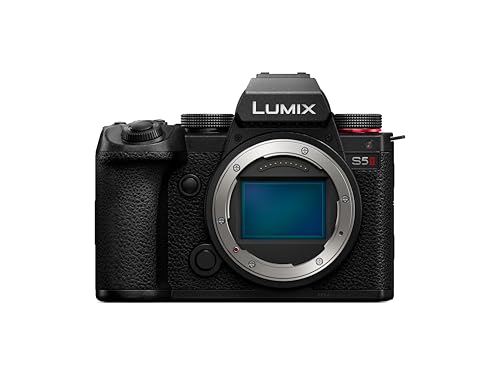
| Panasonic LUMIX S5II | Best first-feature anchor | Full-frame log files, confident stabilisation and a filmmaker-first control layout. |
| Sony Alpha 7 IV | Best autofocus-era production body | Focus the crew can trust with actors, plus the deepest lens ecosystem in its class. |
| Canon EOS R6 Mark II | Best colour-straight-from-camera body | Footage that looks finished before the grade, for film makers delivering fast. |
| Fujifilm X-T5 | Best in-camera-look storyteller | Film simulations and tactile dials for makers who design the look on the day. |
| Nikon Z50 II | Best film-school and collective starter | Serious video in a body a student or collective can actually buy outright. |
| Canon EOS R10 | Best second-body and B-unit pick | The affordable RF body that covers pickups, gimbal work and second angles. |
How Did We Choose Cameras for Working Film Makers?
We weighted the things a production actually feels. First, control that stays put: dials and menus that let exposure, white balance and focus behaviour be set in the morning and trusted until wrap. Second, files with room in them — log profiles and codecs that survive a colourist’s grade without falling apart at the shadows. Third, the ecosystem test: can lenses for this mount be rented in a mid-sized city on a Friday afternoon? A camera that fails that test is a hobby, however good its sensor is.
We also applied a crew test and a career test. The crew test asks whether the body makes sense when someone other than its owner operates it — a focus puller, a second unit, a borrowed operator on a pickup day. The career test asks whether the body still makes sense as the second camera when its owner steps up. Cameras that pass both tests age into a kit; cameras that pass neither become listings on a marketplace. All six picks pass both, at six different scales of production.
What we deliberately ignored: stills specifications beyond their usefulness on a poster or a press kit, brand loyalty, and the spec-sheet arms race of ever-higher resolutions that most festival delivery will downscale anyway. A film maker’s deliverable is a finished film at a sensible resolution with clean sound — the picks were ranked by how reliably they produce exactly that.
We also listened for the absence of stories. Cameras accumulate reputations on productions — the body that overheated during the wedding scene, the one whose media failed at the festival premiere’s source. The six picks carry the opposite reputation among working makers: uneventful. In a guide for people whose films must exist on schedule, uneventful is not a consolation prize. It is the headline feature, and it filtered out several more exciting cameras that a film maker would enjoy owning and regret depending on.
Which Six Cameras Earn a Film Maker’s Trust?
The order below follows a production ladder rather than a podium: the first pick is the body we would hand a director shooting a first feature this year, and the list descends through the bodies that serve earlier or leaner stages of the same career. Every film maker on the ladder is doing the same job — turning a script and a schedule into a finished film — and every rung deserves a camera that respects the job.

Panasonic LUMIX S5II — Best first-feature anchor
The S5II earns the top slot because it behaves like it was designed by people who have actually wrapped a shoot. Its video tools — waveform monitoring, log profiles, shutter-angle thinking — are the vocabulary of a film set rather than a content studio, and its stabilisation lets a two-person crew shoot a walk-and-talk without a gimbal operator. For a film maker raising a first feature on favours and weekends, that combination is not a luxury; it is the difference between a schedule that holds and one that dissolves by the second Saturday.
- Full-frame mirrorless body on the L-mount system
- Log recording and waveform tools for graded workflows
- In-body stabilisation suited to handheld narrative work
- Dual card slots for production-day media safety
On a real production the S5II’s quiet virtues compound. Its files grade predictably, so the look designed in prep survives contact with mixed practical lighting. Its body runs long days without drama, and the L-mount gives the production access to a growing pool of rentable glass from several makers — the Friday-afternoon rental test, passed. Directors who came up through this camera tend to keep it as a B-camera long after stepping up, which is the career test passed in the most literal way a camera can pass it.
In the working week between productions, this is also the camera that films the tests: lens comparisons for the next feature, casting tapes for actors being considered, location reels for producers who need convincing. A film maker whose anchor body doubles as the development camera keeps the whole practice inside one colour language, so a test shot honestly predicts the feature’s footage. That continuity — prep, production and post all speaking the same imaging dialect — is a large part of what ‘professional’ actually looks like from the inside, and the S5II delivers it without a cinema-line invoice.
Strengths
- Video-first tools that speak the language of a film set
- Stabilisation that genuinely replaces support gear for small crews
- Log files with grading headroom beyond its price class
Trade-offs
- L-mount lens pool is smaller than the biggest rival systems
- Autofocus, while much improved, is not the class benchmark
- Menu depth rewards setup time in prep, not on the day
Best for: first-feature directors and cinematographers building a lean, serious kit.
Not suited for: film makers whose local rental houses stock only one rival mount.

Sony Alpha 7 IV — Best autofocus-era production body
Some film makers direct from behind the camera; others direct from beside it, watching the performance rather than the monitor. The Alpha 7 IV is the body for the second kind. Its face and eye autofocus is dependable enough to hold an actor through an unrehearsed movement, which frees the director to direct and the operator to compose. On dialogue-heavy productions — the kind most independent films actually are — that reliability quietly saves a take a day, and a take a day is a scene a week.
- Full-frame mirrorless body on the Sony E-mount system
- Real-time eye autofocus for faces in motion
- Log profiles for graded delivery
- Extensive third-party and rental lens support
The ecosystem argument is just as practical. E-mount lenses can be rented almost anywhere film is made, borrowed from almost any collaborator, and bought used at every price point. A film maker building on this body is never stranded by a single broken lens or an unavailable rental. Add files that every editor and colourist has handled a hundred times, and the Alpha 7 IV becomes the lowest-friction full-frame choice on the list — the camera productions choose when the film, not the gear, is the adventure.
There is a delegation dividend as well. Because the Alpha 7 IV handles focus so competently, a small production can staff differently: the operator composes, the director directs, and no third person is needed purely to keep faces sharp. On micro-budget films where every crew member is also doing a second job, that saved pair of hands might be the boom operator — and the production’s sound improves by exactly the margin its camera choice freed up. Equipment decisions are staffing decisions, and this one staffs generously.
Strengths
- Autofocus a director can genuinely delegate focus to
- The widest lens availability of any system here
- Familiar files that speed up every post-production handoff
Trade-offs
- Rolling shutter asks for care on fast pans
- Menus reward an owner who configures custom modes in prep
- No cinema-line luxuries such as internal raw at this tier
Best for: dialogue-led productions and directors who work beside the camera.
Not suited for: operators who pull focus manually on every take by preference.

Canon EOS R6 Mark II — Best colour-straight-from-camera body
Not every film maker has a colourist, a post budget, or a delivery date that allows either. The R6 Mark II serves the ones working to festival deadlines, client turnarounds and same-week edits: its default colour is the most immediately likeable on this list, skin tones especially, so footage can be cut, lightly corrected and shipped with confidence. That is not a compromise pick — it is a recognition that many real productions are won in the calendar, not the grading suite.
- Full-frame mirrorless body on the Canon RF mount
- Canon log profiles alongside pleasing default colour
- Strong subject-detection autofocus
- Comfortable ergonomics for long handheld days
In production terms, this is also the body crews relax around. The ergonomics suit long days, the autofocus tracks subjects through cluttered frames, and Canon’s RF glass — plus the vast adapted EF back catalogue — gives a film maker decades of affordable lens choices. Directors shooting weddings-to-features crossover careers, branded shorts or fast festival pieces will find the R6 Mark II the camera that most often simply gets the film finished, which is the only metric the audience ever sees.
Post-production is where the R6 Mark II’s philosophy fully pays out. An editor handed its footage can build a watchable cut with nothing more than exposure trims, because the colour decisions were made well at the moment of capture. For the film maker who is also the editor — which, at this scale, is most film makers — that halves the loneliest part of the process. The film starts looking like a film weeks earlier, and morale, festival deadlines and client confidence all feed on that early resemblance.
Strengths
- Default colour that shortens or skips the grade entirely
- Deep adapted-lens catalogue keeps glass costs sane
- Handling that stays comfortable across a full shooting day
Trade-offs
- Video feature set is less specialised than the S5II’s
- RF native glass at the top end is expensive
- Thermal limits deserve respect on very long continuous takes
Best for: film makers delivering on tight calendars with small post teams.
Not suited for: productions built around an elaborate, grade-first colour pipeline.

Fujifilm X-T5 — Best in-camera-look storyteller
The X-T5 represents a philosophy: decide the look before the shoot, not after it. Its film simulations are not filters in the social-media sense but coherent colour designs with decades of photographic heritage, and a film maker who commits to one in prep gains a consistency that small productions struggle to achieve in post. The physical dials reinforce the discipline — settings are visible and tactile, changed deliberately, and a glance at the top plate tells the operator exactly what the camera is doing.
- APS-C mirrorless body on the Fujifilm X mount
- Renowned film simulation colour modes
- Physical dials for shutter, ISO and exposure compensation
- Compact body suited to discreet, small-crew shooting
For film makers working small — a director, two actors, a borrowed apartment — the X-T5’s discretion is a production asset. It does not announce itself as a cinema rig, locations stay calm, and real life continues around the edges of the frame, which many independent films actively want. Its APS-C files hold up beautifully at festival delivery resolutions, and the X-mount lens range includes characterful primes that flatter faces. This is the camera for the maker who believes a film’s look is a decision, not a correction.
The X-T5 also teaches its owner something transferable: commitment. Makers who learn to choose a look in prep, light for it and expose for it develop a visual authorship that post-first workflows often postpone for years. Festivals programme authored films, not corrected ones, and several directors now working at scale trace their visual signatures to exactly this kind of constrained, decision-forward camera. A teaching tool that also shoots the film is a rare bargain in any art form.
Strengths
- In-camera colour designs that unify a whole production
- Tactile controls that slow the operator down in a good way
- Small footprint keeps locations and subjects relaxed
Trade-offs
- APS-C sensor gives up some low-light and depth-of-field range
- Video toolset is capable rather than cinema-specialised
- Battery life asks for spares on full shooting days
Best for: auteur-leaning makers who design colour in prep and shoot small.
Not suited for: large-crew productions needing full-frame standardisation across bodies.

Nikon Z50 II — Best film-school and collective starter
Every film maker starts somewhere, and the starting camera has one job above all: to be owned, not rented, so it is there on the Tuesday evening an idea strikes. The Z50 II is the strongest such camera on this list — a body a student, a collective or a first-time director can buy outright, with video quality that does not embarrass the work when it reaches a festival screen. Its footage cuts credibly alongside far more expensive bodies in daylight and lit interiors, which describes most of what beginners actually shoot.
- APS-C mirrorless body on the Nikon Z mount
- Capable 4K video with oversampled detail
- Product-review and subject-detection modes that help solo shooters
- Compact kit lenses that keep the starting cost honest
Its deeper value is educational. The Z mount path means the lenses bought for this body stay useful when its owner steps up to Nikon’s full-frame cameras, so the starter investment compounds instead of expiring. The helpful automated modes let a one-person crew get a scene covered, while the manual controls are all present for the day the film maker is ready to take the decisions over. Film schools could standardise on far worse; independent beginners regularly do, and then spend their second year unlearning a lesser camera’s limits instead of making their second film.
Treat the Z50 II’s limits as curriculum rather than failure. Its low-light ceiling teaches lighting; its single card slot teaches media discipline; its modest rigging teaches economy of movement. Film makers formed on forgiving flagship gear often never acquire those crafts, and it shows in their second films. The maker formed on this Nikon arrives at a bigger body with habits already installed — and habits, unlike specifications, cannot be bought later at any price.
Strengths
- Ownership-priced without feeling like a compromise camera
- Lens investment carries forward into Nikon’s full-frame range
- Assists solo makers while keeping full manual control available
Trade-offs
- APS-C low-light ceiling shows in available-darkness scenes
- Fewer video-centric accessories than the biggest systems
- Single card slot demands a disciplined offload routine
Best for: students, collectives and first-time directors buying their first real body.
Not suited for: established makers who need a matched full-frame A-camera today.

Canon EOS R10 — Best second-body and B-unit pick
Mature film makers think in units, not cameras: an A-camera on the sticks, a B-camera on the gimbal, a body that goes out for pickups without insurance paperwork anxiety. The R10 is built for that second role. Inside a Canon production it matches the A-camera’s colour language closely enough to intercut, its autofocus handles the moving second angle, and its price means a pickup day costs a train ticket rather than a rental invoice. Many working kits quietly run on exactly this logic.
- APS-C mirrorless body on the Canon RF mount
- Fast, confident subject-detection autofocus
- Lightweight body suited to gimbals and rigs
- Shares lenses and colour language with Canon full-frame bodies
It also serves the film maker who shoots alone more often than the credits suggest. The R10 on a small gimbal covers the establishing shots, the inserts and the location b-roll that give an edit its breathing room, and it does so without the setup time a full rig demands. Paired with a full-frame Canon as the A-body — or standing alone for web-delivered films — it is the list’s reminder that a film maker’s kit is a small company of tools, and this is the employee who never calls in sick.
One more duty suits the R10 perfectly: the director’s own coverage. Many film makers shoot the rehearsal process, the behind-the-scenes material and the crowdfunding updates that finance the next project, and they shoot them alone, quickly, between other jobs. The R10’s speed from bag to recording makes that material actually happen. A camera that documents the practice between films is quietly financing the practice itself — a very film-makerly virtue for the ladder’s most affordable Canon.
Strengths
- Colour and lenses that intercut with Canon A-cameras
- Light enough to live on a gimbal permanently
- Price that makes ownership of a second body realistic
Trade-offs
- APS-C sensor is the junior partner in low light
- Fewer pro video assists than the cinema-leaning picks
- Build is enthusiast-grade rather than set-proof
Best for: Canon-system makers adding a B-unit, and solo makers covering their own inserts.
Not suited for: buyers wanting one body to serve as a flagship A-camera for features.
How Does a Production Day Change What a Camera Must Do?
A camera reviewed on a desk and a camera used on a production are barely the same object. On a production day the body is powered before call time and may not rest until wrap; it is handed between an operator and an AC, mounted and remounted, asked for a take in available darkness and then a take against a blown-out window. The film maker’s camera must absorb all of that without becoming a conversation. Every pick above was chosen partly for this invisibility — none of them will be the reason a day runs long.
Media discipline is the day’s quiet backbone. Dual slots where they exist, a named-card system, an offload at lunch and an offload at wrap: the camera’s part in that system is to write reliably and report honestly. Film makers learn to love boring reliability here, because the alternative — a corrupted card holding the one unrepeatable performance — is the kind of story that ends collaborations. Build the routine around whichever body you choose, and treat the routine as part of the camera.
Sound deserves the same production thinking. None of these bodies replaces a sound recordist, but all of them must at minimum record trustworthy scratch audio for sync and accept an external microphone gracefully. The film makers whose work sounds professional are not using secret microphones; they are planning sound as a department from prep, and choosing cameras that cooperate with that plan instead of fighting it.
There is a courtesy dimension to all this that young film makers underestimate: a reliable camera package is a promise kept to everyone who gave the production their weekend. Actors rearranged jobs, a location owner lent a business, a friend drove the van. When the camera fails, it is their generosity that gets spent, not just the schedule’s. Choosing proven, uneventful bodies from mainstream systems is therefore partly an ethical decision — the production protecting the goodwill it runs on. The makers who get second films made are the ones whose first films wasted nobody’s kindness on preventable equipment drama, and their camera choices are where that respect becomes visible.
What Should a Film Maker’s Budget Actually Buy First?
The most common budgeting error in independent film is spending the camera line on the camera. A working allocation gives the body perhaps half the equipment budget; the rest belongs to the things audiences actually perceive — light, sound, support and the lenses that stay when bodies change. Every body on this list was chosen partly because it leaves room in a realistic budget for those departments. An S5II with lights and a recordist will out-film a flagship body shot in the dark with scratchy audio, every single time.
Lenses deserve the longest view of all. Bodies depreciate on a two-year rhythm; good glass serves for a decade and moves between systems via adapters more gracefully than ever. A film maker building a career should therefore buy the body that fits this year’s productions and lenses that fit the next ten years’ — which is precisely why the mount question runs through every pick above like a spine.
Finally, budget for the unglamorous consumables of reliability: enough cards to never format on a shoot day, enough batteries to never ration, a case that survives the boot of a car, and insurance if the kit leaves the house for paid work. These line items have saved more films than any sensor ever made, and they are the true mark of a film maker rather than a camera owner.
How Do Film Makers Choose Between Renting and Owning?
Ownership wins for the camera that shoots every week — the B-unit, the development camera, the body that films tests, auditions and pickups. Rental wins for the flagship a production needs for nine days in March. The smart film maker owns from this list and rents above it: the owned body keeps skills sharp and covers the small jobs that pay rent, while rental houses supply the cinema bodies whose cost could never be justified by a single production’s budget.
There is a skills argument for owning, too. A camera you own is a camera whose menus live in your hands; on a rented body, the first day is partly a familiarisation exercise the schedule pays for. Film makers who own their mid-tier body and rent the flagship arrive on set fluent in the ecosystem — same mount family, same colour language, same media — and that fluency is worth real money across a nine-day shoot.
The crossover point is simple arithmetic: if a body’s rental cost across your next three productions approaches its purchase price, buy it. For most working film makers, at least one camera on this list crosses that line quickly — which is why the list is built as a ladder, so the owned rung and the rented rung belong to the same system.
How Does a Film Maker Grow a Kit Across a Career?
Kits grow by addition, not replacement, when they are planned. The starter body becomes the B-camera; the B-camera becomes the pickup unit; the lenses bought first are still working a decade later. The ladder in this guide is deliberately climbable within systems — Nikon’s Z path, Canon’s RF path, Sony’s E path — so that growth never requires selling everything and starting again, the silent tax on so many early careers.
Growth should follow the work, not the wish list. A film maker whose next three projects are dialogue shorts needs focus reliability and sound cooperation more than resolution; one moving into commercial work needs the client-facing polish of full-frame files and tethering manners. Let the confirmed productions dictate the next purchase, and the kit will always look — as good kits do — like a biography of the films actually made.
And keep the paperwork of a professional: receipts, serial numbers, service records. A film maker’s kit is a small business’s capital. Treating it that way — insured, maintained, inventoried — is unglamorous, and it is also the difference between a hobby that rents cameras and a practice that owns them outright.
How Should a Film Maker Direct the Camera Department on a Tiny Crew?
On a crew of three, the camera department is a person with a body from this list, a tripod, and a bag of decisions to make alone. The film maker’s job is to make those decisions fewer and earlier: a lens plan agreed in prep, a short list of setups per scene, exposure and white-balance discipline that does not get renegotiated between takes. Cameras with clear physical controls and honest monitoring — every pick here qualifies — let a tiny department execute a plan instead of improvising one at the monitor.
Communication scales down better than equipment does. Agree the vocabulary in prep: what ‘give me another at the same size’ means, how focus marks are called, when the operator may suggest an alternative frame and when the schedule forbids it. The best tiny-crew films feel unhurried on screen precisely because their makers replaced gear with agreement. Choose the body that supports that calm — the one whose behaviour nobody has to discuss after day one.
And protect the operator’s attention as a production resource. Every unnecessary menu dive, media scare or battery calculation spends attention that belonged to the actors. This is the deepest reason reliability dominates this guide’s rankings: on a tiny crew there is no spare attention, and a camera that consumes none of it is, in the only sense that matters, the most cinematic camera on the list.
What Does Delivery Ask of the Camera, Long After Wrap?
Months after wrap, the camera’s last job reveals itself in the edit. Files must open in whatever software the editor owns, behave under the grade the festival version needs, and survive being upscaled, subtitled, compressed and projected without showing their seams. The mainstream systems on this list are, in part, a delivery decision: their codecs and colour pipelines are the ones post houses, festival technicians and streaming QC teams handle daily without surprise.
Archiving belongs to delivery too. A film maker’s masters, project files and camera originals are the practice’s back catalogue — the asset a retrospective, a distributor or a sequel will one day need. Bodies that record to standard media in standard formats make that archive cheap to keep and easy to reopen in ten years. Exotic formats and orphaned codecs are how films quietly become unwatchable, and no film maker chooses that on purpose.
So the final test of any pick is temporal: will this footage still be easy to show, sell and re-edit when the film finds its audience — whenever that is? All six bodies here pass that test comfortably, which is why this guide can recommend them as career equipment rather than seasonal gadgets. Films are forever; cameras should at least be for a long while.
How Do Film Makers Light for the Camera They Own, Not the One They Want?
Every body on this list has a native sensitivity range where its footage looks effortless, and a frontier beyond which noise, colour shift and desperation creep in. The film maker’s lighting craft is largely the art of keeping scenes inside the effortless range: a practical lamp added here, a window netted there, an actor moved two feet toward the key instead of two stops added at the dial. Cameras reward this discipline identically at every price — the difference between rungs is how wide the effortless range is, not whether it exists.
That is why the lighting package should be bought with the camera, as one decision. A maker who chooses the Z50 II and spends the savings on two decent LED panels and a roll of diffusion has made a better film-making decision than one who stretches to full-frame and shoots in whatever light locations happen to offer. Audiences cannot name a sensor size, but they feel underlit footage in their shoulders within a minute. Light is the image; the camera merely files it.
Practical exercise, worth more than a month of reviews: take your shortlisted body into the worst-lit location on your next script and shoot the hardest scene at the settings you would actually use. Grade it, project it, live with it for a day. If the footage holds, the camera is yours. If it does not, no specification sheet will rescue the relationship — rent up for that production and keep the honest body for the work it does beautifully.
Why Do Film Makers Talk About Everything Except Cameras?
Spend a day on a working set and tally the conversations: casting, weather, catering, the location owner’s dog, the light, the schedule, the sound of the refrigerator that must be unplugged. The camera is discussed for perhaps ninety seconds, at call time, usually about which lens goes on first. This is not because film makers undervalue cameras; it is because a well-chosen camera exits the conversation, and the exit is the achievement this entire guide is organised around.
The corollary matters for buyers: beware the camera that dominates conversation in reviews and forums. Drama in ownership — overheating sagas, firmware sagas, accessory sagas — is attention taxed from the work. The six bodies here are, by the standards of internet camera culture, almost boring: they start, they focus, they record, they stop. On a film set, boring is the highest available praise, and it is earned by exactly the mature, mainstream systems this list is built from.
So let the forums have their arguments. The film maker’s question is smaller and harder: which body lets my next production think about the film for ninety-nine percent of the day? Answer that with a test day, a system decision and a budget that feeds light and sound, and the camera question is settled — not for the season, but for the career stage you are actually in.
How Does a Film Maker Choose a Second Body Without Breaking the Look?
The second body is where system discipline pays its dividend. Chosen inside the same mount and colour family — the R10 beneath an R6 Mark II, a Z50 II beneath a full-frame Nikon — it intercuts with the A-camera after nothing more than a shared picture profile and a white-balance habit. Chosen carelessly, from another system entirely, it costs the colourist an hour per scene and still betrays itself in skin tones whenever the two angles share a cut.
The working method is simple and strict: same log profile, same white-balance method, lenses from the same family where possible, and a test afternoon where both bodies shoot the same actor in the same light before production trusts them together. The picks in this guide were partly selected as natural pairs — two Canons, and clear within-system partners for the others — because film makers rarely stay single-body for long, and the second purchase should feel like a promotion, not a negotiation.
Budget the pair from the start, even if the second body arrives a year later. Knowing which B-camera the kit will grow into shapes today’s A-camera choice, today’s lens choices and today’s accessory choices. That is the ladder logic of this whole guide in miniature: buy the rung you need, in the system whose next rung you already want.
How Do the Six Compare for a Film Maker’s Kit?
Read the table as a staffing chart rather than a league table. Each body is the right hire for a different role in a film maker’s company of tools — the anchor, the focus specialist, the fast finisher, the look designer, the starter and the second unit. Mature kits often contain two of these roles at once, which is why the systems matter: pairs chosen within one mount family share lenses, batteries and habits.
| Pick | Badge | Where it earns its place |
|---|---|---|
| Panasonic LUMIX S5II | Best first-feature anchor | The feature anchor: full-frame log, stabilisation for lean crews, files a colourist respects. |
| Sony Alpha 7 IV | Best autofocus-era production body | The trust-the-focus option: actors stay sharp, lenses are everywhere, crews already know it. |
| Canon EOS R6 Mark II | Best colour-straight-from-camera body | The fast-delivery pick: beautiful default colour for turnaround work and lean post. |
| Fujifilm X-T5 | Best in-camera-look storyteller | The look-in-camera pick: simulations as production design, dials as discipline. |
| Nikon Z50 II | Best film-school and collective starter | The starter that is not a toy: real video tools at a student-proof price tier. |
| Canon EOS R10 | Best second-body and B-unit pick | The B-unit workhorse: pickups, gimbals and second angles inside the RF system. |
What Mistakes Do Film Makers Make When Choosing a Camera?
The signature mistake is buying for the film you describe at parties rather than the film scheduled for spring. The scheduled film has locations, actors, a light package and a delivery date; the party film has none of those and infinite resolution. Every pick above was ranked against scheduled films. Before buying, write down your next two real productions and choose for them — the party film will forgive you, because it does not exist.
A second mistake is auditioning cameras by their highlight reels. Manufacturers’ demo films are shot by elite crews with full lighting packages; they demonstrate the ceiling of a system in conditions you will not have. Judge instead by the footage of makers at your scale, in your locations, with your crew size. The gap between bodies shrinks dramatically at honest production values, and the money saved buys the light that closes the rest of the gap.
Third, film makers underinvest in the test day. Before any body anchors a production, spend one day shooting your actual actors, in your actual locations, through your actual post pipeline. An afternoon of testing has ended more bad purchases than any review, because it converts specification arguments into footage you can point at. The camera that wins your test day, in your conditions, is your camera — whatever any list, including this one, says.
A fourth mistake is neglecting the rehearsal of the kit itself. Crews rehearse actors and forget to rehearse equipment: the full rig built once at home, the media workflow run end to end, the backup plan for a failed card or a dead battery practised rather than imagined. Film makers who run one full dress rehearsal of their camera package before production day discover their problems in private, at leisure, with coffee — instead of on location, at call time, with the cast watching.
Finally, film makers mistake the camera for the career. The body is the most purchasable part of the practice, so it absorbs ambitions that belong to scripts, collaborators and patience. No pick in this guide will write the next draft, cast it well or sit through the edit’s hard middle. Buy the camera quickly, correctly and once — then spend the years it serves you on the parts of film making that cannot be added to a cart.
Final Recommendation
One last framing for the decision: you are not choosing the camera for the film you wish existed, or the one your peers are shooting, but for the productions with dates attached and people relying on them. Matched to those, every body on this list is sufficient, and two or three are genuinely excellent. The film maker’s craft begins where the equipment conversation ends — in prep, in casting, in the discipline of the day — and the highest compliment any of these cameras can earn is that, on your set, nobody talked about it at all.
If one recommendation must stand for the whole list, it is the Panasonic LUMIX S5II for the film maker shooting a feature-scale project this year, and the Nikon Z50 II for the one shooting a first short this month — because the right camera is the one matched to the production that actually exists. Between those poles, Sony’s focus, Canon’s colour (in both the R6 Mark II and the tireless R10) and Fujifilm’s designed looks each answer a real way of working.
Whichever rung you start on, buy into the system deliberately, test in your own conditions, and spend the savings on light and sound. Do that, and the camera will do the only thing a film maker has ever truly needed it to do: disappear, leaving nothing between the audience and the film.
Choose, then close the tab. The next decision — the script’s, the cast’s, the schedule’s — is the one the audience will actually see, and it has been waiting patiently behind this one the whole time.
Frequently Asked Questions
Is this guide different from your fictional filmmaking and doing-movies guides?
Yes, deliberately. The fictional filmmaking guide judges cameras by story and performance; the doing-movies guide serves casual moviemaking. This one judges by production reality — crew roles, rental logic, deliverables and career growth — because ‘film maker’ describes a working role, not a genre or a hobby. When in doubt, count your shooting days: the body that covers the most of them, owned, beats the flagship that covers a few of them, rented.
Should a film maker buy full-frame or APS-C first?
Buy the scale of your confirmed productions. APS-C bodies like the Z50 II, X-T5 and R10 cover shorts, school films and web delivery completely, and their lenses can carry upward. Full-frame earns its cost when low-light work, client expectations or feature delivery genuinely demand it. The honest dividing line is the work itself — available-darkness scenes and paying clients pull toward full-frame; lit, scheduled productions do not care.
How important is the lens mount, really?
It is the decision inside the decision. The mount governs rental availability, adapted-lens options and your upgrade path for a decade. Every pick above sits in a mount with a real future and a real rental presence; choose the mount as carefully as the body. A useful test: name three places within driving distance where you could rent a lens for the mount on a Friday. If you cannot, think again.
Do film makers need raw recording?
Rarely at this scale. Well-exposed log footage from any pick here grades beautifully for festival and streaming delivery. Raw becomes relevant for effects-heavy work and extreme grades; for most narrative productions it mostly buys storage costs and post time. Most festival and streaming deliverables are finished at resolutions where clean log footage is indistinguishable from raw to any audience member.
What else should a first camera budget include?
Cards enough for a full day without formatting, batteries enough to never ration, a support you trust, an external microphone path, and insurance for paid work. Those items, plus one body from this list, are a production kit; the body alone is only a camera. Think of the budget as the film’s first casting decision — every department cast well makes the others look better.
Can one of these bodies really shoot a feature?
Yes — features have been shot and theatrically released on bodies at every level of this list. The constraints that decide a feature are script, cast, light, sound and schedule. The camera’s job is reliability, and all six picks are reliable enough to disappear into a production. The more useful question is whether the production around the camera is feature-grade; the bodies have been ready for years.
Related Guides
Keep exploring with our guide to cameras for fictional filmmaking and the doing-movies camera roundup and our event videography camera picks — each guide applies the same verified-pool, no-invented-specs approach to a neighbouring question.


